How to Grow Heliotrope
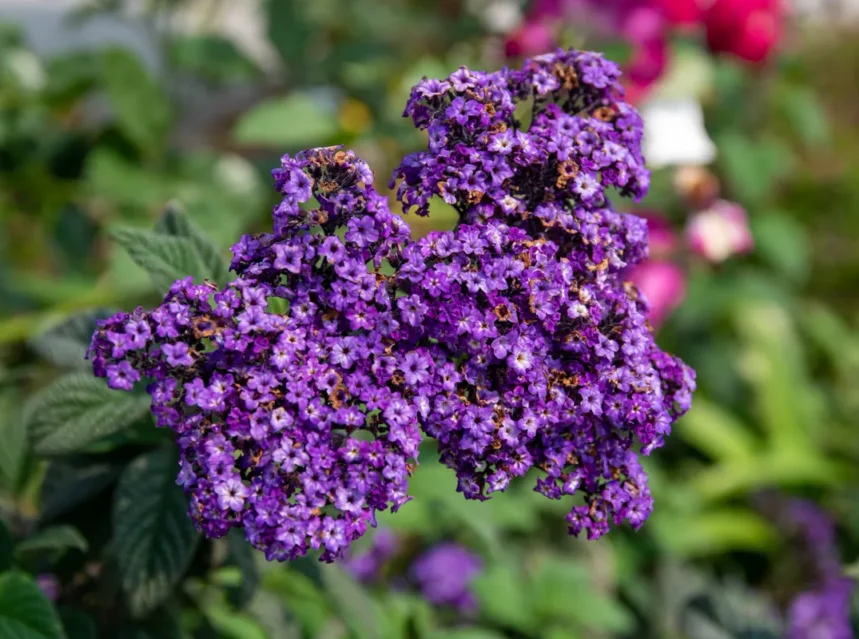
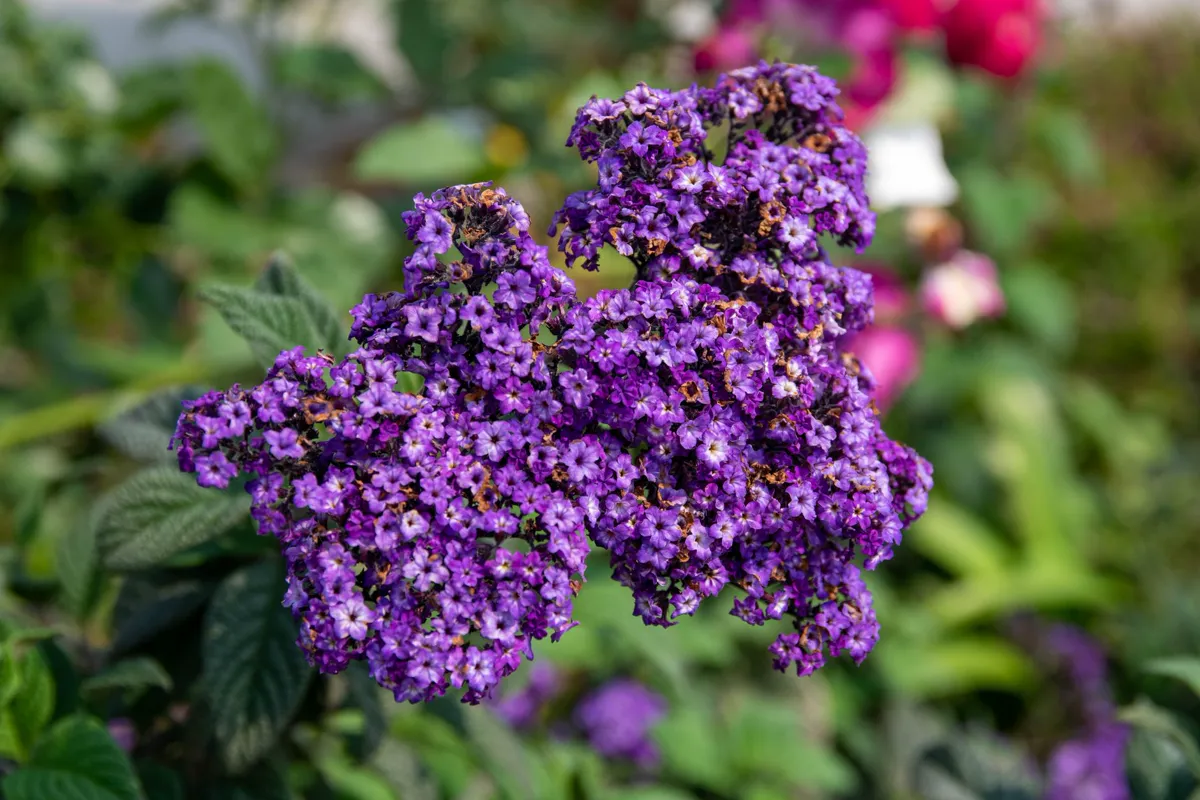
Heliotrope (Heliotropium arborescens), often called the cherry pie plant, is a tender shrubby perennial grown for its dense clusters of deep purple flowers and their rich, sweet vanilla fragrance — and it is one of the most scented plants you can grow in a pot by a doorway. The flowers sit in broad domed heads above wrinkled dark green leaves, drawing in bees and butterflies. Most gardeners treat it as an annual or container plant. Here is the complete guide on how to grow heliotrope.
Quick start: Give heliotrope full sun or light shade, rich free-draining soil, and steady moisture. Feed and deadhead through summer for non-stop scented blooms. It is frost-tender, so grow it as an annual or bring pots indoors before winter in cold areas.
Experienced growers and the Royal Horticultural Society prize heliotrope above all for its scent, which many compare to cherry pie, vanilla or marzipan. Gardeners often note two things: it flowers best with regular feeding and deadheading, and it sulks if allowed to dry out, wilting dramatically before bouncing back when watered. Many grow it in pots near a seat or path so the perfume can be enjoyed up close. In short, keep it fed, watered and warm and it rewards you with months of fragrant colour.
🧰 In a hurry? Jump straight to our tested picks for this guide ↓
Heliotrope at a glance
| Feature | Detail |
|---|---|
| Botanical name | Heliotropium arborescens (family Boraginaceae) |
| Common name | Cherry pie plant |
| Plant type | Tender perennial, grown as annual |
| Sun | Full sun to light shade |
| Soil | Rich, moist, free-draining |
| Flowers | Summer–autumn, purple/violet, fragrant |
| Note | Frost-tender; toxic if eaten |
Why grow heliotrope?
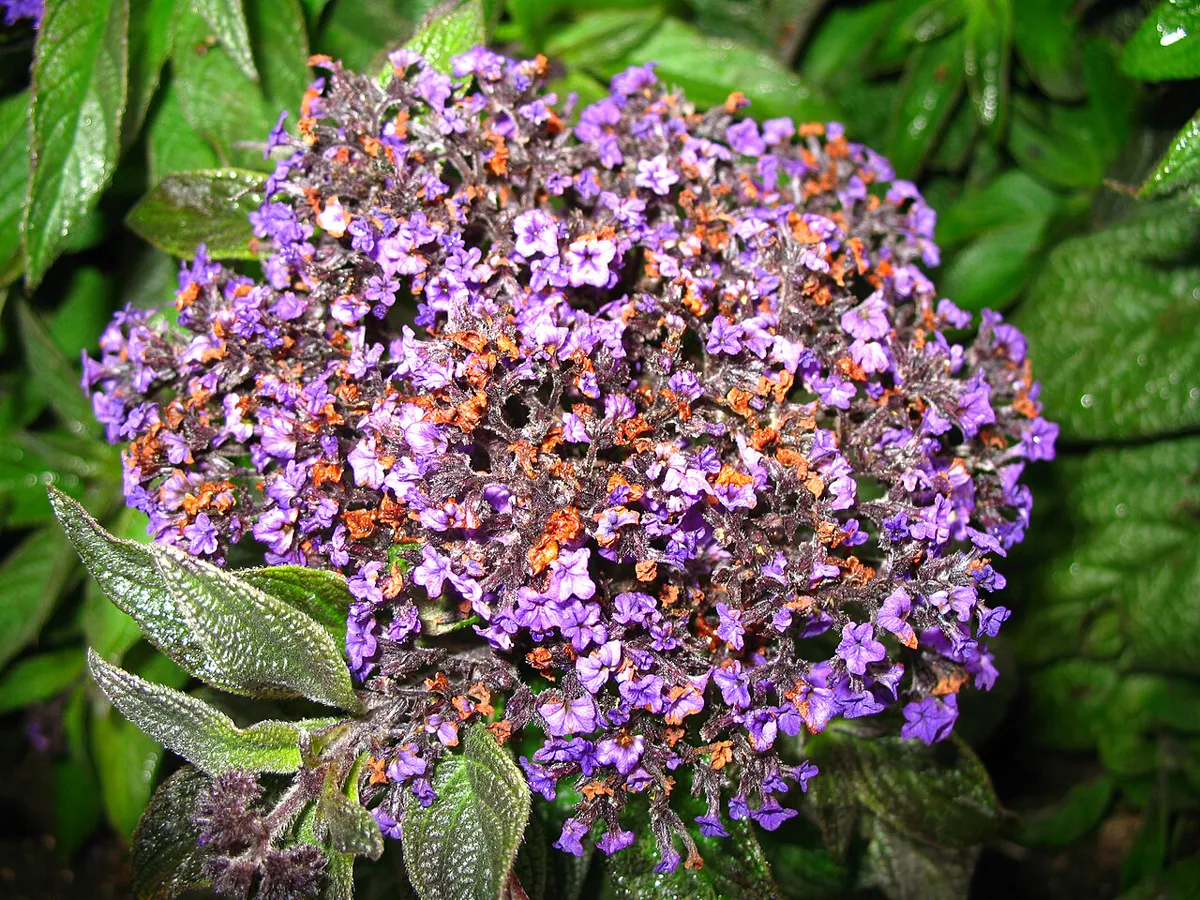
Fragrance is the star. Few bedding plants offer a scent this rich and sweet, and a single pot can perfume a patio or doorway all summer. The deep violet flower heads are beautiful in their own right, glowing against the dark foliage.
It is also a magnet for pollinators, alive with bees and butterflies on warm days. Compact and long-flowering, it suits pots, borders and window boxes, and the old-fashioned charm makes it a cottage-garden favourite.
History, origin & where it grows
Heliotrope is native to Peru and other parts of South America, where it grows as a warm-climate shrub. It was introduced to European gardens in the 18th century and quickly became a Victorian favourite, valued for its powerful scent and used in perfumery. The name comes from Greek words meaning “sun” and “to turn”.
It belongs to the Boraginaceae, the borage family (see the Missouri Botanical Garden records). In its native warmth it is a woody perennial, but in cooler climates it is grown as a tender annual.
Today heliotrope is grown for scent and colour in gardens worldwide. In India its love of warmth suits much of the country, and it grows well as a cool-season annual in the plains and through more of the year in mild hill regions. Give it sun, rich soil and steady water, with a little afternoon shade where summers are fierce.
Best season & when to plant
Plant heliotrope out in late spring, once all frost has passed and the soil is warm. It is frost-tender, so never rush it outdoors too early. Sow seed or take cuttings earlier under cover to have plants ready.
It flowers from summer into autumn, often for many months with good care. In India, grow it through the cooler season in hot regions, planting once the worst heat has passed.
How to plant heliotrope

Rich soil and a warm, bright spot give the best flowers and scent. To plant well:
- Choose a sunny or lightly shaded spot, ideally near a path, seat or door so you can enjoy the perfume.
- Use rich, free-draining soil improved with compost, as it likes moisture but not waterlogging (see improving garden soil).
- For pots, use a good multipurpose compost and a container with drainage holes.
Water in well and keep the soil evenly moist, since heliotrope wilts quickly if it dries out.
Sun, soil, watering & feeding
Heliotrope flowers best in full sun, though in very hot climates a little afternoon shade stops it scorching and wilting. It wants rich, moisture-retentive but free-draining soil to keep those flower heads coming.
Water regularly so the soil never fully dries out (see how often to water), as drought stress causes sudden wilting and dropped buds. Feed every couple of weeks through summer with a balanced or high-potassium liquid feed, as covered in our feeding guide, to fuel continuous flowering.
Deadheading & overwintering
Two simple jobs keep heliotrope at its best. Deadhead the faded flower clusters regularly through summer, which keeps the plant tidy and pushes out fresh blooms instead of seed. A light trim also keeps it bushy.
Because it is frost-tender, you can either treat it as an annual or overwinter it. To keep a plant, bring the pot indoors to a bright, frost-free spot before the first frost, water sparingly, and return it outside in late spring. Cuttings taken in late summer are an easy way to keep favourites going.
Growing heliotrope in pots
Containers are the classic way to grow heliotrope, putting its fragrance right where you sit. A pot by the back door or on a patio table fills the air with scent on warm evenings. It also makes overwintering easy.
Use a good compost in a pot with drainage holes, stand it in sun or light shade, and water whenever the surface starts to dry. Feed regularly through summer and deadhead often. In cold areas, simply lift the whole pot indoors for winter.
Common pests & diseases
Heliotrope is fairly trouble-free outdoors but can attract a few pests, especially under cover. Whiteflies, aphids and spider mites are the most likely, particularly on stressed or indoor plants. Good airflow and steady care keep them down.
Watch also for wilting from dry soil, which looks alarming but usually recovers fast after watering. Avoid waterlogging, which rots the roots. For insect problems, our organic pest control guide and the aphid control guide offer safe fixes.
Best companion plants
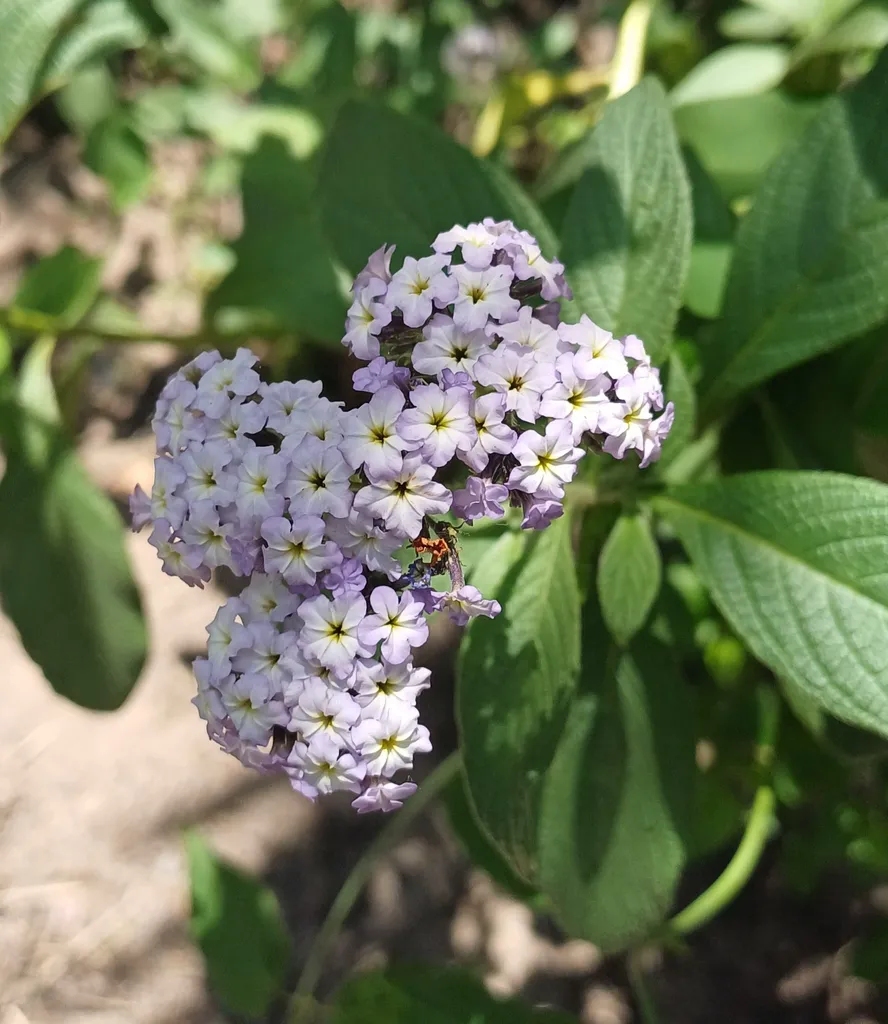
Heliotrope’s deep purple flowers and dark foliage set off brighter bedding beautifully, so it earns its place in mixed pots and borders. The pairings below are easy and look good all summer.
It combines wonderfully with the silver foliage and bright blooms of petunias, the spires of salvia, and the soft mounds of sweet alyssum, whose own honey scent layers nicely with the heliotrope. In a fragrant container, pair it with nicotiana for an evening-scented display by a seat or door.
Uses & benefits
Heliotrope is grown as a fragrant ornamental and pollinator plant, valued for its sweet vanilla scent, rich purple flowers, and long season in pots, beds and window boxes. It is a wonderful choice near seating, doorways and paths where the perfume can be enjoyed.
One important safety note: heliotrope is toxic if eaten, as it contains compounds that can harm the liver, so keep it away from children, pets and grazing animals, and never use it in food or remedies.
This article is for general information only and is not medical advice. Talk to a qualified professional before using any plant medicinally.
Common heliotrope problems
Sudden wilting
Almost always dry soil. Water thoroughly and keep the soil evenly moist; the plant usually recovers quickly, but repeated drought reduces flowering.
Few flowers
Often too little feeding or no deadheading. Feed every couple of weeks and remove spent heads to keep new blooms coming.
Sticky leaves or tiny flies
Whitefly or aphids, especially indoors. Improve airflow and treat early with the methods in our pest guides.
Related plant guides
- How to grow Fuchsia
- How to grow Night Blooming Jasmine
- Browallia care
- How to grow Pentas
- How to grow Nicotiana
- How to grow Ageratum
How to propagate heliotrope
Heliotrope can be raised either way, but the two methods answer different questions. Seed is how you get a lot of plants cheaply; cuttings are how you keep a particular plant — especially a good scented form — through a frosty winter.
From seed
Start indoors about 10 to 12 weeks before your last frost, because heliotrope is slow compared with most bedding annuals. Press the seed onto the surface of moist, fine compost and barely cover it, then hold it at roughly 21–24°C; germination often takes two to three weeks. Prick out at the first true pair of leaves, grow on in bright light, and pinch the tips at around 10 cm so the plant branches instead of running up. Harden off carefully and plant out only when nights stay above about 10°C. In the Indian plains, sow to plant out for the cool season rather than into peak heat.
From cuttings
Take soft, non-flowering tip cuttings in late summer. They root readily in gritty, free-draining compost kept warm and humid under a clear cover, and small young plants overwinter on a windowsill far more easily than a big woody parent. This is also the only way to keep a named cultivar true.
Handling
The whole plant contains pyrrolizidine alkaloids, so wear gloves if your skin is sensitive, wash your hands after taking cuttings, and keep trimmings away from pets and livestock.
Frequently asked questions
Why is my heliotrope wilting?
Almost always dry soil. Heliotrope wilts dramatically when thirsty but usually recovers fast once watered. Keep the soil evenly moist, never bone dry.
Is heliotrope a perennial or annual?
It is a tender perennial, but in cold climates it is grown as an annual or overwintered indoors in a bright, frost-free spot.
Why does heliotrope smell like cherry pie?
Its flowers carry a rich, sweet vanilla-and-almond fragrance that many people liken to cherry pie or marzipan, which is how it earned its nickname.
Can I grow heliotrope in a pot?
Yes — pots are ideal, letting you place the scent near seating and bring the plant indoors for winter. Keep it fed, watered and deadheaded.
Is heliotrope poisonous to people, dogs or cats?
Yes. Despite the vanilla-like scent, heliotrope is not edible and should never be added to food or drinks. The whole plant contains pyrrolizidine alkaloids, compounds that veterinary toxicology references link to cumulative liver damage in grazing animals and pets that eat the foliage. Grow it purely as an ornamental, site it away from where dogs, cats or livestock browse, and wash your hands after taking cuttings. If a pet or child has chewed any part of the plant, ring your vet or poison helpline — this is general information, not medical advice.
How much sun does heliotrope need, and will it grow in shade?
Full sun gives the strongest scent and the tightest, most flower-covered plants, so aim for six or more hours of direct light. In cool summer climates it can take sun all day, but in hot regions such as the Indian plains or the American South it appreciates shade from about noon onward. Deep shade is a mistake: plants stretch, flower thinly and lose much of their fragrance. A bright spot with morning sun and afternoon shelter is the best compromise in warm areas.
How do you grow heliotrope from seed?
Sow indoors about 10 to 12 weeks before your last frost, because heliotrope is slow from seed compared with most bedding annuals. Press the seed onto the surface of moist, fine compost and cover only very lightly, then keep it warm at roughly 21 to 24 degrees C until germination, which can take two to three weeks. Prick out the seedlings once they have a true pair of leaves, grow them on in bright light, and pinch the tips at around 10 cm to build a bushy plant. Harden off carefully and plant out only once nights are reliably above about 10 degrees C.
How tall does heliotrope get?
Modern bedding varieties usually settle at about 30 to 45 cm tall and roughly as wide, which suits containers and the front of a border. Older heirloom types and plants overwintered for several seasons can reach 60 cm or more and become woody at the base. In frost-free climates a heliotrope left in the ground for years can be trained as a small standard on a single stem. Pinching young growth two or three times keeps any type compact rather than sprawling.
Is heliotrope deer resistant?
It is generally listed among the plants deer and rabbits leave alone, most likely because the alkaloids and strong scent make the foliage unappealing. That said, no plant is truly deer proof, and hungry animals in a hard season will sample almost anything. Treat heliotrope as a low-risk choice rather than a guarantee, and combine it with other aromatic plants such as lavender or salvia for a border that browsers tend to skip. Young, freshly planted specimens are the ones most worth protecting.
Can heliotrope be grown indoors?
Yes, and it is one of the nicest scented plants for a bright windowsill. Give it the sunniest window you have, ideally south or west facing, or add a small grow light for four to six hours in winter. Indoor air is often too dry and too dim, so expect slower growth, and watch for whitefly and spider mite, which love warm indoor conditions. Keep the compost evenly moist, never soggy, and turn the pot every few days so the plant does not lean toward the glass.
How do you overwinter heliotrope?
In climates with frost, lift plants or bring pots inside before the first cold night, since heliotrope is damaged at temperatures near freezing. Cut the plant back by about a third, check thoroughly for pests, and keep it in a cool, bright, frost-free room at roughly 10 to 15 degrees C. Water sparingly through winter, just enough that the compost never dries out completely, and stop feeding until late winter. Alternatively, take soft cuttings in late summer — they root readily and small young plants overwinter more easily on a windowsill than a large woody one.
Sources and further reading
Still stuck? Ask the Plant Doctor
Describe the problem — yellow leaves, holes, no flowers — and get a clear answer in seconds. FreeAI can make mistakes. Answers are guidance, not a guarantee — check anything important against the guide it links to, and always read the label on any product before you use it.