How to Grow Ageratum (Floss Flower): Rare True Blue
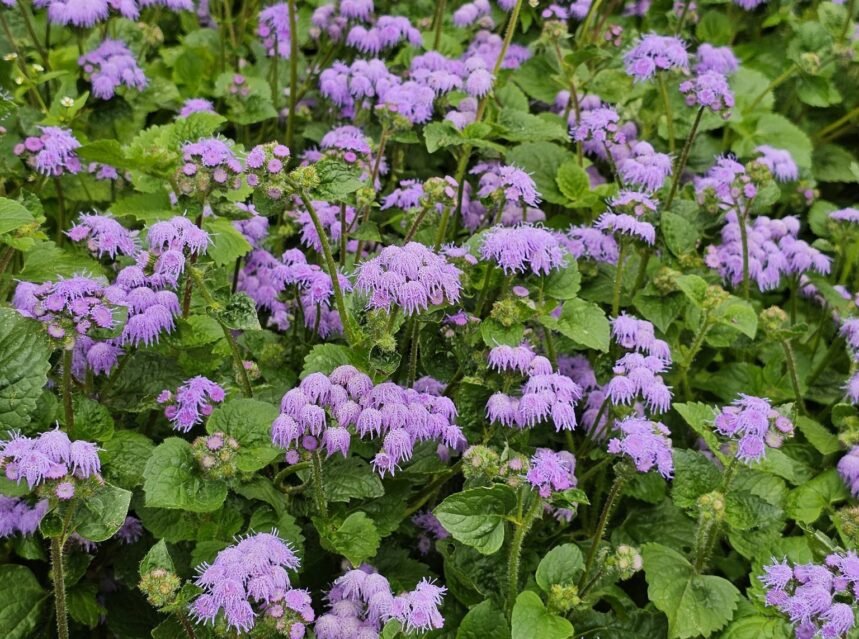
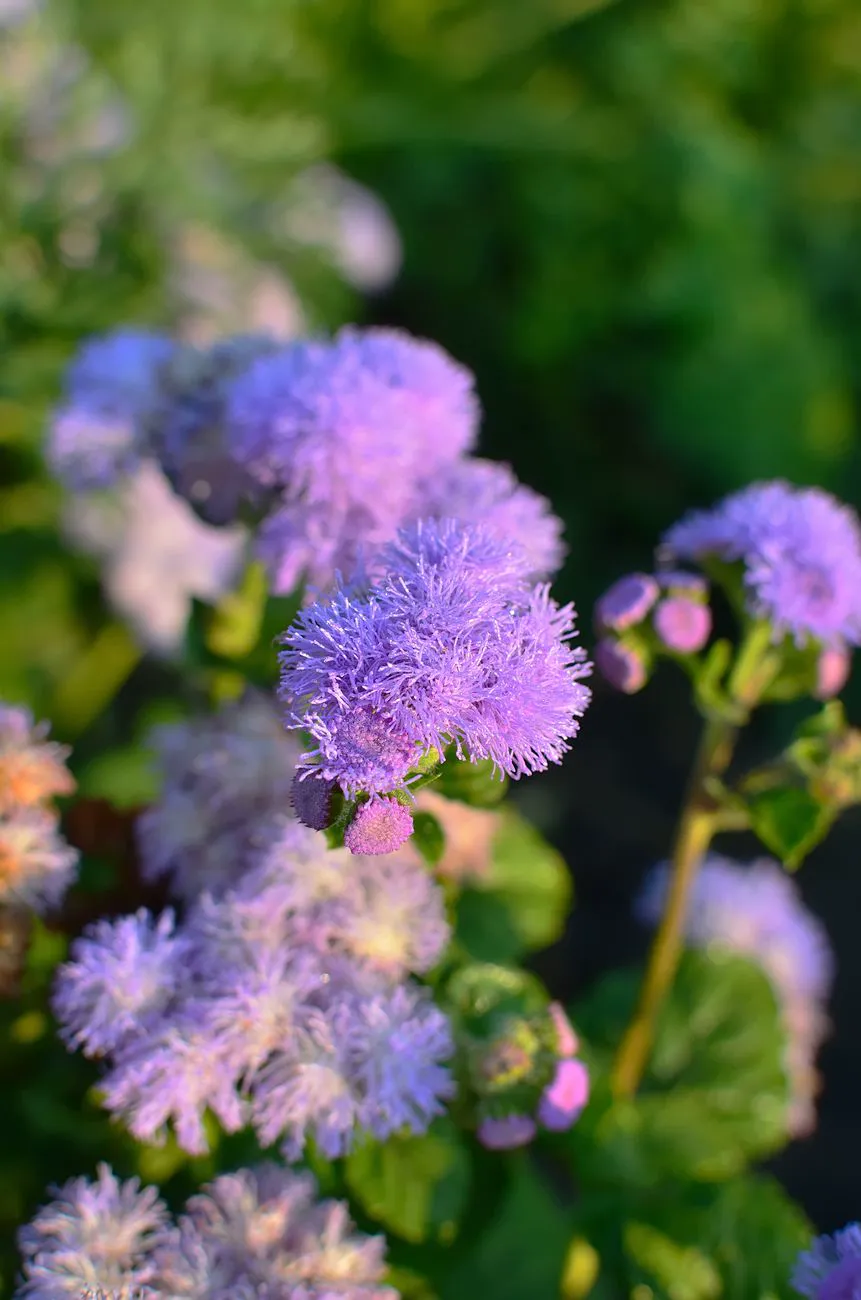
Ageratum (floss flower) is an easy, low-growing annual grown for its fluffy, powder-puff blooms in the hard-to-find shade of true blue — few flowers offer such soft, genuine blue. The fuzzy flower clusters, in blue, purple, pink and white, cover neat little mounds all summer, and butterflies love them. It is perfect for edging, borders and pots. Here is the complete guide on how to grow ageratum (floss flower).
Quick start: Start ageratum seeds indoors (surface-sow, as they need light), then plant out after frost in full sun. Keep the soil evenly moist. Deadhead for non-stop blooms. Then enjoy soft, fluffy colour all summer.
Ageratum is a favourite for the soft, true-blue haze it brings to the front of a border, a colour few annuals offer. The tiny seeds need light to germinate, so they are barely covered when sown. The habit that keeps it flowering nonstop is regular deadheading along with steady moisture. In return it hums with butterflies right through the summer. Compact types suit edging, while taller ones cut well for small posies.
🧰 In a hurry? Jump straight to our tested picks for this guide ↓
Ageratum at a glance
| Feature | Detail |
|---|---|
| Botanical name | Ageratum houstonianum (family Asteraceae) |
| Common name | Floss flower |
| Plant type | Warm-season annual |
| Light | Full sun (light afternoon shade in heat) |
| Soil | Average, evenly moist, well-drained |
| Flowers | Blue, purple, pink, white; summer to frost |
| Habit | Neat, compact mounds |
| Wildlife | Magnet for butterflies and bees |
Why grow ageratum?
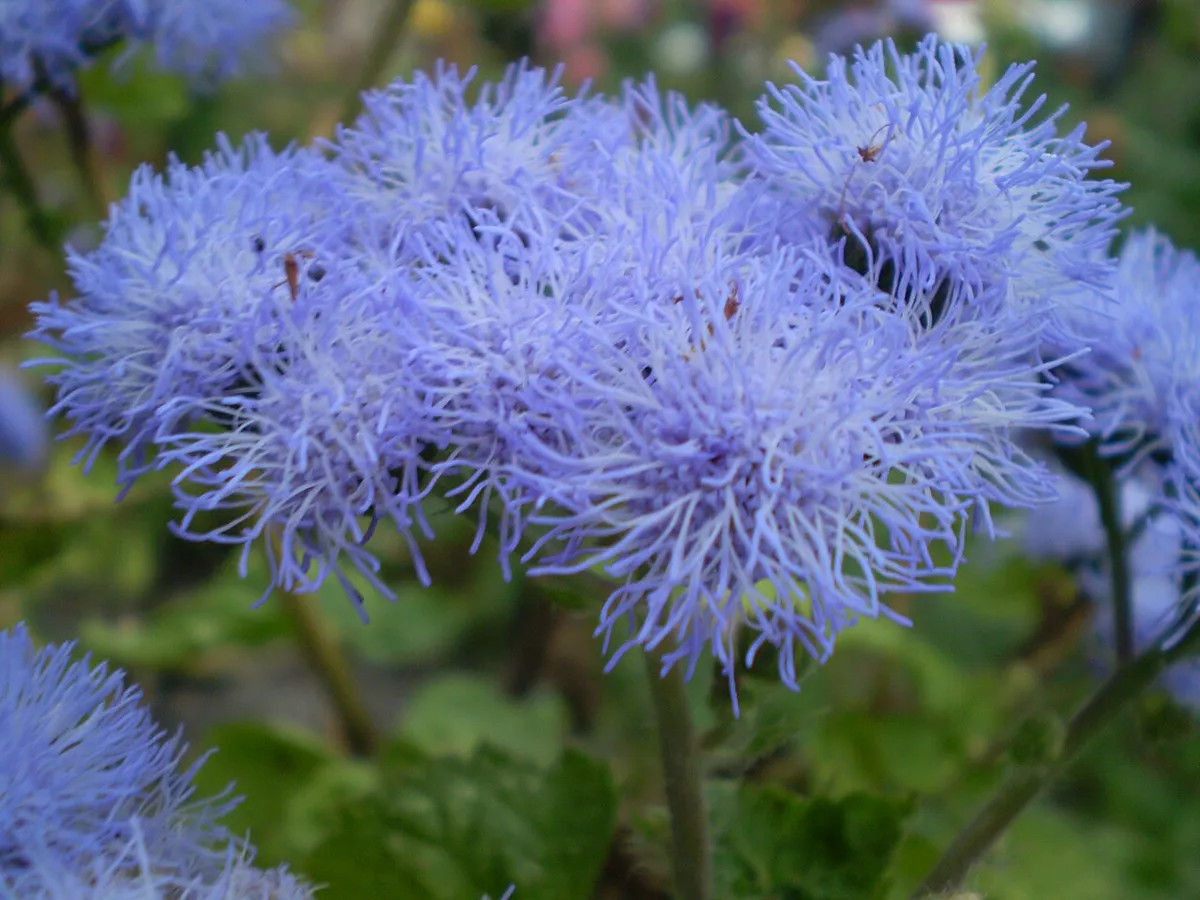
Ageratum is prized for its rare colour and soft texture. A few reasons to grow it:
- True blue. It offers one of the hardest colours to find in the garden.
- Long-flowering. The fuzzy blooms cover neat mounds for months.
- Pollinator-friendly. It is a magnet for butterflies and bees.
- Versatile. It suits edging, mass planting and containers.
History, origin & where ageratum grows
Ageratum is native to Guatemala, Belize and adjacent Mexico, where it grows in warm, sunny conditions (range, toxicity and weed status). Two things worth knowing before you plant a drift of it: the plant contains pyrrolizidine alkaloids and is toxic to grazing animals, causing liver damage — so keep it out of paddocks and away from browsing pets — and outside its native range it can become a rampant environmental weed, with records of it running wild in the US, Australia, Africa, Asia and parts of Europe. In a bed or a container it behaves; over a fence into rough ground it may not. The name ageratum comes from the Greek for “non-ageing”, a nod to its long-lasting flowers. Its soft blue blooms made it a quick favourite once it reached European and American gardens.
From Central America it spread worldwide as a popular bedding annual. Breeders developed compact, free-flowering series in a wider colour range. These dwarf types became staples of summer borders everywhere.
It is a warm-loving plant grown as an annual (see the Royal Horticultural Society). It enjoys sun and warmth and is killed by frost. In hot climates such as much of India, it flowers well and can bloom into the cooler months.
Best season & when to plant
Ageratum is a warm-season annual. Start the seeds indoors 8–10 weeks before the last frost, then plant out once frost has passed. It blooms from early summer until frost, typically about 90 days after sowing. In hot climates, it flowers well into the cooler months.
How to grow ageratum from seed
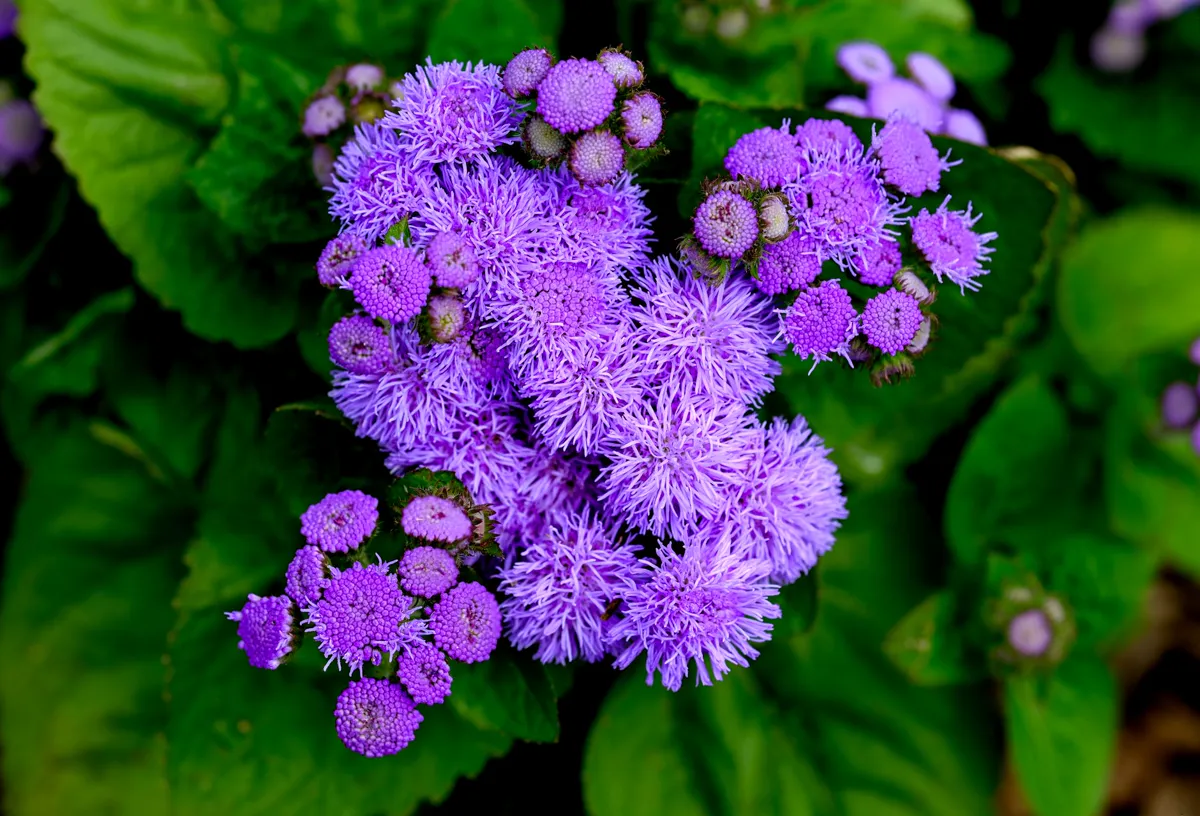
- Surface-sow the tiny seeds — press them onto the mix but do not cover, as they need light to germinate (see starting seeds indoors). Starting indoors gives far better results than direct sowing.
- Keep them moist; seedlings appear in 5–14 days. Transplant out after frost.
- Plant in full sun and average, well-drained soil (see improving garden soil).
Sun, soil & watering
Give ageratum full sun for the most blooms — in very hot climates, a little afternoon shade helps. Too much shade makes it leggy and fades the colour. Keep the soil evenly moist, as it is not very drought-tolerant, and well-drained (see how often to water plants).
Deadheading for non-stop blooms
Deadhead regularly to keep ageratum flowering. Snip the fading blooms just above a set of leaves, and the plant pushes out more (see deadheading flowers). Some modern “self-cleaning” series grow over their spent blooms and need little deadheading.
Using ageratum in the garden
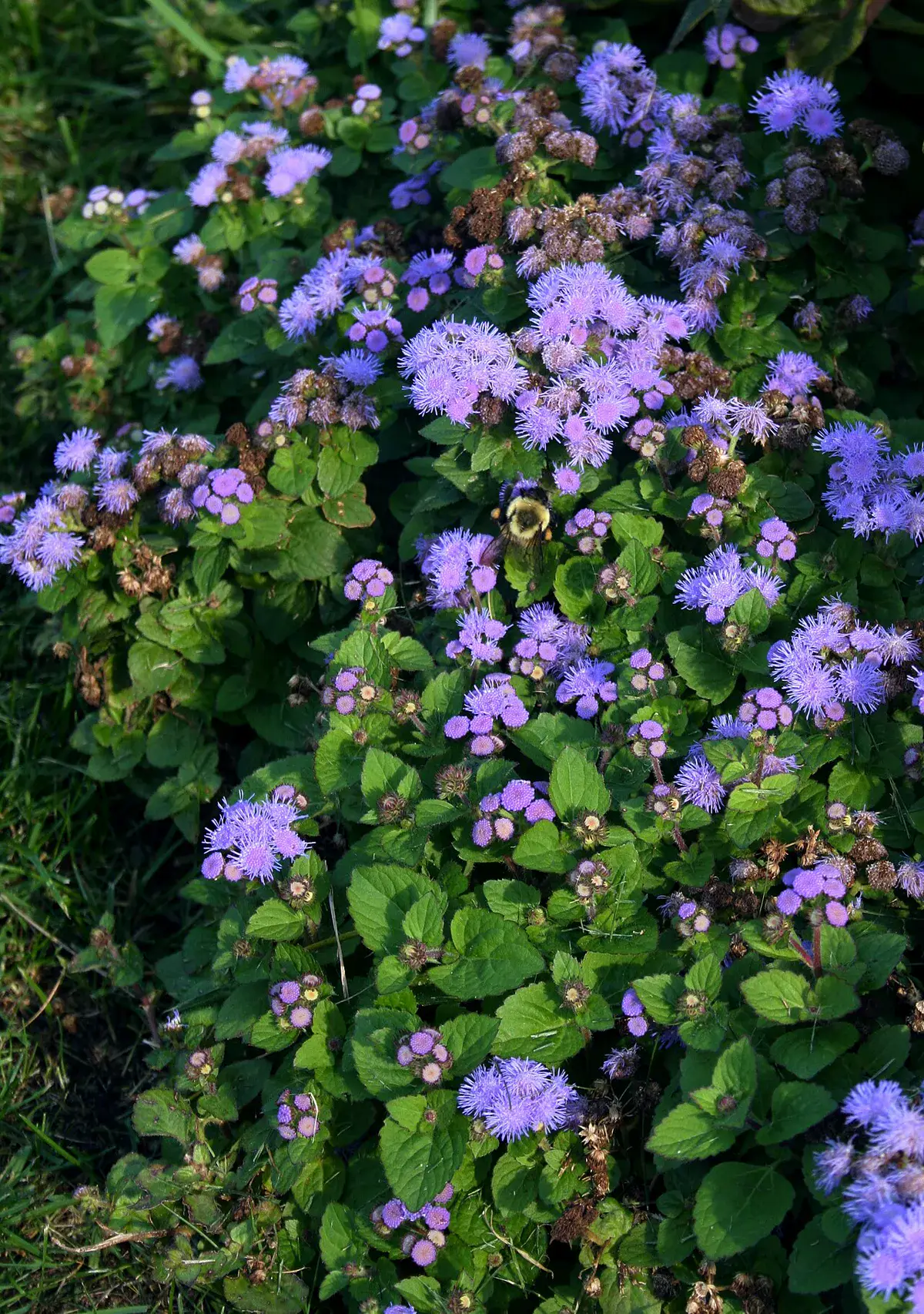
Ageratum’s neat habit makes it a designer’s friend. The compact mounds stay tidy without much effort. So it slots into many planting schemes.
The classic use is as a soft blue edge along a path or border front. Massed together, the plants make a low haze of colour. The blue also cools and calms hot reds, oranges and yellows nearby.
Taller varieties exist too, and these make charming, long-lasting cut flowers. In pots and window boxes, ageratum pairs beautifully with white and pink companions. It is equally at home in a formal bed or a relaxed cottage scheme.
Ageratum in containers
Ageratum is a natural for pots and window boxes. Its compact size suits small spaces perfectly. So it is ideal for a balcony or terrace.
Use a free-draining compost and a container with good drainage holes. Stand the pot in full sun for the best, most compact growth. Keep the compost evenly moist, as pots dry out faster than open ground.
Deadhead regularly and feed lightly through summer for continuous blooms. Combine the blue flowers with white alyssum or pink petunias. The result is a soft, pretty display that lasts until frost.
Ageratum colours and varieties
While true blue is the signature, ageratum comes in several shades. Choosing a mix extends the display. So it is worth knowing the main types.
Dwarf blue series like ‘Blue Mink’ and ‘Blue Horizon’ are the most popular for bedding. White and pink forms offer a softer, paler look. Taller varieties, often sold for cutting, reach a foot or more.
The compact types stay neat for edging and pots. The tall ones suit the middle of a border and the vase. All share the same fluffy texture and long flowering season.
Why true blue is special
Blue is the rarest colour in the flower garden, which makes ageratum valuable. Very few annuals offer a genuine, soft blue. So gardeners prize it for that alone.
True blue cools and calms a planting scheme. It makes hot reds and oranges look richer by contrast. Beside white and silver, it gives a fresh, restful effect.
This is why ageratum shows up so often in classic bedding designs. A blue edge ties a mixed border together beautifully. Few other easy annuals can play the same role.
Common pests & diseases
Ageratum is fairly easy. Watch for spider mites and whiteflies in hot, dry conditions, and powdery mildew or root rot in damp, crowded spots. Give it sun and airflow, and see our organic pest control guide for safe fixes. Good spacing and even watering prevent most problems.
Saving ageratum seed
You can collect ageratum seed to grow again next year. The fluffy flowers dry into small seed heads. So a free supply is easy to gather.
Let some flowers fade fully and dry on the plant. Rub the dried heads gently between your fingers to release the tiny seeds. Store them somewhere cool and dry over winter.
Remember that named hybrids may not come true from saved seed. The offspring can vary in height and colour. For reliable results, the open-pollinated species types are the best to save.
Benefits & uses
Ageratum offers rare true-blue colour, a neat mounding habit, and strong appeal to butterflies and bees (see attracting pollinators). It is perfect for edging, mass colour and pots, and the taller varieties are lovely, long-lasting cut flowers. For soft, dependable summer colour, it is hard to beat.
This article is for general information only and is not medical advice. Talk to a qualified professional before using any plant medicinally.
Common ageratum problems
Leggy, faded colour
Too much shade. Give it full sun for compact, vivid plants.
Stops blooming
Missed deadheading or dried out. Deadhead and keep the soil evenly moist.
Spider mites
Hot, dry air. Rinse the plants and improve the conditions.
Related plant guides
- How to grow Balsam
- Browallia care
- How to grow Osteospermum
- How to grow Cornflowers
- How to grow Catananche
- How to grow Nierembergia
Frequently asked questions
Is ageratum a perennial or annual?
The garden types are grown as annuals, flowering through summer until frost.
Does ageratum need full sun?
Yes — full sun for the best, most compact blooms, with light afternoon shade only in extreme heat.
How do I keep ageratum blooming?
Deadhead regularly and keep the soil evenly moist. Some self-cleaning varieties need little deadheading.
Is ageratum good for butterflies?
Yes — its fluffy flowers are a favourite of butterflies and bees.
Can I grow ageratum in pots?
Yes — its compact habit suits containers and window boxes well. Use free-draining compost in full sun and keep it evenly moist.
How long does ageratum take to flower from seed?
Usually about 90 days from sowing. Start the seeds indoors 8 to 10 weeks before the last frost, and the plants will bloom from early summer right through until the first frost.
Is ageratum toxic to dogs and cats?
Ageratum is best treated as a plant to admire, not to nibble. It contains pyrrolizidine alkaloids, compounds that can damage the liver of grazing animals, and it may cause an upset stomach in pets that chew on it. Keep curious dogs, cats, and small children away from the plants, and contact a vet if a pet has eaten a large amount. Wearing gloves when handling lots of plants is a sensible extra precaution.
Is ageratum deer resistant?
Yes, ageratum is one of the more reliable annuals for deer-prone gardens. Its bitter-tasting, slightly fuzzy foliage is unappealing to deer, so they usually pass it by. That said, no plant is completely deer-proof — in a hard season, hungry deer will sample almost anything. Rabbits also tend to leave it alone for the same reason.
Does ageratum self-seed?
Garden ageratum often drops seed and pops up again the following year, especially in mild climates and undisturbed beds. It reseeds gently rather than aggressively, so volunteers are easy to pull or transplant where you want them. Keep in mind that seedlings from hybrid varieties may not look exactly like the parent plant. If you want to prevent self-sowing, simply deadhead before the flowers set seed.
Should I cut back leggy ageratum?
Yes, a trim works wonders. If plants stretch and get leggy by midsummer, shear the taller varieties back by about a quarter to encourage bushier growth and a fresh flush of flowers. Pinching young plants early in the season also helps them branch and stay compact. Water and feed lightly after cutting back so they recover quickly.
Does ageratum spread?
The bedding annuals sold in nurseries stay as tidy clumps and spread only by dropping seed. The plant called hardy ageratum or blue mistflower is a different species — a perennial that spreads by underground rhizomes as well as seed, and it can roam widely in warm regions. So check which one you are buying: the annual behaves itself in beds and pots, while the hardy type needs room or regular editing.
Still stuck? Ask the Plant Doctor
Describe the problem — yellow leaves, holes, no flowers — and get a clear answer in seconds. FreeAI can make mistakes. Answers are guidance, not a guarantee — check anything important against the guide it links to, and always read the label on any product before you use it.