Best Liquid Fertiliser

A liquid fertiliser is a soluble plant nutrient product — concentrate or ready-to-use — applied to soil or foliage in dilute solution to provide immediately available nitrogen, phosphorus, potassium, and trace elements to actively growing plants. Unlike slow-release granules, liquid fertilisers act within 24–48 hours. They are the best tool for correcting deficiencies quickly, boosting flowering and fruiting, and feeding plants that are actively producing rather than just establishing roots.
This guide reviews the seven best liquid fertilisers of 2026 across the key use cases: tomatoes and vegetables, roses, lawns, houseplants, and general all-purpose feeding. We also cover what NPK ratios mean and which to choose, with a dedicated section for Indian garden growers.
Quick start: For vegetables and fruiting plants, use a tomato feed (high potash, NPK ratio approximately 4-3-8) weekly from first flower. For leafy growth (lawns, brassicas, spinach), use a balanced or high-nitrogen liquid feed (NPK approximately 7-3-6). For all-round feeding of ornamentals, seaweed extract is the most forgiving option — it is difficult to overapply and provides micronutrients beyond NPK. Always dilute according to the label; stronger is not better with liquid fertilisers.
🧰 In a hurry? Jump straight to our tested picks for this guide ↓
Understanding NPK ratios: what to buy for which plant
Every liquid fertiliser lists three numbers on the label — the NPK ratio. These stand for nitrogen (N), phosphorus (P), and potassium (K). Each drives different plant processes.
Nitrogen (N) drives leafy growth and green colour. High-N feeds suit lawns, brassicas, and salad crops. Too much nitrogen on fruiting plants produces lush foliage. However, it delays or reduces flowering and fruiting.
Phosphorus (P) supports root development and early establishment. It is most useful at transplanting or for overwintered plants coming back into growth in spring. Most garden soils have adequate phosphorus. It is rarely the limiting nutrient in established borders.
Potassium (K) promotes flower and fruit development. It also strengthens cell walls and improves disease resistance. High-K feeds (tomato fertilisers) are the most important liquid feed for any flowering or fruiting plant. They are also the most widely used feed in UK gardens.
| Plant type | Goal | NPK to look for | Example product |
|---|---|---|---|
| Tomatoes, peppers, courgettes | Fruit size and quantity | High K (e.g. 4-3-8) | Tomorite, Maxicrop tomato |
| Roses | Flower size and repeat bloom | Balanced-high K (e.g. 5-5-8) | Baby Bio Rose, Westland Rose |
| Lawns | Green colour and density | High N (e.g. 7-0-2) | Miracle-Gro Lawn Feed, Westland Lawn |
| Brassicas, salads, spinach | Leaf production | High N, moderate P (e.g. 5-3-4) | Liquid seaweed, general NPK |
| Houseplants | Balanced growth | Balanced (e.g. 3-3-3) | Baby Bio Original, Westland Indoor |
| Overwintering or new transplants | Root establishment | High P (e.g. 2-6-2) | Maxicrop original, liquid bone meal |
The 7 best liquid fertilisers of 2026
1. Levington Tomorite (Best for tomatoes and fruiting veg)
The UK’s best-selling liquid tomato fertiliser, with an NPK of approximately 4-3-8 plus added magnesium. The high potassium promotes fruit set and sweetness. The magnesium prevents the blossom end rot and yellowing leaves that are the most common tomato feeding problems.
Tomorite is also the best feed for courgettes, peppers, cucumbers, and aubergines. Dilute 20 ml per litre of water and apply weekly from the moment the first flower truss sets. Do not apply before flowering — the high-K feed is wasted on seedlings, which need nitrogen for establishment first. This is the single most useful liquid fertiliser for any kitchen garden.
2. Maxicrop Seaweed Extract (Best all-round organic)
A liquid extract of Ascophyllum nodosum seaweed, cold-processed to preserve natural plant hormones (cytokinins and auxins). It provides a broad spectrum of trace elements — iron, manganese, boron, zinc — missing from most standard NPK feeds. Its NPK ratio is very low (approximately 0.3-0.1-1). This means it does not replace a nitrogen or potassium feed.
However, it is the best supplement to use alongside any NPK feed. Seaweed extract improves soil microbial activity. It also strengthens plant cell walls and helps plants resist drought and disease. It is virtually impossible to overapply — the major nutrient concentration is so low that burning is rarely possible. Best used at every watering from March through September on all garden plants.
3. Baby Bio Original (Best for houseplants)
A balanced houseplant liquid feed with an NPK of approximately 3.5-1.5-3.5 plus trace elements. The low concentration (diluted to 5 drops per 300 ml of water) suits the limited compost volume of houseplant pots, where overfeeding causes salt buildup and root damage faster than in outdoor beds.
Baby Bio has been the UK’s dominant houseplant feed for over 50 years. The bottle includes a dropper cap to control precise dilution. Apply once a week from March to September during active growth. Stop feeding from October to February. Most houseplants are dormant then, and excess nitrogen causes weak, leggy growth in low light.
4. Westland Growmore Liquid Feed (Best balanced general use)
A balanced general-purpose liquid concentrate with an NPK of 7-7-7. It suits any plant where you want to support growth, flowering, and root development simultaneously without specialising. It is the best starting feed for new borders, recently transplanted shrubs, and any garden where you are not targeting a specific outcome.
For gardens with varied planting — some flowering shrubs, some vegetables, some lawn — a balanced feed like Growmore liquid is the most practical single-product choice. Switch to a high-K product (tomato feed) once fruiting plants begin to flower. According to the RHS fertiliser guide, a balanced NPK feed applied monthly is the minimum intervention to maintain productive garden soil in containers and raised beds.
5. Miracle-Gro Water Soluble All Purpose (Best for US gardeners)
The most widely used garden fertiliser in the United States, with an NPK of 24-8-16. It dissolves in water and is applied via a hose-end sprayer or watering can. The high nitrogen level (24) makes it particularly effective on lawns, flowering annuals, and vegetable beds in the first half of the season.
Miracle-Gro is the best all-purpose option for US gardeners who want one product that covers lawn feeding, vegetable garden feeding, and container plant feeding. Switch to a high-K formulation (Miracle-Gro Tomato Plant Food, NPK 18-18-21) from the moment fruiting plants begin to set flowers. The US formulation is labelled as “fertilizer” (American spelling) — the product is identical to UK equivalents despite the different packaging language.
6. Liquid Seaweed and Fish Emulsion Mix (Best for organic vegetable gardens)
A blend of hydrolysed fish emulsion and seaweed extract, providing approximately 5-2-2 NPK plus a broad trace element spectrum from the seaweed component. The fish emulsion is the primary nitrogen source — it breaks down slowly in the soil, providing a gentle sustained release rather than the sharp peak of synthetic fertilisers.
Fish emulsion has a strong smell when applied. It fades within 24–48 hours. This is the best liquid feed for certified organic vegetable growing where synthetic NPK products are not permitted. It also significantly improves soil microbial life. The fish-derived amino acids feed the bacterial and fungal communities that make nutrients available to plant roots. Apply every two weeks from May to August on all vegetable beds.
7. Vitax Q4 Liquid (Best for roses and flowering shrubs)
A rose-formulated liquid feed with an NPK of approximately 5-5-8 plus magnesium and iron. The balanced NPK supports both foliage and flower production, while the elevated potassium promotes repeat flowering. Iron prevents the leaf yellowing (chlorosis) common on roses grown in alkaline soils.
This is the best liquid feed for roses, hydrangeas, and acid-loving flowering shrubs. Apply every two weeks from the first signs of bud break in spring through to the last flush of autumn flowering. Do not apply after late September — late-season feeding promotes soft new growth that is easily damaged by the first frosts.
Liquid vs granular fertiliser: which is better?

Liquid fertilisers act within 24–48 hours. Granular slow-release fertilisers act over weeks or months. Each suits a different need.
Use liquid fertiliser when: a plant shows a deficiency symptom (yellow leaves, poor fruiting), the growing season is short, or you want to boost fruiting in a specific window. Liquid is also best for container plants, where granules can be difficult to incorporate into existing compost without disturbing roots.
Use granular fertiliser when: you want background nutrition across a whole season without weekly applications, or you are setting up a new bed or border that will not need close attention. Granules are also better on a water-restricted garden — they do not need diluting and do not require precise application.
Many experienced gardeners use both: a slow-release granule at planting time and a weekly liquid tomato feed from flowering. The granule provides background N-P-K for 6 months. The liquid provides targeted high-K for fruit production. RHS guidance for productive kitchen gardens recommends this dual approach. Check soil nutrition with a soil test kit before adding major fertilisers — you may already have excess phosphorus from years of compost addition.
Liquid fertiliser for Indian garden growers
Indian home gardeners have excellent organic liquid fertiliser options. Many are cheaper and more effective than imported synthetic products. The most widely used is Jeevamrutha — a fermented liquid made from cow dung, cow urine, pulse flour, jaggery, and soil. It originates from the ZBNF (Zero Budget Natural Farming) movement pioneered by Subhash Palekar. It provides a complete microbial inoculant and low-level NPK. Apply at 200 ml per litre of water, weekly, across the root zone.
For growers who want a commercially available product, Ugaoo’s Bio NPK liquid (NPK 1.5-1.5-1.5 from microbial sources) and Prom Coco (liquid coconut-based fertiliser) are widely used on terrace gardens across Mumbai, Pune, and Bengaluru. For a quick nitrogen boost on leafy vegetables, liquid DAP (diammonium phosphate dissolved in water at 2–5 g/litre) is effective and inexpensive — widely available at agricultural supply shops across India.
For fruiting vegetables on Indian terraces — tomatoes in pots, chillies, brinjal — a high-potassium liquid feed from flowering improves fruit size significantly. Coconut water (young green coconut, diluted 1:10) is a traditional Indian home remedy that provides potassium, cytokinins, and trace elements. However, it spoils quickly in Indian heat and must be used within 12 hours of opening. For a more practical purchased option, see our full guide to organic fertilisers including locally available inputs. For healthy root growth in potting compost, a high-phosphorus liquid starter feed at transplanting accelerates establishment significantly.
Frequently asked questions
How often should I use liquid fertiliser?
For tomatoes and fruiting vegetables, apply weekly from first flower to end of harvest. For ornamental flowering plants (roses, dahlias, sweet peas), apply every two weeks from bud break to end of flowering. For houseplants, apply once a week from March to September and stop feeding from October to February.
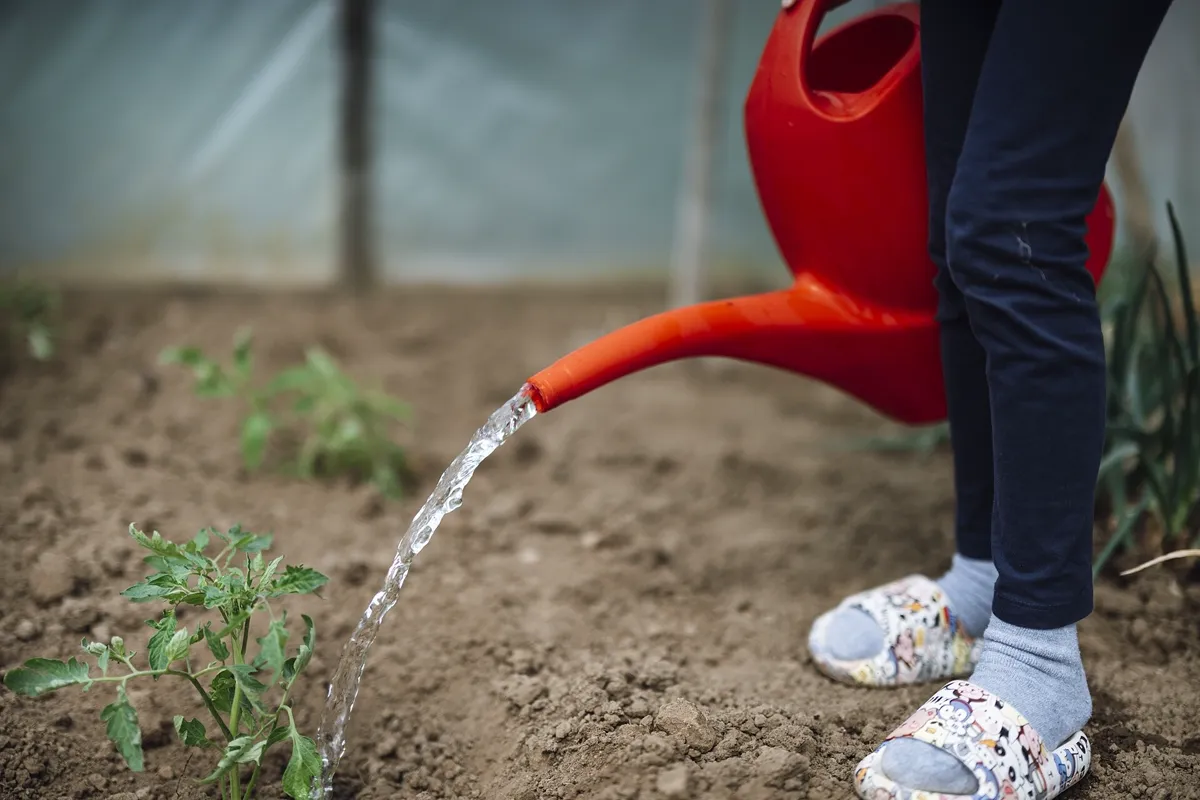
Always follow the dilution rate on the label. More concentrated is not more effective — high salt concentrations in compost burn roots and reduce the plant’s ability to absorb water. If plants show leaf tip burn or wilting after a feed, flush the compost thoroughly with plain water and return to the correct dilution rate. Use a watering can with a fine rose to apply liquid feed gently at the base of the plant, avoiding splash on foliage.
Can I use tomato feed on all plants?
Tomato feed (high potassium, typically NPK 4-3-8) is beneficial for any plant that flowers or fruits — roses, sweet peas, hanging basket plants, strawberries, peppers, and cucumbers. It is not the right choice for leafy plants (spinach, lettuce, brassicas, lawns) that need nitrogen more than potassium.
For lawns, use a high-nitrogen liquid lawn feed, not tomato fertiliser. For seedlings, use a half-strength balanced liquid feed rather than high-K, which can delay root establishment. Use a soil moisture meter before applying liquid feed to dry soil — fertiliser applied to very dry compost can cause root burn. Water the plant first, then feed once the compost is moist.
Is seaweed fertiliser as good as synthetic NPK?
Seaweed extract is not a replacement for NPK fertiliser — its major nutrient content is very low. However, it provides trace elements (iron, boron, manganese, zinc, molybdenum) and natural plant hormones (cytokinins) that are absent from most synthetic NPK feeds. These trace elements become limiting in long-cropped container compost and heavily-leached outdoor beds.
The best approach is to use both: a standard NPK liquid feed for major nutrients and seaweed extract as a supplement every 2–3 weeks. The combination is more effective than either product alone for sustained productivity across a full growing season. Use a garden sprayer for foliar application of seaweed extract — leaves absorb trace elements faster through stomata than roots absorb them from soil.
When should I stop feeding my garden?
In the UK and northern US, stop feeding perennials and shrubs by late August. Late feeding encourages soft, leafy growth that is easily damaged by autumn frosts. Fruit trees can be fed until harvest but not after. Lawns can receive a final high-nitrogen feed in September to prepare for winter dormancy.
Houseplants should stop receiving feed from October to February in the northern hemisphere. During short days and low light, most houseplants slow their growth significantly. Feeding during this period builds up salt deposits in the compost and promotes the weak, pale growth typical of over-fertilised plants in low light.
How often should I apply liquid fertilizer?
Most general-purpose liquid feeds work best applied every 1-2 weeks during active spring and summer growth, then scaled back to monthly or stopped entirely once growth slows in autumn and winter. Actively fruiting vegetables and heavy-feeding container plants tolerate the more frequent end of that range, while slower-growing houseplants and shrubs do better on the two-week schedule. Always follow the product label first, since concentration and formulation vary between brands.
How much liquid fertilizer should I mix per litre of water?
Follow the dilution rate printed on the bottle rather than guessing, since concentrated liquid feeds vary enormously in strength between brands and even between product lines from the same manufacturer. A useful general safety habit is to mix at half the recommended strength for young seedlings, newly repotted plants, or anything already stressed, then move to full strength once the plant is established and growing steadily. Over-concentrating is the most common cause of leaf-tip burn.
What is the difference between liquid and granular fertilizer?
Liquid fertilizer is pre-dissolved and immediately available to roots, making it the faster option for correcting a visible deficiency or reviving a plant recovering from transplant shock. Granular fertilizer releases nutrients gradually as it breaks down in the soil, which suits a “feed and forget” approach over weeks or months but reacts more slowly to an urgent problem. Many gardeners use granular feed for a steady baseline and liquid feed as a targeted top-up during the growing season.
Can I overfeed a plant with liquid fertilizer, and how do I fix it?
Yes — over-fertilizing builds up mineral salts in the soil, which shows up as browned or crispy leaf edges, wilting despite moist soil, or a white crust on the compost surface. Flush the pot thoroughly with plain water equal to two or three times the container’s volume, letting it drain fully each time, and hold off on further feeding for one to two weeks so the plant can recover. Outdoor beds recover faster because rain and irrigation naturally leach excess salts away.
Should I apply liquid fertilizer to dry soil or already-moist soil?
Water the plant first with plain water, then apply the diluted liquid feed once the top layer of soil is already moist. Feeding dry soil concentrates the fertilizer around whatever roots the water first reaches, which raises the risk of root burn in that localised area. Pre-moistened soil lets the diluted nutrients disperse evenly through the root zone instead of pooling in one spot.
Can liquid fertilizer be sprayed directly onto leaves instead of the soil?
Yes, and this is called foliar feeding — many liquid fertilizers, particularly seaweed-based ones, are absorbed through the stomata on the underside of leaves faster than the same nutrients travel from soil to roots. Foliar feeding works well as a quick supplement or for correcting a visible trace-element deficiency, but it shouldn’t fully replace root feeding, since leaves cannot take up the full range of nutrients a plant needs at the concentration soil-applied feed provides.
Does liquid fertilizer go bad or lose strength in storage?
Most synthetic liquid fertilizers stay chemically stable for two to three years unopened if kept away from direct sunlight and freezing temperatures, though the label’s stated shelf life is the most reliable guide. Organic liquid feeds, such as fish emulsion or seaweed extract, degrade faster once opened and can develop a stronger odour or separate over months. Discard any liquid fertilizer that has developed mould, an unusually foul smell, or a texture that won’t remix by shaking.
Sources and further reading
Still stuck? Ask the Plant Doctor
Describe the problem — yellow leaves, holes, no flowers — and get a clear answer in seconds. FreeAI can make mistakes. Answers are guidance, not a guarantee — check anything important against the guide it links to, and always read the label on any product before you use it.