Best Soil Moisture Meters
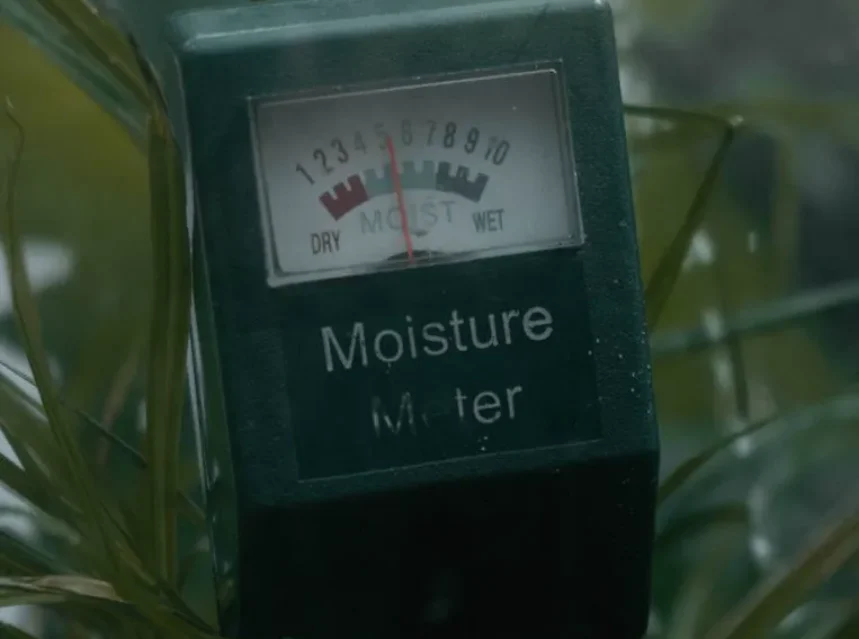
A soil moisture meter is a device that measures the water content of soil by pushing a probe into the growing medium and showing the result on a scale. Most scales run from 1 (bone-dry) to 10 (saturated). Some digital models show a percentage instead.
The best soil moisture meter gives an accurate, repeatable reading within seconds. It works from dry soil right through to saturated soil. Good ones also last several outdoor seasons without probe corrosion or drift.
Good soil moisture meter reviews test accuracy against laboratory gravimetric measurements. They also check response time, probe durability, and performance across soil types such as clay, sandy loam, and peat compost. University of Minnesota Extension offers clear guidance on soil moisture and irrigation scheduling for different soils.
🧰 In a hurry? Jump straight to our tested picks for this guide ↓
Best soil moisture meters at a glance
| Pick | Best for | Type | Trade-off |
|---|---|---|---|
| Sustee Aquastick | UK/US houseplants, visible indicator | Colour-change indicator, no battery | Only shows wet/dry, not a numbered scale |
| Bluelab Pulse Meter | UK/US precision growing, hydroponics | Digital capacitance, % display | Professional price range |
| XLUX T10 soil moisture meter | UK/US all-round home garden | Analogue dial, no battery | Analogue readings less precise than digital |
| Dr.meter 3-in-1 tester | UK/US beginners, pots + garden beds | 3-in-1 moisture/light/pH, no battery | pH reading less accurate than a dedicated pH meter |
| Govee digital soil sensor | UK/US smart garden, Bluetooth logging | Digital capacitance, app-connected | Requires smartphone app; Bluetooth range limited |
| Rapitest dial meter | US home garden, outdoor beds | Analogue dial with moisture zones | Fixed probe length; not suitable for deep planting |
Types of soil moisture meter
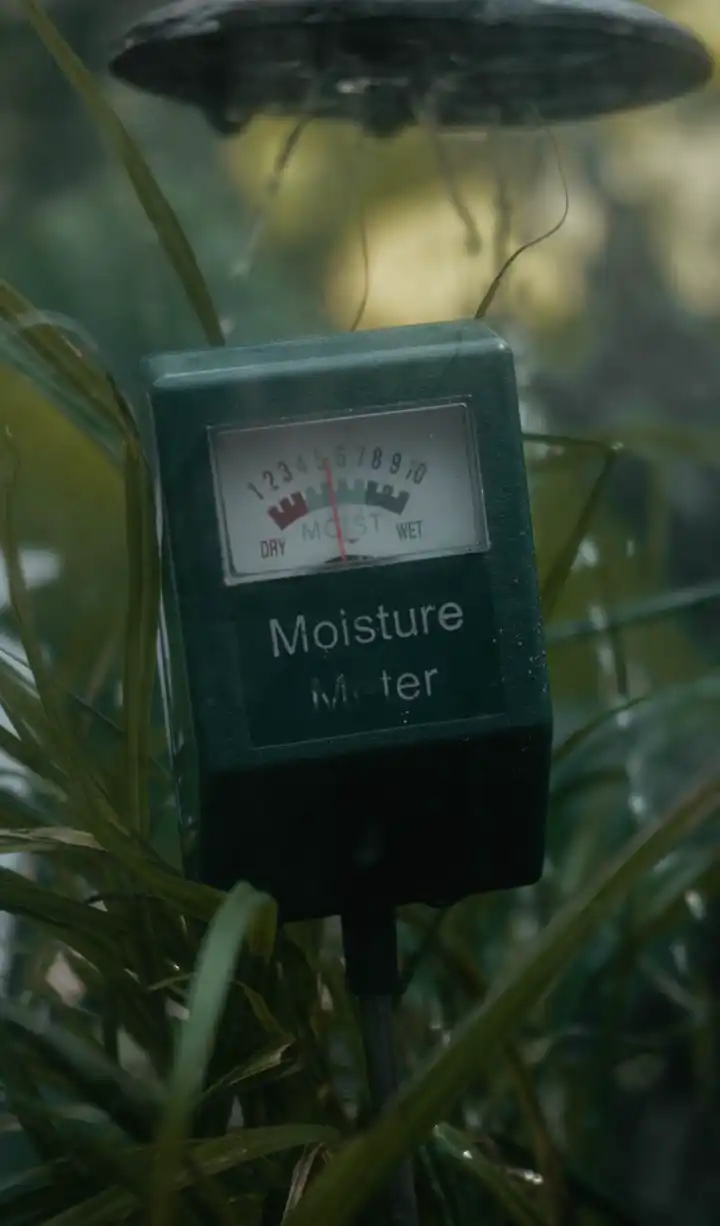
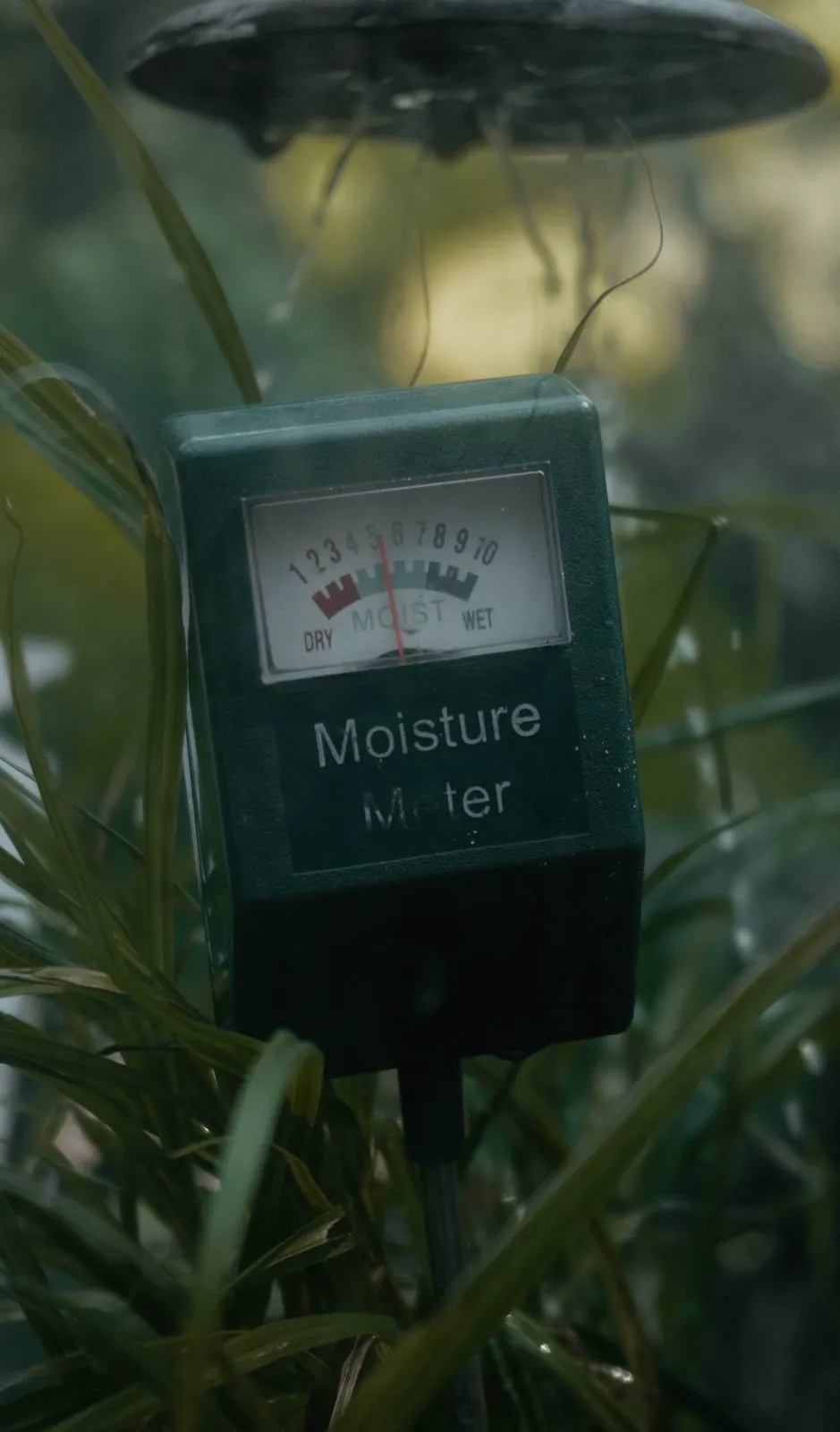
Analogue dial soil moisture meter: This is the most widely sold type for home gardeners. A metal probe goes into the soil and a dial gauge at the top shows a reading on a 1-10 scale. The reading comes from a galvanic circuit — the probe measures soil conductivity, which rises as water content rises.
Analogue meters need no battery. They are the cheapest and easiest to find. So they suit basic checks, such as confirming whether a pot or bed needs water right now.
However, they are affected by soil salt, temperature, and soil type. A salty, fertilised soil reads wetter than it really is. A very dry sandy soil may not complete the circuit, so it reads falsely dry. For everyday home use this is fine. For precision vegetable growing, a digital capacitance meter does better.
Digital capacitance soil moisture meter: This more accurate type measures soil dielectric permittivity. That physical property tracks water content but ignores salt levels. These meters show a percentage or a 0-100 scale.
Digital models need a battery, usually AAA or a coin cell. In return, they give more repeatable readings across different soils. So they suit precision vegetable growing, where moisture directly affects yield and disease.
For example, overwatered tomatoes split, while underwatered chilli peppers drop their flowers. A capacitance reading also helps set a watering timer schedule. Knowing the exact moisture before and after watering sets the right irrigation time. The Bluelab Pulse suits professionals, but Govee and Vivosun offer home options at £15-40.
3-in-1 moisture, light, and pH meter: This combination meter uses one probe and three modes. The moisture reading uses the same galvanic method as an analogue meter. The light reading uses a sensor at the probe tip, and the pH reading gives a rough soil acidity estimate.
3-in-1 meters need no battery and cost only £8-20. So they are the most popular choice for beginners. They are a handy way to learn how to read garden conditions.
The catch is that each function is less precise than a dedicated tool. Even so, a beginner learning to water gets enough accuracy to make better calls. Experienced growers who need precision should use separate meters.
Smart wireless soil moisture sensor: This probe stays in the soil and sends readings to a phone app over Bluetooth or Wi-Fi. The app logs moisture over time and shows how fast the soil dries after watering. That data helps you fine-tune watering for each plant and soil. Some models even link to a smart watering timer for automatic irrigation.
Smart sensors cost £20-60 per probe, with a Bluetooth range of roughly 10-30 m. So they suit containers and raised beds on automated irrigation. They are not essential when you water by hand and check the soil daily. For manual watering, a simple analogue or digital meter is enough.
Analogue vs digital vs 3-in-1: which to choose?
Match the meter type to the precision you need and the way you grow.
Choose an analogue dial meter when the situation is simple — houseplants, mixed flower beds, or vegetable beds with organic compost. Here the goal is just to confirm whether the soil needs water now. At £6-15, an analogue meter is the cheapest solution and needs no battery. For most home gardeners, that is plenty.
Choose a digital capacitance meter when precision matters. Think precision vegetable growing, grow bags with special compost, or setting an automatic irrigation schedule. At £15-40, these meters give percentage readings that stay steady even in heavily fertilised soil. Fertiliser salts inflate analogue readings without adding water, so capacitance measurement is the real advantage.
Choose a 3-in-1 meter when you are a new gardener. The light and pH readings sit alongside moisture and help you diagnose three problems at once — water stress, low light, or the wrong pH. So one 3-in-1 tool covers the three most common checks and saves buying three separate meters.
What to look for when buying
- Probe length matched to growing depth: a 15-20 cm probe suits houseplant pots and shallow containers. For deep vegetable beds with carrots, parsnips, or beetroot, a 30-40 cm probe reaches the root zone. A short probe in a deep bed reads only the top few centimetres, which dries faster than the roots below. That gives a falsely dry reading, so match probe length to planting depth.
- Probe material, stainless steel vs electroplated: stainless steel probes resist corrosion through repeated use in moist soil. Electroplated probes have a thin coating over base metal that corrodes at the tip after 1-2 seasons. Corrosion changes the probe’s electrical behaviour, so readings drift over time. Stainless steel costs a little more but lasts far longer, so check the material on the packaging first.
- Display clarity, dial vs digital: analogue dials need you to read a needle against colour zones. Digital meters simply show a number or percentage. A large backlit digital display is easier in bright sun or for anyone with reduced vision. For most home use in natural light, a clear analogue dial is fine and simpler to read.
- Battery requirement: analogue and most 3-in-1 meters need no battery. Digital capacitance meters need a AAA or coin cell. Smart sensors need a new battery every 4-6 months. So think about how often you will use it — a weekly-use tool does not need the upkeep of a smart sensor.
The 6 best soil moisture meters in 2026
1. Sustee Aquastick — best UK/US houseplant moisture indicator
The Sustee Aquastick is our top pick for houseplant moisture. Sustee (Japan) makes an indicator that turns from white to blue when the soil hits the ideal moisture for most houseplants. The indicator stays in the pot and gives a constant visible status — white means water now, blue means wait.
It needs no battery and no scale to interpret. So it is the simplest monitor for houseplants and the most intuitive for beginners who find numbered scales confusing. Cost: £8-12 per indicator. The limit is that it only shows optimal or not, never an exact level. Pair it with a free-draining potting mix for reliable results.
2. Bluelab Pulse Meter — best UK/US precision digital capacitance meter
The Bluelab Pulse Meter is our top precision pick. Bluelab (New Zealand) makes measuring tools for professional and serious home growers. The Pulse uses a capacitance probe and reads volumetric water content in percent, whatever the salt level. In one insertion it also reads electrical conductivity (EC) and temperature.
That triple reading gives a full picture of the root zone in one step. So it is the most accurate and informative meter here. Cost: £150-200. This is a pro-grade tool for serious vegetable growers, grow-bag cultivators, or anyone running a fertiliser programme where EC matters. For a standard mixed garden, a cheaper meter is enough.
3. XLUX T10 soil moisture meter — best UK/US all-round home garden analogue
The XLUX T10 is our all-round home garden pick. It is a simple, reliable, no-battery analogue meter. It has a 20 cm stainless steel probe and a large dial with clear dry, moist, and wet colour zones. The reading settles within 60 seconds, and it is easy to find in UK garden centres and on Amazon.
The XLUX T10 is the most consistent budget analogue meter across soil types, in both beds and pots. Cost: £10-18. The 20 cm probe suits pots and most outdoor beds, though it will not reach the full root zone of deep beds or root vegetables. So it is the right choice for a home gardener who wants one dependable meter without battery fuss.
4. Dr.meter 3-in-1 soil tester — best UK/US beginner 3-in-1 meter
The Dr.meter 3-in-1 is our starter pick for beginners in the UK and US. It reads soil moisture (1-10), light (0-2000 lux), and pH (3.5-8) from one stainless steel probe. No function needs a battery. The pH estimate is rougher than a dedicated pH meter, but it still guides lime or sulphur decisions.
So it is the most useful entry-level diagnostic tool for building basic soil-reading skills. Cost: £10-18. The moisture and light functions are the most reliable in this price range. The pH reads to about ±0.5-1.0, enough to tell if soil is broadly acid, neutral, or alkaline. Pair it with a dedicated soil test kit for precise pH and nutrients before planting.
5. Govee digital soil moisture sensor — best UK/US smart Bluetooth sensor
The Govee sensor is our pick for tracking moisture over time. Govee (HK) makes a range of smart home sensors. This capacitance probe sends readings over Bluetooth to the Govee Home app on iOS or Android. The app logs each reading and draws a drying curve for every plant.
So it is the cheapest way to see moisture patterns over time. The Bluetooth range is about 10 m and the battery lasts 4-6 months. Cost: £15-25 per sensor. Buy 2-3 to watch several pots or beds at once. It works well with an automated watering timer — the sensor data informs the schedule and the timer runs it.
6. Rapitest dial moisture meter — best US home garden outdoor beds
The Rapitest dial meter is our best pick for US outdoor beds. Rapitest (US) makes soil testing tools for the US retail market. Its 20 cm galvanic probe and large dial with dry, moist, and wet zones are easy to read. It is the most widely stocked budget analogue meter in US garden centres and hardware stores.
So it is also the easiest first meter for a US gardener to actually buy. You will find it at Home Depot, Lowe’s, and garden centres nationwide. Cost: $8-15. The Rapitest and XLUX T10 perform much the same in testing. The real difference is availability — the Rapitest is easier to find in US stores, the XLUX in UK stores, and both are on Amazon. Use it with a soil nutrient test kit for a full soil health picture.
How to use a soil moisture meter
Using a meter well takes only a few good habits. First, push the probe into the root zone, not just the top inch of soil. The surface dries far faster than the roots below, so a shallow poke reads falsely dry.
Next, insert it slowly to avoid bending the probe on stones or compacted ground. Wait 30-60 seconds for the reading to settle before you trust it. Then read the dial or digits, remove the probe, and wipe it clean.
Take readings at two depths on outdoor beds — about 5 cm and 15-20 cm. Learn what “wet, moist, dry” looks like by testing one pot just after watering and again 2-3 days later. Over time you build a feel for each plant. So the meter becomes a check on your judgement, not a replacement for it.
Soil moisture meters in India
Soil moisture meters are widely used across Indian agriculture. The main commercial use is irrigation scheduling in drip-irrigated vegetable farms and orchards. A meter at each drip zone tells the manager whether to irrigate today or wait.
In Indian home, terrace, and kitchen gardens, meters are slowly replacing the finger-check. The finger-check — pressing a finger 2-5 cm into the soil — still works for experienced gardeners. However, a meter gives a steady reading that beginners on a terrace or balcony find easier to trust.
The biggest Indian problem a meter solves is monsoon overwatering. During the monsoon (June-September), terrace and balcony gardens catch heavy rain. Pots that drain poorly then hold standing water at the roots, and root rot follows.
Many gardeners keep watering on a fixed schedule despite the rain. A meter breaks that habit at once, because it shows the soil is already wet and needs no water. This single change prevents the most common cause of container plant death in the monsoon. Pair it with a drip irrigation kit or watering timer to automate the decision.
Meters are easy to buy on Amazon India, Ugaoo, and farm supply stores. XLUX and Dr.meter 3-in-1 models sell at ₹400-900, and the Govee Bluetooth sensor at ₹800-1,500. For field crops, tensiometer-type sensors that measure water tension are sold by Netafim India and Jain Irrigation. For a home terrace or kitchen garden, a standard analogue or 3-in-1 meter is enough and affordable.
Soil moisture meter tips
- Remove the probe after each reading — never leave it in: a metal probe left in moist soil corrodes at the tip. Galvanic analogue probes corrode fastest of all, and even stainless steel degrades faster with constant soil contact. So insert the probe, wait 60 seconds, then remove and wipe it. This one habit adds seasons of life.
- Calibrate readings to each plant’s preference: plants want different moisture levels. Succulents and drought-tolerant herbs like lavender, rosemary, and thyme want a reading of only 2-3. Moisture-loving vegetables such as tomatoes, courgettes, and sweet corn like 4-5. Tropical houseplants like pothos, philodendron, and peace lily prefer 4-6. Note the reading just before each plant shows stress, and you build a plant-by-plant guide.
- Check at different depths outdoors: a bed can read moist at the surface but dry at root depth, especially after light rain. Take one reading at 5 cm and one at 15-20 cm in the same spot. If the surface is moist but the deeper reading is dry, the roots are actually dry. Water until the deeper reading also shows enough moisture.
- Clean the probe between soil types: leftover soil on the probe skews the next reading. Wipe it with a damp cloth after each use and before a new pot or bed. This matters most when moving from a fertilised container to plain garden soil, because fertiliser residue inflates the reading and shows a falsely wet result.
Frequently asked questions
Do soil moisture meters actually work?
Analogue galvanic meters give directional accuracy. They reliably tell dry, moist, and wet soil apart in normal garden conditions. However, salt, temperature, and soil type all affect them. Salty fertilised soil reads too wet, and very dry sandy soil can read falsely dry.
Digital capacitance meters are more accurate. They measure the soil’s dielectric permittivity, which links directly to water content. In controlled tests against laboratory gravimetric measurements, capacitance meters beat analogue meters for accuracy and repeatability. For basic watering, either type works. For precision, choose capacitance.
Why does my soil moisture meter always read dry?
The most common reason is testing too shallow. The top inch of soil dries far faster than the root zone, so a shallow poke reads dry even when roots sit in moist soil. Push the probe deeper and wait 30-60 seconds.
Soil type can also fool it. Very airy mixes like orchid bark, or very dry sand, may not complete the circuit and read dry. A corroded or damaged probe tip does the same, so check the probe if a known-wet pot still reads dry.
What is a good soil moisture reading for plants?
Most garden plants do best in the moist range, about 4-7 on a 10-point analogue scale. Succulents and Mediterranean herbs like lavender, rosemary, sage, and thyme prefer it drier, so water at 2-3. Moisture-loving vegetables such as tomatoes and sweet corn like 4-5.
Houseplants want moist but not waterlogged soil. Most tropical types, like pothos and monstera, are watered when the top 5 cm reads 3-4. Cacti and succulents wait until the whole pot reads 1-2. These are guides only, so note each plant’s reading just before it wilts to find its true trigger.
Are cheap soil moisture meters reliable?
Cheap analogue meters with two bare prongs are reliable for one job: telling wet from dry. Their exact numbers drift with soil type and salt, and the probes corrode over time. So treat their scale as a guide, not a lab reading.
Capacitance meters in the £15-25 range are noticeably more accurate and last longer. For everyday watering, a budget analogue meter is fine. For precision or heavy fertiliser use, spend a little more on capacitance.
How do you use a soil moisture meter correctly?
Push the probe slowly into the root zone, not the surface layer. Wait 30-60 seconds for the reading to settle, then read the dial or display. Remove the probe and wipe it clean after every check.
For outdoor beds, test at two depths so you know the roots, not just the surface. Never leave the probe in the soil between readings, as that corrodes the tip.
Do you need to calibrate a soil moisture meter?
Most consumer meters cannot be recalibrated, so there is no dial to reset. Instead, you calibrate your own expectations. Test a pot just after watering and again 2-3 days later to learn what wet, moist, and dry read for your soil.
Serious growers calibrate lab sensors with the gravimetric method — weighing a soil sample, drying it at about 105°C, and comparing the weights. That is overkill for a home garden meter but explains how professional accuracy is checked.
Can I use a soil moisture meter for hydroponics?
Standard analogue galvanic meters are made for soil. Hydroponic media like rockwool, clay pebbles, and coir conduct electricity very differently, so an analogue meter reads unreliably in them.
Digital capacitance meters can work in hydroponic media if calibrated for the material. The Bluelab Pulse is built for this and is the industry standard for rockwool and coco coir. For a home setup, pair a capacitance moisture meter with a dedicated EC meter for full control.
How deep should I insert a soil moisture meter?
For pots and houseplants, 5-8 cm reaches most of the root ball. For outdoor beds, aim for 10-15 cm, and up to 20 cm for deep-rooted vegetables. Always match the depth to where the roots actually sit.
If your probe is shorter than the root zone, take the reading as low as it reaches and treat it as a surface guide. A longer probe is worth it for deep beds and root crops.
How often should I check soil moisture?
For outdoor beds, check before each watering rather than on a fixed calendar. Drying rate changes with heat, sun, wind, and rain. A hot dry week may need a daily check, while a cool cloudy week may need one every 3-4 days.
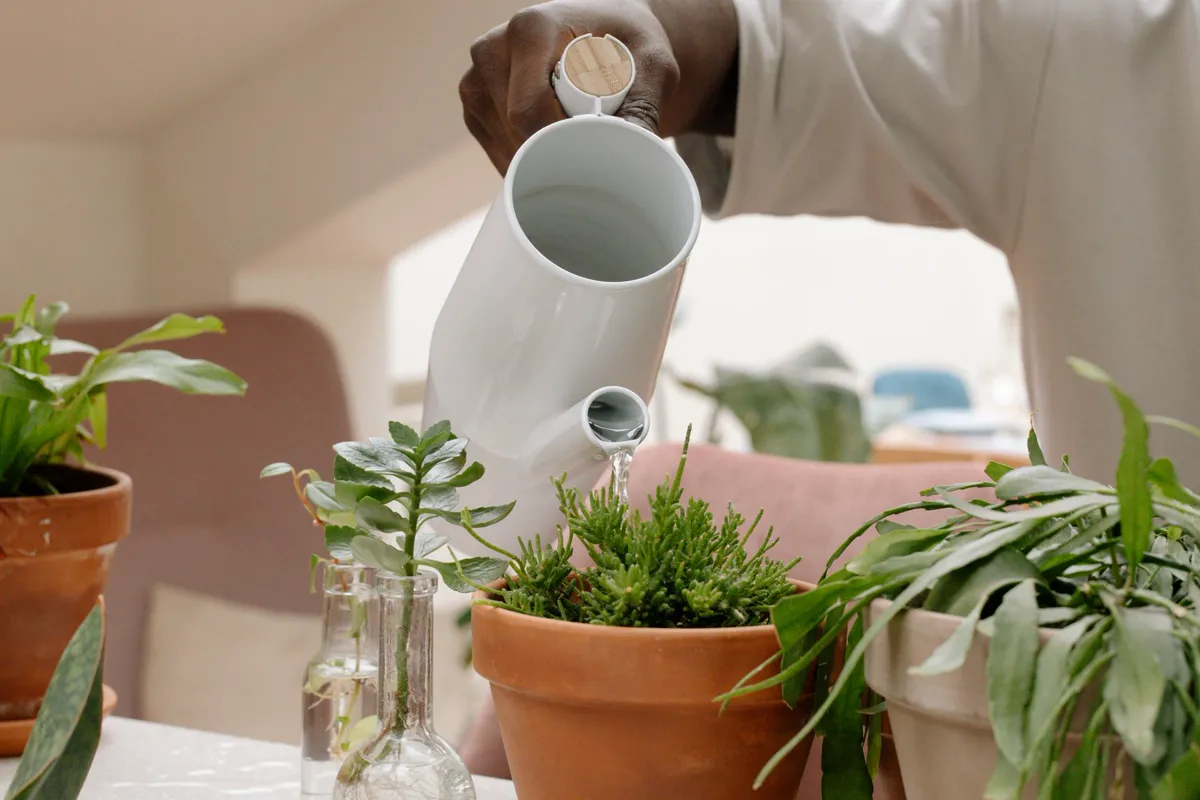
For houseplants, check before every watering too. Most houseplants are overwatered, so a quick check prevents the soggy roots that cause rot. A watering can with a fine rose is the right tool once the meter confirms watering is needed.
Can I leave a soil moisture meter in the soil permanently?
No, not a standard analogue or basic digital probe. Constant contact with moist soil corrodes the tip and ruins the readings within a season or two. Insert, read, then remove and wipe it clean.
Only smart wireless sensors are designed to stay in the soil, because their probes and housing resist corrosion. If you want a permanent in-soil reading, choose a purpose-built smart sensor instead of leaving a handheld meter in place.
Does fertiliser affect soil moisture meter readings?
Yes, on analogue and galvanic meters. Fertiliser salts and hard water raise soil conductivity, so the meter reads wetter than the soil truly is. Newly fed pots can show a false high reading for a while.
Digital capacitance meters largely avoid this, since they measure a property tied to water rather than salt. So in heavily fertilised beds or grow bags, a capacitance meter gives a truer result.
Is a soil moisture meter better than the finger test?
Both have a place. The finger test is free and, for experienced gardeners, surprisingly reliable at 2-5 cm depth. A meter, though, reaches deeper and gives a consistent number that beginners can trust.
For most gardeners the best approach is to use both. Let the meter guide you at first, and keep checking by finger so you learn your soil directly.
Sources and further reading
Still stuck? Ask the Plant Doctor
Describe the problem — yellow leaves, holes, no flowers — and get a clear answer in seconds. FreeAI can make mistakes. Answers are guidance, not a guarantee — check anything important against the guide it links to, and always read the label on any product before you use it.