Best Potting Mix for Houseplants (& a Simple DIY Recipe)

The best potting mix for houseplants is light, free-draining, and airy — never heavy garden soil — usually a blend of a peat-free base with perlite, bark, and a little compost. The right mix is the foundation of a healthy houseplant, holding enough moisture and nutrients while letting roots breathe and excess water drain away. This guide explains the best potting mix for houseplants and how to make your own.
Quick answer: Use a quality peat-free houseplant or multipurpose compost, lightened with about a third perlite or bark for drainage. Never use garden soil, which compacts. Adjust by plant: extra grit for succulents and cacti, extra bark for orchids and aroids, and a richer, moisture-holding mix for thirsty leafy plants.
🧰 In a hurry? Jump straight to our tested picks for this guide ↓
Houseplant potting mix at a glance
| Plant type | Best mix |
|---|---|
| General foliage plants | Peat-free compost + ~30% perlite/bark |
| Succulents & cacti | Compost + lots of grit/sand (fast-draining) |
| Orchids | Bark-based orchid mix (very chunky) |
| Aroids (monstera, pothos) | Compost + bark + perlite (chunky, airy) |
| Ferns & calatheas | Rich, moisture-holding mix + perlite |
| Seedlings/cuttings | Light, low-nutrient seed/cutting mix |
Why the right potting mix matters
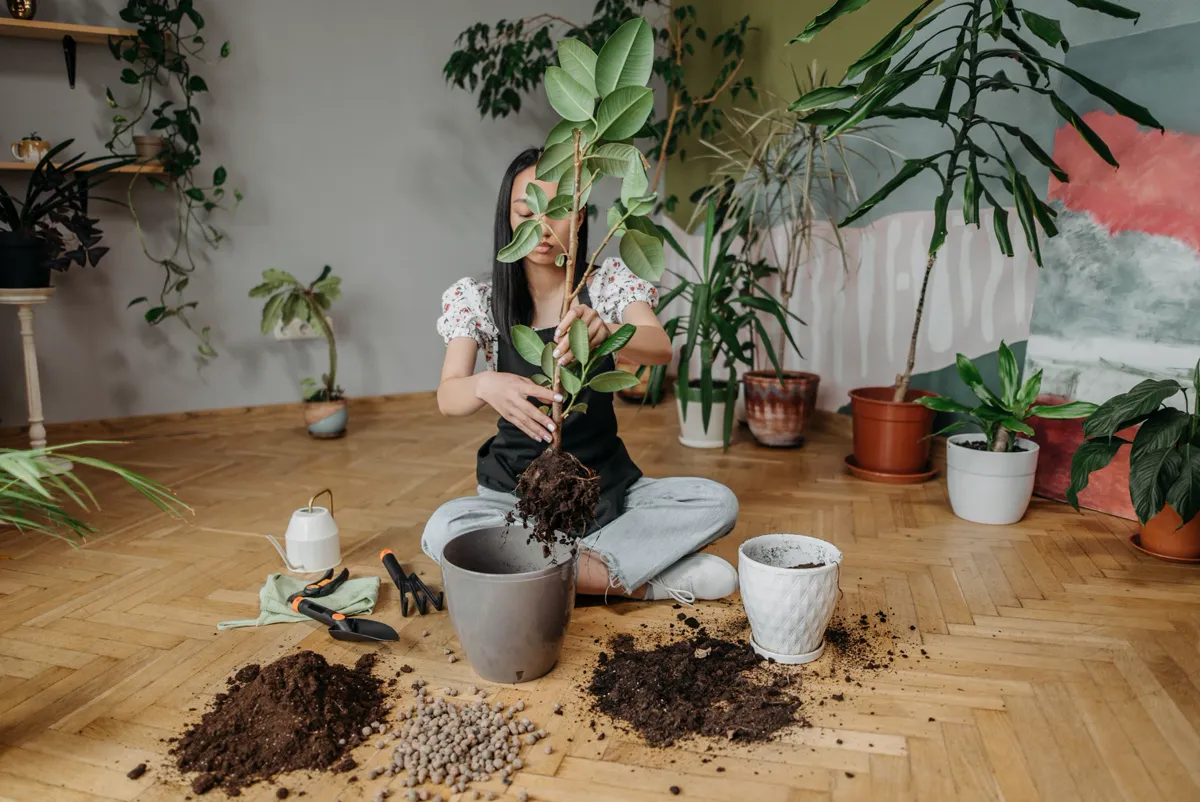
A houseplant lives entirely in its pot, so the mix around its roots is everything. Get it right and the plant thrives; get it wrong and even careful watering cannot save it.
A good mix balances three things: it holds enough moisture and nutrients, yet drains freely and stays airy so roots can breathe. The wrong mix, especially heavy soil, stays soggy, starves roots of air, and leads to the rot that kills more houseplants than anything else.
What makes a good potting mix?
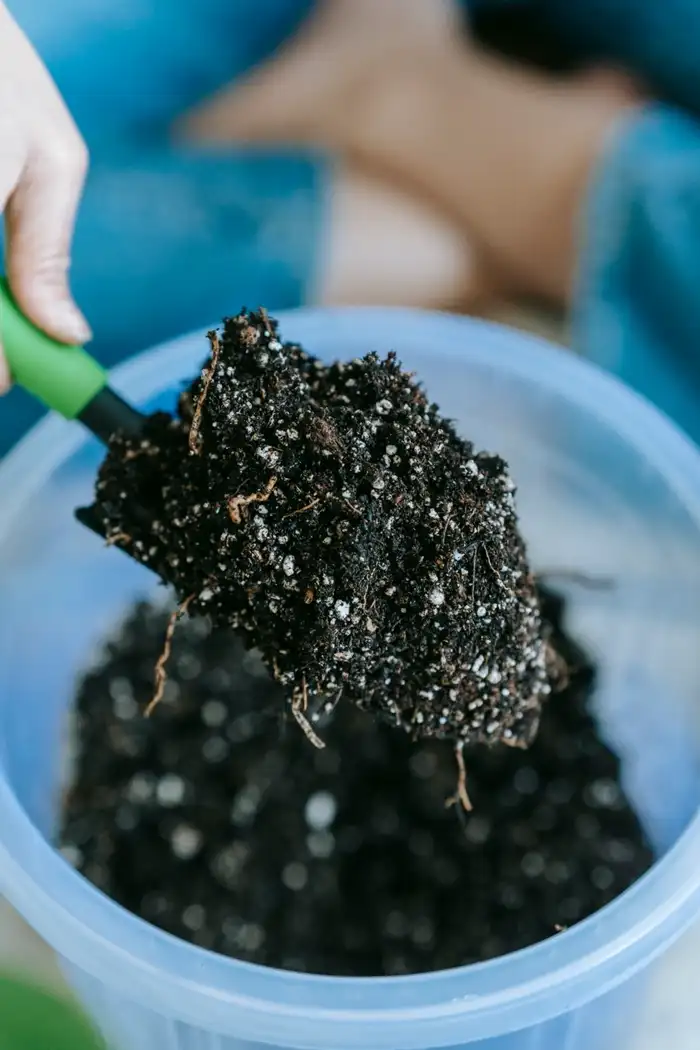
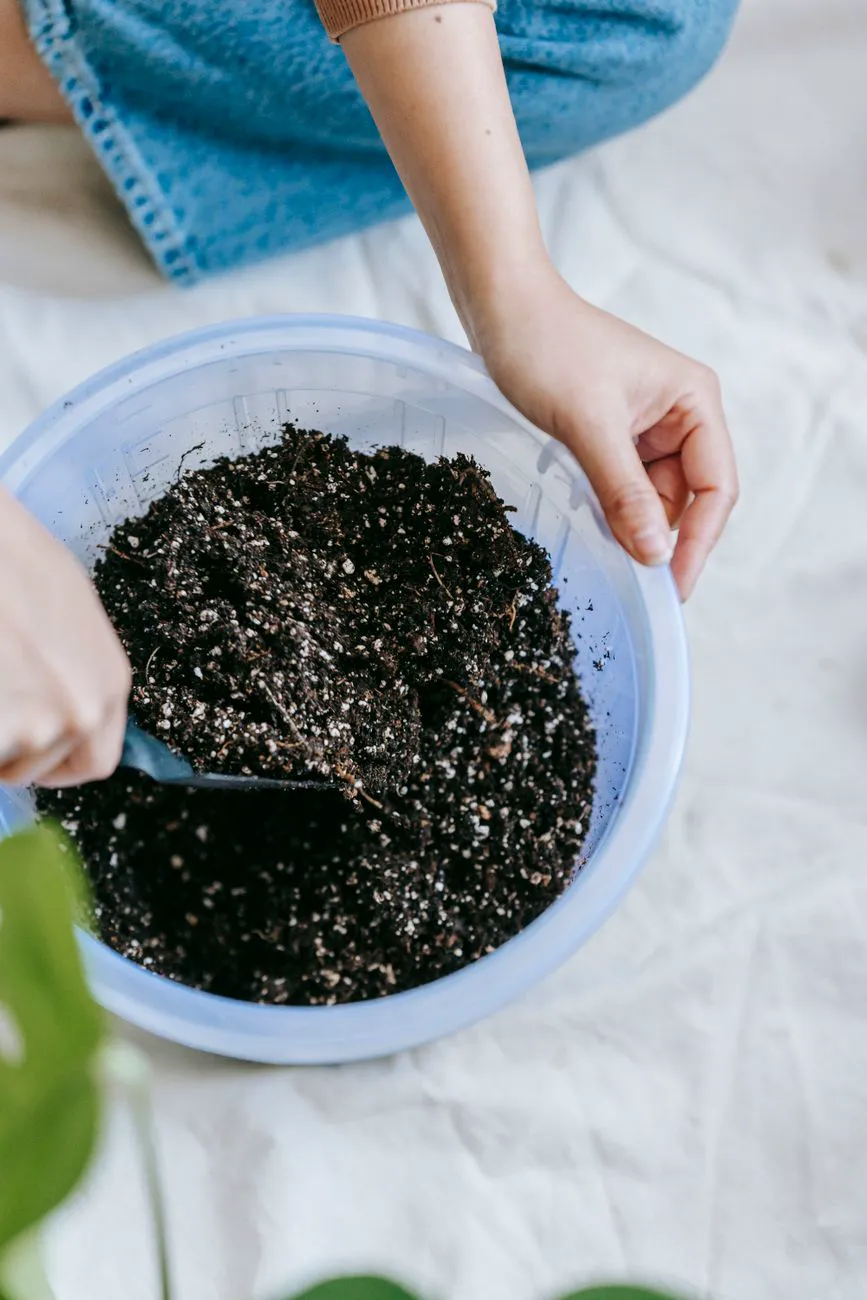
A good houseplant mix is light and open, not dense and muddy. It should feel fluffy in the hand and drain quickly when watered.
The base is usually a peat-free compost or coir, which holds moisture and some nutrients. To this you add drainage and air: perlite (light white granules), bark (chunky air pockets), or grit/coarse sand for heavier drainage. A little worm compost adds gentle, long-lasting nutrients. The exact blend depends on the plant.
Why not use garden soil?
It is tempting to dig up garden soil for free, but it is a poor choice indoors. Garden soil is heavy and behaves very differently in a pot.
In a container it compacts into a dense block, holding too much water and squeezing out air, which rots roots. It can also carry pests, weed seeds, and diseases into the home. Always use a proper potting mix instead, which is blended to stay light and drain well in the confined space of a pot.
A simple DIY potting mix recipe
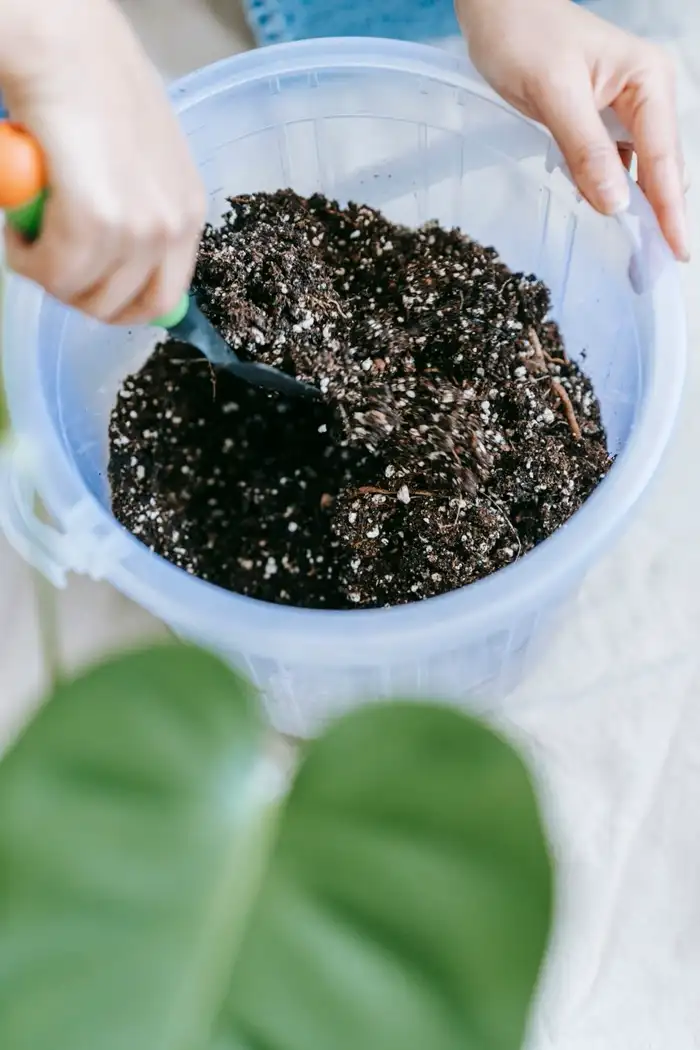
Making your own mix is cheap, easy, and lets you tailor it to your plants. A good all-round recipe suits most foliage houseplants.
- 2 parts peat-free multipurpose or houseplant compost (the base).
- 1 part perlite or fine bark (for drainage and air).
- A handful of worm compost or slow-release feed (for gentle nutrition).
- Mix well; add more perlite for chunkier, faster-draining needs.
Matching the mix to the plant
Different houseplants want different blends, and tweaking the recipe makes a big difference. Think about where each plant grows in the wild.
Succulents and cacti want a gritty, fast-draining mix with extra sand or grit (see succulent care). Orchids and aroids like chunky, bark-rich mixes full of air, since many grow on trees. Ferns and calatheas prefer a richer, more moisture-holding mix. Matching the mix to the plant prevents both rot and drought.
When to repot and refresh the mix
Potting mix does not last forever. Over a year or two it breaks down, compacts, and loses nutrients, so refreshing it keeps plants healthy.
Repot most houseplants every one to two years, in spring, into fresh mix and a slightly larger pot if the roots are crowded (see repotting and propagating). Even if you do not move up a pot size, replacing the old, tired mix with fresh gives plants a real boost. Signs it is time include water running straight through, roots circling the pot, or slow, pale growth.
Potting mix in India & warm climates
In warm climates like much of India, the same principles apply, with a few local notes. Coir (coco-peat) is widely available and makes an excellent, sustainable base for homemade mixes.
A typical Indian houseplant mix blends coco-peat with compost and plenty of perlite, sand, or rice husk for drainage, which matters even more in humid heat. Avoid heavy local garden soil, and add extra drainage material in the monsoon season, when over-wet mixes rot roots fast. Let any garden-sourced compost mature well before using it indoors.
Why the right mix is worth it
The potting mix is the single most overlooked factor in houseplant success. People fuss over watering and light, yet pot their plants in heavy, soggy soil that dooms them from the start.
Get the mix right, light, airy, free-draining, and matched to the plant, and everything else becomes easier, because the roots stay healthy and rot is far less likely. Whether you buy a quality peat-free compost and add perlite, or mix your own, a good potting mix is the foundation every thriving houseplant is built on.
Understanding the ingredients
It helps to know what each part of a potting mix actually does. Then you can tweak any recipe with confidence.
The base (peat-free compost or coir) holds moisture and some nutrients and gives the roots something to grip. Perlite is light volcanic glass that creates air pockets and drainage without holding water. Bark adds chunky structure and air, perfect for plants that like their roots to breathe. Grit or coarse sand adds weight and fast drainage for succulents. A little worm compost or slow-release feed supplies gentle nutrition. Knowing these roles lets you build the perfect mix for any plant.
Signs your potting mix is wrong
Plants soon tell you when the mix is not right. Reading the signs helps you fix it before the plant suffers.
If water sits on top or the soil stays wet for days, the mix is too heavy and needs more perlite or bark. If it dries out within a day or two and water runs straight through, it is too open or the plant is pot-bound and needs repotting. A sour smell or fungus gnats hint at soil that stays too wet. Yellowing, drooping, or stalled growth often trace back to a mix that is suffocating the roots, so refreshing it can transform a struggling plant.
Repotting into fresh mix
Moving a plant into fresh mix is one of the best things you can do for it. The job is simple and best done in spring.
Ease the plant out, gently tease away some of the old, tired soil from the roots, and settle it into fresh mix in a clean pot only slightly larger. Firm gently, water in, and keep it out of harsh sun for a week while it recovers. Do not jump to a huge pot, as too much wet soil around small roots invites rot. Done every year or two, repotting keeps houseplants growing strongly.
Sources and further reading
Frequently asked questions
What is the best potting mix for houseplants?
A light, free-draining blend of peat-free compost with about a third perlite or bark suits most foliage houseplants.
Can I use garden soil for houseplants?
No — it compacts in pots, holds too much water, and can carry pests and disease. Always use a proper potting mix.
How do I make my own potting mix?
Mix 2 parts peat-free compost, 1 part perlite or bark, and a handful of worm compost. Add more grit for succulents.
How often should I change houseplant potting mix?
Refresh it every one to two years when you repot, or sooner if water runs straight through and growth slows.
What potting mix is best in India?
A blend of coco-peat with compost and plenty of perlite, sand, or rice husk for drainage works very well in the warm climate.
Is multipurpose compost OK for houseplants?
Yes, as a base — but lighten it with about a third perlite or bark for the drainage and air that houseplants need.
Do houseplants need special potting mix?
A good free-draining houseplant or peat-free mix works for most; succulents, orchids, and aroids do best with their own tailored blends.
What is the difference between potting soil and potting mix?
Despite the name, most bagged “potting soil” contains no real soil at all; both terms usually describe the same soilless blend of peat-free compost, bark, and perlite. True garden soil is heavier, compacts in a container, and is unsuitable for pots.
Is perlite or vermiculite better for houseplants?
Perlite is better for most foliage houseplants because it opens up the mix and improves drainage and airflow around the roots. Vermiculite holds more water, so it suits moisture-loving plants like ferns or seed-starting mixes rather than drought-tolerant types.
What potting mix is best for succulents and cacti?
Use a gritty, fast-draining blend of about half mineral material, such as coarse sand, perlite, or pumice, mixed with a peat-free compost base. Standard houseplant mix holds too much water and encourages root rot in succulents.
Can I reuse old potting mix?
Only after refreshing it, since spent mix loses structure and nutrients and can harbour pests or fungal spores. Mix it half-and-half with fresh compost and perlite, or sterilise it by baking, rather than reusing it straight.
See also: why your monstera leaves are turning yellow.
Still stuck? Ask the Plant Doctor
Describe the problem — yellow leaves, holes, no flowers — and get a clear answer in seconds. FreeAI can make mistakes. Answers are guidance, not a guarantee — check anything important against the guide it links to, and always read the label on any product before you use it.