Tellima Fringe Cups Seeds
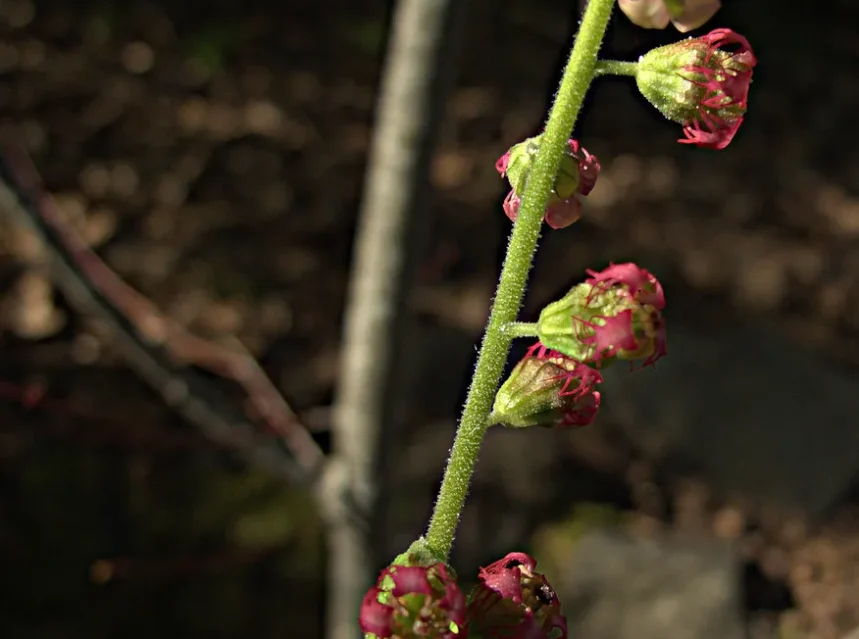
Tellima fringe cups seeds grow into one of the toughest and prettiest plants for shade. Plant tellima fringe cups seeds and you get Tellima grandiflora, a woodland perennial with arching spikes of small, fringed, cup-shaped flowers. It also forms neat mounds of heuchera-like leaves. This guide covers sowing, care and honest notes worldwide.
This article is for ornamental gardening only. It makes no medicinal, herbal, or edible claims of any kind. Any traditional uses are noted purely as history, not advice.
🧰 In a hurry? Jump straight to our tested picks for this guide ↓
Quick start
- Plant type: hardy herbaceous shade perennial.
- Family: Saxifragaceae (saxifrage family).
- Height: 45–60 cm in flower.
- Bloom time: late spring to early summer.
- Flower colour: greenish-cream, ageing to pink-red.
- Flower shape: small fringed cups on tall spikes.
- Light: part to full shade.
- Soil: humus-rich, moist; tolerates dry shade.
- Foliage: rounded, scalloped, semi-evergreen.
- Seed tip: surface-sow; needs light to germinate.
Authority sources: Wikipedia — Tellima grandiflora, RHS.
Tellima fringe cups seeds at a glance
| Feature | Detail |
|---|---|
| Botanical name | Tellima grandiflora |
| Family | Saxifragaceae (saxifrage family) |
| Common names | Fringe cups, fringecups |
| Native range | Western North America (Alaska to California) |
| Life cycle | Hardy herbaceous perennial |
| Mature size | 45–60 cm in flower |
| Flower season | Late spring to early summer |
| Flower colour | Greenish-cream, ageing to pink-red |
| Light | Part to full shade |
| Germination | Surface-sow; 1–3 months |
| Hardiness | Very hardy temperate perennial |
Why grow fringe cups?
Fringe cups is a problem-solver. It thrives where many plants fail.
First, it loves shade. So it brings flowers to dark, tricky corners under trees. Few perennials cope so well with dry shade.
Second, it is tough and easy. It is not fussy about soil or water once settled. It even self-seeds gently to fill gaps.
The fringe cups name story
The name is a perfect description of the flower. It rewards a close look.
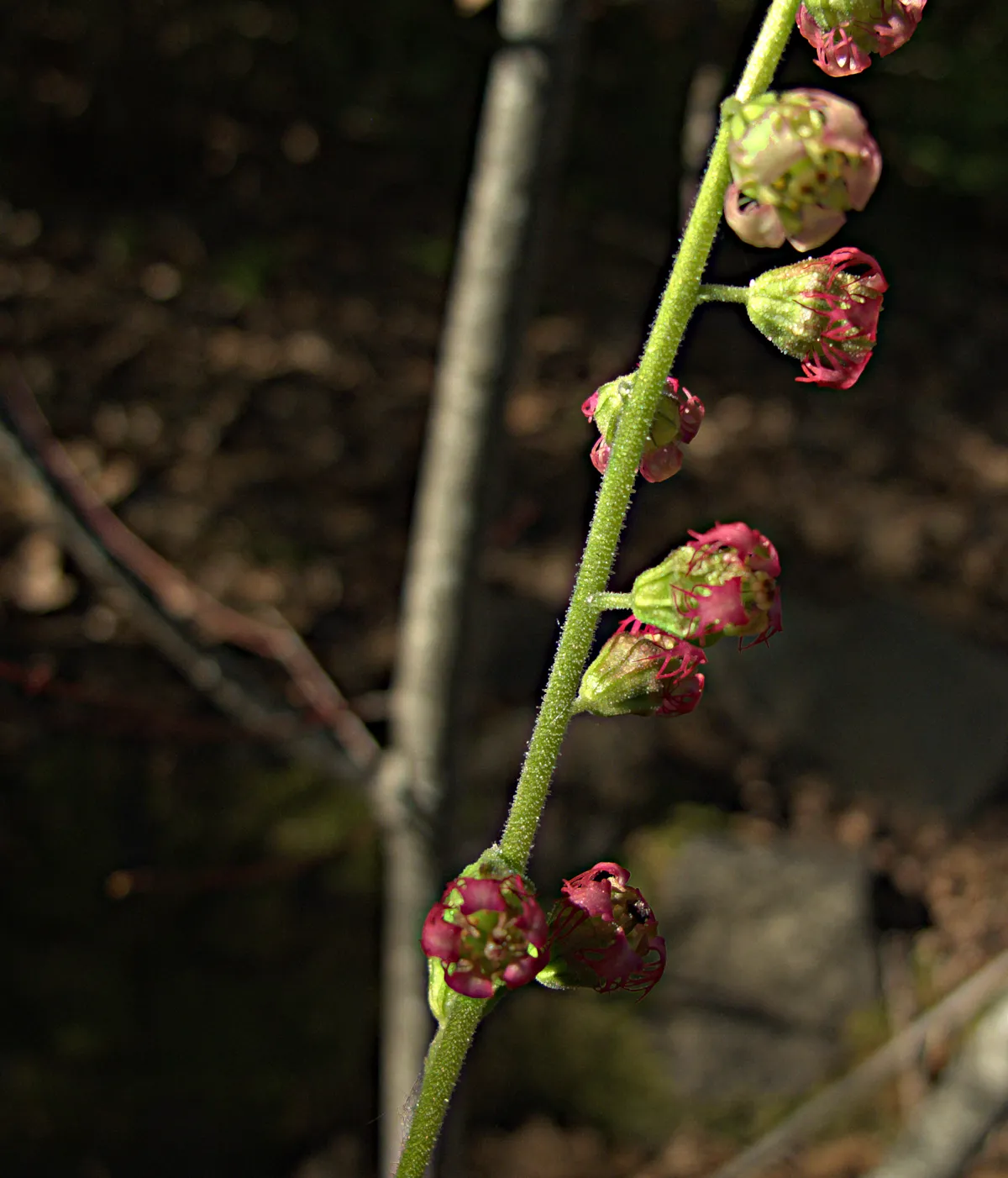
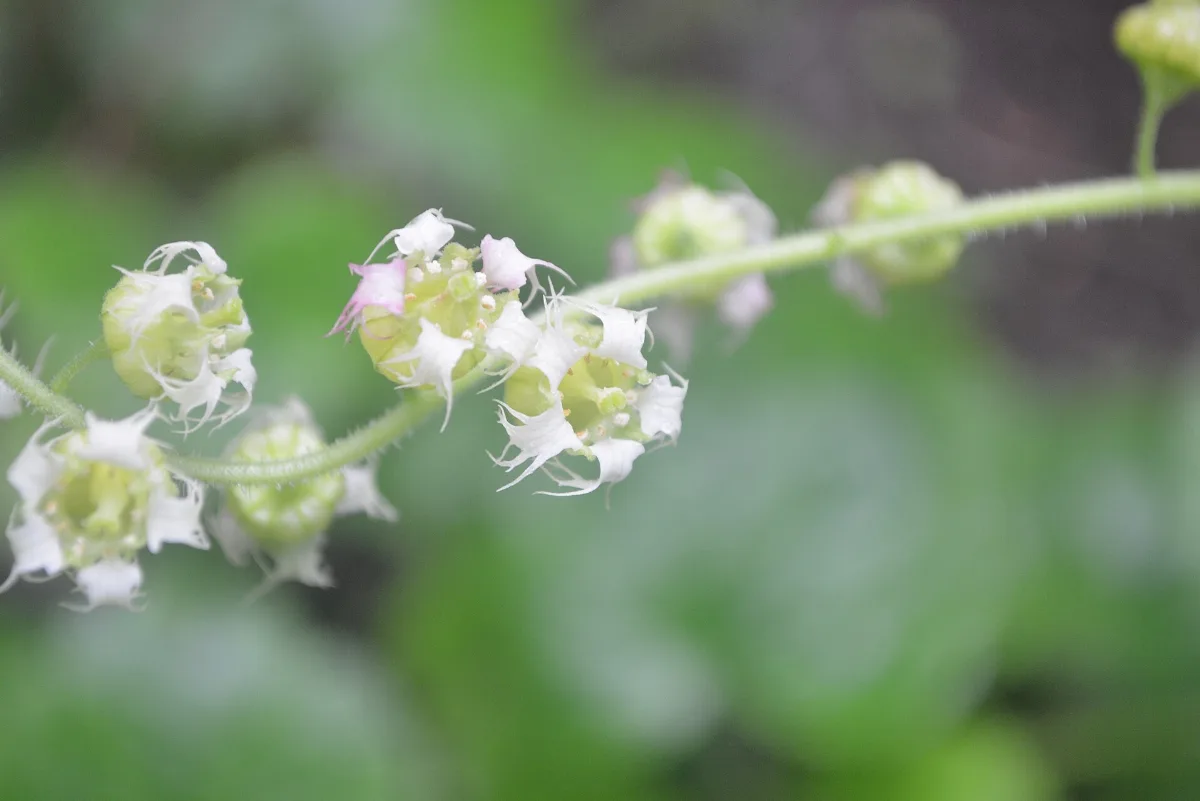
Each tiny flower is a small green cup. The five petals are cut into delicate fringes, like a fringed lampshade. So the plant became known as “fringe cups”.
The botanical name is Tellima grandiflora. The species name grandiflora simply means “large-flowered”. We share the name purely as background, and this guide makes no health claims.
The fringed flowers: a charming close-up detail
This is the plant’s signature feature. The flowers are subtle but special.
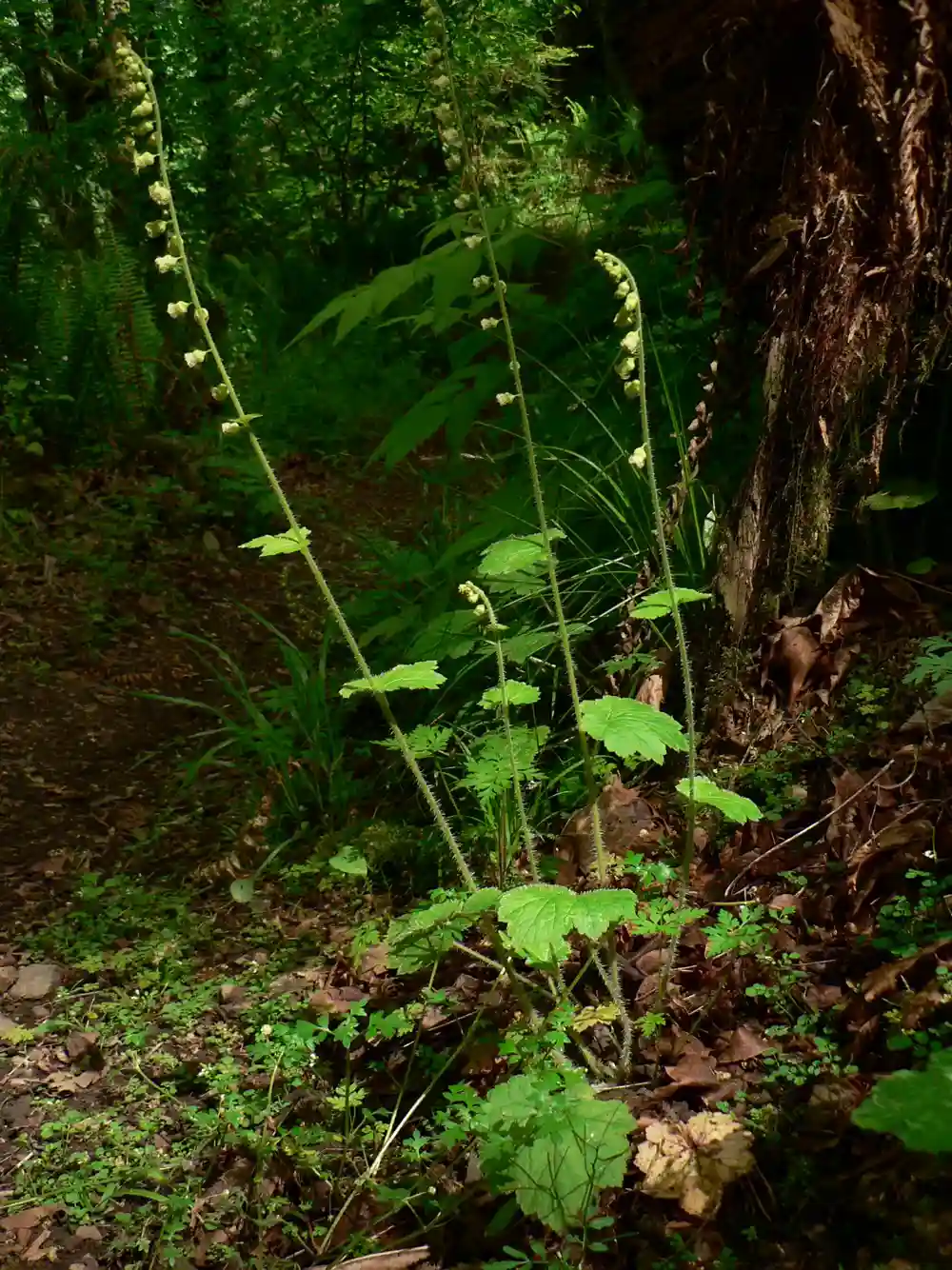
Slender spikes rise above the leaf mound. Along each spike sit many small, cup-shaped flowers. They open greenish-cream, then age to soft pink and red.
Look closely and each petal is finely fringed. This delicate detail is rare among garden plants. The tall spikes also make lovely, long-lasting cut flowers.
Dry-shade toughness: a real problem-solver
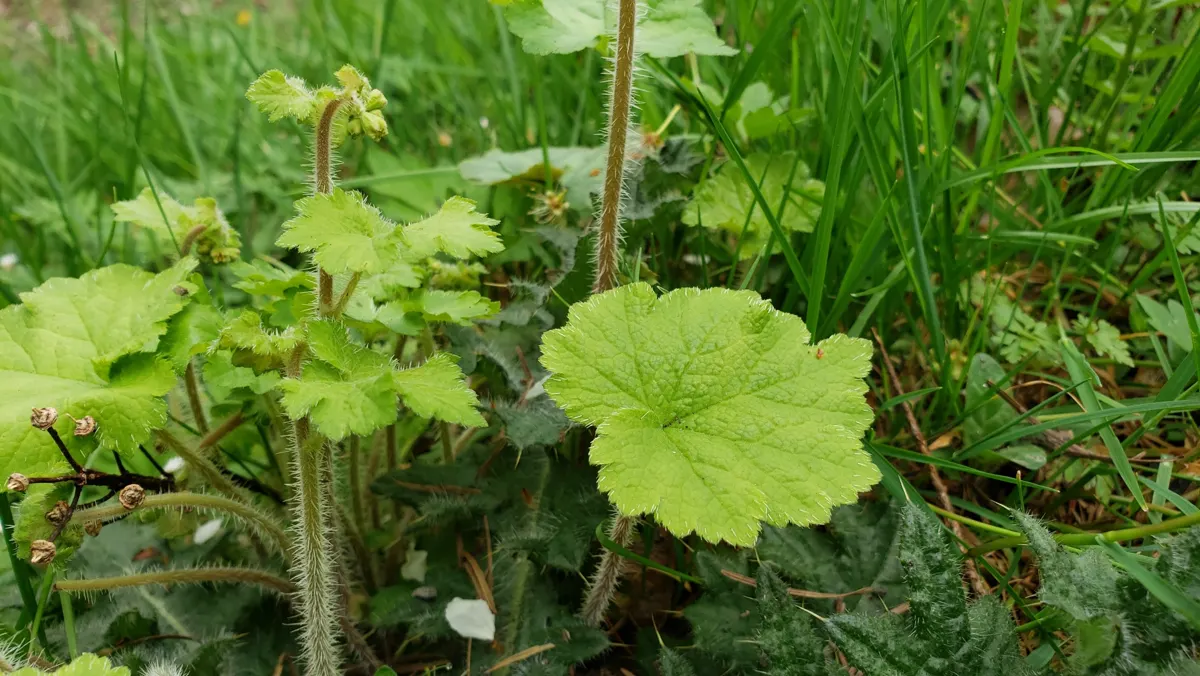
Here is the practical selling point. Dry shade is one of gardening’s hardest spots.
Fringe cups handles it well. It prefers moist, humus-rich soil, but it tolerates drier shade once established. It is also reported to be deer-resistant.
That makes it ideal for the dry ground under trees and large shrubs. There, it spreads into a soft, weed-smothering carpet. For another shade-tough plant, see our aquilegia columbine seeds.
A heuchera relative for shade tapestries
Fringe cups belongs to the saxifrage family. So it has some famous cousins.
Its rounded, scalloped leaves look much like heuchera (coral bells). It also pairs beautifully with foamflower and their hybrid, ×Heucherella. Together they build a rich foliage tapestry.
Use fringe cups to weave these shade plants into one scheme. Its airy flower spikes add height above the lower mounds. The effect is soft, natural and very easy to keep.
Best season and when to sow
Autumn or spring both work for sowing. The seed likes cool conditions.
- Autumn sowing: sow fresh seed and let it sit cool over winter.
- Spring sowing: sow in pots in early spring in a cool, bright spot.
Fringe cups is a hardy perennial. Plants often flower in their second year. After that they bloom every late spring and summer.
Germination: the seed-starting secret
The big secret is light. The seed is tiny and needs light to sprout.
Surface-sow the seed and do not bury it. Press it gently onto moist compost. Keep the mix damp but never waterlogged.
Cool temperatures suit it best. Germination takes one to three months, so be patient. Once up, the seedlings grow steadily and transplant well.
How to plant fringe cups step by step
- Surface-sow seed in autumn or early spring.
- Do not cover the seed, as it needs light.
- Keep the compost moist and cool.
- Wait one to three months for germination.
- Prick out seedlings into small pots.
- Grow on in a shaded, sheltered spot.
- Plant out into part or full shade.
- Mulch with leaf-mould and keep moist while settling.
Sun, soil, watering and feeding
Give fringe cups part to full shade. In cool climates it also takes some sun, as long as the soil stays moist.
Soil should be humus-rich and moisture-retentive. That said, the plant is adaptable. It tolerates drier shade once its roots are established.
Water during dry spells while plants settle in. Feeding is barely needed. A yearly mulch of leaf-mould keeps it happy and healthy.
Common pests and diseases
Fringe cups is a healthy, trouble-free plant. Problems are rare and easy to fix.
Slugs and snails may nibble young leaves in spring. In pots, vine weevil can attack the roots, as it does with heuchera. Check container plants and act early to fix any infestation.
Rust or leaf-spot can appear if plants are crowded. Good airflow and tidy spacing prevent it. Overall this is one of the easiest shade perennials you can grow.
Common problems and quick fixes
- Leaves scorched: too much hot sun. Move to deeper shade.
- Few flowers: very deep, dry shade. Add moisture and leaf-mould.
- Seed will not sprout: seed was buried. Surface-sow next time.
- Spreading too much: it self-seeds. Deadhead to control it.
- No flowers in year one: normal. It blooms from year two.
Fringe cups vs heuchera and other relatives
Several saxifrage-family plants look similar. Here is how to tell them apart.
| Plant | Botanical name | How to tell it apart |
|---|---|---|
| Fringe cups | Tellima grandiflora | Tall spikes of fringed green cups, dry-shade tough |
| Coral bells | Heuchera | Showy coloured leaves, airy tiny flowers |
| Foamflower | Tiarella | Feathery white spikes, often lobed leaves |
| Foamy bells | ×Heucherella | Hybrid of the two above |
| Piggyback plant | Tolmiea menziesii | Plantlets grow on the leaves |
| Mitrewort | Mitella | Smaller, similar family, tiny flowers |
Design ideas for tellima fringe cups seeds
This shade-lover suits woodland and cottage schemes. A few proven uses:
- Woodland gardens: a natural fit under trees and shrubs.
- Dry-shade ground-cover: fills tough, dark spots.
- Cottage edging: soft mounds along shady paths.
- Foliage tapestry: lovely with ferns, hostas and heuchera.
- Cut flowers: the tall spikes last well in a vase.
- Shade pots: neat in containers in a sheltered, dark corner.
Buy tellima fringe cups seeds
Growing fringe cups in India: an honest take
Let us be honest about this plant. Fringe cups is a cool temperate woodlander from the Pacific Northwest.
The hot, dry Indian plains are not its world. It needs cool air, shade and steady moisture. So it is not a plant for most of the country.
Cool, shaded hill gardens are the realistic home. Think Himachal, Uttarakhand, Kashmir, Sikkim, Darjeeling and the Nilgiris, where summers stay mild. Grow it in dappled shade in humus-rich, moist soil. On wildlife, expect bees and other insects. There are no hummingbirds here, as they live only in the Americas. For a tougher Indian shade option, try our aster seeds in a part-shaded spot.
Companion plants and related guides
Fringe cups pairs well with other shade, woodland and cottage-garden plants. Explore these guides to build a layered shady border:
- Aquilegia columbine seeds — airy woodland-edge flower
- Foxglove seeds — classic tall shade bloomer
- Forget-me-not seeds — soft blue shade carpet
- Anchusa seeds — bright blue companion
- Nemophila seeds — gentle shade annual
- Nicotiana seeds — evening-scented shade flower
- Honesty seeds — woodland biennial
- Penstemon seeds — cottage-border partner
- Pansy seeds — cheerful shade edging
- Dianthus seeds — neat front-of-border flower
- Verbena seeds — airy pollinator partner
- Aster seeds — late-season colour
Frequently asked questions
Why is it called fringe cups?
The name describes the flower exactly. Each small flower forms a tiny green cup, and its five petals are cut into delicate fringes. That fringed-cup shape gives the plant its name. The botanical name, Tellima grandiflora, simply means “large-flowered”. We share the name only as background, with no other claims.
Is fringe cups good for dry shade?
Yes, it is one of the better choices. It prefers moist, humus-rich soil, but it tolerates drier shade once its roots are established. That makes it useful under trees and large shrubs, where little else grows. It also forms a weed-smothering carpet and is reported to be deer-resistant.
How do I grow fringe cups from seed?
The seed is tiny and needs light, so surface-sow it and do not bury it. Press it gently onto moist compost and keep it cool and damp. Germination takes one to three months, so be patient. Sow in autumn or early spring, and expect flowers from the second year.
Does fringe cups need cold stratification to germinate?
Yes, cold helps. Fringe cups seed germinates best after about 30 days of cold, moist stratification. Sow fresh seed in containers as soon as it ripens, then leave the pots in a cold frame or an unheated spot over winter. Without that chill, seed can still sprout, but germination is slower and less even.
Does fringe cups self-seed heavily, and is it a problem?
It self-seeds readily once established, spreading gently by both rhizomes and dropped seed. Most gardeners see this as a bonus, since it fills gaps under trees without any effort. If it spreads further than you want, simply pull unwanted seedlings in spring or deadhead the spikes before the seed ripens.
Is fringe cups deer resistant?
Yes, fringe cups is considered deer and rabbit resistant, which is one reason it works so well under trees where browsing pressure is high. Slugs and snails are the real threat, especially to young spring growth, so watch for them instead. In pots, check for vine weevil grubs in the roots too.
Is fringe cups foliage evergreen in winter?
It is semi-evergreen. In mild climates the scalloped leaf mounds stay green through winter and give year-round ground cover. In colder gardens, hard frost can knock the foliage back, but the crown survives and sends up fresh leaves as soon as the weather warms in spring.
What eats fringe cups seedlings or new growth?
Slugs and snails are the main culprits, chewing tender young leaves in spring when growth is soft. Vine weevil grubs can also damage roots of container-grown plants, mirroring the damage they cause to heuchera. Deer and rabbits generally leave the mature foliage alone, which is part of its appeal.
How often should fringe cups clumps be divided?
Divide congested clumps every three to four years, in early spring or immediately after flowering. Lift the plant, pull the crown into smaller rooted sections, and replant them at the same depth in refreshed, humus-rich soil. Regular division keeps the ground cover vigorous and stops the centre of the clump thinning out.
Can fringe cups be grown in containers?
Yes, it grows well in a shaded pot as long as the compost stays reliably moist. Use a peat-free, humus-rich mix, and choose a container with good drainage so the roots never sit in stagnant water. Feed lightly in spring and repot every couple of years as the clump fills the pot.
Can I grow fringe cups in India?
Only in the right place. It is a cool temperate woodland plant that needs shade and steady moisture. The hot plains are unsuitable, but cool hill gardens in Himachal, Uttarakhand, Kashmir, Sikkim and the Nilgiris can work. Grow it in dappled shade. Expect bees and other insects, not hummingbirds, which live only in the Americas.
Still stuck? Ask the Plant Doctor
Describe the problem — yellow leaves, holes, no flowers — and get a clear answer in seconds. FreeAI can make mistakes. Answers are guidance, not a guarantee — check anything important against the guide it links to, and always read the label on any product before you use it.