How to Grow Abelia
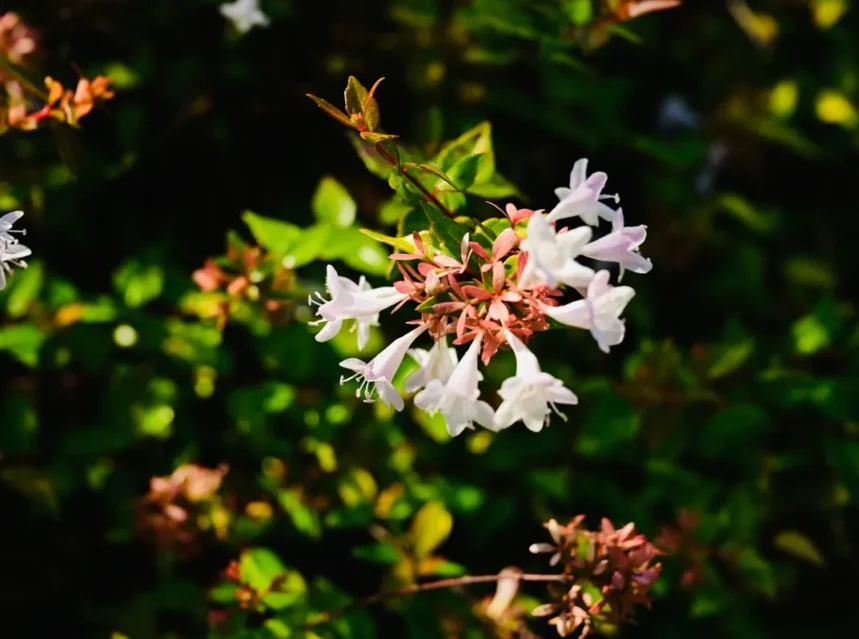
Abelia is an easy, graceful semi-evergreen shrub grown for its long succession of small, fragrant, bell-shaped flowers from summer to autumn, set against glossy leaves on arching stems — a tough, pollinator-friendly shrub that flowers for months with little care. Many forms also have colourful, variegated, or bronze-tinted foliage. Here is the complete guide on how to grow abelia.
Quick start: Grow abelia in full sun to light shade in moist, free-draining soil. Plant in spring or autumn and water until established. It flowers on new growth, so prune lightly in early spring. Abelia is hardy in mild areas, drought-tolerant once settled, and a magnet for bees and butterflies through late summer.
Experienced growers and the Royal Horticultural Society rate abelia as a long-flowering, fuss-free shrub, with a couple of useful notes. The first is its remarkable flowering season, which runs from summer well into autumn, far longer than most shrubs. The second is pruning, since it flowers on new growth, so gardeners trim it in early spring to shape it without losing blooms. Most also value the persistent pinkish sepals that stay on after the flowers fade, extending the colour, and how reliably bees and butterflies visit it.
🧰 In a hurry? Jump straight to our tested picks for this guide ↓
Abelia at a glance
| Feature | Detail |
|---|---|
| Botanical name | Abelia (family Caprifoliaceae) |
| Plant type | Semi-evergreen shrub |
| Height/spread | About 1–2.5 m, arching |
| Sun | Full sun to light shade |
| Soil | Moist, fertile, free-draining |
| Bloom time | Summer to autumn |
| Best for | Long flowering, pollinators, borders, hedges |
| Watch out | Can be frost-tender in cold inland gardens |
Why grow abelia?
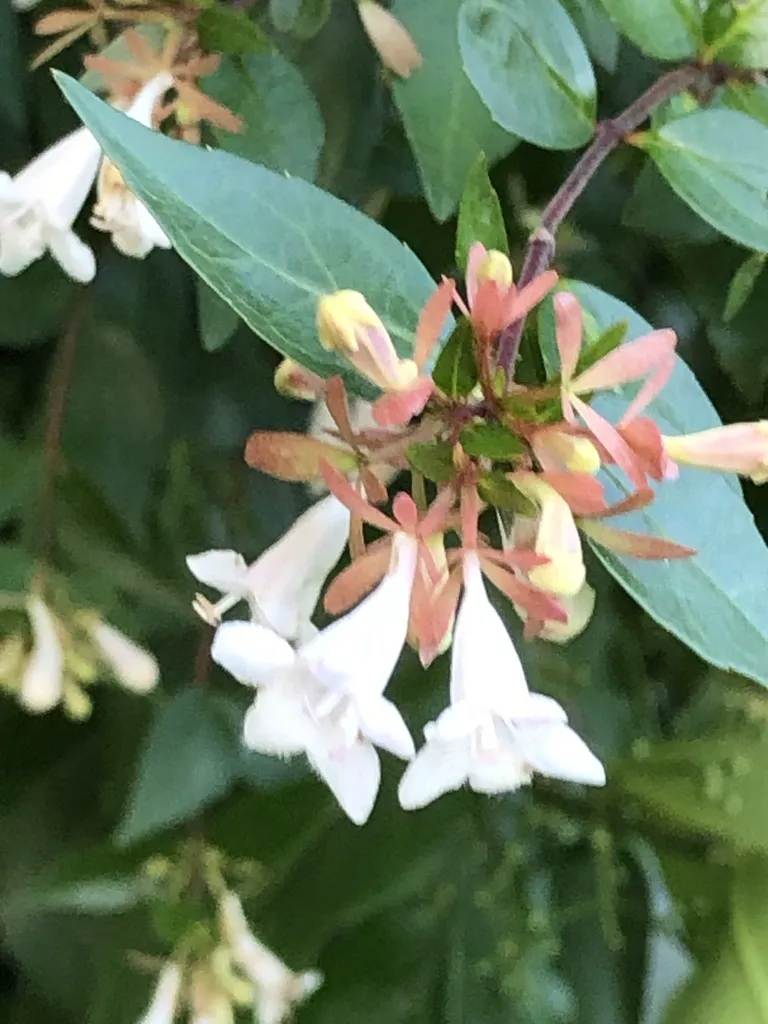
Abelia is one of the longest-flowering shrubs you can grow, blooming steadily from summer right through autumn. Its dainty, lightly scented flowers and arching stems give a soft, graceful look to borders and hedges.
It is also tough and easy, drought-tolerant once established and largely trouble-free. The flowers are a genuine magnet for bees and butterflies, and the glossy, often colourful foliage looks good even out of bloom, so abelia works hard for both gardeners and wildlife. Few shrubs flower for so long with so little fuss. That long season of bloom is exactly what keeps it so popular.
History, origin & where it grows
Abelia comes mainly from East Asia, especially China, and parts of the Himalayas and Mexico, growing on hillsides and in scrub. The popular garden plants are mostly hybrids, especially the glossy abelia.
It was introduced to Western gardens for its long flowering and easy nature, and breeders have produced many compact and variegated forms (see the background on Abelia). It has become a popular, dependable shrub for borders and low hedges.
Abelia thrives in mild-temperate gardens across the US, southern Europe, and Asia. In India, it suits the cooler hills and milder northern gardens, where some abelias are native to the Himalayas, rather than the hottest plains or areas with hard frost.
Best season & when to plant
Plant abelia in spring or autumn, when the weather is mild, so it establishes before summer or winter extremes. Spring planting is safest in colder areas.
It flowers from summer into autumn, often for many weeks. In India’s hills, plant in the mild season and give it a sunny, sheltered, free-draining spot for the best, longest flowering.
How to plant abelia
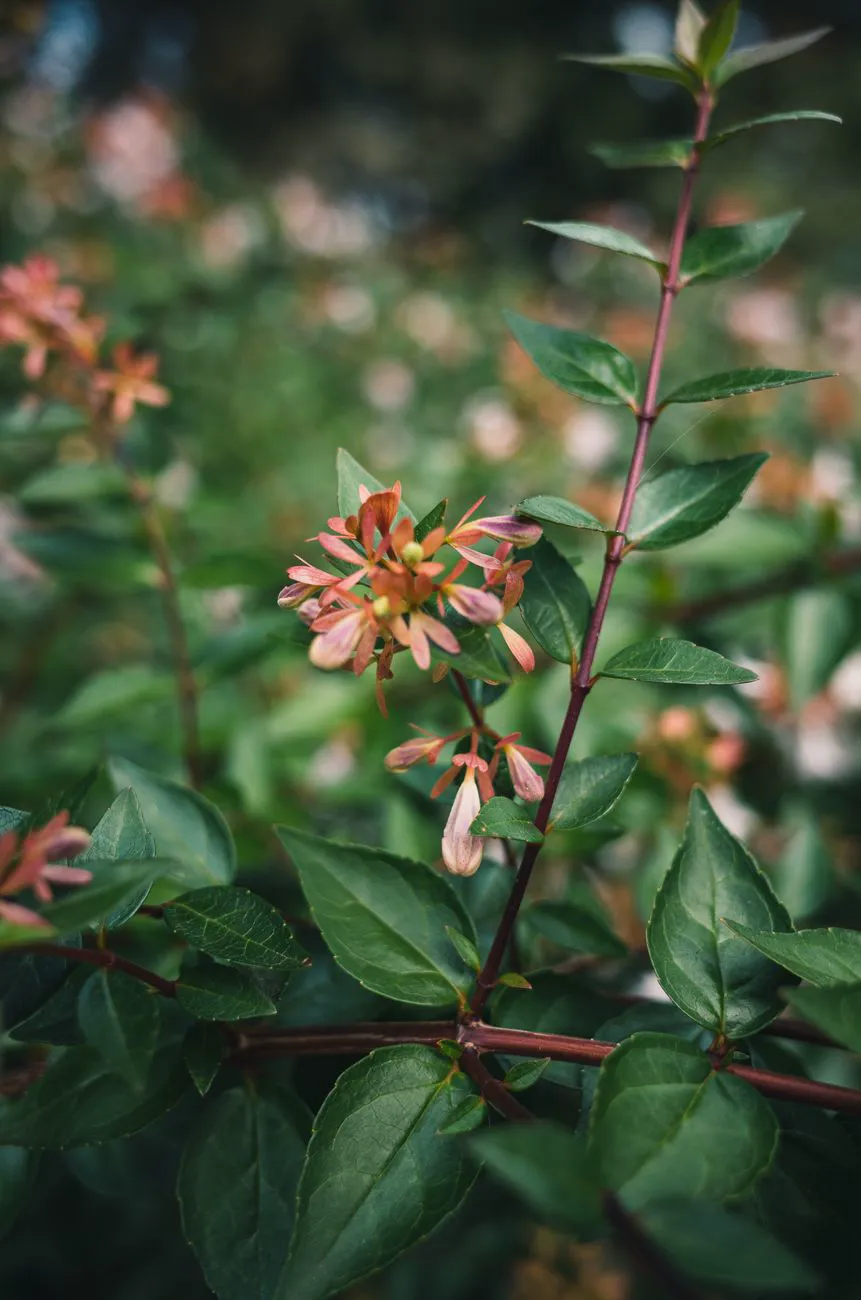
Abelia is sold as young potted shrubs and is easy to establish. For a healthy, free-flowering plant:
- Choose a spot in full sun to light shade, sheltered from hard frost inland, with free-draining soil.
- Dig in compost to enrich the soil (see improving garden soil).
- Plant at the same depth as the pot, firm in, and water well.
Add a mulch to hold moisture while it establishes. Give a single shrub room to arch, or space plants about 1 m apart for an informal flowering hedge.
Sun, soil, watering & feeding
Abelia flowers best in full sun but tolerates light shade. It likes moist, fertile, free-draining soil and, once established, copes well with drought, though it dislikes waterlogging.
Water young plants in dry spells until settled (see how often to water plants). Feed in spring with a balanced fertiliser and a mulch to support the long flowering season. It needs little feeding to bloom freely, making it genuinely low-maintenance.
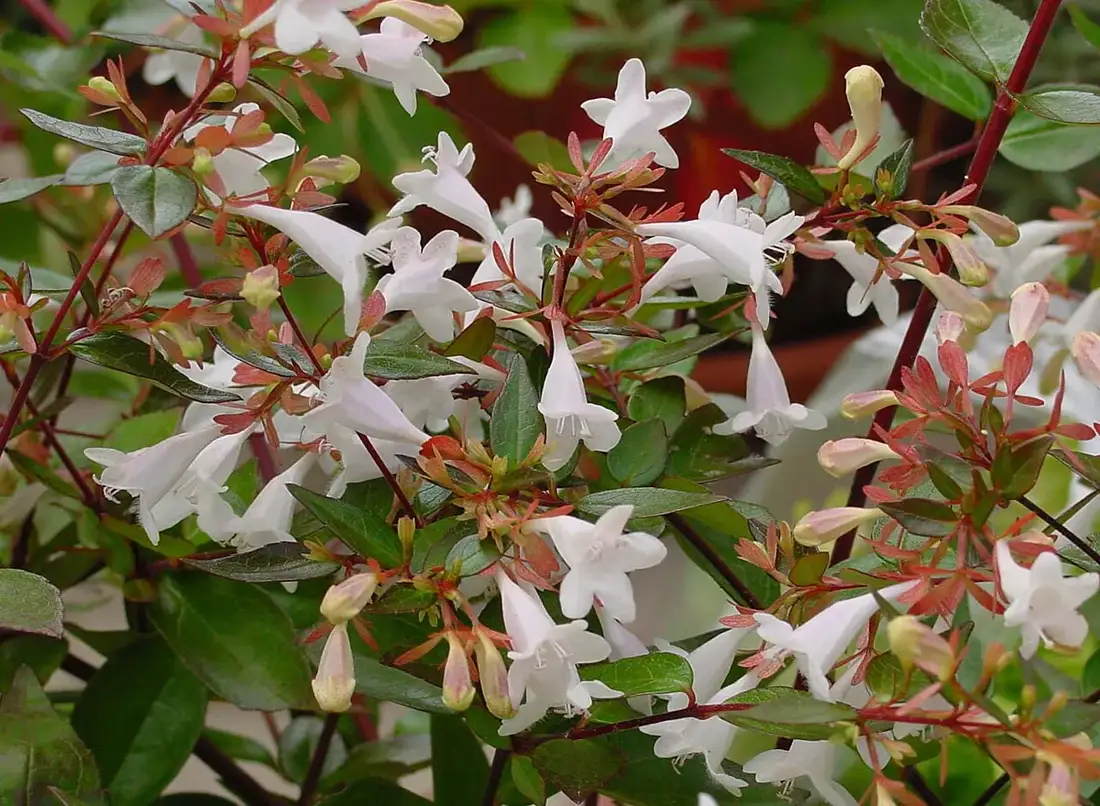
When and how to prune abelia
Pruning abelia is easy, because it flowers on the current season’s new growth. This means you can shape it without sacrificing the coming display.
Prune in early spring, before growth starts, trimming to shape and shortening over-long arching stems. On established plants, also cut a few of the oldest stems to the base to encourage fresh growth. Avoid heavy pruning in autumn, which removes the structure and can expose tender growth to frost in cold gardens.
Types and foliage colour
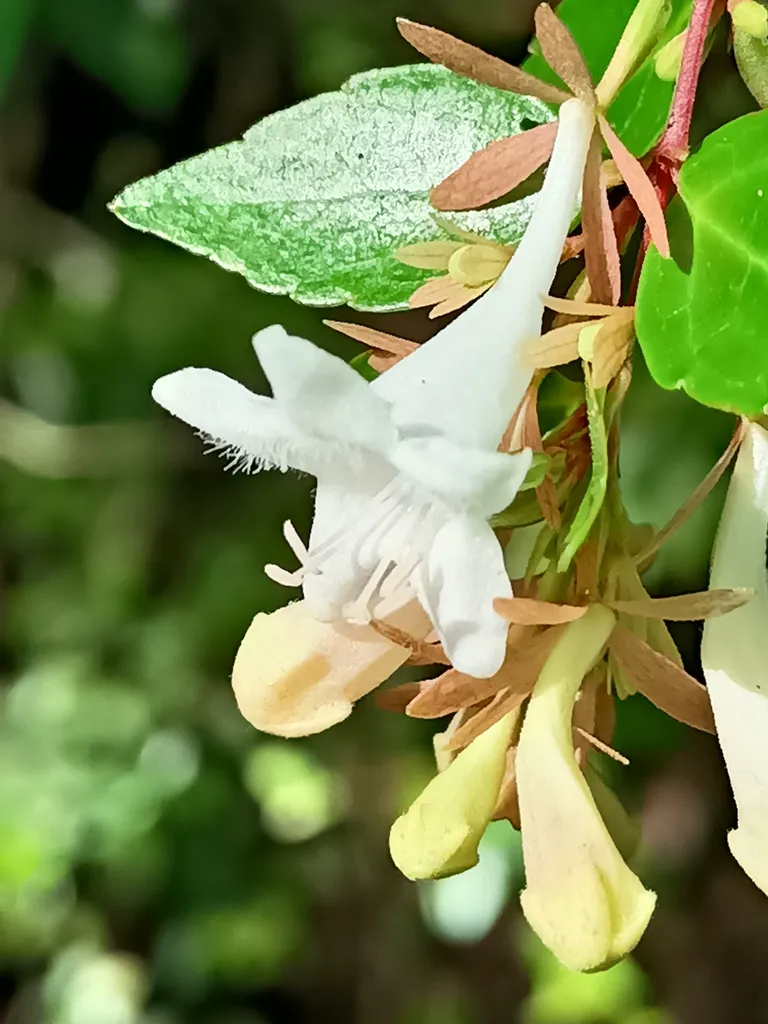
Part of abelia’s appeal is the range of foliage, so it is worth choosing for leaves as well as flowers. Many modern forms are grown as much for colour as for bloom.
The classic glossy abelia has dark green leaves and white-pink flowers, while variegated kinds like ‘Kaleidoscope’ and ‘Hopleys’ add gold, cream, and bronze tones that shift through the seasons. Compact forms suit small gardens and pots, and larger ones make graceful, arching specimens. Whichever you choose, the long flowering and pinkish persistent sepals are common to all.
Growing abelia in pots and as a hedge
Abelia’s neat, arching habit and long flowering make it excellent in containers and informal hedges. Both show off its summer-to-autumn blooms beautifully.
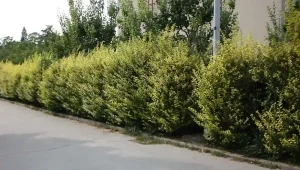
In a large pot of loam-based compost, a compact abelia makes a fine patio plant, flowering for months and trailing gracefully over the rim. Keep potted plants well watered and fed, as they dry out faster, and refresh the compost each spring. Planted in a row about a metre apart, abelia forms a relaxed, flowery hedge that hums with bees through late summer, ideal for a sunny boundary. The variegated forms add foliage colour to brighten the line even between flushes. Trim potted and hedged plants in early spring to shape, and they reward you with a long, generous display from a tough, easy plant that asks for very little in return.
Common pests & diseases
Abelia is largely trouble-free, which adds to its appeal. Healthy plants in good conditions rarely suffer serious problems.
Occasionally aphids appear on soft new growth, and root problems can occur in wet, heavy soil. Frost may damage it in cold inland gardens. Grow it in free-draining soil and a sheltered spot, prune in spring, and remove any frost-damaged shoots to keep it healthy.
Uses & benefits
Abelia is grown as an ornamental and pollinator shrub, valued for its exceptionally long flowering, fragrant blooms, glossy or colourful foliage, and graceful arching habit. It suits mixed borders, informal hedges, foundation planting, and large containers.
Its nectar-rich flowers are superb for bees and butterflies over a long season. Abelia is grown for beauty and wildlife rather than eating, making it a reliable, low-care choice that combines well with other pollinator-friendly plants in a sunny border.
Common abelia problems
Few flowers
Usually too much shade or hard autumn pruning. Grow in full sun and prune only in early spring, as it flowers on new growth.
Frost damage in cold gardens
Abelia is best in mild areas. Inland, plant it in a sheltered spot and trim out any frost-damaged shoots in spring.
Leggy, sparse shrub
From never thinning old stems. Cut a few of the oldest stems to the base in spring to keep it bushy.
Related plant guides
- How to grow Corokia
- How to grow Cotoneaster
- How to grow Hardy Geranium
- How to grow Nandina
- How to grow Photinia
- How to grow Pyracantha
How to propagate abelia
Abelia is propagated from cuttings, and it is one of the easier shrubs to root. Take semi-ripe cuttings in July — 7 to 10 cm, with a slight heel of older wood at the base — and put them in pots of sandy compost in a cold frame; they root in about three to four weeks and a good proportion of them take. Hardwood cuttings work just as well later in the year: 7 to 10 cm with a heel where you can manage it, taken in November and left in a cold frame over winter (Plants For A Future).
Layering is the no-equipment option. Abelia’s stems arch to the ground anyway, so peg a young shoot down into the soil, leave it attached to the parent, and lift it once it has rooted.
Seed is the one route we will not give you a recipe for. Plants For A Future records no specific germination information for abelia, and most garden abelias are hybrids in any case, so seedlings would not come true to the parent plant. Cuttings give you the same shrub; seed is a lottery.
Frequently asked questions
Is abelia easy to grow?
Yes. In sun and free-draining soil, abelia is tough, drought-tolerant once established, and flowers for months with only a light spring prune.
When should I prune abelia?
Prune in early spring before growth starts. It flowers on new growth, so spring pruning shapes the plant without losing the coming display.
How long does abelia flower?
Unusually long, from summer right into autumn. The pinkish sepals often persist after the petals drop, extending the colour even further.
Is abelia evergreen?
It is semi-evergreen, keeping its leaves in mild areas and losing some or all of them in colder gardens, where it behaves more like a deciduous shrub.
How big does abelia get?
Size depends entirely on the variety, so read the label before you plant. Full-size glossy abelia can reach roughly 6 to 10 feet tall and almost as wide, while modern compact cultivars stay in the 2 to 3 foot range and suit small beds and containers. Mid-size selections around 3 to 5 feet tall are the most useful for mixed borders and informal hedging. Give the plant its full mature width at planting time so you are not fighting it with the shears every year.
Does abelia need full sun?
Abelia flowers hardest and colours best in full sun, ideally six hours or more a day. It will grow in part shade, but you get fewer blooms, looser growth, and duller foliage tints on the variegated types. In very hot regions, including much of India, a spot with strong morning sun and some afternoon shade keeps the leaves from scorching while still giving a good display. Poor flowering in an established plant is almost always a light problem first and a pruning problem second.
Is abelia deer resistant?
It is widely rated as deer resistant, since browsing animals tend to avoid the slightly bitter, leathery foliage and the strongly scented flowers. No shrub is deer proof, though, and hungry animals in a hard winter will sample almost anything. If deer pressure is heavy in your area, protect young plants for their first season while they establish. Rabbits generally leave it alone as well.
How fast does abelia grow?
Abelia is a moderate grower, typically putting on around a foot of growth a year once it is settled, with faster extension in warm climates and rich soil. New plants spend their first season mostly building roots, so do not panic if the top looks static. From the second year onward the arching shoots fill out quickly and the shrub reaches a useful size within three or four years. Steady moisture in the first summer makes the biggest difference to how fast it takes off.
Are abelia flowers fragrant, and do they attract pollinators?
Yes on both counts. The small bell-shaped flowers carry a light, sweet scent that is easiest to notice on warm still evenings or when the shrub is planted near a path or doorway. Because it blooms for months rather than weeks, abelia is a genuinely valuable nectar source, and bees, butterflies, and other pollinating insects work it steadily through summer and autumn. That long season is why it earns a place in pollinator borders.
Can abelia be grown in a pot?
Compact varieties do well in containers, which is handy for balconies, terraces, and small courtyards. Use a large pot with generous drainage holes and a free-draining loam-based mix, and stand it where it gets plenty of sun. Potted plants dry out much faster than those in the ground, so check the compost regularly in hot weather and water when the top few centimetres are dry. Feed lightly in spring and repot or refresh the top layer of compost every couple of years.
Why are my abelia leaves turning yellow?
Yellowing most often traces back to the roots rather than the leaves. Waterlogged or heavy soil is the usual culprit, since abelia hates sitting wet, so check drainage before reaching for feed. Uniformly pale leaves on poor sandy soil can indicate a nutrient shortage, which a spring dose of balanced fertiliser will correct. Some seasonal leaf colour change is completely normal too, as semi-evergreen types drop older leaves in cold weather and take on bronze or purple tints.
Still stuck? Ask the Plant Doctor
Describe the problem — yellow leaves, holes, no flowers — and get a clear answer in seconds. FreeAI can make mistakes. Answers are guidance, not a guarantee — check anything important against the guide it links to, and always read the label on any product before you use it.