How to Grow Astrantia (Masterwort)
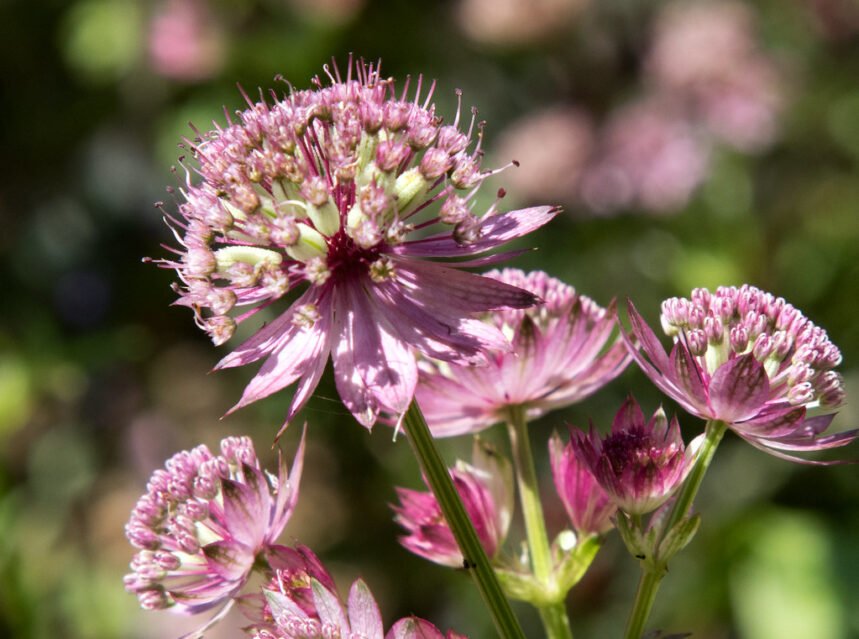
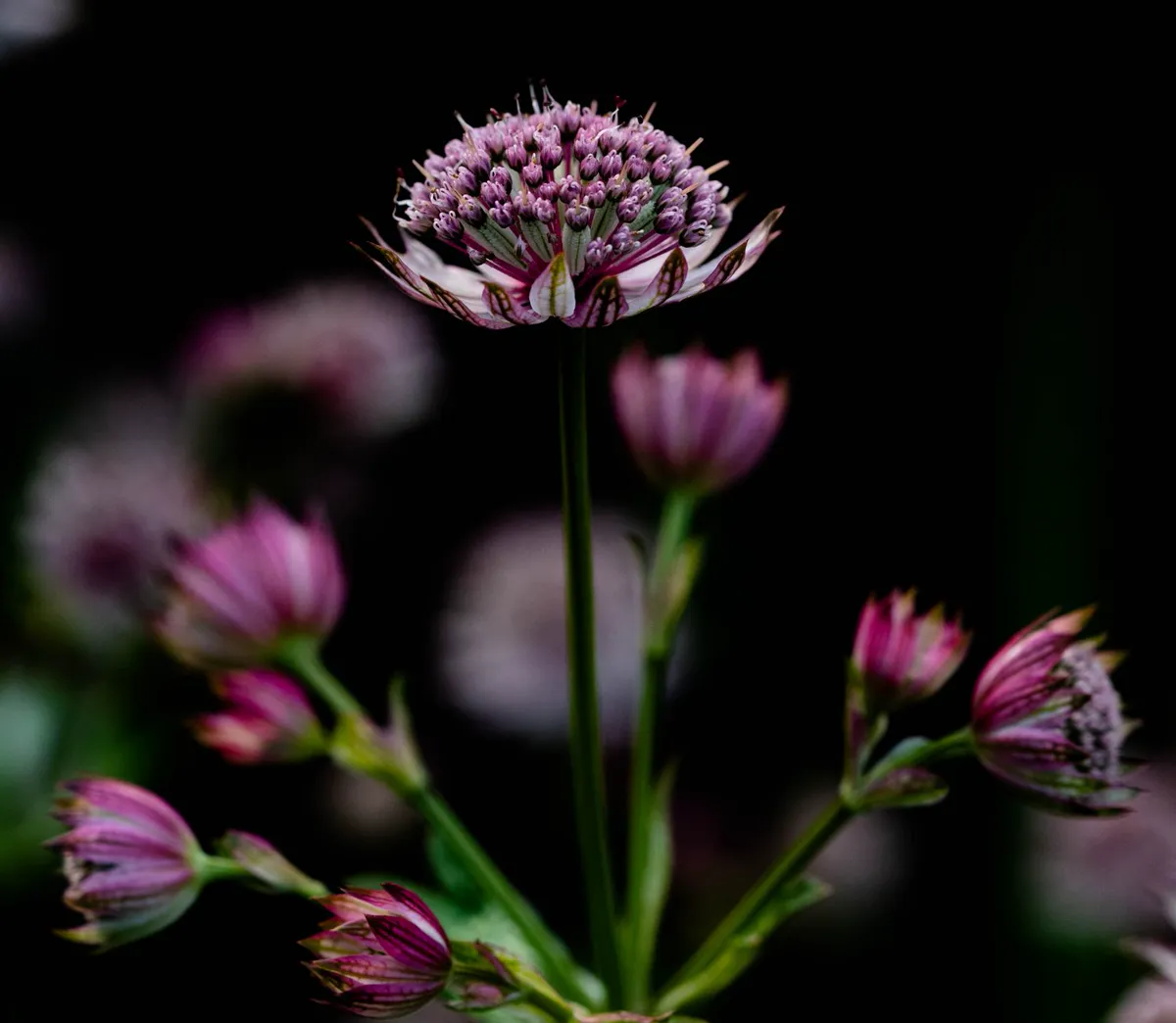
Astrantia (masterwort) is a shade-loving cottage perennial grown for its intricate, pincushion flowers framed by a papery ruff of pointed bracts — giving each bloom a delicate, star-like, almost jewelled look. In shades of white, pink and deep ruby, the flowers last for ages in the garden and the vase, thrive in shade, and weave romantically through cottage borders. Here is the complete guide on how to grow astrantia (masterwort).
Quick start: Grow astrantia in part to full shade in moist, humus-rich soil. It must not dry out, so keep it consistently moist. Feed once or twice a year and mulch. Cut it back hard after flowering for fresh foliage and a second flush. Divide in spring or autumn. The intricate star-flowers last well, fresh or cut.
Masterwort is a quietly sophisticated perennial, its intricate pincushion flowers looking hand-stitched up close and lasting beautifully in a vase. Growers prize it for thriving in the difficult spot of moist part-shade, but they also warn it will not tolerate drought, collapsing fast in dry soil. Cutting the whole plant back hard after the first flush usually triggers a fresh wave of bloom. It self-seeds gently and settles in for years.
🧰 In a hurry? Jump straight to our tested picks for this guide ↓
Astrantia at a glance
| Feature | Detail |
|---|---|
| Botanical name | Astrantia major (family Apiaceae) |
| Common name | Masterwort |
| Plant type | Hardy perennial |
| Light | Part to full shade |
| Soil | Moist, humus-rich (must not dry out) |
| Flowers | White, pink, ruby; mid to late summer |
| Uses | Cottage borders, cut and dried flowers |
| Key task | Keep moist; cut back for a second flush |
Why grow astrantia?
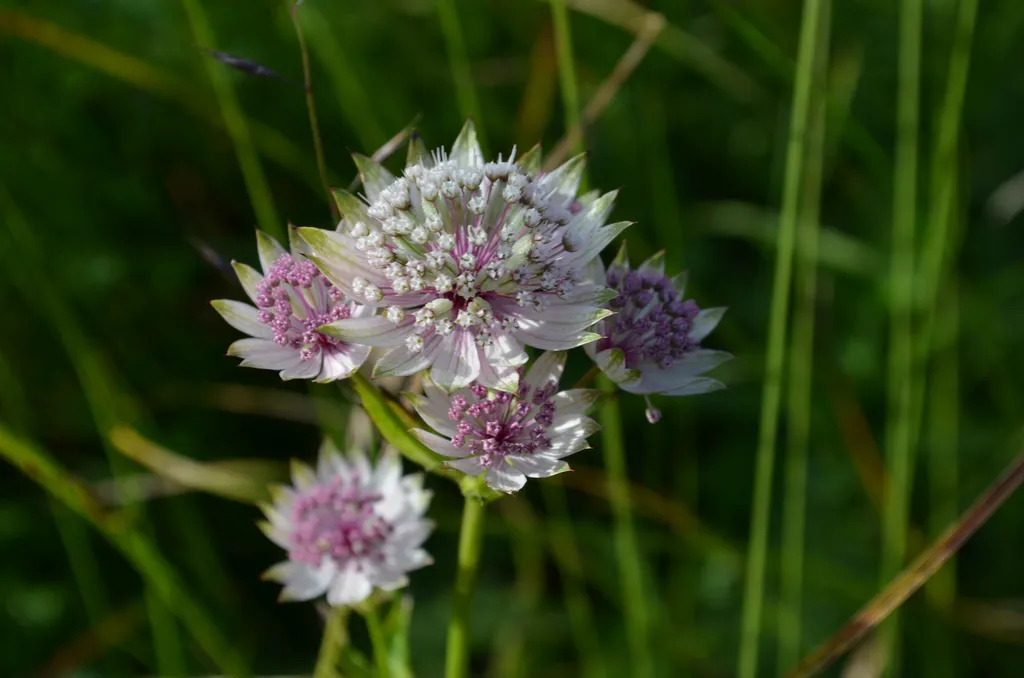
Astrantia is a connoisseur’s plant that is also genuinely easy. A few reasons to grow it:
- Jewel-like flowers. The intricate, long-lasting blooms reward a close look.
- Thrives in shade. It brings elegant colour to cool, damp, shady spots.
- Excellent for cutting. The flowers last well fresh and also dry beautifully.
- Pollinator-friendly. Bees and other insects love it (see attracting pollinators).
History, origin & where astrantia grows
Astrantia is a small genus — ten accepted species — native to the mountain woodlands and meadows of central, eastern and southern Europe and the Caucasus (genus and name). The name comes from the Latin aster, a star, for the collar of pointed bracts that makes each pincushion look like one. It has been grown in cottage and country gardens for centuries, valued for its old-fashioned charm. The name masterwort hints at its long use as a traditional herb.
Because of its woodland-meadow origins, it loves cool, part-to-full shade and moisture-retentive, humus-rich soil. It cannot tolerate drought or hot, dry nights. This is the single most important thing to know about it.
It is a hardy perennial, happy in cool-temperate gardens across Europe and North America (see the Royal Horticultural Society). It does best where it stays cool and damp. In hot regions, give it the shadiest, moistest spot you have.
Best season & when to plant
Plant astrantia in spring or autumn. It flowers from mid to late summer, often with a strong second flush if cut back. Grow it from division or seed, though seed needs cold stratification, and named varieties do not come true from seed. It is a long-lived perennial that returns each year and self-seeds readily.
How to plant astrantia
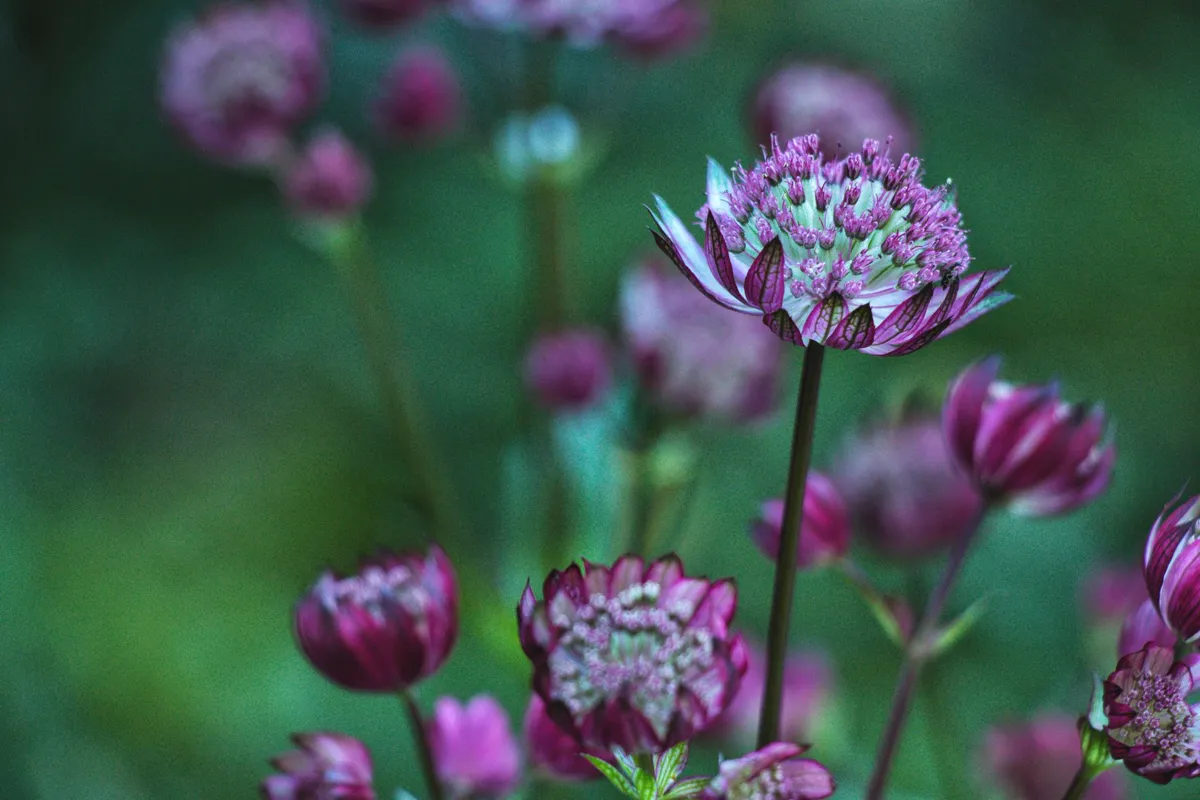
- Choose part to full shade — ideally a few hours of sun with shade the rest of the day, avoiding hot full sun.
- Use moisture-retentive, humus-rich soil, as light sandy soils dry out too much. Clay is fine if it does not bake dry. Improve it with plenty of organic matter (see improving garden soil).
- It is lovely in cottage borders, woodland edges, and beside ponds or in damp spots, with hostas, ferns and geraniums.
Watering & feeding
The golden rule: astrantia needs consistently moist soil and must not dry out — water frequently in dry spells, as drought can kill it (see how often to water plants). Feed once or twice a year and mulch with compost or leaf mould to hold moisture and enrich the soil (see our mulching guide). Cool, damp conditions are everything.
The cut-back for a second flush
For the best display, cut the plant back almost to the ground after the first flush of flowers — it quickly throws up lush new foliage and a fresh wave of late blooms. Deadhead named varieties if you want to prevent self-sown seedlings, which will not match the parent (see deadheading flowers). Divide clumps in early spring or early autumn to renew them and make more.
Astrantia as a cut flower
Few perennials earn their place in both border and vase as well as astrantia. The flowers are tough little stars that simply keep going. So they are a florist’s favourite.
Cut the stems when the flowers are fully open, in the cool of the morning. They last a week or more in fresh water, holding their delicate shape. Mixed with roses or sweet peas, they add an airy, intricate detail.
The blooms also dry beautifully for everlasting arrangements. Simply hang small bunches upside down in a cool, airy spot. The papery bracts keep their colour and form for months.
Designing with astrantia
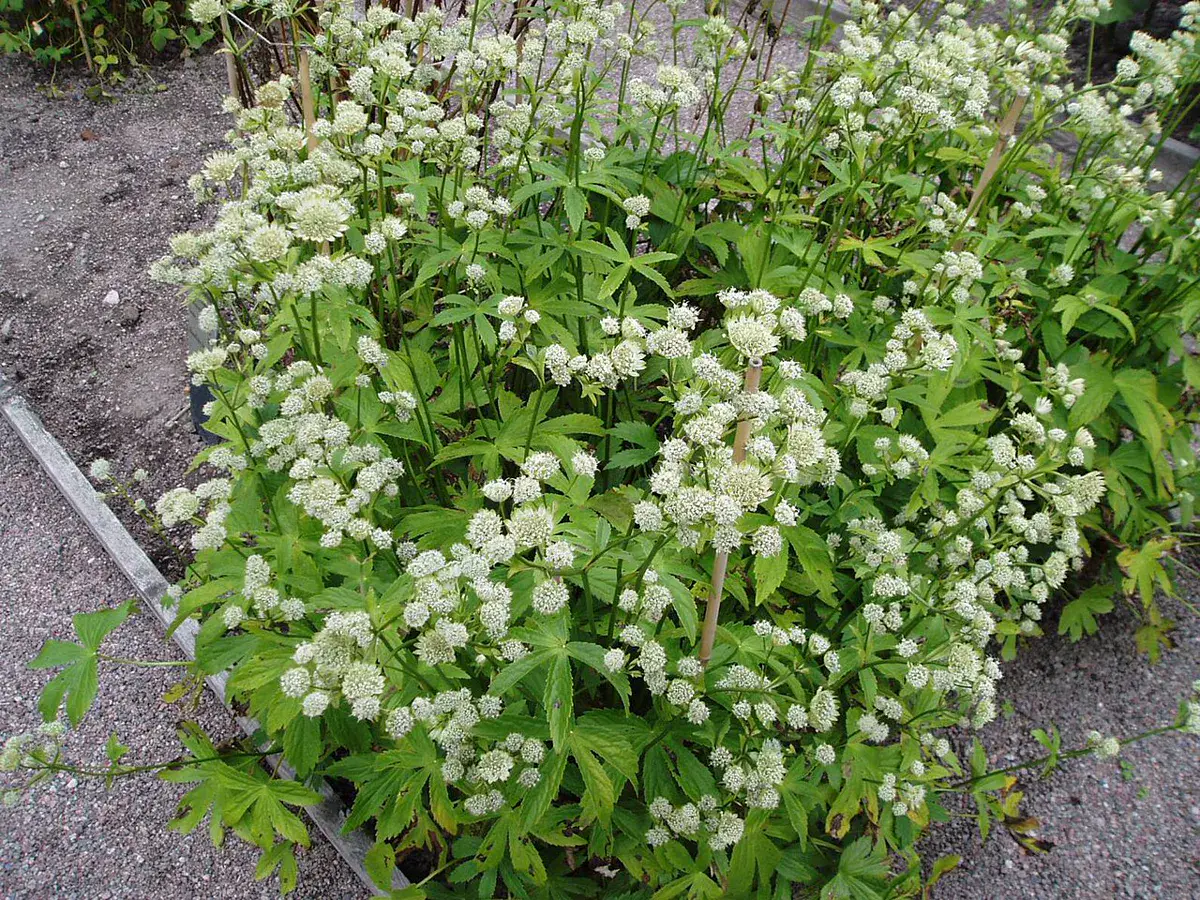
Astrantia weaves through a planting rather than shouting from it. Its soft, intricate flowers link bolder plants together. So it is a brilliant border connector.
Plant it in generous drifts for the best effect, rather than single plants. It pairs perfectly with hostas, ferns, hardy geraniums and foxgloves. The result is a romantic, cottage-garden softness.
Use the white forms to lighten a shady corner, and the deep ruby ones for richness. It also thrives at a woodland edge or beside a pond. Anywhere cool and damp suits it beautifully.
Growing astrantia from seed and division
You can increase astrantia in two easy ways. Division is the quickest and keeps named varieties true. So it is the method most gardeners prefer.
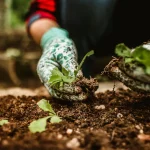
Lift an established clump in early spring or autumn and split it into pieces. Each piece needs roots and a growing point. Replant them straight away in rich, moist soil and water them well.
Seed is cheaper but slower, and named types will not come true. The seed needs a spell of cold, or stratification, to germinate. Sow it fresh in autumn, or chill it in the fridge before a spring sowing. Self-sown seedlings often appear on their own, ready to move.
Best astrantia varieties to try
There are lovely varieties in a range of shades. Choosing a few extends the colour and the season. So it is worth knowing the popular ones.
For deep colour, ‘Ruby Wedding’ and ‘Hadspen Blood’ give rich, dark red flowers. For soft romance, ‘Roma’ offers dusky pink blooms over a long season. For a fresh, bright look, the white and green ‘Shaggy’ (also called ‘Margery Fish’) has extra-long bracts.
All grow the same easy way in moist shade. Mixing a dark red with a pale pink looks especially good. Plant them in bold drifts for the strongest effect.
Common pests & diseases
Astrantia is fairly trouble-free. Watch for slugs and aphids, which like its leaves (see aphid control), and powdery mildew if it dries out. Keep it moist and cool with good airflow, and see our organic pest control guide if needed. It self-seeds prolifically, so deadhead to control its spread.
Benefits & uses
Masterwort gives intricate, long-lasting, jewel-like flowers for shady borders and cutting, fresh or dried, plus good value for bees and pollinators. It is hardy, easy in moist shade, and romantically beautiful with cottage and woodland companions. For cool, damp gardens, it is an elegant and rewarding perennial.
This article is for general information only and is not medical advice. Talk to a qualified professional before using any plant medicinally.
Common astrantia problems
Wilting or dying in heat
It dried out, as astrantia cannot take drought. Keep the soil consistently moist and the plant shaded.
Self-sown seedlings unlike the parent
Named varieties do not come true. Deadhead to prevent unwanted reversions.
Powdery mildew
Dry stress. Keep it moist and cool with good airflow.
Related plant guides
- How to grow Aconitum
- How to grow Doronicum
- How to grow Brunnera
- How to grow Astilbe
- How to grow Polemonium
- How to grow Perennial Cornflower
Frequently asked questions
Does astrantia grow in shade?
Yes — it thrives in part to full shade and dislikes hot, dry, sunny positions.
Why is my astrantia dying?
Almost always drought — it needs consistently moist soil and cannot tolerate drying out.
Should I cut astrantia back?
Yes — cutting it back hard after the first flush brings fresh foliage and a second wave of flowers.
Does astrantia make a good cut flower?
Yes — its intricate, long-lasting blooms are lovely fresh in the vase and also dry well.
Can I grow astrantia in a pot?
Yes, in a large container of rich, moisture-retentive compost in shade. The key is never letting it dry out, so water it often and mulch the surface.
When does astrantia flower and how long does it last?
Astrantia usually opens its first pincushion flowers in early summer, around June in temperate gardens, and keeps going into August. Established clumps often push a second, lighter flush into early autumn, especially if you cut them back after the main show. The papery bracts hold their colour for weeks on the plant, which is why the flowering season feels so generous. Cool, damp summers suit it best, while heat and drought shorten the display sharply.
How tall does astrantia grow, and how far apart should I plant it?
Most garden forms of Astrantia major reach roughly 60 to 90 cm in flower, with a mound of divided leaves about half that height. Compact selections stay lower, while some named cultivars push towards a metre in rich, moist ground. Space plants around 40 to 45 cm apart so the clumps knit into a drift without smothering each other. Planting in groups of three or five looks far better than dotting single plants through a border.
Does astrantia self-seed?
Yes, freely. Left alone, astrantia scatters seed and you will find volunteer seedlings around the parent clump the following spring. Many gardeners welcome this in a cottage-style planting, since the seedlings weave the border together. Be aware that seedlings from named cultivars rarely match the parent colour and often revert to a plainer greenish white. If you want to keep a border tidy or a cultivar pure, deadhead as the bracts fade and propagate by division instead.
Are astrantias deer and rabbit resistant?
Astrantia is generally left alone by deer and rabbits, which makes it valuable in rural gardens where hostas and lilies get stripped. Slugs and snails are also less interested in it than in most shade perennials, though reports vary and young plants in a wet spring can still be grazed. Treat it as resistant rather than immune. Protecting new plants for their first season is a sensible precaution in a garden with heavy browsing.
Is astrantia toxic to pets?
Astrantia has no known toxic effects on cats, dogs or people, so it is usually treated as a safe choice for family gardens. That said, no plant is meant to be eaten, and chewing on any ornamental can cause a mild upset stomach. If a pet eats a large amount of any garden plant, contact a vet rather than guessing. This information is general only and is not veterinary advice.
How and when do I divide astrantia?
Divide established clumps every three or four years, either in early spring as the new leaves appear or in autumn once flowering finishes. Lift the whole plant with a fork, then cut or tease it into sections that each carry a good share of roots and several growing points. Replant immediately at the same depth in soil improved with compost, and water thoroughly. Division keeps the clump vigorous and is also the only reliable way to increase a named cultivar true to type.
Still stuck? Ask the Plant Doctor
Describe the problem — yellow leaves, holes, no flowers — and get a clear answer in seconds. FreeAI can make mistakes. Answers are guidance, not a guarantee — check anything important against the guide it links to, and always read the label on any product before you use it.