How to Grow Jerusalem Artichoke
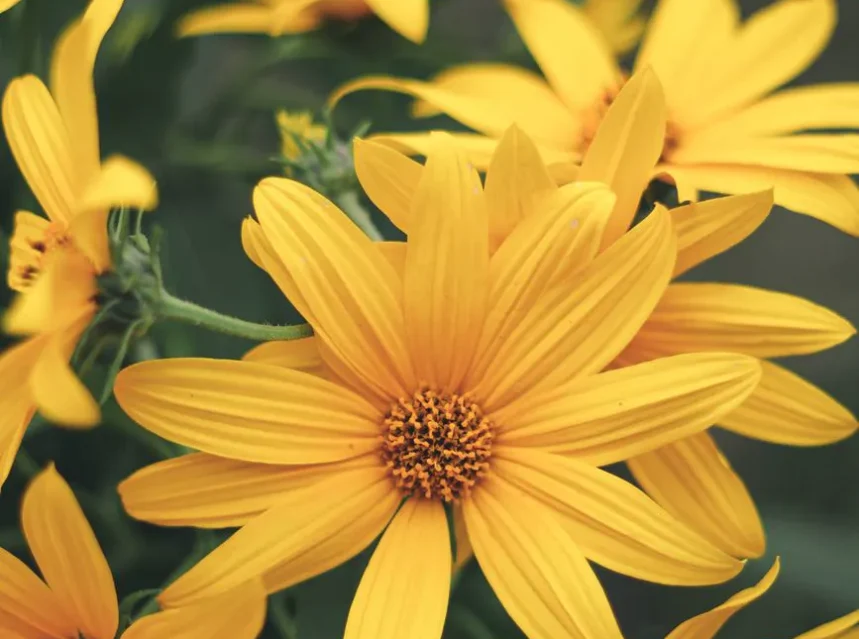
Jerusalem artichoke (Helianthus tuberosus), also called sunchoke, is a tall sunflower relative grown for its knobbly, nutty-tasting underground tubers — and it is one of the most productive, trouble-free crops you can grow. It is neither from Jerusalem nor an artichoke, but a hardy North American perennial that crops heavily with almost no care. Here is the complete guide on how to grow jerusalem artichokes.
Quick start: Plant tubers in early spring in full sun and any reasonable soil. The tall plants grow themselves through summer, then you dig the tubers from autumn through winter. Be warned: every scrap of tuber left in the ground regrows, so site them where you can control their spread.
Experienced growers and allotment gardeners agree sunchokes are almost too easy — the real challenge is containing them, not growing them. Two lessons come up again and again: leave even a small piece of tuber in the soil and it returns the next year, so a dedicated bed or a buried barrier is wise; and the tubers are best lifted as needed through winter, since they store far better in the ground than in the kitchen. Many also warn the tubers can cause wind when first eaten, so start with small portions. In short, plant once, harvest for years, and keep them in their place.
🧰 In a hurry? Jump straight to our tested picks for this guide ↓
Jerusalem artichoke at a glance
| Feature | Detail |
|---|---|
| Botanical name | Helianthus tuberosus (family Asteraceae) |
| Common names | Jerusalem artichoke, sunchoke |
| Plant type | Hardy perennial tuber crop |
| Height | Tall, often 2–3 m |
| Sun | Full sun (tolerates part shade) |
| Soil | Almost any; prefers free-draining |
| Plant | Early spring, from tubers |
| Harvest | Autumn through winter |
Why grow Jerusalem artichokes?
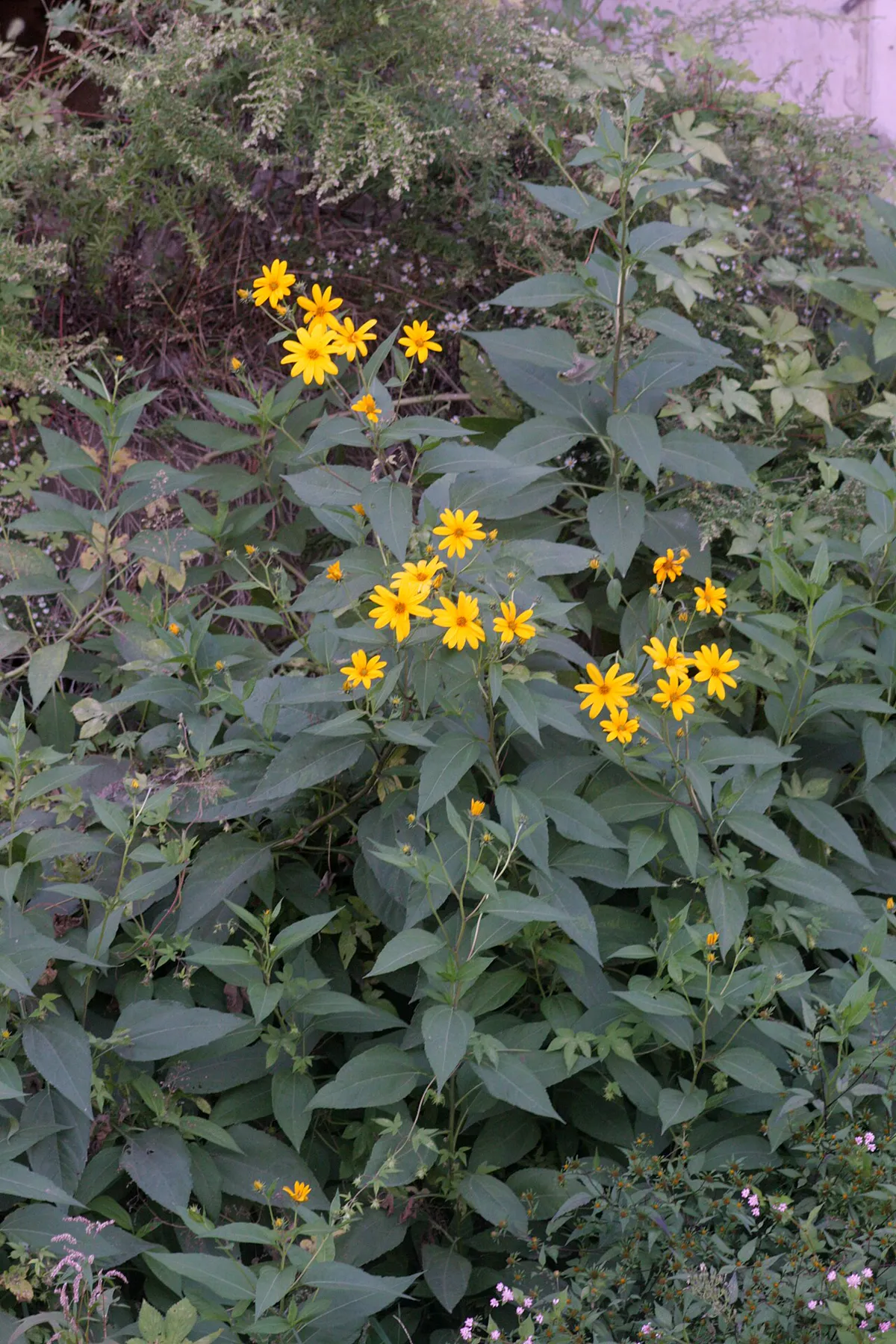
Few crops give so much for so little effort. Plant a handful of tubers once and you get a towering, leafy screen in summer, cheerful small sunflowers in autumn, and a heavy crop of tubers to dig all winter. They are genuinely fuss-free.
The tubers are also nutritious and distinctive, with a sweet, nutty, slightly artichoke-like flavour. They carry a special fibre called inulin, which feeds gut bacteria, and an unusual 3.4 mg of iron per 100 g for a tuber (USDA record 169236). For a reliable, productive perennial vegetable, sunchokes are hard to beat.
They are a brilliant choice for tough spots and beginners. Because they crop heavily in poor soil with no spraying and few pests, they suit wild corners, new plots, and low-effort gardens. The tall summer screen they form can even be used to shelter other crops or hide an ugly fence, so the plant earns its keep above ground as well as below.
History, origin & where it grows
Jerusalem artichoke is native to eastern North America, where Indigenous peoples grew and gathered it long before European arrival. Despite the name, it has no link to Jerusalem; the word is thought to come from a corruption of the Italian for sunflower, girasole (see the Encyclopaedia Britannica).
European explorers took it home in the 1600s, where it became a useful winter food before the potato took over. Today it is grown worldwide as a hardy vegetable and a source of inulin.
Sunchokes are extremely adaptable, thriving across the US and UK. In India, they grow best in the cooler hills and the winter season, where the milder weather suits tuber formation, rather than the hot, humid plains in summer.
Best season & when to plant
Plant tubers in early spring, as soon as the soil is workable, much like potatoes. They sprout as the weather warms and grow rapidly through summer.
The plants flower in late summer and autumn, and the tubers are ready from autumn onwards, after the tops die back. In India’s hills, plant in spring; on the plains, the cool season gives the best tuber growth.
How to plant Jerusalem artichokes
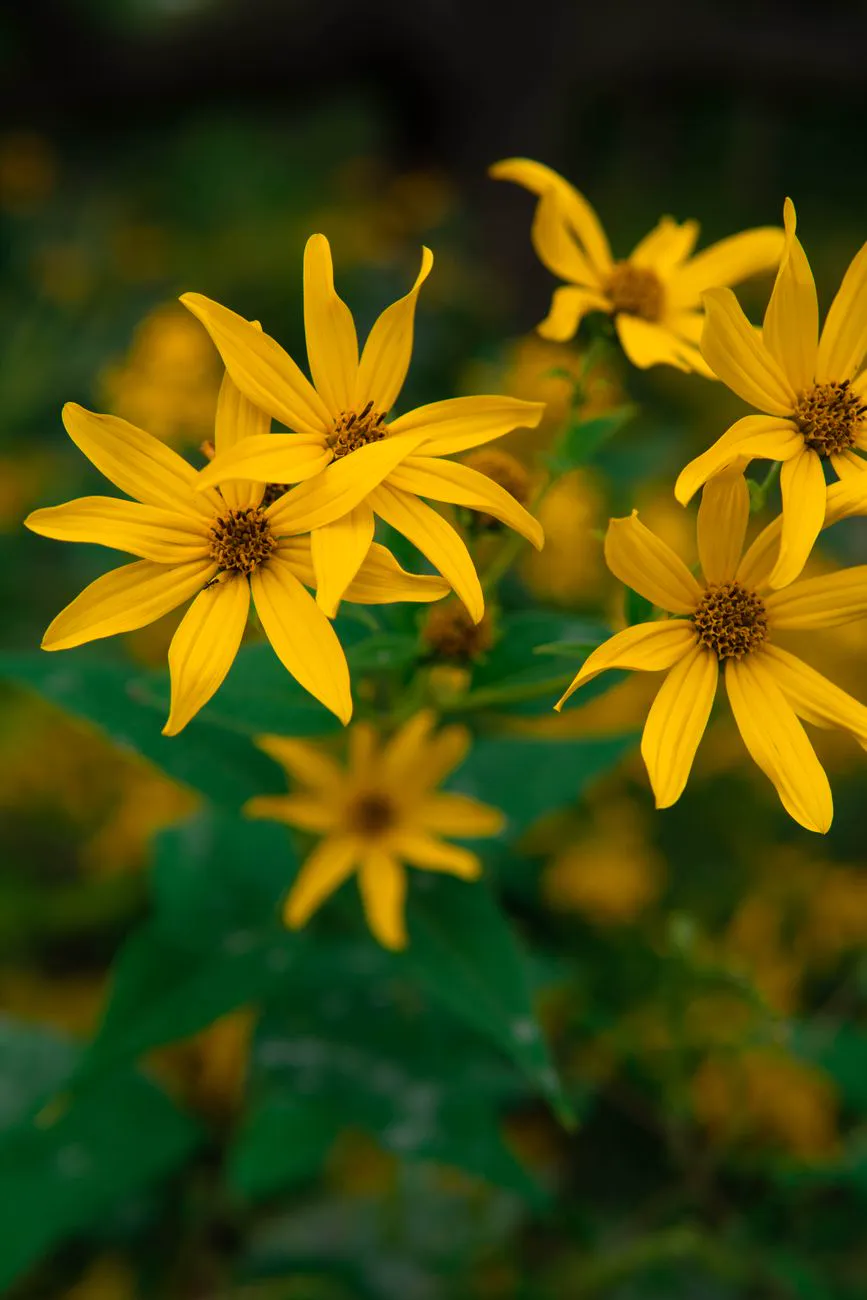
Sunchokes are grown from tubers, just like seed potatoes. To plant them:
- Choose a spot in full sun, ideally one where their spread and height will not be a problem.
- Plant whole tubers or chunks with a bud about 10–15 cm deep.
- Space them 30 cm apart, as the plants get large.
Water in and then largely leave them alone. Because they grow so tall, plant them on the north side of a plot so they do not shade other crops.
Sun, soil, watering & feeding
Jerusalem artichokes grow in almost any soil, though they crop best in free-draining ground. They prefer full sun but tolerate part shade. Once established, they are tough and drought-tolerant.
Water in long dry spells to keep the tubers swelling, but they rarely need feeding, as they find their own nutrients with vigorous roots. Earthing up the base a little and mulching helps in poorer soil, but overall this is a plant that thrives on neglect.
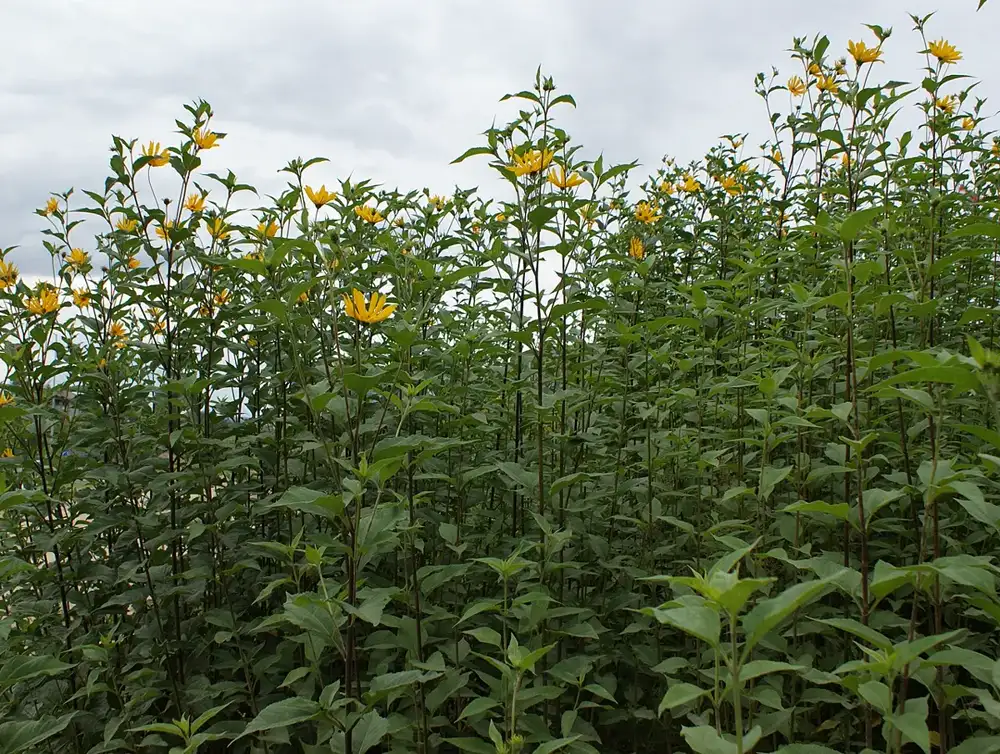
Keeping them under control
This is the one essential skill with sunchokes. They spread strongly, and any piece of tuber left in the soil will regrow the following year. Left unchecked, a small patch can take over a corner of the garden.
To stay in control, grow them in a dedicated bed or container, or sink a barrier around the roots. At harvest, dig thoroughly and remove every tuber you do not want to keep. Treat them as a permanent crop in their own space rather than mixing them through a rotated vegetable bed.
Growing Jerusalem artichokes in pots
Because they spread so freely, sunchokes are a natural choice for large containers, which neatly solve the problem of them taking over a bed. A big tub, half barrel, or even a sturdy bag works well.
Choose the deepest, widest container you can, fill it with good compost, and plant two or three tubers. Stand it in full sun and water more often than you would plants in the ground, since pots dry out faster. At the end of the season, simply tip out the whole container to harvest every tuber at once, keeping a few firm ones to replant next spring. Container growing also keeps the tall plants where their height and shade are easy to manage.
Harvesting & storing
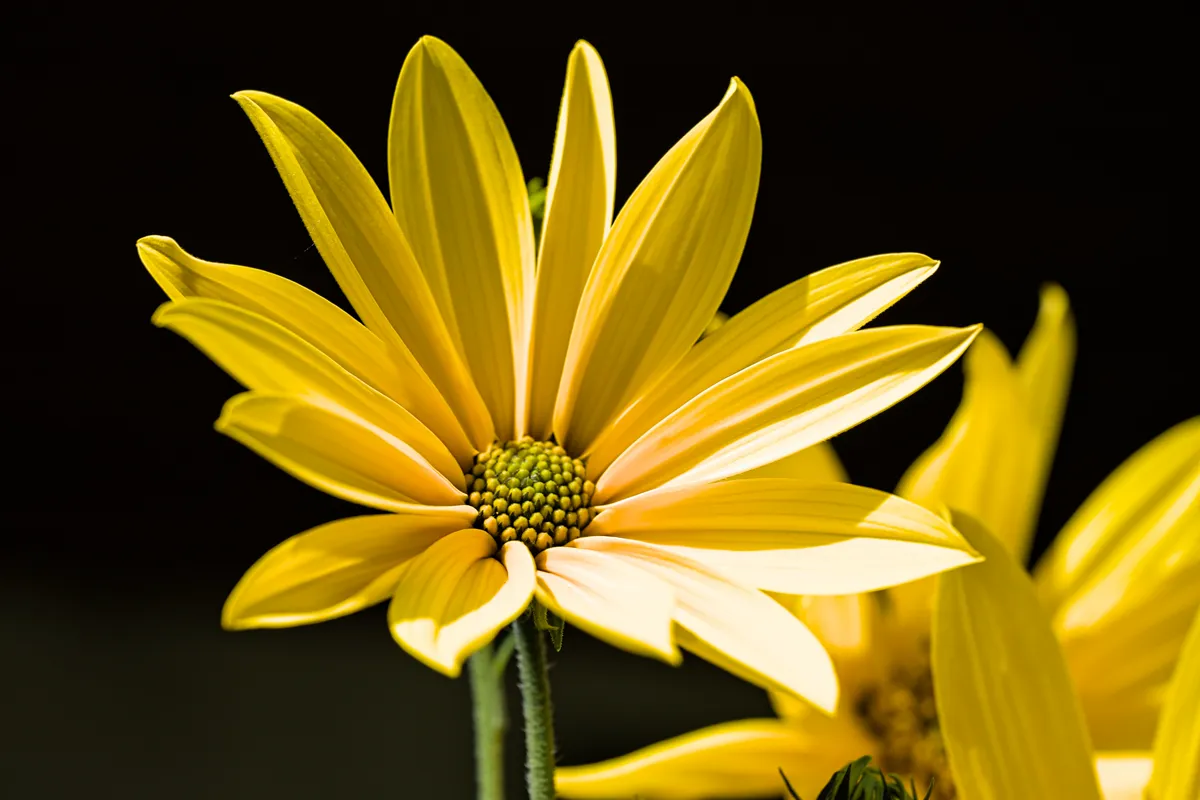
Harvest from autumn through winter, once the tall stems have blackened and died back. Cut the stems down and dig the tubers with a fork, lifting them as you need them in the kitchen.
The tubers store far better left in the ground than in the fridge, where they soon go soft. In areas with hard, deep frosts, lift a batch and store them in damp sand. Save a few tubers to replant, and the crop continues year after year.
Health benefits & uses
Jerusalem artichokes carry inulin, a prebiotic fibre that feeds beneficial gut bacteria, with 3.4 mg of iron and 429 mg of potassium per 100 g on 73 kcal (USDA record 169236). Note that the fibre figure USDA lists, 1.6 g, does not count inulin the way most people expect it to. Their sweet, nutty flavour suits roasting, soups, and gratins, and they can be eaten raw, sliced thin in salads.
A friendly warning: that same inulin can cause wind and bloating, especially when you first eat them, which earned them the nickname “fartichokes”. Start with small portions and your body usually adjusts.
This article is for general information only and is not medical advice. Consult a qualified professional for dietary guidance.
Common problems
Spreading everywhere
Leftover tubers regrow. Use a dedicated bed or barrier and dig out every unwanted tuber at harvest.
Plants flopping over
The tall stems catch the wind. Plant in a sheltered spot or give them some support.
Small tubers
Usually very poor, dry soil or heavy summer heat. Improve soil, water in droughts, and grow in the cool season in warm climates.
Few or no flowers
Some varieties flower little in short or cool seasons, which is fine, since you grow sunchokes for the tubers rather than the blooms. The crop below ground is unaffected.
Related plant guides
- How to grow Oca
- How to grow Elephant Garlic
- How to grow Onions
- How to grow Orach
- How to grow Shungiku
- How to grow Sunflowers
Frequently asked questions
Are Jerusalem artichokes easy to grow?
Very. Plant tubers in spring and they crop heavily with almost no care. The harder task is containing their spread, not growing them.
Do Jerusalem artichokes come back every year?
Yes. They are perennial, and any tuber left in the soil regrows. Grow them in a dedicated bed or barrier so they do not take over.
Why do Jerusalem artichokes cause wind?
They are rich in inulin, a fibre that gut bacteria ferment. Start with small portions when first eating them and most people adjust over time.
When do you harvest sunchokes?
From autumn through winter, after the tall tops die back. They store best left in the ground and lifted as needed.
How do you get rid of Jerusalem artichokes?
Be honest with yourself before you plant: this is one of the hardest vegetables in the garden to remove once it is established. Every tuber and even quite small broken fragments left in the soil will sprout the following spring, so a single thorough dig almost never finishes the job.
The method that actually works is persistence — lift every tuber you can find in autumn, then hoe or pull each new shoot as soon as it appears through the following two or three growing seasons, never letting a shoot get big enough to feed a new tuber. Covering the cleared ground with a light-excluding tarp or thick mulch for a full season speeds it up considerably, and growing them in a raised bed, a buried barrier or a large container from the start avoids the problem altogether.
How do you make Jerusalem artichokes less gassy?
The gas comes from inulin, a storage carbohydrate that human digestion cannot break down but gut bacteria happily ferment. Three things reduce it. Leaving the tubers in the ground through a few hard frosts, or storing them cold for several weeks, converts some of the inulin to simpler sugars. Long, slow cooking helps, and boiling in slightly acidic water — a good squeeze of lemon juice or a splash of vinegar — breaks more of the inulin down into fructose. Fermented and pickled preparations work on the same principle. Above all, start with a small portion the first few times, because tolerance genuinely does build with regular eating.
How deep and how far apart do you plant the tubers?
Plant tubers about 10-15 cm deep and 30-45 cm apart, with roughly 75-90 cm between rows if you are planting more than one. Golf-ball-sized tubers, or larger ones cut so each piece has two or three buds, are ideal — there is no advantage in planting the biggest tubers whole. Get them in during early spring as soon as the ground is workable. Earthing up soil around the stems as they grow gives the tall stalks a much steadier footing.
How tall do Jerusalem artichokes grow, and do they need support?
Expect 2 to 3 m, and on rich soil the strongest stems can top 3.5 m, which is why they double as a summer screen. That height makes them vulnerable to being rocked over in a gale, especially on a light soil. Either run a couple of horizontal strings along stakes at each end of the row, or simply cut the tops back to about 1.5-1.8 m in midsummer — shortening them does not reduce the tuber crop meaningfully and makes the whole planting far more stable. Site them on the north side of the plot so they do not shade everything else.
How long do Jerusalem artichokes take to grow?
Roughly four to five months of top growth, so tubers planted in early spring are ready from mid-autumn onward. The signal to start digging is the foliage: once the tall stems have flowered, yellowed and died back, the plant has finished moving sugars down into the tubers. Digging earlier gives you small, disappointing tubers. There is no rush at the other end, since the crop keeps perfectly well underground.
How do you store Jerusalem artichokes?
The simplest storage is the ground itself — leave the tubers where they grew and lift them as you need them through winter, which is exactly what most experienced growers do. Once out of the soil they keep poorly, because the thin skin loses moisture fast and they go soft within a week or two at room temperature. Lifted tubers last longest unwashed in a perforated bag in the fridge, or buried in barely damp sand in a cool shed, where you might get a month. In cold regions where the ground freezes solid, lift a batch before the freeze and store it that way.
Can you grow Jerusalem artichokes in a container?
Yes, and it is the sensible option for anyone worried about them spreading. Use the biggest container you can manage — 40-50 litres or more, at least 40 cm deep — and plant two or three tubers in it. The yield per plant is smaller than in open ground and the pot needs consistent watering because the tall top growth is thirsty, but harvesting becomes a matter of tipping the pot out onto a sheet. Save a few of the best tubers to replant and dispose of the rest of the compost carefully rather than tipping stray tubers onto a border.
Why is it called a Jerusalem artichoke when it is neither?
Both halves of the name are misleading, and the plant is really a North American sunflower, Helianthus tuberosus. The artichoke half is easy to explain: early French explorers compared the cooked flavour to the globe artichoke and the comparison stuck. The Jerusalem half is genuinely uncertain — the popular explanation is that it is an English mangling of girasole, the Italian word for sunflower, though language historians have long questioned that story and other origins have been proposed. That ambiguity is why many growers now prefer the tidier name sunchoke.
Sources and further reading
Still stuck? Ask the Plant Doctor
Describe the problem — yellow leaves, holes, no flowers — and get a clear answer in seconds. FreeAI can make mistakes. Answers are guidance, not a guarantee — check anything important against the guide it links to, and always read the label on any product before you use it.