Is Monstera Toxic to Dogs? Symptoms, First Aid and 5 Safe Swaps

Is monstera toxic to dogs? Yes. Monstera (Monstera deliciosa) contains insoluble calcium oxalate crystals in every green part. A dog that chews a leaf, stem, or aerial root gets a painfully irritated mouth, drooling, and often vomiting. The reassuring half of the answer: serious poisoning is rare. But a big floor monstera meets a dog very differently from a cat, so it earns its own warning.
Quick answer: If your dog just chewed monstera, take the plant away, rinse or wipe its mouth, rinse its paws, and offer fresh water. Do not induce vomiting. Watch for drooling, pawing at the mouth, and vomiting. Call your vet or a pet poison line if signs are severe, last beyond a few hours, or involve swelling or breathing trouble. This is general information, not veterinary advice.
🧰 In a hurry? Jump straight to our tested picks for this guide ↓
Is monstera toxic to dogs? Severity at a glance
| What you notice | What it means |
|---|---|
| Drooling, lip smacking, pawing at the mouth | Typical oxalate irritation, usually mild |
| One or two vomits soon after chewing | Common, monitor at home |
| Refusing food, dropping toys | Sore mouth, offer water and soft food |
| Red or sore paws after touching sap | Rinse paws, crystals also irritate skin |
| Repeated vomiting or ongoing distress | Call your vet |
| Swelling of mouth or tongue, laboured breathing | Rare emergency, go to the vet now |
Why monstera hurts a dog: the needle-crystal mechanism
Monstera does not poison like a chemical toxin. Its cells hold bundles of microscopic, needle-shaped calcium oxalate crystals called raphides.
When a dog’s teeth crush a leaf or stem, those cells burst and fire the needles into the tongue, gums, and throat. The result is immediate stinging pain, so the classic sign is a dog that drops the leaf, drools, and rubs its face on the floor or a paw.
Because the crystals are insoluble, they do not spread through the bloodstream the way true systemic poisons do. The ASPCA lists monstera (as “cutleaf philodendron”) toxic to dogs and cats, with oral irritation, drooling, and vomiting as the signature signs.
The dog problem: a big leaf is a tug toy
Most monstera-and-pets guides are written for cats and simply relabelled. That misses how a dog actually meets this plant.
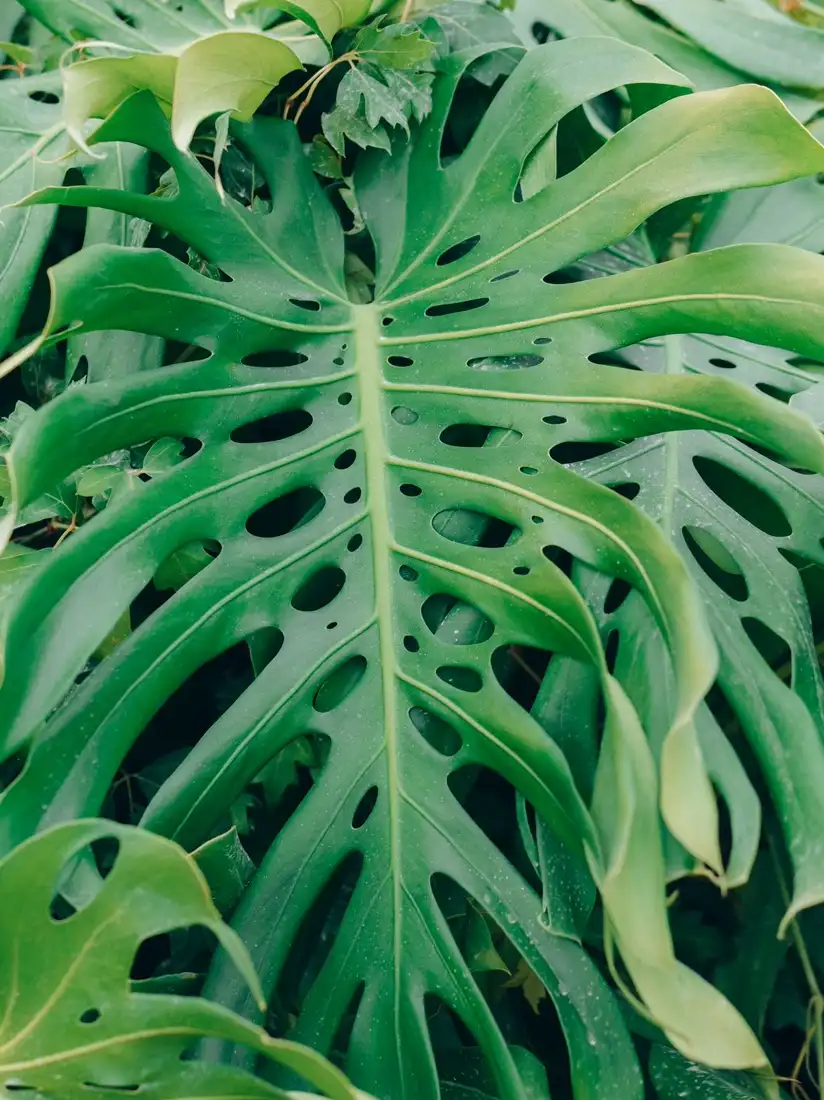
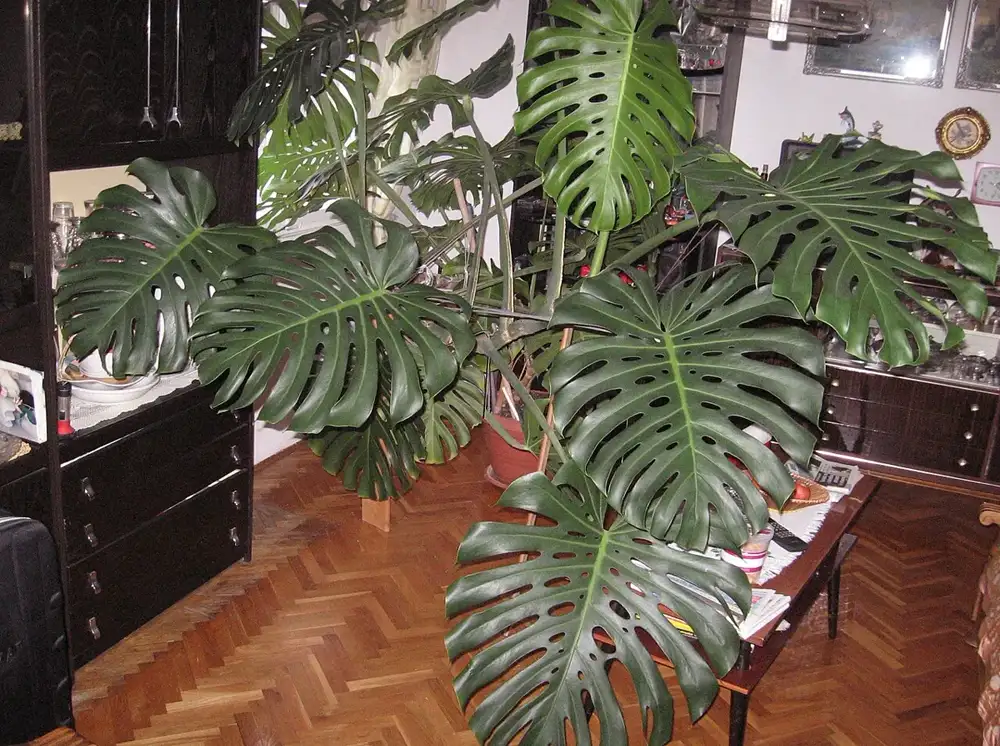
A monstera is a large, floor-standing climber with wide, fenestrated leaves hanging right at dog height. To a bored dog or a teething puppy, a big floppy leaf looks like a tug toy, so dogs do not just nibble a monstera, they grab, shred, and shake it. That play behaviour crushes far more leaf cells at once, firing more crystals in a single mouthful than a cat’s cautious bite ever would.
Body size then decides the dose. A shredded leaf is a mild sting for a Labrador but a much bigger relative hit for a Chihuahua or a puppy, so small breeds and pups earn a quicker call to the vet.
How dangerous is it really? The honest severity answer
Here is the context scare headlines skip. Monstera chewing is painful and unpleasant, but it is rarely life-threatening for a healthy adult dog.
The burning mouth acts as its own deterrent, so most dogs drop the leaf and quit long before eating a harmful quantity. Typical cases settle within a few hours to a day.
The exceptions deserve respect. Puppies, small breeds, senior dogs, and the rare dog that swallows a large amount can react more strongly, and significant mouth or throat swelling can interfere with breathing. Monstera is a mild-to-moderate toxin for dogs, and its symptoms are usually oral rather than systemic, in line with the plant’s known chemistry. Respect it, do not panic over it. When unsure, a quick call to your vet beats guessing.
What about the monstera fruit, sap and paws?
This is the part most dog guides leave out. Monstera deliciosa is grown in some countries for its edible fruit, but only the fully ripe fruit is safe, and even then only for people.
Every unripe part, including the green fruit, the stalks, and the milky sap, is loaded with the same oxalate crystals. Botanical references flag the whole plant as a contact and ingestion irritant because of its needle-like calcium oxalate raphides. So a dog that bites an unripe fruit or licks cut sap gets the same mouth sting as chewing a leaf.
The sap point matters for dogs especially, because they shred leaves and then lick their paws. Sap on the paws or coat is carried straight back to the mouth. That is why rinsing the paws, not just the mouth, is part of good first aid.
What to do right now if your dog chewed monstera
Work through this calmly, in order.
First, remove the plant and any leaf fragments from your dog’s reach, and check its mouth for pieces you can gently remove. Rinse or wipe the mouth, rinse any sap off the paws, and offer fresh water. A lick of plain yoghurt helps rinse crystals off the tongue too.
Do not induce vomiting unless a vet tells you to. Then watch. Mild drooling and a vomit or two can be monitored at home. Call your vet or an animal poison line if signs are severe, last past a few hours, or your dog seems weak. Bring a photo or a piece of the plant for identification. Our plant doctor tool can help you confirm the plant. Again, this is general information, and your vet’s advice always comes first.
Monstera, pothos and the aroid family: one shared risk
Monstera belongs to the aroid family, and that is the practical headline for dog owners. The exact same calcium oxalate chemistry runs through pothos, philodendron, peace lily, ZZ plant, and dieffenbachia.
So a dog-proofing plan that only handles the monstera misses most of the risk on the same plant shelf. If you keep a mixed collection, treat them as one category. Our guides on pothos toxicity in dogs and snake plant toxicity in dogs cover the neighbours, so between the three you can screen almost any common houseplant. One difference worth noting: snake plant irritates the gut through saponins, while monstera and pothos sting the mouth through oxalate needles.
Keeping dog and monstera apart: the big-plant problem
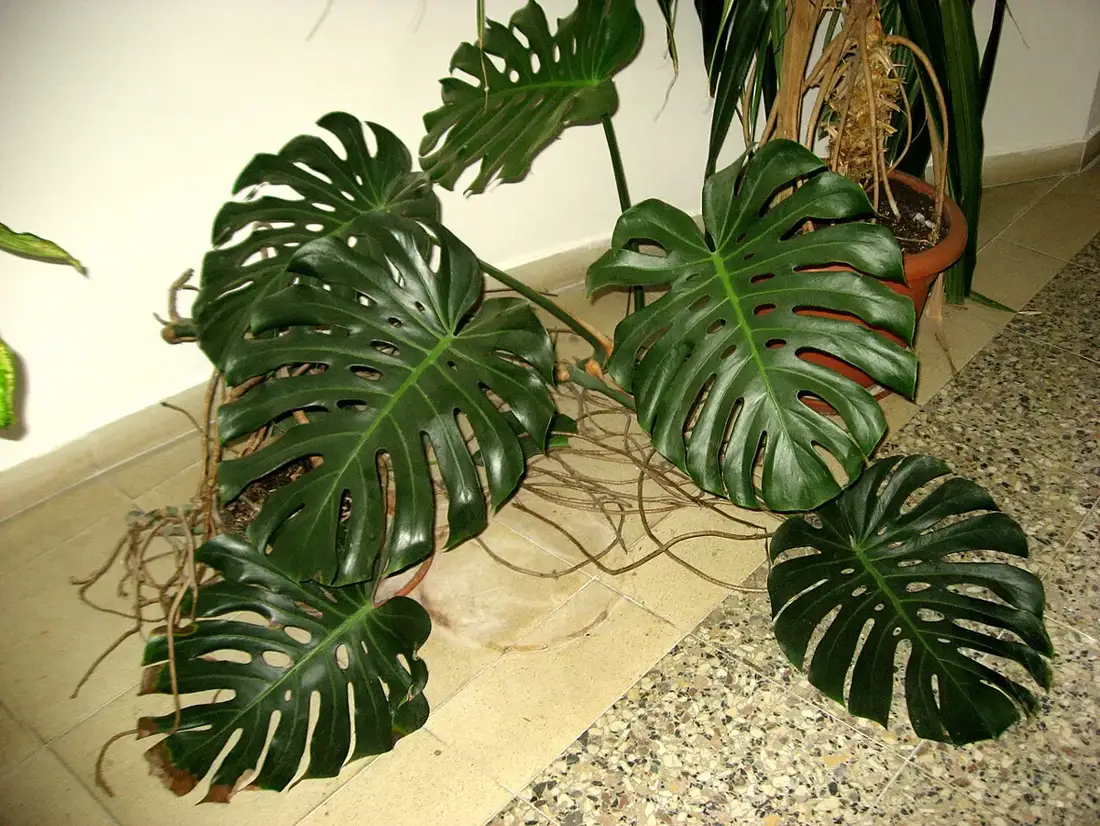
A monstera is not a small shelf plant you can lift out of reach. It is a large, floor-standing climber with wide leaves and, often, a moss pole. That is a lot of chewable surface right at dog height.
The good news for dog owners is that a dog cannot climb the moss pole the way a cat does, so lifting the plant helps more here than it would for a cat. Raise the pot on a sturdy plant stand, keep the lowest leaves trimmed up off the floor, and anchor tall plants so a big dog cannot knock them over. If your dog is a determined shredder, a closed plant room is the surest fix. Our monstera legginess guide covers the trimming and support side.
Back it up with training and redirection: a firm “leave it” cue, a proper chew toy, and enough exercise to burn off the boredom that drives leaf-shredding.
Five safe swaps that keep the same jungle look
If you cannot keep them apart, swap the plant, not the dog. These non-toxic plants cover monstera’s big, leafy, statement job:
| Safe plant | What it replaces |
|---|---|
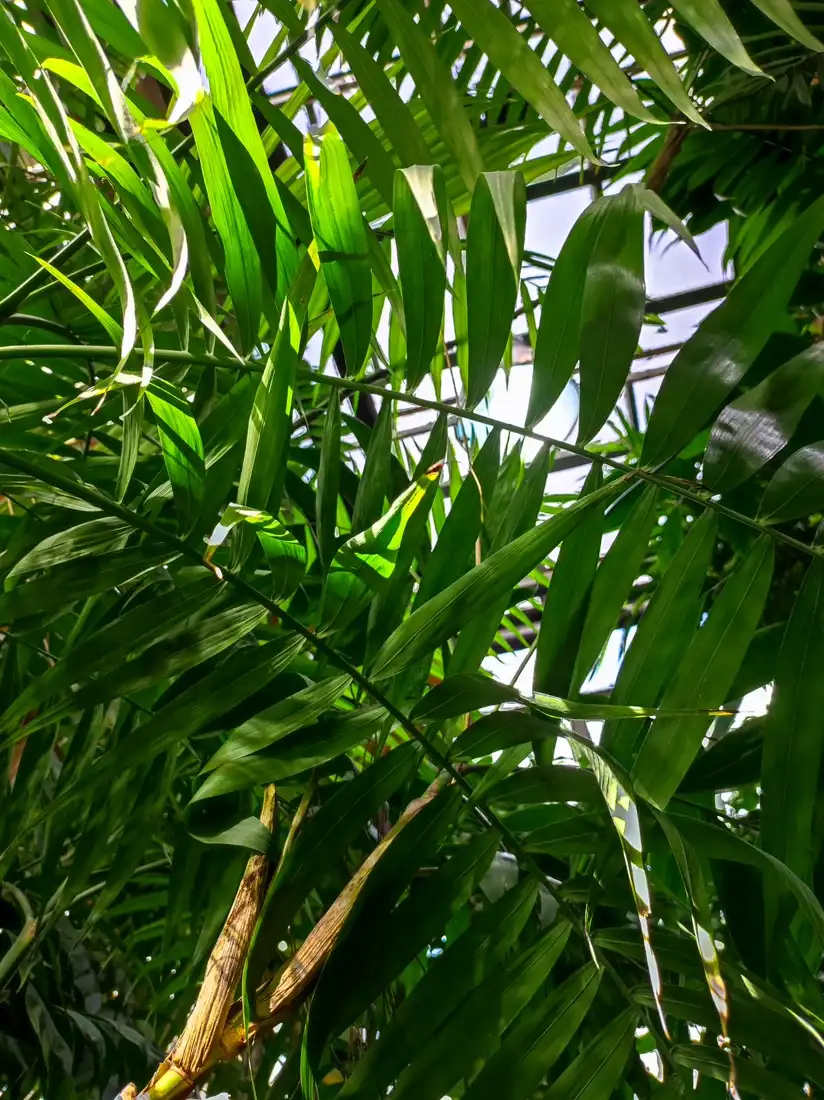
| Parlour palm | Tall, lush floor greenery |
| Areca palm | Big architectural jungle presence |
| Calathea | Bold patterned decorative leaves |
| Boston fern | Full, cascading foliage volume |
| Spider plant | Easy, near-indestructible greenery |
All five appear on the ASPCA’s non-toxic list. Our pet-safe houseplants guide ranks the full roster, and our spider plant care guide covers the easiest swap of all.
Which monstera varieties are toxic? All of them
Deliciosa, adansonii (the Swiss cheese plant), Thai constellation, borsigiana: every monstera variety carries the same calcium oxalate crystals, because the chemistry belongs to the whole genus and the wider aroid family.
The popular “mini monstera” (Rhaphidophora tetrasperma) is not a true monstera, but it is another aroid and carries the same oxalate risk, so treat it identically. Do not assume a smaller or trendier cultivar is any safer.
The safest habit is simple. Before any new plant joins a dog household, look it up against a toxic-plant list first, whatever the label calls it.
Monstera and dogs step by step
- Know the risk: painful, common, rarely fatal, worse for small dogs and puppies.
- After chewing: remove plant, rinse mouth, rinse paws, offer water.
- Never induce vomiting without vet instruction.
- Call the vet for severe, persistent, or breathing symptoms.
- Raise the pot and trim low leaves, since a dog cannot climb the pole.
- Swap in pet-safe leafy plants where separation fails.
A dog household can absolutely stay jungle-green. It just chooses its greenery, and its placement, deliberately.
Monstera and dogs in homes worldwide
Monstera has become one of the most popular houseplants on the planet, trending in dog-owning homes from New York and London to Sydney and Toronto, and the questions are identical everywhere.
In India, the monstera has boomed as an urban statement plant in apartments and cafés, usually as a big floor pot with a moss pole, which is exactly the dog-access format. The fixes translate directly: raise the pot, keep low leaves trimmed up, give the dog a proper chew toy, and know your nearest vet’s number.
Wherever you live, save an animal poison helpline number in your phone before you need it, and treat any new plant as a quick toxicity lookup first. Our monstera care guide covers the plant’s side of the household, and our pet-safe plant guide covers the dog’s.
Frequently asked questions
What happens if my dog eats a monstera leaf?
Expect immediate mouth irritation: drooling, lip smacking, face rubbing, and pawing at the mouth, often followed by a vomit or two. The needle-like calcium oxalate crystals sting on contact, and that sting usually stops the dog after a bite. Remove the plant, rinse the mouth, rinse the paws, and offer water. Most dogs recover within hours. Call your vet if vomiting repeats, signs last beyond a few hours, or you see any swelling or breathing difficulty.
Can a monstera plant kill a dog?
Fatalities are very rare. Monstera crystals cause local pain rather than organ-damaging systemic poisoning, and the burning mouth stops most dogs before they eat much. The realistic risks sit with puppies, small breeds, and the unusual dog that swallows a large amount, where severe mouth and throat swelling needs urgent care. Treat monstera as a plant to keep away from dogs, not a death sentence on your living-room floor.
Is monstera fruit safe for dogs?
No. Only the fully ripe monstera deliciosa fruit is safe, and only for people, not dogs. Every unripe part, including the green fruit, stalks, leaves, and milky sap, carries the same calcium oxalate crystals that sting the mouth. Keep any fruiting monstera and its cut sap well away from pets, and rinse a dog’s paws if it touches the sap, since licking carries the irritant back to the mouth.
Do dogs usually stay away from monstera?
Less reliably than cats. A cat’s fussy palate makes it quit at the first sting, but bored dogs, teething puppies, and big tuggable leaves defeat the theory regularly, and a floor monstera is easy to reach and shred. Give a chew-prone dog a proper toy as a legal outlet, use deterrent sprays on the lower leaves, teach a firm “leave it” cue, and keep the monstera raised or in a room the dog does not enter.
What are the symptoms of monstera poisoning in a dog?
The signs are local and appear fast. Look for heavy drooling, foaming or lip smacking, pawing at the muzzle, and a reluctance to eat because the mouth hurts. Some dogs vomit once or twice, and the lips, tongue, or gums may look red or slightly puffy. The one sign that turns this from unpleasant into urgent is swelling that affects breathing or swallowing, which is rare but needs a vet at once.
How long do monstera symptoms last in a dog?
For most dogs the worst of the stinging fades within a couple of hours, and everything settles inside a day. The calcium oxalate crystals cause pain on contact rather than a poison that builds up in the body, so once the mouth is rinsed and the plant is gone, recovery follows quickly. If drooling, retching, or mouth pain is still obvious after several hours, or a dog refuses water, that is your cue to phone the vet rather than wait it out.
Is Monstera adansonii, the Swiss cheese vine, toxic to dogs too?
Yes. Adansonii, deliciosa, and the other trailing Monstera species all carry the same insoluble calcium oxalate crystals in leaves, stems, and sap, so the mouth-stinging risk is identical. A smaller-leaved vine is not a safer vine. Treat every Monstera in the house the same way: up on a shelf, in a hanger, or in a room the dog cannot browse, and clean up any snipped stems that ooze sap.
Is a mini monstera (Rhaphidophora tetrasperma) safe for dogs?
Despite the nickname, mini monstera is a different plant, but it is not a safer one. Rhaphidophora tetrasperma also contains calcium oxalate crystals, so a chewing dog gets the same burning mouth, drooling, and possible vomiting. Gardeners often buy it as a compact alternative to a full Monstera and assume it is pet-friendly, which it is not. Keep it out of reach exactly as you would a true Monstera.
What should I do right now if my dog just ate monstera?
Take any plant pieces out of the mouth, then rinse the mouth and lips with cool water and wipe the paws so grooming does not carry more crystals back in. Offer a drink or a little cold food, which can ease the sting. Do not force vomiting. Watch closely for the next few hours, and if you see swelling, choking, repeated vomiting, or breathing trouble, call your vet or the ASPCA Animal Poison Control line on (888) 426-4435 straight away.
Can a dog be harmed by monstera without eating it, just from the sap?
The sap can irritate. Monstera’s juice holds the same crystals as the leaves, so it may cause redness or itching on skin and, more importantly, sting the mouth if a dog licks sap off its coat or paws after brushing past a freshly cut stem. Simply touching an intact leaf is low-risk, but a broken or pruned plant that weeps sap is worth wiping up, and worth washing off a curious dog that has been nosing around it.
Are puppies more at risk from monstera than adult dogs?
Yes, on two counts. Puppies explore with their mouths and teethe on anything chewable, so they are far more likely to bite a leaf in the first place. They are also small, which means a given amount of swelling in the mouth or throat is proportionally more serious for a little airway. If you have a puppy, do not rely on the plant’s own sting to teach the lesson; move every Monstera out of reach until the chewing phase passes.
Related guides
- Is pothos toxic to dogs
- Is snake plant toxic to dogs
- Is monstera toxic to cats
- Best pet-safe houseplants
- Monstera care guide
- Why is my monstera leggy
Still stuck? Ask the Plant Doctor
Describe the problem — yellow leaves, holes, no flowers — and get a clear answer in seconds. FreeAI can make mistakes. Answers are guidance, not a guarantee — check anything important against the guide it links to, and always read the label on any product before you use it.