Is Passionflower Toxic to Dogs? Ripe vs Unripe Explained
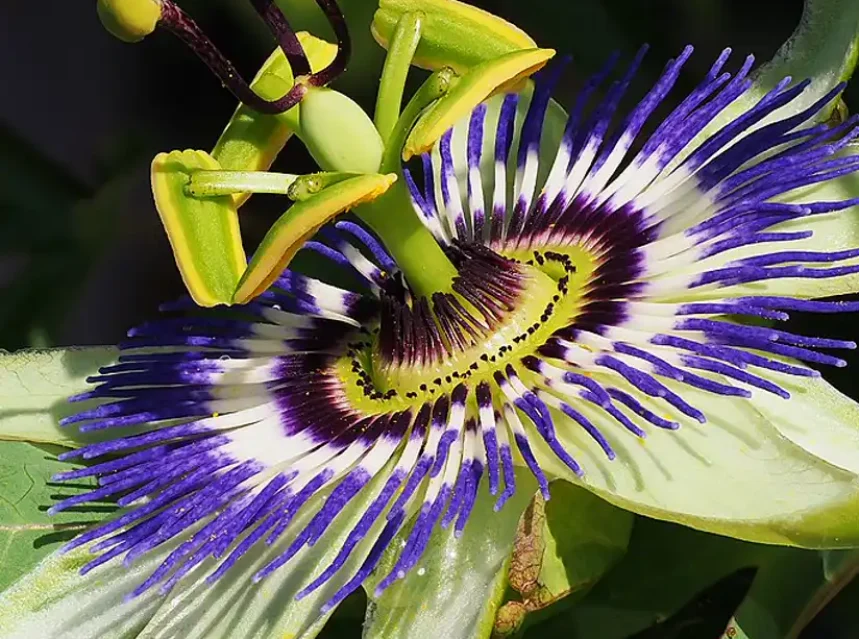
Is passionflower toxic to dogs? Mostly no. The flowers and the ripe fruit of common garden species are low-risk, and passionflower is not on the ASPCA’s toxic list. The catch is ripeness: unripe fruit and damaged or wilted leaves contain cyanogenic glycosides, compounds that release cyanide as they break down. A dog eating a ripe passion fruit is fine. A dog crunching green ones off the ground is not the same thing.
Quick answer: If your dog ate a ripe passion fruit or chewed a flower, watch it and relax. If it ate unripe green fruit or a pile of wilted vine clippings, call your vet, especially if you see drooling, panting, bright red gums, weakness, or collapse. This article gives general information, not veterinary advice.
🧰 In a hurry? Jump straight to our tested picks for this guide ↓
Is passionflower toxic to dogs? Ripeness decides
| What your dog ate | Risk level |
|---|---|
| A flower | Low, no action needed |
| A few healthy green leaves | Low, possible mild stomach upset |
| Ripe, fully coloured passion fruit | Low, the pulp is edible |
| Unripe green fruit | Real risk, cyanogenic compounds, call the vet |
| Wilted or crushed leaves and clippings | Highest cyanide release, call the vet |
| Drooling, panting, red gums, staggering | Emergency, go now |
Our climber swap list, checked honestly
We list passionflower as a dog-safer climber alongside climbing roses, jasmine, and honeysuckle. That advice holds, and this post exists to say exactly where the fine print is.
The fine print is not the flower. It is the fruit, and only while it is green. That is a genuinely different risk shape from wisteria, where the seed pods are always dangerous, or morning glory, where the seeds carry nervous-system alkaloids no matter what.
Passionflower’s hazard has an expiry date. Let the fruit ripen, and it disappears.
Cyanogenic glycosides: the compound that ripens away
This is the mechanism behind every honest passionflower warning, and it is worth understanding, because it explains the strange advice that follows.
Unripe Passiflora fruit and the leaves contain cyanogenic glycosides. On their own they are harmless. But when plant tissue is crushed, chewed, or wilting, enzymes convert them into hydrogen cyanide.
Two things follow. First, ripening breaks these compounds down, which is why ripe passion fruit is a supermarket item and green fruit is not. Second, wilted plant material is more dangerous than fresh, because the damage has already started the conversion. A pile of vine prunings left drying on the lawn is the worst-case version of this plant.
The good news for most owners: the ASPCA plant database does not list common passionflower among its toxic plants, and serious poisonings in dogs are rare. The risk is real but narrow.
Cyanide signs are fast, and they look wrong
Most plant poisonings start with vomiting. Cyanide does not, and that catches owners out.
Cyanide blocks cells from using oxygen. So a dog can look like it is struggling to breathe while its gums stay bright cherry-red rather than turning blue. Watch for heavy drooling, rapid panting, dilated pupils, staggering, and in serious cases seizures or collapse. Onset is minutes to an hour, not the leisurely few hours of a gut irritant.
If you see those signs after your dog was near a passionflower vine, this is an emergency. Do not wait to see if it settles.
Why the fruit is the real-world trap
A vigorous passionflower drops things. That is what makes an otherwise safe plant worth a second look in a dog’s garden.
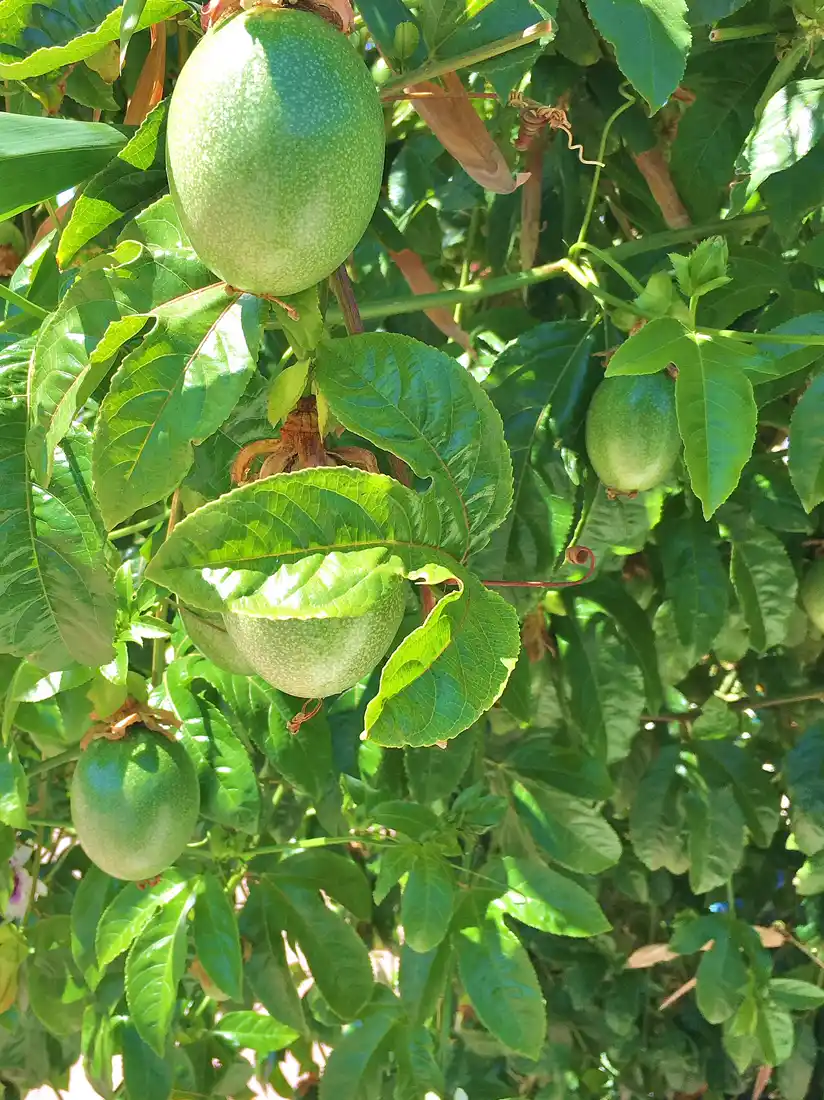
A mature vine sets fruit through summer, and not every fruit ripens. Small green ones abort and fall. Wind knocks others down early. They land on the ground under the vine, exactly where a bored dog patrols, and a hard green fruit is an appealing object to a dog that likes to carry and crunch things.
Ripe fruit rarely causes trouble. It goes soft, wrinkles, and smells like food, so a dog that eats one gets pulp and seeds, not toxin. It is the hard, green, ball-like ones that both look like a toy and carry the compounds.
What to do if your dog ate passionflower
Work through this in order.
First, identify what was eaten. A flower, a healthy leaf, or a ripe fruit means you can simply keep an eye on your dog. Unripe green fruit, or a mouthful of wilted clippings, changes the plan entirely.
Second, act on it. Call your vet or an animal poison line immediately for any unripe fruit or wilted-leaf ingestion, even if your dog seems fine, because cyanide moves fast. Do not induce vomiting unless a vet tells you to. Our plant doctor tool helps you confirm the plant if you are unsure what your dog got into. Your vet’s advice always comes first.
Growing passionflower safely with a dog
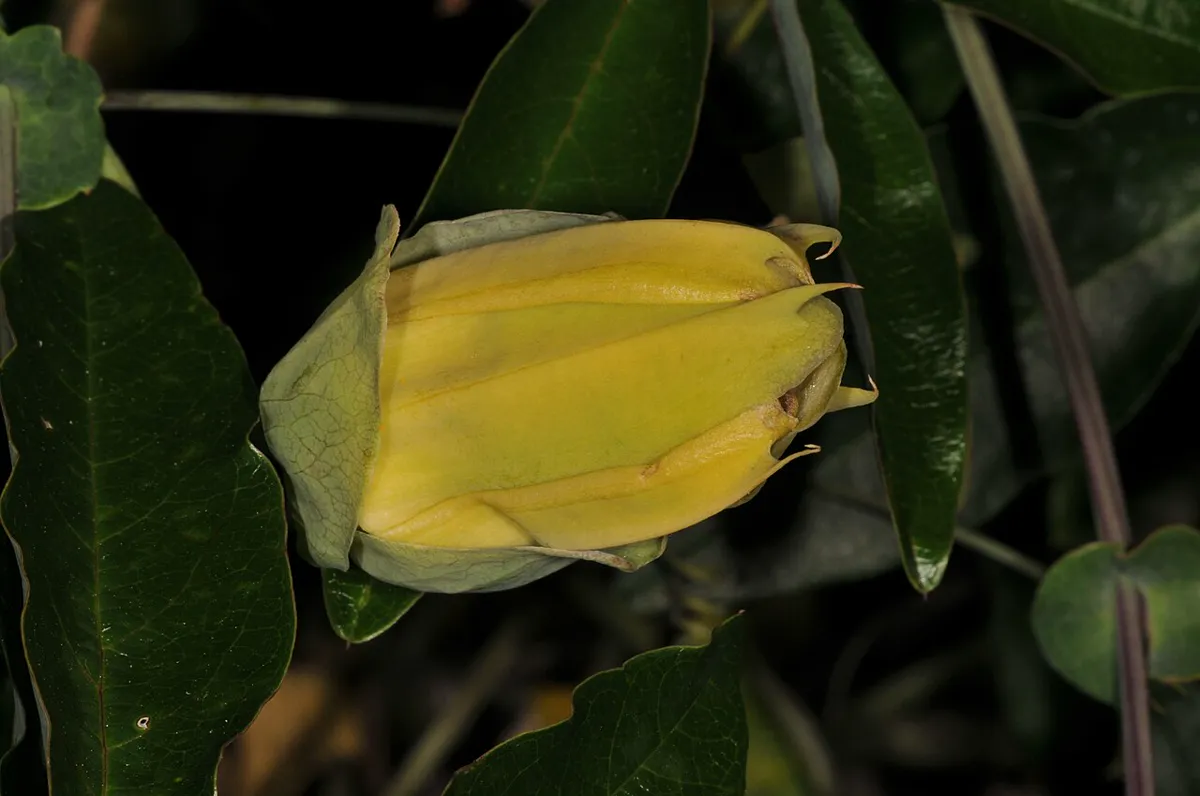
- Pick up dropped fruit daily in summer, especially the small green ones. This is the single most useful habit.
- Never leave prunings on the ground. Wilting clippings are the most dangerous form of this plant. Bag them straight away.
- Grow it high. An arch, pergola, or tall trellis keeps flowers and developing fruit above a dog’s reach.
- Let fruit ripen on the vine where you can, rather than knocking it down green.
- Know your species. Maypop (P. incarnata) and blue passionflower (P. caerulea) are the usual garden climbers; edible passion fruit is P. edulis. Ornamental hybrids vary, so treat unfamiliar green fruit with caution.
Our passion fruit growing guide covers support, pruning, and getting fruit to ripen properly, which doubles as your safety routine.
Passionflower and dogs step by step
- Flowers: low risk. Not a problem.
- Ripe fruit: low risk. The pulp is edible.
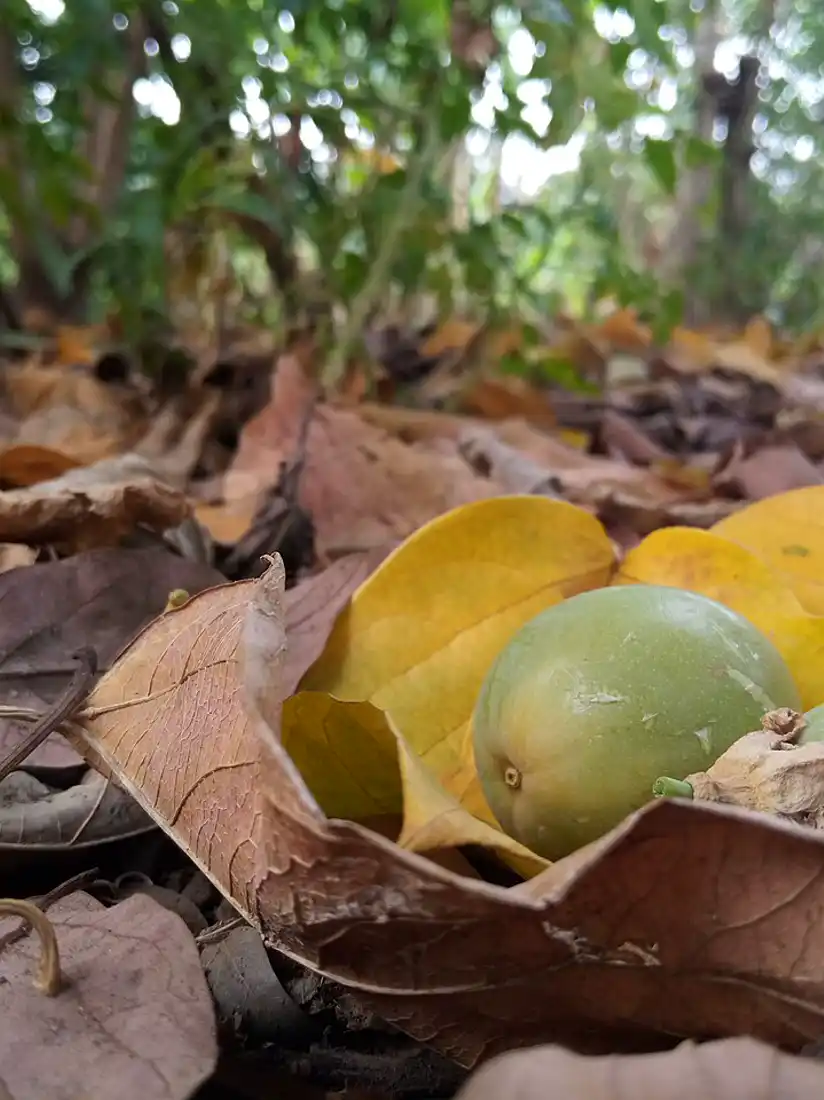
- Unripe green fruit: the actual hazard, cyanogenic glycosides.
- Wilted leaves and clippings: worst form, highest cyanide release.
- Cyanide signs are fast: drooling, panting, cherry-red gums, staggering.
- Any green fruit or wilted-clipping ingestion: vet, now.
Passionflower stays on our recommended climber list. It earns that place because the risk is manageable with a broom, not because it is risk-free.
Passionflower and dogs in gardens worldwide
Passiflora is a huge genus of well over 500 species, native to the Americas and now grown across Europe, Asia, Africa, and Australia. That variety is why blanket answers fail.
In cooler climates like the UK, blue passionflower (P. caerulea) is the common hardy climber. It fruits enthusiastically, and in a British summer plenty of those orange fruits never fully ripen, which raises the odds of green fruit on the lawn.
In India, and across warm regions generally, P. edulis is grown for actual fruit on terraces and boundary walls. Warmth means better ripening, so the ripe-fruit share is higher, but a heavy-cropping vine also drops more, so a daily sweep matters just as much.
Wherever you live, save an animal poison helpline number in your phone before you need it.
Frequently asked questions
Can dogs eat passion fruit?
Ripe passion fruit pulp is generally considered safe and non-toxic for dogs in small amounts. The concern is unripe fruit, which contains cyanogenic glycosides that release cyanide when chewed. The tough rind and hard seeds are also not ideal for dogs and can cause digestive upset or, rarely, a blockage in a small dog that swallows chunks. Passion fruit is not a food dogs need, so treating it as an occasional accident rather than a snack is the sensible approach.
What happens if my dog eats an unripe passionflower fruit?
Green passion fruit contains cyanogenic compounds that convert to cyanide when the tissue is chewed and crushed. A small amount may cause nothing at all, but a larger dose can act quickly, blocking the body’s ability to use oxygen. Watch for heavy drooling, rapid panting or apparent breathlessness, bright cherry-red gums, dilated pupils, staggering, and in severe cases seizures or collapse. Call your vet immediately rather than waiting, because the onset is often minutes, not hours.
Are passionflower leaves poisonous to dogs?
Healthy fresh leaves are low-risk, and a dog that chews one usually gets nothing worse than mild stomach upset. Wilted or crushed leaves are a different matter, because damage begins the enzymatic process that releases cyanide. That makes a pile of vine clippings drying on the lawn the most dangerous form of this plant, more so than the growing vine itself. Bag prunings immediately instead of leaving them where a bored dog might chew them.
Is passionflower safe to plant if I have a dog?
Yes, for most households, and it remains one of the better flowering climbers for a dog garden. It is not on the ASPCA’s toxic plant list, and serious poisonings are rare. Manage it sensibly: grow it up an arch or tall trellis, sweep up dropped fruit daily through summer while the small green ones fall, bag prunings straight away, and let fruit ripen on the vine. Those habits remove nearly all of the practical risk.
Are passionflower seeds toxic to dogs?
The hard seeds inside the fruit are more of a physical nuisance than a poison. In ripe passion fruit the cyanogenic compounds have largely broken down, so a few swallowed seeds are unlikely to poison a dog, but a mouthful of tough seeds and rind can irritate the stomach or, in a small dog that gulps chunks, contribute to a blockage. The bigger seed-related risk sits with unripe green fruit, where the compounds have not yet mellowed.
Is passionflower tea or a calming supplement safe to give a dog?
Passionflower is traditionally used as a calming herb for people, and some studies suggest a mild effect, but that history does not make it a safe do-it-yourself remedy for dogs. Canine doses are not well established, and many human tinctures contain alcohol or added ingredients that are risky for dogs. Do not give your dog a human supplement to calm it; ask your vet, who can suggest something proven safe. This is general information, not veterinary advice.
Will passion fruit give my dog diarrhoea?
It can. Passion fruit is high in fibre and packed with tough seeds and a leathery rind, none of which a dog’s gut is built to process in quantity. A small taste of ripe pulp is usually fine, but a whole fruit, especially with the rind, often means a loose stool or a bout of vomiting. Passion fruit is not a food dogs need, so keep any sharing to a tiny amount of the ripe inner pulp and skip the rind and seed mass.
Can puppies eat passion fruit safely?
Go easy. A puppy’s digestive system is more sensitive than an adult dog’s, and its small size means the fibre, seeds, and any traces from a less-than-ripe fruit hit harder. A lick of ripe pulp is unlikely to cause harm, but there is nothing a puppy gains from it nutritionally, and green fruit should be kept away entirely. If you want to offer a fruit treat to a young dog, a vet-approved dog-safe option is a better choice than passion fruit.
Is the ornamental blue passionflower (Passiflora caerulea) dangerous to dogs?
Blue passionflower is the vigorous climber many gardeners grow for its striking flowers, and it fits the general passionflower pattern: the foliage and ripe fruit are low-risk, while the unripe orange-yellow fruit is often noted as mildly toxic and can upset a dog that eats it. It is not on the ASPCA’s toxic list, and serious cases are rare, but the loose, fallen green fruit is the part to sweep up if a dog forages beneath the vine.
My dog ate a whole passion fruit including the rind — what should I watch for?
Keep an eye on the stomach and the gut. Most dogs will simply have an upset — drooling, vomiting, or diarrhoea from the fibre, seeds, and rind — and settle within a day. Offer water and a bland, small meal. Watch a small dog more closely for signs of an obstruction, such as repeated vomiting, a painful belly, or straining with no result, and call your vet if any of that appears or if the fruit was clearly unripe and green.
Are there passionflower relatives or lookalikes that are more dangerous to dogs?
Within the passionflower group the differences are mostly about ripeness rather than one species being a hidden killer. The real confusion comes from unrelated plants sometimes called “passion” or grown alongside it, and from genuinely toxic climbers a dog might reach on the same trellis. The safe habit is to identify exactly what is growing, let true passion fruit ripen fully, bag prunings promptly, and not assume every vine in a mixed planting is as low-risk as passionflower.
Related guides
- Is jasmine toxic to dogs
- Is honeysuckle toxic to dogs
- Is wisteria toxic to dogs
- Best pet-safe houseplants
- How to grow passion fruit
- Is clematis toxic to dogs
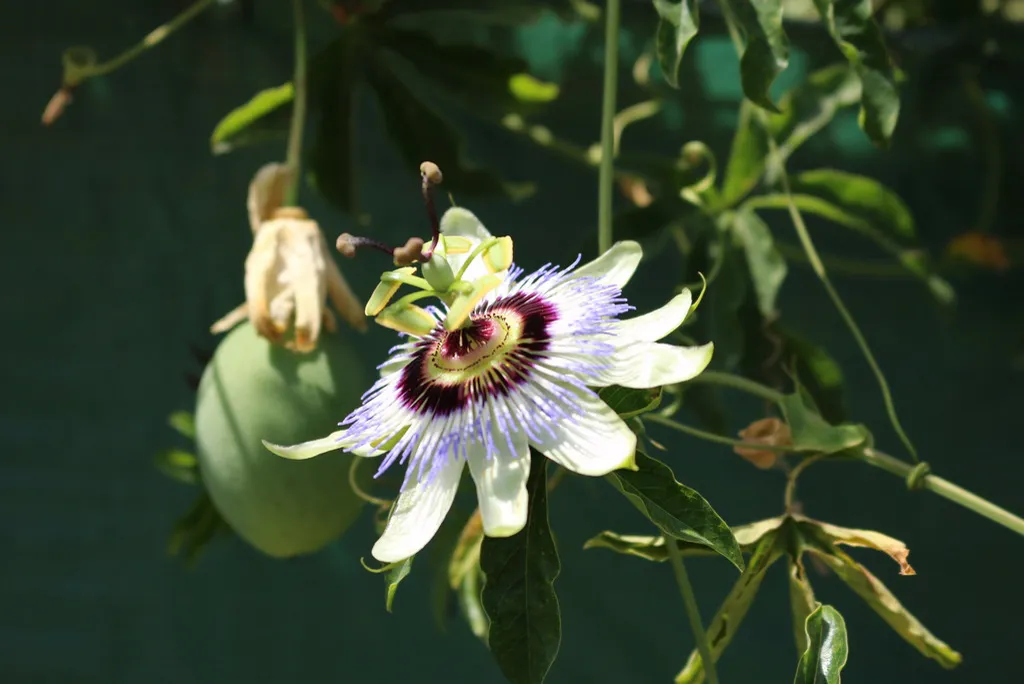
Featured image: Passiflora caerulea by Petar Milošević, CC BY-SA 4.0.
Still stuck? Ask the Plant Doctor
Describe the problem — yellow leaves, holes, no flowers — and get a clear answer in seconds. FreeAI can make mistakes. Answers are guidance, not a guarantee — check anything important against the guide it links to, and always read the label on any product before you use it.