Is Rubber Plant Toxic to Dogs? The Sappy Truth and First Aid
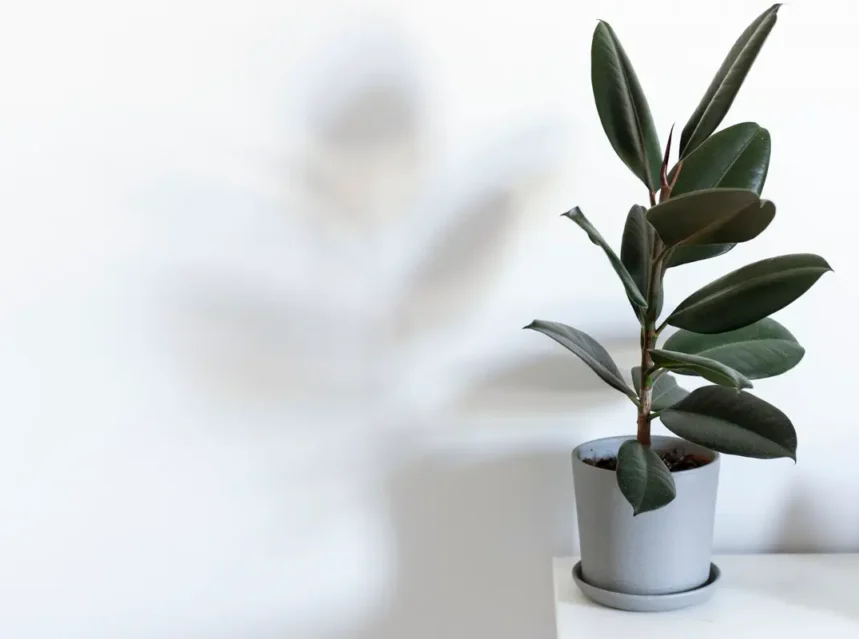
Is rubber plant toxic to dogs? Yes, but only mildly. The rubber plant (Ficus elastica) leaks a milky sap, or latex, when a leaf or stem is broken. That sap irritates a dog’s mouth, skin, and stomach. The reassuring part: it is not a deadly plant. A dog that chews it usually gets drooling, mild vomiting, or a red muzzle, not organ damage. Here is the full picture.
Quick answer: If your dog chewed a rubber plant, take the plant away. Wipe the sap from its mouth, paws, and coat, then offer fresh water. Do not induce vomiting. Watch for drooling, vomiting, or skin redness. It is usually mild, but call your vet if signs are strong or persist. This is general information, not veterinary advice.
🧰 In a hurry? Jump straight to our tested picks for this guide ↓
Is rubber plant toxic to dogs? Severity at a glance
| What you notice | What it means |
|---|---|
| Drooling or lip smacking after a chew | Sap irritating the mouth, usually mild |
| Mild vomiting or a loose stool | Common gut reaction, monitor at home |
| Red, itchy skin or muzzle where sap touched | Contact irritation, wash the area |
| Pawing at the mouth, refusing food briefly | Sore mouth, offer water and soft food |
| Repeated vomiting or ongoing distress | Call your vet |
| Swelling or breathing trouble | Rare, treat as an emergency |
Why rubber plant is different: the milky sap
This point sets the rubber plant apart, so understand it first. Many toxic houseplants sting with oxalate crystals, like pothos and monstera. The rubber plant works differently.
Its trouble is the milky white latex sap inside the leaves and stems. This sap contains irritating compounds and an enzyme called ficin. When a dog bites a leaf, the sap oozes out and irritates the mouth and gut.
The ASPCA lists the rubber plant (as “Indian rubber plant”) as toxic to dogs and cats. The signs it names are mild: oral irritation, salivation, and vomiting.
How dangerous is it really? The honest severity answer
Here is the reassuring truth, especially if you have just read about deadly plants. The rubber plant is a mild irritant, not a killer.
Unlike the sago palm, there is no liver toxin here. Unlike kalanchoe, there is no heart risk. The sap simply tastes bad and stings a little, so most dogs stop after one bite.
Typical cases settle within a few hours with simple home care. The exceptions are minor. Puppies, small breeds, and dogs with sensitive skin may react more, and a latex-sensitive dog can get a worse rash. Respect it, but do not panic over it.
The dog-specific risk: sticky sap on paws and coat
Here is where dogs need their own warning. With most toxic plants, the danger is only what a dog swallows. The rubber plant adds a second route.
A broken leaf leaks sticky latex that clings to fur, paws, and skin. A dog that brushes past, or shreds a low leaf, gets sap on its coat. Then it licks itself clean and swallows the irritant anyway.
That sap can also cause a contact rash on the skin it touches, especially the muzzle and paws. So with a rubber plant, wiping the coat matters as much as clearing the mouth.
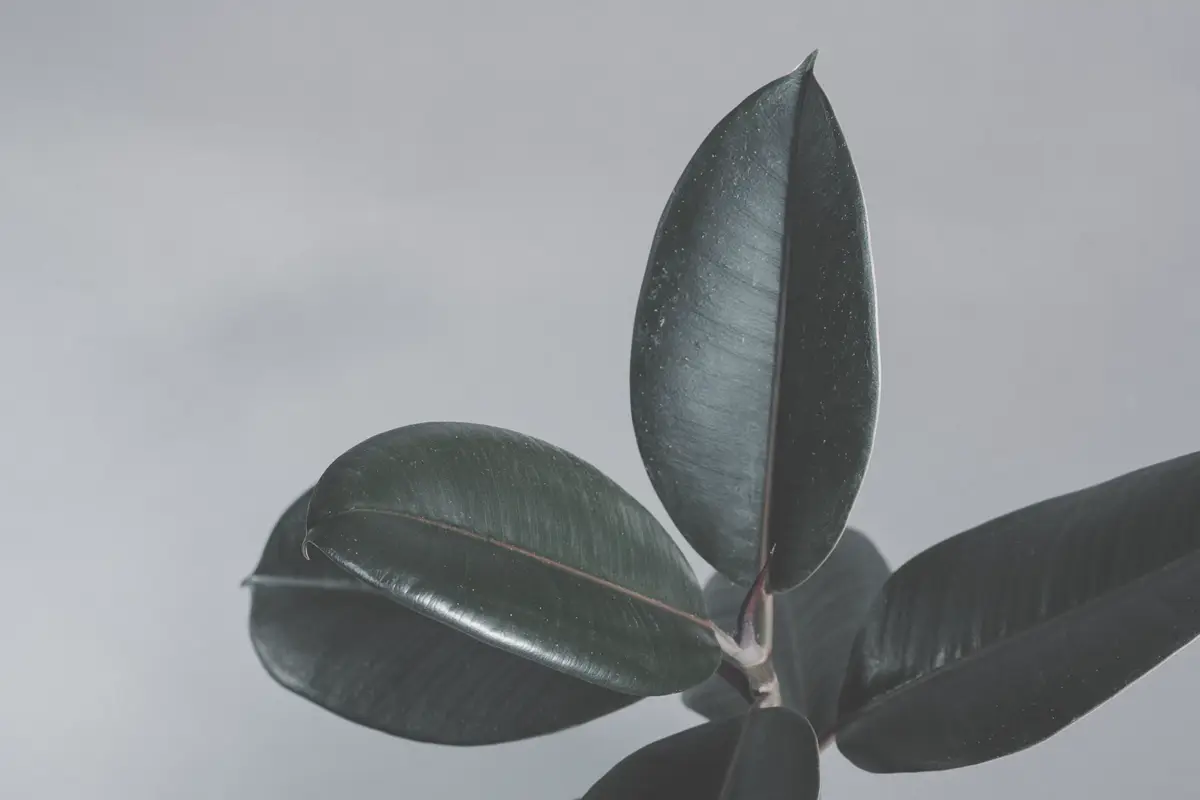
What to do right now if your dog chewed a rubber plant
Work through this calmly, in order.
First, remove the plant and any leaf pieces from your dog’s reach. Check its mouth and clear any fragments. Wipe the sticky sap from the mouth, muzzle, paws, and coat with a damp cloth. Offer fresh water.
Do not induce vomiting. Then watch. Mild drooling and a single vomit can be monitored at home. Call your vet or an animal poison line if vomiting repeats, the skin looks sore, or your dog seems unwell. Our plant doctor tool can help you confirm the plant. Your vet’s advice always comes first.
The ficus family: rubber plant, fiddle leaf and friends
The rubber plant belongs to the ficus family (Ficus elastica), and its relatives share the same sappy trick.
The fiddle leaf fig, the weeping fig, and the Indian laurel all carry the same irritating latex. So if you keep several fig-type plants, treat them as one mild-risk group. They all leak the same sap when a dog chews them.
None of these are deadly, but all can cause a sore mouth or a skin rash. Screen the whole ficus shelf together, and keep the low leaves out of reach.
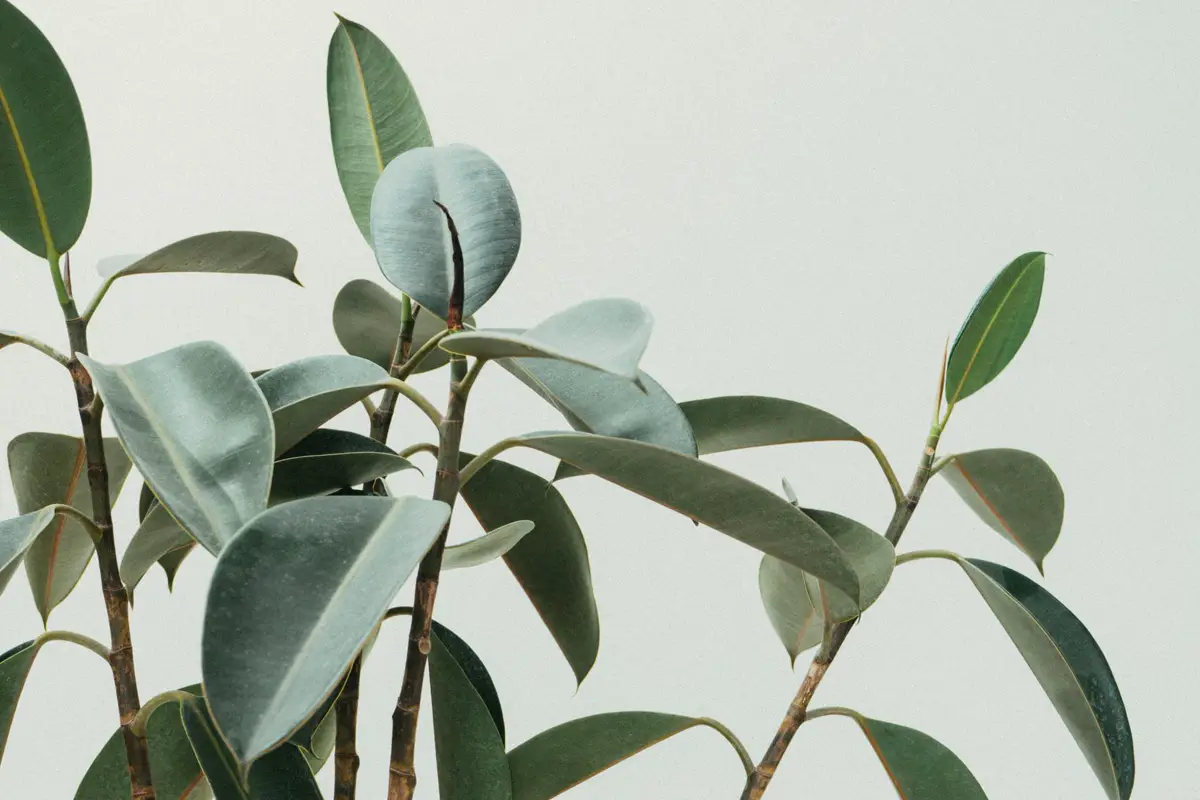
Keeping dog and rubber plant apart
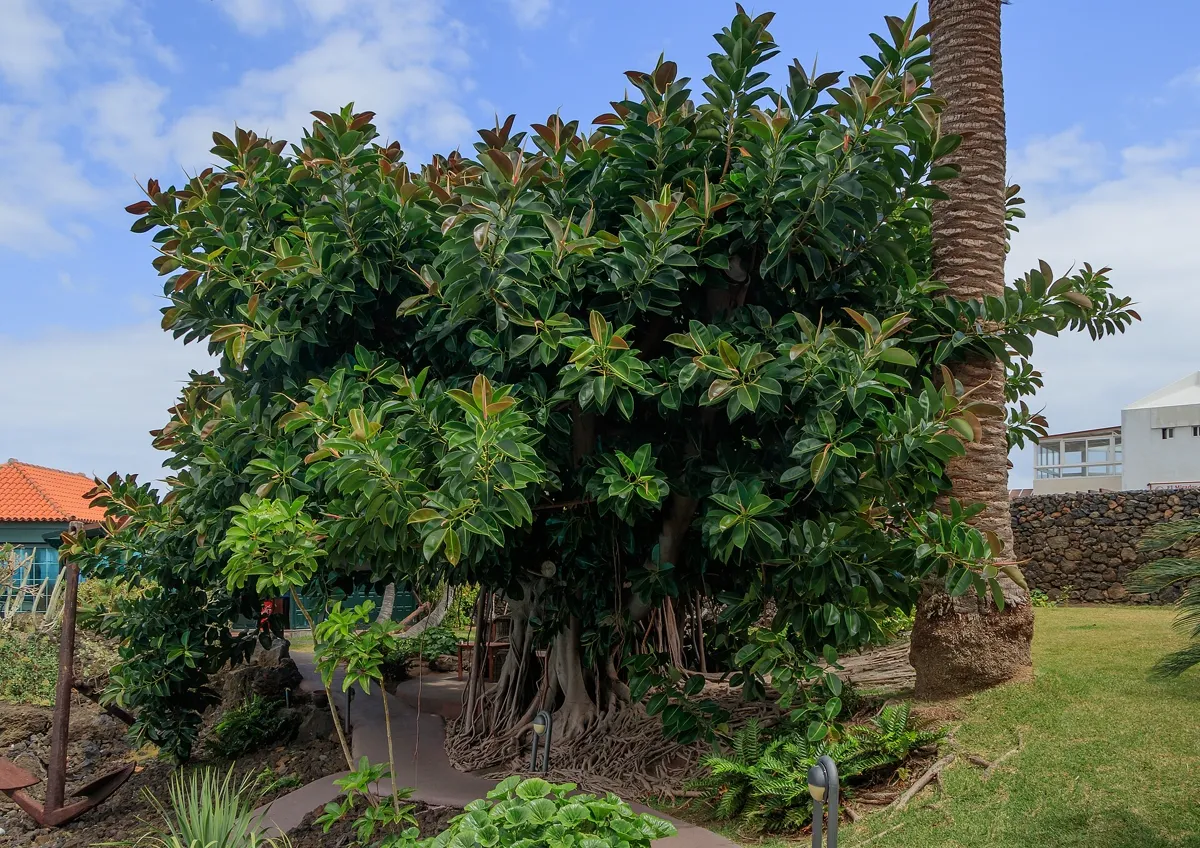
A rubber plant is usually a big, glossy floor plant grown as a statement piece. Its lowest leaves sit right at a dog’s level.
The good news is that a dog cannot climb. So raising the plant on a stand, or keeping the lower leaves trimmed up, puts the foliage out of reach. Wipe up any sap drips from pruning or dropped leaves promptly.
Back it up with training and redirection. A firm “leave it” cue, a proper chew toy, and daily exercise all cut the boredom that drives chewing.
Five pet-safe swaps that keep the same bold look
If you would rather not manage the sap, swap the plant, not the dog. These non-toxic plants cover the rubber plant’s big, glossy, statement job:
| Safe plant | What it replaces |
|---|---|
| Calathea | Bold, glossy, patterned leaves |
| Parlour palm | Tall, lush floor greenery |
| Areca palm | Big tropical statement presence |
| Boston fern | Full, cascading foliage volume |
| Spider plant | Easy, near-indestructible greenery |
All five appear on the ASPCA’s non-toxic list. Our pet-safe houseplants guide ranks the full roster. Our spider plant care guide covers the easiest swap of all.
Rubber plant and dogs step by step
- Know the risk: mild sap irritation, not a deadly poison.
- Remember the milky latex is the culprit, not crystals.
- After chewing: remove plant, wipe mouth, paws, and coat, offer water.
- Never induce vomiting without vet instruction.
- Call the vet for repeated vomiting or a sore skin rash.
- Raise the plant or trim low leaves, since a dog cannot climb.
A dog household can absolutely keep a rubber plant’s bold greenery. It just manages the sap and the low leaves with a little care.
Rubber plant and dogs in homes worldwide
The rubber plant is one of the most popular big-leaf houseplants on the planet. It stands in dog-owning homes from New York and London to Sydney and Toronto, valued as an easy, glossy statement plant.
In India, the rubber plant (often the Indian rubber tree) is a familiar indoor and garden plant, grown for its shine and shade. It is usually a large floor pot, right at dog height. Raise the pot or trim the lower leaves, give the dog a proper chew toy, and know your nearest vet’s number.
Wherever you live, save an animal poison helpline number in your phone before you need it. Our rubber plant care guide covers the plant’s side of the household. Our pet-safe plant guide covers the dog’s.
Frequently asked questions
What happens if my dog eats a rubber plant leaf?
Expect a mild reaction. The milky sap irritates on contact, so a dog usually drools, smacks its lips, and may vomit once or have a loose stool. Sap on the skin or muzzle can cause a red, itchy patch. Remove the plant, wipe the mouth, paws, and coat, and offer water. Do not induce vomiting. Most dogs recover within hours. Call your vet if vomiting repeats or the skin looks sore.
Can a rubber plant kill a dog?
No, this is not a deadly plant. The rubber plant is a mild irritant, with no liver or heart toxin like the sago palm or kalanchoe. Its sappy latex causes a sore mouth, mild stomach upset, or a skin rash, not organ failure. The realistic risks are minor and sit with puppies, small breeds, and latex-sensitive dogs. Keep it out of reach to avoid the discomfort, but there is no need to fear a fatal dose.
Is rubber plant sap irritating to a dog's skin?
Yes, that is one of its quirks. The milky white sap can cause contact irritation, a red or itchy patch, on the skin and muzzle it touches. A dog that brushes a broken leaf or steps in a sap drip can get a rash, then spread the irritant by licking. So with a rubber plant, wipe the coat and paws as well as the mouth, and wash your own hands after pruning.
Is the fiddle leaf fig as toxic as the rubber plant?
They are very similar. The fiddle leaf fig is another ficus, so it carries the same irritating latex sap as the rubber plant. Both cause mild mouth and stomach upset and possible skin irritation, and neither is deadly. If you keep several fig-type plants, treat them as one mild-risk group and keep the low leaves out of your dog’s reach.
How much rubber plant does a dog have to eat to get sick?
There is no strict toxic dose, because the rubber plant is a mild irritant rather than a potent poison. A dog that chews a leaf usually gets a sore mouth from the milky sap and stops there, and the bitter latex discourages a big meal. A small nibble tends to cause drooling and maybe one vomit. Larger amounts can bring more stomach upset, so watch puppies and small dogs more closely. Even so, a fatal dose is not a realistic worry with this plant.
How long do rubber plant symptoms last in a dog?
Usually only a short while. The mouth irritation, drooling, and any single vomit tend to appear soon after chewing and settle within a few hours to a day. A skin rash from the sap also fades once the area is cleaned. A dog that is comfortable and eating by the next day has generally recovered. Call your vet if vomiting repeats, the skin stays sore, or your dog seems genuinely unwell.
What should I do first if my dog eats a rubber plant leaf?
Keep it simple, since this is a mild irritant. Remove the plant, wipe the mouth, muzzle, and paws to clear away any sticky sap, and offer water to soothe the mouth. Do not try to make your dog vomit. Then watch for a skin rash where sap has touched, and for any repeated vomiting or dullness. Most dogs need nothing more than a wipe-down and a little monitoring, but call your vet if anything looks worse than mild.
Is a baby rubber plant (Peperomia) as risky as a real rubber plant?
No, and the shared name causes real confusion. The “baby rubber plant” is usually a Peperomia, which is listed as non-toxic to dogs, whereas the true rubber plant (Ficus elastica) has the irritant latex sap. So a Peperomia is a much safer choice for a dog household. Always check the botanical name rather than trusting the common one, because “rubber plant” is attached to several very different plants.
Are the leaves or the sap the dangerous part of a rubber plant?
The sap is the real irritant, and it runs through the leaves and stems. When a dog bites a leaf, it releases the milky white latex that stings the mouth and can upset the stomach, and the same sap can irritate skin on contact. The leaf tissue on its own is not a special poison; it is the latex inside that causes the trouble. That is why wiping away sap matters as much as removing the plant.
Do dogs usually leave rubber plants alone?
Many do, because the bitter, sticky sap is off-putting after one taste. But you cannot count on it. Bored dogs, teething puppies, and determined chewers will nibble despite the taste, and low leaves are an easy target. Give a chew-prone dog a proper toy as an outlet, teach a firm “leave it” cue, and keep the rubber plant raised or in a room the dog does not use.
What dog-safe large houseplants can replace a rubber plant?
If you want a big, leafy statement plant without the irritant sap, several are listed as non-toxic to dogs. A parlour palm or areca palm brings height safely, while a Boston fern adds lush foliage. A Peperomia, the true “baby rubber plant”, gives a similar glossy look on a smaller scale. Always confirm a plant against a reliable toxic-plant list before buying, since common names overlap and can mislead.
When should I call the vet after my dog eats a rubber plant?
Most cases are mild, but call your vet if vomiting repeats, the mouth or skin looks very sore or swollen, or your dog seems unwell rather than just briefly irritated. A puppy or very small dog warrants a call even for milder signs. The ASPCA Animal Poison Control Center on (888) 426-4435 can advise at any hour. This is general information, not veterinary advice, so let your own vet decide if you are in any doubt.
Related guides
- Is sago palm toxic to dogs
- Is jade plant toxic to dogs
- Is pothos toxic to dogs
- Best pet-safe houseplants
- Rubber plant care guide
- Why is my rubber plant dropping leaves
Still stuck? Ask the Plant Doctor
Describe the problem — yellow leaves, holes, no flowers — and get a clear answer in seconds. FreeAI can make mistakes. Answers are guidance, not a guarantee — check anything important against the guide it links to, and always read the label on any product before you use it.