Lithop Care
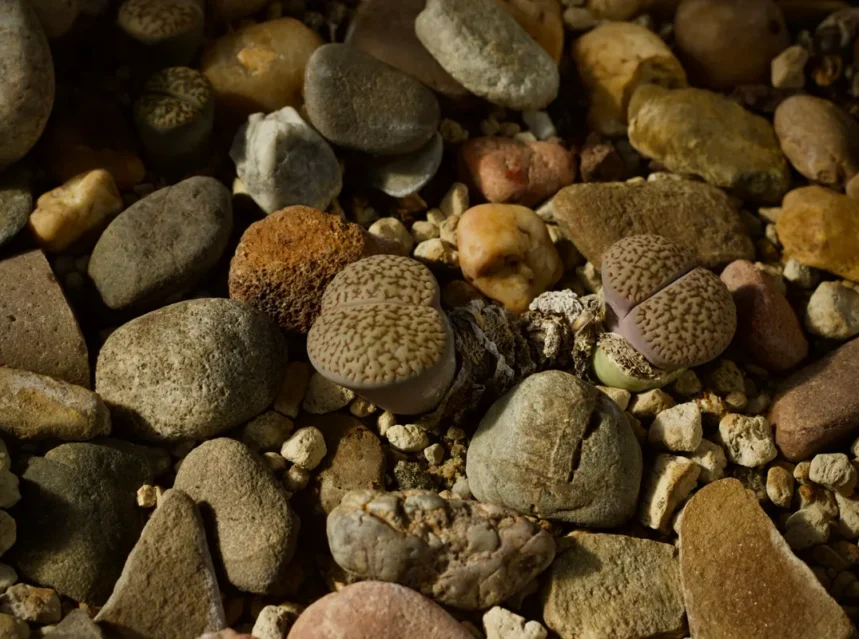
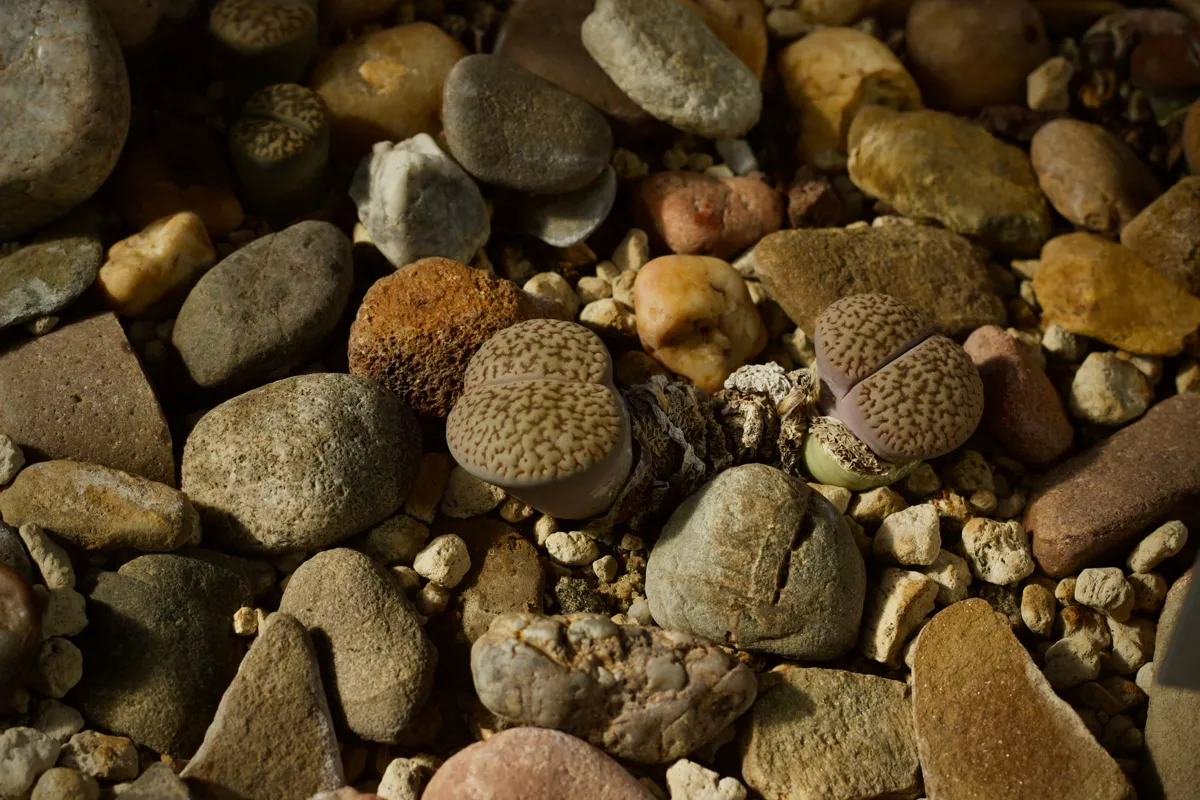
Lithops, commonly called living stones, are tiny succulents that mimic pebbles, each plant a pair of fused, swollen leaves that blends in among real stones — and they are among the most curious and low-water plants you can keep. Once you understand their strict watering rhythm, they are easy and almost endlessly long-lived. Here is the complete guide to lithops care.
Quick start: Give lithops the brightest light you have and very gritty, sharply draining soil. Water sparingly and only during their active growing periods, keeping them bone dry while dormant and while they renew their leaves. Overwatering is fatal. Get the watering cycle right and the rest is genuinely simple.
Experienced lithops growers agree that watering is everything, and almost every dead plant is a drowned one. The recurring lessons are clear: water only when the plant is actively growing, and never while it is dormant in summer or splitting to form new leaves; a deep gritty pot that dries fast is far safer than rich compost; and these plants want hours of strong light or they bloat and lose their stony shape. Many also note lithops can go weeks with no water at all. In short, think desert pebble, water rarely, and follow the leaf cycle.
🧰 In a hurry? Jump straight to our tested picks for this guide ↓
Lithops at a glance
| Feature | Detail |
|---|---|
| Botanical name | Lithops (family Aizoaceae) |
| Common name | Living stones, pebble plants |
| Plant type | Tiny stemless succulent |
| Light | Very bright; several hours of sun |
| Soil | Extremely gritty, fast-draining |
| Water | Only in active growth; none when dormant |
| Key event | Yearly leaf renewal (splitting) |
| Lifespan | Decades with the right care |
Why grow lithops?
Lithops are one of nature’s best disguises, looking so much like stones that they are easy to miss in their pots. That mimicry makes them endlessly intriguing, and a little dish of living stones is a real conversation piece.
They are also wonderfully suited to busy or forgetful gardeners, since they need watering only a handful of times a year. Long-lived, tiny, and undemanding once understood, lithops reward patience and a light touch rather than constant fussing.
They are perfect for tiny spaces too. A whole collection of different species and colour forms fits on a single sunny windowsill, each one slightly different in pattern, colour, and shade. For collectors who love variety without needing much room, few other plants pack so much interest into such a small footprint. Once you learn their rhythm, they are also among the most forgiving of all succulents to keep alive for many years.
History, origin & where it grows
Lithops are native to the dry deserts of southern Africa, especially South Africa and Namibia, where they grow half-buried among stones in fierce sun and almost no rain (see the Encyclopaedia Britannica). Their stone-like form hides them from grazing animals and helps them conserve water.
Collectors and houseplant growers around the world prize them for this strange beauty, and many species and colour forms are now grown from seed.
As houseplants, lithops are grown on bright windowsills across the US, UK, and worldwide. In India they suit a very bright, airy spot indoors, kept dry and protected from the monsoon humidity and heavy rain, which can quickly rot these dry-loving plants. Their desert nature means warmth and dryness matter far more than any particular climate.
Light — give them as much as possible
Lithops need very bright light, ideally several hours of direct sun a day on the brightest windowsill you have. In strong light they stay low, firm, and keep their patterned, stony tops.
Too little light is a common problem. Starved of sun, the plants stretch, bloat, and lose their colour and shape, becoming soft and elongated. A south-facing window is usually best, and a grow light helps in dull winters or dark rooms. More light, within reason, is almost always better.
Soil & pots
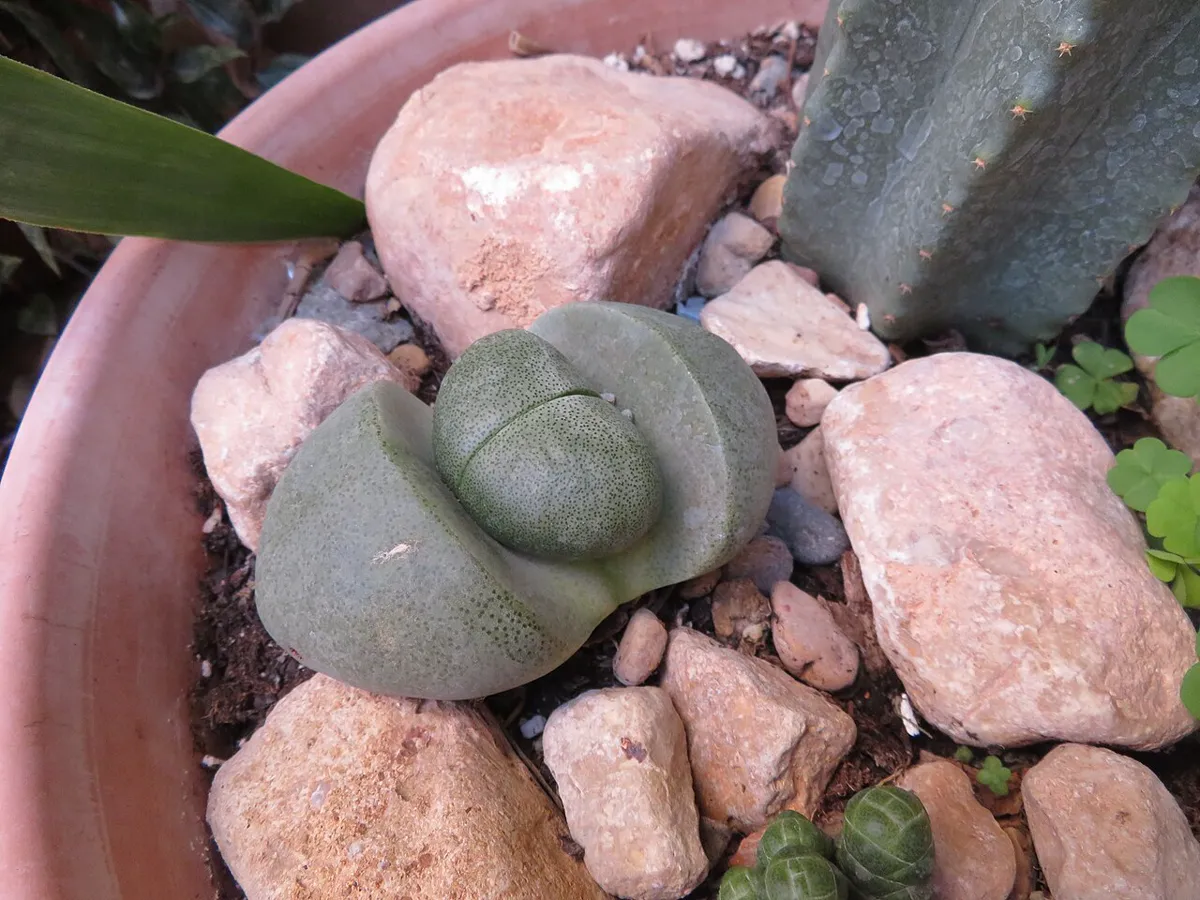
Drainage is everything. Lithops must have an extremely gritty, fast-draining mix, often half or more coarse grit, sand, or pumice mixed into a little cactus compost. They rot in ordinary, moisture-holding soil.
Use a pot with good drainage holes, and a deeper pot suits their surprisingly long taproot. A top layer of grit mimics their natural home and keeps the necks dry. The whole aim is a pot that dries out quickly and completely after watering, which is exactly what these desert plants need to stay firm and healthy through the year.
The lithops watering cycle
This is the heart of lithops care, and it follows their natural year rather than a fixed schedule. The golden rule is to water only when they are actively growing, and to keep them completely dry the rest of the time.
In general, water sparingly in autumn and spring when they grow and may flower. Keep them dry through summer dormancy, and crucially, give no water during leaf renewal in late winter and spring, when a new pair of leaves emerges from the old. During renewal the plant lives off its old leaves, which shrivel away, so watering then causes rot. When you do water, soak well, then let the soil dry out fully.
Leaf renewal & flowers
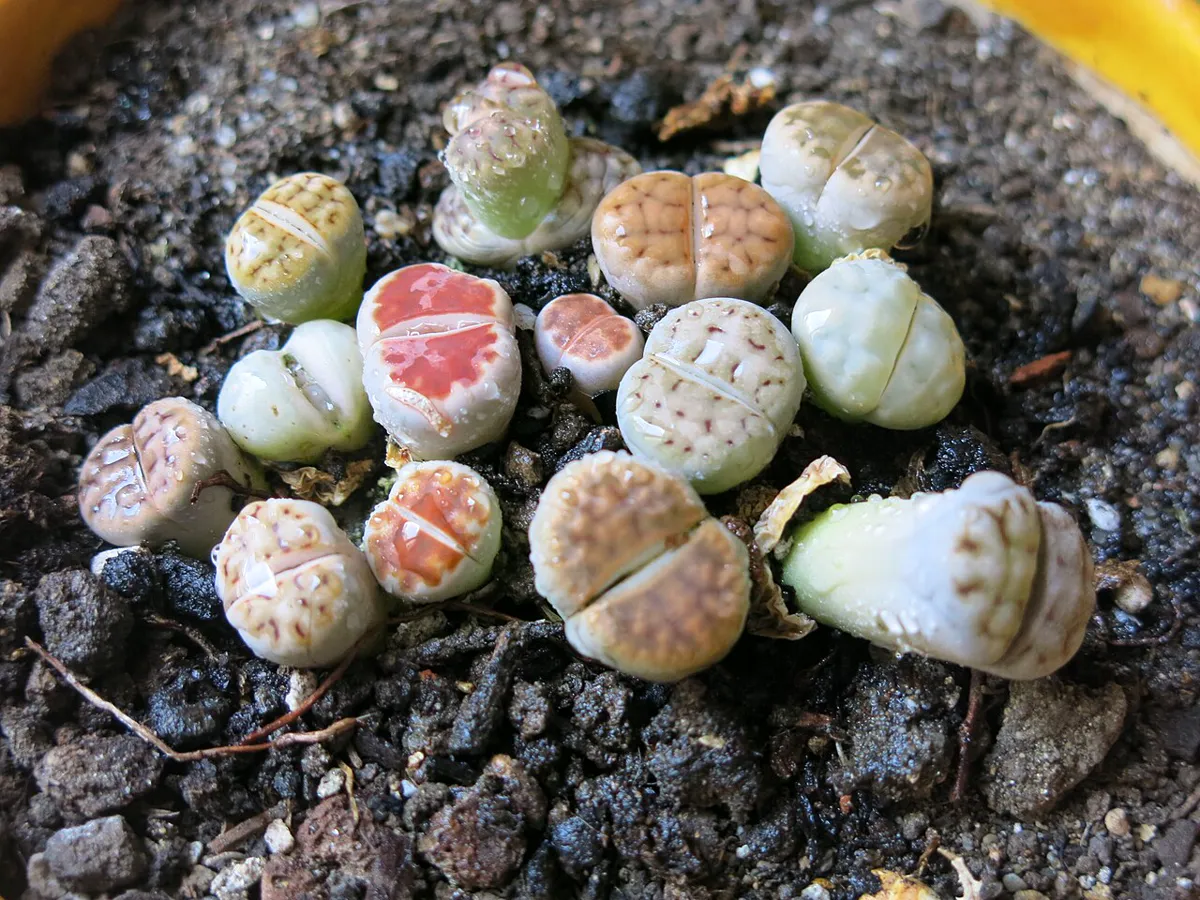
Once a year, lithops perform their strangest trick: leaf renewal. The old pair of leaves splits and wrinkles as a fresh new pair grows from inside, absorbing the old ones until only the new plant remains. This is normal and must happen dry.
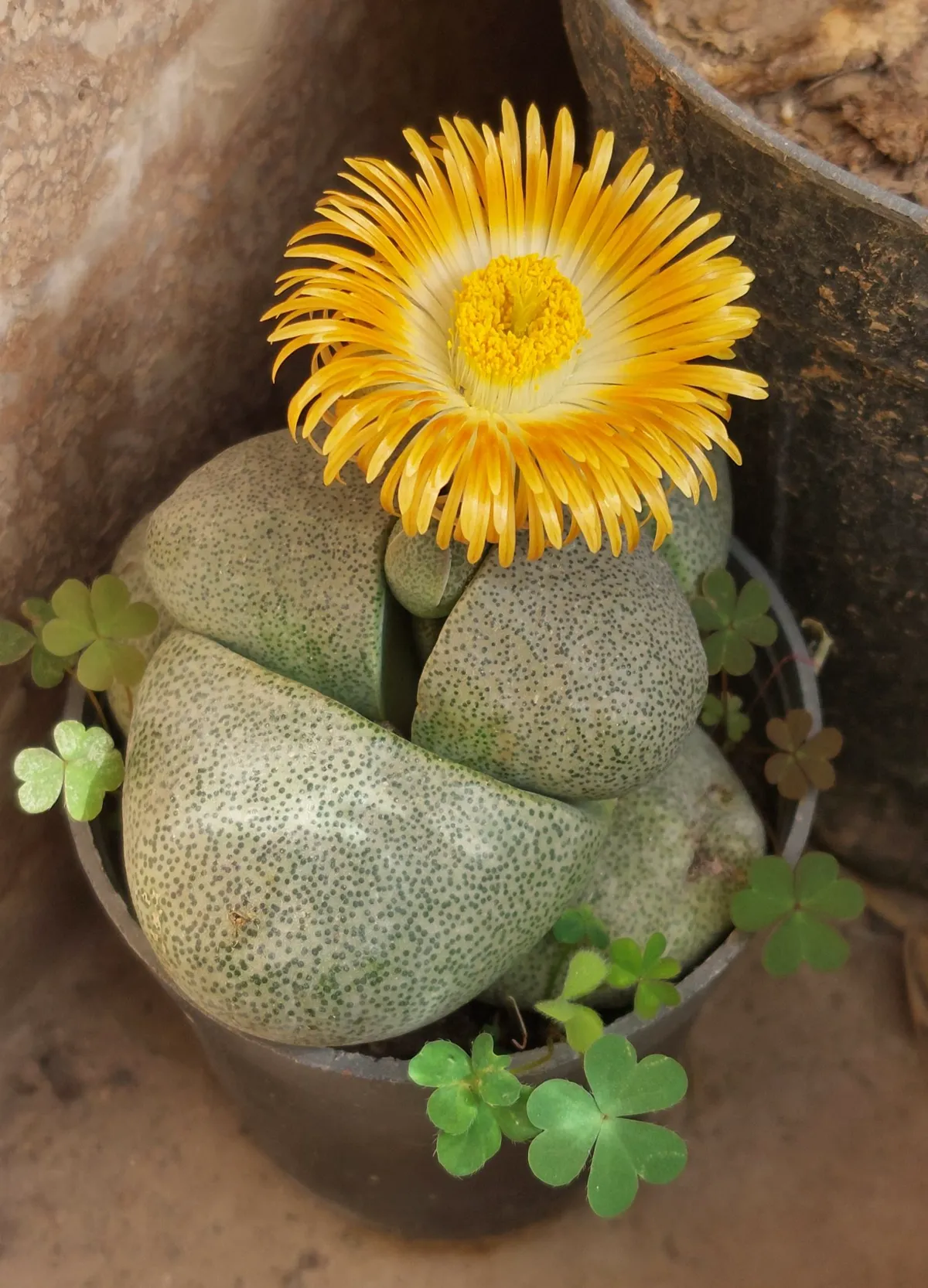
In autumn, established plants may produce a surprisingly large daisy-like flower, white or yellow, that emerges from the slit between the leaves. Flowering is a sign of a happy, mature plant grown in good light.
Common problems
Soft, mushy, or split-open plants
Almost always overwatering, especially during dormancy or leaf renewal. Stop watering and keep them dry; follow the seasonal cycle.
Stretched, pale, bloated plants
Too little light. Move them to the brightest spot or add a grow light to keep their compact, stony form.
Wrinkled plants
Usually normal during dormancy or leaf renewal. Only consider a light water if it is the active growing season and the plant is not splitting.
Common pests & diseases
Healthy, correctly watered lithops have few pests, but a stressed or crowded plant can attract trouble. The most likely visitors are mealybugs, which hide in the slit between the leaves and around the roots, along with the occasional spider mite or scale.
The real killer, however, remains rot from overwatering, especially during dormancy or leaf renewal. Soft, collapsing, or split plants point to wet soil rather than any insect. Keep them dry on schedule, inspect new plants, and treat any pest early by hand or with a gentle spray, following the RHS guidance on succulents and our organic pest control guide.
Growing lithops from seed
Lithops are often grown from seed, which is cheap and gives many plants, though it is slow. Sow the fine seed on a gritty surface, keep it lightly humid and warm to germinate, then gradually move seedlings to drier, brighter conditions.
Patience is essential, as seedlings take a few years to reach full size and their stony character. For most people, buying a few established plants is the quick route, but raising them from seed is deeply satisfying for the dedicated.
Related plant guides
- Echeveria care
- Kalanchoe care
- Sensitive Plant care
- Haworthia care
- How to grow Venus Flytrap
- Ponytail Palm care
Frequently asked questions
How often do you water lithops?
Rarely. Water only during active growth in autumn and spring, soaking then letting it dry fully. Keep them completely dry in summer and during leaf renewal.
Why is my lithops shrivelling?
Often normal during dormancy or leaf renewal, when the old leaves shrink. Water only if it is the active season and the plant is not splitting.
Do lithops need full sun?
Close to it. They need very bright light with several hours of sun, or they stretch, bloat, and lose their stony shape and colour.
How long do lithops live?
A long time. Given the right light and careful, seasonal watering, a single lithops can live for decades, slowly forming a small clump of stony heads over the years and gradually becoming more impressive.
Can you grow lithops in India?
Yes, indoors in a very bright, airy spot, kept dry. Protect them from monsoon humidity and rain, which quickly cause these desert plants to rot. A bright windowsill with strong light and an unglazed terracotta pot of gritty mix works best for keeping them happy.
Why is my lithops splitting into new leaves?
An old pair of leaves splitting apart to reveal a fresh pair inside is completely normal — it is the yearly leaf-renewal cycle, not damage. This usually happens in late winter and spring, when the new body draws water and nutrients straight from the old leaves. During this stage you should stop watering entirely and let the outer leaves shrivel to papery husks. Watering while it splits is the fastest way to cause rot.
Why did my lithops split open or burst?
A lithops that cracks, splits sideways, or bursts has almost always been overwatered. The plant takes up more water than its stony body can hold, and the swollen tissue simply ruptures. This is the single most common way people kill living stones, so the fix is a strict, seasonal watering schedule with long dry spells. A burst plant may still survive if you let it dry out fully and hold off water until it recovers.
When do lithops flower?
Most lithops bloom in autumn, pushing a single daisy-like white or yellow flower up from the slit between the leaves. Plants generally need to be three or more years old before they flower. The blooms open in the afternoon over several days and often carry a light scent. A flower is a good sign the plant is mature and has had enough light through the year.
How do you grow lithops from seed?
Sow the fine seed on top of a gritty, well-draining mix, barely cover it, and keep it lightly moist and warm. Germination is often quick, but the seedlings are tiny and grow very slowly, so patience is essential. For the first year they need more consistent moisture than adults, then you gradually shift them onto the dry, seasonal schedule. It can take three to five years for seed-grown lithops to reach flowering size.
Why is my lithops turning brown, orange, or mushy?
A lithops going soft, mushy, or translucent brown is rotting, and the cause is nearly always too much water or a mix that stays damp. Once rot sets in from the base it is hard to reverse, so act fast by stopping all water and improving drainage and airflow. A firm plant that simply turns a duller brown or reddish on top is usually just sun colouring, which is harmless. Squeeze gently: mushy means rot, firm means it is fine.
How do I know when to water lithops?
Follow the plant’s cycle rather than a fixed calendar: water sparingly during active growth in spring and autumn, and keep it bone dry through summer dormancy and winter leaf renewal. When you do water in the growing seasons, soak the mix, then let it dry out completely before the next drink. A slightly wrinkled, softening body during growth is your cue that a watering is due. When in doubt, wait — lithops handle drought far better than excess water.
Still stuck? Ask the Plant Doctor
Describe the problem — yellow leaves, holes, no flowers — and get a clear answer in seconds. FreeAI can make mistakes. Answers are guidance, not a guarantee — check anything important against the guide it links to, and always read the label on any product before you use it.