Haworthia Care Guide
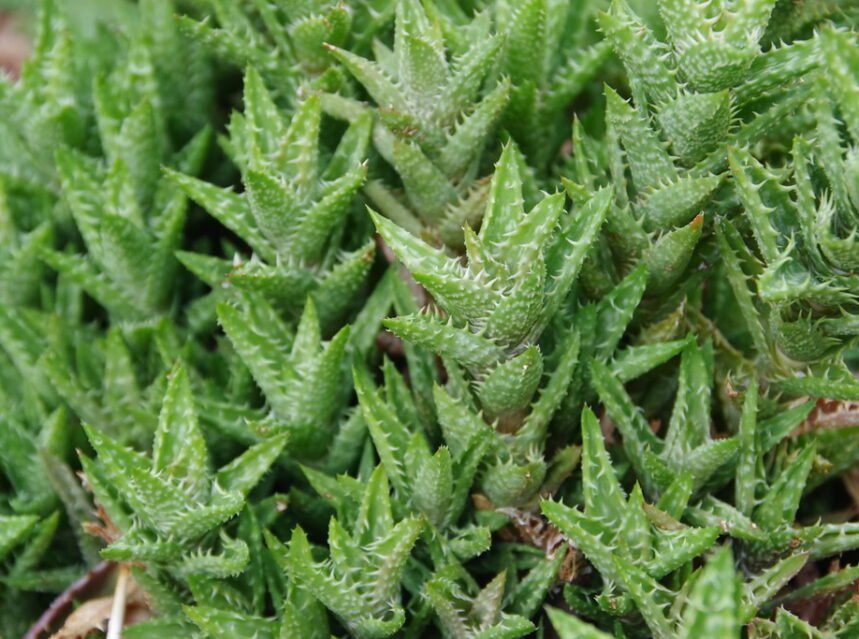
Haworthia is a small, hardy succulent grown for its neat rosettes of fleshy, often striped or window-tipped leaves.
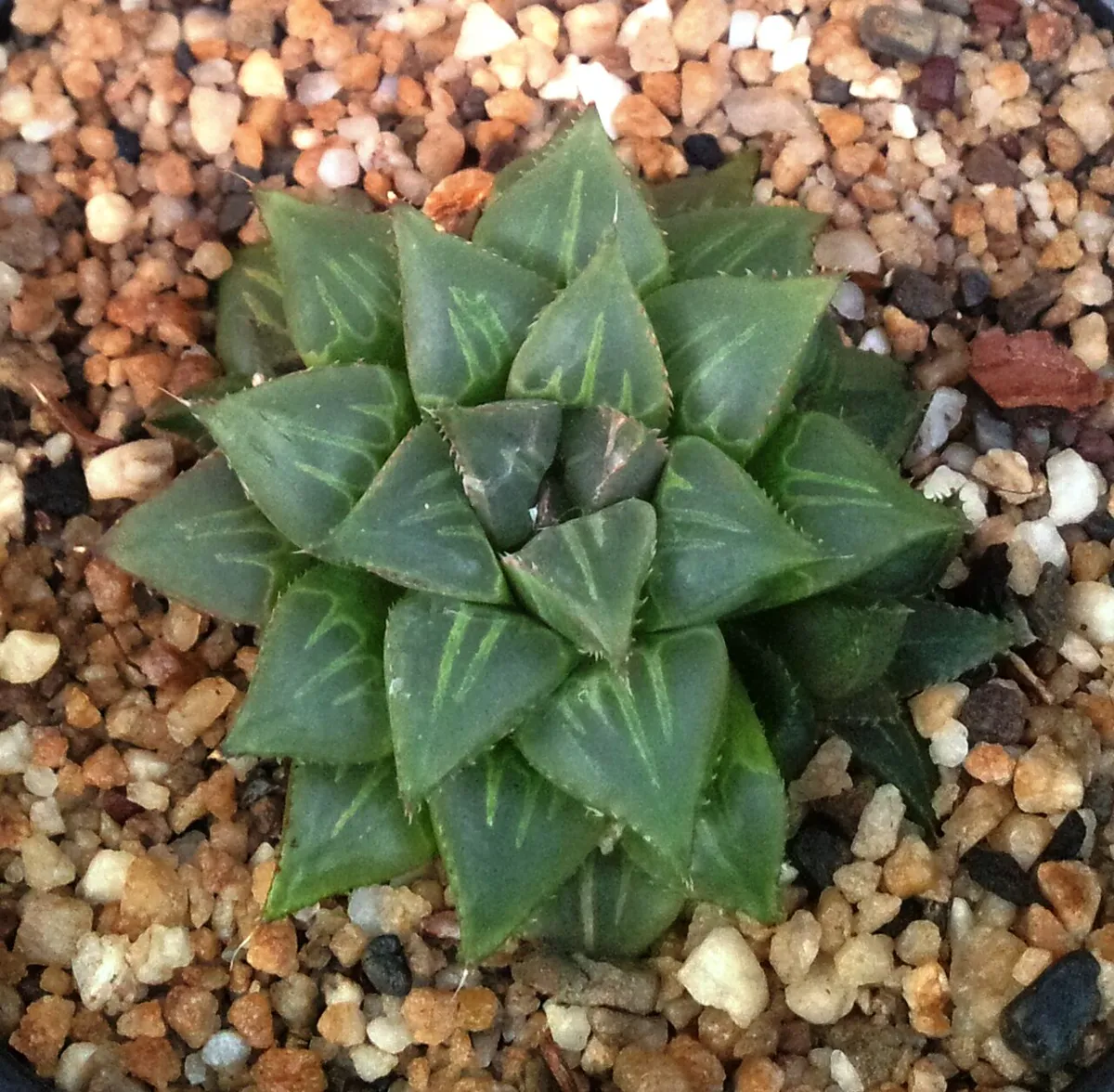
The haworthia is the perfect little succulent for a desk or windowsill. Compact, slow-growing, and tough, it forms neat rosettes of pointed leaves — some banded with white “zebra” stripes, others almost translucent like tiny windows. Unlike many succulents, it tolerates a bit less light, so it suits more spots in the home, and it is pet-safe — the ASPCA lists Haworthia species as non-toxic to dogs, cats and horses, unlike the aloes they resemble.
It is one of the easiest succulents to keep alive, with really only one way to kill it. This guide shows you how to avoid that and how to turn one rosette into many. Here is complete haworthia care.
Quick start: Give your haworthia bright, indirect light with a little gentle sun. Water deeply only when the soil is fully dry, roughly every 2–3 weeks. Use a gritty cactus mix and never overwater.
Haworthias are ideal beginner succulents, happy on a windowsill in light that would be too weak for many of their relatives. Growers find they ask for little beyond gritty, free-draining compost and a thorough drink only once the soil has dried out. They stay small, cluster into neat clumps over time, and are easily increased by potting up the offsets.
🧰 In a hurry? Jump straight to our tested picks for this guide ↓
Haworthia at a glance
| Feature | Detail |
|---|---|
| Botanical name | Haworthia / Haworthiopsis species (family Asphodelaceae) |
| Plant type | Small rosette succulent |
| Light | Bright, indirect (more shade-tolerant than most) |
| Soil | Gritty, free-draining cactus mix |
| Water | Sparingly; let it dry out |
| Note | Pet-safe; perfect for small spaces |
Why grow a haworthia?
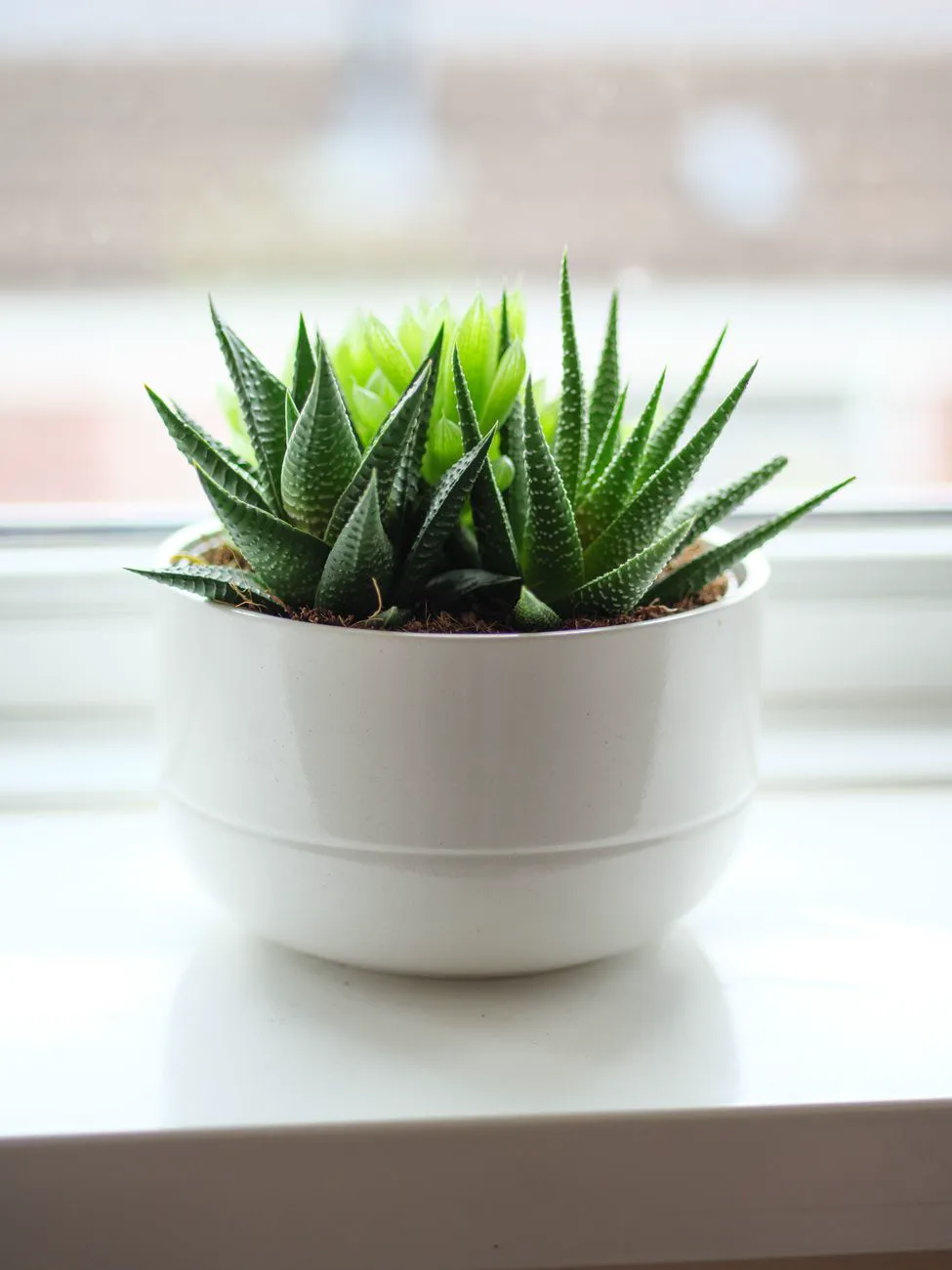
Haworthias (including the popular zebra haworthia) are ideal beginner succulents. They stay small, grow slowly, and tolerate a bit less light than most succulents, so they work on desks and shelves near a window. They are pet-safe — a real advantage over the lookalike aloes — drought-tolerant, and they produce offsets you can pot up. For a tidy, low-effort plant in a small space, they are perfect.
Where the haworthia grows best (origin and climate)
Haworthias are native to southern Africa, especially South Africa, where they grow in dry, rocky ground, often tucked in the partial shade of rocks and shrubs rather than full blazing sun. This is why they handle bright, indirect light better than sun-baked succulents.
But they still store water in their leaves and need fast-draining soil and careful watering. In India they do beautifully on a bright windowsill out of harsh afternoon sun; ease off watering during the humid monsoon.
Popular haworthia types
- Zebra haworthia (fasciata/attenuata) — dark leaves banded with white bumps; the classic, also called zebra cactus.
- Window haworthia (cooperi) — plump, translucent leaf tips that let in light.
- Pearl haworthia (margaritifera) — green leaves dotted with pearly white tubercles.
Light
Haworthia prefers bright, indirect light with a little gentle morning sun, which suits more indoor spots than sun-hungry succulents need. It tolerates medium light very well — rare among succulents — though in genuinely low light it stretches and loses its tight rosette shape. Too much harsh direct sun, on the other hand, turns the leaves red, brown, or bleached. A bright windowsill out of harsh afternoon sun is ideal.
Watering (the only real threat)
Overwatering is essentially the only thing that kills a haworthia. Water deeply only when the soil is completely dry — roughly every 2–3 weeks in spring and summer, and every 3–4 weeks in autumn and winter. Then let it drain fully. The fleshy leaves store water, so if the rosette becomes squishy or translucent, that is overwatering and rot. When the leaves look slightly thinner, water; when plump and firm, wait.
Soil, humidity & feeding
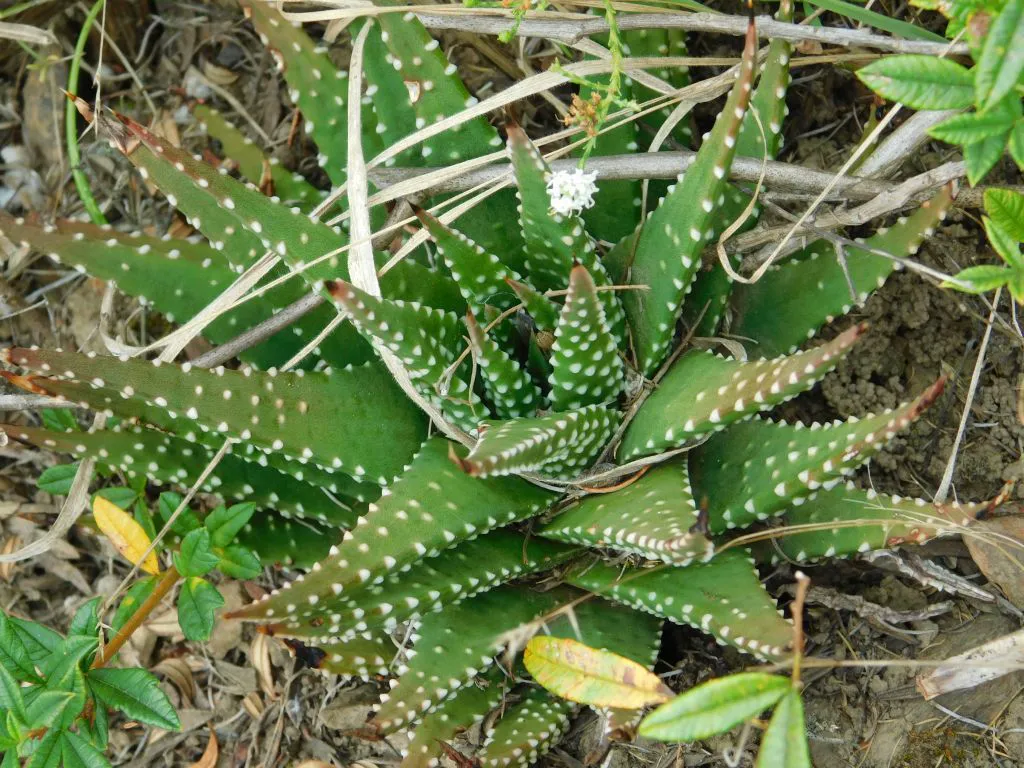
Use a gritty cactus or succulent mix in a pot with drainage (see our best potting mix for houseplants). It shrugs off dry air. Feed lightly once or twice in spring and summer with a diluted succulent fertiliser (see fertilizing houseplants). It is slow-growing, so it needs very little feeding.
👉 Foolproof setup: a small gritty succulent mix and a little terracotta pot with drainage make a haworthia almost impossible to overwater.
Propagation (easy offsets)
Haworthia produces offsets (pups) around the base of the rosette, and separating these is the easiest, most reliable method — with an 80–90% success rate. In spring or early summer, ideally at repotting, gently separate a pup that has its own little roots and pot it in dry gritty soil, waiting a few days before watering. You can also root individual leaves, though offsets are far more reliable. See our houseplant propagation guide.
Common problems & pests
Soft, mushy, translucent leaves
Overwatering and rot. Stop watering, repot in dry gritty soil, and water far less.
Stretched, loose rosette
Too little light. Move it to a brighter (still indirect) spot.
Red, brown, or bleached leaves
Too much harsh direct sun. Move it out of intense afternoon sun.
Pests
Watch for mealybugs, especially in the leaf crevices and roots. Treat as in our organic pest control guide.
Benefits & pet safety
The haworthia is a compact, slow, drought-proof, pet-safe succulent — non-toxic to cats and dogs, unlike the similar-looking aloes — that tolerates a little less light than most. It is perfect for desks, small spaces, and pet homes, and easy to propagate.
For another pet-safe, easy succulent-style plant, try a peperomia. If you like succulent rosettes and can keep them in bright light, an echeveria makes a lovely companion.
Leaf windows: why this succulent copes with shade when others sulk
Put a haworthia and an echeveria on the same dim shelf and one of them will be fine. That is not toughness — it is a genuine structural difference, and it explains most of what makes this plant easy.
Many haworthias carry leaf windows: translucent panels through which sunlight reaches the photosynthetic tissue inside the leaf. Instead of catching light only on the surface, the leaf lets it in. Species like H. cooperi look almost like clusters of green glass beads for exactly this reason.
Where they actually grow matters too. These are plants of semi-shade in southern Africa — under bushes and rock overhangs, not out on open sand. So the usual “succulents need blazing sun” rule was never written for them.
| What this means in practice |
|---|
| Bright indirect light is ideal — an east window, or a metre back from a brighter one |
| It tolerates real shade better than almost any other succulent, growing slowly rather than collapsing |
| Harsh direct sun is a mistake, not a treat. The leaves redden, then bleach, and window species scorch fastest of all |
| Reddening is a warning, not autumn colour — move it before the tips go papery |
So if you have killed succulents by not having a sunny enough windowsill, this is the genus to try. It is the shade-tolerant exception in a family famous for the opposite.
Offsets: the whole plant is designed to be divided
A healthy haworthia produces small offsets — pups — around its base. Left alone the pot fills with a tight clump, which looks well but slows everything down. Removing them is the entire propagation method, and it is close to foolproof.
- Wait until the pup is a reasonable size, ideally with a few roots of its own. Very small pups do survive but take far longer to establish.
- Unpot the parent rather than pulling at the pup. Working blind is how you snap roots that would have been fine.
- Separate by hand where possible, or cut cleanly with as many roots attached to the pup as you can.
- Let any cut surface dry for a day or two before potting, exactly as you would with a cutting.
- Pot into gritty mix and wait a week before watering. This is the step people skip, and it is where most losses happen.
Spring or early summer is the moment, while the plant is in growth. A pup separated in midwinter simply sits there, and a wet pot around an unrooted pup in cold weather is the classic way to lose both.
Overwatering is genuinely the only real threat
Most houseplants have several ways to fail. This one, kept indoors, has essentially one — and knowing that makes the plant much easier to read.
| What you see | What it means |
|---|---|
| Lower leaves soft, translucent, mushy at the base | Overwatering. Stop at once, unpot and check for rot |
| Leaves thin, wrinkled, curling inward | Underwatering — far easier to fix. Water thoroughly |
| Leaves reddening or bleaching | Too much direct sun |
| Rosette stretching upward, leaves spacing out | Too dark, even for this one. Move brighter |
The single rule: water thoroughly, then let the compost dry out completely before the next one — which in winter can mean a month or more. A wrinkled haworthia recovers within days of a good drink. A mushy one usually does not recover at all, so when you are unsure, wait.
Related plant guides
- Lithops care
- Mother of Thousands care
- Yucca care
- Echeveria care
- String of Pearls care
- Ponytail Palm care
Frequently asked questions
How often should I water a haworthia?
Only when the soil is completely dry — roughly every 2–3 weeks in spring and summer and every 3–4 weeks in winter. Overwatering is the main killer.
Why is my haworthia stretching out and losing its shape?
Too little light. Move it to a brighter, indirect spot to keep the rosette tight.
Can a haworthia grow without much sun?
It handles bright, indirect light and even medium light better than most succulents, so it suits more indoor spots — but it still needs good light, not gloom.
Is the haworthia safe for pets?
Yes — it is non-toxic and pet-safe for cats and dogs, unlike similar-looking aloes.
Why are my haworthia leaves going soft and see-through?
Overwatering and rot. Let the soil dry fully, repot in gritty mix if needed, and water far less often.
How do I propagate a haworthia?
Separate the offsets (pups) around the base in spring, each with a few roots, and pot them in dry gritty soil. Offsets root reliably.
Why is my haworthia turning red or purple?
Reddish or purple tones are stress colouring, almost always from too much direct sun or a grow light sitting too close. The pigments act as the plant’s sunscreen. Move it back to bright, indirect light and the green colour usually returns over the following weeks, as long as the leaves have not actually scorched.
Why is my haworthia turning brown?
Brown tips or patches usually trace back to one of three things: harsh direct sun scorching the leaves, long-term underwatering drying them out, or soggy soil starting root rot. Check the soil first — bone dry for weeks means it needs a proper drink, while wet and heavy means drainage is the problem. Adjust light or watering to match, and trim crisp brown tips if they bother you.
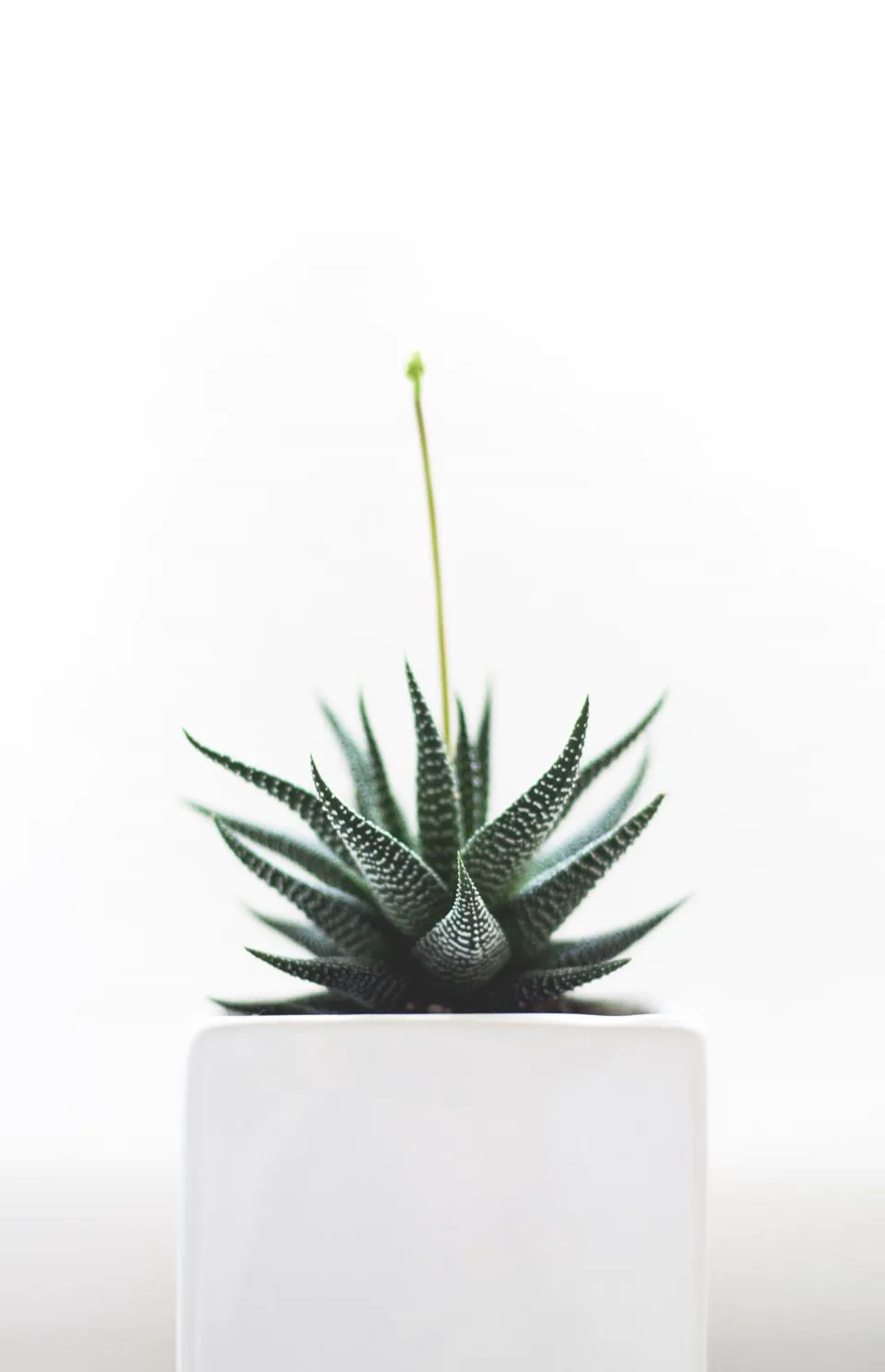
What is the tall stalk growing out of my haworthia?
That thin stem, sometimes 30-40 cm tall, is a flower stalk carrying small white tubular blooms — a sign of a content, mature plant. The flowers are modest rather than showy, and blooming does not harm the rosette (haworthias are not monocarpic like some succulents). Snip the stalk off at the base once it finishes if you find it untidy.
How often should I repot a haworthia?
Roughly every 2-3 years, mainly to refresh the gritty mix rather than to give it more room. Haworthias have shallow roots, grow slowly, and are happiest slightly root-bound, so go up only one pot size — or reuse the same pot with fresh soil. The best time is spring, and it pairs naturally with separating any offsets crowding the pot.
How long do haworthia plants live?
Decades. A haworthia given gritty soil, restrained watering, and decent light routinely lives 20-40 years, and well-grown plants have been kept for 50 years or more. Because they constantly produce offsets, a single plant effectively renews itself indefinitely — many collectors are still growing divisions of plants they started with decades ago.
Still stuck? Ask the Plant Doctor
Describe the problem — yellow leaves, holes, no flowers — and get a clear answer in seconds. FreeAI can make mistakes. Answers are guidance, not a guarantee — check anything important against the guide it links to, and always read the label on any product before you use it.