Why Are My Plant Leaves Turning Brown? (Causes & Fixes)
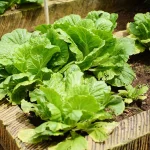
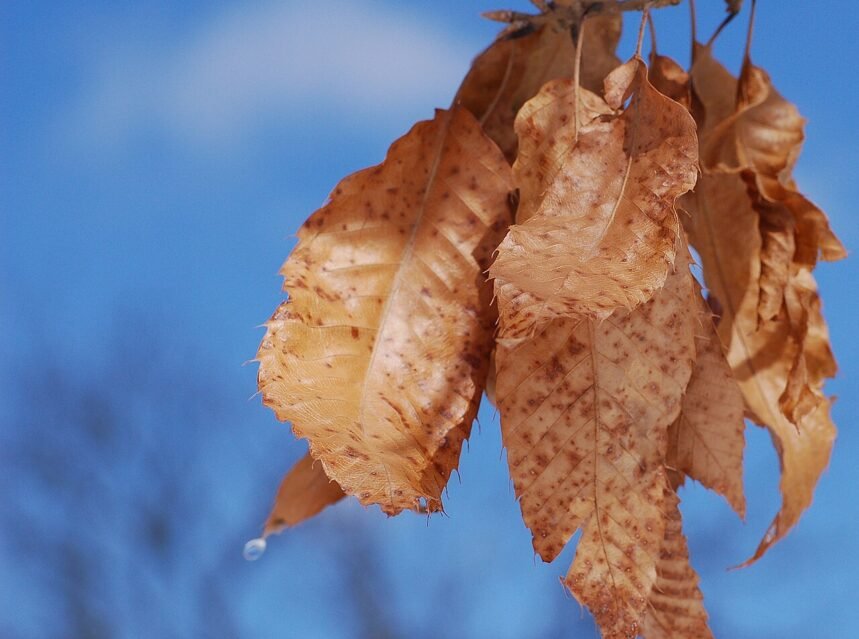 Photo: Photo (c)2007 Derek Ramsey (Ram-Man) (GFDL 1.2) via Wikimedia Commons
Why are my plant leaves turning brown? The cause depends on where the browning is — crispy brown tips usually mean dry air or water issues, while brown patches or whole leaves point to scorch, watering problems, or disease. Brown leaves are one of the most common plant worries, and the location of the browning is the key clue. This guide explains why plant leaves turn brown and how to fix each cause.
Quick answer: Brown, crispy leaf TIPS usually mean low humidity, under-watering, or salts and fluoride in tap water. Brown EDGES often mean inconsistent watering or fertilizer burn. Brown PATCHES can be sunscorch or disease. Whole leaves browning low down is often natural ageing or over-watering. Read where the brown is, then match the fix below.
🧰 In a hurry? Jump straight to our tested picks for this guide ↓
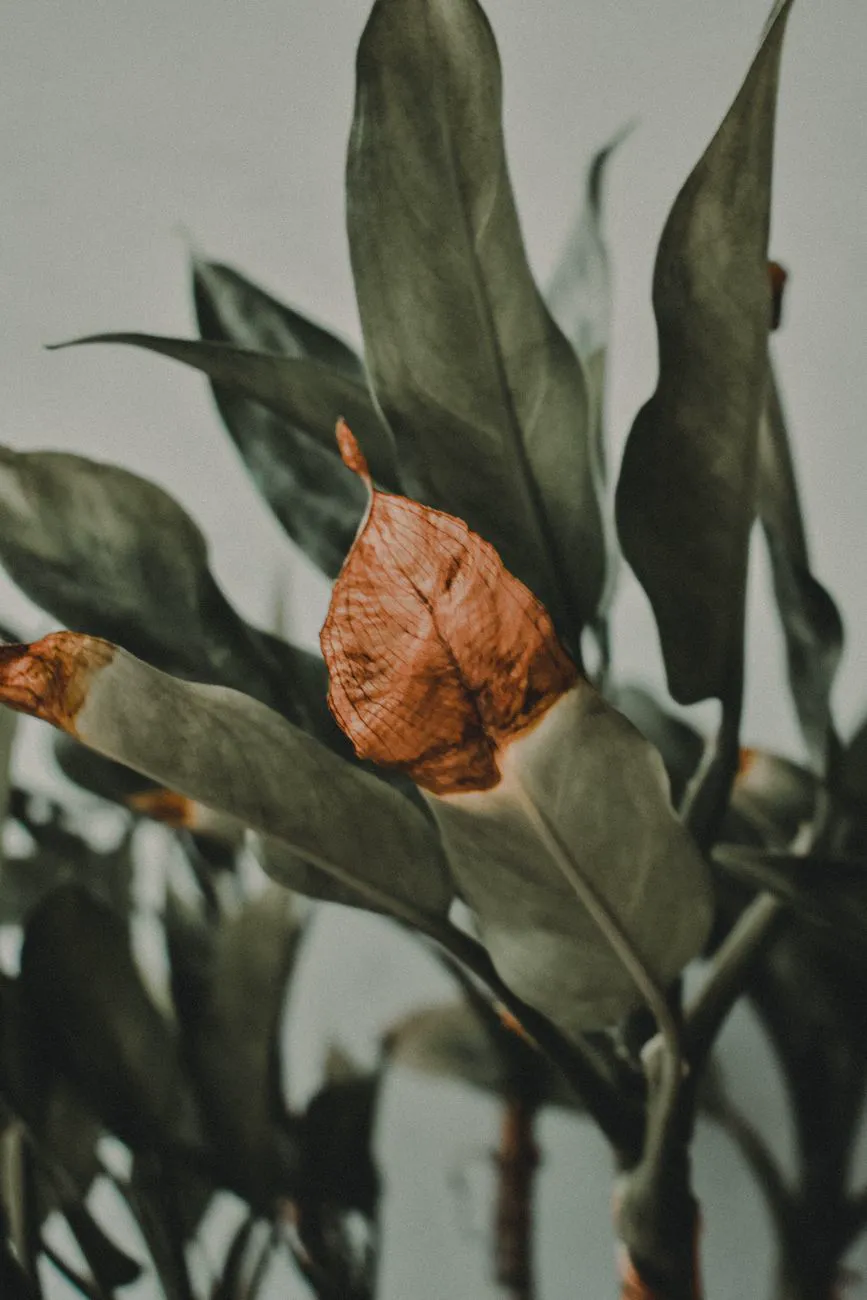
Brown leaves: causes at a glance
| Where it is brown | Likely cause |
|---|---|
| Crispy tips | Dry air, under-watering, or tap-water salts/fluoride |
| Brown edges | Erratic watering or fertilizer burn |
| Brown patches/spots | Sunscorch or fungal/bacterial disease |
| Whole lower leaves | Natural ageing or over-watering |
| Sudden widespread brown | Cold, shock, or root problems |
Read where the browning is
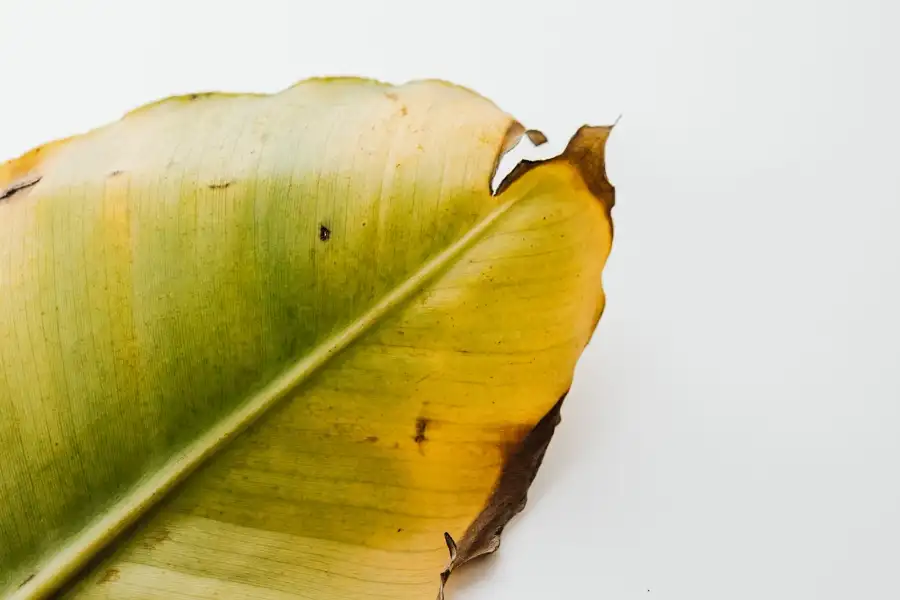
The single most useful step is to look at where on the leaf the brown appears. Different causes leave different patterns.
Brown tips, brown edges, brown spots, and whole brown leaves each point to different problems. So rather than guessing, match the pattern you see to the causes below. Combined with a quick check of the soil and the plant’s position, this usually identifies the culprit straight away, and the fix follows naturally.
Brown, crispy leaf tips
Crispy brown tips are the most common browning, especially on houseplants. They usually point to the air or the water.
Low humidity is a frequent cause, as dry indoor air desiccates leaf tips, so raise humidity with a pebble tray or by grouping plants. Under-watering also browns tips, so check the soil and water deeply (see how often to water). And fluoride or salts in tap water brown the tips of sensitive plants like calatheas and spider plants, so switch to rainwater or filtered water (see tap water for plants).
Brown leaf edges
When the whole edge of a leaf browns, the usual causes are watering swings or feeding. The middle of the leaf often stays green.
Inconsistent watering, letting a plant dry out then drowning it, browns and crisps the edges, so aim for steady moisture. Fertilizer burn from too much feed, or a build-up of salts in the pot, also scorches edges, so feed at half strength and flush the pot occasionally with plain water (see feeding houseplants). Steady watering and gentle feeding usually clear it up.
Brown patches and spots
Brown patches or spots in the body of the leaf have two main causes. Their look helps tell them apart.
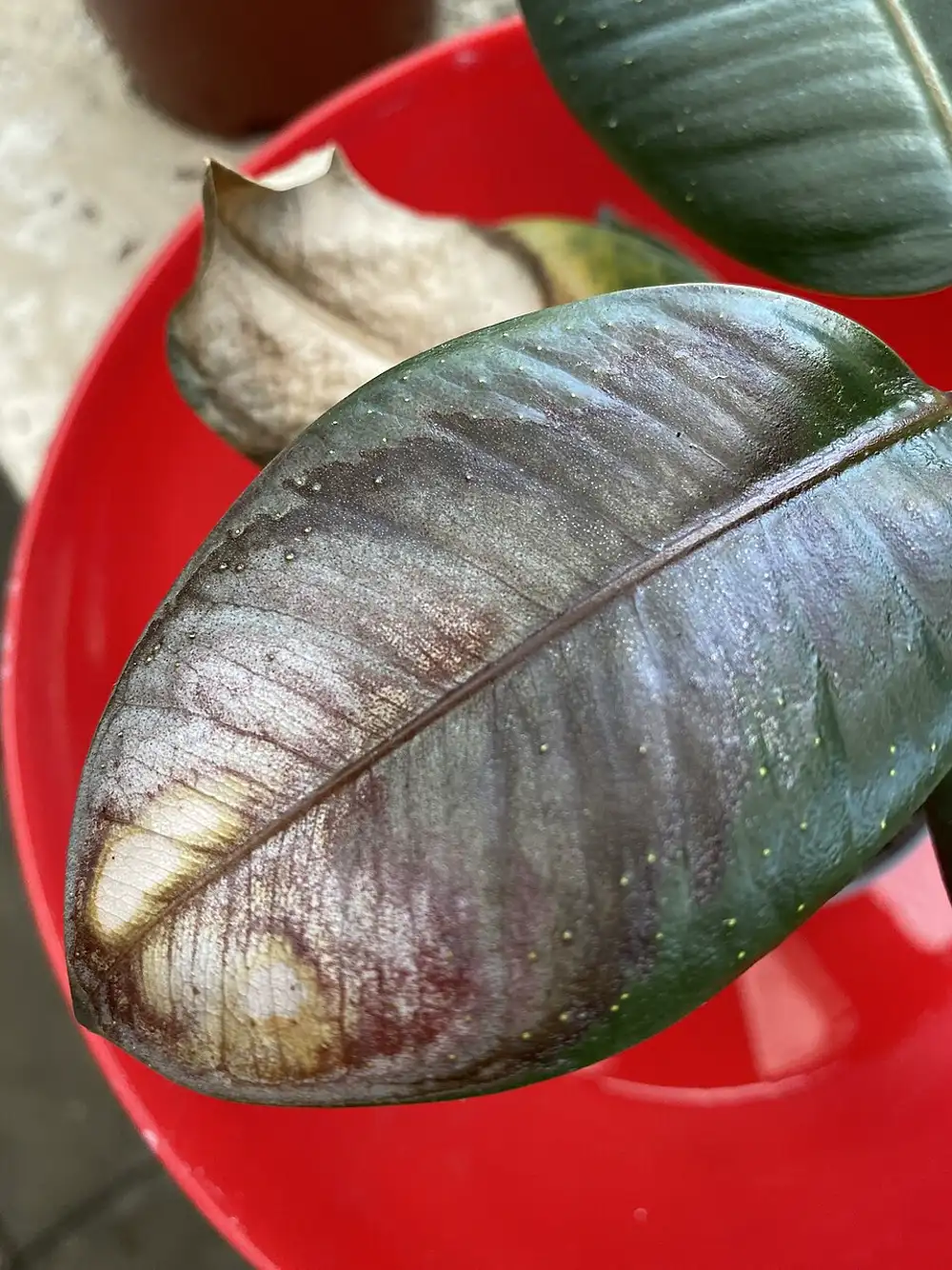
Sunscorch gives pale-brown, dry, bleached patches where strong sun has burnt the leaf, common when a shade plant gets direct sun or water sits on leaves in sunshine; move it to gentler light. Fungal or bacterial leaf spots are usually darker, sometimes with a yellow halo, and spread in damp, crowded conditions. Improve airflow, avoid wetting the leaves, remove affected leaves, and follow our organic pest control guide.
Whole leaves turning brown
Sometimes entire leaves brown and die, which can be normal or a warning. Where it happens matters.
If old, lower leaves slowly yellow then brown and drop, that is often natural ageing, nothing to worry about. But if many leaves brown quickly, suspect over-watering and root rot (check for soggy soil), cold damage, or shock from a sudden change. Whole-plant browning needs a look at the roots and recent conditions, while the odd old leaf can simply be removed.
How to prevent brown leaves
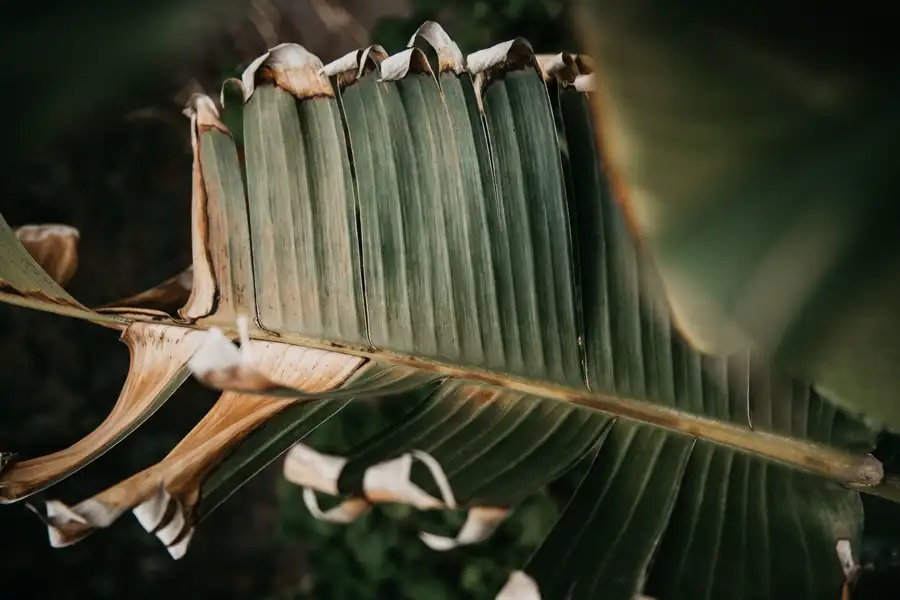
Most browning comes down to a few avoidable conditions. Steady, suitable care prevents the great majority of it.
- Water consistently by the soil, never letting plants swing between bone-dry and soaked.
- Raise humidity for tropical houseplants prone to crispy tips.
- Match light to the plant to avoid scorch (see light needs).
- Use rainwater for sensitive plants, and feed at half strength.
- Give airflow and avoid wet leaves to prevent leaf-spot disease.
Should I cut off brown leaves?
Brown leaf tissue is dead and will not turn green again, so it is fine to tidy it up. How you do it depends on how much is affected.
For a brown tip or edge, you can trim just the dead part with clean scissors, following the leaf’s natural shape, leaving a thin margin. For a wholly brown or badly affected leaf, remove it at the base. Removing dead tissue keeps the plant tidy and lets it focus energy on healthy growth, but always fix the underlying cause too, or the browning will simply continue.
Brown leaves in India & hot climates
In hot climates like much of India, two causes dominate: sunscorch and hard tap water. Both are very common in the heat.
Fierce summer sun scorches leaves, so give sensitive and shade plants protection from the harsh afternoon sun. Hard, heavily-treated tap water browns the tips of fussy houseplants, so use harvested rainwater or let water stand. In dry indoor heat, low humidity also crisps tips, helped by misting and grouping plants. Steady morning-and-evening watering prevents the swings that brown leaf edges.
The bottom line on brown leaves
Brown leaves look worrying, but they are really a message, and the message is written in where the brown appears. Crispy tips point to air and water, brown edges to watering swings or feeding, patches to scorch or disease, and whole brown leaves to ageing or root problems.
Read the pattern, check the soil and the plant’s spot, and match the fix. Trim away the dead tissue to tidy up, and correct the underlying cause so it does not return. Do that, and your plant will put out fresh, healthy green growth and leave the brown behind.
A quick diagnosis routine
When you spot browning, a quick, calm routine pins down the cause fast. Run through these checks before acting.
First, note where the brown is, tips, edges, patches, or whole leaves. Next, check the soil, wet or dry. Then look at the plant’s position, is it in harsh sun or dry, draughty air? Finally, consider your water and feed, hard tap water or heavy feeding? Resources like the Royal Horticultural Society use the same approach, reading the pattern of damage to identify the cause. Within a minute, this routine usually tells you what to fix.
When brown leaves are normal
It is worth remembering that some browning is perfectly natural and no cause for alarm. Plants shed older leaves as they grow.
The oldest, lowest leaves on many plants gradually yellow then brown and drop as the plant puts energy into new growth, which is completely normal. A few brown lower leaves on an otherwise healthy, growing plant are nothing to worry about, just tidy them away. It is only when browning is widespread, fast, or on new growth that it signals a real problem needing attention.
Sources and further reading
Frequently asked questions
Why are the tips of my plant leaves turning brown?
Crispy brown tips usually mean low humidity, under-watering, or salts and fluoride in tap water. Raise humidity and use rainwater.
Why are the edges of my leaves brown?
Often inconsistent watering or fertilizer burn. Water steadily and feed at half strength, flushing the pot occasionally.
Should I cut off brown leaf tips?
Yes, you can trim just the dead part with clean scissors. The brown will not turn green again, but fix the cause too.
Do brown patches mean disease?
Sometimes — darker spots with halos suggest leaf-spot disease, while pale, dry patches are usually sunscorch.
Why do my plant leaves brown in India?
Most often sunscorch from fierce heat or hard tap water on sensitive plants. Give shade and use rainwater for fussy plants.
Why are only the leaf tips brown?
Crispy tips usually mean dry air, under-watering, or salts and fluoride in tap water. Raise humidity and use rainwater.
Do brown leaves turn green again?
No — brown leaf tissue is dead and will not recover. Trim it off and fix the cause so new growth stays healthy.
Is browning caused by overwatering or underwatering?
Look at the texture and the soil. Underwatered leaves go dry, crisp and papery at the tips and edges, and the pot feels light. Overwatered leaves turn soft, dark brown and limp while the soil stays wet, and the stems may feel mushy. Check the mix with a finger before every watering. Water deeply when the top two to three centimetres are dry, then let the excess drain right out.
Can too much sun turn plant leaves brown?
Yes. Strong direct sun scorches leaf tissue, leaving pale tan or bleached brown patches in the middle of the leaf rather than at the tips. Indoor plants moved suddenly to a sunny balcony are the usual victims, and Indian summer afternoons burn foliage very fast. Shift the plant to bright indirect light, or use a shade net or sheer curtain, and move plants outdoors gradually over a week or two.
Can pests cause brown leaves?
They can. Spider mites, thrips, mealybugs and scale drain sap, so the leaf first speckles or silvers, then browns and dries. Look under the leaves and at the leaf joints for webbing, sticky residue or tiny moving dots. Spider mites explode in hot dry weather, so check often before and during the hot season. Wash the plant down, then treat with neem oil or insecticidal soap weekly until the damage stops spreading.
Why are my plant leaves turning brown after repotting?
That is usually transplant shock. Roots get disturbed, so the plant cannot pull up enough water and older leaves brown and drop. Keep it in stable indirect light, water lightly but regularly, and hold off on fertiliser for four to six weeks. Do not repot into a pot that is much larger, because the extra wet mix invites rot. Most plants settle down and push new leaves within a month.
How do I stop my plant leaves from turning brown?
Work through the basics in order. Fix watering first, since it causes most browning, then check light, humidity and drainage. Flush the pot with plain water every couple of months to wash out fertiliser salts, and use filtered or stored rainwater if your tap water is hard. Keep plants away from heaters, coolers and direct AC vents, feed at half strength, and trim dead tissue so new growth stays clean.
See also: why your fiddle leaf fig leaves are turning brown.
See also: why your spider plant tips are turning brown.
See also: why your aloe leaves are turning brown.
See also: why your tomato leaves are turning brown.
Still stuck? Ask the Plant Doctor
Describe the problem — yellow leaves, holes, no flowers — and get a clear answer in seconds. FreeAI can make mistakes. Answers are guidance, not a guarantee — check anything important against the guide it links to, and always read the label on any product before you use it.