Gilia Capitata Seeds
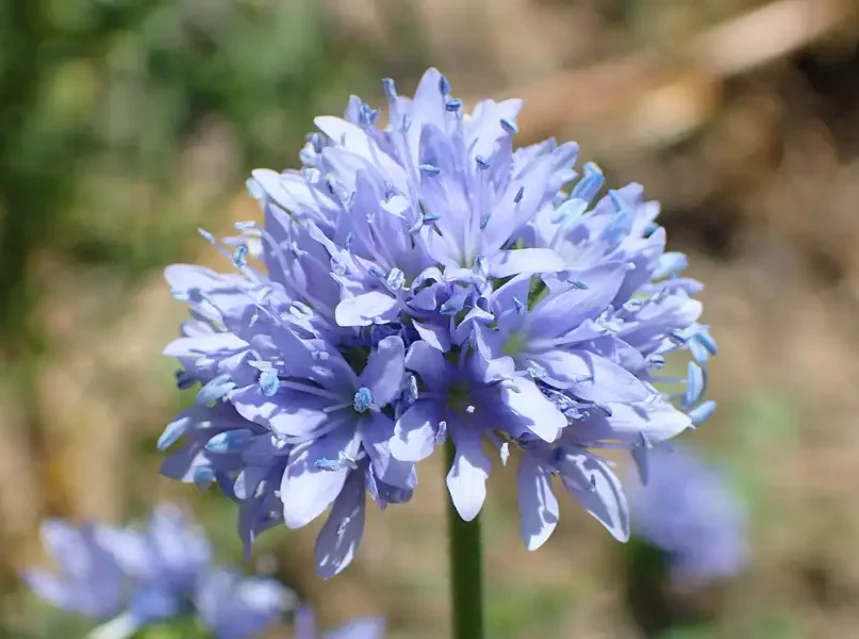
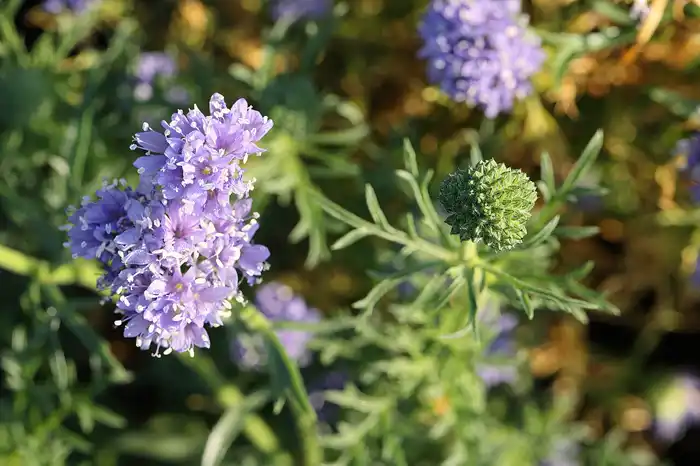
Gilia capitata seeds grow into globe gilia — also called the blue thimble flower — an airy hardy annual in the phlox family. Each slender stem rises over ferny, lacy foliage and ends in a rounded, ball-shaped head of powder-blue flowers. Bees and butterflies swarm these soft blue globes all summer. It is one of the easiest pollinator and cut-flower annuals you can sow. This guide covers the best gilia capitata seeds worldwide, how to sow them, when to sow, top varieties, and where to buy good seed.
🧰 In a hurry? Jump straight to our tested picks for this guide ↓
Quick start: gilia capitata seeds at a glance
- Type: Hardy annual — Gilia capitata (globe gilia / blue thimble flower), 30–90 cm tall.
- Sow: Direct-sow in autumn or early spring; surface-sow — seeds need light, so do not cover.
- Germination: 14–21 days at around 18–21 °C.
- Light & soil: Full sun; light, sandy or rocky, well-drained soil.
- Bloom: Early-to-mid summer; powder-blue globe heads; a top bee and butterfly plant.
- India note: Grow as a cool-season annual; sow in autumn-winter for winter and spring bloom.
Authoritative references: Wikipedia — Gilia capitata, NC State Extension — Gilia capitata.
What is gilia capitata (globe gilia)?
Gilia capitata is an annual wildflower in the phlox family, Polemoniaceae. Common names include globe gilia, blue thimble flower, blue gilia, and bluehead gilia.
It is native to western North America, from Alaska down to northern Mexico. There it grows on sandy and rocky soils.
Each spherical head packs 50 to 100 tiny flowers. They are usually powder-blue to blue-violet, sometimes paler.
The foliage is fine, ferny, and lacy. Slender stems hold the round “thimble” heads well above the leaves.
Gilia capitata seeds at a glance
| Botanical name | Gilia capitata (globe gilia, blue thimble flower) |
|---|---|
| Native range | Western North America (Alaska to northern Mexico) |
| Height | 30–90 cm tall, generally around 60 cm |
| Flower | Round powder-blue to blue-violet globe heads of 50–100 flowers |
| Light & soil | Full sun; light, sandy or rocky, well-drained soil |
| Germination | 14–21 days at 18–21 °C; surface-sow (needs light) |
| Bloom time | Early-to-mid summer (May–July in the US) |
| Habit | Drought-tolerant, self-sowing pollinator annual; good cut flower |
Why grow globe gilia from seed?
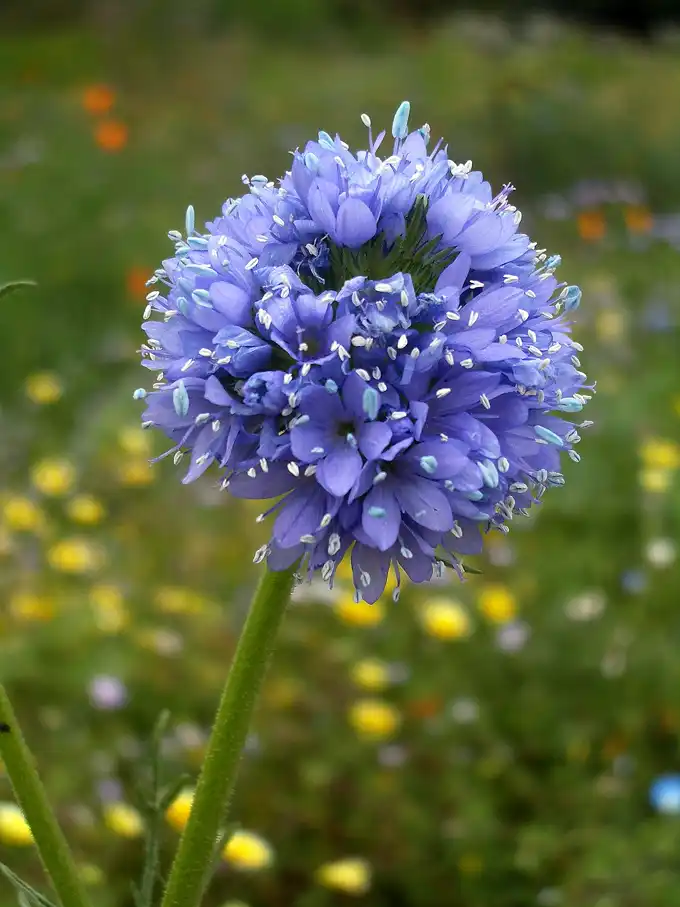
Globe gilia is one of the easiest blue annuals to raise from seed. It direct-sows happily and asks for little care.
The colour is the big draw. Few annuals give such soft, clean, powder-blue ball-shaped heads.
It is also tough and drought-tolerant. Once growing, it shrugs off poor, dry, sandy soil.
Bees and butterflies adore it, and it makes a fine cut flower. One packet fills a border, meadow, or pollinator patch.
The #1 pollinator native and easy cut flower
This is what sets globe gilia apart from many pretty annuals. It is a genuine pollinator powerhouse.
In Oregon State University trials of native pollinator plants, gilia capitata ranked number one. Researchers rated it the top source of pollen and nectar.
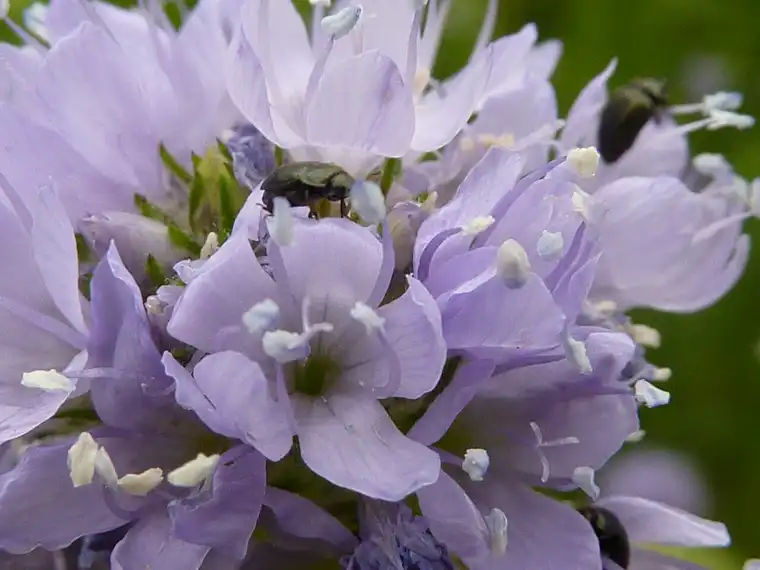
Each globe head is really a cluster of 50 to 100 flowers. That packs a huge nectar reward into a small landing pad.
Bees and butterflies work it constantly through summer. It is one of the best annuals you can sow for a buzzing garden.
The long, slender stems also make it a lovely cut flower. The airy blue globes lift mixed bouquets and last well in a vase.
It pairs beautifully with other easy annuals like cosmos and calendula. Together they keep nectar flowing all season.
Best season & when to sow
Globe gilia is a hardy annual, so it likes cool starts. A little chill actually helps the seed.
In mild US climates, direct-sow in autumn. The seed then germinates with cool-season rain and flowers early.
In colder zones, direct-sow in early spring. You can also start indoors 6–8 weeks before the last frost.
For spring sowing, a short chill can boost germination. Mix seed with damp sand and refrigerate it for a few weeks first.
In India, treat it as a cool-season annual. Sow in autumn to winter in the plains, for winter and spring bloom.
It follows the same calendar as other western US annuals. Grow it like nemophila or clarkia in the cool months.
Growing gilia capitata from seed: how to plant
Sowing is simple if you remember one rule. These seeds need light to germinate.
So you surface-sow them and do not bury them. Scatter the seed and press it lightly onto the soil.
To direct-sow, rake a fine, sandy bed in full sun. Sow thinly, firm the seed in, and water with a gentle spray.
Keep the surface lightly moist until seedlings appear. Germination usually takes about 14 to 21 days.
Thin or space young plants 15 to 20 cm apart. Crowded plants flop, so give each a little room.
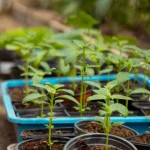
For indoor starts, sow on the surface of moist seed compost. Keep at around 18–21 °C in bright light, then harden off before planting out.
Sun, soil, watering & feeding
Globe gilia is almost foolproof once it is up. The two big rules are sun and drainage.
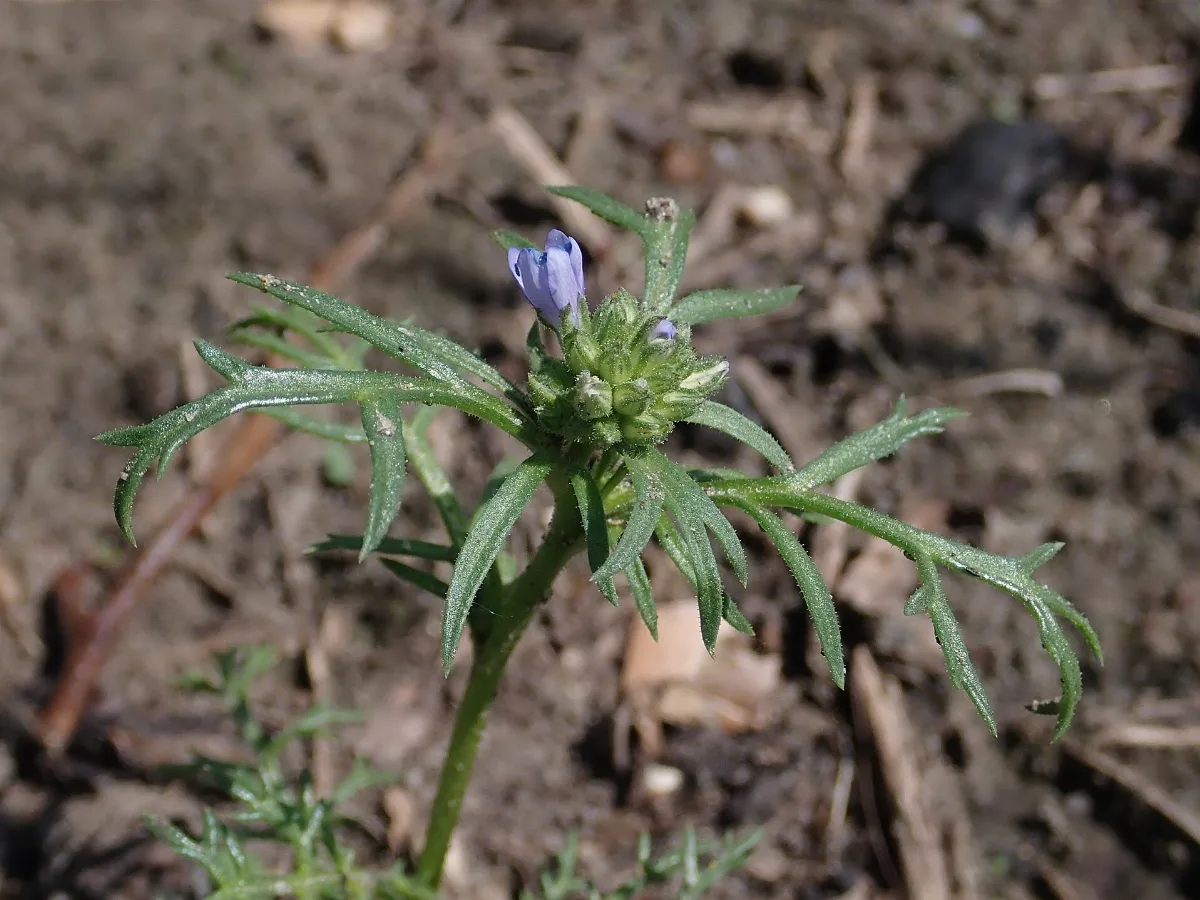
Give it full sun, ideally six or more hours a day. Too much shade makes weak, floppy, shy-flowering plants.
The soil should drain freely, even if it is poor. Sandy, rocky, or gritty ground suits it perfectly.
Water young seedlings to settle them in. After that, water only in long dry spells, as it hates soggy roots.
Skip rich feeding, since lean soil gives the best flowers. Too much fertiliser leads to leaves, not blooms.
In hot summer areas, plants may finish and set seed early. That is normal for this cool-season annual.
It also self-sows where it is happy. Leave a few heads and you may get free seedlings next year.
Globe gilia varieties & related blue annuals
Most seed is sold simply as the blue globe gilia species. A few forms and sibling annuals are worth knowing.
| Plant | Type & flower | Best use | Climate notes (US / India) |
|---|---|---|---|
| Gilia capitata ‘Blue’ (globe gilia) | Annual; round powder-blue globe heads | Pollinator beds, cut flowers, meadows | US: cool-season annual, May–July bloom · India: autumn-winter sowing, plains/hills |
| Gilia capitata ssp. chamissonis | Annual; brighter blue-violet (dune form) | Sandy beds, collectors, coastal | US: sandy/coastal sites · India: sandy well-drained gardens |
| Gilia tricolor (bird’s eyes) | Annual; flat tricolour lilac flowers | Edging, fragrant cottage borders | US: cool-season · India: cool plains/hills |
| Nemophila (baby blue eyes) | Annual; sky-blue saucer flowers | Low carpet, light shade, edging | US: cool-season · India: cool plains |
If you want airy blue globes for bees, choose the standard Gilia capitata. For brighter blue on sandy soil, look for ssp. chamissonis.
For a flat-faced, chocolate-scented cousin, grow our sibling guide to gilia tricolor (bird’s eyes). The two gilias look very different but enjoy the same cool-season care.
Common pests & problems
Globe gilia is healthy and has no serious pests. Nearly every problem traces back to wet soil.
Overwatering and heavy ground cause root rot. Improve drainage with grit, or grow in raised beds.
Slugs and snails may nibble soft young seedlings. Protect early growth with grit or nightly checks.
In rich soil or shade, plants grow leafy and flop. Move them to lean soil in full sun next time.
Tall stems can lean in wind or rain. A few twiggy supports keep the display upright and tidy.
Deadheading & saving seed
Light deadheading keeps plants flowering longer. Snip spent globe heads to encourage repeat blooms.
This is an easy job done now and then. It also keeps the planting neat through summer.
To save seed, leave some late heads to ripen on the plant. Let them dry until they turn brown and papery.
Snip the dry heads into a paper bag on a dry day. Rub them gently and store the cleaned seed cool, dark, and dry.
It self-sows readily in open ground. Either let volunteers appear or re-sow your saved seed each season.
Where to buy gilia capitata seeds
Gilia capitata seeds are widely sold by wildflower and cottage-garden suppliers. Below are simple buy options worldwide.
Links are placeholders for now. Always compare freshness, packet size, and shipping before you order.
For more easy, pollinator-friendly annuals to grow alongside it, see our guides to godetia, white collinsia (Chinese houses), golden layia (tidy tips), and drought-proof nolana. Mixing several keeps colour and bees coming.
Buy fresh gilia seed where you can. Recent, well-stored seed germinates fastest and most evenly.
Frequently asked questions
Do gilia capitata seeds need light to germinate?
Yes. Surface-sow globe gilia seeds and press them onto the soil without covering them. Light helps trigger germination, which usually takes 14–21 days.
Is globe gilia an annual or perennial?
It is a hardy annual. It grows, flowers, sets seed, and dies in one season, but it self-sows readily, so it often returns from dropped seed.
Is gilia capitata good for pollinators?
Very. Its globe heads hold 50–100 nectar-rich flowers, and in Oregon State University trials it ranked as a top native source of pollen and nectar for bees and butterflies.
Do gilia capitata seeds need cold stratification?
No, globe gilia germinates without any chilling or scarification. Native-seed growers do note that a brief 7 to 14 day cold spell in the fridge can even out germination for a spring sowing, but it is optional. Autumn sowing outdoors gets the same effect naturally from cool nights.
How long does it take gilia capitata seed to germinate?
Expect seedlings in 7 to 14 days at a soil temperature around 18 to 21°C (70-75°F). Keep the surface evenly moist for that whole window, since the seed sits on top of the soil and dries out fast if you skip a watering.
Is globe gilia the same as globe thistle?
No, they are unrelated plants that only share a nickname. Globe gilia (Gilia capitata) is a soft annual wildflower with powder-blue ball-shaped heads, while globe thistle (Echinops) is a spiny perennial with steel-blue spherical flowers. Gardeners searching “globe gilia” sometimes land on thistle results by mistake.
Does deadheading stop gilia capitata from self-seeding?
Yes, removing spent globe heads before they dry and shatter cuts down on volunteer seedlings the following year. Leave a few heads to ripen if you want the plant to return on its own; snip them all off if you would rather control where it grows next season.
Is gilia capitata deer resistant?
Yes, deer generally leave globe gilia alone, along with most other plants gardeners grow specifically as deer-resistant options in dry, sunny beds. Its ferny, aromatic foliage is not a preferred browse, though hungry deer in a bad season may still sample anything nearby.
How tall does gilia capitata grow?
Most plants reach 30 to 90 cm (roughly 12 to 28 inches), with named seed strains typically settling around 60 cm. Rich soil or shade pushes stems taller and floppier, so lean, sunny conditions give the sturdiest, most compact plants.
Can gilia capitata handle drought once established?
Yes, mature plants are genuinely drought tolerant and thrive on the hot, dry, rocky hillsides of their native range. Only the first two weeks after sowing need regular watering to get seedlings through germination; after that, established plants need little to no supplemental water.
Can I grow globe gilia in India?
Yes, as a cool-season annual. Sow in autumn to winter in the plains for winter and spring bloom, give it full sun and sandy, well-drained soil, and it grows easily.
Still stuck? Ask the Plant Doctor
Describe the problem — yellow leaves, holes, no flowers — and get a clear answer in seconds. FreeAI can make mistakes. Answers are guidance, not a guarantee — check anything important against the guide it links to, and always read the label on any product before you use it.