Best Potting Trowels
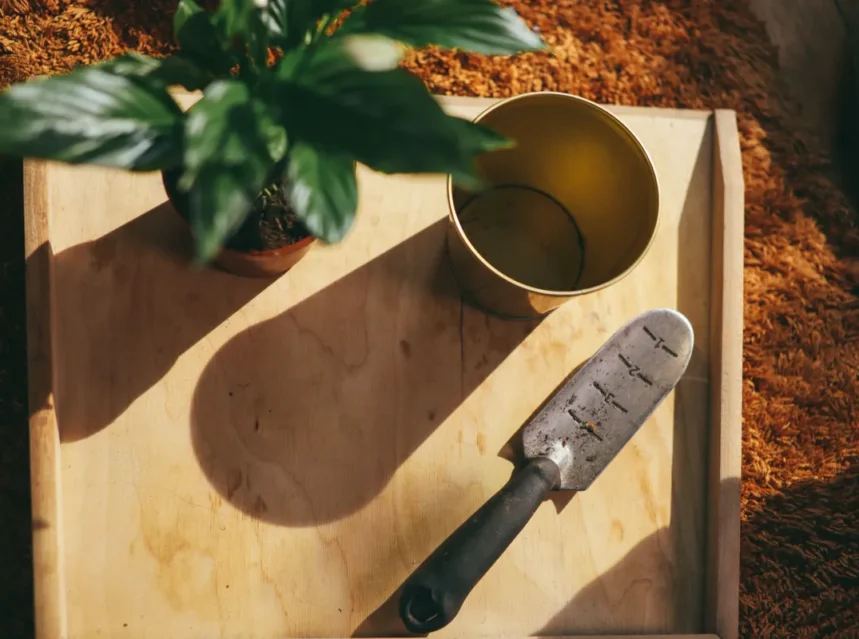
A potting trowel is a small, narrow-bladed hand tool designed for planting, transplanting, and working in containers and pots where a full-size garden trowel is too wide to manoeuvre. A standard garden trowel has a blade width of 7-9 cm. A potting trowel has a blade width of 4-6 cm. The narrower blade fits into smaller gaps between plants. It works in containers without disturbing nearby roots. Potting trowels are also used for transplanting seedlings. The narrow blade gets under a seedling root ball without cutting or compressing it from the sides.
Potting trowel reviews assess blade width and profile (narrow transplanting vs standard potting shape), blade material and durability, handle comfort over extended use, and value for money for container and indoor gardening use. This guide weighs those factors for home garden and container gardening use. University of Minnesota Extension provides guidance on correct seedling transplanting technique and tool selection for minimising transplant shock.
🧰 In a hurry? Jump straight to our tested picks for this guide ↓
Best potting trowels at a glance
| Pick | Best for | Material | Trade-off |
|---|---|---|---|
| Burgon & Ball stainless narrow trowel | UK/US general container planting, depth marks | Stainless steel, FSC ash handle | Premium price vs comparable tools |
| Haws narrow stainless transplanting trowel | UK seedling transplanting, tight spaces | Stainless steel, lacquered ash handle | Shorter blade than standard potting trowel |
| Fiskars ergo trowel | UK/US ergonomic grip, extended sessions | Stainless steel blade, rubber grip | Not a narrow transplanting profile |
| DeWit forged potting trowel | UK/US premium quality, lifetime use | Hand-forged carbon steel, ash handle | Carbon steel needs oiling; higher cost |
| Radius Garden potting trowel | US ergonomic, arthritis-friendly handle | Carbon steel blade, radial handle | Heavy handle by design; not a light tool |
| Steel potting trowel (India) | India container planting, terrace garden | Carbon steel blade, wooden handle | Prone to rust if left wet; needs oiling |
Types of potting trowel
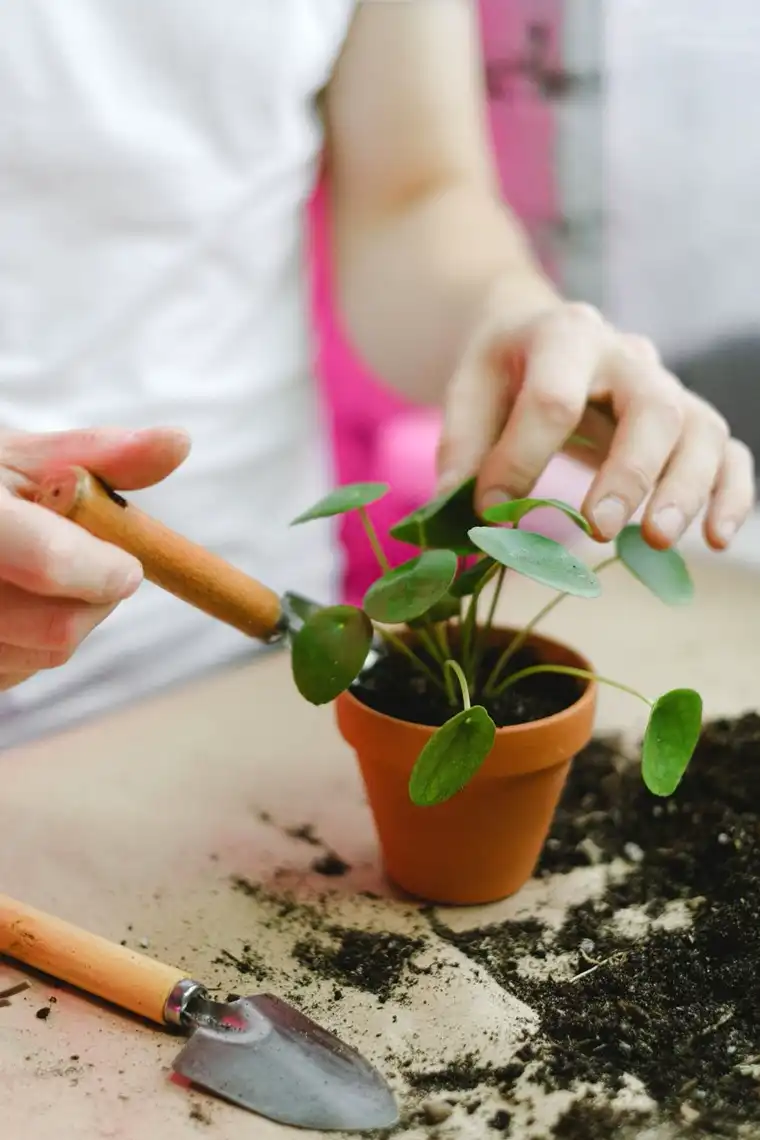
Narrow transplanting trowel (4-5 cm blade width): The most specialised potting trowel type. The narrow blade (typically 4-5 cm wide) fits into the gap between a seedling root ball and the pot wall. It also fits between established plants in a container without disturbing their roots. Narrow transplanting trowels are the correct tool for moving individual seedlings from a seed tray to a module or pot.
The narrow profile does not scoop as much compost per stroke as a standard trowel. This makes it slower for filling large containers from scratch. However, it is far more precise. The narrow blade can direct compost into specific gaps within an existing container arrangement. This precision is not possible with a wider blade. For container gardeners who regularly transplant into established pots, a narrow transplanting trowel is the most useful single tool.
Standard potting trowel (6-7 cm blade width): The most common potting trowel type. It is slightly narrower and shorter than a full-size garden trowel, but not as narrow as a specialist transplanting trowel. The standard potting trowel is the everyday container planting tool. It fills pots with compost, makes planting holes in containers, and moves medium-size plants between pots.
Most “garden trowels” sold as general-purpose tools are in this size category. The distinction between a “standard garden trowel” (7-9 cm) and a “potting trowel” (6-7 cm) is subtle. However, the slightly shorter and narrower blade of the potting trowel is meaningfully easier to use in containers. Use a standard potting trowel for everyday container work. Upgrade to a narrow transplanting trowel when precision work in tight spaces is needed.
Long-handled potting trowel (30-40 cm handle): A potting trowel with a longer handle than the standard 15-20 cm. The longer handle reduces the need to stoop over a low potting bench. It also provides better leverage for working in deep containers over 30 cm deep. A short handle forces the user to reach arm-deep into a tall container. Long-handled potting trowels are particularly useful for working in raised bed planters and deep terracotta pots.
The trade-off is reduced precision at the blade tip. A 40 cm handle provides less tactile feedback than a 15 cm handle when working among delicate seedling roots. The longer handle is a practical advantage for potting bench ergonomics and deep container work. It is less suited to fine transplanting work. Match the handle length to the depth of the containers you use most often.
Dibber-trowel hybrid (pointed tip): A potting trowel with a more pointed blade tip than the standard rounded tip. The pointed tip makes individual planting holes in compost without a separate dibber tool. These hybrid tools are particularly useful for seed sowing directly into containers. The pointed tip makes a seed hole in one motion. The blade then scoops back over the hole to cover the seed.
This eliminates switching between a dibber and a trowel during direct seed sowing in containers. A standard dibber remains the more precise tool for consistent-depth seed planting. But the dibber-trowel hybrid is the more practical choice for speed and minimal tool-switching. For occasional seed sowing in containers, the hybrid is a useful two-in-one solution.
Narrow vs standard vs long-handled: which to choose?
Match the trowel type to the primary container sizes and tasks you perform most often.
Choose a narrow transplanting trowel when: you regularly transplant seedlings from seed trays to pots, plant bulbs into established container displays, or work in small pots below 15 cm diameter. The narrow blade is the only type that enters a 10-12 cm pot comfortably. For indoor plant repotters who work in small succulent pots, orchid pots, and seedling modules, a 4 cm narrow trowel is the most-used tool in the potting session.
Choose a standard potting trowel when: you fill and plant medium-to-large containers (20 cm diameter and above), work in window boxes and raised beds, and need a general-purpose container planting tool. A 6-7 cm standard potting trowel moves compost faster than a narrow trowel. It is precise enough for most container planting work outside specialist transplanting scenarios.
Choose a long-handled potting trowel when: your potting bench is below waist height and extended stooping is uncomfortable, or when you regularly work in containers over 30 cm deep. The long handle improves ergonomics for repeated bending during potting bench work. Pair it with a good potting bench at the correct height. The correct bench height combined with a standard short-handled trowel is often better ergonomics than a long-handled trowel on a low bench.
What to look for when buying
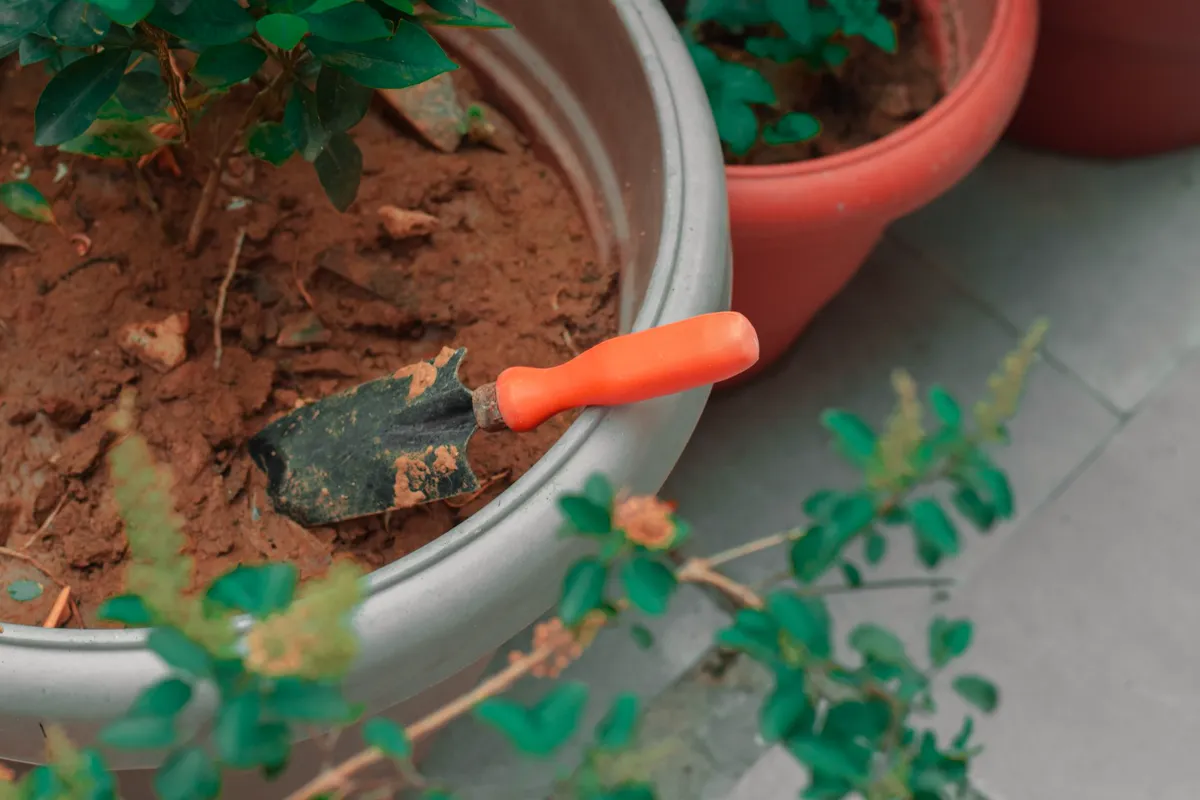
- Blade material — stainless steel vs carbon steel vs aluminium: stainless steel is the best all-round blade material for a potting trowel. It resists rust in the wet compost environment, wipes clean easily, and holds its shape through years of use. Carbon steel takes a sharper edge than stainless but requires oiling after each use to prevent rust — an added maintenance step easily forgotten. Aluminium blades are the lightest option but are softer than steel and bend when encountering a hard root or stone. For container gardening in compost (which is wet and acidic), stainless steel is the correct choice.
- Depth markings on the blade: depth markings (typically at 2 cm intervals) embossed on the blade allow accurate planting depth without measuring. This is particularly useful for bulb planting and for transplanting seedlings at a consistent depth. Not all potting trowels include depth markings. Those that do — particularly Burgon & Ball, Haws, and Spear & Jackson — are significantly more useful for precision container work. An unmarked blade requires separate measuring or a guessed depth, which leads to inconsistent planting results.
- Handle comfort for extended sessions: a potting session involving 20-30 individual plants requires repeated grip, twist, and release motions. A handle that is uncomfortable for this motion creates fatigue that limits session length. The handle should fit the user’s hand comfortably. It should provide grip in the trowel-working direction. The material should not blister when wet — smooth varnished wood blisters; textured rubber or FSC ash wood do not. Try the handle grip before purchasing in-store if possible.
- One-piece construction vs separate blade and handle: high-quality potting trowels are made from a single piece of stainless steel or from a forged blade with a riveted solid wood handle. Budget trowels use a plastic or die-cast handle crimped onto a thin steel blade. The crimp join is the point of failure — the blade works loose after extended use. This creates play that reduces precision and eventually makes the tool unusable. A one-piece stainless trowel never separates and never fails at the join. These are the most durable option for heavy use.
The 6 best potting trowels in 2026
1. Burgon & Ball stainless narrow trowel — best overall UK/US
The Burgon & Ball stainless narrow potting trowel is our top pick for container and border planting. Burgon and Ball (Sheffield, est. 1730) have manufactured UK garden tools for nearly 300 years. The narrow trowel uses a 5 cm wide stainless steel blade with depth markings at 2 cm intervals. The FSC-certified ash handle is oiled and shaped for a comfortable grip.
It is the most useful single potting trowel for general container planting across every task compared here. The stainless blade wipes clean in seconds. It resists rust without maintenance. The 5 cm blade width is narrow enough for a 15 cm pot but wide enough to scoop compost efficiently in a larger container. Cost: £20-30 / $25-40. This is the correct first potting trowel for a container gardener who wants one high-quality tool for both transplanting and everyday container planting.
2. Haws narrow transplanting trowel — best UK seedling transplanting
The Haws narrow transplanting trowel is our pick as the specialist trowel for seedling transplanting. Haws (Birmingham, est. 1886 — the same company that makes the Haws watering can) manufactures a range of precision gardening tools for fine-detail work. The transplanting trowel uses a 4 cm wide stainless steel blade and a lacquered ash handle. The blade is shorter and more pointed than a standard potting trowel.
The 4 cm blade width fits into a 10 cm pot. This makes it the only trowel type that works effectively in the smallest standard pot sizes. It is the best trowel specifically for transplanting — it gets under a seedling root ball without side compression. The shorter blade provides better tactile feedback than a longer blade when working among delicate seedling roots. Cost: £15-25 / $20-35.
3. Fiskars ergo potting trowel — best UK/US ergonomic
The Fiskars ergo potting trowel is our pick for gardeners who need less hand and wrist strain during long potting sessions. Fiskars (Finland, est. 1649) manufactures ergonomic handles across their entire garden tool range. The ergo trowel uses a stainless steel blade and a rubber-grip handle. The handle aligns the wrist in a neutral position during the trowel-working stroke.
The neutral wrist alignment reduces strain from repeated twist-and-scoop motions. It is the most comfortable trowel for a potting session of 30+ minutes. The blade is a standard potting trowel width (6 cm) rather than a narrow transplanting width. It is not the correct choice for precise transplanting in small pots. It is the correct choice for the gardener whose hands or wrists fatigue quickly during potting sessions. Cost: £12-22 / $16-30.
4. DeWit forged potting trowel — best UK/US premium
The DeWit forged potting trowel is our premium pick for gardeners who want a handmade, lifetime-quality tool. DeWit (Netherlands, est. 1898) hand-forges all their garden tools individually from boron steel. This is significantly harder and more durable than the machine-pressed steel used in mass-produced trowels. The ash handle is hand-fitted and riveted to the blade.
Hand-forged boron steel holds an edge longer than standard garden tool steel. The blade can be sharpened repeatedly over decades of use. The hand-riveted ash handle never works loose. The DeWit trowel is the most durable tool in this comparison by a significant margin. Cost: £35-55 / $45-75. This is a generational tool — the investment is higher, but the tool genuinely outlasts budget alternatives by many years. Carbon steel requires oiling after each use to prevent rust.
5. Radius Garden potting trowel — best US ergonomic for arthritis
The Radius Garden potting trowel is our pick for gardeners with arthritis, limited grip strength, or other hand and wrist conditions. Radius Garden (US) designs all their tools around an ergonomic “radial design” principle. The handle curves to follow the natural line of the forearm. This eliminates the wrist deviation that standard trowels require.
Clinical occupational therapists have used Radius Garden tools as reference tools for reduced-grip-demand garden equipment. The radial handle distributes the troweling force across the entire palm and forearm. This reduces the peak pressure that triggers pain in arthritic hands. The carbon steel blade is adequately durable for home use. Cost: $18-28 / £14-22. This is the correct choice specifically for gardeners with hand and wrist conditions.
6. Steel potting trowel (India) — best India
In India, carbon steel potting trowels are available from garden supply stores, agricultural supply stores, and Amazon India. The standard Indian potting trowel uses a carbon steel blade (typically 5-6 cm wide) and a wooden handle. These are manufactured by Indian tool companies including Falcon Tools, Ketsy, and local manufacturers. The carbon steel blade is harder and cheaper to manufacture than stainless steel. It requires oiling after each use to prevent rust.
For Indian container gardeners growing vegetables, herbs, and flowers on terraces and balconies, a potting trowel is a daily-use tool. Transplanting seedlings between pots, filling grow bags with compost, and dividing root-bound plants all require a potting trowel. The practical recommendation for Indian gardeners is to buy a mid-range stainless steel potting trowel (₹400-600) from a known brand rather than the cheapest available carbon steel tool. The stainless blade survives the monsoon season without rusting. This saves the cost and inconvenience of replacing a rusted tool each season.
Potting trowels in India
The potting trowel is one of the most-used tools in an Indian urban garden. Most Indian urban gardening takes place in containers — pots, grow bags, window boxes, and terrace planters. Virtually every task in a container garden involves a trowel. Filling pots with potting mix, transplanting seedlings, dividing root-bound plants, and topping up containers with fresh compost all require a trowel with a blade narrow enough to work in a pot without constant spillage over the sides.
Indian gardeners typically use one trowel for all these tasks. A general-purpose carbon steel or stainless steel garden trowel from a local hardware store or online retailer is the standard starting point. The concept of a dedicated “potting trowel” as a distinct product from a “garden trowel” is not strongly established in the Indian market. However, the functional advantage of a narrower blade (5 cm vs the 8 cm of a standard garden trowel) is immediately apparent in container use. Gardeners who try a narrow 5 cm potting trowel in a 15 cm pot immediately notice the difference in maneuverability.
One characteristic of Indian growing conditions is the speed of root growth in the monsoon season. Warm temperatures combined with high humidity cause root systems to fill a pot within 4-6 weeks during the monsoon. This creates a higher frequency of repotting tasks than in the UK. An Indian terrace gardener with 30-50 pots may repot 10-15 plants per month during the June-September growing peak. For this level of repotting frequency, a quality stainless steel potting trowel (₹400-600) is a more economical long-term investment than buying a new ₹150 carbon steel tool every 12-18 months as rust damage accumulates. Complement the trowel with a garden kneeler for the ground-level repotting sessions common in terrace gardens.
Potting trowel tips
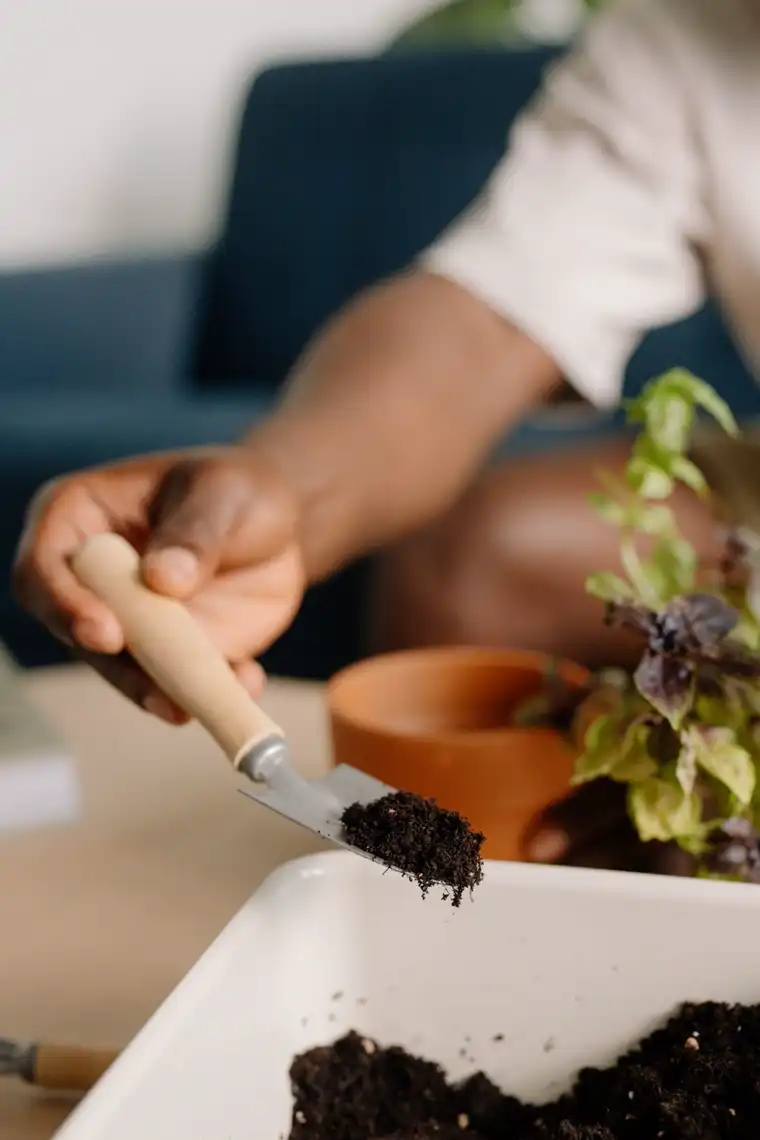
- Use depth markings for consistent bulb planting: bulb planting depth is the most commonly ignored rule in container gardening. Most bulbs should be planted at a depth of 2-3 times their own diameter. A tulip bulb 5 cm in diameter needs a 10-15 cm deep planting hole. Planting too shallow reduces frost protection. Planting too deep delays emergence and can cause rot in poorly-drained compost. A potting trowel with depth markings (in 2 cm intervals) eliminates the need to measure planting depths individually. Use the marking as the stop point when making each planting hole.
- Clean the blade between different plant pots when disease is a concern: a trowel used to pot a plant with root rot or fungal disease carries the pathogen on the blade. The next plant potted with the same unwashed trowel is exposed to that pathogen. This is a common route of disease spread in container gardens. Clean the blade between pots by wiping with a cloth dampened with dilute bleach solution (1 part bleach to 9 parts water) when disease is suspected. This takes 10 seconds per plant and prevents spreading the problem across the entire container collection.
- Trowel in, don’t dig in, when transplanting seedlings: the most common seedling transplanting mistake is using the trowel as a small spade — angling it downward and levering backward to lift the seedling root ball. This approach compresses the root ball from the side. It often breaks the fine feeder roots at the base. The correct technique is to slide the trowel blade vertically downward alongside the seedling’s root ball. Then sweep it horizontally beneath the root ball. This lifts the entire root ball cleanly from below without side compression. The narrow transplanting trowel (4 cm blade) makes this beneath-the-root-ball sliding motion easier than a wider blade.
- Store the trowel dry and oiled at the end of the season: a stainless steel potting trowel stored in a damp shed or potting bench drawer through winter will develop surface oxidation spots. These affect the blade’s ability to slide cleanly through compost. At the end of the growing season, clean the blade thoroughly, dry it completely, and wipe it with a light coat of linseed oil or machine oil before storage. The oil coat protects the blade surface and the handle through the dormant season. A clean, oiled trowel is ready to use on the first potting session of the new season without any remediation.
Frequently asked questions
What is the difference between a potting trowel and a garden trowel?
A garden trowel is a general-purpose hand tool for digging, planting, and moving soil in garden borders and beds. It typically has a blade 7-9 cm wide and 15-20 cm long. A potting trowel is a smaller, narrower version. It is designed for container and pot work. The narrower blade (5-7 cm wide) fits into smaller spaces. It causes less disturbance to nearby plant roots. The difference is similar to the difference between a large serving spoon and a teaspoon — both are spoons, but the smaller one is more useful in confined spaces.
For most home gardeners, one quality garden trowel handles both border planting and container work. However, a dedicated potting trowel — particularly a narrow transplanting trowel (4-5 cm blade) — is noticeably more useful in small containers. It is worth adding to the tool kit for anyone who regularly works in pots below 20 cm diameter, raises seedlings for transplanting, or grows indoor plants that need regular repotting.
How do I remove a stuck plant from a pot using a trowel?
A root-bound plant that has filled its pot can become stuck — the roots form a solid mass that grips the inner wall of the pot. The potting trowel is the correct tool to free it. Run the blade around the inner circumference of the pot, between the root mass and the pot wall. The blade cuts through the surface roots gripping the pot wall. This allows the root ball to slide free when the pot is inverted and the plant is gently pulled out. Do not lever the trowel forcefully against the root ball — this breaks structural roots rather than the surface feeder roots causing the sticking.
After freeing a root-bound plant, examine the root ball. If the roots are tightly circling the base (pot-bound), gently tease them outward before repotting. A pot-bound root system that is not teased out will continue to grow in the circular pattern from the old pot. It will not expand outward into the new compost. Use the potting trowel to assist this teasing-out process by gently breaking apart the compacted surface of the root ball. Pair this technique with a good hand fork for severely root-bound specimens.
Can I use a potting trowel for outdoor garden beds?
Yes — a potting trowel works in outdoor garden beds for the same planting tasks it performs in containers. It is particularly useful for transplanting seedlings from containers into garden beds. It is also useful for planting bulbs in an established border, and for working in narrow gaps between established plants. The narrower blade makes less impact on the surrounding root zone of established plants than a wider trowel.
For tasks that require moving large volumes of soil — making a new planting hole for a bare-root shrub or digging out weeds with deep taproots — a full-size garden trowel or a hand fork is more efficient. The potting trowel is a precision tool. Its narrow blade is its main advantage in tight spaces. In open soil with no nearby plants to avoid, the extra width of a standard trowel makes the same work faster.
What is the best material for a potting trowel blade?
Stainless steel is the best material for a potting trowel used primarily in container and pot work. Stainless steel resists rust in the wet compost environment. It requires no oiling and wipes clean easily between uses. It holds its shape without bending when encountering pot drainage crockery or a hard root. Stainless steel cannot be sharpened to as keen an edge as carbon steel. However, a potting trowel does not need a cutting edge — it scoops and slides through compost rather than cutting through soil.
Carbon steel takes a sharper edge than stainless but requires oiling after each use to prevent rust. In the wet compost environment of a container garden, a carbon steel trowel left unwashed overnight develops rust spots within 24-48 hours. For gardeners who clean and oil their tools conscientiously after each session, carbon steel is a valid premium choice. For gardeners who leave tools in the potting shed at the end of a session, stainless steel is far more practical. The low-maintenance advantage of stainless steel is particularly relevant for Indian gardeners managing the high humidity of the monsoon season.
How do I remove rust from a potting trowel blade?
Soak the blade in a 50:50 vinegar and water solution for a few hours, or overnight for heavy rust, then scrub with a stiff brush or fine steel wool. The acetic acid in vinegar dissolves iron oxide without damaging the steel underneath. Rinse, dry thoroughly, and wipe on a light coat of oil before storing. For light surface rust, a paste of baking soda and water worked in with a cloth is usually enough on its own.
Why is my new potting trowel already rusting?
Cheap trowels are often stamped from plain carbon steel with only a thin factory coating that wears off within the first few uses. Wet potting compost left on the blade after use is the main trigger, since damp soil holds moisture against bare metal for hours. Wipe the blade dry after every session and store it somewhere dry. A stainless-steel trowel avoids this problem entirely, though it costs more upfront.
Is a cast-aluminum or forged-steel trowel better for potting work?
Cast aluminum is lighter and naturally rust-resistant, which suits gardeners who leave a trowel on the potting bench without worrying about corrosion. Forged steel is heavier but more durable under repeated pressure, especially when the blade meets a stone or compacted compost. For pure potting work, where the blade mostly scoops loose compost rather than digging hard ground, the lighter cast-aluminum trowel is usually the more comfortable daily choice.
What handle length makes a potting trowel comfortable to use?
A handle of at least 10 cm, paired with an ergonomic grip that flares slightly at the base, gives the most control without straining the wrist during repeated scooping. Wooden handles feel comfortable but need occasional oiling to stop them drying out. Rubberised or textured plastic handles stay grippy even when the hand is damp from handling wet compost, which happens often during potting sessions.
Do I need a separate potting trowel if I already own a hand fork?
A hand fork loosens and aerates soil but cannot scoop or move compost the way a trowel’s solid blade does, so the two tools do different jobs rather than replacing each other. Filling pots, firming compost around a root ball, and levelling the surface all need a trowel’s flat, curved blade. A hand fork is better for breaking up a root-bound root ball. Most keen container gardeners keep both tools within reach.
What is the difference between a trowel and a hand transplanter?
A hand trowel has a broad, scoop-shaped blade built for digging and moving soil in bulk. A hand transplanter, sometimes called a transplanting trowel, has a narrower, often tapered or fluted blade designed to lift one seedling with its root ball intact and set it into a new hole with minimal root disturbance. Anyone raising seedlings for later transplanting benefits from a narrow transplanter alongside a wider potting trowel.
How do I stop wet potting compost from sticking to the trowel blade?
A smooth, polished stainless-steel blade sheds damp compost far more easily than a textured or painted one, so the material matters more than the technique. Lightly misting the blade with water before scooping very dry, dusty compost can also cut down on clinging. Wipe the blade clean between plants when repotting several containers in a row, since a build-up of old compost makes every following scoop stick worse.
Sources and further reading
Still stuck? Ask the Plant Doctor
Describe the problem — yellow leaves, holes, no flowers — and get a clear answer in seconds. FreeAI can make mistakes. Answers are guidance, not a guarantee — check anything important against the guide it links to, and always read the label on any product before you use it.