How to Grow Ceanothus
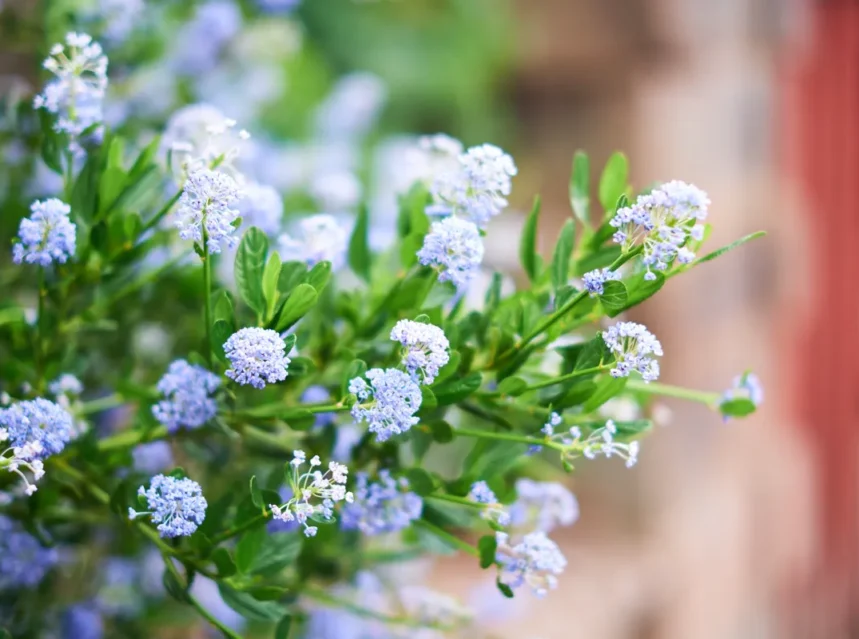
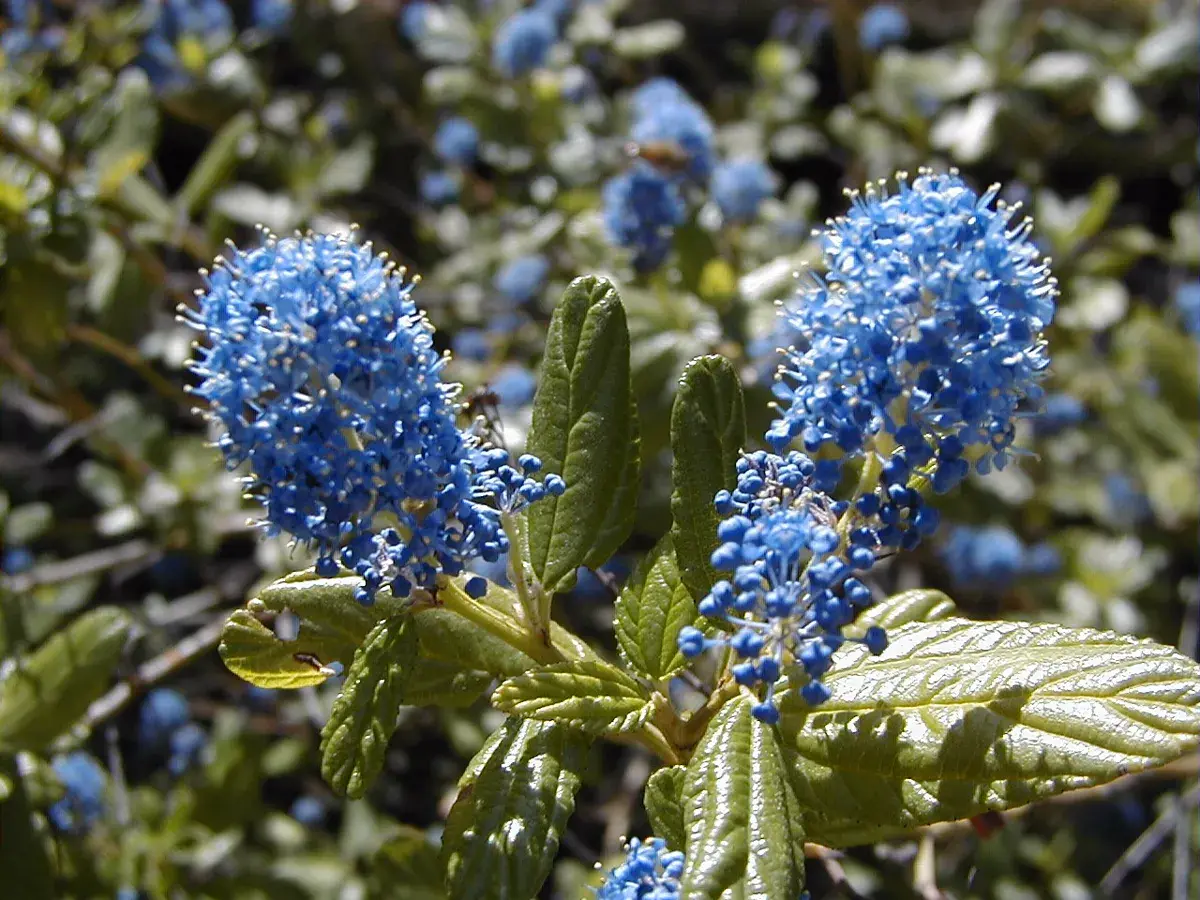
Ceanothus, or California lilac, is a sun-loving shrub grown for its dazzling clouds of tiny blue flowers in spring or summer — one of the very few shrubs that gives a true, deep blue. Most garden types are evergreen, fast-growing, and wonderfully drought-tolerant once established. That makes them a favourite for hot banks, gravel gardens, and sheltered sunny walls. Here is the complete guide on how to grow ceanothus, from planting and pruning to pots and propagation.
Quick start: Grow ceanothus in full sun in light, free-draining soil. Plant in spring and water deeply through the first summer, then leave it mostly alone. Evergreen types hate hard pruning, so only trim lightly after flowering. It dislikes wet, heavy soil, rich feeding, and cold winds. In colder areas, grow it against a warm, sheltered wall for the best results.
Experienced growers and the Royal Horticultural Society rate ceanothus for its unbeatable blue, with a few firm lessons. The biggest is pruning: gardeners warn that evergreen ceanothus will not reshoot from old, bare wood, so you must only trim lightly and never cut hard into the framework. The second is drainage, since the shrub quickly rots in wet, heavy soil. Most also note it is naturally short-lived, often around ten years, and that it resents being moved, so it pays to plant it in the right sunny, sharp-draining spot from the start.
🧰 In a hurry? Jump straight to our tested picks for this guide ↓
Ceanothus at a glance
| Feature | Detail |
|---|---|
| Botanical name | Ceanothus (family Rhamnaceae) |
| Plant type | Evergreen or deciduous shrub |
| Height/spread | About 1–4 m, by type |
| Sun | Full sun (6+ hours daily) |
| Soil | Light, free-draining; dislikes wet |
| Hardiness | Roughly USDA zones 7–10; many to about -8°C |
| Bloom time | Spring or summer, by type |
| Best for | Blue colour, walls, dry gardens, pollinators |
| Watch out | Won’t reshoot from old wood; short-lived |
Why grow ceanothus?
Ceanothus gives you something very few shrubs can: a haze of true, vivid blue flowers. When it blooms, an established plant is smothered so thickly that the foliage almost disappears, making it a real showstopper.
It is also tough and easy once settled, thriving on heat, sun, and poor, dry soil. The nectar-rich flowers hum with bees, hoverflies, and butterflies, while seed-eating birds visit later in the year. Evergreen kinds add year-round structure too. For a hot bank, a sunny wall, or a low-water garden, ceanothus is hard to beat.
History, origin & where it grows
Ceanothus comes mostly from North America, especially California, which is why it is known as California lilac. Botanists count roughly 50–60 species, and around 40 grow wild in California alone, from coastal bluffs to dry chaparral hillsides (see the background on Ceanothus). That sun-baked origin explains its love of heat and sharp drainage.
The genus has a surprising history. Leaves of the eastern species Ceanothus americanus, called New Jersey tea, were brewed as a caffeine-free tea substitute during the American Revolution. Gardeners have grown ceanothus ornamentally since the late 1800s, and breeders have since raised over 200 cultivars for hardiness and richer blues. Like legumes, the shrub also fixes nitrogen — its roots host Frankia bacteria that feed it in poor ground.
Ceanothus does best in mild, sunny, Mediterranean-type climates such as California, southern Europe, and milder parts of the UK. In India, it suits the cooler hill stations with dry, sunny conditions rather than the hot, humid plains, where monsoon-soaked soil usually rots the roots.
When to plant ceanothus
In cooler climates such as the UK, plant ceanothus in spring, once frost has passed. The shrub then has a full warm season to root before winter. Container-grown plants can also go in during early autumn in mild areas.
In mild-winter, dry-summer regions such as California, growers do the opposite and plant in autumn to early winter. Winter rain then establishes the roots before the summer drought. Depending on the type, flowers appear in late spring or in summer. In India’s hills, plant in spring in the sunniest, sharpest-draining spot you have, sheltered from cold wind.
How to plant ceanothus
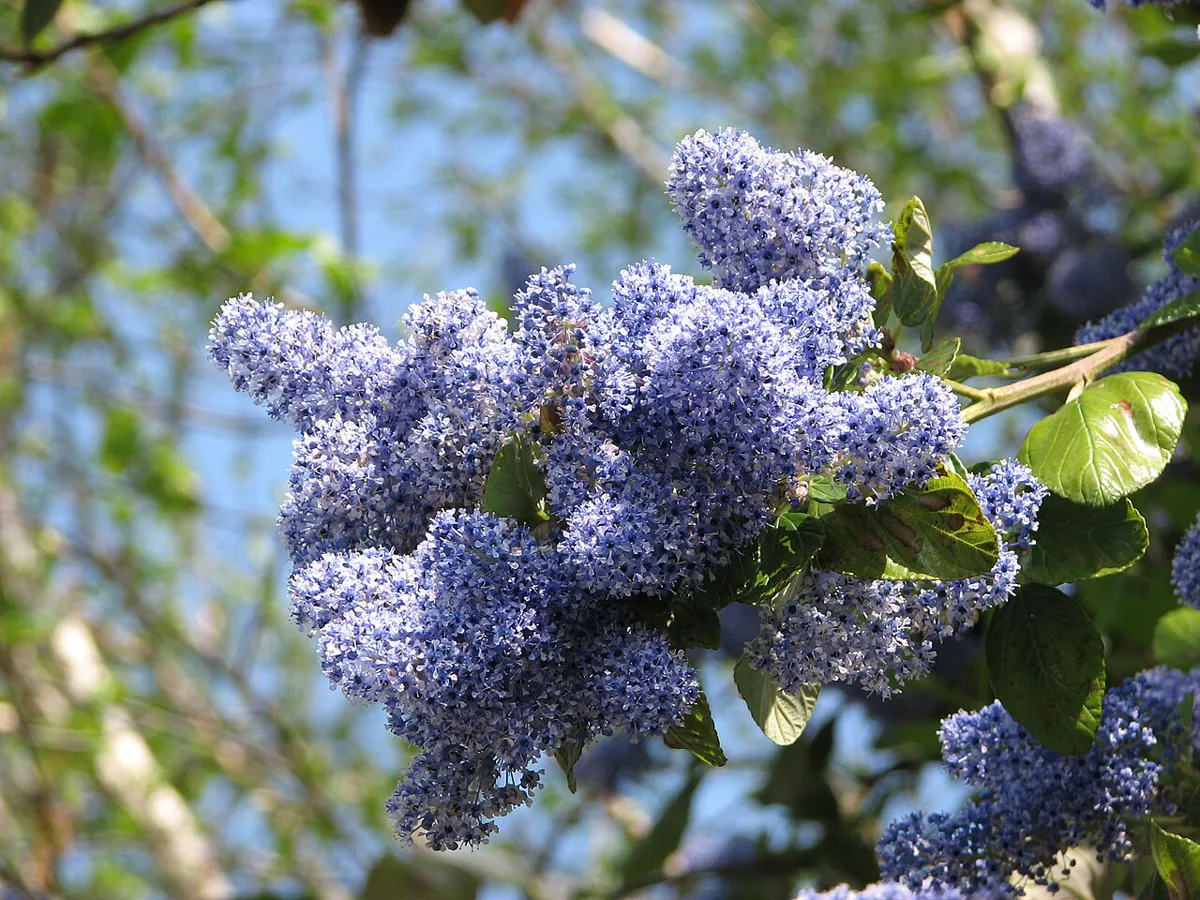

Ceanothus is usually bought as a young potted shrub and resents disturbance, so plant it carefully and once only. For the best start:
- Choose a warm, sunny, sheltered spot with light, free-draining soil; a south or west wall is ideal in cold areas.
- Dig the hole twice as wide as the root ball but no deeper, and loosen the sides with a fork.
- On heavy clay, plant on a low mound or raised berm so water drains away from the crown — the trick University of California Master Gardeners recommend for slow-draining ground. Add grit too (see improving garden soil).
- Plant at the same depth as the pot, with the crown fractionally proud of the soil, and firm in gently.
- Skip rich compost and manure. Lean soil grows a tougher, longer-lived shrub.
Water in deeply, then keep watering through the first summer before tapering off. A gravel mulch keeps the base dry, deters rot, and sets off the flowers — just keep it clear of the trunk.
Sun, soil, watering & feeding
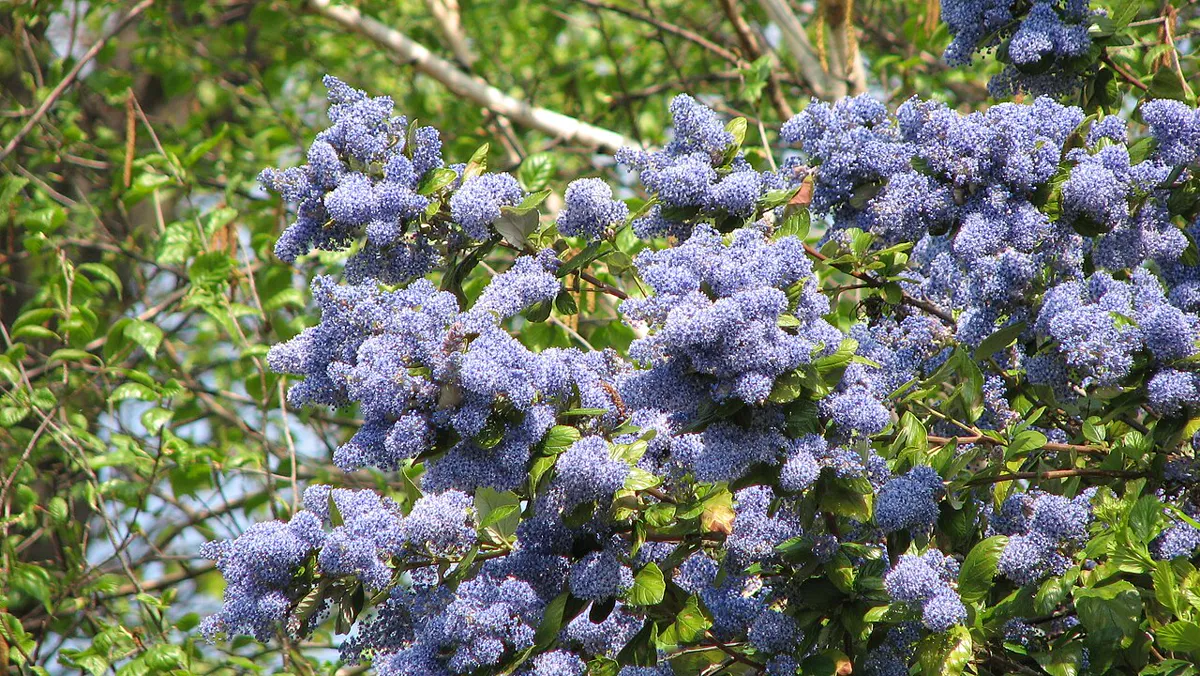
Ceanothus demands full sun — at least six hours a day — to flower well and stay compact. In very hot inland areas, light afternoon shade is fine. Deep shade means weak growth and few flowers.
Soil must be light and free-draining above all, because cold, wet ground rots the roots. It tolerates poor, sandy, even gravelly soil happily. Most types accept some lime, but leaves can yellow (chlorosis) on shallow chalk.
Watering follows a simple schedule. In the first year, give one or two deep soaks a week (see how often to water plants). In the second year, taper to a deep soak every few weeks. After that, water only in extreme drought — one thorough soak beats frequent light sprinkles. Overwatering an established plant is the single most common way gardeners kill it; yellowing, dropping leaves are the warning sign.
Feeding is even easier: don’t. Ceanothus fixes its own nitrogen through root bacteria, and rich feeding produces soft, floppy, short-lived growth with fewer flowers.
When and how to prune ceanothus
Pruning is where many gardeners go wrong, because evergreen ceanothus will not regrow from old, bare wood. Cut into the leafless woody framework and that branch is usually finished.
So treat evergreen types gently. Trim spring-flowering kinds lightly straight after flowering, shortening only the green, leafy shoots that have just bloomed. Prune later-flowering evergreens in mid-spring. Never remove more than about a third of the plant, and always cut on the leafy side of the point where green stems turn grey and bare.
Deciduous ceanothus is far more forgiving. Cut it back hard in early spring, shortening last year’s shoots towards the older framework before growth starts. With either type, choose a dry spell for the job — professional native-plant growers report that pruning cuts made in wet weather invite canker and dieback. Avoid autumn pruning too, since late soft growth gets burned by frost.
Growing ceanothus against a wall
In colder gardens, a warm wall is the secret to growing ceanothus well. The brick stores heat, and the shelter helps the shrub survive winter and flower freely.
Plant it about 30–45 cm out from a sunny south- or west-facing wall and tie the main stems to wires or trellis as they grow. Use soft twine rather than wire, which cuts into the bark, and check ties each year. Trained this way, it forms a stunning vertical sheet of blue, and the drier soil at a wall’s base suits this rot-prone shrub perfectly.
How to grow ceanothus in pots
Ceanothus prefers open ground, but compact kinds will succeed in containers if you copy their dry hillside home. Choose a large, heavy pot with big drainage holes and a naturally small variety such as ‘Dark Star’, ‘Julia Phelps’, or the deciduous ‘Gloire de Versailles’.
Mix roughly one-third horticultural grit into peat-free compost so water races through. Water when the top few centimetres feel dry, and never leave the pot standing in a saucer of water. Skip liquid feeds, which force soft growth.
Remember that roots in pots freeze faster than roots in the ground. So in cold regions, move the container against a sheltered wall for winter or wrap it in frost fleece. This is also the smart route in India’s wetter hill towns — a pot can slide under the eaves when the monsoon arrives, keeping the roots dry. Expect a potted ceanothus to live a little shorter than a border plant, and trim it lightly after flowering to keep it in scale.
How to propagate ceanothus
Because the shrub is naturally short-lived, savvy gardeners keep young replacements coming. Cuttings are the reliable route, and new plants flower within two to three years.
- Evergreen types: take 10–15 cm semi-ripe cuttings from mid-summer to early autumn, ideally with a small heel of older stem. Trim the heel clean, strip the lower leaves, dip in rooting hormone, and pot into gritty compost.
- Deciduous types: take softwood cuttings from non-flowering shoots in late spring to midsummer and root them the same way in a warm, humid spot.
- Seed: possible but slow. Wild ceanothus seed is fire-adapted, so soak it in hot water overnight, then chill it in moist vermiculite in the fridge for two to three months before sowing.
Keep cuttings barely moist rather than wet, because they rot easily. A bright, airy cold frame usually beats a sealed, humid bag for this Mediterranean-style shrub.
Types of ceanothus to know
Choosing the right ceanothus matters, because the group splits into two quite different camps. Evergreens give the most dramatic spring blue but resent pruning and hard frost. Deciduous kinds flower later, in softer powder-blue, and are both hardier and far more forgiving of the secateurs. Low, spreading forms make superb ground cover on hot banks.
| Variety | Type | Size | Why choose it |
|---|---|---|---|
| ‘Concha’ | Evergreen, spring | ~2.5 m | Deep ultramarine blue; classic wall shrub |
| ‘Puget Blue’ | Evergreen, spring | 1.5–2.5 m | Intense colour; RHS award winner |
| ‘Victoria’ / ‘Skylark’ | Evergreen, late spring | 1–3 m | Among the cold-hardiest evergreens |
| ‘Autumnal Blue’ | Evergreen, late summer | 2.5–4 m | Extends the season into autumn |
| ‘Gloire de Versailles’ | Deciduous, summer | 1–1.5 m | Powder-blue; hardy; takes hard pruning |
| ‘Yankee Point’ | Evergreen, spreading | ~1 m, wide | Fast ground cover for sunny slopes |
In colder gardens, lean towards the deciduous and wall-trained types, and save the showiest evergreens for mild areas or a sheltered, sunny wall.
Common pests & diseases
Ceanothus care is fairly trouble-free in the right conditions, and most problems trace back to wet soil rather than pests. Sharp drainage prevents the worst.
Watch for scale insects on stems and leaves, which weaken growth and leave sticky honeydew; aphids sometimes cluster on soft tips too. In damp ground, root rot and dieback are the real killers, and honey fungus can also claim stressed plants. Keep the soil free-draining, avoid overwatering, prune only in dry weather, and remove dead wood promptly.
Uses & benefits
Ceanothus is grown as an ornamental and pollinator shrub, prized for its rare blue flowers, evergreen structure, and drought tolerance. It suits sunny banks, gravel gardens, mixed borders, informal hedges, and warm walls, while low kinds carpet hot slopes and help bind the soil.
Its wildlife value is outstanding. The flowers feed bees, hoverflies, and butterflies, several moths use the foliage as a nursery plant, and birds take the seed. Historically, New Jersey tea leaves even stood in for black tea. In the garden it is grown purely for beauty and wildlife, and it pairs well with lavender, cistus, and other drought-tolerant planting ideas.
This article is for general information only and is not medical advice. Talk to a qualified professional before using any plant medicinally.
Common ceanothus problems
Branches dying after pruning
Caused by cutting evergreen types into old wood, which will not reshoot. Only trim lightly after flowering, never hard. Bare brown gaps will not refill, so badly butchered plants are usually best replaced.
Brown leaves after a cold winter
Frost or cold wind scorch. Do the scratch test: nick the bark, and green underneath means the stem is alive. Wait until late spring, then cut scorched shoots back to live growth, and consider frost protection next year.
Yellowing leaves and dieback
Usually wet, heavy soil and rotting roots — or chlorosis on shallow chalk. Improve drainage, water less, and grow in a raised, sunny, sharp-draining spot.
Plant collapsing after about ten years
Often just old age, as ceanothus is naturally short-lived. Take cuttings or plan to replace ageing plants.
Related plant guides
- How to grow Cistus
- How to grow Lewisia
- How to grow Hebe
- How to grow Heather
- How to grow Buddleia
- How to grow Lilac
Frequently asked questions
Is ceanothus easy to grow?
Yes, in the right spot. Given full sun and sharp drainage, it is tough and drought-tolerant. The main rules are never to cut into old wood and to avoid wet soil.
Why did my ceanothus die after pruning?
Evergreen ceanothus cannot reshoot from old, bare wood. Cutting hard into the framework often kills branches, so only trim lightly after flowering.
How long does ceanothus live?
It is naturally short-lived, often around ten years. Enjoy its fast, generous display, and take cuttings or replace plants as they age.
Can ceanothus grow in a cold climate?
The hardier and deciduous types can, especially trained against a warm, sheltered wall, which gives the heat and shelter they need to survive winter and flower.
Does ceanothus need ericaceous soil?
No — this is one of the most persistent myths about the plant, probably because “California lilac” sounds like it should behave like a rhododendron. Ceanothus is perfectly happy on neutral and even moderately alkaline soils, and what it actually demands is sharp drainage and a sunny position. Planting it in a peaty ericaceous mix usually makes matters worse, because that compost holds too much water around roots that hate sitting wet. A gritty, lean, free-draining soil is the real requirement.
Does ceanothus need feeding?
Very little, and overfeeding does real harm. Ceanothus is actinorhizal, meaning its roots form nodules with Frankia bacteria that fix nitrogen from the air, so it largely supplies its own. Rich soil and nitrogen fertiliser push soft, sappy growth that flops, flowers poorly and is far more likely to be damaged by cold or disease. A thin mulch of gravel or leaf mould is plenty, and an established shrub in reasonable ground needs nothing at all.
Why did my ceanothus suddenly go brown and die?
Sudden death in an apparently healthy shrub is usually root disease, most often Phytophthora root rot brought on by wet soil, and summer irrigation is a common trigger — established plants genuinely prefer to be left dry once they have their roots down. Heavy clay, a poorly drained planting hole and a mulch piled against the stem all contribute. Other causes include verticillium wilt and simple old age, since the shrub is naturally short-lived. Once a large section browns off there is rarely a cure, so the fix is preventive: plant high on a slope or raised bed, in grit-improved soil, and stop watering after the first year.
Can ceanothus grow in shade?
It really needs full sun to thrive. In shade you get sparse, drawn growth, very few of the blue flower clusters it is grown for, and a plant that is more prone to rot because the soil stays damp. A wall-trained specimen on a sunny, sheltered aspect is close to perfect, and in cooler regions that reflected warmth is what makes the difference between survival and loss. Reserve the shady corners for something else.
How fast does ceanothus grow, and how big does it get?
Fast — vigorous evergreen forms can add 30 to 60 cm a year and reach 3 m or more within five or six years, with wall-trained plants going higher still. Prostrate ground-cover types such as the low C. thyrsiflorus selections spread wide but stay under 1 m, and there are compact shrubs at 1 to 1.5 m for smaller gardens. That speed is part of the appeal, since a bare wall can be covered quickly. It also means choosing the right form matters, because you cannot cut a large one back to size later.
How do you take ceanothus cuttings?
Semi-ripe cuttings taken in mid to late summer are the most reliable method. Choose side shoots about 8 to 10 cm long, pull or cut them with a small heel of older wood, remove the lower leaves, dip the base in rooting hormone and insert them in a very free-draining mix of compost and perlite or grit. Keep them in a shaded cold frame or propagator, water sparingly and expect roots in six to ten weeks. Because the parent plants are short-lived, taking a few cuttings every couple of years is the sensible way to keep a favourite going.
Can you move an established ceanothus?
Realistically, no. Ceanothus resents root disturbance and rarely recovers from being lifted once it is more than a couple of years old, particularly the evergreen kinds. A very young plant moved in early spring with a generous rootball has a fair chance, but anything mature is better replaced than relocated. If you may want to change your mind later, grow it in a large container of gritty compost from the start. Choosing the right permanent spot first time is the real answer.
Is ceanothus deer resistant, and is it good for bees?
It is excellent for pollinators — the dense blue clusters are covered in bees for weeks, and the plant is a well-known nectar source in its native California chaparral. On deer, be a little sceptical of the “deer resistant” label: browsing animals including mule deer feed on ceanothus foliage in the wild, where it is valued as a source of protein and calcium. A mature, well-grown shrub takes that browsing in its stride, but young plants in a deer-heavy garden deserve a guard for the first year or two. Once it is above browsing height the problem disappears.
Still stuck? Ask the Plant Doctor
Describe the problem — yellow leaves, holes, no flowers — and get a clear answer in seconds. FreeAI can make mistakes. Answers are guidance, not a guarantee — check anything important against the guide it links to, and always read the label on any product before you use it.