How to Grow Cuphea (Cigar Plant)
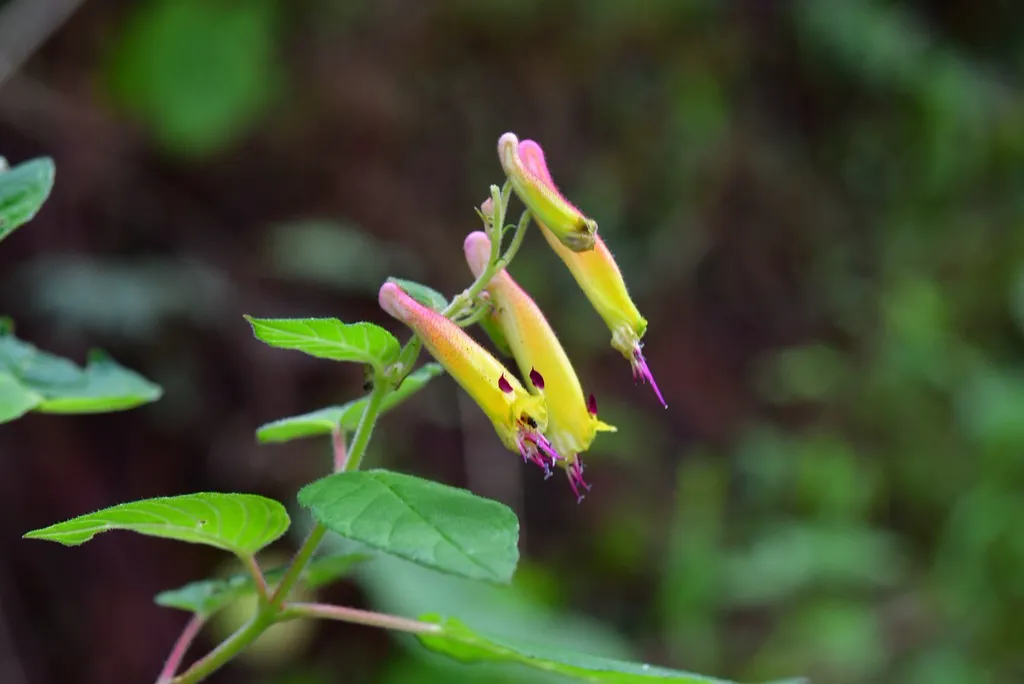
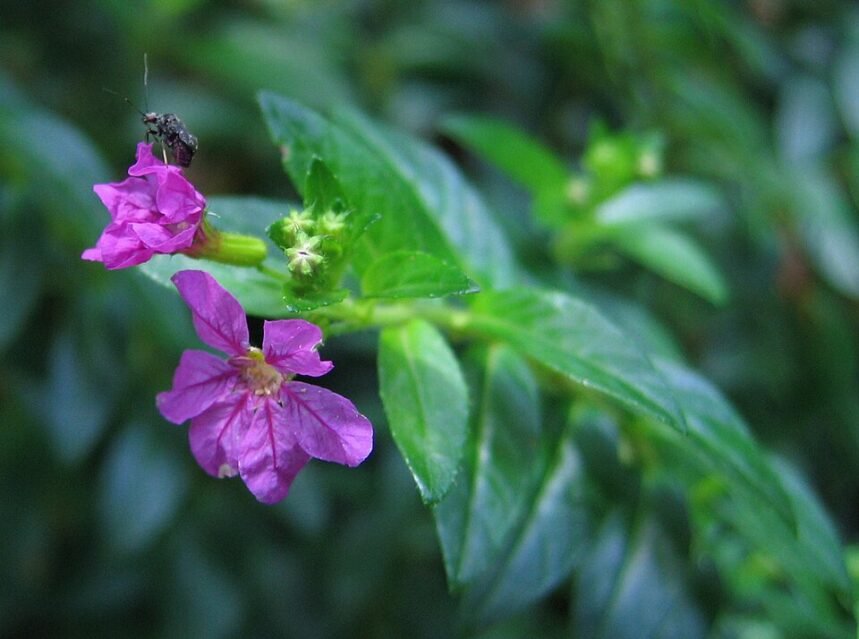 Image: Vinayaraj — CC BY-SA 3.0, via Wikimedia Commons
Cuphea is a heat-loving, nonstop-flowering sub-shrub grown for its slim, tubular blooms that are irresistible to pollinators. Best known as the cigar plant or firecracker plant, it carries fiery reddish-orange flowers, each with a dark tip like a tiny lit cigar, all season long. Bushy, easy and tough, it is one of the most rewarding plants for a lively, wildlife-friendly garden. Here is the complete guide on how to grow cuphea (cigar plant).
Quick start: Grow cuphea in full sun in light, well-drained soil. It loves heat. Keep the soil consistently moist but not soggy, feed every few weeks, and pinch the tips to keep it bushy. It flowers nonstop all summer and draws bees, butterflies and other pollinators. Grow it as an annual where winters are cold.
Cuphea, the cigar plant, is a tireless little shrub that barely stops flowering, its slim tubular blooms perfectly shaped for pollinators. In its native Americas it draws hummingbirds, while in Indian and other gardens it hums with bees, butterflies and sunbirds. Growers find it heat-tolerant and low-effort, asking only for an occasional pinch to stop it growing leggy. It is frost-tender, so it is grown as an annual or overwintered indoors, where it carries on as a cheerful, low-care wildlife plant.
🧰 In a hurry? Jump straight to our tested picks for this guide ↓
Cuphea at a glance
| Feature | Detail |
|---|---|
| Botanical name | Cuphea ignea (family Lythraceae) |
| Common names | Cigar plant, firecracker plant |
| Plant type | Tender sub-shrub (grown as an annual in cold areas) |
| Sun | Full sun, 6–8 hours |
| Soil | Light, average, well-drained |
| Height | 30–60 cm (1–2 ft) |
| Flowering | Early summer until frost |
| Best for | Pollinators, borders, pots and baskets |
Why grow cuphea?
Cuphea is a top-tier pollinator plant that flowers continuously all season with almost no effort. A few reasons gardeners plant it again and again:
- Endless flowers. It blooms nonstop from early summer to frost, with no deadheading needed.
- Wildlife magnet. The tubular flowers are tailor-made for nectar feeders, drawing bees, butterflies and sunbirds.
- Heat-proof. It thrives in the kind of summer heat that flattens other bedding plants.
- Easy and tidy. Its neat, bushy habit suits beds, borders and pots, and it shrugs off most problems.
History, origin & how cuphea spread
Cuphea (Cuphea ignea) is native to Mexico and Central America, where it grows as a warm-climate evergreen sub-shrub on sunny, open ground (see Encyclopaedia Britannica). The wider genus is large, with well over two hundred species spread across the warmer parts of the Americas, many of them adapted to attract the hummingbirds that pollinate them in their homeland.
European and North American gardeners took up the cigar plant as a colourful glasshouse and bedding plant in the nineteenth century, valuing its long season and bright flowers (see the RHS). Today it is grown around the world as a summer annual or, in frost-free areas, a permanent shrub. That tropical American ancestry explains its garden needs everywhere: it wants heat and sun, which makes it very well suited to hot Indian conditions, where it can flower for much of the year.
Best season & when to plant
Plant cuphea out after the last frost, once the soil and air are warm. It flowers from early summer until frost in a long, continuous display that peaks in the heat. In warm, frost-free regions and across much of India it can bloom for most of the year and behave as a short-lived perennial.
How to plant cuphea

- Choose full sun, ideally 6–8 hours, for the most flowers (a little afternoon shade helps in extreme heat).
- Use light, average, well-drained soil, loamy and slightly acidic to neutral (pH about 6.0–7.5); see improving garden soil.
- It is easy from young plants, cuttings or seed, and does very well in containers.
- Space plants about 30 cm apart so air moves freely around them.
Sun, soil, watering & feeding
Although established cuphea is moderately drought-tolerant, it does best in consistently moist (but not soggy) soil; avoid waterlogging, which causes root rot (see how often to water). Feed with a slow-release fertiliser at the start of the season, or a liquid feed every two to four weeks during active growth, for steady flowering. In a pot, where nutrients wash through faster, that regular feeding matters even more.
The plant gives the clearest signs of what it wants: pale, sparse growth usually means it is short of food or light, while yellowing lower leaves and a sour, wet compost point to overwatering. Adjusting to those cues keeps it flowering hard. In the hottest, driest part of summer a daily check of the soil pays off, as a cuphea in full flower drinks more than its small size suggests.
Pinching & ongoing care
To keep cuphea full and bushy rather than leggy, pinch the stem tips during the growing season, which encourages more side branches and more flowers. Happily, it does not need deadheading to keep blooming. In cold climates, take cuttings in late summer or bring a potted plant indoors to overwinter on a bright sill, where it often keeps flowering. A light all-over trim in mid-season is worthwhile too, as it refreshes a plant that has started to sprawl and triggers a fresh burst of growth and bloom within a couple of weeks.
Types of cuphea to grow
Beyond the classic cigar plant, a few relatives are widely grown and want the same warm, sunny conditions:
- Cigar plant (Cuphea ignea) — the familiar orange-red tubular flowers with a dark, ash-like tip.
- Bat-faced cuphea (Cuphea llavea) — quirky red-and-purple flowers said to resemble a little face.
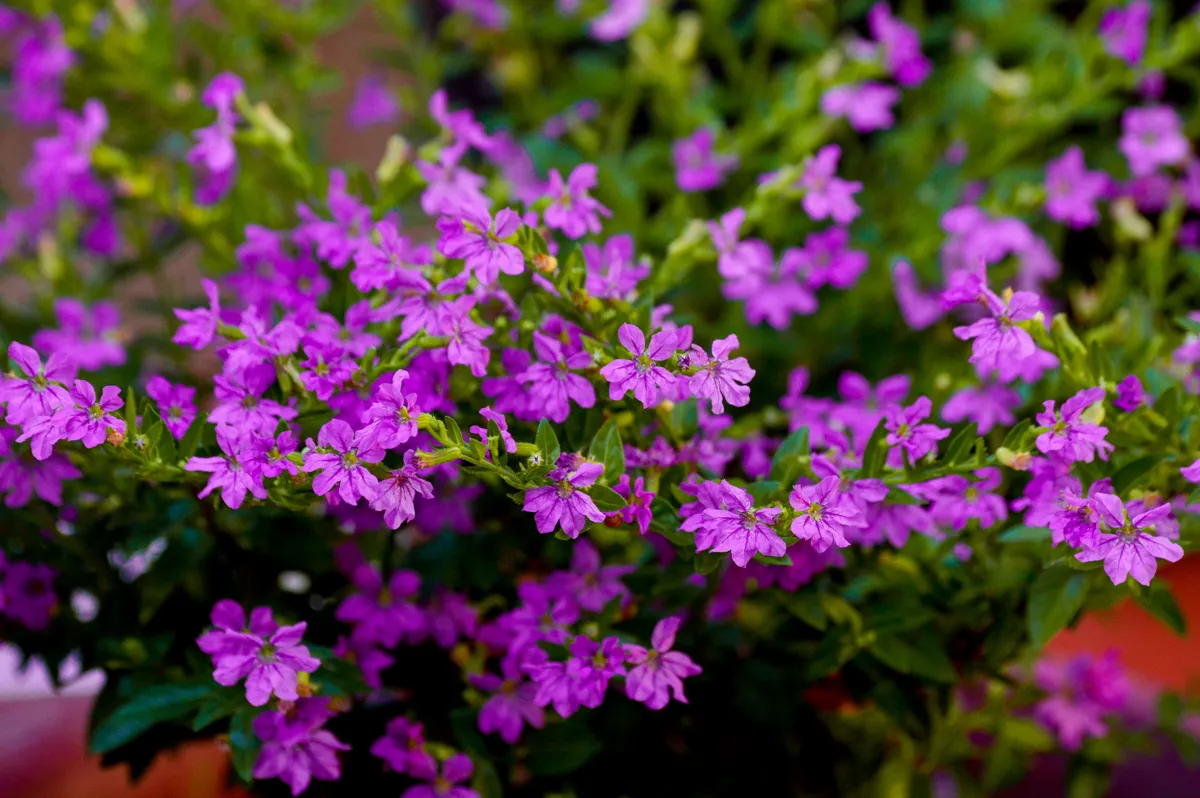
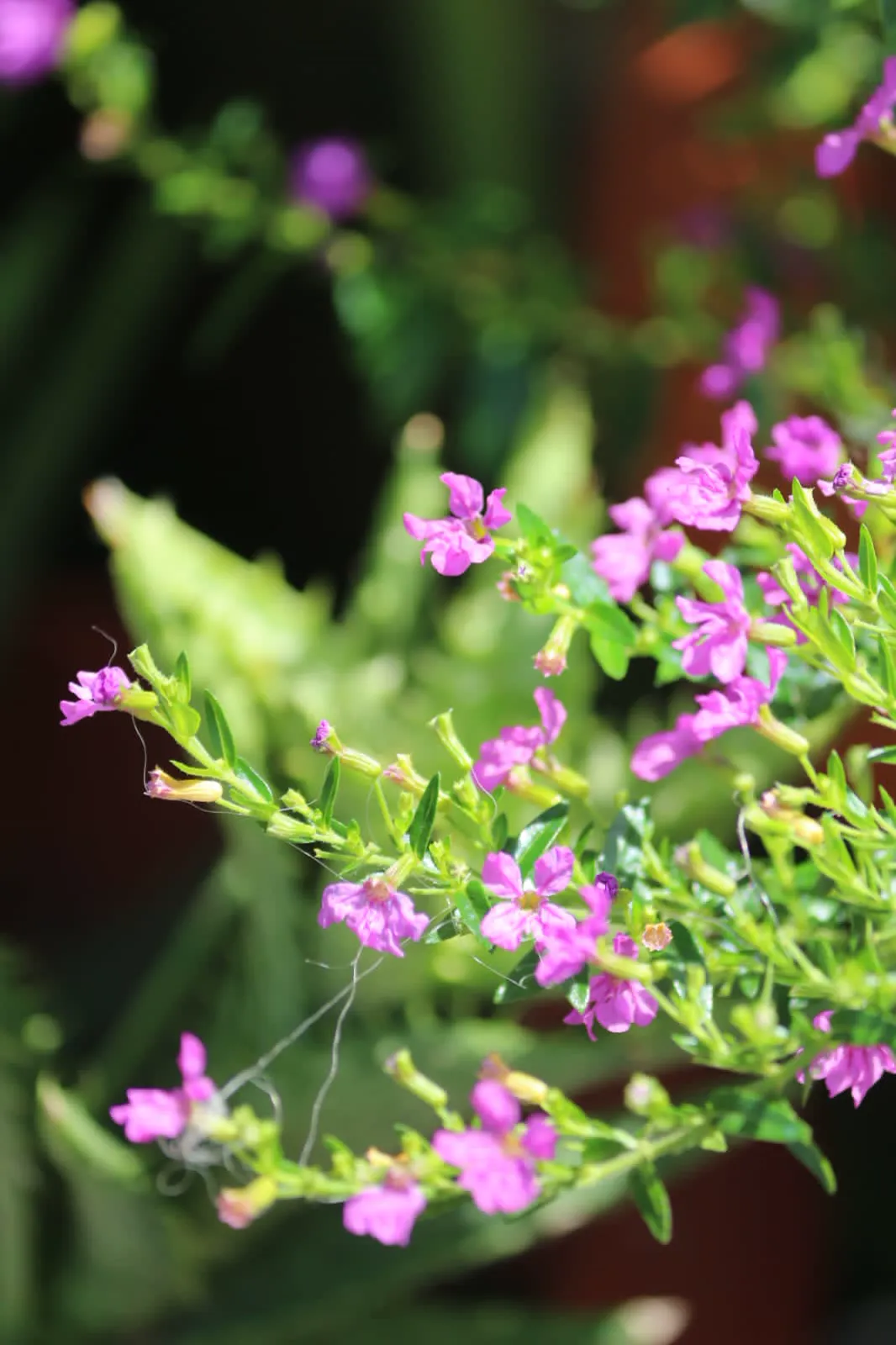
- Mexican heather (Cuphea hyssopifolia) — a fine-leaved, compact shrub smothered in tiny pink, purple or white flowers, popular as edging.
Growing cuphea in pots and containers
Cuphea is a natural for containers, where its tidy, mounded shape and constant flowers earn their keep on a balcony or patio. Use a free-draining compost and a pot with good drainage holes, and never let it stand in water. Because pots dry out and lose nutrients quickly, check the compost in hot spells and keep up the regular feeding.
A container also makes it easy to move the plant under cover for winter in cold regions. Grouping two or three plants in a wide, low bowl gives a fuller, faster display than a single plant in a tall pot, and the mounded shape softens the rim beautifully. On a hot terrace, standing the pot where it catches morning sun and a little afternoon shade keeps the flowers coming without scorching, which is a useful trick in Indian summers.
Best companion plants
Cuphea mixes well with other sun-loving, heat-tolerant plants that share its long flowering season:
- Lantana and salvia — fellow pollinator magnets that thrive in the same heat.
- Zinnias and marigolds — bold, easy annuals for a hot, colourful border.
- Ornamental grasses — add soft texture behind the busy little flowers.
Common pests & diseases
Cuphea is generally trouble-free. The most common pest is mealybugs (cottony white masses), which you can blast off with water or treat with insecticidal soap, plus occasional aphids (see aphid control). Avoid soggy soil to prevent root rot; see our organic pest control guide for more.
Benefits & uses
Cuphea offers nonstop, fiery little flowers and is one of the best plants for attracting bees, butterflies and other pollinators (see attracting pollinators). Its bushy, heat-loving habit suits beds, borders and containers, and it is easy, long-blooming and largely pest-free, making it superb value for a lively, wildlife-friendly garden.
Common cuphea problems
Leggy, sparse growth
Not pinched. Pinch the tips during the season for a bushier, more floriferous plant.
Few flowers
Too little sun. Give 6–8 hours of full sun.
Mealybugs / rot
Treat mealybugs with water or insecticidal soap; avoid soggy soil to prevent root rot.
Related plant guides
- How to grow Brachyscome
- How to grow Marguerite Daisy
- How to grow Pentas
- How to grow Bidens
- How to grow Diascia
- How to grow Angelonia
How to propagate cuphea
Cuphea is one of the easier bedding plants to increase. Softwood cuttings are the quickest and most reliable route, and they double as the way to carry a plant through a cold winter without keeping a large pot indoors.
From cuttings
Take 8–10 cm tip cuttings from soft, non-flowering growth in late spring or summer. Strip the lower leaves, cut just below a node, dip the base in rooting hormone if you have it, and set the cuttings in moist, gritty compost inside a covered tray or a clear bag. In warmth and bright indirect light they root in about two to four weeks. Cuttings are essential for named cultivars such as the bat-faced and Mexican heather types, which will not come true from seed.
From seed
Seed works well for many species. Sow it on the surface of warm, moist compost and do not cover it, because it needs light to germinate. Start indoors six to eight weeks before your last frost in cool climates; in frost-free regions and much of India it can be sown directly once the soil is warm, and plants often self-sow lightly.
Overwintering by cutting
Where frost is expected, a few late-summer cuttings are easier to keep than the parent plant — they are small, need little light, and give you fresh, vigorous plants to set out in spring.
Frequently asked questions
Does cuphea attract hummingbirds?
Yes, in the Americas its tubular flowers are magnets for hummingbirds; elsewhere, including India, it draws bees, butterflies and sunbirds.
Does cuphea need full sun?
Yes, 6–8 hours of full sun gives the best, most continuous flowering.
Is cuphea a perennial?
In frost-free climates it is a short-lived perennial; in cold regions it is grown as a warm-season annual.
How do I keep cuphea bushy?
Pinch the stem tips during the growing season to encourage branching and more flowers.
Is cuphea the same as Mexican heather?
Mexican heather is one cuphea, not all of them. Cuphea is a large genus of well over 200 species, and the plant sold as Mexican heather or false heather is Cuphea hyssopifolia — a neat, twiggy mound covered in tiny lilac, pink or white flowers. The cigar or firecracker plant is C. ignea, with tubular orange-red flowers tipped in black and white, and the bat-faced cuphea is C. llavea, whose red and purple flowers really do look like a small face. Care is broadly the same across all of them, but the sizes and looks are quite different, so check the species name before you buy.
How big does cuphea get?
Mexican heather usually settles at about 30-60 cm tall and roughly as wide, forming a tidy dome that needs no staking. Cigar plant and bat-faced types are a little taller and looser, often reaching 60-90 cm in a warm season. Growing conditions make a real difference — plants in frost-free climates keep going and build up into small shrubs, while those grown as summer annuals rarely have time to reach full size. Regular tip pinching keeps any of them dense rather than sprawling.
Is cuphea toxic to dogs and cats?
Cuphea does not appear on the ASPCA’s lists of plants toxic to dogs, cats and horses, and it is not a species that turns up in common pet-poisoning reports. That is reassuring rather than a guarantee of safety, since the absence of a listing is not the same as tested safety, and any plant material can upset a pet’s stomach if enough is eaten. Discourage chewing, and contact a vet if your animal eats a large amount or seems unwell afterwards. This is general information, not veterinary advice.
Is cuphea deer resistant?
It is generally rated deer resistant, and rabbits tend to leave it alone too. The small, slightly rough leaves and the resinous, sticky feel of the stems make it unappealing to browsing animals, so it often survives untouched in gardens where other bedding is grazed. As always, deer resistant does not mean deer proof — hungry animals in a dry season will sample almost anything. Massing cuphea with other aromatic, unpalatable plants such as lantana, salvia and rosemary gives the best odds.
How do you propagate cuphea?
Softwood cuttings are the quickest and most reliable route. Take 8-10 cm tip cuttings in late spring or summer, strip the lower leaves, dip the base in rooting hormone if you have it, and set them in moist, gritty compost inside a covered tray or a clear bag. In warmth and bright indirect light they root in about two to four weeks. Seed also works for many species, sown on the surface of warm, moist compost since it needs light to germinate, though named cultivars will not come true from seed.
Does cuphea need deadheading?
No — cuphea is effectively self-cleaning, dropping its spent flowers and carrying on without any help. That is a large part of its appeal for containers and edging, where a fussier bedding plant would need weekly attention. What it does appreciate is a light trim or shear in mid-season if it starts to look open or straggly, which brings a fresh flush within a couple of weeks. A liquid feed every few weeks in containers keeps the flowering going right through the season.
How do you overwinter cuphea?
Where frost is expected, treat it as a plant to bring in rather than one to protect outside. Lift a favourite plant into a pot in early autumn, cut it back by about a third, and keep it on a bright windowsill or in a frost-free conservatory with sparing water and no feed until spring. Alternatively, take a few cuttings in late summer — they are small, easy to keep and often overwinter better than a big woody parent. In frost-free zones, roughly USDA 9-11, plants simply carry on outdoors and are cut back hard in early spring to renew them.
Can you grow cuphea in pots and hanging baskets?
Yes, and it is one of the better container plants for a hot, sunny position. Use a pot of at least 20-25 cm with free-draining compost, and give trailing types such as the smaller cuphea hybrids room to spill over the rim of a basket. Containers dry out fast in summer heat, so check daily and water before the compost is bone dry, then feed with a balanced liquid feed every two to three weeks. Good drainage matters more than rich soil — cuphea copes with heat and drought far better than it copes with sitting wet.
Still stuck? Ask the Plant Doctor
Describe the problem — yellow leaves, holes, no flowers — and get a clear answer in seconds. FreeAI can make mistakes. Answers are guidance, not a guarantee — check anything important against the guide it links to, and always read the label on any product before you use it.