How to Grow Four Oclock Flowers
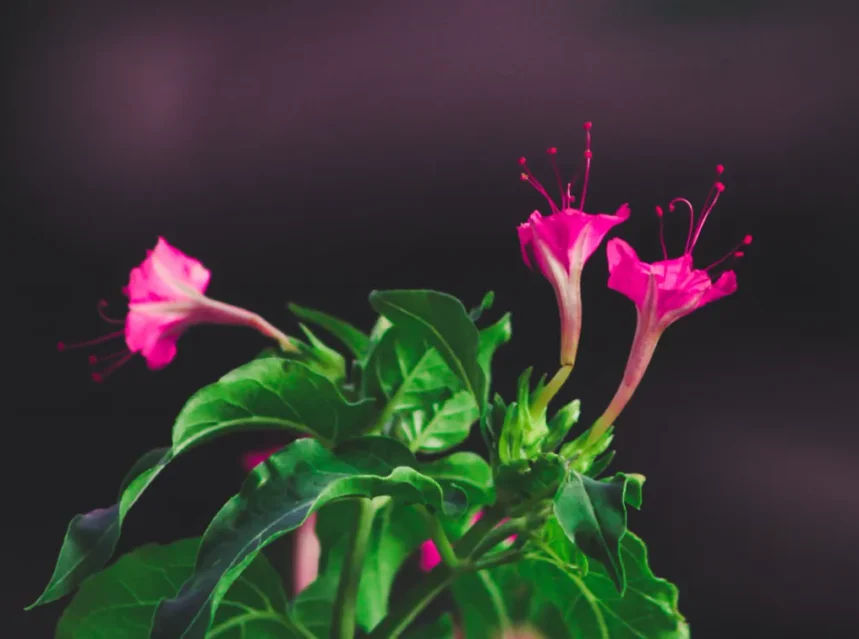
Four o’clock flowers (Mirabilis jalapa) are bushy, easy annuals or tender perennials famous for trumpet-shaped, sweetly scented blooms that open in the late afternoon and stay open all night — often in several colours on the same plant. Loved as a cottage-garden favourite, they bring fragrance and pollinators to a sunny border. Here is the complete guide on how to grow four oclock flowers.
Quick start: Sow four o’clock seed in spring after frost, in full sun and ordinary, free-draining soil. Water through dry spells and they bloom from summer to autumn. The flowers open around 4 pm and close by morning. In cold areas, lift the tubers like dahlias to replant next year, or let plants self-seed.
Experienced growers and the Royal Horticultural Society describe four o’clocks as one of the most forgiving plants you can sow, with a couple of things worth knowing. Gardeners delight in how a single plant can carry blooms of different colours, and even striped or split-colour flowers, which makes each plant a surprise. The flip side is that they self-seed freely, so many growers report seedlings popping up everywhere the next year. Most also note the strong evening perfume that draws moths, and warn that the seeds and roots are toxic if eaten, so they keep them away from small children.
🧰 In a hurry? Jump straight to our tested picks for this guide ↓
How to grow four oclock flowers: at a glance
| Feature | Detail |
|---|---|
| Botanical name | Mirabilis jalapa (family Nyctaginaceae) |
| Plant type | Tender perennial, grown as an annual |
| Height | About 60–90 cm, bushy |
| Sun | Full sun to light shade |
| Soil | Ordinary, free-draining |
| Bloom time | Summer to autumn, opening late afternoon |
| Best for | Cottage borders, scent, moth pollinators |
| Watch out | Self-seeds; seeds and roots are toxic |
Why grow four o’clock flowers?
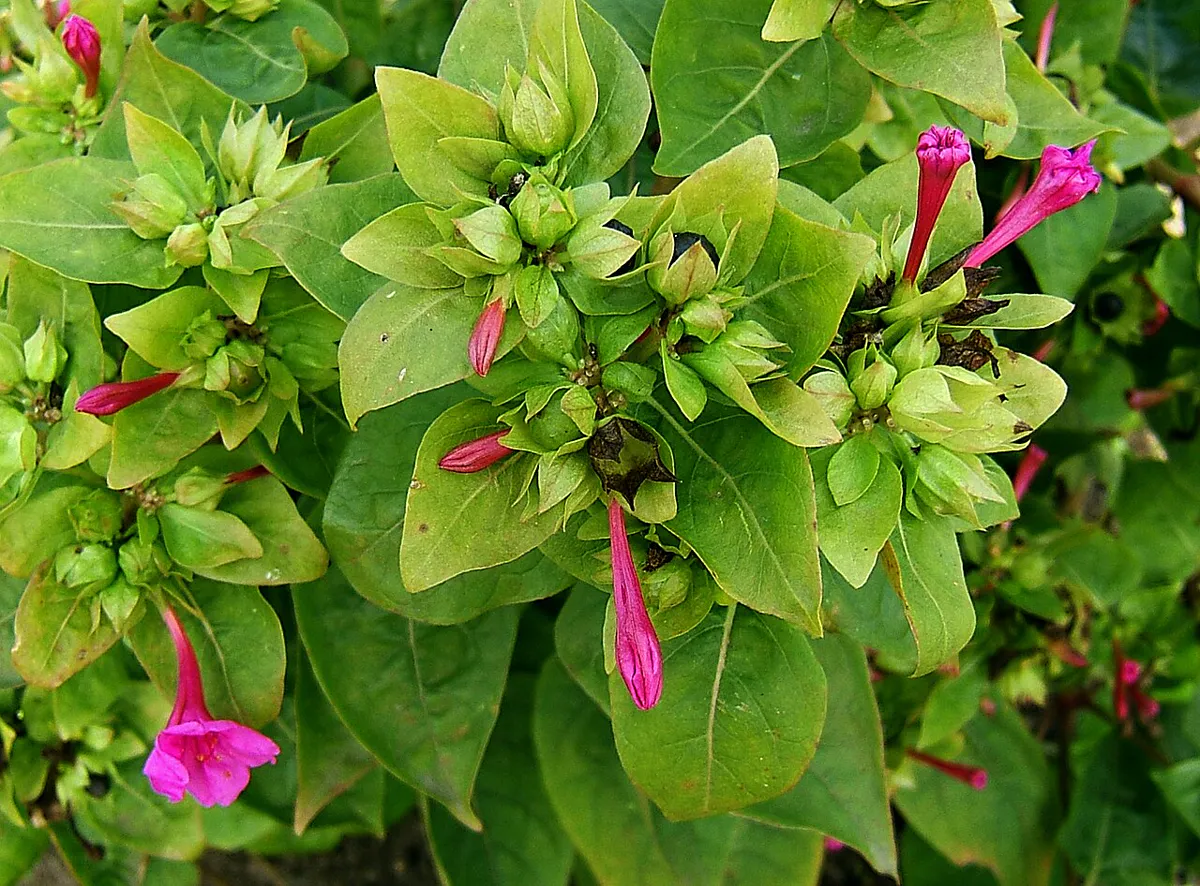
Four o’clock flowers are among the easiest plants to grow from seed, perfect for beginners and busy gardeners. They shrug off heat, poor soil, and pollution, and reward you with masses of colourful, fragrant blooms.
Because the flowers open in the evening, they bring the garden to life just when you sit outside to relax. The sweet scent and bright trumpets draw moths and other pollinators, so these flowers add both beauty and wildlife value with hardly any effort.
History, origin & how it reached India
Four o’clock flowers come from the tropical Americas, especially Peru and Mexico, where they grow as true perennials. Their old name, marvel of Peru, points to this South American home.
Spanish traders carried the plant around the world from the 16th century, and it spread quickly because it grows so easily from seed (see the background on Mirabilis jalapa). It reached India long ago and became a beloved garden flower known as gul abbas or sandhya malti, common in home gardens across the country.
Today four o’clocks are grown almost everywhere with warm summers, from the US and Mediterranean to South Asia. In India they thrive in the plains as a warm-season flower, blooming through the monsoon and into autumn.
Best season & when to plant
Sow four o’clock seed in spring, once the danger of frost has passed and the soil has warmed. In cold climates, start seed indoors a few weeks earlier for an earlier show.
The plants flower from midsummer into autumn. In India, sow at the start of the warm season or just before the monsoon, and the plants will bloom right through the rains. Soaking the hard seeds overnight speeds up germination.
How to plant four o’clocks
These flowers are usually grown from their large, easy seeds. To get them going:
- Soak seeds overnight, then sow about 1 cm deep in full sun in spring.
- Use ordinary, free-draining soil; they tolerate poor ground but flower best with some compost dug in (see improving garden soil).
- Space plants about 30–45 cm apart, as they grow into bushy clumps.
You can also start seed in pots and transplant young plants. For a head start, see our guide to starting seeds indoors. Keep the soil moist until seedlings are established.
Sun, soil, watering & feeding
Four o’clocks bloom best in full sun, though they cope with a little afternoon shade in very hot areas. They are not fussy about soil as long as it drains freely, and they happily grow in average or even poor ground.
Water regularly in dry spells for the best flowering, but avoid waterlogging (see how often to water plants). Feed lightly once or twice in summer with a balanced fertiliser, or rely on rich soil. Too much feeding gives leafy plants with fewer flowers.
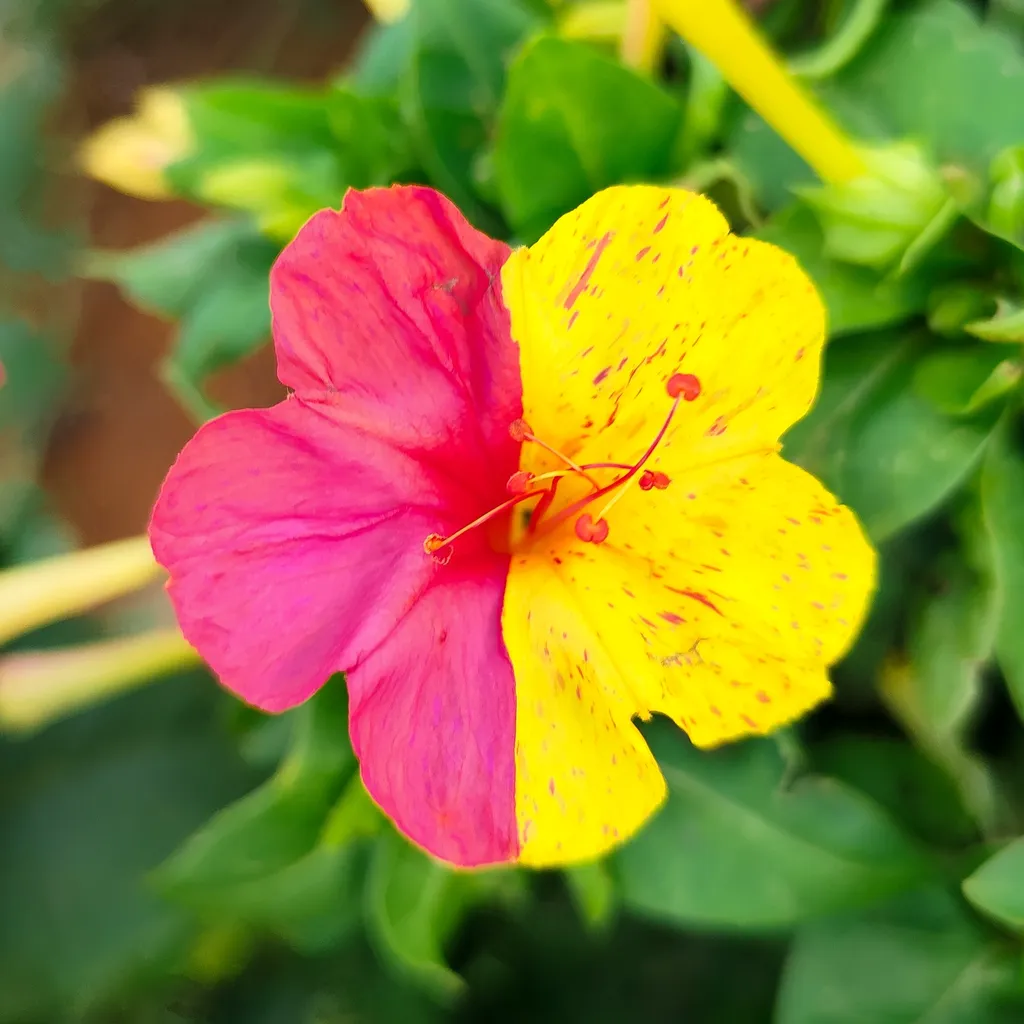
Why the flowers change colour
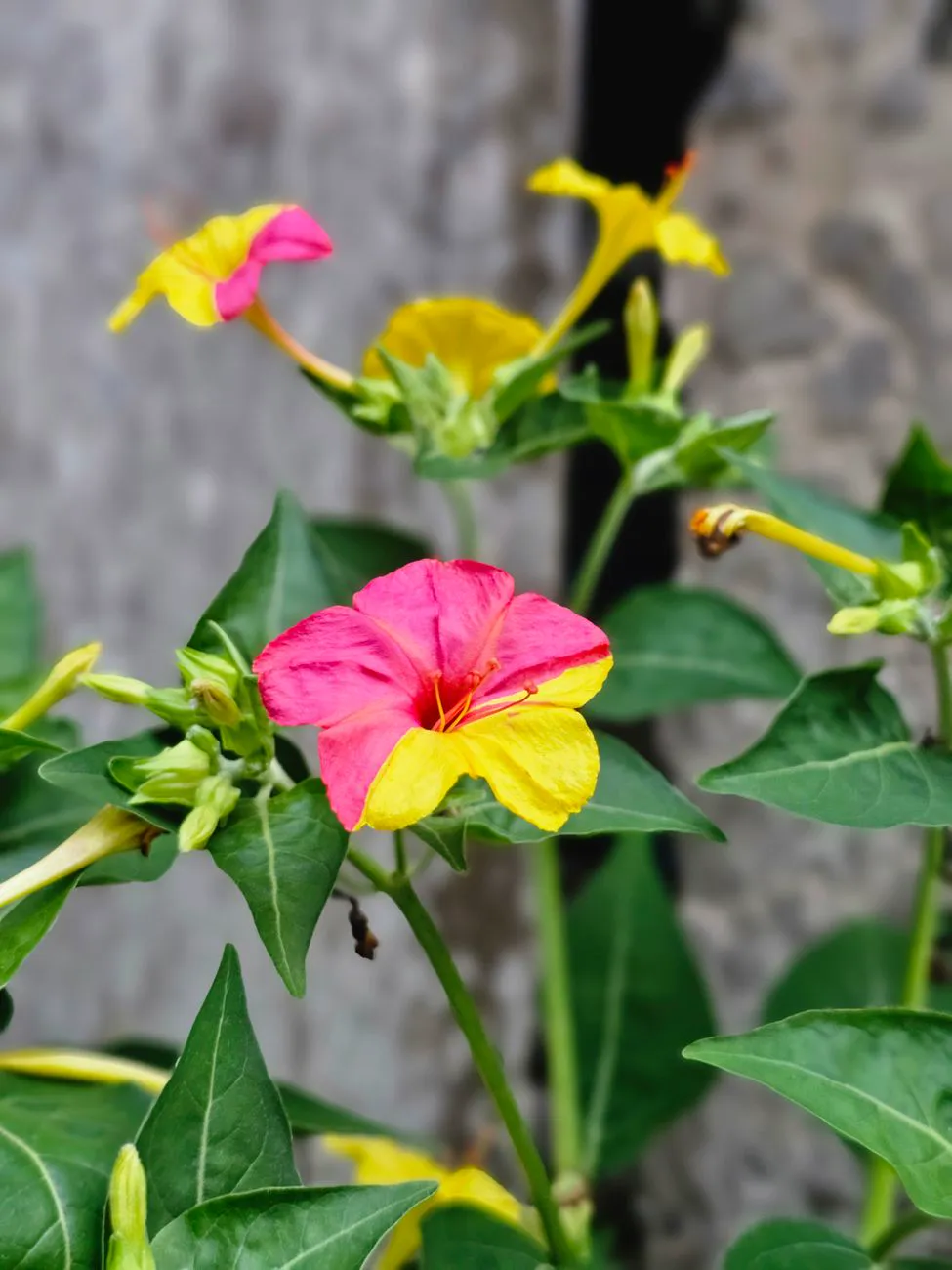
One of the charms of four o’clocks is that a single plant can produce flowers in several colours, such as yellow, pink, red, white, and bicoloured stripes.
This happens because of natural genetic mixing within the plant, so blooms can be flecked, split down the middle, or change from one season to the next. It makes every plant unique and is a big part of why these flowers are so popular with gardeners.
Saving tubers and self-seeding
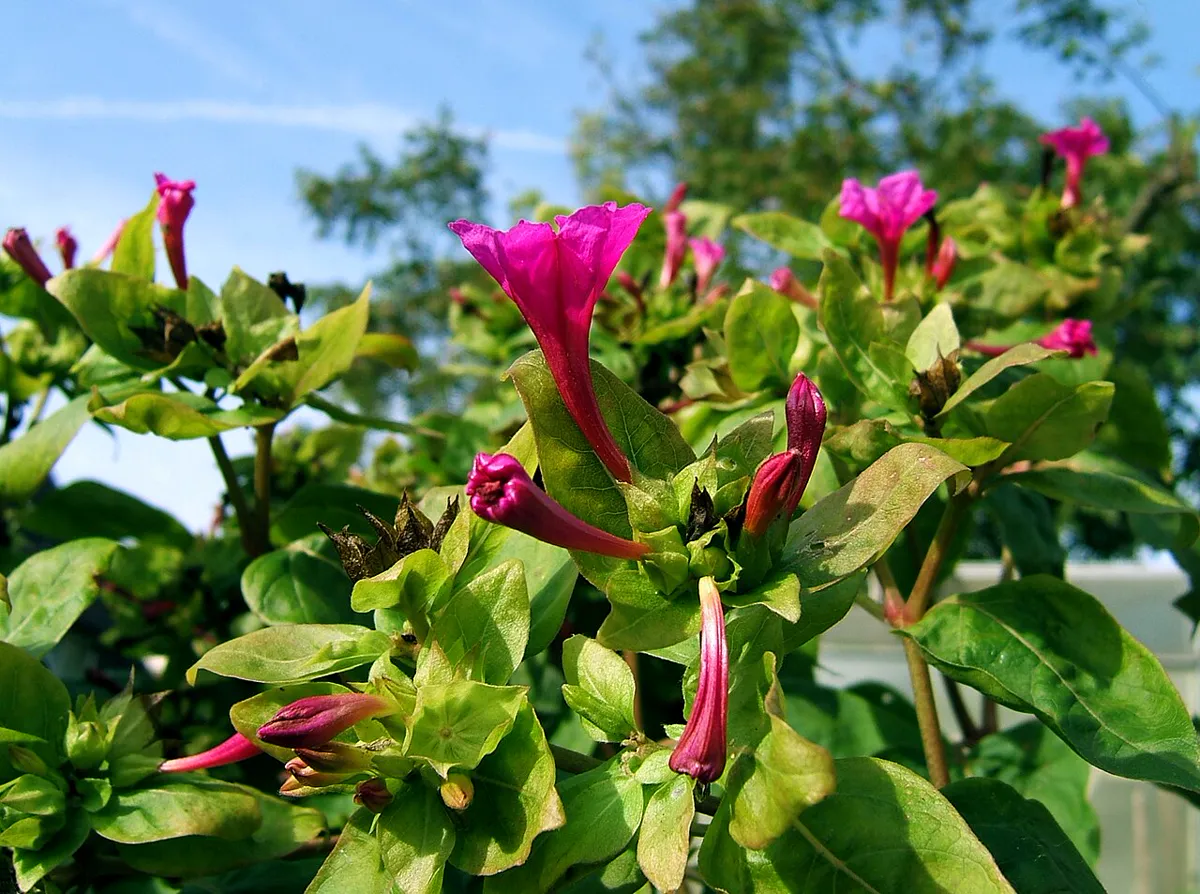
In warm climates four o’clocks behave as perennials, regrowing each year from fleshy, tuberous roots. In cold regions you can lift the tubers in autumn, much like dahlias, store them dry and frost-free, and replant in spring.
The plants also self-seed freely, so seedlings often appear nearby the following year. This is handy for free plants, but pull out unwanted seedlings while they are small if you want to keep things tidy.
Growing four o’clocks in pots
Four o’clock flowers grow happily in large containers, which is handy on a balcony or patio. A pot also makes it easy to enjoy the evening scent right where you sit.
Choose a deep, wide pot with good drainage holes, because the plants form chunky tubers. Fill it with a quality potting mix, stand it in full sun, and water when the top of the compost dries. Feed lightly through summer for steady blooms. In cold areas, you can move the whole pot under cover and keep the tubers dry over winter.
Common pests & diseases
Four o’clock flowers are tough and rarely troubled by serious problems. Their robust growth shrugs off most pests, which makes them a reliable choice.
Occasionally aphids cluster on soft new shoots, and leaf spots or rust can appear in damp, crowded conditions. Snails may nibble young seedlings. Keep plants spaced for airflow, clear fallen debris, and use our slug and snail guide if seedlings are being eaten.
Uses & benefits
Four o’clocks are grown as ornamental and pollinator-friendly flowers, valued for fragrance, long bloom, and easy care. They suit cottage borders, hedges, evening seating areas, and large pots, and pair well with other pollinator-friendly plants.
Their evening scent draws moths and hawk moths, adding life to the dusk garden. The plant has a history of traditional dye and folk use, but its seeds and roots are toxic if eaten, so it is best enjoyed for its looks alone. For information only, not medical advice — consult a professional before using any plant medicinally.
Common four o’clock problems
Few flowers, lots of leaves
Usually too much shade or too much feeding. Move plants to full sun and ease off the fertiliser.
Seedlings everywhere
Self-sown plants from dropped seed. Pull unwanted seedlings while small, or deadhead before seeds form to limit spread.
Wilting in midday heat
Often normal in extreme heat, with plants recovering by evening. Water deeply in the morning and mulch to keep roots cool.
Related plant guides
- How to grow Moonflower
- How to grow Marigolds
- How to grow Columbine
- Heliotrope care
- Butterfly Pea
- How to grow Campanula
Frequently asked questions
Why are they called four o'clock flowers?
Because the flowers open in the late afternoon, around four o’clock, and stay open through the night, closing again by the next morning.
Are four o'clock flowers easy to grow?
Very. Sown from seed in full sun after frost, they grow quickly in almost any free-draining soil and bloom for months with little care.
Do four o'clocks come back every year?
In warm climates they regrow from tubers each year. In cold areas, lift and store the tubers, or let the plants self-seed for new plants in spring.
Are four o'clock flowers poisonous?
The seeds and roots are toxic if eaten, so keep them away from young children and pets. Grown for looks and scent, they are otherwise a safe garden plant.
How tall and wide do four o'clock plants get?
University of Wisconsin horticulture puts a well-grown plant at about 2 to 3 feet in both height and spread, forming a rounded, many-branched bush. In a long warm season, and especially in the tropics where the tuber survives and grows on, plants can push past that and behave almost like a small shrub. Space them roughly 18 to 24 inches apart so air can move between them. Growers in India often see the biggest plants of all, since the roots never freeze and keep building year on year.
Why does one four o'clock plant have flowers of different colours?
Because the species is genuinely variable, and this is not a fault. A single plant can carry white, yellow, pink, magenta and red blooms at once, and individual flowers may be striped, speckled or split down the middle in two colours. The plant is also the textbook example of incomplete dominance in genetics: crossing a red-flowered plant with a white one gives pink offspring rather than one colour winning outright. If you save seed from a mixed patch, expect surprises rather than a copy of the parent.
Do four o'clock flowers climb?
No. Mirabilis jalapa is a bushy, self-supporting plant with no tendrils, twining stems or clinging roots, so it will not go up a trellis. The confusion usually comes from photographs of tall, sprawling plants leaning against a fence, which happens when they are grown in rich soil or too much shade and get floppy. If yours are lolling about, move them into full sun, feed less, and give them a light trim in early summer to encourage a sturdier shape. For a genuine night-scented climber, look at moonflower instead.
How do you transplant four o'clocks?
Move them young, or move the tuber. Seedlings transplant easily while they are only a few inches tall, but an established plant makes a thick, deep taproot that resents disturbance in mid-season. The reliable method is to wait until the top growth dies back, dig the whole tuber with a fork, and replant it — or store it and plant it again in spring. Those tubers get remarkably large in old plants, occasionally a foot or more long, so dig wide and go deeper than you think you need to.
Are four o'clocks considered a weed?
In cold climates they are perfectly well behaved, because the frost kills the top and the seedlings are easy to pull. In warm regions the picture changes: they self-sow freely and have naturalised in parts of the southern United States, and gardeners in warm zones regularly report seedlings coming up everywhere plus tubers that survive every attempt to remove them. If you garden somewhere frost-free, grow them where you can control the seed — deadhead before the black seeds ripen and drop, or grow them in containers. It is a lovely plant, but it does not know when to stop.
What time do the flowers actually open, and how long do they last?
Each flower opens in the late afternoon or early evening, perfumes the garden through the night, and wilts by the following morning — so every bloom you see is a fresh one. The clock is not fixed, though: on rainy or heavily overcast afternoons they open noticeably earlier, since the trigger is falling light and temperature rather than the hour. The plant compensates for the short-lived individual flowers by producing them non-stop for months. That evening timing is also why the scent is aimed at sphinx moths and other night-flying pollinators rather than bees.
Do four o'clocks need full sun?
Full sun gives the best plants — compact growth, heavy flowering and the strongest fragrance. They will cope with a few hours of afternoon shade, and in very hot climates some midday shade actually helps the foliage, but deep shade produces leggy stems and a poor show. Soil matters less than light; they flower well in ordinary, free-draining ground and over-rich soil simply makes them leafier. Give them the sunniest spot near a door or seating area so you are around when the evening scent starts.
Still stuck? Ask the Plant Doctor
Describe the problem — yellow leaves, holes, no flowers — and get a clear answer in seconds. FreeAI can make mistakes. Answers are guidance, not a guarantee — check anything important against the guide it links to, and always read the label on any product before you use it.