How to Grow Parijat (Harsingar): Night-Flowering Jasmine
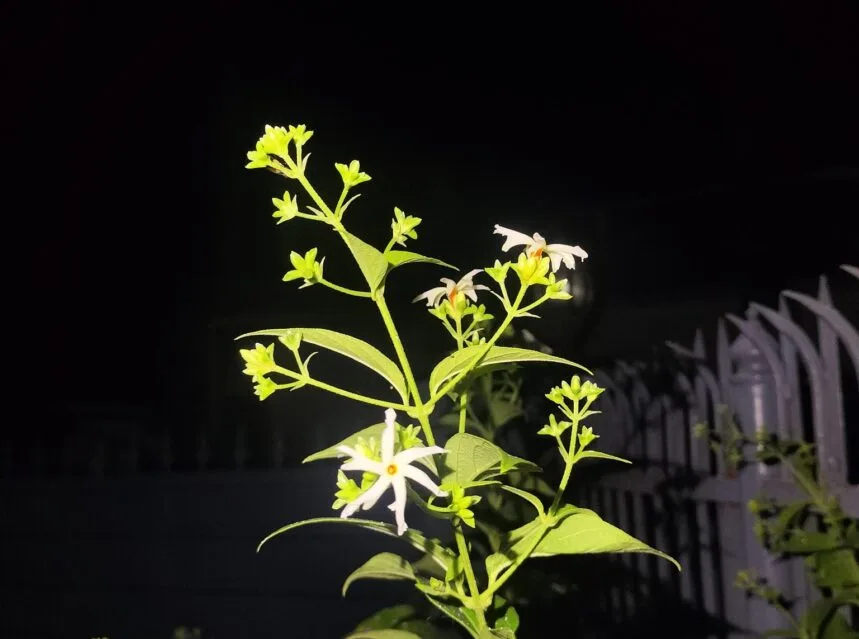
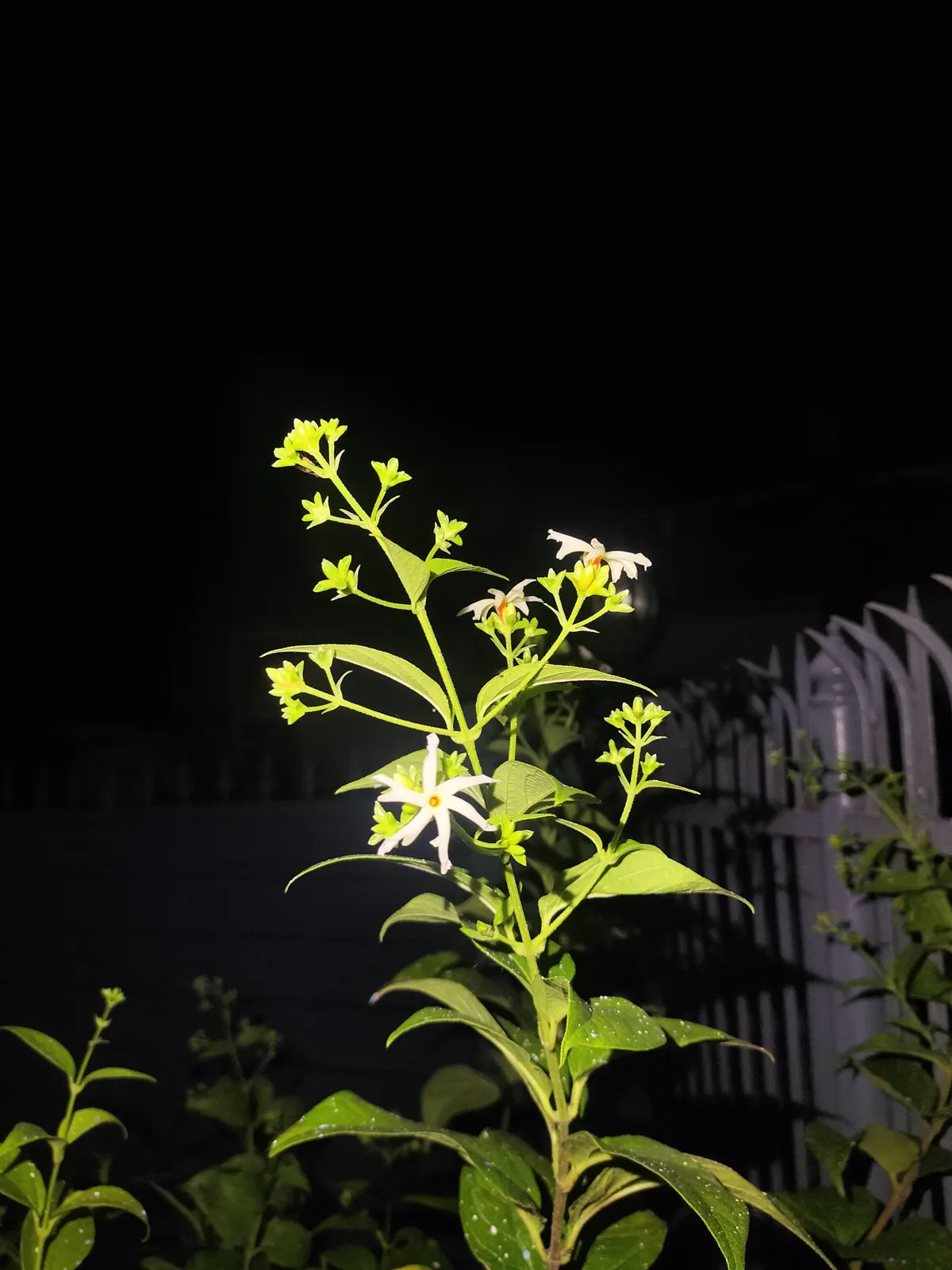
Parijat — also called Harsingar or night-flowering jasmine — is a sacred and beloved plant in India. Each evening it opens delicate white flowers with a glowing orange centre, releasing a divine fragrance, and by morning it carpets the ground beneath in blossoms. It’s cherished in worship, Ayurveda, and folklore. Easy to grow and deeply fragrant, it’s a treasure for any garden. Here is the complete guide on how to grow Parijat (Harsingar).
Quick start: Grow Parijat in full sun in well-drained, compost-rich soil. Let the soil dry between waterings — it dislikes constant wetness. Prune tips to encourage branching and flowers. It blooms fragrantly at night in autumn. Then enjoy its divine scent and morning carpet of flowers.
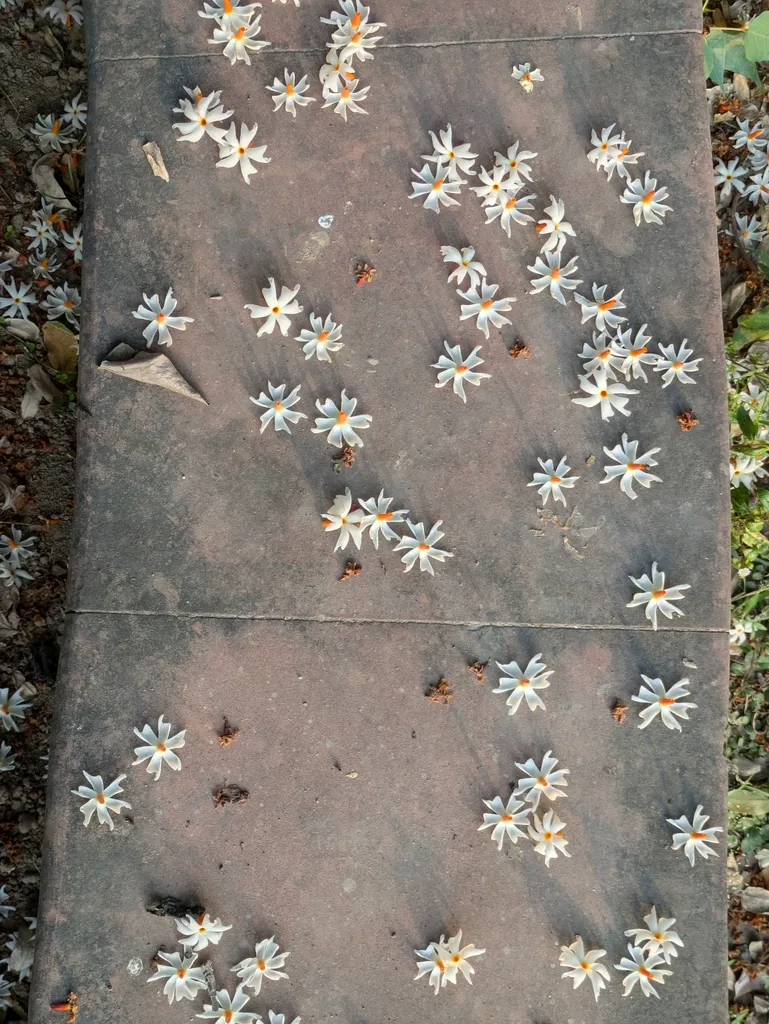
Parijat, the night-flowering jasmine or harsingar, is treasured for its small, intensely fragrant white-and-orange flowers that open at dusk and carpet the ground by dawn. Growers in India often gather the fallen blooms in the morning for worship and for their scent, which is part of the plant’s deep cultural significance. It is a tough, drought-tolerant shrub or small tree that flowers most generously in autumn. It holds a sacred place in Indian tradition and is valued in Ayurveda; for any medicinal use, consult a professional.
🧰 In a hurry? Jump straight to our tested picks for this guide ↓
Parijat at a glance
| Feature | Detail |
|---|---|
| Botanical name | Nyctanthes arbor-tristis (family Oleaceae) |
| Common names | Parijat, harsingar, night-flowering jasmine |
| Plant type | Hardy shrub or small tree |
| Sun | Full sun to part shade |
| Soil | Well-drained; tolerates poor soil |
| Flowering | Fragrant white-and-orange blooms at night, mainly autumn |
| Climate | Warm; drought-tolerant once established |
Why grow Parijat?
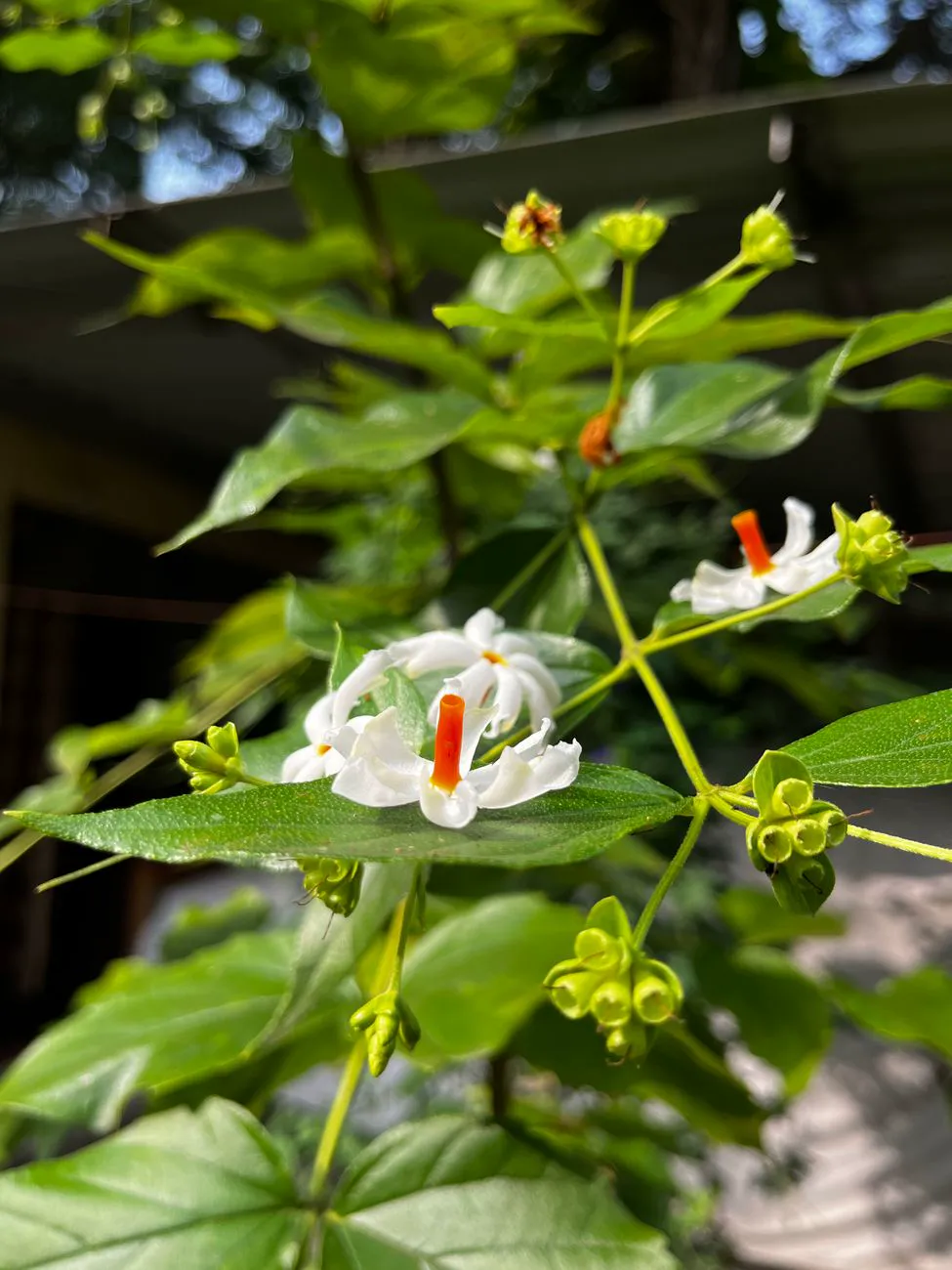
Parijat is treasured for fragrance, beauty, and meaning. Its night-blooming flowers perfume the evening air, and their petals are gathered for worship and garlands. It holds a sacred place in Indian culture, and its leaves and flowers feature in traditional Ayurvedic preparations; consult a qualified professional before any such use. Easy and rewarding, it grows well in the ground or a large pot, much like its cousin jasmine.
History, origin & cultural significance
Parijat (Nyctanthes arbor-tristis) is native to India and South Asia, where it grows as a large shrub or small tree. It’s adapted to warm, sunny conditions with seasonal rain. So it’s well suited to Indian gardens and other warm climates.
Parijat is native to Indo-China, the Himalaya, and from Sumatra to Java, and has been woven for centuries into mythology, worship and folklore (Nyctanthes arbor-tristis). Its botanical name records the habit that makes it sacred: arbor-tristis means “sad tree”, because the foliage droops as the blooms fall in the early morning. Individual flowers open at dusk and finish at dawn, which is why they are gathered off the ground at first light for offerings. The orange corolla even yields a dye, nyctanthin, used to colour silk.
The plant features in ancient legends and remains a beloved garden tree across the region (see the RHS). It is valued in Ayurveda, where the leaves and flowers are used in traditional remedies; for any medicinal use, consult a qualified professional. Its tolerance of heat and poor soil suits it well to warm gardens, where it flowers most generously in autumn.
Best season & when to plant
Plant Parijat in the warm season. It famously flowers in autumn (about October–December), blooming at night and dropping its fragrant flowers by dawn. It’s frost-tender, so in cold climates grow it in a pot and protect it in winter.
How to plant Parijat
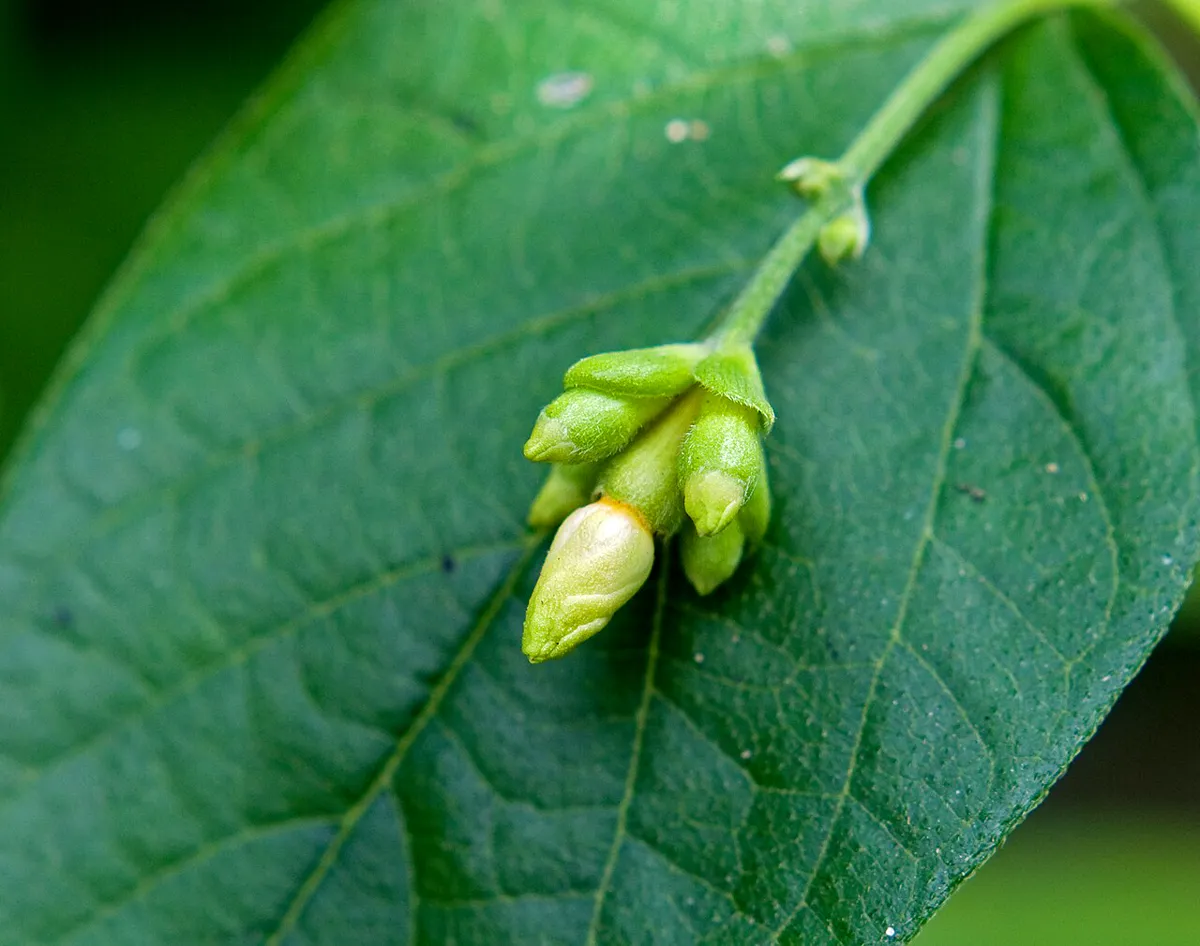
Grow it from a cutting or a young plant (cuttings root readily). For a pot, start with a 12-inch container. Use a rich, well-drained mix:
- Garden soil + about half as much compost/vermicompost, plus some river sand for drainage and a little coco-peat.
- Add a small amount of neem cake for natural protection against soil pests and fungus (see improving garden soil).
- Choose a spot with 6–8 hours of sun (at least 4–5 for flowering).
Watering (let it dry out)
Here’s the key: Parijat does not like constantly moist soil. Water only when the soil is dry inside — if it’s still wet, wait. It’s far more prone to problems from overwatering than underwatering (see how often to water). In summer, water about 3–4 times a week; reduce in winter.
Feeding & pruning
Feed Parijat through its flowering season (autumn) — many Indian gardeners use mustard-cake liquid feed and natural tonics (banana peel, Epsom salt) every couple of weeks. Prune to boost flowering: trim the tips of all branches just above the nodes, and in about 25 days new branches sprout from those points — more branches mean more fragrant flowers.
Common pests & diseases
Parijat is fairly hardy. Watch for mealybugs, aphids, and scale, plus fungal issues and root rot from overwatering. Keep the soil on the drier side, use neem, and see organic pest control and aphid control. Good drainage prevents most problems.
Benefits & uses
Parijat is sacred, fragrant, and medicinal. Its night-blooming flowers are gathered for worship and their divine scent, and the plant is valued in Ayurveda (leaves and flowers are used in traditional remedies). It’s also believed to bring positive energy in Vastu. For fragrance, spirituality, and beauty, it’s a deeply meaningful plant to grow.
This article is for general information only and is not medical advice. Talk to a qualified professional before using any plant medicinally.
Common Parijat problems
No flowers
Too little sun, no pruning, or a young plant. Give 6+ hours of sun, prune the tips, and be patient.
Yellow leaves / rot
Overwatering — its most common issue. Let the soil dry out between waterings and ensure drainage.
Pests
Mealybugs and aphids. Treat with neem and keep the plant healthy.
Sun, soil, watering & feeding
Parijat is an easy, tough plant, thriving in full sun to part shade in almost any well-drained soil (see how often to water plants). Young plants need regular watering to establish, after which it becomes drought-tolerant and largely self-reliant. A feed in spring supports good growth and flowering. It is frost-tender when young, so in cooler areas it is grown in a pot that can be sheltered, or treated as a conservatory plant.
The famous night flowering
The magic of parijat is its flowering, as the small white flowers with bright orange centres open after dark, pouring out a sweet, far-carrying fragrance, then drop to carpet the ground by morning (see improving garden soil for healthy growth). Gardeners traditionally gather the fallen blooms at dawn, both for their scent and for worship. The peak of this display comes in autumn, when a mature plant can be smothered in flowers night after night.
Why grow parijat
Few plants combine beauty, fragrance and cultural meaning as richly as parijat. Its nightly show of perfumed flowers, the romance of gathering them at first light, and its deep significance in Indian tradition make it far more than just another shrub. On top of that it is genuinely easy, tough and drought-tolerant, asking little once established and rewarding the gardener with one of the most evocative scents in the whole garden. For a warm-climate garden with any room for a special shrub or small tree, parijat is a treasured and meaningful choice.
There is something genuinely special about a plant whose flowering you experience as much by scent as by sight. With parijat, the ritual is part of the pleasure: the buds open after dark, the perfume drifts through the evening and into the house, and by morning the ground beneath the tree is scattered with little white-and-orange flowers waiting to be gathered. In many Indian homes that morning collection, for worship and for the sheer joy of the fragrance, is a cherished part of the autumn season.
Beyond its cultural meaning, it is an easy and generous plant, tough enough to cope with heat, poor soil and dry spells once it is established, and quick to flower generously each year. It needs little pruning and few interventions, asking mainly for sun, reasonable drainage and protection from hard frost while young.
For a warm-climate gardener with room for a special shrub or small tree, parijat offers a rare combination of beauty, fragrance, wildlife value and deep tradition, a plant that engages the senses and the heart in a way that few others can, and that earns its place in the garden many times over with every scented autumn night.
Related plant guides
- How to grow Jasmine
- How to grow Tuberose
- How to grow Crossandra
- How to grow Bael
- How to grow Jamun
- How to grow Plumeria
How to propagate Parijat
Parijat is increased from cuttings, by layering, or from seed. Cuttings are the usual choice for home gardeners in India, because a rooted cutting flowers sooner than a seedling and repeats the parent tree.
From semi-hardwood cuttings
The monsoon is the season to try. Choose a firm shoot from the current year’s growth and cut a piece about 15–20 cm long, just below a node. Strip the lower leaves and insert it into a gritty, free-draining mix. Keep it warm and humid but never soggy — rot is the usual reason a Parijat cutting fails, not dryness. Take more cuttings than you need, since the strike rate is moderate rather than dependable.
By layering
Layering is the most forgiving method and costs nothing. Bend a low branch down to the ground, wound the underside of the stem lightly where it touches, pin it under soil, and leave it. Once roots have formed, sever it from the parent and move it. Because the branch is fed by the tree the whole time, layering succeeds where cuttings often do not.
From seed
Seed is possible but slower. Use fresh seed from the flat capsules, remove the pulp, and sow it into moist, free-draining soil. Germination is uneven, and a seedling takes noticeably longer to reach flowering size than a cutting or a layer.
Frequently asked questions
When does Parijat flower?
In autumn (about October–December), blooming at night and dropping fragrant flowers by morning.
Why is my Parijat not flowering?
Usually too little sun, no pruning, or a young plant. Give full sun and prune the branch tips to encourage flowering.
How often should I water Parijat?
Only when the soil is dry inside — it dislikes constant moisture and is prone to overwatering problems.
Can I grow Parijat in a pot?
Yes — start with a 12-inch pot of rich, well-drained mix in a sunny spot.
Does a Parijat tree attract snakes?
This is one of the most persistent garden beliefs in India, and there is no botanical basis for it — nothing in the flowers, leaves or bark of Nyctanthes arbor-tristis draws snakes. What the belief probably reflects is habitat rather than the plant itself: any dense, unpruned shrub with a thick layer of fallen leaves and flowers underneath makes good cover for frogs, rodents and insects, and those are what a snake follows. Keep the base of the plant tidy, clear the daily fall of flowers, avoid piling debris or firewood nearby, and the shelter disappears. Plenty of Indian homes have grown Parijat in courtyards for generations without incident.
Can we keep a Parijat plant at home?
Yes, and it is traditionally regarded as an auspicious plant to have in the garden, associated in Hindu mythology with Krishna and with the churning of the ocean. Vastu practitioners commonly suggest planting it where its fragrance can be enjoyed near the house, typically to the north or east side, and away from the main entrance path where fallen flowers would be trodden. Practical considerations matter more than placement rules: it needs full sun, room to spread, and open ground or a large container, so it belongs outdoors rather than in a room. The daily carpet of dropped flowers is part of the charm, but plan for sweeping it up.
Why do Parijat flowers fall at dawn?
The flowers open after sunset and are shed with the first light of morning — the botanical name arbor-tristis, meaning sad tree, refers to how dull and unremarkable the plant looks by day once its blooms have dropped. It is a night-blooming strategy: the intense fragrance and the pale white petals are aimed at night-flying moths rather than daytime bees, so there is no advantage in holding the flowers once dawn arrives. The falling is completely normal and is not a sign of stress or disease. Traditionally the flowers are gathered from the ground each morning for temple offerings, which is why Parijat is one of the few flowers considered acceptable to offer after they have fallen.
How do I propagate Parijat?
Semi-hardwood cuttings taken during the monsoon are the most reliable method for home gardeners. Choose a firm shoot from the current season’s growth, cut a piece of about 15-20 cm just below a node, strip the lower leaves, and insert it into a gritty, free-draining mix kept warm and humid but not soggy. Layering works too: bend a low branch to the ground, wound it lightly, pin it down under soil, and separate it once roots form. Seed is possible but slower — use fresh seed, remove the pulp, and expect uneven germination and a longer wait before flowering.
Is Parijat the same as raat ki rani or night-blooming jasmine?
No, though the common names overlap confusingly. Parijat is Nyctanthes arbor-tristis, in the olive family, with distinctive white petals around a bright orange-red tube, and it drops its flowers by morning. Raat ki rani is Cestrum nocturnum, a member of the nightshade family with narrow greenish-white tubular flowers and a much heavier, sweeter night scent, and it holds its blooms rather than shedding them. Neither is a true jasmine (Jasminum), despite what the English names suggest, so it is worth checking the botanical name when buying a plant.
Is Parijat an indoor or outdoor plant, and how big does it get?
It is firmly an outdoor plant. In open ground it grows into a large shrub or small tree of roughly 5-10 m with a spreading crown, and it needs full sun for most of the day to flower properly. Grown in a large container on a terrace it stays much smaller and can be kept to two or three metres with regular tip pruning after the flowering season. Indoors it will survive for a while but will not flower, because no window provides the light intensity it needs.
Why are my Parijat leaves turning yellow?
Overwatering is the most common reason, especially in pots. Parijat prefers to dry out somewhat between waterings, and a container with poor drainage or a saucer left full of water causes root problems that show up as yellowing leaves and dropped foliage. The second frequent cause is a nutrient issue — in alkaline soils iron becomes unavailable and new leaves yellow between green veins, which responds to a chelated iron feed and some organic matter dug in. A general fade with older leaves dropping in cool weather is often just the plant’s natural seasonal leaf shed rather than a problem.
What are Parijat leaves and flowers used for?
Beyond ornament, the plant has a long place in Indian tradition. The orange corolla tubes of the flowers yield a natural yellow-orange dye that has historically been used to colour silk and monastic robes, and the flowers themselves are gathered for temple offerings and used to scent oils. In Ayurveda, the leaves have traditionally been used in preparations for fever and joint complaints, and some laboratory studies have examined the plant’s compounds, though this does not establish it as a proven treatment for any condition. This information is provided for general interest only and is not medical advice — consult a qualified healthcare professional before using any plant medicinally.
Still stuck? Ask the Plant Doctor
Describe the problem — yellow leaves, holes, no flowers — and get a clear answer in seconds. FreeAI can make mistakes. Answers are guidance, not a guarantee — check anything important against the guide it links to, and always read the label on any product before you use it.