How to Grow Sarcococca
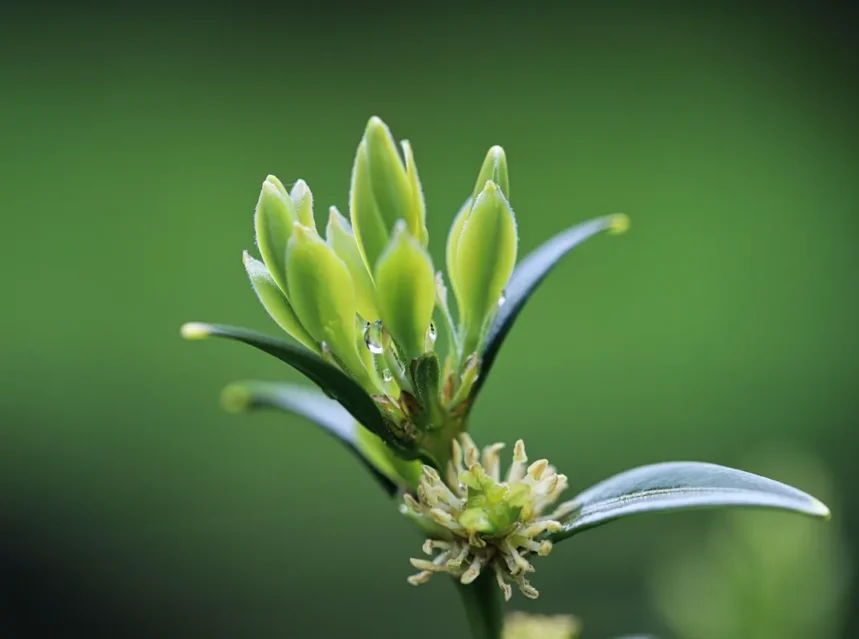
Sarcococca, or sweet box, is a compact evergreen shrub grown for its tiny but intensely fragrant white winter flowers, glossy dark leaves, and shiny black berries — one of the best shade shrubs for perfuming the garden in the depths of winter. Slow, tough, and easy, it thrives where many plants struggle. Here is the complete guide on how to grow sarcococca.
Quick start: Grow sarcococca in part to full shade in moist, humus-rich, free-draining soil. Plant in autumn or spring and keep it moist. It flowers in winter with a powerful sweet scent, needs almost no pruning, and slowly spreads to make low evergreen ground cover. Plant it near a path or door to enjoy the winter fragrance.
Experienced growers and the Royal Horticultural Society rate sarcococca as a winter treasure, with a couple of notes. The biggest is placement. The flowers are tiny and easily missed, but the scent is astonishingly strong. So gardeners plant it beside paths, doors, and seats, where they catch the perfume on still winter days. The second is its love of shade. Sweet box thrives in dry and deep shade where little else will grow. Most also value how slow, neat, and trouble-free it is, needing barely any pruning.
🧰 In a hurry? Jump straight to our tested picks for this guide ↓
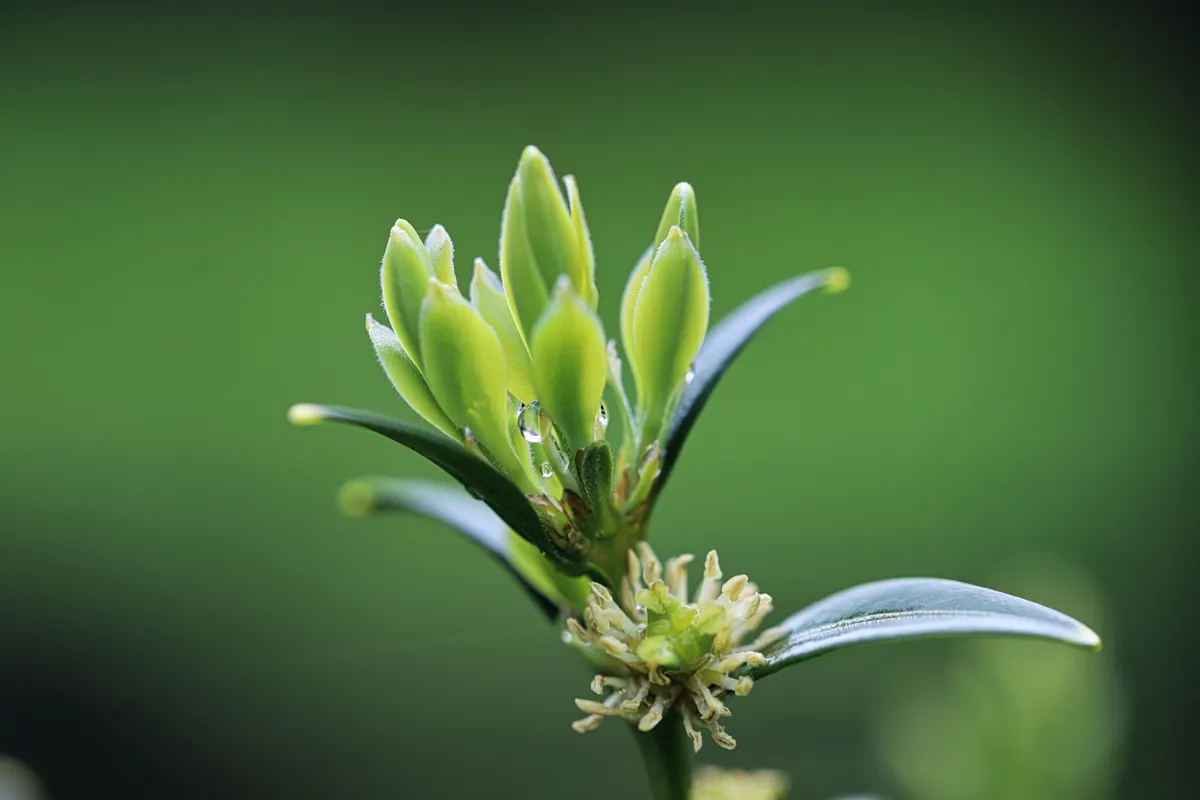
Sarcococca at a glance
| Feature | Detail |
|---|---|
| Botanical name | Sarcococca (family Buxaceae) |
| Plant type | Evergreen shrub |
| Height/spread | About 0.5–1.5 m |
| Sun | Part to full shade |
| Soil | Moist, humus-rich, free-draining |
| Bloom time | Winter, intensely scented |
| Best for | Winter scent, shade, low hedges, ground cover |
| Bonus | Thrives in dry, deep shade |
Why grow sarcococca?
Sarcococca solves two of the garden’s hardest problems at once: shade and winter interest. It thrives in difficult shady spots, even dry shade under trees, where it forms neat, glossy evergreen cover all year.
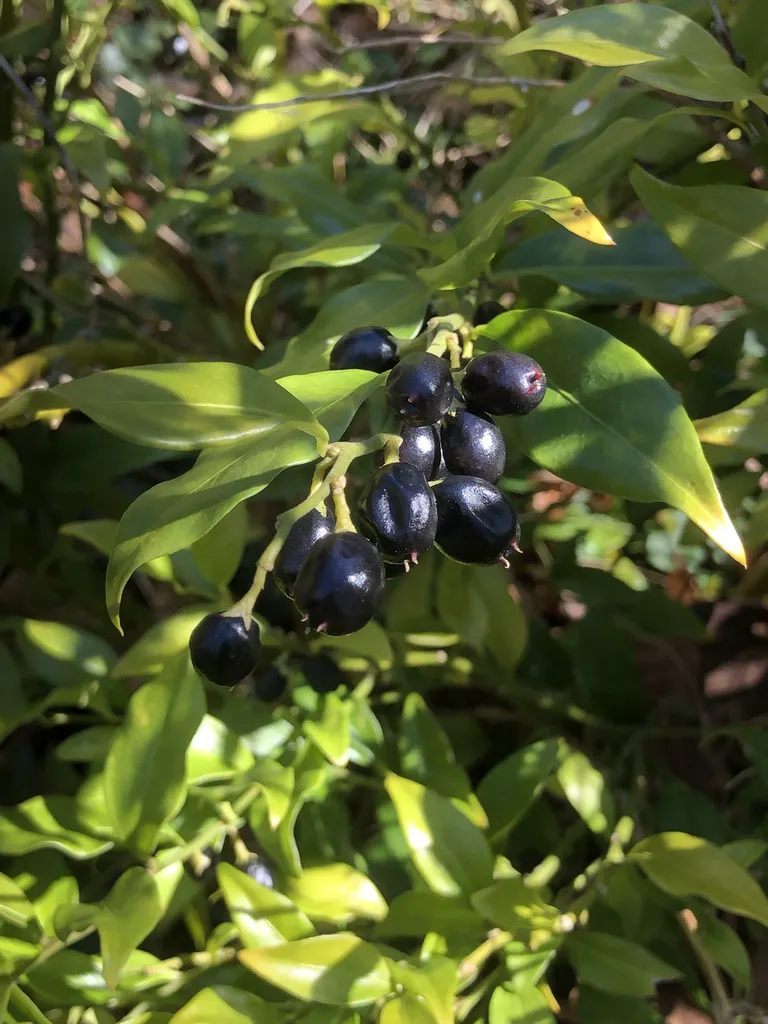
Then, in the depths of winter, it fills the air with a sweet, powerful perfume from flowers so small you may not see them. Add glossy black or red berries, easy care, and real value to early winter bees, and sweet box is a quietly brilliant shrub for any cool, shady garden. It is the kind of plant you notice by scent before you see it. On a cold, still day, that drift of perfume is a real winter joy. Few shrubs do so much in the season when the garden needs it most, asking almost nothing in return.
History, origin & where it grows
Sarcococca comes from the woodlands of the Himalayas, China, and Southeast Asia, where it grows as an understorey shrub in shade. This forest-floor origin explains its love of cool, moist, shaded conditions.
It was introduced to Western gardens as an easy, fragrant winter evergreen and has become a favourite for shady, low-care planting (see the background on Sarcococca). Its common name, sweet box, reflects its boxwood-like leaves and sweet scent.
Sarcococca thrives in cool-temperate gardens across the UK, Europe, and the cooler US. In India, several species are native to the Himalayan hills, so it suits cool, shaded hill-station gardens far better than the hot, dry plains.
Best season & when to plant
Plant sarcococca in autumn or spring, when the soil is moist, so it settles before extremes of heat or cold. Container-grown plants establish best.
It flowers in winter, typically from midwinter into early spring, when its scent is most welcome. In India’s hills, plant in the mild season in a shaded, sheltered spot with cool, moist soil, ideally where the winter perfume can be enjoyed.
How to plant sarcococca
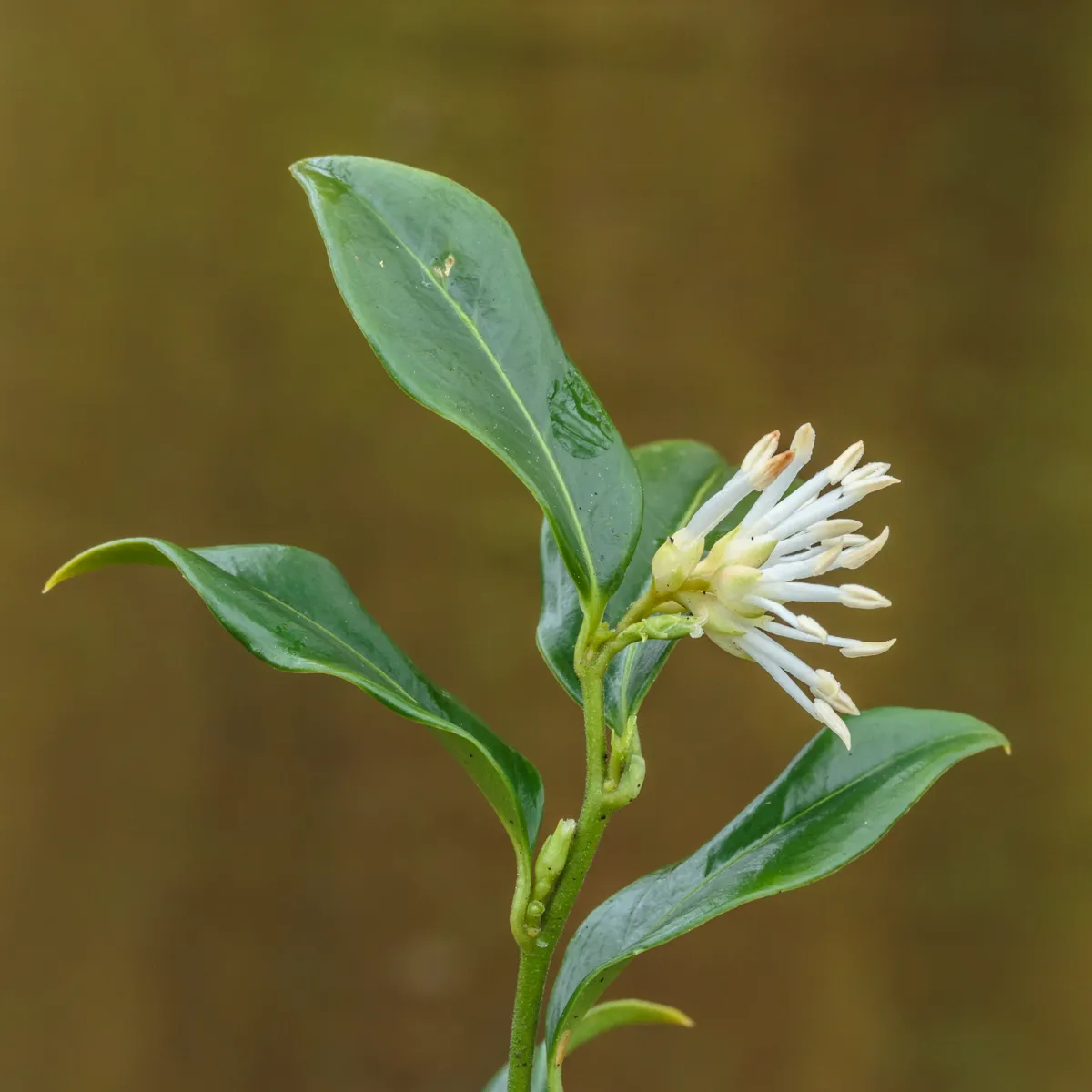
Sarcococca is bought as a young potted shrub and is easy to establish in shade. For healthy growth:
- Choose a spot in part to full shade, such as under trees, beside a shady path, or by a north-facing door.
- Dig in leaf mould or compost for the moist, humus-rich soil it prefers (see improving garden soil).
- Plant at the same depth as the pot, firm in, and water well.
Add a mulch of leaf mould to keep the roots cool and moist. Space plants about 60 cm apart for a low hedge or ground-cover drift, as it spreads slowly to knit together.
Sun, soil, watering & feeding
Sarcococca prefers part to full shade and dislikes hot, direct sun, which can scorch the leaves. It likes moist, humus-rich, free-draining soil but, once established, copes remarkably well even with dry shade.
Water young plants well, especially in dry spells, until settled (see how often to water plants). Feed in spring with compost or a balanced fertiliser and a leaf-mould mulch. It is otherwise very low-maintenance and needs little ongoing attention.
Pruning and using sarcococca
Sarcococca needs very little pruning, which adds to its easy charm. Its naturally neat, slowly spreading habit keeps it tidy on its own.
Simply trim lightly after flowering if you want to shape it or keep a low hedge crisp, removing any stray or overlong shoots. It can also be clipped as a low formal hedge or edging. Because it spreads gently by suckers, an established clump can be divided to make more plants, and it works beautifully as fragrant evergreen ground cover under deciduous shrubs and trees.
Best companion plants for sarcococca
Sarcococca shines when paired with other shade-lovers that share its quiet, woodland feel. Together they turn a dull, shady corner into a year-round feature.
It combines beautifully with skimmia, mahonia, and ferns for evergreen structure, and with hellebores, snowdrops, and lily of the valley for winter and spring interest. Planted near the equally fragrant winter daphne, it creates a corner of pure scent in the coldest months. Underplant taller deciduous shrubs and small trees with a drift of sweet box for low, glossy ground cover. Its dark leaves also set off paler shade plants and spring bulbs well. Because it is so tolerant of dry shade, it is one of the few fragrant shrubs that will thrive in those difficult spots beneath trees, giving both cover and perfume where little else grows.
Common pests & diseases
Sarcococca is one of the most trouble-free shrubs you can grow, rarely affected by pests or diseases. Healthy plants in shade need almost no attention.
Very occasionally it may show leaf spot or scorch on plants in too much sun or dry, stressed conditions, and the odd scale insect. Grow it in cool, moist shade, mulch well, and these minor issues rarely arise. It is genuinely a plant-and-forget shrub.
Uses & benefits
Sarcococca is grown as an ornamental evergreen, prized for its powerful winter fragrance, glossy foliage, and tolerance of shade. It is ideal for shady borders, low hedges and edging, ground cover under trees, and especially planting near paths, doors, and seating for the winter scent.
Its winter flowers offer rare early nectar to bees on mild days, and the berries feed birds. Sweet box is grown for beauty and fragrance rather than eating, and it makes a superb companion to other shade plants for year-round, low-care interest.
Common sarcococca problems
Scorched or yellowing leaves
Usually too much sun or dry soil. Move it to shade and keep the soil moist with a leaf-mould mulch.
Slow growth
Normal, as sarcococca is naturally slow. Be patient; it steadily forms dense, neat cover over a few years.
Few flowers
Often a young or stressed plant. Give it time, shade, and moist, humus-rich soil, and the winter flowering improves with age.
Related plant guides
- How to grow Daphne
- How to grow Gaultheria
- How to grow Lily of the Valley
- How to grow Liriope
- How to grow Winter Honeysuckle
- Skimmia
How to propagate sarcococca
Sarcococca is slow in everything it does, propagation included — but the suckering kinds hand you new plants almost for free.
Rooted suckers (easiest)
Sarcococca hookeriana and its varieties travel gently by underground suckers. In early spring, follow a sucker out from the clump, lift it with its roots attached and pot it up or replant it straight away. Keep it shaded and moist for its first season. This is the same growth you would otherwise pull out to keep a tight border in check, so nothing is wasted.
Semi-ripe cuttings
For non-suckering species, take semi-ripe cuttings in late summer from this year’s growth. Insert them in a gritty mix in a covered propagator and be patient — they root reasonably well but slowly, and a cutting that looks idle for months is normal rather than dead.
Seed
Seed sown fresh in autumn and left outside over winter works for the true species, letting cold break dormancy naturally. It will not reproduce a named cultivar, so use cuttings or suckers for anything sold under a variety name.
Frequently asked questions
Is sarcococca easy to grow?
Yes, very. In shade and moist, humus-rich soil, sweet box is hardy, slow, and trouble-free, needing almost no pruning and tolerating even dry shade once established.
Why grow sarcococca if the flowers are so small?
For the scent. The tiny winter flowers release a remarkably strong, sweet perfume, so it is planted near paths and doors where the fragrance can be enjoyed.
Does sarcococca grow in dry shade?
Yes. Once established, sweet box is one of the best shrubs for dry, deep shade under trees, where many other plants fail to thrive.
Does sarcococca need pruning?
Very little. Trim lightly after flowering only if you want to shape it or keep a low hedge neat; otherwise it stays tidy on its own.
When does sarcococca flower, and how long does the scent last?
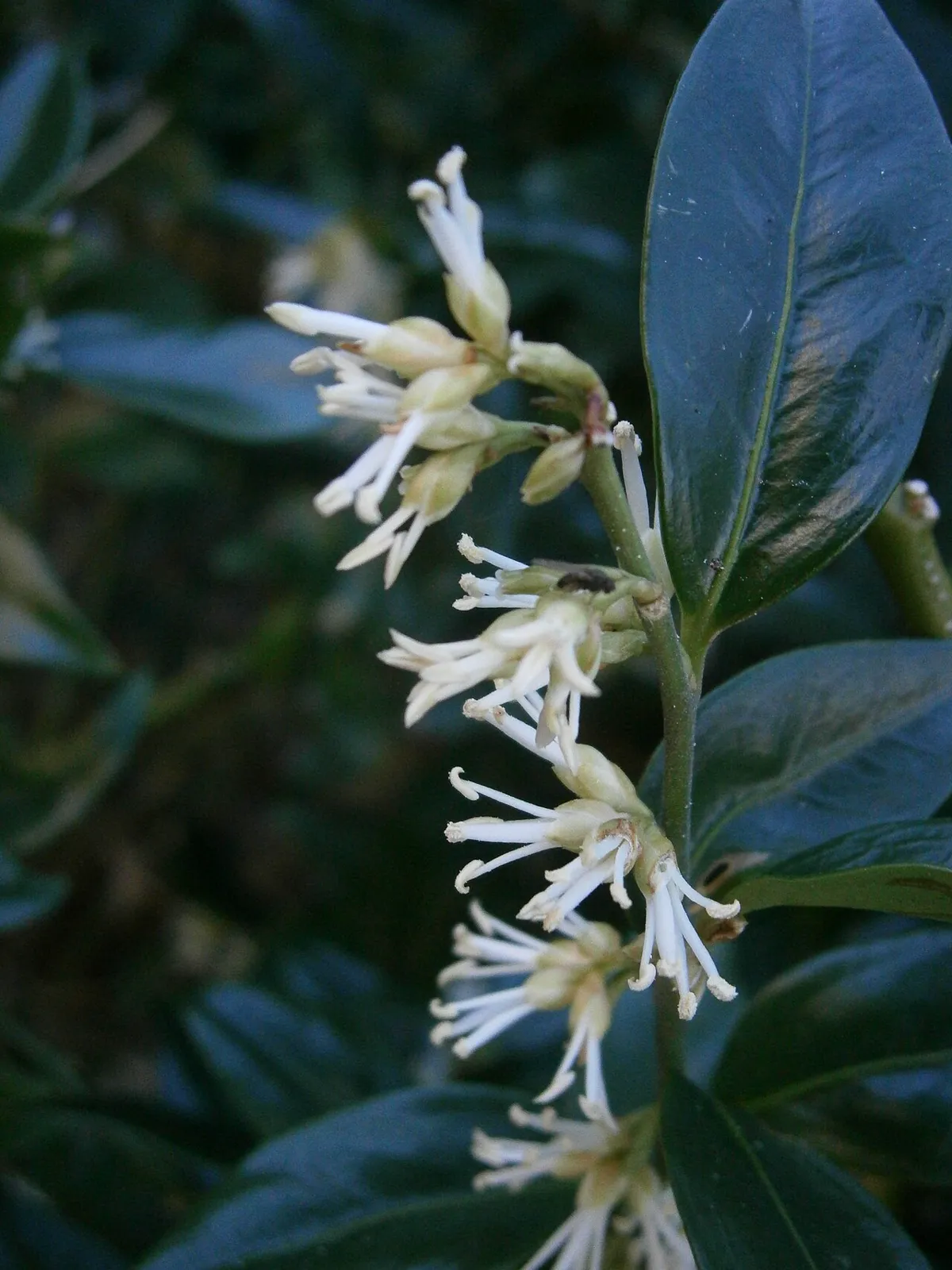
Flowering runs through the depths of winter, typically from around December to March depending on the species and how mild your winter is, with Sarcococca confusa and Sarcococca hookeriana among the earliest. The individual flowers are tiny white tassels that are easy to miss, but a single established shrub can perfume several metres of still air, and the display generally holds for six to eight weeks. Cold, still, sunny days carry the scent best — wind disperses it and hard frost pauses it until things warm slightly. Cut stems brought indoors will scent a whole room, which is one of the plant’s great winter luxuries.
How big does sarcococca get, and how fast does it grow?
The RHS puts the genus at roughly 1-2m tall depending on species, with compact forms staying around a metre. Sarcococca confusa is one of the larger, reaching about 1.5-2m in time; Sarcococca hookeriana var. humilis is the low, spreading one at around 30-60cm and is often used as ground cover. Growth is genuinely slow, usually only a few centimetres a year, so buy the largest plant your budget allows if you want an effect soon. The upside of that slowness is that it almost never outgrows its space.
Does sarcococca need ericaceous or acid soil?
No, it does not need ericaceous compost, and this is a common misconception. Sweet box grows perfectly well on neutral and alkaline ground, including chalk, and nurseries routinely list it as tolerating both acid and alkaline soils. What it actually cares about is texture and organic matter — the RHS advice is rich, moisture-retentive soil, improved with well-rotted manure or compost if yours is thin and dry. Plant it in ordinary good soil with a generous mulch and it will be entirely happy.
Can sarcococca take full sun?
It can tolerate sun, but only where the soil stays reliably moist, and it will never look as good as it does in shade. In an exposed sunny spot the leaves lose their deep glossy green, turning yellowish or bronzed and sometimes scorching at the edges, and the plant grows more slowly. Partial to full shade is where it excels, which is precisely why it is so valued — few good evergreens flower fragrantly in a north-facing bed. If you only have sun, choose something else and save the sarcococca for a shady doorway or path.
Does sarcococca spread or sucker?
Some do and some do not, so it depends which one you buy. Sarcococca hookeriana and its varieties spread steadily by underground suckers and will slowly colonise an area, which makes them excellent shade ground cover but a nuisance in a tight border. Sarcococca confusa and Sarcococca ruscifolia are far better behaved, forming a slowly expanding clump that stays put. None of them are aggressive or invasive by any reasonable standard, and unwanted suckers pull up easily in spring.
Are sarcococca berries poisonous?
The glossy black or red berries are not edible and are generally described as mildly toxic if eaten, so they should be treated as ornamental only. Sweet box belongs to the box family, Buxaceae, a group known for alkaloid compounds, and serious poisonings are not on record but nobody should be sampling them. In practice the berries are small, sparse and unappealing, so the risk to children and pets is low, though it is worth knowing about when planting beside a play area. Contact a doctor or vet if a child or animal eats a quantity — this is general information, not medical advice.
Can sarcococca get box blight?
It can, because box blight is caused by Calonectria pseudonaviculata, and research from USDA and university plant pathology groups confirms that the fungus infects Sarcococca and Pachysandra as well as Buxus, all three being members of the same family. In practice sarcococca is affected far less often than box hedging, and the RHS describes the genus as generally untroubled by pests and diseases. The sensible precaution is to avoid planting it right against a struggling box hedge, keep airflow reasonable, and clear away fallen infected leaves. Watch for dark leaf spots and sudden defoliation on one section as the warning sign.
How do you propagate sarcococca?
The easiest route for the suckering types is simply to detach rooted suckers in early spring and pot them up. For all species, semi-ripe cuttings taken in late summer root reasonably well in a gritty mix in a covered propagator, though they are slow and patience is required. Seed sown fresh in autumn and left outdoors over winter also works for the true species, but not for named cultivars. Whichever method you use, expect a plant that takes several years to reach a useful size, which is why nursery-grown sarcococca is never cheap.
Can I grow sarcococca in a pot?
Yes, and a container is a good way to place that winter scent right by a door or a bench where you will meet it every day. Use a large pot, at least 40cm across, with a loam-based compost that will not dry out or collapse over the several years the plant will live there. Container plants need more watering attention than those in the ground, particularly in summer, and a slow-release feed in spring keeps the leaves dark. Top-dress with fresh compost each spring and repot into something larger every three or four years.
Still stuck? Ask the Plant Doctor
Describe the problem — yellow leaves, holes, no flowers — and get a clear answer in seconds. FreeAI can make mistakes. Answers are guidance, not a guarantee — check anything important against the guide it links to, and always read the label on any product before you use it.