Is Dieffenbachia Toxic to Cats? Dumb Cane Symptoms and First Aid
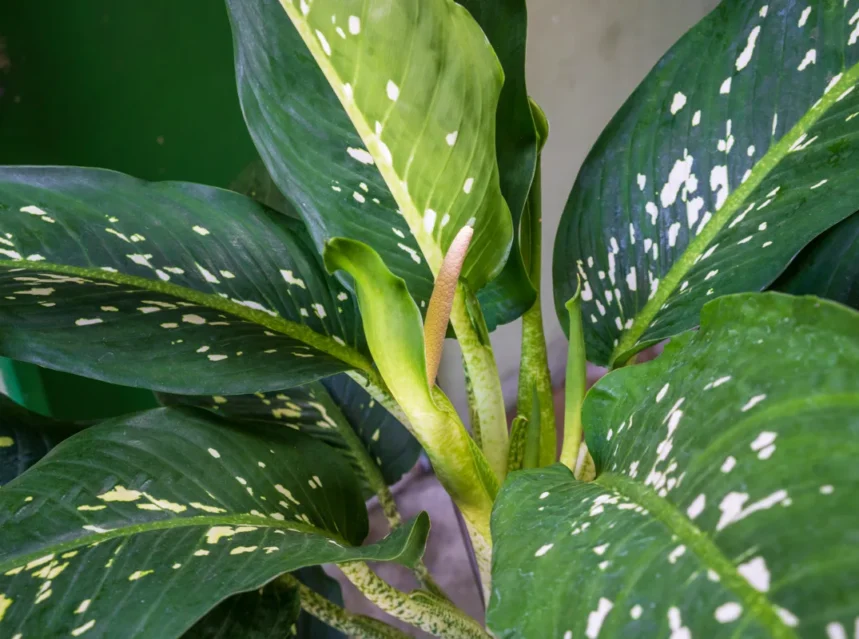 Dieffenbachia houseplant with large cream-speckled green leaves
Is dieffenbachia toxic to cats? Yes, and it is the most irritating of the common houseplants in its family. Dieffenbachia, or dumb cane, is packed with insoluble calcium oxalate crystals. A cat that chews it gets an intensely painful mouth, heavy drooling, and sometimes swelling. The reassuring part: it is still rarely fatal. But it deserves more caution than a pothos. Here is the full picture.
Quick answer: If your cat chewed dumb cane, take the plant away, wipe its mouth, rinse its eyes and paws if sap touched them, and offer fresh water. Do not induce vomiting. Watch closely for swelling or breathing trouble, which is a genuine emergency with this plant. Call your vet promptly. This article is general information, not veterinary advice.
🧰 In a hurry? Jump straight to our tested picks for this guide ↓
Is dieffenbachia toxic to cats? Severity at a glance

| What you notice | What it means |
|---|---|
| Heavy drooling and pawing at the mouth | Intense oxalate irritation, stronger than most aroids |
| Difficulty swallowing, refusing food | Sore mouth and throat, offer water, watch closely |
| One or two vomits soon after chewing | Common, monitor at home |
| Red, watering, or squinting eyes | Sap contact, rinse gently with water |
| Swelling of mouth, tongue, or throat | Emergency with dumb cane, go to the vet now |
| Laboured or noisy breathing | Airway emergency, urgent vet care |
Why “dumb cane” is more serious than other aroids
Dieffenbachia shares the same calcium oxalate crystals as pothos, monstera, and philodendron, but it earns extra respect for two reasons.
First, it packs a high concentration of those crystals, so the mouth reaction is more intense. That is exactly where the name “dumb cane” comes from: the swelling can be severe enough to make speech, or in an animal a normal voice and swallow, temporarily difficult.
Second, the discomfort can linger. Where a pothos sting often fades within hours, dumb cane irritation can leave a cat sore and off its food for longer. The ASPCA lists dieffenbachia as toxic to cats, with oral irritation, intense burning, excessive drooling, and vomiting.
Why dieffenbachia hurts: the needle-crystal mechanism
Dumb cane does not poison like a chemical toxin. Its cells hold bundles of microscopic, needle-shaped calcium oxalate crystals called raphides, and some enzymes that add to the sting.
When a cat’s teeth crush a leaf or stem, those cells rupture and fire the needles into the tongue, gums, and throat. The result is immediate, fierce stinging pain, so the classic sign is a cat that drops the leaf, drools heavily, and paws frantically at its face.
Because the crystals are insoluble, they stay local and do not spread through the bloodstream like true systemic poisons. The danger is the swelling they cause, not organ damage. As Wikipedia’s entry on dieffenbachia explains, the reaction is immediate, and airway swelling, while uncommon, is the reason to act fast.
How dangerous is it really? The honest severity answer
Here is the balanced truth. Dumb cane is more painful than most houseplants, but it is still rarely life-threatening for a healthy adult cat.
The fierce burning is actually protective, because it usually stops a cat after the very first bite, long before it eats a large amount. Most cases involve a sore, drooling cat that recovers with supportive care.
The reason to take it seriously is the swelling. In the uncommon cases where the mouth and throat swell significantly, breathing can be affected, and that is a true emergency. Kittens, small cats, and frail cats are most at risk. Most cats recover with supportive care, though the discomfort from its oxalate raphides can linger for days. So treat dumb cane as the one aroid where you call the vet sooner rather than later.
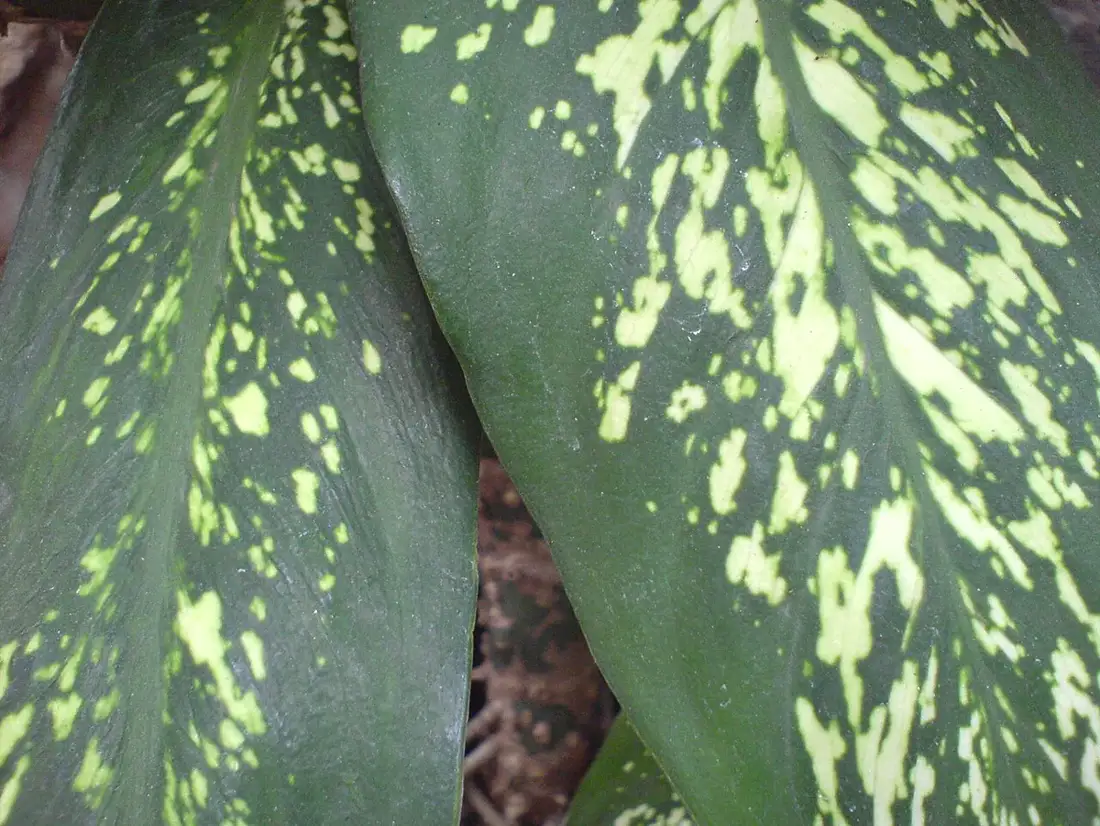
The sap and eye risk most guides miss
Dumb cane sap is notoriously irritating, and not just in the mouth. It can inflame the eyes and skin on contact.
For a curious cat, that matters. A cat that bites a stem and then rubs its face, or gets splashed sap while you prune, can end up with red, watering, squinting eyes on top of the mouth pain.
So if sap has touched your cat’s eyes, rinse them gently with clean water and call your vet. When you prune or repot a dumb cane yourself, keep the cat out of the room, wear gloves, and wash up afterwards. This is normal caution, not panic.
What to do right now if your cat chewed dumb cane
Work through this calmly, in order.
First, remove the plant and any leaf fragments from your cat’s reach, and check its mouth for pieces you can gently remove. Wipe the mouth with a damp cloth, rinse any sap from the eyes or paws, and offer fresh water. A lick of something tasty helps flush the tongue.
Do not induce vomiting. Then act on the severity. Because dumb cane swelling can be serious, call your vet or an animal poison line promptly, and go straight in if you see any swelling or breathing change. Bring a photo or a piece of the plant. Again: this is general information, and your vet’s advice always comes first.
Dieffenbachia and the aroid shelf: one shared risk
Dumb cane is an aroid, so it shares its oxalate chemistry with pothos, monstera, peace lily, ZZ plant, and philodendron, just at a stronger dose.
That means a cat-proofing plan should treat the whole plant shelf as one category. Our guides on pothos toxicity, monstera toxicity, philodendron toxicity, and ZZ plant toxicity cover the neighbours, so between them you can screen almost a whole collection.
Of that group, dumb cane is the one to place most carefully, given its stronger sting and swelling risk. And keep true lilies, which cause fatal kidney failure, out of a cat home entirely.
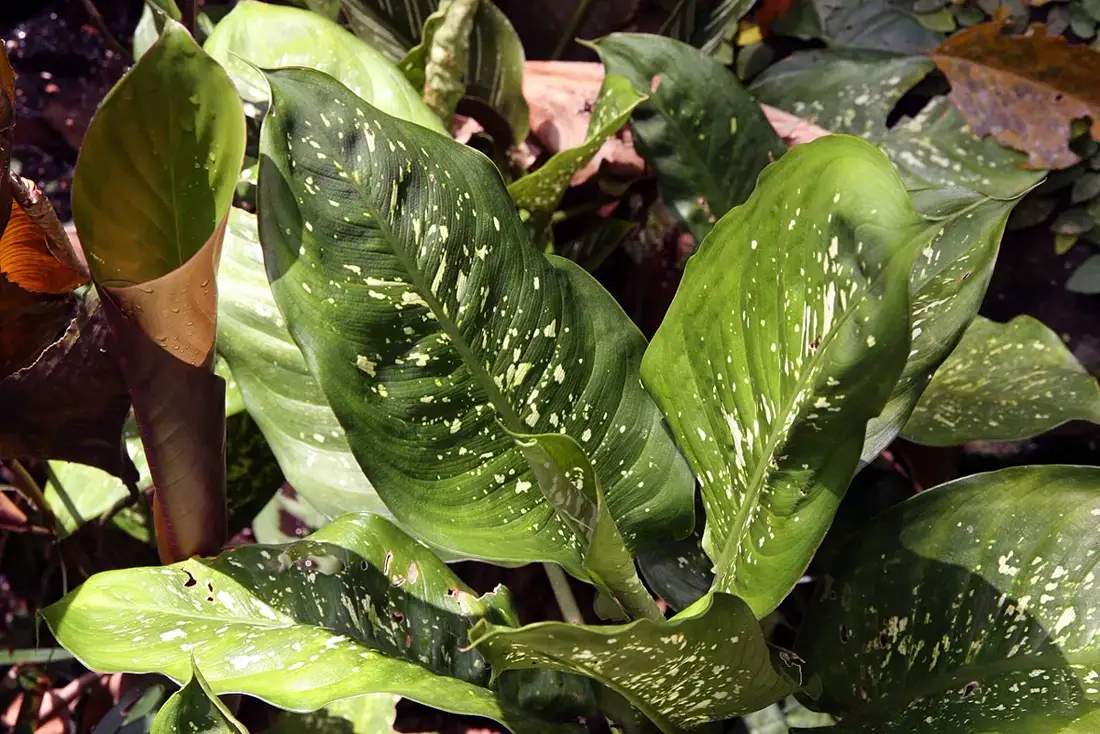
Keeping cat and dumb cane apart
Dieffenbachia is an upright, bushy floor or table plant with big, tempting leaves right at cat height, so height alone rarely solves it.
What works is separation the cat cannot beat. Given this plant’s stronger reaction, the safest choice is a closed plant room or a genuinely cat-free space, rather than a hopeful high shelf.
Back it up with redirection. A pot of cat grass, regular play, and a bitter deterrent spray on the leaves all reduce interest. Our plant doctor tool helps you identify a mystery plant before you decide how careful to be.
Five safe swaps that keep the same bold look
If separation is impossible, swap the plant, not the cat. These non-toxic plants cover the dumb cane’s big, variegated, leafy job:
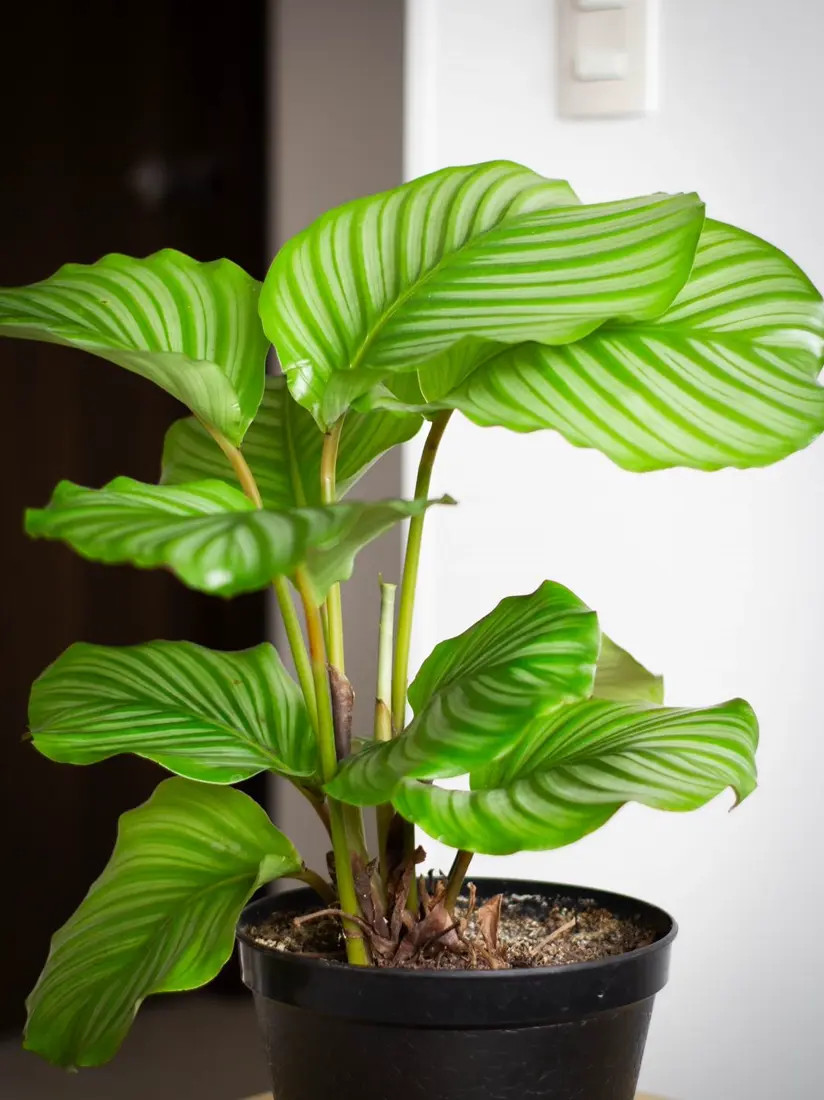
| Safe plant | What it replaces |
|---|---|
| Calathea | Bold, patterned, variegated leaves |
| Parlour palm | Upright, lush floor greenery |
| Areca palm | Big architectural presence |
| Spider plant | Easy striped, arching foliage |
| Boston fern | Full, cascading volume |
All five appear on the ASPCA’s non-toxic list. Our pet-safe houseplants guide ranks the full roster, and our spider plant care guide covers the easiest swap of all.
Dieffenbachia and cats step by step
- Know the risk: intense mouth pain, higher swelling risk than most aroids.
- After chewing: remove plant, wipe mouth, rinse eyes and paws, offer water.
- Never induce vomiting, it re-irritates the tissue.
- Call the vet promptly, and rush in for any swelling or breathing change.
- Prune it yourself with the cat out of the room and gloves on.
- Place it in a cat-free space, not on an optimistic shelf.
A cat household can still enjoy bold foliage. It just treats dumb cane as the plant that needs a closed door.
Dieffenbachia and cats in homes worldwide
Dieffenbachia is a classic, easy houseplant found in cat-owning homes from New York and London to Singapore and Sydney, and the worry is the same everywhere.
In India, dumb cane is a popular indoor and balcony plant, valued for tolerating shade and warmth. It is usually a floor or table pot, right at cat height, so the placement risk is real. The fixes translate directly: keep it in a room the cat does not enter, give the cat its own pot of grass, and know your nearest vet’s number.
Wherever you live, save an animal poison helpline number in your phone before you need it, and treat any new plant purchase as a quick toxicity lookup first. Our dieffenbachia care guide covers the plant’s side of the household, and our pet-safe plant guide covers the cat’s.
Frequently asked questions
Is dumb cane the most dangerous common houseplant for cats?
Among the everyday aroids, yes, it is the most irritating. Dieffenbachia carries a high concentration of calcium oxalate crystals, so it causes stronger mouth pain and a higher chance of swelling than pothos, philodendron, or ZZ plant. It is still not in the same league as a true lily, which causes fatal kidney failure. Think of dumb cane as the aroid that most warrants a closed door and a quicker call to the vet.
What happens if my cat eats dieffenbachia?
Expect an intense reaction: heavy drooling, frantic pawing at the mouth, difficulty swallowing, and often a vomit or two. The fierce sting usually stops the cat after one bite. Remove the plant, wipe the mouth, rinse any sap from the eyes, and offer water. Do not induce vomiting. Call your vet promptly, and go in straight away if you notice any swelling of the mouth or throat, or any change in breathing.
Can dieffenbachia kill a cat?
Fatalities are rare, but dumb cane carries more risk than most houseplants. The crystals cause local pain rather than organ damage, and the fierce burning stops most cats before they eat much. The genuine danger is significant swelling of the mouth and throat, which can affect breathing in uncommon cases and is an emergency. Kittens and small cats are most at risk. Treat it seriously, keep it away from cats, and call your vet quickly.
Is dieffenbachia sap dangerous to touch?
The sap is a known irritant to skin and especially eyes, for both people and pets. A cat that bites a stem and rubs its face, or gets splashed during pruning, can develop red, watering eyes on top of mouth pain. Rinse affected eyes gently with clean water and call your vet. When you prune or repot the plant, wear gloves, keep the cat out of the room, and wash your hands and surfaces afterwards.
Which dieffenbachia varieties like camille, seguine, and maculata are toxic to cats?
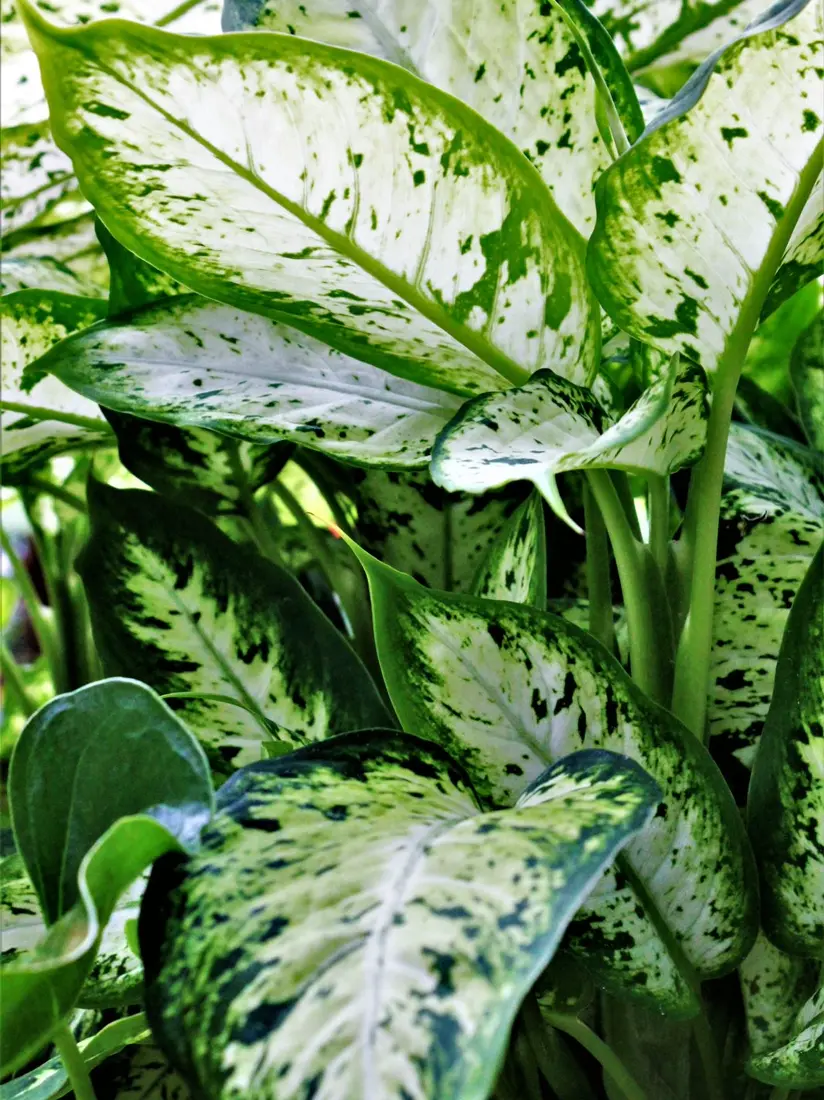
All of them are, because the toxin belongs to the whole genus. Popular types such as Dieffenbachia seguine, Dieffenbachia maculata, and the compact ‘Camille’ cultivar all contain the same insoluble calcium oxalate crystals, so none is safer for a cat than another. The differences you see are in leaf pattern and size, not in chemistry. Whichever dumb cane you own, treat it as toxic and keep it away from cats.
How much dieffenbachia does a cat need to eat to be hurt?
Very little, and that small amount is usually enough to stop the cat. The crystals release a fierce sting the instant a cat bites down, so most cats recoil after a single mouthful and never eat more. That is why serious cases are uncommon — the plant punishes the first bite. The danger is not the quantity swallowed but the reaction to that first bite, especially if the mouth or throat begins to swell.
How long do dumb cane symptoms last in a cat?
The intense mouth pain often eases within a few hours, but mild irritation and drooling can linger for up to a day or two as the tissue settles. Most cats recover fully with supportive care and a return to soft food and water. The timeline changes if there is swelling of the mouth or throat, which is an emergency and needs a vet at once. Always have significant swelling checked rather than waiting for it to pass.
What should I do immediately if my cat chews dumb cane?
Take the plant away, gently wipe or rinse the mouth, and rinse any sap from the eyes with clean water. Offer water or something cold and soft to soothe the mouth, but do not try to make your cat vomit. Go to the vet straight away if you see any swelling of the mouth or throat, drooling that will not stop, or any change in breathing. You can also call the ASPCA Animal Poison Control line on (888) 426-4435; this is general information, not veterinary advice.
Is dieffenbachia toxic to dogs too?
Yes, the ASPCA lists dumb cane as toxic to dogs as well as cats, for the same reason — insoluble calcium oxalate crystals. A dog that bites the plant gets the same burning mouth, heavy drooling, pawing at the face, and possible vomiting. As with cats, the fierce sting usually stops a dog after one bite, and the main emergency is any swelling that affects breathing. Keep the plant out of reach of every pet in the home.
Why is it called "dumb cane," and does that relate to the risk for cats?
The name comes from the plant’s effect on the mouth: the calcium oxalate crystals can make the tongue and throat swell so much that speech is temporarily lost, hence “dumb.” That same swelling is exactly what makes it risky for a cat, because a swollen mouth and throat can interfere with swallowing and, rarely, breathing. So the old name is really a warning label. It tells you the danger sits in the mouth and airway, not in the stomach.
Are there cat-safe alternatives to dieffenbachia?
Yes, if you want the same leafy, upright look without the risk, several plants fit. Calathea and maranta (prayer plants) give bold patterned foliage and are non-toxic to cats, while the parlour palm and Boston fern are safe leafy choices too. Always confirm a new plant against the ASPCA non-toxic list before buying, since some common houseplants share a look but not a safety rating. These let you keep the jungle feel while removing the sting.
Can just brushing against dieffenbachia harm a cat, or only chewing?
Brushing past intact leaves is low-risk, because the crystals are released when the plant tissue is broken. The real exposure comes from chewing, or from a cat walking through freshly cut or damaged stems and then grooming the sap off its coat and paws. Sap can also irritate the eyes if a cat rubs its face after contact. To be safe, wear gloves when you prune or repot, keep the cat out of the room, and wipe up any sap afterwards.
Related guides
- Is pothos toxic to cats
- Is philodendron toxic to cats
- Is monstera toxic to cats
- Is peace lily toxic to cats
- Best pet-safe houseplants
- Dieffenbachia care guide
Still stuck? Ask the Plant Doctor
Describe the problem — yellow leaves, holes, no flowers — and get a clear answer in seconds. FreeAI can make mistakes. Answers are guidance, not a guarantee — check anything important against the guide it links to, and always read the label on any product before you use it.