Why Is My Mint Leggy? 5 Causes and How to Make It Bushy
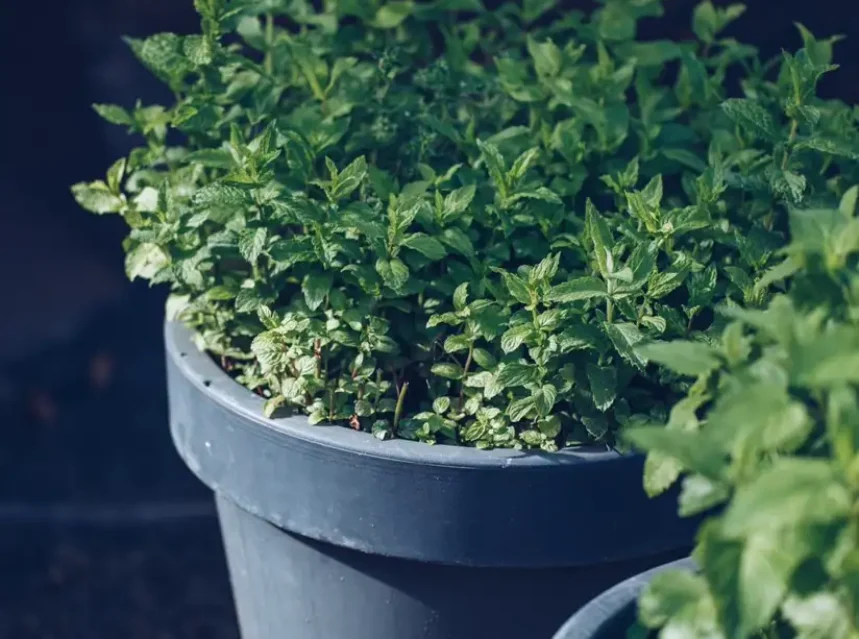
Why is my mint leggy? Most often because it is being picked too little, grown in too little light, or trapped in an exhausted, root-bound pot. Mint builds long bare stems whenever nothing forces it to branch. Match the cause below.
Quick answer: Harvest harder, not gentler. Pinch or snip stem tips just above a leaf pair, and the plant answers with two new side shoots for every cut. Give it four to six hours of sun, refresh the pot yearly, and shear a scraggly patch flat, since it regrows dense within weeks. Match yours below.
🧰 In a hurry? Jump straight to our tested picks for this guide ↓
Why is my mint leggy? Quick diagnosis

| What you see | Most likely cause |
|---|---|
| Tall, sparse stems, few leaves, rarely picked | Not enough harvesting or pinching |
| Pale, stretched stems leaning to a window | Too little light, indoor etiolation |
| Weak, crowded stems in an old pot | Root-bound plant, exhausted compost |
| Sudden stretch with flower buds forming | Bolting, cut before it blooms |
| Soft, floppy, fast growth after feeding | Too much nitrogen |
| Long bare stems with tufts at the tips | Missed pruning, give it the flat-top cut |
The harvest paradox: leggy mint is under-picked mint
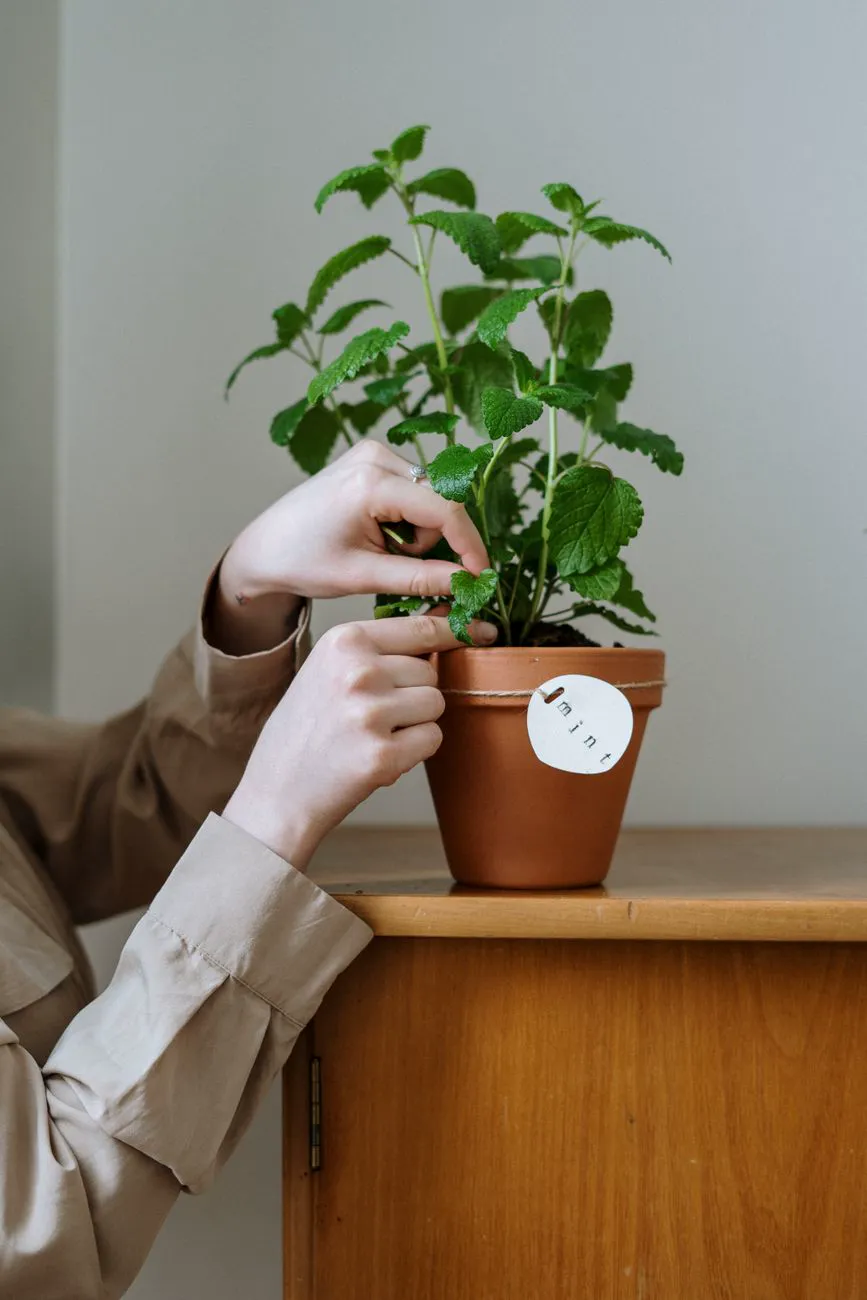
Here is the counterintuitive truth at the heart of it. Most leggy mint belongs to gardeners being kind, picking a leaf here and there and letting the plant “grow”.
Mint does the opposite of what kindness expects. Every time you cut a stem tip just above a pair of leaves, the buds in that leaf pair fire and produce two new shoots. No cuts means no branching, so the stem simply extends, longer, barer, and weaker.
So harvest hard and often, always snipping tips above a node rather than stripping single leaves. A mint picked ruthlessly every week becomes a dense, self-renewing cushion. This is the single biggest fix, and it costs you nothing but tea and chutney.
Too little light: the indoor stretch
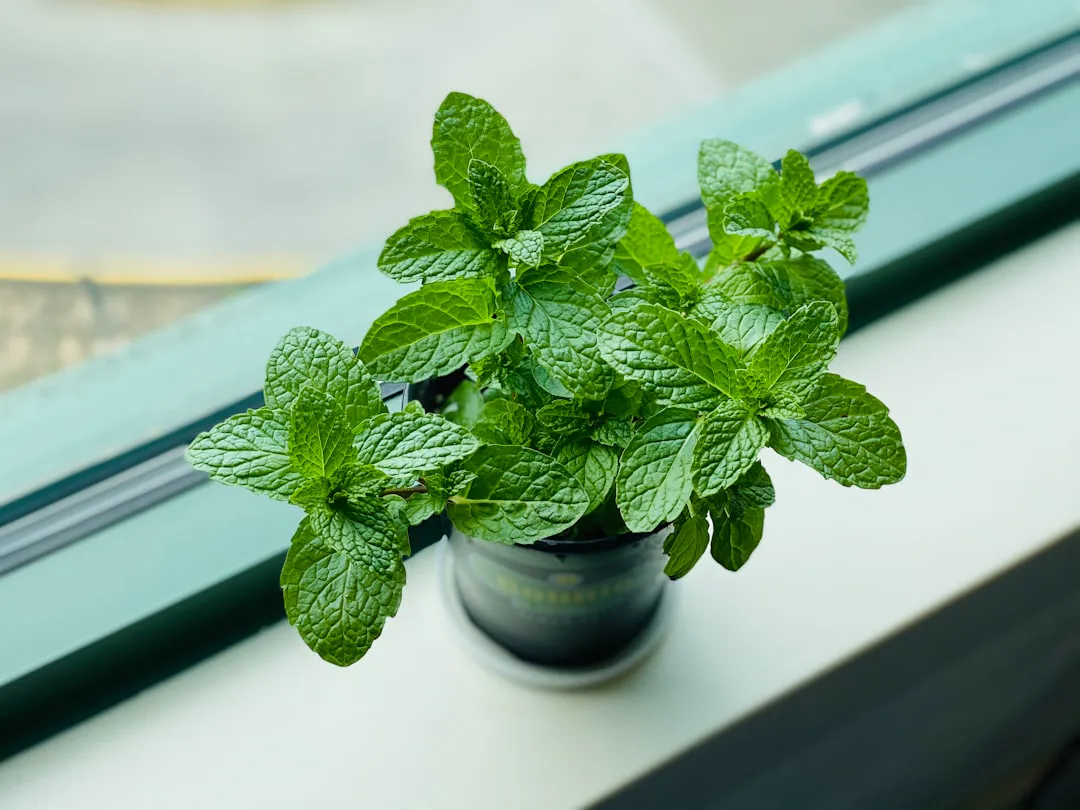
The second classic cause is light hunger, especially indoors. A mint on a dim windowsill grows long, pale, thin stems with small, widely spaced leaves, literally stretching in search of sun.
Botanists call it etiolation, and our leggy houseplant guide covers the same effect across indoor plants.
Mint wants four to six hours of good sun, or bright light all day. Move indoor pots to your sunniest window and rotate them weekly, or summer them outdoors. Poor light is the top cause indoors, and outdoors a shaded corner does the same slow damage.
The flat-top cut: reset a scraggly patch in weeks
Already got a leggy jungle? Do not untangle it, reset it. Mint regrows from its underground runners with astonishing speed, which makes it one of the few herbs you can cut almost to the ground without risk.
Shear the entire patch or pot down to about five centimetres, water it, and walk away. Fresh, dense, leafy shoots emerge within days and fill out inside two to three weeks.
Repeat this hard trim every four to six weeks through the season on vigorous mints. Dry or freeze the mountain of trimmings, and nothing is wasted.
Root-bound pots: the yearly refresh mint demands
Mint is famously invasive in the ground, and it treats a pot the same way. Its runners circle the container within a single season, packing it solid with roots and exhausting the compost.
A root-bound mint sends up crowds of thin, weak, leggy stems, because hundreds of shoots are fighting over nothing.
Refresh every spring: tip the plant out, slice the root ball into quarters, and replant one healthy quarter in fresh compost, giving the rest away. That one-year-in, one-quarter-back rhythm keeps container mint permanently young and bushy. Our fertilizer calculator helps you feed the fresh pot lightly, since heavy nitrogen just recreates the floppy stretch.
Bolting: the flowering stretch
In midsummer, mint switches goals. Stems suddenly elongate, leaves shrink and space out, and flower buds appear at the tips.
This bolting stretch is natural, but it costs you leaf quality and flavour, and it reads as sudden legginess.
Cut flowering stems back hard as soon as you spot buds, or simply give the whole patch its flat-top cut. The Royal Horticultural Society notes regular cutting keeps mint producing fresh, flavourful young growth instead of flowers. Pollinators love mint bloom, so you can also let one pot flower and keep another cut for the kitchen.
Water and feed: steady, not lavish
Mint likes consistently moist soil, and drought-stressed plants throw weak, wiry growth. But the opposite errors cause legginess too.
Heavy nitrogen feeding pushes fast, soft, floppy stems that sprawl and stretch. Mint in decent compost needs little or no fertiliser, just an occasional light feed for hard-picked pots.
Keep the moisture even and the feeding lean. Our water calculator and watering guide help with the rhythm, and if the plant looks sick rather than just stretched, our plant doctor tool and mint rust guide rule out disease.
How to make leggy mint bushy again
- Shear the whole plant down to about five centimetres.
- Move it into four to six hours of sun.
- Repot or divide a root-bound plant into fresh compost.
- Harvest weekly, pinching tips just above a leaf pair.
- Cut off flower buds the moment they appear.
- Water evenly, and feed only lightly if at all.
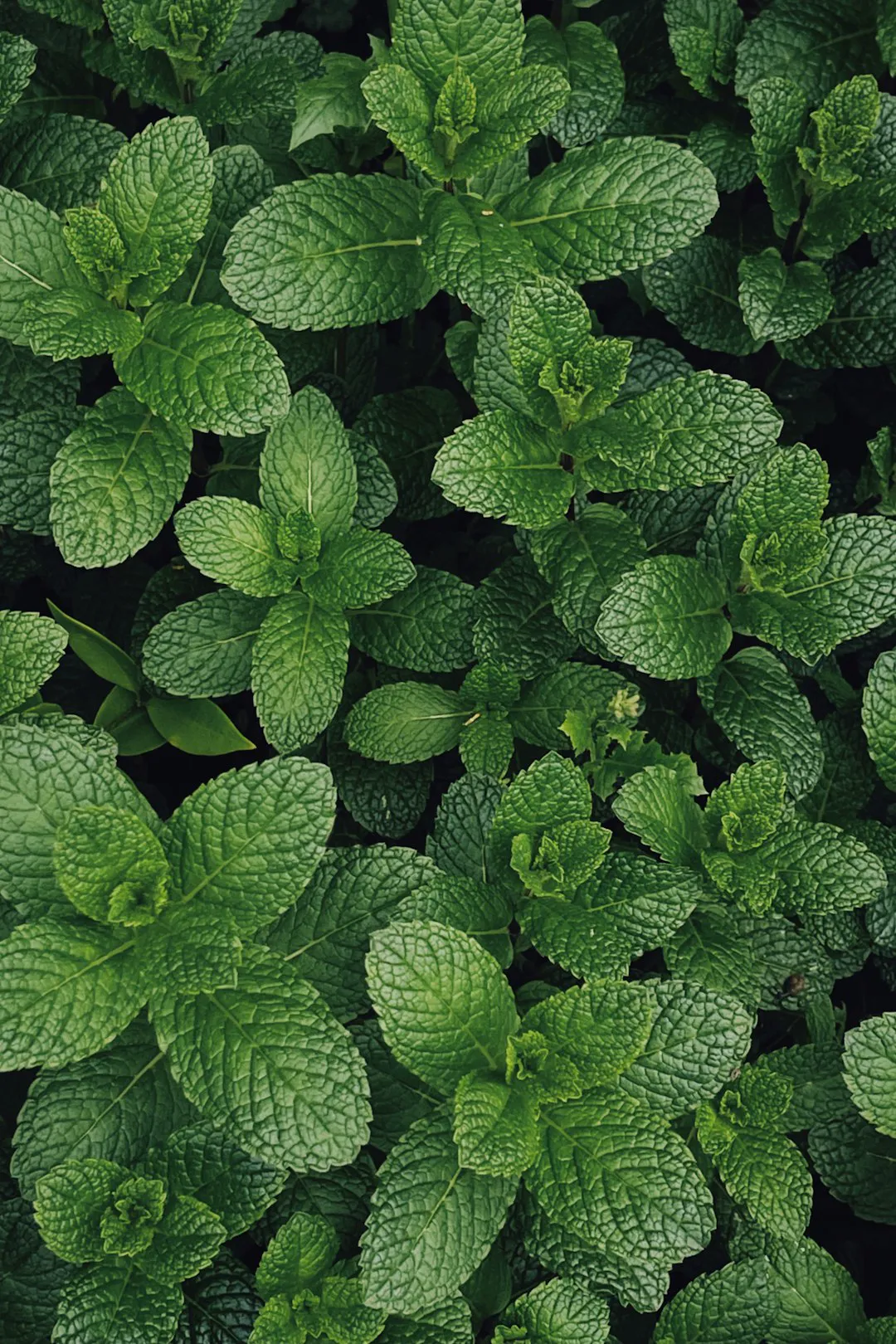
Two to three weeks after a hard cut, a healthy mint looks like a brand-new plant. Ruthlessness is the whole secret.
Leggy mint in different climates worldwide
Mint grows on every continent except Antarctica, and it gets leggy everywhere for the same reasons: too little picking, too little light, too small a pot. Cool-climate growers see the indoor winter stretch most, while hot-climate growers meet the bolting stretch.
In India, pudina is the classic balcony-pot herb, and the fixes map neatly onto the seasons. Give pots the sunniest rail spot, cut the patch flat before the monsoon flush so it regrows dense in the rains, and refresh crowded pots after the wet season.
Southern-hemisphere growers run the same calendar six months shifted. Everywhere, the weekly pinch-and-pick habit beats any product you can buy. Our mint growing guide and mint yellowing guide cover the rest of pudina’s care.
Frequently asked questions
How do I make my mint plant bushy?
Pinch and pick constantly. Every cut made just above a pair of leaves triggers two new side shoots, so weekly harvesting is what builds density. Give the plant four to six hours of sun, refresh the pot with fresh compost each spring, and shear the whole plant back by a third every four to six weeks in the growing season. A mint treated this roughly becomes a thick, fragrant cushion within a month or two.
Should I cut my leggy mint all the way back?
Yes, and confidently. Mint regrows fast from its underground runners, so cutting a leggy plant down to about five centimetres is a reset, not a risk. Water it after the cut and expect fresh, dense shoots within days, with a full leafy pot in two to three weeks. Use the trimmings for tea, freezing, or drying. End-of-season, you can cut even lower to tidy the patch for winter.
Why is my indoor mint so tall and thin?
Light hunger. Indoors, mint rarely gets the four to six hours of sun it wants, so it stretches pale, thin stems toward the window, spacing its leaves further apart as it goes. Move it to your brightest sill, rotate the pot weekly, and consider summering it outside. Then shear the stretched growth back hard, since those leggy stems never thicken up, and let fresh shoots regrow in the better light.
Does mint get leggy when it flowers?
Yes. When mint bolts, its stems elongate quickly, its leaves shrink, and flower buds form at the tips, which reads as sudden legginess. Flavour drops at the same time. Cut flowering stems back hard as soon as buds show, or shear the patch flat and let it regrow leafy. If you like bees, keep one pot for flowering and one cut hard for the kitchen, and both jobs get done.
Can I turn leggy mint stems into new plants?
Yes, and it is the best use for the trimmings. Choose stems that are still green and flexible rather than brown and woody, and cut lengths of about eight to ten centimetres. Strip the lower leaves, stand the stems in a glass of water on a bright sill, and change the water every couple of days. Roots usually appear within one to two weeks. Pot the rooted cuttings into fresh compost and you have replacement plants for free.
Why has my mint gone woody at the base?
Age. Mint stems harden and turn brown after a season or two, and woody sections carry few leaves and rarely resprout well. Cutting into that dead-looking wood often gives nothing back. So instead of fighting it, cut just above the lowest green growth and let the plant push fresh shoots from its underground runners. Every second spring, lift the clump, keep the young outer runners, discard the tired woody centre, and replant.
Does too much fertiliser make mint leggy?
It can. Heavy nitrogen feeding drives soft, fast, stretched growth with widely spaced leaves and a weaker aroma, because oils concentrate best in steadier growth. Mint is naturally vigorous and needs very little help. So feed a potted plant lightly once or twice through the growing season at most, and skip feeding altogether for mint planted in decent garden soil. Fresh compost each spring supplies more than enough for a healthy, compact clump.
How often should I prune mint to stop it getting leggy?
Little and often beats one big rescue. Through the growing season, take a light harvest every week or two, always cutting just above a pair of leaves so two new shoots replace one. Then shear the whole plant back by about a third every month or so. Indoor plants growing in weaker light need the same treatment, because stretched stems never thicken up on their own and only fresh growth restores a dense shape.
Does mint need repotting to stop it going leggy?
Usually yes, once a year. Mint fills a container with a dense mat of runners within a season, and a congested root ball cannot support leafy growth, so the plant produces thin, sparse stems instead. So each spring, tip the plant out, slice the clump into two or three pieces, and replant a piece into fresh compost. The discarded sections make good gifts, and the refreshed plant bulks up quickly.
Why is my mint growing sideways instead of upright?
That is normal behaviour, not a fault. Mint spreads by runners that travel along or just under the soil surface and root wherever they touch damp ground, which is exactly why it takes over beds so quickly. Sprawling stems become a problem only when the plant is short of light and the growth is thin and pale. So keep it in a pot with a rim, harvest the wandering stems regularly, and it will stay compact.
Can overwatering make mint look thin and leggy?
Yes, indirectly. Mint likes steadily damp soil but not sodden compost, and waterlogged roots cannot take up nutrients properly. The result is yellowing lower leaves, weak spindly stems, and eventually root rot. So check with a finger before watering and only add water when the top two to three centimetres feel dry. Always use a pot with drainage holes, empty the saucer, and move containers under cover during long spells of monsoon rain.
Will a grow light fix leggy indoor mint?
It helps a great deal, provided you also cut back the stretched growth. A simple LED grow light placed fifteen to thirty centimetres above the plant, running for around twelve hours a day, gives far more usable light than an average winter windowsill. The already-stretched stems will not shorten, though, so shear them and let new shoots grow under the lamp. Rotate the pot every few days so all sides stay even and bushy.
Sources and further reading
Related guides
- How to grow mint
- Best mint seeds
- Why does my mint have orange spots
- Why are my mint leaves turning yellow
- Leggy houseplant guide
- How often to water plants
Still stuck? Ask the Plant Doctor
Describe the problem — yellow leaves, holes, no flowers — and get a clear answer in seconds. FreeAI can make mistakes. Answers are guidance, not a guarantee — check anything important against the guide it links to, and always read the label on any product before you use it.