Passion Fruit Seeds
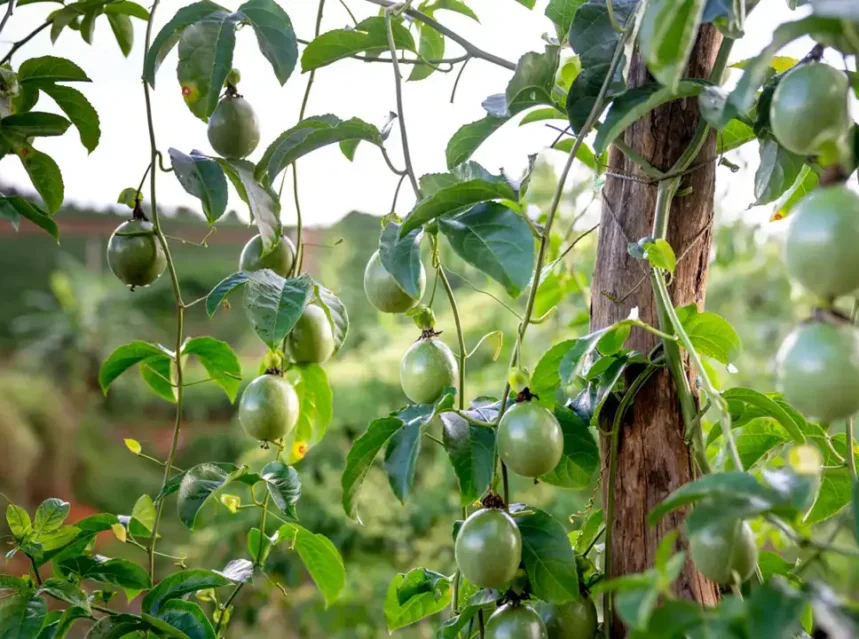
Passion fruit seeds grow into a vigorous climbing vine with stunning, intricate flowers and round fruits full of fragrant, tangy-sweet pulp and edible seeds. Both a beautiful ornamental and a delicious crop, the passiflora vine can be raised from seed in warm gardens, greenhouses, or large pots. Passion fruit, or Passiflora edulis, rewards a little patience with exotic flowers and tropical fruit. This guide covers the best passion fruit seeds, how to grow passion fruit from seed, when to sow, how to harvest, and where to buy.
Passion fruit (Passiflora edulis) is a tender climbing vine grown for its showy flowers and tangy fruit. You grow it from fresh seed sown warm in spring. It needs a strong support and a long, warm season, and fruits within a year or two.
Exotic, fragrant, and productive. The passion fruit page and the Britannica entry on passion fruit cover the vine and its fruit.
🧰 In a hurry? Jump straight to our tested picks for this guide ↓
Passion fruit seeds at a glance
| Feature | Detail |
|---|---|
| Botanical name | Passiflora edulis (family Passifloraceae) |
| Sowing depth | About 1 cm; soak/nick fresh seed first |
| Germination temperature | 20–30°C (68–86°F) |
| Days to germinate | 2–6 weeks (slow, uneven) |
| Season | Tender perennial climber; frost-sensitive |
| Time to fruit | About 1–2 years |
| Best for | Exotic flowers, tangy fruit, warm walls & pots |
Why grow passion fruit from seed?
Passion fruit is a wonderful two-in-one plant. First, the flowers are breathtaking, intricate and exotic, among the most beautiful any vine can offer. Second, the fruit is delicious, with fragrant, tangy pulp loved in drinks and desserts.
Third, seed is a cheap and easy way to start, and watching a vine grow from seed to fruit is hugely satisfying. It is fast and vigorous once going.
It suits warm walls, trellises, greenhouses, and big pots. Passion fruit is a climber like other vining crops grown from seed, such as achocha and the exotic fruit naranjilla. For ornamental climbers, it sits beside thunbergia, cup-and-saucer vine, Spanish flag, and balloon vine.
Purple vs yellow passion fruit
There are two main passion fruits. The purple type (Passiflora edulis) has smaller, dark purple fruit, a richer flavour, and more cold tolerance, suiting cooler subtropical and hill gardens.
The yellow type (the form flavicarpa) has larger, yellow fruit, more vigour and heat tolerance, and is better for hot, lowland tropical areas. Its flavour is more acidic.
For most growers, especially in cooler or hill climates, purple passion fruit is the usual choice. In hot regions, the yellow form often does better.
History, origin & India
Passion fruit comes from South America, especially Brazil, and has spread across the warm regions of the world. The “passion” name refers to the flower’s symbolism, not the taste.
You can read more on the vine’s botany and history at Wikipedia.
In India, passion fruit, sometimes called krishnaphal, is grown in the cooler hills of the north-east, the Nilgiris, Coorg, and parts of the south. It thrives in mild, frost-free hill conditions rather than the hottest, driest plains.
Passion fruit types to grow
Passion fruit seed is sold as purple or yellow types, plus some named selections. Choose by your climate and taste.
| Type | Notes | Best for | Region |
|---|---|---|---|
| Purple passion fruit | Smaller dark fruit, richer flavour | Cooler subtropical & hill gardens | cool subtropical |
| Yellow passion fruit (flavicarpa) | Larger yellow fruit, very vigorous | Hot, lowland tropics | tropical |
| Named purple selections | Improved fruit size and flavour | Reliable home crops | cool subtropical |
For most home growers and hill climates, purple passion fruit is the best all-round choice. In hot tropical areas, the yellow form crops more freely.
Both are grown the same way from seed, on a strong support in a warm, sunny spot.
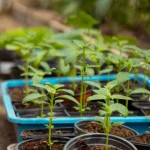
How to grow passion fruit from seed
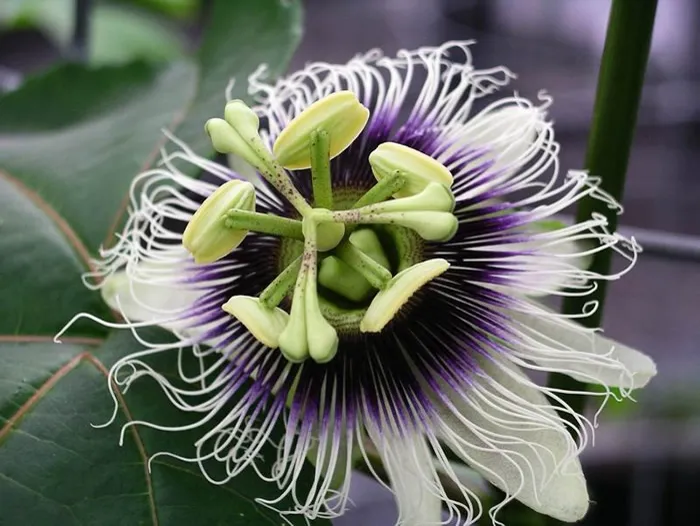
Passion fruit needs a warm, patient start, then grows fast.
- Use fresh seed. Passion fruit seed germinates best when fresh, so sow promptly and soak or lightly nick the hard coat.
- Sow warm. Sow about 1 cm deep and keep at 20–30°C, as warmth is essential.
- Be patient. Germination is slow and uneven, often two to six weeks, so do not give up early.
- Give strong support. Provide a sturdy trellis, fence, or frame, as the vine is vigorous and heavy.
- Protect from frost. Grow in a warm, sunny, sheltered spot, and under cover or in pots in cool climates.
The vine climbs fast and can flower and fruit within one to two years from seed. It is hungry and thirsty, needing good soil and regular care.
In Indian hill gardens, grow passion fruit on a strong support in a warm, frost-free spot, where it can crop well.
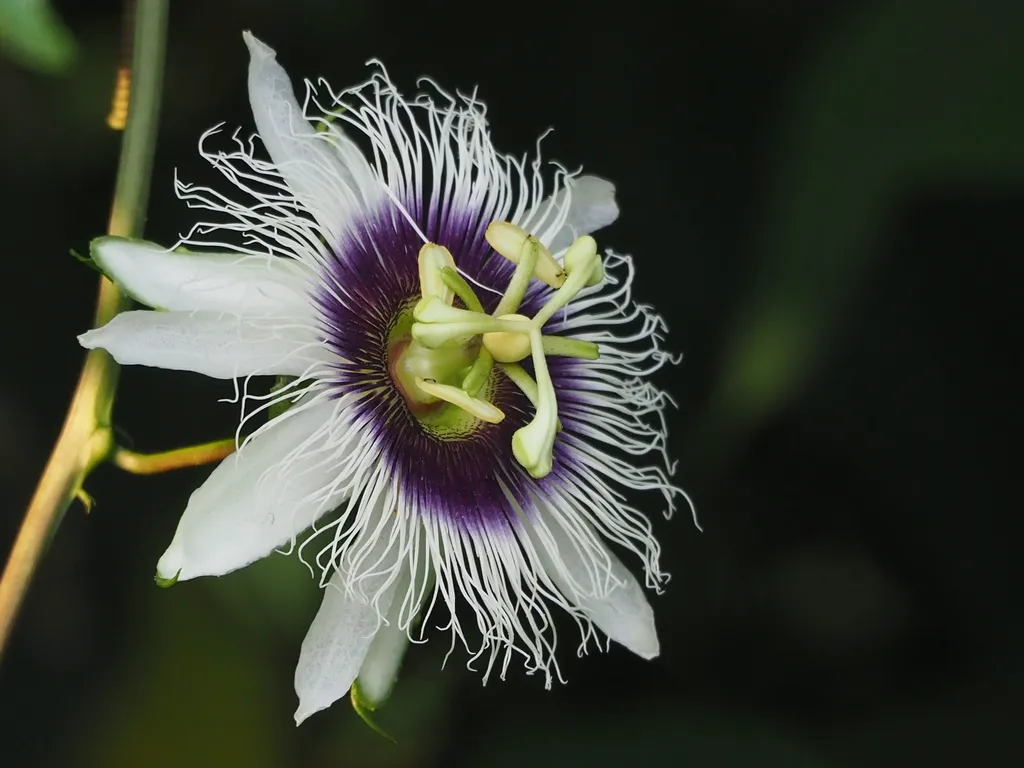
When should you sow passion fruit seeds?
Sow passion fruit in spring, giving the slow seed and long-season vine the most warm growing time. Indoor warmth helps germination.
In cool and temperate areas, grow the young vines under glass or in pots, planting out only in warm summers or keeping them in a greenhouse. Frost will kill them.
In warm, frost-free or mild hill areas, sow at the start of the warm season. The vine then has the long, warm run it needs to flower and fruit.
Soil, watering & feeding
Passion fruit wants full sun and rich, well-drained soil with plenty of organic matter. Good drainage is vital, as the vine dislikes waterlogged roots.
Water regularly and deeply, especially in dry spells and while fruiting, but avoid soggy soil. Mulch helps keep the roots moist and cool.
Feed regularly through the growing season, as passion fruit is a hungry plant that fruits best with good feeding. A balanced or potassium-rich feed supports flowering and fruit.
Pollination & common pests
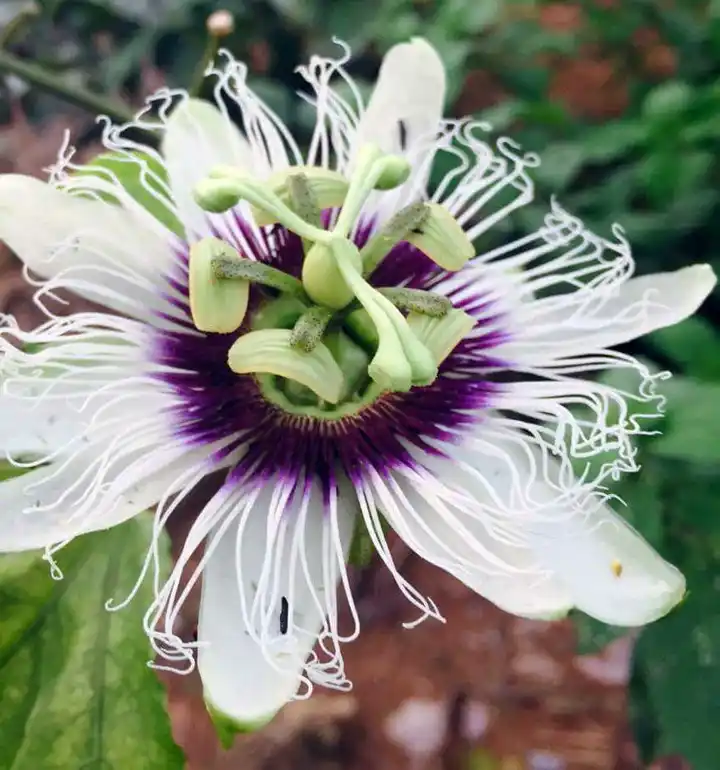
Pollination matters for fruit. The flowers are pollinated by large bees, and some yellow types need a second plant or hand-pollination to set fruit well.
The main pests are aphids, spider mites, scale, and fruit flies, while diseases include fungal wilts and viruses. Good hygiene, airflow, and healthy growth help.
Encouraging pollinators, or hand-pollinating with a soft brush, improves the crop. Strong, well-fed vines in a sunny spot usually fruit reliably.
Harvesting passion fruit
Harvest passion fruit when it is fully coloured and the skin begins to wrinkle, which is the sign of ripeness. Ripe fruit often simply drops to the ground.
You can pick fruit that is fully coloured, or gather the dropped fruit, which is at its sweetest. Cut the fruit in half and scoop out the pulp and seeds.
Eat only ripe fruit, as unripe fruit and the leaves are not for eating. Ripe passion fruit keeps for a while and even improves as the skin wrinkles further.
Uses of passion fruit
The fragrant pulp, seeds and all, is eaten fresh straight from the shell, or strained into juice. It flavours drinks, sorbets, cheesecakes, and many desserts.
The intense, tangy taste goes a long way, so a little adds a tropical lift to dishes. The flowers also make the vine a fine ornamental.
This article is for gardening information only and is not health or medical advice. Eat only ripe passion fruit, and enjoy it as part of a normal, balanced diet.
Saving your own seeds
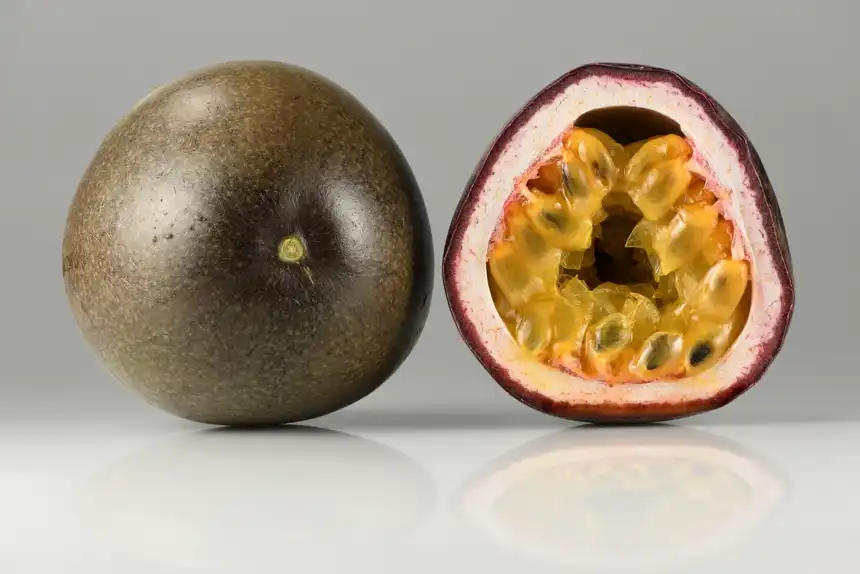
Saving passion fruit seed is easy from ripe fruit. Scoop out the seeds with their pulp from a fully ripe fruit.
Rinse the seeds clean of the gel, then dry them, and sow them fresh for the best germination, as the seed does not store well for long.
If storing, keep dry seed cool and dark, but expect lower germination over time. Our guide to saving seeds covers cleaning and storage.
Common problems from seed
The most common problem is slow, patchy germination, so use fresh seed, soak it, sow warm, and be patient. Cold conditions stall both seed and vine.
Lots of leafy growth but no fruit can mean too much nitrogen or poor pollination, so feed for fruit and encourage bees. Flower drop often follows dryness or cold.
Frost damage is fatal, so protect the vine in cool climates. Warmth, fresh seed, strong support, good feeding, and pollination give the best crop.
Where can you buy passion fruit seeds?
Choose purple passion fruit (Passiflora edulis) for cooler and hill gardens, or the yellow form for hot tropics. Buy fresh seed, as passion fruit germinates best when freshly sown.
Specialist and exotic-fruit seed suppliers are the usual source. Use the links below to compare trusted sellers.
Frequently asked questions
How long do passion fruit seeds take to germinate?
Passion fruit seeds germinate slowly and unevenly, usually over 2–6 weeks at 20–30°C. Use fresh seed, soak or lightly nick it, sow warm, and be patient.
How long until passion fruit fruits from seed?
Usually about one to two years, given warmth and good care. The vine grows fast but needs to mature before it flowers and sets fruit, so a long, warm season helps.
Purple or yellow passion fruit, which should I grow?
Purple passion fruit suits cooler and hill gardens and has a richer flavour, while the yellow form is more vigorous and better for hot tropical lowlands. Choose by your climate.
Are passion fruit leaves or unripe fruit toxic to pets?
Yes, the leaves and unripe green fruit contain cyanogenic glycosides that can release cyanide when eaten, so keep pets away from foliage and fallen unripe fruit. Only the fully ripe, wrinkled fruit is safe to eat; if a pet chews the vine or green fruit, contact a vet promptly.
How long does a passion fruit vine live and produce fruit?
Purple passion fruit vines are relatively short-lived, typically cropping well for around five to seven years before vigour declines, according to grower reports and university extension notes. Regular renewal pruning and good feeding help keep an older vine productive for longer.
Is passion fruit self-fertile, or do you need two vines?
Purple passion fruit is generally self-fertile and sets fruit alone with the help of visiting bees. Some yellow-fruited types are less self-compatible and crop better with a second seedling nearby or with hand-pollination using a small brush, especially if fruit set is poor.
What USDA hardiness zones suit passion fruit outdoors year-round?
Passion fruit is generally hardy outdoors only in USDA zones 8 to 10, where winters stay mild and frost-free. Anywhere colder, grow it in a large container that comes under cover for winter, or treat it as a greenhouse and summer-patio plant.
Can passion fruit vines be grown in containers and overwintered indoors?
Yes, a large pot with a sturdy support works well, and repotting every two to three years keeps the vigorous roots happy. In cold climates, bring the container into a bright, frost-free space for winter, water sparingly while growth slows, and move it back outside once frosts end.
How hard should you prune a passion fruit vine?
Fairly hard, once a year after harvest or in late winter. Cutting back old, tangled growth to a framework of strong stems encourages fresh flowering wood, since fruit forms mainly on the current season’s new growth rather than old, woody stems.
Can you eat passion fruit seeds?
Yes, the small black seeds inside ripe fruit are perfectly edible and are normally eaten along with the fragrant pulp, adding a pleasant crunch. There is no need to strain them out unless a recipe specifically calls for smooth, seed-free juice.
Can you grow passion fruit in India?
Yes, especially in the cooler hills such as the north-east, Nilgiris, and Coorg. Passion fruit, or krishnaphal, likes mild, frost-free conditions on a strong support, with full sun and good feeding.
Still stuck? Ask the Plant Doctor
Describe the problem — yellow leaves, holes, no flowers — and get a clear answer in seconds. FreeAI can make mistakes. Answers are guidance, not a guarantee — check anything important against the guide it links to, and always read the label on any product before you use it.