Silver Leaf Disease
Silver leaf disease is a serious fungal disease of plum, cherry, and other stone fruit trees caused by Chondrostereum purpureum. It produces a distinctive silvery or metallic sheen on leaves — caused not by the fungus growing in the leaves themselves, but by a toxin that causes air gaps between leaf cell layers. The disease kills trees by destroying the wood beneath, spreading from pruning wounds and damaged bark. Full identification and management guidance is on the RHS silver leaf disease page.
🧰 In a hurry? Jump straight to our tested picks for this guide ↓
Why Silver Leaf Disease Is Dangerous for Stone Fruit Trees
Silver leaf disease is one of the most serious diseases of stone fruit in the UK and temperate Europe. The RHS lists it as a notifiable disease of plum trees in parts of the UK, meaning confirmed infections must legally be reported in commercial orchards. For home gardeners, it is not notifiable, but it demands prompt action.
The danger lies in the way the disease progresses. The fungus enters through pruning wounds or damaged bark and begins destroying the cambium — the living tissue between bark and wood. The tree continues to grow above the infection for a season or more while the wood beneath rots. By the time multiple branches show silvering, the disease may already be extensive in the main trunk.
Experienced plum and cherry growers describe silver leaf as the disease that makes you regret autumn pruning. Almost every case in home gardens traces back to pruning wounds made between October and April, when spores are active and the tree has no ability to close wounds quickly. Switching to summer-only pruning and painting large cuts is the single most effective prevention measure available.
History, Biology and Distribution of Silver Leaf
Chondrostereum purpureum is a basidiomycete fungus in the family Meruliaceae. The species name purpureum refers to the purple or lilac colour of the bracket fruiting bodies that appear on dead infected wood. The fungus was described scientifically in the nineteenth century and confirmed as the cause of silver leaf disease in the early twentieth century through controlled inoculation studies.
The silvery appearance on leaves is caused by a toxin produced by the fungus as it colonises the wood. The toxin disrupts the normal adhesion between the upper and lower epidermis of the leaf, creating an air space that reflects light differently — producing the distinctive silver sheen. The leaf cells themselves may remain alive for some time. This is why branches with silvered leaves are not always the most heavily infected: the toxin can travel further in the vascular tissue than the fungus itself.
Silver leaf disease is widespread across Europe, the USA, Canada, South Africa, Australia, and New Zealand. It affects commercial stone fruit orchards significantly in France, Spain, and the UK. In India, C. purpureum occurs in temperate fruit-growing regions, particularly in apple and plum orchards in Himachal Pradesh and Jammu and Kashmir, where it can cause losses in improperly managed orchards.
Which Plants Does Silver Leaf Disease Affect?
Silver leaf disease primarily targets stone fruits in the genus Prunus. Plum is the most commonly and severely affected in UK gardens, but all stone fruits are susceptible. Other plants can also be infected, including some non-Prunus species.
| Host | Susceptibility | Notes |
|---|---|---|
| Plum / greengage / damson | Very high | Most commonly lost species in UK |
| Cherry (sweet + ornamental) | High | Large specimens at risk |
| Peach / nectarine / apricot | Moderate–High | Less common, serious when it occurs |
| Apple / pear | Moderate | Occasional; less common than on Prunus |
| Poplar, willow, elder, hawthorn | Low–Moderate | Mostly in stress situations |
Our guides on growing plums, growing cherries, growing peaches, and growing apricots cover variety choice and general care for all the main stone fruit hosts. Among plums, ‘Victoria’ — the most widely grown variety in the UK — is notoriously susceptible. However, all plum varieties can develop silver leaf if wounds occur in the wrong season. There are no varieties considered truly resistant to silver leaf — only resistant through vigorous wound-closure ability, which is influenced by timing of pruning.
How to Identify Silver Leaf Disease: Key Symptoms
Silver leaf disease has distinctive symptoms that, when seen together, make it one of the more reliably diagnosable diseases in the garden.
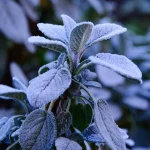
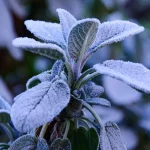
- Silvery or metallic leaf sheen: Leaves on affected branches develop a silvery, grey, or leaden sheen. They look as if they have been given a light metallic coating. The sheen is visible from a distance and is most obvious in bright sunlight. Individual leaves remain intact — they do not wilt or curl. The sheen typically appears on one branch first.
- Brown internal wood stain: This is the most reliable diagnostic test. Cut a branch that is 2.5 cm (1 in) or more in diameter. Look at the cut surface. Silver leaf causes a brown, irregular stain in the heartwood and sapwood, extending from the point of entry upward. This stain does not occur with false silver leaf (see below) or most other diseases. If you see silvery leaves but no internal stain, the cause is likely environmental stress, not silver leaf disease.
- Branch die-back: Affected branches die back over one to two seasons. The silvered leaves collapse, turn brown, and remain on the branch. Eventually the branch dies entirely.
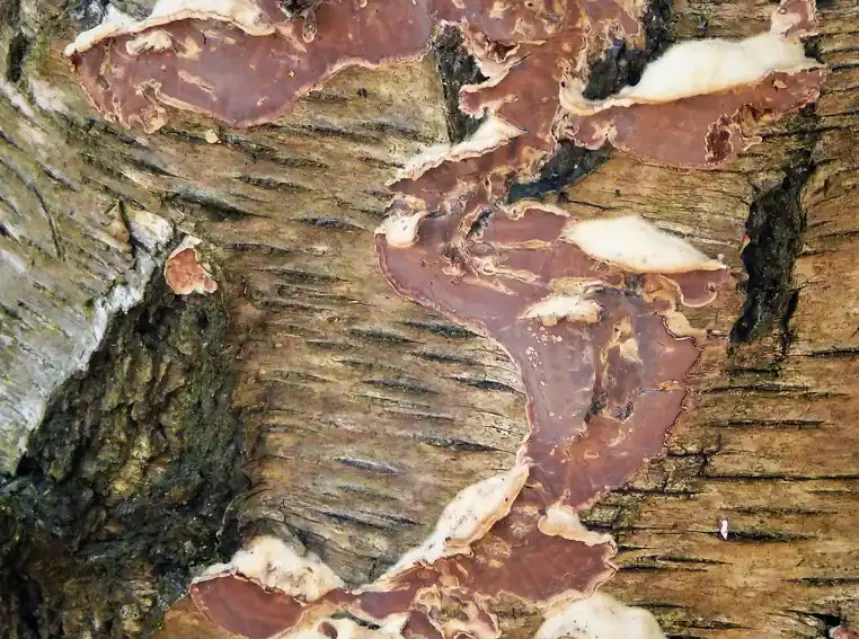
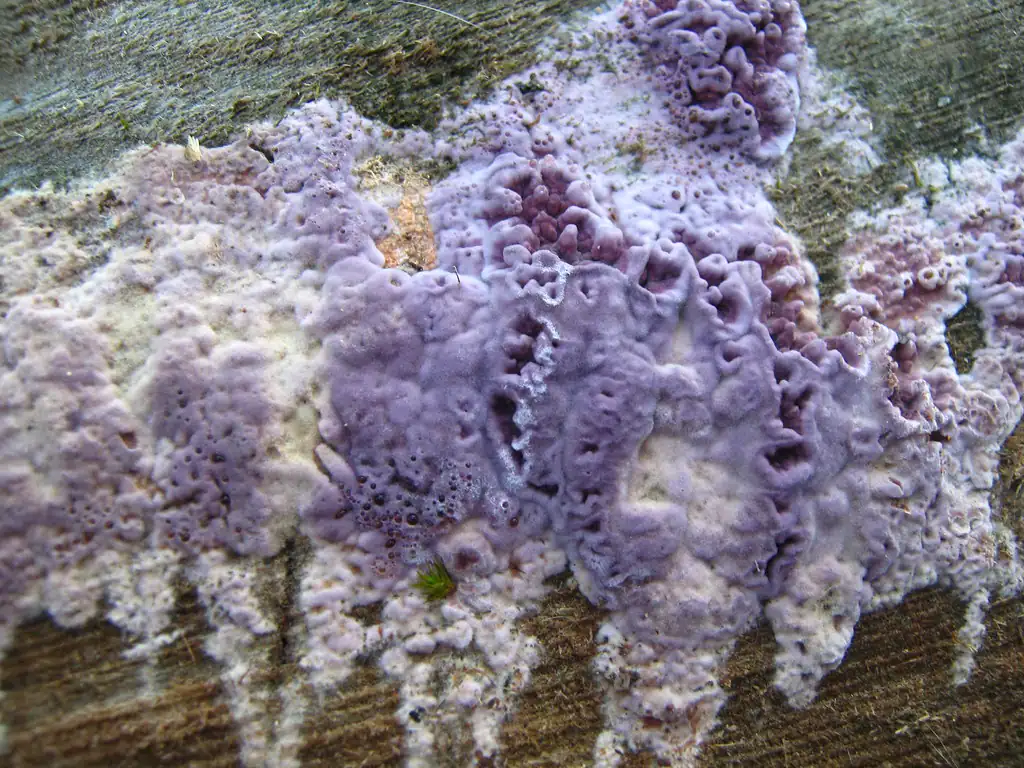
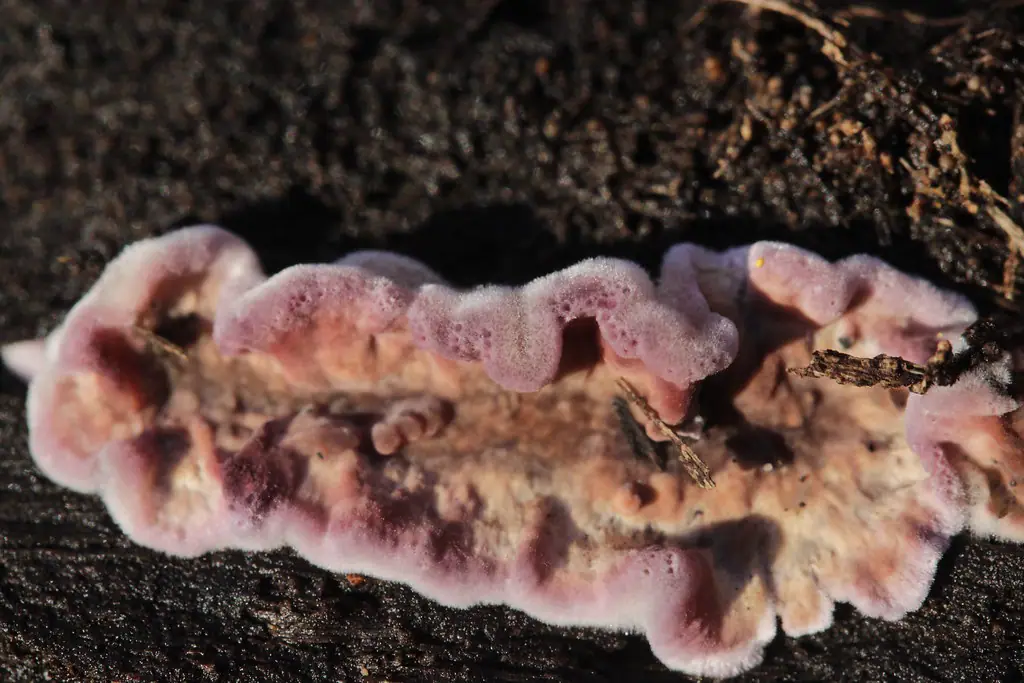
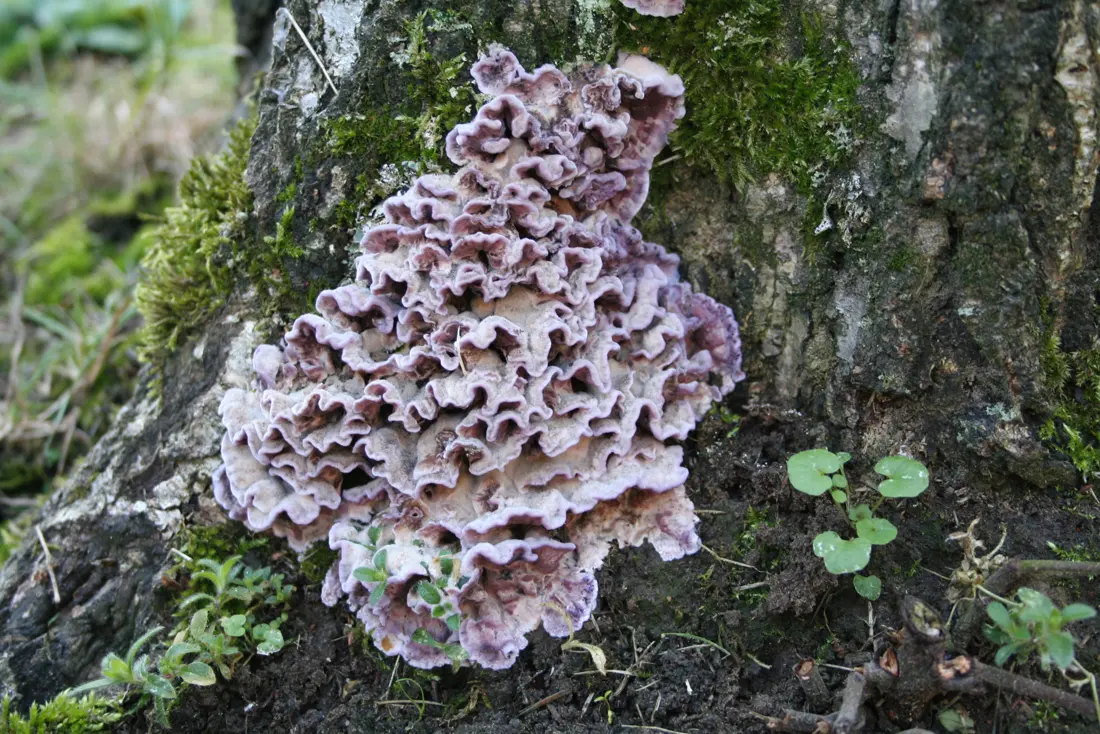
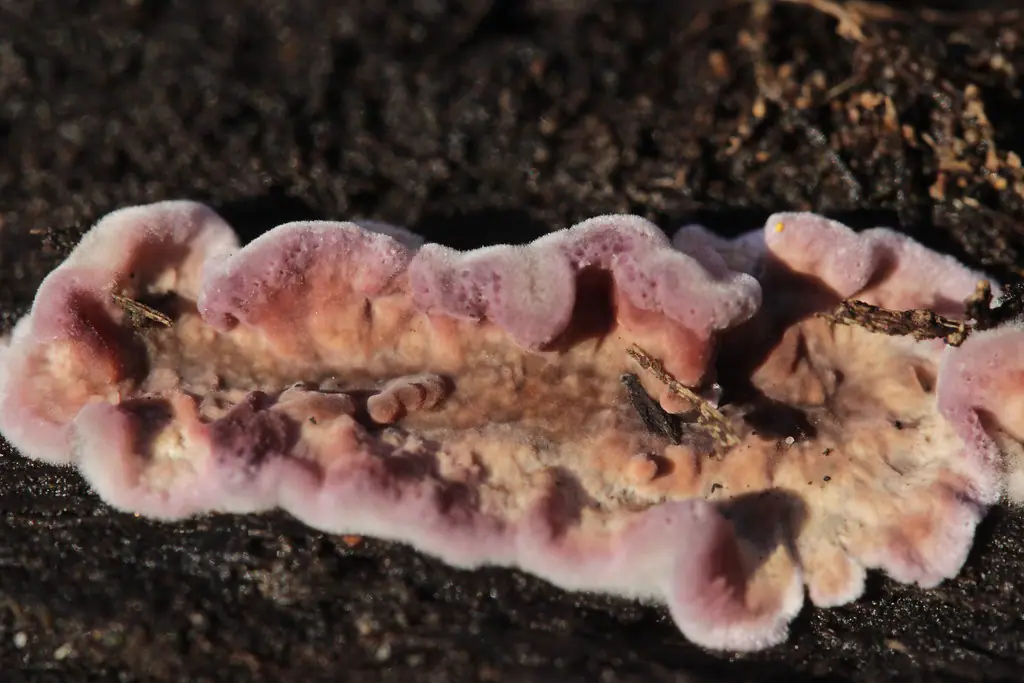
- Purple bracket fungi on dead wood: In late summer and autumn, flat, shelf-like brackets appear on dead infected branches or the main trunk. These are the fruiting bodies of C. purpureum — purple to lilac on the upper surface, cream on the underside. Their presence confirms silver leaf and indicates active spore production. A tree producing these brackets is a significant source of infection for other plants.
How Silver Leaf Disease Spreads
Silver leaf spreads primarily via airborne spores released from the purple bracket fungi on dead infected wood. Spore release is highest in wet, cool conditions — autumn, winter, and early spring. Spores land on fresh pruning cuts, frost cracks, or other wounds in the bark and germinate in the moist, nutrient-rich tissue beneath.
This is why the timing of pruning is so critical. In autumn and winter, spore levels in the air are at their peak and tree wounds heal slowly in cold conditions. A pruning cut made in October may remain open and susceptible for weeks. In contrast, summer pruning wounds seal rapidly in warm conditions, and airborne spore levels are lowest during dry summer weather. This makes June to August the safe window for all stone fruit pruning.
The fungus does not spread via rhizomorphs in the soil like honey fungus. It does not pass from root to root. Each new infection comes from airborne spores reaching a fresh wound. This means that perfect pruning hygiene — summer-only cuts, clean technique, disinfected tools — can prevent virtually all new infections, even in a garden where infected trees already exist.
How to Manage and Treat Silver Leaf Disease
There is no fungicide treatment for silver leaf disease available to gardeners. Management requires prompt physical action and strict pruning timing.
- Prune infected branches to clean wood: Cut back infected branches to at least 15 cm (6 in) below the last point of brown staining in the wood. If staining is present at the cut surface, cut further. In dry summer conditions, the tree has the best chance of sealing the new cut before spores can reach it.
- Always prune stone fruits in summer: The June to August window — when spore levels are low and wound-healing is fast — is the only safe pruning season. Never prune plums, cherries, or any Prunus in autumn, winter, or early spring.
- Disinfect tools: Wipe blades with methylated spirits between each cut, especially if moving from infected to healthy wood. Although silver leaf is primarily airborne, using contaminated tools on fresh tissue is an unnecessary risk.
- Destroy infected wood: Burn all removed infected branches and bracket fungi. Do not compost or chip infected material. Every bracket fungus left in the garden continues to release spores for weeks.
- Fell a tree producing bracket fungi: A tree that has reached the stage of producing bracket fungi on its trunk or main branches is severely infected throughout. The risk of continued spore release to other trees outweighs the cost of removal. Fell the tree and remove all roots and infected wood from the garden.
- Paint large pruning cuts: Traditional wound paints are no longer recommended for all pruning cuts, but large cuts on Prunus in high-risk gardens or after late-season pruning can benefit from a wound sealant to reduce spore landing and entry while the wound seals naturally.
Preventing Silver Leaf Disease on Plum and Cherry Trees
Summer pruning is the single most powerful prevention. Prune all Prunus trees between June and August, in dry weather. Do this consistently every year. Most UK home orchardists lose plum trees to silver leaf entirely because they do not know about the summer-pruning rule and prune in winter alongside their apple trees. Knowing and following this rule is the most important thing you can do.
Minimise the number and size of cuts. Fewer cuts mean fewer entry points. Work to a definite objective when pruning — removing a specific crossing branch, reducing height, opening the centre — rather than making many small tidying cuts throughout the tree.
Keep trees vigorous and healthy. Well-fed, well-watered trees with good root health seal wounds more quickly and resist infection better. Mulch around the root zone, feed in spring, and ensure good drainage to support robust wound-closure response.
Check new acquisitions. When buying new plum or cherry trees, inspect for early silvery leaf symptoms. Do not plant a tree showing suspect symptoms until you have cut a small branch and checked the wood for internal staining.
Silver Leaf vs False Silver Leaf and Similar Problems
Silver leaf vs false silver leaf: False silver leaf produces a similar sheen but is caused by environmental stress — drought, frost damage, root problems, or nutritional deficiency. The critical difference is the internal wood stain. False silver leaf shows no brown stain when you cut into the wood. False silver leaf also often affects the whole tree rather than individual branches. If there is no stain, treat the cause of stress rather than assuming disease.
Silver leaf vs bacterial canker: Bacterial canker (Pseudomonas syringae) also affects Prunus and enters via pruning wounds. However, bacterial canker causes flat, sunken bark patches with amber gum — not silvery leaves. It does not produce bracket fungi. The internal stain from bacterial canker is in the bark and outer sapwood, while silver leaf staining extends deeper into the heartwood. Both are prevented by the same summer-pruning rule.
Silver leaf vs honey fungus: Honey fungus causes root and base rot, producing white mycelium fans under bark at ground level and black bootlace rhizomorphs in soil. Silver leaf affects branches and wood above ground, entering via pruning wounds, not through roots. The two can co-occur in a garden but are entirely separate diseases.
For stone fruit care including pruning timing: our guides on growing plums and peach leaf curl cover related disease and care topics. Pruning wound timing is equally critical for preventing bacterial canker — both diseases share the summer-pruning rule. For soil-borne diseases that cause similar above-ground decline, see honey fungus and verticillium wilt. The Iowa State University Extension silver leaf resource explains the spore-timing biology in detail, and the RHS silver leaf disease guide provides comprehensive UK-specific management advice including variety susceptibility listings. For the biological control angle, UC Davis notes that Trichoderma viride has shown some promise in experimental wound treatments, though it is not yet a reliable garden-scale option.
Related plant guides
- How to grow Brown Rot
- Bacterial Canker
- Coral Spot
- Honey Fungus
- How to grow Flowering Cherry
- Greengage
Frequently Asked Questions About Silver Leaf Disease
Can a tree recover from silver leaf disease?
Yes, if the infection is caught early and infected branches are removed with a clean summer-pruned cut well below the staining. Trees that have had only a few branches infected and the main trunk remains stain-free can recover fully. Trees with staining in the main trunk have a much poorer prognosis and often need to be felled.
How do I know if the stain is silver leaf or something else?
Silver leaf staining is a fairly uniform mid-brown discolouration extending through sapwood and into heartwood. It does not have the black or blue-green staining associated with other fungal rots. If uncertain, send a sample to a plant diagnostic service. The RHS offers identification advice on submitted samples.
Should I report silver leaf disease?
In England, silver leaf disease on commercial plum orchards is notifiable to APHA (Animal and Plant Health Agency). Home garden infections are not notifiable but the RHS recommends reporting confirmed cases via its disease recording scheme to help monitor spread. In other countries, check local plant health authority guidance.
Do I need to treat the wound after pruning out silver leaf?
Clean wound cuts made in dry summer weather do not generally need wound paint — the tree seals them naturally. However, large cuts made outside the ideal summer window, or on trees in areas with high disease pressure, can benefit from a proprietary wound sealant to reduce the landing window for spores while the callus forms.
What causes silver leaf disease?
The cause is a fungus called Chondrostereum purpureum. Its airborne spores land on freshly exposed sapwood, usually a pruning cut, a torn branch or storm damage, and the fungus then grows into the wood. A toxin released by the fungus separates the leaf surface from the layers beneath, and the trapped air reflects light, giving the silvery sheen. Spores are released mainly in damp, cool autumn and winter weather, which is why wound timing matters so much.
Which trees does silver leaf disease attack most?
Plums are the most susceptible, followed by other stone fruit such as cherries, apricots, peaches and almonds. Apples, pears, hawthorn, poplar, willow, laburnum, maple and rhododendron can also be infected, though usually with milder symptoms. Younger, vigorous trees generally cope better than older, stressed ones. If you grow several plums together, treat the whole group as at risk and follow strict pruning hygiene, because one infected tree becomes a spore source for its neighbours.
Is there a fungicide or cure for silver leaf disease?
No fungicide cures the disease once it is inside the wood. Injections and sprays do not reach the fungus in the vascular tissue, and there are no chemical treatments approved for garden use against it. Management is therefore entirely cultural: prune out infected wood well below the brown staining, keep trees healthy and unstressed, and avoid creating wounds during high-risk seasons. Biological wound treatments based on Trichoderma are used commercially in some countries as a preventive measure.
When should you prune plum and cherry trees to avoid silver leaf?
Prune in mid to late summer, from roughly June to August in the northern hemisphere, when the tree is in active growth and spore levels are lowest. Wounds seal fastest at this time, which shortens the window for infection. Never prune in wet weather or during autumn and winter, when spore release peaks. In India, prune stone fruit in the hills after harvest and before the monsoon breaks, since damp air greatly increases infection risk.
Can silver leaf disease spread to other trees in my garden?
Yes. Once the fungus produces its bracket fruiting bodies on dead wood, it releases spores that travel on the wind to any fresh wound nearby. Infected prunings, stumps and dead branches left lying around act as long-term spore factories. This is why removing and destroying infected material promptly matters more than any spray. Keep susceptible trees well spaced, clear deadwood each year, and disinfect pruning tools between trees with alcohol or a garden disinfectant.
What is false silver leaf?
False silver leaf is a similar-looking silvering of the foliage caused by stress rather than infection. Drought, waterlogging, root damage, poor nutrition or a hard winter can all trigger it. The key difference is that with false silver leaf the whole tree usually silvers at once, and cut branches show no brown staining in the wood. True silver leaf appears branch by branch and always leaves that internal stain. Improving watering, feeding and soil conditions normally reverses false silvering.
How should I dispose of wood infected with silver leaf?
Get infected prunings away from the garden quickly and never leave them stacked as logs. Burn them where local rules permit, or send them out with council green waste that goes to high-temperature composting. Do not chip infected wood for garden mulch and do not add it to a home compost heap, as neither reaches temperatures that kill the fungus. Grind out or remove infected stumps too, since they can fruit for years and keep releasing spores.
Can you eat fruit from a tree with silver leaf disease?
Yes, fruit from an affected tree is safe to eat. The fungus lives in the wood and does not produce toxins in the fruit, so any plums or cherries that ripen normally can be picked and used as usual. Wash them as you would any garden fruit. Yields are often smaller and the fruit may be undersized, because infected branches carry damaged foliage that cannot photosynthesise properly. Branches that have died back should not be harvested from.
Still stuck? Ask the Plant Doctor
Describe the problem — yellow leaves, holes, no flowers — and get a clear answer in seconds. FreeAI can make mistakes. Answers are guidance, not a guarantee — check anything important against the guide it links to, and always read the label on any product before you use it.