How to Grow a Cherry Tree
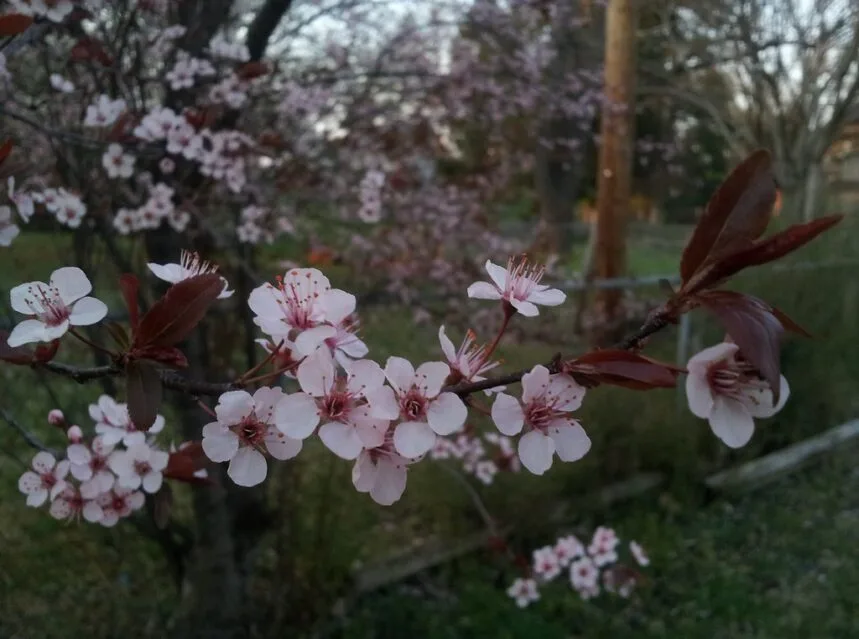
The cherry (Prunus avium and Prunus cerasus) is a deciduous temperate fruit tree grown for its jewel-like summer fruit and breathtaking spring blossom — few garden moments beat picking your own sun-ripe cherries. These beautiful trees give a cloud of spring flowers followed by sweet cherries for eating fresh, or tart cherries for pies and preserves. With modern dwarf rootstocks, even small gardens can grow them. Here is the complete guide on how to grow a cherry tree.
Quick start: Grow cherries in full sun (6–8 hours) in deep, well-drained loamy soil (pH 6–6.5). Sweet cherries usually need a pollination partner; sour (tart) cherries are self-fertile. Plant in autumn or early spring, prune in late winter or summer (never autumn), and net against birds. Tart cherries fruit in 3–5 years, sweet in 5–7.
A homegrown cherry is a real treat, but growers face two big hurdles: pollination and birds. Many cherries need a compatible partner nearby to fruit, so unless you have space for two, it is worth choosing a reliably self-fertile variety. The bigger battle is with birds, which will strip a ripening tree in a day, making netting almost essential. Pruning is best done in dry summer weather rather than winter, to reduce the risk of silver leaf and canker.
🧰 In a hurry? Jump straight to our tested picks for this guide ↓
Cherry at a glance
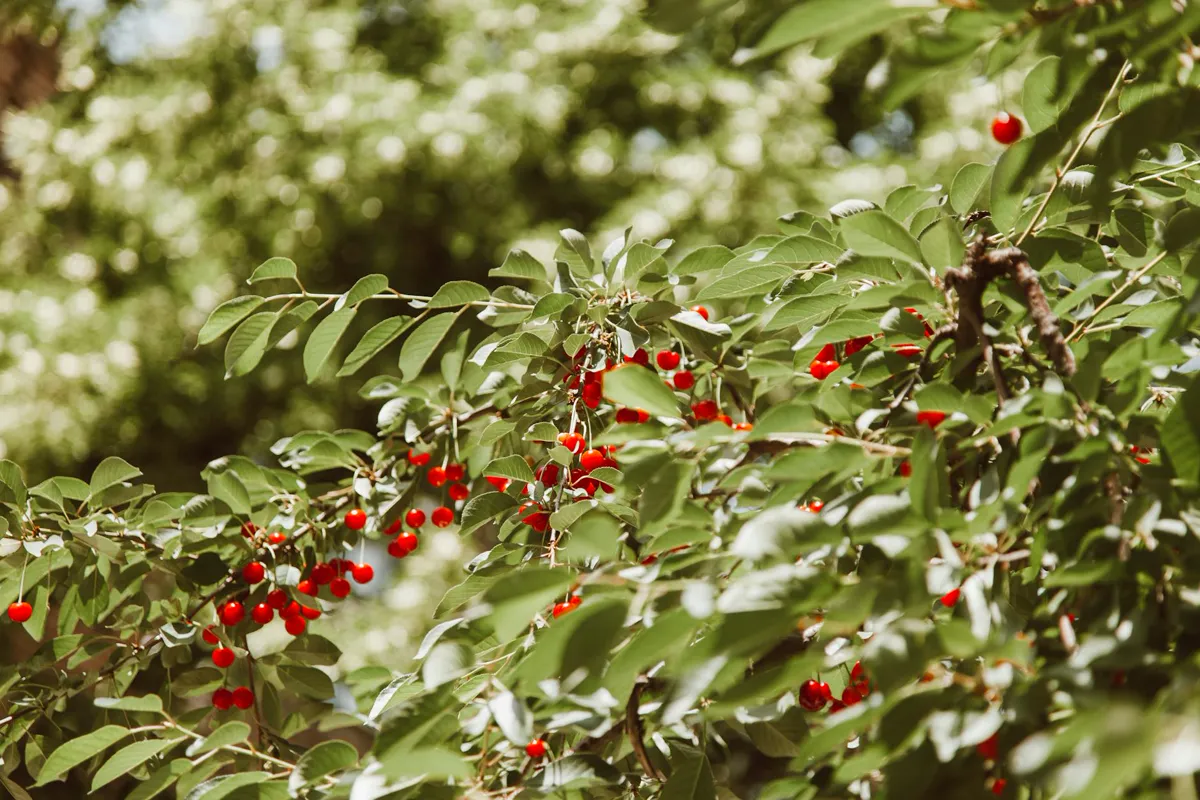
| Feature | Detail |
|---|---|
| Botanical name | Prunus avium (sweet), Prunus cerasus (sour) |
| Plant type | Deciduous temperate fruit tree |
| Sun | Full sun (6–8 hours) |
| Soil | Deep, well-drained loam, pH 6–6.5 |
| Pollination | Sweet usually needs a partner; sour self-fertile |
| Climate | Needs winter chill; cool-temperate |
| Main pest | Birds (netting essential) |
| First fruit | Tart 3–5 years; sweet 5–7 |
| Chill requirement | Most sweet types 800–1,200 hours below 7 °C; low-chill cultivars from ~300 hours |
| Hardiness | Sweet USDA 5–7 (some to 4); sour 4–6; bush cherries to zone 2 |
| Spacing | 2.5–3 m on Gisela 5 · 4–5 m on Colt · 8–12 m on Mazzard |
| Mature height | 1.8 m (bush cherry) to 12 m (seedling rootstock) |
| Typical yield | 7–14 kg dwarf · 20–30 kg semi-dwarf · 45–70 kg standard sweet cherry |
| Productive life | 15–20 years dwarf · 30–40 years sour · 40–50+ years standard sweet |
| Ripening | Early to mid summer, over roughly a 10–14 day window per variety |
Why grow a cherry tree?
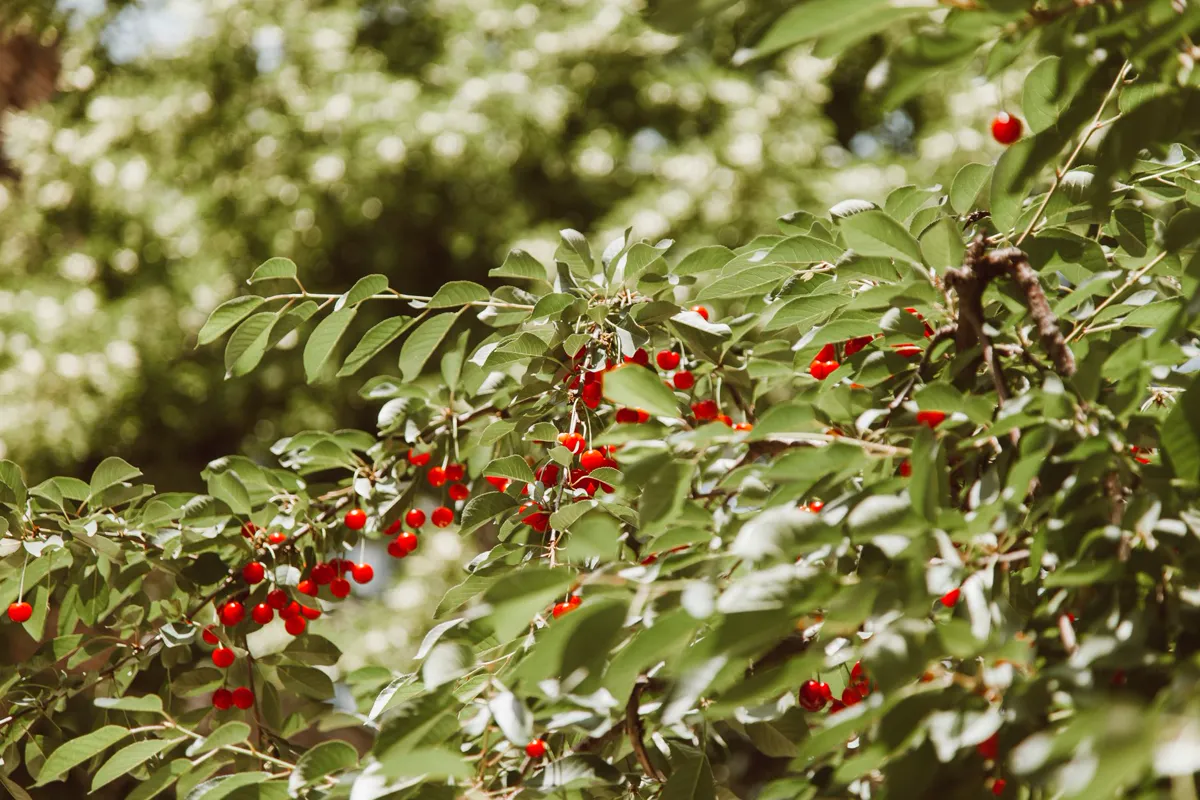
Cherries offer a spectacular spring blossom display plus delicious, premium fruit. A few reasons to grow one:
- Beautiful blossom. The spring flowers are one of the loveliest garden sights.
- Premium fruit. Sweet cherries for fresh eating, sour cherries for pies and jam.
- Fits small gardens. Dwarf rootstocks make them practical for tight spaces and large pots.
- Good for bees. The early blossom is a valuable nectar source.
Which cherry should you grow?
Three quite different plants get sold as “cherry trees”, and picking the wrong one is the most common reason a garden cherry disappoints. Sweet cherries give the dessert fruit most people picture. Sour cherries are the cook’s fruit, hardier and far more forgiving. Bush cherries are dwarf shrubs bred for brutal winters and tiny spaces.
Read the table below before you read a single variety description. The choice of type decides more than the choice of variety.
| Feature | Sweet cherry (P. avium) | Sour / tart cherry (P. cerasus) | Bush cherry (dwarf sour hybrids) |
|---|---|---|---|
| Best use | Fresh eating | Pies, jam, juice, drying | Juice, jam, fresh when fully ripe |
| Pollination | Usually needs a partner | Self-fertile | Self-fertile |
| Hardiness | Zones 5–7 | Zones 4–6 | Zones 2–7 |
| Mature size | 2.5–12 m by rootstock | 3–5 m, easily kept smaller | 1.8–2.4 m, no rootstock needed |
| Years to fruit | 4–7 | 3–5 | 2–4 |
| Sun needed | Full sun essential | Copes with a half-day, even a north wall as a fan | Full sun |
| Named examples | Stella, Lapins, Sunburst, Bing, Sweetheart | Morello, Montmorency, Nabella | Carmine Jewel, Romeo, Juliet, Nanking |
The short answer. Want fruit in a bowl and have room plus a mild winter? Sweet. Want reliability, a smaller tree, a shady wall or a colder garden? Sour. Gardening in a very cold region, a balcony, or a large pot? A bush cherry such as the Romance series (Carmine Jewel, Romeo, Juliet) from the University of Saskatchewan breeding programme will out-crop a struggling sweet cherry every time, and it needs no pollination partner at all.
History, origin & how cherries spread
Cherries trace back to the region around the Black and Caspian Seas, between Europe and Asia (the sweet cherry, Prunus avium, ranges naturally across most of Europe, western Asia and parts of North Africa, and a cultivated cherry was carried to Rome from north-eastern Anatolia in 72 BCE). They have been gathered and grown since ancient times. The Greeks and Romans cultivated and spread them widely.
The Romans are credited with carrying cherries across Europe, including to Britain. Later, settlers took them to the Americas. Many regional varieties developed over the centuries.
Today cherries are grown across the US, UK, Europe and Turkey, the top producer: Turkey alone grew 725,000 of the 2.6 million tonnes of sweet cherries harvested worldwide in 2020, ahead of the United States and Chile, while Russia leads the separate 1.5 million tonne sour-cherry crop (FAO-sourced production tables). They need a cold winter to fruit, so they thrive in cool-temperate regions. Sweet cherries suit roughly USDA zones 5–7, and sour cherries are a little hardier. They suit most of the US and UK but not hot tropical lowlands.
Chill hours & climate — the real limit
Chill hours are the number of winter hours a tree spends between roughly 0 °C and 7 °C. A cherry counts those hours before it will break dormancy evenly in spring. Miss the target and the tree does not die — it simply flowers thinly, over a long straggly period, and sets almost nothing.
This single number explains most failed cherry trees in warm gardens, and most nursery catalogues bury it in the small print. Check it before you buy, because no amount of feeding, watering or pruning can substitute for winter cold.
| Chill band | Hours below 7 °C | Cultivar examples | Where it works |
|---|---|---|---|
| Very low chill | ~300 | Royal Lee, Minnie Royal (must be grown as a pair) | Warm-temperate and subtropical margins, mild coastal gardens |
| Low chill | 500–700 | Black Tartarian, Lapins in mild winters | Zone 8 gardens, southern US, Mediterranean climates |
| Moderate chill | 800–1,000 | Stella, Sunburst, Sweetheart, Montmorency | Most of the UK, northern Europe, US zones 5–7 |
| High chill | 1,100–1,500 | Bing, Rainier, many traditional European varieties, most Indian hill orchards | Cold-winter continental regions, Himalayan hill stations |
Two practical points that follow from this. First, a mild winter followed by a warm spring is worse than a hard winter, because the chill is never satisfied. Second, in a marginal climate, plant on the coolest side of the garden rather than the sunniest wall — a north or east aspect delays flowering and often saves the crop from frost as well.
Cherry rootstocks & tree size
Every grafted cherry is two plants. The variety on top decides flavour and season. The rootstock underneath decides height, spacing, how soon it fruits, and whether you will ever be able to net or pick it. Nurseries often print the variety in large letters and the rootstock in tiny ones — read the tiny ones.
| Rootstock | Mature size | Spacing | Staking | Best for |
|---|---|---|---|---|
| Gisela 3 | ~2–2.5 m (very dwarfing) | 2–2.5 m | Permanent support | Pots, tiny gardens, high-density rows |
| Gisela 5 | 2.5–3 m | 2.5–3 m | Permanent support; fertile soil essential | The standard garden choice — fruits in year 3–4 |
| Gisela 6 / Gisela 12 | 3.5–4.5 m | 3.5–4 m | First 3–4 years | Weaker soils where Gisela 5 would stall |
| Krymsk 5 / 6 | 3–4 m | 3–4 m | Early years | Cold winters and heavier, wetter soils |
| Colt | 4–5 m | 4.5–5 m | First 2–3 years | Semi-vigorous garden trees and trained fans |
| Mahaleb | 5–7 m | 5–6 m | Early years | Dry, chalky, well-drained soils; sour cherries |
| Mazzard / F12-1 (seedling) | 8–12 m | 8–12 m | None once established | Orchards and specimen trees only — unnettable |
The trap nobody warns you about. A dwarfing rootstock only dwarfs while the graft union stays above the soil. Bury that swollen joint — by planting too deep, by heaping mulch against the trunk, or by topping up a pot — and the variety roots directly into the ground. It then ignores the rootstock entirely and grows into a full-sized tree. Keep the union 5–8 cm clear of the surface for the life of the tree, and check it again every couple of years.
Best season & when to plant
Plant cherry trees while dormant, in early spring or late autumn, in a sunny site with good air circulation. They blossom in spring and the fruit ripens in early-to-mid summer. Tart (sour) cherries fruit in about 3–5 years; sweet cherries take 5–7 years to bear well.
Bare-root trees are the better buy where the season allows. They are lifted dormant, sold from late autumn until early spring, cost roughly half what a potted tree costs, and root away faster because nothing circles in a pot. Container-grown trees can go in whenever the soil is workable, which is useful if you missed the dormant window.
- Late autumn (best): soil is still warm, roots settle before winter, and spring growth starts from an established tree.
- Late winter to early spring: the next best slot, especially on cold or heavy soils where winter waterlogging is a risk.
- Avoid: frozen ground, waterlogged ground, and midsummer planting of bare-root stock.
If a bare-root tree arrives and the weather turns, heel it into a spare patch of soil or a bucket of damp compost rather than letting the roots dry. A few days of exposed roots costs a year of growth.
Pollination — sweet vs sour
This matters more than any other decision after rootstock. Most sweet cherries are self-sterile and need a compatible second sweet-cherry variety nearby that flowers at the same time. Sour or tart cherries are self-fertile, so a single tree crops on its own. Modern self-fertile sweet varieties such as Stella, Lapins, Sunburst, Sweetheart and Cherokee give you the sweet fruit without the second tree.
Two rules do the work. First, the partner must flower at overlapping times — nurseries group cherries into flowering groups 1 to 5, and a partner from the same group or an adjacent one will overlap. Second, the partner must not share the same incompatibility genes. Sweet cherries carry S-alleles, and two varieties with an identical S-genotype will not fertilise each other however well they flower together.
Why “just plant two cherry trees” can still give you no cherries
This is the advice almost every guide gives, and on its own it is not safe. Two different, perfectly healthy sweet cherries can flower together for years and set nothing, because compatibility is decided by incompatibility groups, not by variety count.
Ontario’s provincial agriculture ministry states the rule in one line: “A cultivar in any incompatibility group cannot pollinate another cultivar in the same group, but can serve as a pollenizer for cultivars in any other incompatibility group.”
The example that proves it is not theoretical. Washington State University warns that Bing, Lambert and Royal Ann/Napoleon — three of the most famous cherries in the world — “are also cross-unfruitful and cannot be depended upon to provide pollen for each other.” They sit in the same group. Plant a Bing and a Lambert side by side and you have planted one cherry tree twice over.
| What you plant | Does it fruit? |
|---|---|
| One self-fertile sweet cherry | ✅ Yes, on its own |
| Two sweet cherries from different groups, flowering together | ✅ Yes |
| Two sweet cherries from the same group (e.g. Bing + Lambert) | ❌ No — however well they blossom |
| Anything + a Group 0 universal donor | ✅ Yes — this is the safe default |
| Any sour/tart cherry | ✅ Yes, self-fertile — they do not need a pollenizer at all |
The Group 0 cultivars — the ones that pollinate everything, including each other — are Hedelfingen, Seneca, Vega, Vic and Vista. If you only have room for two trees and do not want to study genotypes, make one of them a Group 0 variety.
WSU’s self-fertile list is the other easy route: Index, Lapins, Skeena, Sweetheart, White Gold, Sonata, Stella, Symphony, Sunburst and Black Gold.
One caveat worth knowing before you rely on Stella, which is usually recommended as the catch-all partner: WSU notes that “Stella has been found to not work as a pollinator for Bing in some areas.” If Bing is the tree you actually care about, pick its partner deliberately rather than defaulting to Stella.
| Flowering group | Typical timing | Example varieties | Partner from |
|---|---|---|---|
| 1 — early | First blossom to open | Early Rivers, Merchant | Groups 1–2 |
| 2 | A few days later | Merton Glory, Bigarreau Napoleon | Groups 1–3 |
| 3 — mid | Peak of cherry blossom | Stella, Sunburst, Van, Bing | Groups 2–4 |
| 4 | Late mid-season | Lapins, Sweetheart, Morello | Groups 3–5 |
| 5 — late | Last to flower | Late Duke, Nabella | Groups 4–5 |
Distance matters too. Bees will carry cherry pollen a long way, but reliable set comes from trees within about 30 metres of each other — a neighbour’s cherry three gardens away often counts, which is worth checking before you plant a second tree you do not need.
The weather detail that explains most “blossom but no fruit” years. Honey bees only fly freely once the air reaches about 13 °C, and even when they do fly, cherry pollen tubes barely grow down the style below roughly 10–11 °C. A cold, wet bloom therefore produces the cruellest result in fruit growing: full blossom, visiting bees, and almost no cherries. Nothing is wrong with your trees. Plant for a sheltered, sunny-but-not-forced site and accept that a cold spring is a thin year. Never spray insecticide on open blossom (see attracting pollinators).
How to plant and grow cherries
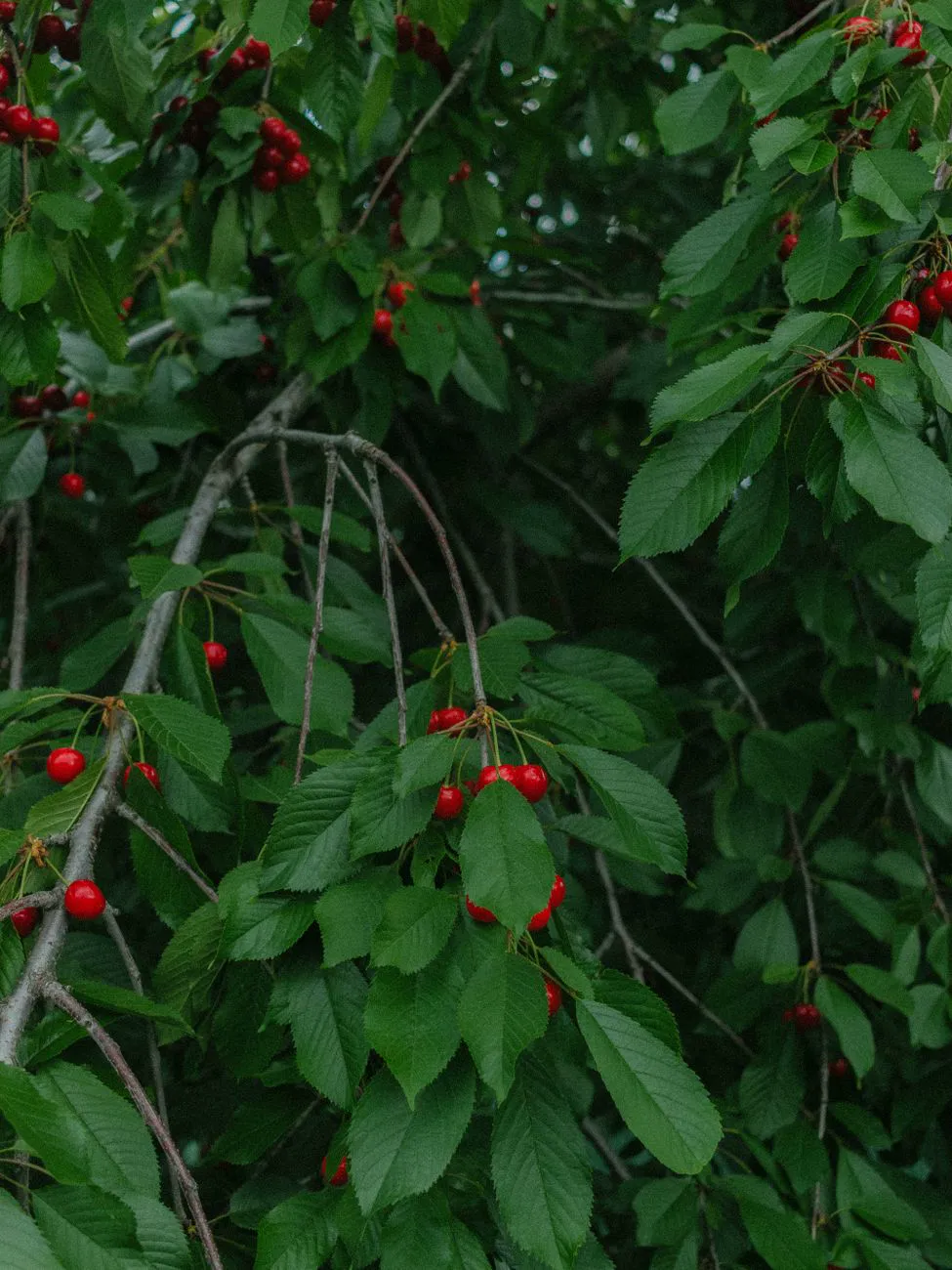
- Choose a full-sun spot (6–8 hours) with good air circulation and deep, well-drained, organic-rich loamy soil (pH 6–6.5), never waterlogged (see improving garden soil). Cherries are less tolerant of wet feet than almost any other top fruit; a fortnight of standing water can kill a young tree outright.
- Pick a rootstock to suit your space using the table above, then a variety, then the pollination partner — in that order.
- Dig a square hole two to three times the width of the root spread but no deeper than the roots. Square corners stop roots spiralling in heavy clay. Loosen the base with a fork rather than filling it with rich compost, which only encourages roots to stay in the hole.
- Set the tree at nursery depth with the graft union 5–8 cm proud of the finished soil level. Lay a cane across the hole to check. This one step protects the dwarfing effect you paid for.
- Backfill with the soil you removed, firming in layers with your heel, then water in thoroughly to settle it around the roots even in wet weather.
- Stake at 45 degrees against the prevailing wind, or use a short vertical stake tied at about one third of the trunk height. Keep the stake for two to three years on Colt and above, permanently on Gisela 3 and 5, whose brittle roots never fully anchor a cropping tree.
- Mulch a 60–90 cm circle with compost or bark, keeping a hand’s width clear of the trunk, and keep that circle grass-free for the first four years. Grass competition is the commonest cause of a young cherry sitting still.
Spacing follows the rootstock, not the variety. Crowding is the mistake that shows up five years later, when the trees shade each other, airflow drops and canker moves in.
Growing a cherry tree in a pot
A cherry does well in a container provided you accept two conditions: it must be on a dwarfing rootstock such as Gisela 3 or 5, or be a bush cherry, and it will depend on you for every drop of water. The reward is a tree you can net in two minutes and move out of a late frost.
- Pot size: start at 40–45 litres (about 10–12 gallons) and move up to 60–90 litres (15–25 gallons) as the tree matures. Anything smaller dries out faster than the tree can cope with in fruit.
- Mix: a soil-based compost such as John Innes No. 3, lightened with about a fifth grit or perlite. Peat-free multipurpose alone slumps and holds water badly by year two.
- Drainage: several large holes, pot feet, and never a saucer left full of water.
- Water: daily in fruiting weather; erratic watering during the last three weeks before harvest is the main cause of split fruit in pots.
- Feed: a balanced slow-release fertiliser in early spring plus a high-potassium liquid feed every two weeks from flowering until the fruit colours.
- Repot: every two to three years in late winter, trimming the outer roots and replacing the top third of the compost. When you top up, keep the graft union clear — burying it in a pot is even easier to do by accident than in open ground.
In hard-winter regions, move the pot against a house wall or wrap it with fleece or bubble wrap. Roots in a container sit several degrees colder than roots in the ground, and it is the roots, not the top growth, that fail first.
Watering, feeding & care
Water young trees well to establish them, and during dry spells while the fruit swells (see how often to water plants). Feed in early spring with a low-nitrogen fertiliser a few weeks before flowering, and stop feeding after midsummer so growth hardens before winter. Mulch in spring. Avoid heavy nitrogen, which gives leaves over fruit.
Aim for steady moisture rather than a cycle of drought and flood. A deep soak of 20–40 litres once a week in dry weather beats a daily sprinkle, because it wets the whole root plate instead of the top few centimetres. Established trees in open ground rarely need watering at all except in a real drought or in the fortnight before harvest.
Two timing rules save most crops:
- Keep water steady from stone-hardening to harvest. A dry spell followed by a heavy soak is what bursts the skins.
- Stop nitrogen by midsummer. Late soft growth is exactly what bacterial canker infects, and it also fails to harden before the first hard frost.
An annual mulch of well-rotted compost usually supplies everything an established cherry needs. If growth is under about 20 cm a year on a young tree, feed more; if it is over 60 cm with little fruit, feed less.
Pruning
Prune cherries in early spring as growth starts, or in summer after fruiting — never in autumn or winter. Silver leaf and bacterial canker spores are most active in cool damp weather and enter through fresh wounds, so timing is not a preference here, it is the whole defence. Cut in dry weather and leave small wounds rather than large ones.
Why the advice differs from site to site. Search this question and you will find flat contradictions — some sources say never prune in winter, others say prune while dormant in late winter. Both are right, for different climates, and the reason is in one word.
The RHS explains that silver leaf spores are “released mainly in the autumn and winter months under damp conditions”, and therefore advises: “Ideally carry out routine pruning of susceptible plants in summer. Not only are there fewer spores at this season but pruning wounds, the main point of entry for the spores, heal more quickly.”
The load-bearing word is damp. So the rule that actually travels is not about the calendar:
- Wet winters — Britain, the Pacific Northwest, Kashmir — the spore load is high all winter. Prune in summer, after fruiting. This is the case for most readers.
- Cold, dry continental winters — the interior US Midwest and similar — carry far less spore pressure, which is why extension services there can safely recommend dormant pruning.
If you are unsure which you have, ask whether your winters are wet. If they are, prune in summer and you cannot go wrong.
Where the fruit comes from decides how hard you cut. Sweet cherries fruit mostly on short spurs on two-year-old and older wood, so they need light thinning, not renewal. Sour cherries fruit largely on last year’s shoots, so they need a proportion of old wood removed each year to force fresh growth. Prune a Morello like a sweet cherry and it slowly stops cropping.
Formative years (1–4)
- Year 1: after planting a feathered maiden, shorten the leader and select three or four well-spaced branches around 75–90 cm from the ground. Remove anything below that height.
- Year 2: shorten each chosen branch by about a third to an outward-facing bud, building the open-centre goblet.
- Year 3–4: keep the centre open, remove crossing and inward shoots, and stop shortening once the framework is the size you want.
Established trees
Take out dead, diseased, damaged and crossing wood first — that is usually enough. Then thin congested growth so light reaches the fruiting spurs and air moves through the canopy. Keep the tree to a height you can net and pick from a standing position; a cherry you cannot reach is a cherry the birds get.
Fan training against a wall
A fan is the classic answer for a sour cherry, and a sunny wall fan works well for sweet types. Build two arms from the young tree, tie in ribs 10–15 cm apart on wires, and after fruiting cut back the shoots that carried fruit to a replacement shoot near the base. Sour cherries fan beautifully on a cool north or east wall, where a sweet cherry would sulk.
Spring frost & blossom protection
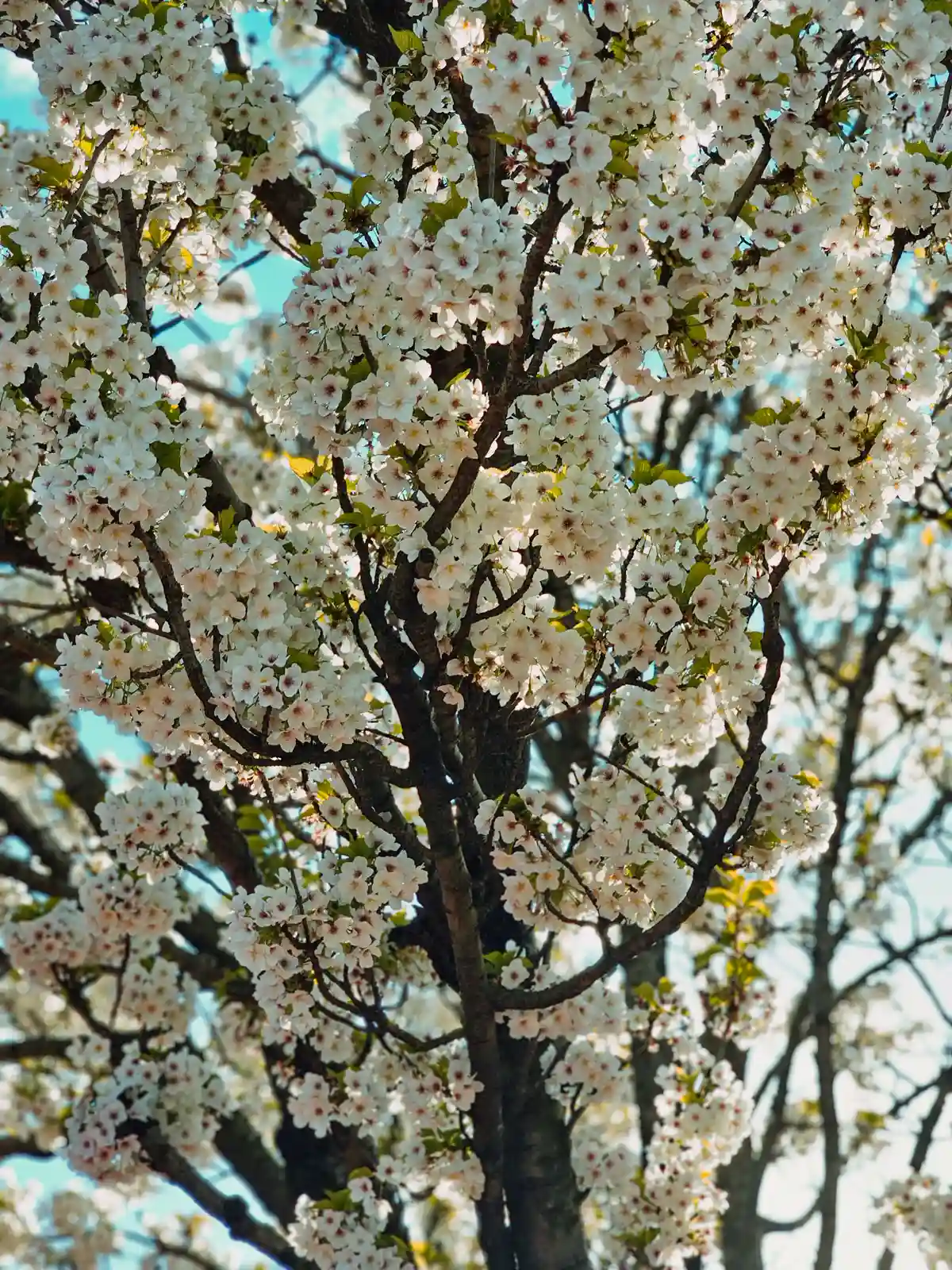
Cherries flower early, which puts the blossom in the path of late frosts. What makes cherries different from apples is arithmetic, not fragility: a cherry needs well over half its flower buds to survive to carry a full crop, while apples, pears and peaches can produce a full crop from only about a tenth of theirs. The same frost that a neighbour’s apple shrugs off can therefore erase a cherry crop entirely.
Critical temperatures fall sharply as buds swell. The figures below, from Michigan State University Extension’s work on critical spring temperatures for tree fruit, are the temperatures at which roughly one in ten and nine in ten buds are killed.
| Bud stage | Sweet cherry — 10% kill | Sweet cherry — 90% kill | Tart cherry — 10% kill |
|---|---|---|---|
| First swelling | −9 °C (15 °F) | −17 °C (2 °F) | −8 °C (17 °F) |
| Side green / green tip | −6 °C (22 °F) | −12 °C (10 °F) | −6 °C (23 °F) |
| Tight cluster | −4 °C (25 °F) | −7 °C (20 °F) | −4 °C (25 °F) |
| First white / open cluster | −3 °C (27 °F) | −4 °C (25 °F) | −3 °C (28 °F) |
| Full bloom | −2 °C (28 °F) | −4 °C (25 °F) | −2 °C (28 °F) |
| Post bloom / small fruit | −2 °C (28 °F) | −3 °C (27 °F) | −2 °C (28 °F) |
What actually helps in a garden. Site choice comes first: avoid frost pockets at the bottom of a slope, and plant on a cooler north or east aspect so bloom is delayed past the worst nights. On the night itself, throw horticultural fleece over a small or fan-trained tree before dusk and take it off in the morning so pollinators can work. Watering the soil the afternoon before a still, clear frost helps a little, because moist soil releases stored heat overnight. Do not wrap the blossom in plastic sheeting touching the flowers — where it touches, it freezes.
Protecting cherries from birds
Birds are the single biggest threat to a cherry crop. They can strip a ripening tree overnight. So protection is essential if you want to eat any yourself.
The most reliable method is netting — but how you net it decides whether it works at all.
Do not drape the net over the canopy. That is the standard mistake. Michigan State University’s trials are specific: netting “should be on a frame so it does not lie on the fruit and be anchored to the ground. Otherwise birds can still access the fruit.” A net resting on the branches lets birds peck straight through it, and one lying loose on the ground lets them simply walk in underneath.
Timing: MSU netted their trial rows after pollination and two to three weeks before harvest — early enough to be in place before the fruit is worth stealing, late enough not to shut pollinators out of the blossom.
Two things worth adding. A framed, anchored net also reduced spotted wing drosophila in the same trials, so it earns its keep twice. And loose draped netting is a genuine hazard to birds, which become entangled in it — a frame is kinder as well as more effective.
For this reason, a small or dwarf tree is much easier to protect. You can net it completely with little effort. A huge standard tree is almost impossible to cover.
Common pests & diseases
The biggest competitor is birds, which strip ripening fruit fast — netting is essential. After that, cherries have a short list of real problems, and almost all of them are managed by pruning at the right time, keeping the canopy open, and clearing fallen fruit. Use the methods in our organic pest control guide alongside the notes below.
Spotted wing drosophila
This vinegar fly is the pest that changed cherry growing in the last fifteen years, and it is not the same insect as the old cherry fruit fly. Unlike other fruit flies, the female has a serrated ovipositor that saws into sound, ripening fruit rather than damaged fruit, so perfect-looking cherries turn out to be full of small white maggots. University of California’s integrated pest management programme sets out the home-garden approach.
- Exclusion netting must be fine. Bird netting is useless here — you need mesh of about 0.98 mm or finer, fitted before the fruit starts to colour and sealed at the bottom.
- Harvest every two to three days once ripening starts. Fruit left hanging is an egg-laying site.
- Sanitation is the backbone. Collect and destroy every dropped, split or overripe cherry — bag and bin it, or drown it. Compost heaps simply breed the next generation.
- Monitor with traps. Apple cider vinegar with a drop of unscented washing-up liquid in a lidded cup tells you when the flies arrive.
Cherry fruit fly
The older pest lays into fruit as it begins to colour and produces one generation a year. The same sanitation and prompt picking control it, and yellow sticky traps hung in the canopy from late spring show when adults are active.
Aphids and ants
Blackfly curl the tips of new shoots in late spring, and ants farm them for honeydew. Squash colonies early, encourage ladybirds and hoverflies, and put a band of tree grease around the trunk in late winter to break the ants’ supply line (see aphid control).
Bacterial canker
Sunken, dead patches of bark, amber gum, and whole branches dying back. This is the most serious cherry disease in wet climates. Cut affected wood well back into clean tissue in summer, sterilise the saw between cuts, never prune in autumn or winter, and avoid leaving stubs. Trees on well-drained soil with steady moisture resist it far better.
Silver leaf
A fungus entering fresh wounds in damp weather, turning leaves silvery on affected branches. Prune only in dry weather from spring to late summer and remove infected wood at least 15 cm beyond any brown staining in the cut surface.
Cherry leaf spot
Small purple spots that turn yellow and drop the leaf, worst on sour cherries in wet summers. It is judged on the leaves but paid for in the fruit: a tree defoliated before harvest ripens pale, low-sugar cherries, and one defoliated after harvest goes into winter with no stored reserves, which shows up as dieback and a poor crop the following year. Rake and destroy fallen leaves, thin the canopy for airflow, and avoid overhead watering.
Brown rot
Fruit turning brown with buff pustules, then shrivelling into hard mummies that hang on the tree. Every mummy left in place is next year’s infection — pick them all off in winter, and remove damaged fruit promptly during the season.
Why cherries crack & how to stop it
Cracking is not a disease, a deficiency, or a feeding mistake. It is physics. In the last two weeks before harvest, the sugar concentration inside the fruit is high, so water moves in by osmosis — through the roots after rain, and directly through the skin of a wet cherry. The flesh swells faster than the skin can stretch, and the skin splits.
That explains why cracking follows rain on ripe fruit almost regardless of how you have grown the tree, and why it can hit a single variety hard while another beside it is untouched.
- Choose crack-tolerant varieties if your summers are wet — Regina, Sweetheart, Skeena and Lapins are among the better sweet types.
- Keep soil moisture even through ripening. The swing from dry to soaked is what does the damage, so mulch and water steadily rather than heavily.
- Cover the tree. A rain cover, cloche frame or clear canopy over a dwarf or fan-trained cherry for the final fortnight is the only method that reliably works.
- Dry the fruit. On a small tree, gently shaking the branches after rain removes surface water and measurably reduces splitting.
- Pick early. If heavy rain is forecast on a nearly ripe crop, harvest it. A slightly under-ripe cherry beats a split one.
- Be honest about calcium sprays. They are widely sold for cracking; trial results are mixed at best, and they are no substitute for a cover.
What actually reduces cracking, in order of effect
Most guides stop at “it rains, cherries crack”. These are the measures that work, strongest first.
- Keep the rain off. A cover, tunnel or even a tarpaulin rigged over a small tree for the final fortnight is the only method that removes the cause rather than managing it.
- Dry the fruit after a shower. This sounds odd until you see how commercial orchards do it — WSU notes that losses “can be reduced by drying cherries with airblast sprayer fans or helicopter rotor wash shortly after a rain event”. In a garden, a leaf blower on low over a small tree does the same job.
- Calcium chloride spray. Worth stating clearly because you will read that it does not work: it does. WSU reports that 0.5–1.0% CaCl₂ “has proven effective at reducing splitting with proper application and timing”. It works by lowering the osmotic potential of the water sitting on the skin, so less of it is drawn in.
- Pick early and pick fast. If heavy rain is forecast on ripe fruit, harvest ahead of it. Slightly under-ripe cherries are a far better outcome than split ones.
Variety matters too, and it is the decision you make once: some cultivars are markedly more crack-resistant than others, so in a wet-summer region that is worth more than any spray.
Harvesting
Cherries are ready when they are fully coloured (deep red to near-black for sweet types, bright red for sour), plump, and sweet or richly tart. Taste-test, as they do not ripen after picking. Colour alone misleads — most sweet varieties gain a large part of their sugar in the last few days after they look ripe, which is why supermarket cherries so often disappoint and homegrown ones do not.
Commercial growers pick sweet cherries at roughly 15–17% soluble solids, measured with a refractometer. In the garden the equivalent test is your tongue: leave the fruit two or three days past the point where it first looks ready, then taste again.
- Pick in the cool of the morning, when the fruit is at its firmest and field heat is lowest.
- Lift the stalk upward off the spur rather than pulling the fruit — cherries keep far better with the stem attached, and tearing the spur costs you next year’s fruit at that point.
- Pick dry. Wet fruit splits and rots; wait a few hours after rain if you can.
- Cool fast. Sweet cherries lose quality quickly at room temperature. Chill them within an hour or two and store at around 0 °C with high humidity — a covered box in the coldest part of the fridge is the domestic version, giving one to two weeks.
- Do not wash until you eat them. Surface moisture in storage is what starts rot.
Sour cherries are picked a little differently: for cooking and juice, many growers pull the fruit and leave the stem on the tree, since the stalk is not needed and the fruit is processed the same day. Both types freeze excellently, stoned and open-frozen on a tray.
Yield & timeline
Expectations cause more disappointment than pests do. A cherry is not a courgette; the tree spends its first years building a frame. Here is what a healthy, well-sited tree realistically does.
| Type / rootstock | First fruit | Full cropping | Mature yield per year | Productive life |
|---|---|---|---|---|
| Bush cherry (Carmine Jewel, Romeo) | Year 2–3 | Year 4–5 | 9–14 kg (20–30 lb) | 20–25 years |
| Sweet on Gisela 5 (dwarf) | Year 3–4 | Year 6 | 7–14 kg (15–30 lb) | 15–20 years |
| Sweet on Colt (semi-vigorous) | Year 4–5 | Year 7–8 | 20–30 kg (45–65 lb) | 30–40 years |
| Sweet on Mazzard (standard) | Year 5–7 | Year 10+ | 45–70 kg (100–150 lb) | 40–50+ years |
| Sour (Morello, Montmorency) | Year 3–4 | Year 6 | 14–23 kg (30–50 lb) | 25–35 years |
The whole crop of one variety ripens over roughly ten days to a fortnight, so two varieties with different seasons stretch picking to about a month. That, rather than raw tonnage, is usually the better goal in a garden.
Health benefits & uses
Cherries are rich in vitamin C, fibre, potassium, and antioxidants (anthocyanins), and tart cherries have a popular reputation for sleep and recovery, though that is an area still being studied rather than settled. Sweet cherries are eaten fresh; sour cherries shine in pies, jams, sauces and drinks. Both freeze well. The blossom is excellent for bees (see attracting pollinators). It is a beautiful and healthy fruit tree.
This article is for general information only and is not medical advice. Talk to a qualified professional before using any plant medicinally.
A number worth correcting: chill hours are not metres
If you search for cherry growing requirements in India you will repeatedly meet the claim that cherries need “2,000 to 2,700 chilling hours”. That figure is wrong, and it is wrong in a traceable way.
2,000–2,700 is the altitude band in metres at which cherries are grown in the Indian Himalaya. Somewhere along the way it was copied into the chill-hours field, and it has been repeated ever since. The actual requirement quoted by Indian horticulture sources is roughly 1,200–1,500 hours below 7.2 °C — well under half the mistaken figure.
Both numbers matter, but they answer different questions:
| Figure | What it actually is |
|---|---|
| 1,200–1,500 | Chill hours below 7.2 °C the tree needs over winter |
| 2,000–2,700 | Metres above sea level — the altitude band where that chill reliably occurs in India |
The practical answer is the same either way, and it is worth stating plainly: cherries are not a plains crop in India. Delhi, Punjab’s plains, Mumbai and Bangalore cannot supply the winter chill at any altitude available to them, and no variety on sale changes that. Cherry growing in India means the hills — and mostly Kashmir, which produces the overwhelming majority of the national crop.
Growing cherries in India & warm climates
Cherries are one of the few temperate fruits where the honest answer for most of India is no. The chill requirement of 1,000–1,500 hours below 7 °C simply does not exist on the plains, and no amount of care substitutes for it. Where the winter cold is there, though, cherries do very well.
Where cherries actually grow in India. Commercial and garden cherries are concentrated in Jammu and Kashmir, Himachal Pradesh and Uttarakhand, at altitudes of roughly 1,800–2,700 m. In Himachal the Narkanda, Kotgarh and Kinnaur belts are the classic cherry areas; Kashmir’s orchards around Srinagar supply most of the country’s fresh cherries, arriving in markets from late May through June. Small plantings also succeed in parts of the Nilgiris and in Sikkim and Arunachal at similar elevations.
- Planting: December to February, while the trees are dormant and before bud swell.
- Spacing: around 6 × 6 m on vigorous rootstock in hill orchards; 3 × 3 m for Gisela-type dwarfing stock in a garden.
- Yield: a mature hill orchard tree gives roughly 20–25 kg a year.
- Main risks: spring hail and rain at ripening — cracking, not pests, is the usual cause of crop loss in Himachal and Kashmir.
- Varieties: Bing, Black Republican, Napoleon (Bigarreau), Stella, Lambert and Van are widely grown; Stella is the useful self-fertile choice for a single garden tree.
If you garden below about 1,500 m, the realistic options are a low-chill pair such as Royal Lee and Minnie Royal at roughly 300 chill hours — and even those need a genuinely cool winter, not merely a mild one. Elsewhere in the plains, the better use of the same space is a fruit that suits the climate: guava, custard apple, jamun, pomegranate or falsa. Growing the right tree well beats nursing the wrong one for a decade. The same logic applies in the warm southern US, coastal Australia and much of the Mediterranean lowlands.
Common cherry problems
Blossom but no fruit
Pollination — most sweet cherries need a compatible partner. Plant one, or choose a self-fertile variety.
Birds eating the crop
Inevitable without protection. Net the tree as the fruit colours up.
Dieback or silvery leaves
Silver leaf or canker, often from autumn or wet pruning. Prune only in spring or summer, in dry weather, and remove affected wood well back into clean tissue.
Split fruit after rain
Water entering the ripe fruit faster than the skin can stretch. Keep soil moisture even, cover a small tree for the last fortnight, and pick early if heavy rain is forecast.
A dwarf tree that will not stay dwarf
Almost always a buried graft union — from deep planting, piled mulch or topped-up compost in a pot. Scrape the soil back until the swollen joint sits 5–8 cm clear.
Lots of leafy growth, little fruit
Too much nitrogen, or too much winter pruning. Feed less, stop all feeding by midsummer, and thin rather than shorten branches.
Related plant guides
- How to grow Apple
- How to grow Plum
- How to grow Pear
- How to grow Apricot
- How to grow Peach
- How to grow Nectarine
Frequently asked questions
Do I need two cherry trees?
For most sweet cherries, yes (or a self-fertile variety like ‘Stella’); sour or tart cherries are self-fertile and crop alone.
When should I prune a cherry tree?
In late winter or summer after fruiting — never in autumn — to avoid silver leaf and canker.
How do I stop birds eating my cherries?
Net the tree as the fruit ripens; birds will otherwise strip it very quickly.
How long until a cherry tree fruits?
Tart cherries in about 3–5 years; sweet cherries in 5–7.
Can I grow a cherry tree in a pot?
Yes, a tree on a dwarfing rootstock in a large container. It is also easier to net against birds.
What is the difference between sweet and sour cherries?
Sweet cherries are eaten fresh and usually need a pollination partner. Sour or tart cherries are sharper, best cooked, and self-fertile. Sour types are also a little hardier.
Why is my cherry tree not fruiting?
Often a pollination issue with sweet types, or the tree is still young. Plant a compatible partner or a self-fertile variety, and be patient.
Do cherries ripen after picking?
No. Unlike some fruit, cherries do not sweeten once picked. So taste-test and harvest them only when fully ripe. Pick them with the stalk on to keep them fresh.
Can cherries grow in hot climates?
They need winter chill to fruit, so hot lowlands do not suit them. In warm regions they only succeed in cool hill stations where winters are cold enough.
How far from a house should you plant a cherry tree?
Keep a full-sized cherry on vigorous rootstock at least 8-10 metres from buildings and drains, since the roots are shallow and wide-spreading. A tree on Gisela 5 or another dwarfing rootstock is safe at 3-4 metres, which is one more reason gardens are better served by dwarf stock. Also think about the canopy: cherries cast dense shade, and birds feeding in them are messy above a patio or parked car.
When is the best time to plant a cherry tree?
Bare-root trees go in during dormancy, from late autumn to early spring, and they establish faster and cost far less than potted ones. Container-grown trees can be planted almost any time the ground is workable, though autumn and spring still give the easiest establishment. Avoid planting into frozen or waterlogged soil, and stake the tree for the first two or three years while the roots anchor.
How do you train a young cherry tree?
Most garden cherries are grown as an open-centre bush or, against a wall, as a fan. For a bush, cut the young tree back to encourage three or four well-spaced main branches, then keep the middle open so light and air reach the fruit. Fan training suits sour cherries especially well on a shaded wall. Whatever the form, do all formative pruning in spring or summer, never in the dormant season.
Why does my cherry tree leak sap or gum?
Amber gum oozing from the bark is gummosis, the tree’s response to injury, stress, or infection. Small amounts near an old pruning wound are usually nothing to worry about. Extensive gumming with sunken, dead bark and dieback of whole branches points to bacterial canker, which is serious — cut affected wood well back into healthy tissue in summer, disinfect tools between cuts, and never prune cherries in autumn or winter when canker spores are most active.
How long does a cherry tree live?
Sweet cherries on vigorous rootstock commonly live 40-50 years and occasionally far longer, while sour cherries are shorter-lived at around 20-30 years. Trees on dwarfing rootstocks trade longevity for early cropping and convenience, often declining after 15-20 productive years. Good drainage, correct-season pruning, and canker prevention do more for lifespan than anything else.
What is the difference between a fruiting cherry and an ornamental cherry?
Ornamental flowering cherries such as the Japanese sakura varieties are bred for spring blossom and produce either no fruit or tiny, bitter ones. Fruiting cherries are selected for crop quality and have simpler, single flowers. Both are Prunus and share many pests, so if you want fruit rather than only blossom, buy a named fruiting variety on a stated rootstock — the label matters more than the flower photograph.
Can you grow a cherry tree from a stone?
You can, and it is a satisfying project, but the resulting tree will not match the fruit you ate and may take seven to ten years to crop, if it ever does well. The stone also needs several weeks of cold stratification to germinate, mimicking winter. Seed-grown trees are useful as rootstock or as ornamentals; anyone wanting reliable fruit within a few years should buy a grafted tree.
One thing to know while you are handling stones: on a cherry tree every part except the ripe fruit is slightly toxic, because it carries cyanogenic glycosides (plant description). The flesh is entirely safe — this is not a reason to stop eating cherries — but do not let children crack and chew the kernels, and keep prunings away from grazing animals, since wilted foliage is the form that most often causes trouble.
Why are my cherries splitting on the tree?
Splitting happens when heavy rain falls close to harvest and the ripening fruit absorbs water faster through its skin than the skin can stretch. It has little to do with feeding or disease. A rain cover or temporary canopy over the tree during the final ripening fortnight is the only reliable prevention, along with keeping soil moisture steady rather than swinging between dry spells and downpours.
Which cherry varieties are self-fertile?
Stella was the original breakthrough, and Lapins, Sunburst, Sweetheart, and Cherokee followed, all setting fruit without a partner tree. All sour cherries, including Morello and Montmorency, are naturally self-fertile too. Even self-fertile varieties usually crop more heavily when another compatible cherry flowers nearby, so a second tree is a bonus rather than a requirement.
What is eating my cherries from the inside?
Small white maggots inside otherwise perfect fruit mean cherry fruit fly or spotted wing drosophila, both of which lay eggs into ripening cherries. Sanitation is the backbone of control: pick up and destroy every fallen, split, or overripe fruit rather than leaving it under the tree. Yellow sticky traps help you track when the flies arrive, and harvesting promptly at full ripeness gives the maggots less time to develop.
What rootstock should I choose for a cherry tree?
Rootstock decides the eventual size far more than the variety does. Gisela 5 keeps a tree to around 2.5-3 metres and fruits early, making it the usual choice for gardens and containers, while Colt gives a semi-vigorous tree of 4-5 metres. Traditional seedling or Mazzard rootstocks produce full-sized trees over 8 metres, which are magnificent but almost impossible to net or pick.
How do you net a cherry tree against birds?
Drape the netting over a frame rather than directly on the branches, so birds cannot perch and peck through it, and secure it right down to the ground or trunk. Put it on as the fruit begins to colour, not before, and check daily that nothing has become tangled. This is also the strongest practical argument for growing cherries on dwarfing rootstock — a 3-metre tree can be netted, an 8-metre one cannot.
Why are my cherry tree leaves developing holes?
Small holes with reddish-brown edges usually mean bacterial shot hole, common in wet springs and rarely serious on an otherwise healthy tree. Improve airflow with careful pruning, avoid overhead watering, and clear fallen leaves in autumn. If instead you see gumming on the bark and dieback of whole shoots, suspect bacterial canker, which is more serious and is one reason cherries must never be pruned in autumn or winter.
How many chill hours does a cherry tree need?
Most sweet cherries need roughly 800 to 1,200 hours between 0 °C and 7 °C, and some traditional varieties such as Bing want 1,100 or more. Sour cherries sit in a similar band. Low-chill cultivars bred for warm regions, notably Royal Lee and Minnie Royal, crop on about 300 hours, but they must be planted as a pair because each pollinates the other. If your winter does not deliver the hours, the tree flowers thinly over a long period and sets little fruit, which is the usual reason a cherry fails in a mild climate.
Why did my cherry tree blossom but set no fruit even with a pollination partner?
Cold weather during bloom is the most likely explanation. Honey bees only work freely above about 13 °C, and cherry pollen tubes barely grow down the style below roughly 10 to 11 °C, so a chilly wet flowering week gives full blossom, visiting bees and almost no cherries. Frost during bloom does the same job more brutally, since cherries need over half their buds to survive for a full crop. Neither is a fault you can fix after the event; site the tree out of frost pockets and expect a thin year after a cold spring.
What is the difference between spotted wing drosophila and cherry fruit fly?
Cherry fruit fly lays into fruit as it begins to colour and produces one generation a year, so prompt picking and sanitation control it. Spotted wing drosophila has a serrated ovipositor that cuts into sound, ripening fruit, breeds several generations in a season, and can infest a crop that looks perfect. The practical difference is the netting: bird netting stops birds but not this fly, which needs mesh around 0.98 mm fitted before the fruit colours, plus picking every two or three days and destroying every fallen cherry.
Do I need to stake a dwarf cherry tree permanently?
Yes on the dwarfing Gisela rootstocks. Gisela 3 and Gisela 5 have shallow, brittle root systems that never fully anchor a tree carrying a crop, so the support stays for life. Semi-vigorous stocks such as Colt need a stake for the first two or three years only, and a standard tree on Mazzard needs one just while it establishes. Check the tie every year and loosen it before it bites into the bark.
Can I plant a new cherry tree where an old one stood?
It is best avoided. Replant disease affects stone fruit in particular, and a young tree set into the same soil often grows poorly for no visible reason. Choose a new position at least a few metres away if you can. If you have no choice, remove as much of the old root system as possible, replace a large volume of soil, wait a season, and plant on a vigorous rootstock rather than a dwarfing one, since it copes better with the setback.
Still stuck? Ask the Plant Doctor
Describe the problem — yellow leaves, holes, no flowers — and get a clear answer in seconds. FreeAI can make mistakes. Answers are guidance, not a guarantee — check anything important against the guide it links to, and always read the label on any product before you use it.