How to Grow a Plum Tree

Plums (Prunus domestica and Prunus salicina) are deciduous stone-fruit trees grown for their sweet, juicy summer fruit — among the easiest and most generous of all backyard fruit trees. A well-grown plum can be so loaded that the branches need support. The fruit, picked sun-ripe and sweet, is a world away from shop plums, and there are types for eating, cooking and drying. With self-fertile European varieties, even one tree fruits. Here is the complete guide on how to grow a plum tree.
Quick start: Grow plums in full sun in loamy, well-drained soil rich in organic matter. European plums are mostly self-fertile (one tree fruits); Japanese plums need a pollination partner. Plant bare-root in the dormant season, roughly November to March, prune in spring or summer (never winter), water well while establishing, and thin heavy crops. Trees fruit in 3–5 years.
A plum tree can crop heavily, and a glut of sun-warmed plums is one of summer’s great pleasures. Growers learn that some varieties are self-fertile while others need a pollination partner, so it pays to check before planting just one. The crucial bit of care is to prune in spring or summer, never in autumn or winter, because cold-season cuts invite silver leaf disease. Thinning a heavy crop also matters, both to size up the fruit and to stop the laden branches snapping under the weight.
🧰 In a hurry? Jump straight to our tested picks for this guide ↓
Plum at a glance
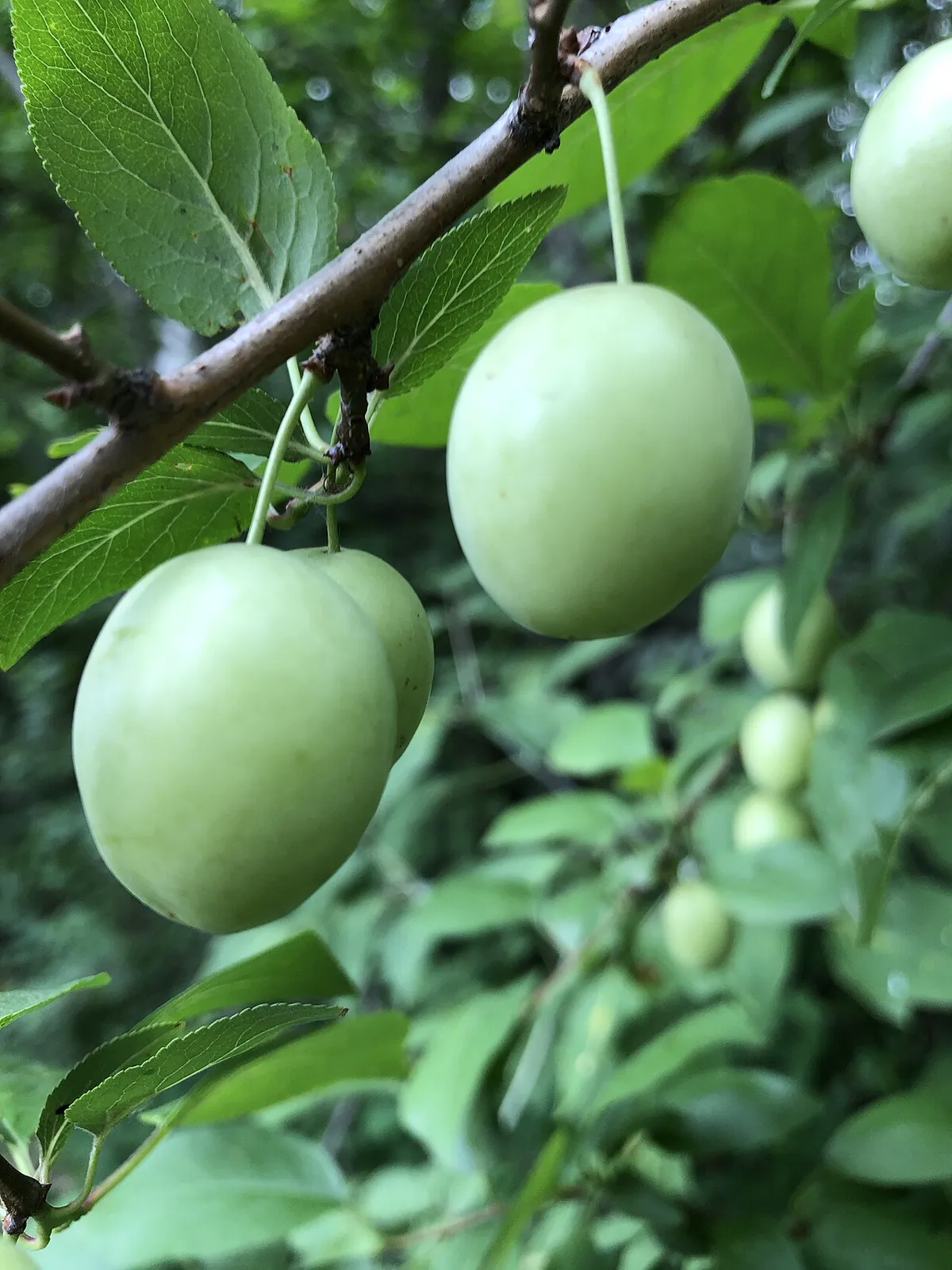
| Feature | Detail |
|---|---|
| Botanical name | Prunus domestica (European), salicina (Japanese) |
| Plant type | Deciduous stone-fruit tree |
| Chill needed | European ~400 h · Japanese 700+ h · American hybrids ~200 h |
| Spacing | Dwarf 3–4 m · semi-vigorous 4.5–5 m · standard 6–7 m |
| Prune | Summer only — never in winter (silver leaf) |
| Sun | Full sun (6+ hours) |
| Soil | Loamy, well-drained, organic-rich |
| Pollination | European mostly self-fertile; Japanese needs a partner |
| Prune | Spring or summer ONLY (never winter) |
| First fruit | 3–5 years |
| Harvest | Mid-to-late summer |
Why grow a plum tree?
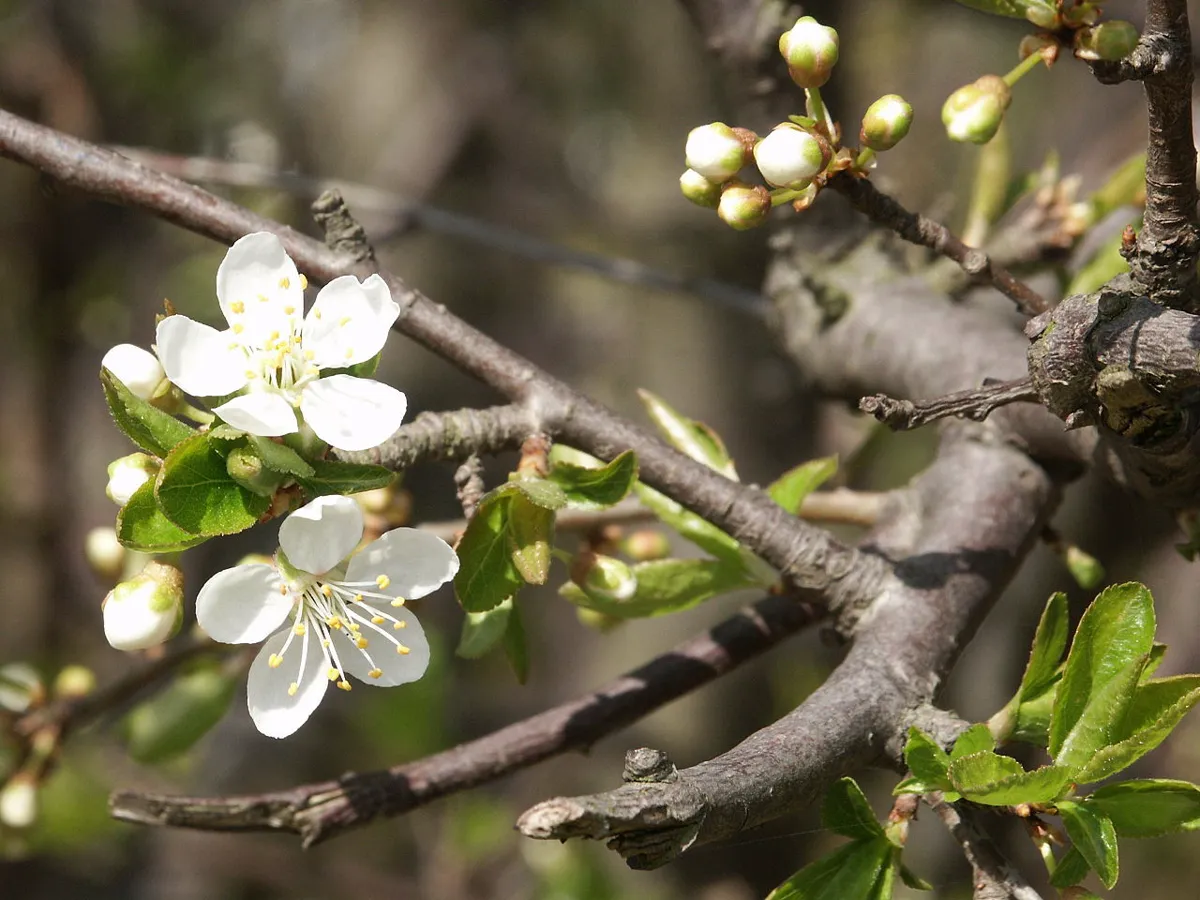
Plums are easy, fast and hugely productive. A few reasons to grow one:
- Beginner-friendly. One of the most reliable, generous fruit trees.
- Better than shop-bought. Sun-ripe fruit is sweet and juicy.
- Versatile. Types range from dessert plums to cooking and drying (prune) varieties.
- Fits small gardens. Self-fertile European types and dwarf rootstocks suit tight spaces, with lovely blossom for bees.
History, origin & how plums spread
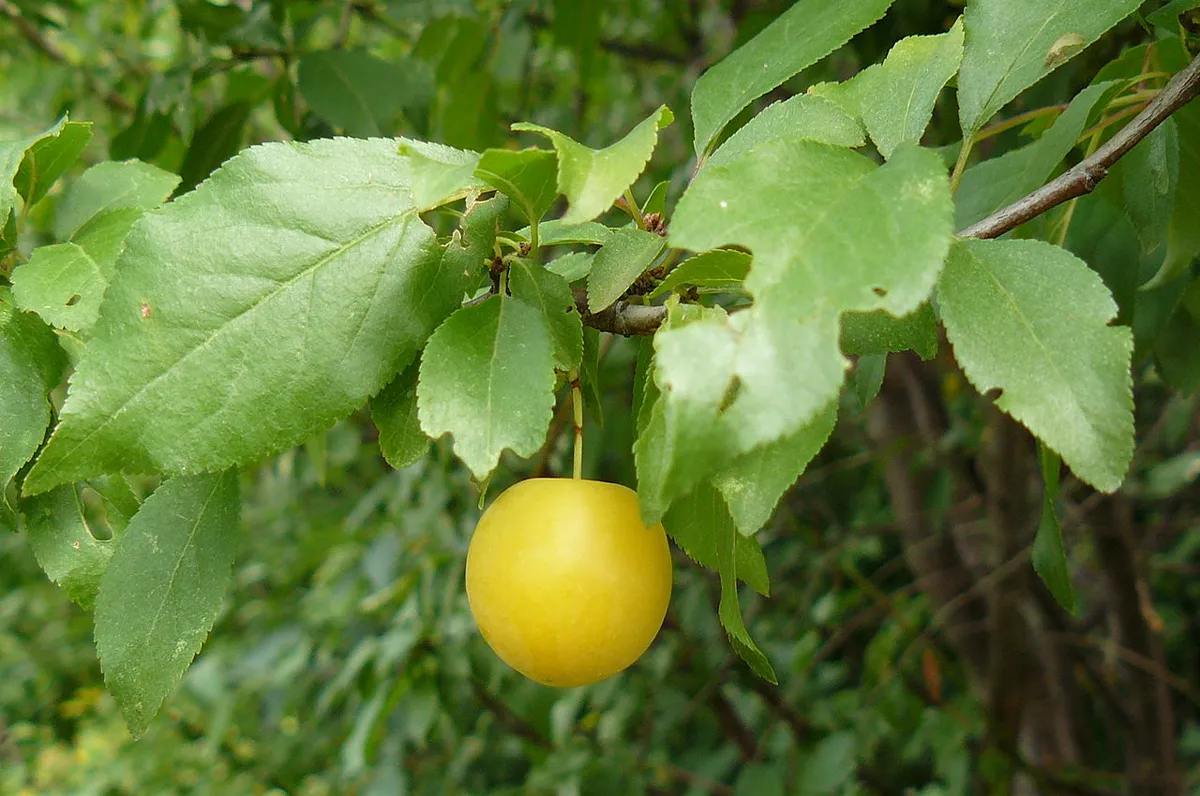
The European plum traces back to western Asia, around the Caucasus and Caspian region, while the Japanese plum originated in China (see botanical records). Plums are among the oldest cultivated fruits. The Romans grew and spread many types across Europe.
European plums became staples of cottage gardens and orchards, eaten fresh and dried into prunes. Japanese plums were later developed and spread, especially in the US. Together they gave the huge range of plums grown today.
Plums are now grown across the US, UK, Europe and China, which alone supplies more than half the world crop: of the 12.5 million tonnes of plums and sloes harvested in 2023, China grew 55%, with Romania and Chile the next largest producers (FAO-sourced production table). Hardy European plums suit cool-temperate regions, while Japanese plums prefer slightly warmer areas. They need winter chill to fruit, so they suit most of the US and UK but not hot tropics.
Best season & when to plant
Plant bare-root plums in early spring as soon as the ground is workable, or potted trees through the season. They blossom in spring, sometimes early enough to risk frost, and the fruit ripens mid-to-late summer. Trees typically begin cropping in 3–5 years and become very productive.
Pollination — European vs Japanese
This decides whether you need one tree or two. Many European plums (like ‘Victoria’) are self-fertile, so a single tree will fruit — ideal for small gardens. Japanese plums usually need a compatible second variety nearby (within about 50 feet) for cross-pollination. If you only have room for one tree, choose a self-fertile European plum.
European, Japanese or American — pick your type first
“Plum” covers three quite different groups, and almost every disagreement you will read about plum care — prune it this way, no that way; one tree is enough, no it is not — comes from people describing different groups. Settle this first and the rest of the guide falls into place.
| European (P. domestica) | Japanese (P. salicina) | American hybrids | |
|---|---|---|---|
| Fruit | Oval, firm, sweet; the prune and jam plums | Round, large, very juicy; the classic dessert plum | Small, tangy, tough-skinned |
| Chill hours | About 400 | 700 or more | Around 200 |
| Blossom | Late — usually dodges spring frost | Early — the first fruit tree to flower, and the most frost-exposed | Late, very cold-hardy |
| Pollination | Often self-fertile (Victoria, Stanley) | Nearly always needs a second variety | Needs a partner, often a wild plum |
| Trained as | Central leader / pyramid | Open centre (vase) | Open centre |
| Best for | Cool temperate gardens, UK, northern US | Warm summers, mild winters, Indian plains | Severe-winter regions |
Note the trap in that table: Japanese plums flower earliest and therefore lose blossom to frost most often. In a frost-prone garden a late-flowering European variety is the safer tree, even though the Japanese fruit is showier.
Rootstocks & how big your tree will get
The variety decides the fruit; the rootstock decides the tree. Plums have no truly dwarfing stock in the way apples do, so a plum bought without checking the rootstock can easily become a 6-metre tree.
| Rootstock | Mature size | Spacing | Use |
|---|---|---|---|
| Pixy | 3–4 m | ~4 m | The nearest thing to dwarf — small gardens, bush trees, large pots |
| VVA-1 | ~3 m | 3.5–4 m | Compact bush, good on lighter soils |
| St Julien A | 4.5–5 m | ~5 m | The standard garden choice — bushes, half-standards, fans |
| Wavit | 4–4.5 m | 4.5–5 m | Semi-vigorous, tolerant of heavier ground |
| Brompton / Myrobalan | 5–6 m+ | 6–7 m | Full-size orchard trees; too big for most gardens |
One practical warning that catches people out: plums sucker freely from the rootstock. Pull suckers off while they are green rather than cutting them, and never let a sucker grow on — it is the rootstock, not your variety, and its fruit will disappoint.
How to plant and grow plums
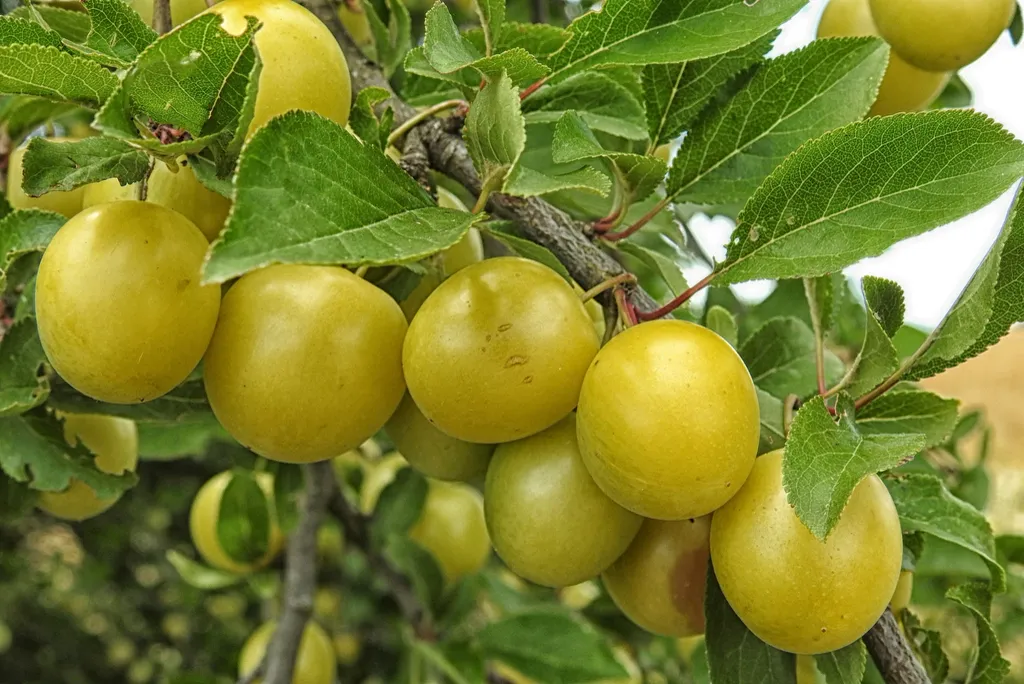
- Choose a full-sun spot (6+ hours), ideally sheltered from late frosts, in loamy, well-drained soil rich in organic matter (see improving garden soil).
- Pick a rootstock to suit your space (such as ‘Pixy’ or ‘St Julien A’ for smaller trees) and the right pollination setup.
- Plant at the correct depth with the graft union above soil, firm it in, water, and stake young trees.
Watering, feeding & thinning
Give young trees heavy weekly watering during the growing season for the first year or two to build deep roots (see how often to water plants), and water mature trees in dry spells while fruit swells. Mulch and feed lightly in spring. In heavy-crop years, thin the young fruit to about 2–3 inches apart — this gives bigger, sweeter plums and stops branches breaking.
Pruning
Crucially, prune plums only in spring or summer, never in winter. Prune young trees in early spring as the buds open, and established trees in midsummer. Build an open framework, remove dead and crossing wood, take off rootstock suckers and vertical water shoots, and support heavily-laden branches before they snap.
Why the timing rule is not optional
Two diseases enforce it. Silver leaf (Chondrostereum purpureum) releases its spores roughly from September through to May, and they enter only through fresh wounds. Bacterial canker works the same way in cool, wet conditions. Summer cuts miss the spore season and heal fastest, which is the whole argument in one sentence.
The disease is easy to identify once you know the test. Leaves take on a silvery sheen — but so do drought-stressed leaves, which is called “false silver leaf”. The real thing leaves a dark stain in the centre of the wood, visible when you cut through an affected branch. Curiously, the fungus never reaches the leaves at all: it releases a toxin that travels up in the sap and separates the leaf tissue, and the trapped air is what looks silver. If you find it, cut back to 10–15 cm beyond where the internal staining stops and burn or bin the wood — do not leave it lying around to grow bracket-shaped fruiting bodies.
Which shape, and why
- European plums: central leader or pyramid — a single upright trunk with tiers of branches, tapering upwards.
- Japanese and American plums: open centre, with three to five main scaffolds and a clear middle, since these types are naturally spreading and crop on the outside of the canopy.
- Small gardens: a fan against a warm wall works well on Pixy or St Julien A. Prune fans in early summer and again after fruiting.
Thinning — and why plum branches snap
Plums set far more fruit than the wood can carry, and a loaded branch tearing out of the trunk is the classic plum injury — it leaves a huge wound in exactly the season silver leaf is waiting for. Thin in early summer, once the tree has finished its own natural drop, to one fruit every 5–8 cm, or a pair every 15 cm along the branch. Large-fruited varieties want the wider spacing. Prop or tie heavy branches as well; a forked stake under a laden limb costs nothing and saves a tree.
Using your plum harvest
A good plum tree gives more fruit than you can eat fresh. Happily, plums are wonderfully versatile in the kitchen. So a glut is easy to enjoy.
Eat dessert plums fresh, warm from the tree. Cook firmer or tarter types into jams, pies, crumbles and sauces. Their high pectin helps jams set well.
Plums also dry and freeze beautifully. Dried, they become prunes, famous for digestion. So one heavy crop can be spread right through the year.
Choosing the right plum variety
Picking the right plum makes everything easier. The choice mainly comes down to use, climate and space. So think about all three before you buy.
For fresh eating, choose a sweet dessert plum such as ‘Victoria’, which is self-fertile and reliable. For cooking and jam, a slightly tarter culinary type holds its shape well. For drying, grow a European prune plum with firm, sugary flesh.
In a small garden, pick a self-fertile European variety on a dwarfing rootstock. Gardeners in warmer regions can try a Japanese plum, which ripens earlier and juicier. In cooler areas, stick to hardy European types, which set fruit more reliably. A short chat with a local nursery quickly narrows the field.
Plums in containers and small spaces
You do not need an orchard to grow plums. A self-fertile variety on a dwarfing rootstock grows happily in a large pot. So even a patio or terrace can give a real harvest.
Use a big, heavy container with good drainage and a loam-based compost. Water it regularly, because pots dry out fast in summer. Feed it in spring and prune it lightly in summer to keep the size in check. This suits Indian terrace gardeners and small UK courtyards alike.
Common pests & diseases
| Problem | What you see | What actually works |
|---|---|---|
| Silver leaf | Silvery leaves; dark stain inside cut wood; bracket fungi on dead wood | Summer pruning only; cut 10–15 cm past the internal staining; destroy the wood |
| Bacterial canker | Sunken bark patches, amber gum, shot-holes in leaves | Prune in summer, never autumn or winter; cut back to clean wood; keep the tree vigorous — copper sprays do not fix it |
| Black knot (mainly North America) | Hard black warty galls swelling along twigs and branches | Cut 5–10 cm below each knot before bud break, sterilise between cuts, burn or bury the prunings; remove wild plums and cherries nearby. President is resistant; Stanley and Damson are susceptible |
| Brown rot | Fruit rotting on the branch, shrivelling into “mummies” that hang on all winter | Remove every mummy from tree and ground; thin so fruit never touch; pick promptly and handle gently |
| Plum moth | Pink maggots and brown frass around the stone; fruit ripening early and dropping | Pheromone traps hung in early May (they monitor rather than control); nematodes sprayed on trunk, branches and soil in September–October, after the grubs leave the fruit |
| Plum aphids | Leaves curling upward in spring; sticky foliage by midsummer | Water jet and natural predators; two waves — leaf-curling aphid April–June, mealy plum aphid July–September |
| Wasps | Hollowed-out ripe fruit late in the season | Pick as fruit ripens rather than leaving it hanging; deal with nests properly — traps and deterrents achieve little |
Watch for silver leaf and bacterial canker (avoid winter pruning), brown rot, plum moth (maggoty fruit), and aphids (see aphid control). Prune at the right time, clear up fallen and mummified fruit, use pheromone traps for plum moth, and follow the methods in our organic pest control guide.
Growing plums in India
Plums are one of the more realistic temperate fruits for Indian growers, because the varieties grown here are mostly Japanese types (Prunus salicina) selected for low chilling. That takes them well beyond the hills: Himachal Pradesh leads production, but low-chill varieties crop in the plains of Punjab, Haryana and parts of Uttarakhand.
- Kala Amritsari — the workhorse of the plains. Low-chill, self-fruitful (one tree crops), and heavy: around 55 kg from a mature tree.
- Satluj Purple — dark, juicy, ripens early May, about 35–40 kg per tree, but it is self-unfruitful and specifically needs Kala Amritsari as its pollinizer. Planting Satluj Purple alone is a standard and expensive mistake.
- Planting: budded plants go out in December, usually 6 m apart on the square system — roughly 270 trees per hectare.
- Feeding: scaled with age, from about 5–10 kg farmyard manure with 50–100 g urea on a one- to two-year-old tree, up to roughly 40 kg manure with 300 g urea, 400 g superphosphate and 200 g muriate of potash by year seven.
- Water: the critical stretch is March to May, when the fruit is swelling and the heat is climbing. Miss it and the crop is small and drops early.
Plan the harvest around the weather, not the calendar: plains varieties ripen into the pre-monsoon heat, so fruit softens quickly and is best picked slightly firm in the cool of the morning.
Harvesting
Plums are ripe when they are fully coloured, slightly soft to a gentle squeeze, and come away easily with a light twist, and they taste sweet. Unlike pears, dessert plums are best left to ripen on the tree. Pick over several visits as they ripen unevenly, handle them gently (they bruise easily), and use or refrigerate them quickly, as they are perishable.
Knowing when to pick, and what happens after
Three signs together beat any calendar. The background colour deepens and evens out; a dusty white bloom appears on the skin; and the fruit gives slightly under gentle pressure, parting from the spur with a small twist. A tree never ripens all at once, so expect to pick over it several times across two or three weeks.
The two groups behave differently after picking, and this is where most disappointment comes from. European plums are best left to ripen fully on the tree — that is where their sugar and flavour are made. Japanese plums can be picked firm-ripe and finished indoors, which suits their softer, more bruisable fruit. In both cases the fruit will soften, juice up and smell better off the tree, but it will not get any sweeter, because a picked plum has no starch reserve left to convert. Pick a plum genuinely green and it stays sour for good.
Ripe fruit keeps two or three days at room temperature and roughly three to five days in the fridge; slightly under-ripe fruit finishes in a paper bag on the counter. For a glut, freeze the halved and stoned fruit — it keeps for months and needs no sugar.
Health benefits & uses
Fresh plums are light — 46 kcal per 100 g with 1.4 g of fibre, 9.5 mg of vitamin C and 6.4 µg of vitamin K (USDA record 169949). Drying changes the food completely: it is the concentrated sorbitol and fibre in prunes, not the fresh fruit, that earns the reputation for digestion. They are eaten fresh, and used in jams, pies, crumbles, chutneys, sauces and drying. They freeze well too. The early blossom is valuable for bees (see attracting pollinators). It is a healthy, versatile and easy fruit.
This article is for general information only and is not medical advice. Talk to a qualified professional before using any plant medicinally.
Common plum problems
Silvery leaves or dieback
Silver leaf disease, often from winter pruning. Prune only in spring or summer and remove affected wood.
Branches breaking under fruit
Over-heavy crop. Thin the young fruit and support laden branches.
Maggoty fruit
Plum moth. Use pheromone traps and clear fallen fruit.
Related plant guides
- How to grow Apple
- How to grow Gooseberry
- How to grow Quince
- How to grow Apricot
- How to grow Cherry
- How to grow Peach
How to propagate a plum tree
Plums are propagated by grafting or budding onto a named rootstock. That is not a technicality – the rootstock is what keeps the tree to a manageable size and brings it into fruit within a few years.
By grafting or budding
A scion of your chosen variety is grafted (in winter) or budded (in summer) onto a rootstock chosen for the size of tree you want: ‘Pixy’ or ‘VVA-1’ for a semi-dwarfing tree of about 3-4 m, ‘St Julien A’ for a semi-vigorous 4.5-5 m tree, ‘Wavit’ for 4-4.5 m, and ‘Brompton’ for a vigorous tree over 4.5 m. Worth knowing before you plan a small garden: there are no truly dwarfing plum rootstocks, which is why plums are less successful as cordons than apples or pears.
What does not work – the supermarket stone: growing a plum from a stone or a cutting is not generally worthwhile. The resulting tree grows much larger than a grafted one, is slower to start fruiting, and may not come true to type. Stones also need two to three months of cold stratification and can take 18 months to germinate.
Other routes
Seed is used to raise rootstocks and species plums: sow in a cold frame as soon as ripe and protect it from mice. Softwood cuttings in spring to early summer, half-ripe heel cuttings in July or August, and layering in spring are all documented.
Frequently asked questions
Do I need two plum trees?
Not always — many European plums (like ‘Victoria’) are self-fertile and fruit alone; Japanese plums usually need a partner.
When should I prune a plum tree?
Only in spring or summer — never in winter — to avoid silver leaf disease.
Why are my plum branches breaking?
An over-heavy crop. Thin the young fruit and prop or tie up laden branches.
How long until a plum tree fruits?
Usually about 3–5 years, after which it is very productive.
Can I grow a plum tree in a pot?
Yes, a self-fertile type on a dwarfing rootstock in a large container. Prune it in summer to keep it compact.
Which plum rootstock should I choose, and how big will the tree get?
The rootstock, not the variety, decides the final size of a plum tree. In the UK and much of Europe, Pixy is the dwarfing choice and settles at roughly 2.5-3 m, St Julien A is semi-vigorous at about 3.5-4.5 m, and Myrobalan is vigorous and can push past 5 m. North American nurseries more often use Myrobalan, Marianna or St Julien A seedlings, which give a similar spread of sizes. Pick the smallest rootstock that suits your space, because a dwarf tree on good soil is far easier to net, prune and pick than a big tree you constantly cut back.
When is the best time to plant a plum tree?
Bare-root trees go in during the dormant season, roughly November to March in temperate climates, whenever the ground is not frozen or waterlogged. Container-grown trees can be planted at almost any time of year, but autumn planting lets the roots settle before the first summer of heat. Dig a hole wider than the rootball rather than deeper, keep the graft union a good 5-10 cm above soil level, and stake the tree for its first two or three years. Water generously through the first two summers, since a young plum with a dry rootball simply stalls.
What are pollination groups, and how do I pick a partner tree?
Pollination groups sort plum varieties by flowering time, so trees in the same group, or in the group either side, overlap enough to pollinate each other. Many European plums such as ‘Victoria’ and ‘Opal’ are self-fertile and crop alone, though even these set heavier fruit with a neighbour nearby. Japanese plums are mostly self-sterile and need a compatible Japanese variety flowering at the same time — a European plum will not do the job. If you only have room for one tree, choose a self-fertile European type and check whether any plum, gage or damson already grows within a few hundred metres.
Why is my plum tree not flowering?
Youth is the most common reason: a plum grafted on a vigorous rootstock may need five years or more before it settles into flowering. After that, suspect too much nitrogen, which pushes leafy shoots at the expense of flower buds, or heavy winter pruning that removes the older wood the blossom forms on. Deep shade and a late frost that kills the buds are the other usual culprits, and frost damage looks like failure to flower when the buds actually opened and died. Feed with a balanced or potassium-rich fertiliser rather than a high-nitrogen one, prune lightly in summer, and give the tree full sun.
What is silver leaf disease and how do I avoid it?
Silver leaf is caused by the fungus Chondrostereum purpureum, which enters through pruning cuts and wounds and then releases toxins that separate the leaf layers, giving foliage a metallic silver sheen. Cut into an affected branch and you will usually see a dark stain in the wood; purple-brown bracket fungi may later appear on dead wood. According to the RHS, spores are released mainly in autumn and winter damp, which is exactly why plums are pruned in spring and summer instead. If you spot it, cut the affected branch back 10-15 cm past the stained wood and remove the prunings from the garden straight away, because fallen wood keeps producing spores.
What pests should I watch for on a plum tree?
Plum aphids curl the young leaf tips in spring and are usually handled by ladybirds and lacewings if you avoid broad-spectrum sprays. Plum fruit moth caterpillars tunnel into ripening fruit and are best tackled with pheromone traps hung at flowering time to track the flight. Plum sawfly larvae cause small fruitlets to drop with a sticky, black-frass exit hole, and clearing fallen fruitlets breaks the cycle. Later in the season, wasps and birds work on split or over-ripe fruit, so picking promptly matters more than any spray.
Why is gum oozing from my plum tree trunk?
Amber, resinous gum on a plum trunk or branch is called gummosis, and it is the tree’s response to injury rather than a disease in itself. Mechanical damage, mower knocks, borers or waterlogged roots can all trigger it, and small amounts on an otherwise healthy tree are not a crisis. Persistent oozing paired with sunken, dying bark and small holes shot through the leaves points to bacterial canker, which is far more serious. In that case cut affected wood out in summer well below the damage, keep the tree unstressed and well drained, and avoid pruning in wet autumn or winter weather.
How do I know when plums are ripe?
Colour alone is unreliable, because plums colour up well before they are sweet. Test by feel and by hold: a ripe plum gives slightly under gentle pressure near the stalk end, smells faintly sweet, and parts from the spur with a light twist rather than a tug. Many varieties also develop a dusty bloom on the skin, which is a good sign and should not be polished off. Plums ripen unevenly over a couple of weeks, so pick over the crop every few days rather than stripping it all at once.
Why are my plums splitting on the tree?
Splitting is a water problem, not a disease. When a dry spell is followed by heavy rain or a sudden soaking, the flesh takes up water faster than the skin can stretch, and the pressure tears the fruit open. Skins that have already hardened during drought are the least elastic, which is why splitting is worst after a long dry summer. Mulch the root area and water deeply and steadily through dry weather to even out the supply. Use split fruit at once, because the wounds are an open door for brown rot.
Why are my plums so small?
Almost always because there are simply too many of them. A plum sets far more fruit than it can size properly, and a tree carrying a huge crop produces a mass of undersized, mediocre plums instead of a moderate crop of good ones. Thin the fruitlets once the natural early drop has finished, leaving roughly one plum every 5-8 cm along the branch, taking off any that touch. Drought while the fruit is swelling and old, exhausted spurs are the other two causes. Thinning also protects against branches snapping under the weight.
Why are my plums sour and not sweet?
Picking too early is the main reason. Plums build sugar only while attached to the tree — they will soften once picked, but they will not get sweeter — so fruit gathered when it first colours stays sharp no matter how long you keep it. A cool, dull summer, a heavy unthinned crop, and too much shade in the middle of the tree all reduce sugar as well. Leave the fruit hanging until it yields to gentle pressure and comes away easily, and pick from the sunniest part of the tree first.
Are plums freestone or clingstone?
It depends on the type, which matters a great deal if you are stoning fruit for jam or drying. European plums (Prunus domestica), including the oval prune plums such as ‘Stanley’ and the Italian types, are usually freestone — the halves twist apart and the stone lifts out cleanly. Japanese plums (Prunus salicina), which dominate the fresh dessert market, are generally clingstone, with flesh that holds tight to the pit. Damsons are clingstone too, which is why they are so tedious to stone. Choose a freestone European variety if you plan to process the crop.
How do I ripen plums after picking?
Leave firm plums at room temperature in a single layer, out of direct sun, and they will soften over two to four days. To speed that up, put them in a paper bag with a ripe banana or apple, which concentrates the ethylene gas that drives softening; check daily, because bagged fruit can go from firm to overripe quickly. Do not refrigerate plums while they are still hard, as cold storage at that stage often leaves them mealy and flavourless. Once they give to a gentle squeeze, move them to the fridge to hold them.
How should I store plums, and can I dry them into prunes?
Ripe plums keep for roughly three to five days in the fridge in a loose, ventilated container; crowding them bruises the fruit and bruises are where rot starts. For longer storage, halve and stone them and freeze them on a tray before bagging, or cook them down into jam or a compote. Prunes are simply dried plums, and the high-sugar freestone European varieties are the ones that dry well — halve them, stone them, and dry them cut side up in a dehydrator or a very low oven until leathery but still pliable. Japanese dessert plums are too watery and clingstone to be worth drying.
Why are my plums falling off the tree early?
A wave of tiny fruitlets dropping in early summer is normal — the June drop, when the tree sheds what it cannot carry — and it usually needs no action beyond thinning what remains. Later drops have other causes. Drought stress while the fruit is swelling makes a tree abandon its crop, and plum moth is a very common culprit, in which case the fallen fruit ripens suspiciously early and contains a small caterpillar and its frass near the stone. Water deeply in dry spells, clear up fallen fruit so pests do not overwinter, and hang pheromone traps in late spring if plum moth is a yearly problem.
Is any part of a plum tree toxic to pets?
The ripe flesh is safe. The stone, leaves and stems are not. The ASPCA lists plum (Prunus domestica) as toxic to dogs, cats and horses. Those parts contain cyanogenic glycosides, and wilting leaves after pruning are the highest risk. A swallowed stone is also a blockage risk for a dog, quite apart from the cyanide. So pick up windfalls and rake prunings before you let pets into the area. People should not eat the kernel inside the stone either. Contact a vet if a pet has swallowed a stone or chewed leaves. This is general information, not veterinary advice.
Still stuck? Ask the Plant Doctor
Describe the problem — yellow leaves, holes, no flowers — and get a clear answer in seconds. FreeAI can make mistakes. Answers are guidance, not a guarantee — check anything important against the guide it links to, and always read the label on any product before you use it.