How to Grow an Apricot Tree
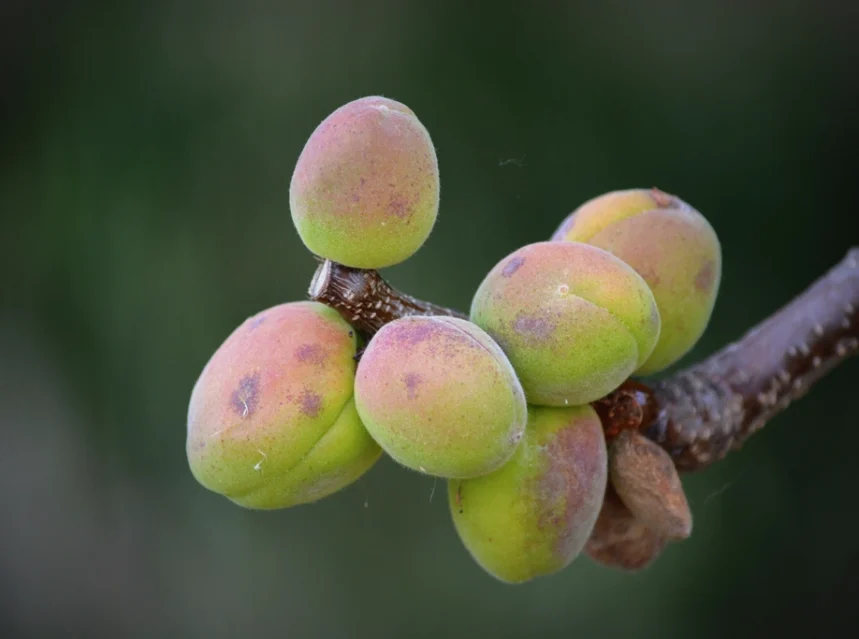
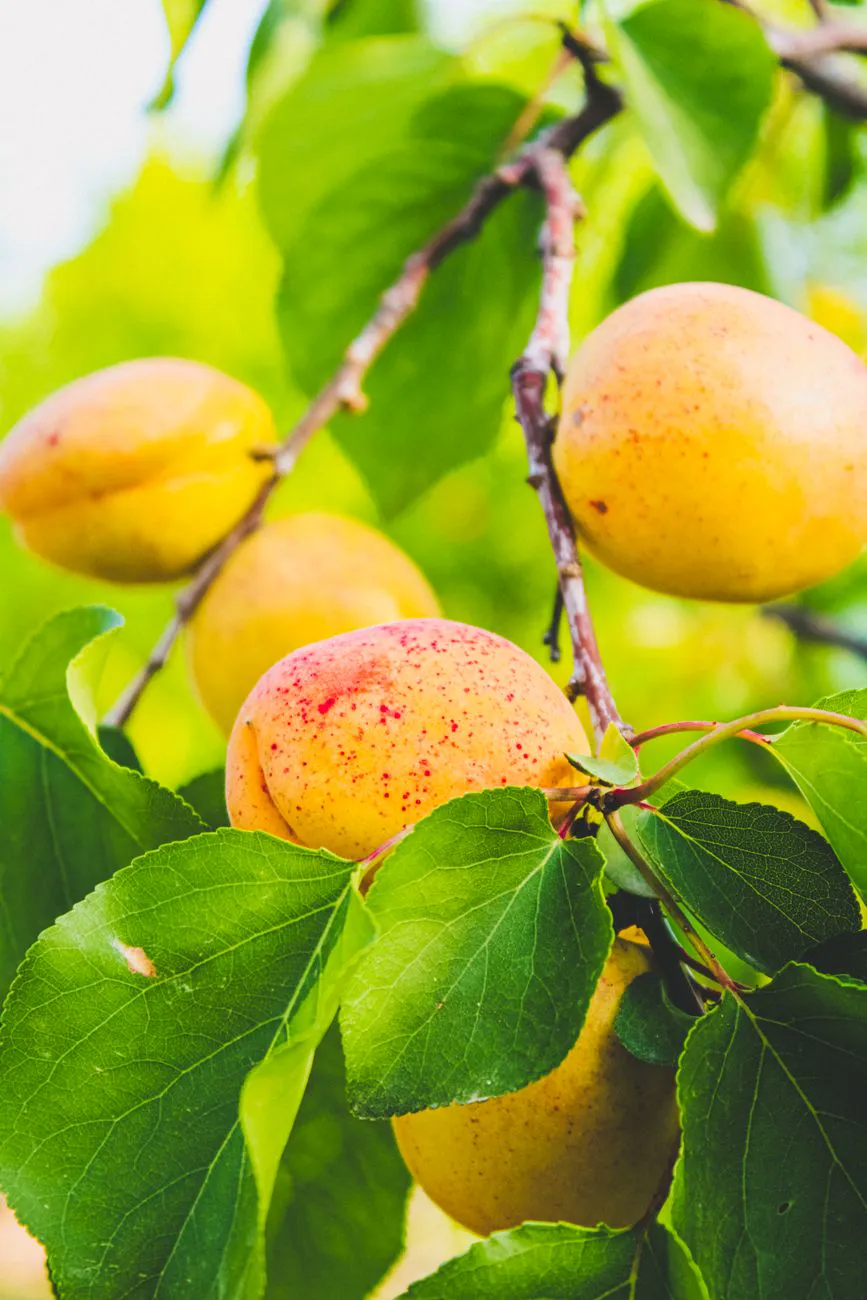
The apricot (Prunus armeniaca) is a small deciduous stone-fruit tree grown for its velvety, golden-orange, intensely sweet fruit — a pretty tree that delivers a big reward. Tree-ripened apricots are fragrant and richly sweet, nothing like the hard, flavourless fruit in shops. With beautiful early blossom and a mostly self-fertile habit, even one tree fruits. It does need warmth and frost protection, but it is well worth it. Here is the complete guide on how to grow an apricot tree.
Quick start: Grow apricots in full sun in deep, fertile, well-drained loamy soil (pH 6.5–7.5), ideally against a warm wall in cooler climates. Most are self-fertile. Plant with the graft 2–4 inches above soil, prune in late winter or summer (never autumn), protect the early blossom from frost, and thin the fruit. Trees fruit in 3–4 years.
A tree-ripened apricot is one of the quiet pleasures of growing your own, warm and perfumed and far sweeter than shop fruit. The plant loves a sunny, sheltered wall, and its early blossom is a delight. The catch growers know well is that those flowers open so early that a single frost can wipe out the crop, so cold spring nights often mean draping the tree in fleece to protect the buds. A self-fertile variety is the simplest choice where garden space is tight.
🧰 In a hurry? Jump straight to our tested picks for this guide ↓
Apricot at a glance
| Feature | Detail |
|---|---|
| Botanical name | Prunus armeniaca (family Rosaceae) |
| Plant type | Small deciduous stone-fruit tree |
| Sun | Full sun (6+ hours); warm wall ideal |
| Soil | Deep, fertile, well-drained, pH 6.5–7.5 |
| Pollination | Mostly self-fertile |
| Key risk | Frost on very early blossom |
| First fruit | 3–4 years |
| Harvest | Mid-summer, tree-ripened |
| Chill requirement | Most cultivars 700–1,000 hours below 7 °C; low-chill types from ~250 hours |
| Hardiness | USDA 5–8 ideal; hardy selections to zone 4, Manchurian types to zone 3 |
| Spacing | 1.5–2.5 m dwarf · 3–4 m semi-dwarf · 5.5–6.5 m standard |
| Mature height | 1.5–2.5 m dwarf · 3.5–5 m semi-dwarf · 6–7.5 m standard |
| Typical yield | Roughly 25–50 kg from a healthy mature tree (about 3–4 bushels) |
| Productive life | 15–35 years; good drainage matters more than age |
| Biggest single risk | Frost on the very early blossom — everything else is manageable |
Why grow an apricot tree?
Apricots give sublime, fragrant, tree-ripened fruit. A few reasons to grow one:
- Incomparable flavour. Tree-ripened fruit is a world apart from shop-bought.
- Self-fertile. A single tree crops, with no pollination partner needed.
- Space-friendly. It suits small gardens, large pots and fan-training on warm walls.
- Beautiful. The early blossom is lovely and feeds the first bees of the year.
Which apricot should you grow?
Two decisions settle most of an apricot’s success before it is even planted: when it flowers and how much winter cold it needs. Flavour differences between good cultivars are small next to those two.
Because apricots blossom earlier than almost any other fruit tree, a late-flowering cultivar is worth more in a frosty garden than a famous name. The table below groups the widely sold types by what actually matters.
| Cultivar | Pollination | Bloom timing | Approx. chill hours | Best for |
|---|---|---|---|---|
| Moorpark | Self-fertile | Mid | 600–700 | Classic flavour, UK and cool-temperate gardens |
| Goldcot | Self-fertile | Late | 800 | Cold regions; hardy, reliable |
| Harglow | Self-fertile | Very late | 800 | Frost-prone gardens — one of the latest to open |
| Tomcot / Tilton | Self-fertile | Mid–late | 600–800 | Dependable garden croppers |
| Goldrich | Needs a partner | Late | 700–800 | Large fruit — plant with another apricot |
| Perfection · Riland · Rival | Needs a partner | Early–mid | 600–800 | Only where you have room for two trees |
| Blenheim (Royal) | Self-fertile | Early | 300–500 | Mild-winter regions; poor in cold, wet springs |
| Katy · Gold Kist | Self-fertile | Early | 250–350 | Warm, low-chill climates |
The short answer. In a cold or frost-prone garden, choose a late-flowering, self-fertile cultivar such as Harglow or Goldcot. In a mild-winter or subtropical-margin garden, chase the chill number instead and pick Katy or Gold Kist. Only take on Goldrich, Perfection, Riland or Rival if you can plant a second apricot to pollinate them — university trials list these as self-unfruitful, and a lone tree will blossom beautifully and set nothing.
History, origin & how the apricot spread
The apricot’s wild origins lie in Central Asia and China, where it has been grown for thousands of years (see Encyclopaedia Britannica). Its botanical name, meaning “Armenian plum,” reflects an early stop on its long journey west.
The fruit travelled along the Silk Road through Persia and into the Mediterranean. The Romans spread it across their empire. Later, settlers carried it to the Americas and beyond.
Today apricots are grown across Turkey, the largest producer, Central Asia, the Mediterranean, the US and warmer parts of the UK. Turkey alone grew about 750,000 tonnes in 2023 — a fifth of the 3.7-million-tonne world crop — followed by Uzbekistan on roughly 500,000 tonnes, then Iran, Italy and Algeria (see apricot production by country, sourced from FAOSTAT). They need winter chill but also warmth and a frost-free flowering period. Because they blossom very early, a sheltered, sunny spot is important in cooler regions.
Chill hours & climate — the first thing to check
Chill hours are the winter hours a tree spends roughly between 0 °C and 7 °C. An apricot counts them before it will wake up evenly in spring. Fall short and the tree does not die — it flowers thinly over a drawn-out period and sets little fruit.
Most apricots want 700–1,000 hours, which is a lot for a mild-winter garden. Low-chill breeding has changed that, but the numbers are cultivar-specific and nurseries often print them only in the small text.
| Chill band | Hours below 7 °C | Cultivar examples | Where it works |
|---|---|---|---|
| Very low | 250–350 | Katy, Gold Kist, Royal Rosa | Warm-temperate and subtropical margins |
| Low | 350–500 | Blenheim (Royal), Tropic Gold | Mediterranean and southern-US style climates |
| Moderate | 600–800 | Moorpark, Tilton, Goldrich, Harglow | Most of the UK, northern Europe, US zones 5–7 |
| High | 800–1,000+ | Goldcot, Wenatchee, many Himalayan orchard types | Cold-winter continental regions, hill stations |
A counter-intuitive point worth knowing. Everyone tells you to plant an apricot on the warmest wall — and for ripening that is right. But a spot with winter shade and summer sun, such as an east-facing wall or the cool side of a building, keeps the tree dormant a little longer and pushes bloom past the worst frost nights. In a frost-prone garden that delay is often worth more than the extra summer heat. Pick the trade-off deliberately rather than by accident.
Apricot rootstocks & tree size
Every grafted apricot is two plants. The cultivar on top decides flavour and timing. The rootstock underneath decides height, spacing, how soon it fruits, and — importantly for apricots — how it copes with heavy or wet soil.
| Rootstock | Mature size | Spacing | Soil notes | Best for |
|---|---|---|---|---|
| Pumiselect | 2–2.5 m (dwarfing) | 2–2.5 m | Needs light, well-drained soil | Pots and very small gardens |
| St Julien A | 3.5–4.5 m (semi-vigorous) | 3–4 m | Tolerates a range of soils | The usual garden and fan-training choice |
| Torinel | 4–4.5 m | 3.5–4 m | Handles wet, heavy ground | Later flowering — a frost advantage |
| Krymsk 86 | 4.5 m | 3.5–4.5 m | Good on heavy soil | Cold winters, wetter regions |
| Lovell (peach seedling) | 4.5–5 m | 3.5–4.5 m | Needs good drainage | Standard North American choice |
| Myrobalan | 5–6 m (vigorous) | 5–6 m | Wide tolerance, including heavier soil | Big traditional trees; some cultivars graft poorly |
Two warnings that come straight out of rootstock trials. First, graft incompatibility is real in apricots — certain cultivar and rootstock combinations simply fail years later, so buy a ready-grafted tree from a nursery that states the pairing. Second, dwarfing only works while the graft union stays above the soil; bury it under deep planting or piled mulch and the cultivar roots directly, ignoring the rootstock and growing full size.
Best season & when to plant
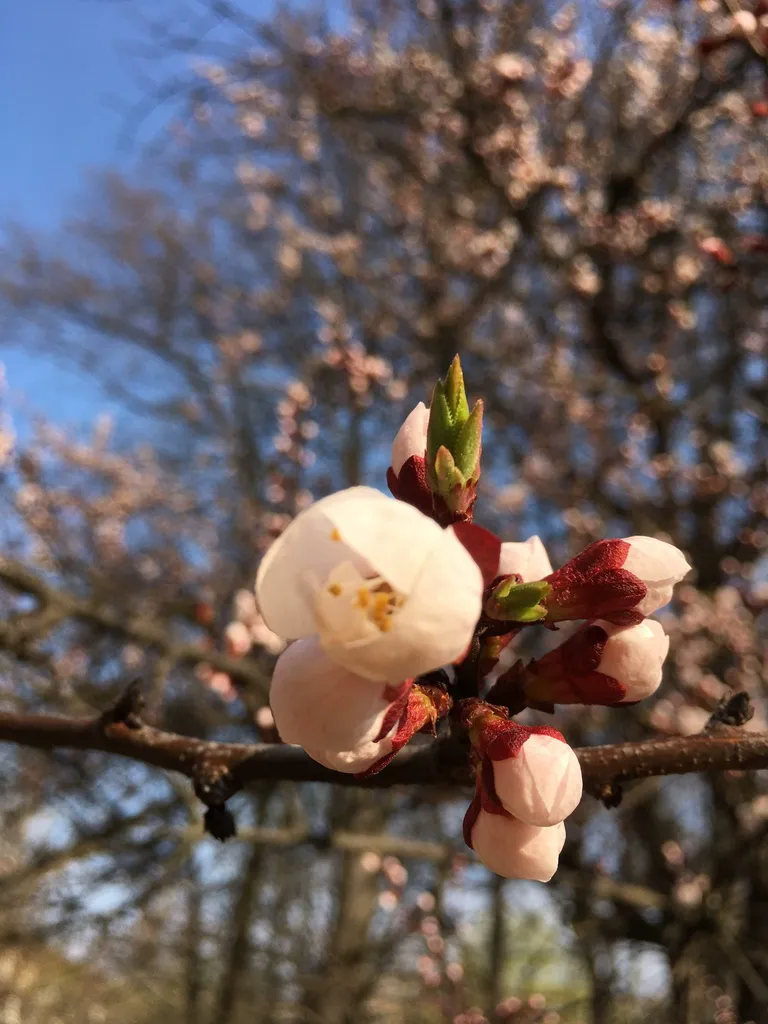
Plant apricot trees while dormant, in late autumn or early spring. They blossom very early, often in late winter, when frost is a serious risk, and the fruit ripens in mid-summer. Trees usually begin fruiting in 3–4 years. Choosing a late-flowering variety helps dodge frost in cold areas.
Autumn is the better slot where winters are not brutal: the soil is still warm, so roots move before the tree has to support leaves. Where winter is severe or the ground stays sodden, wait for early spring instead.
- Bare-root: sold dormant from late autumn to early spring. Cheaper, roots away faster, and gives the widest cultivar choice. Soak the roots for one to two hours before planting — but not more than about six.
- Container-grown: plantable whenever the ground is workable, though it settles in less readily outside the dormant window.
- Avoid frozen ground, waterlogged ground, and any planting where water stands after rain. Apricots have less tolerance of wet, heavy soil than most fruit trees.
Pollination & hand-pollination
Most apricots are self-fertile, which is why a single tree crops and why apricots suit small gardens. That is the rule — but it is not universal. Extension listings put Goldrich, Perfection, Riland and Rival in the self-unfruitful group: they need a second apricot cultivar flowering at the same time.
Self-fertility solves only half the problem, though. The real difficulty is that apricots flower so early that almost no pollinating insects are flying. Bees work freely only once the air is around 13 °C, and an apricot can be in full bloom weeks before that happens.
How to hand-pollinate an apricot
This is the highest-value ten minutes in the whole apricot calendar for anyone in a cool climate, and it is genuinely easy.
- Wait for a dry, sunny day and work around midday, when pollen is loose and the flowers are warm.
- Take a soft artist’s brush or a cotton bud and dab gently into the centre of each open flower in turn, moving from bloom to bloom so pollen travels.
- Repeat over several days as new flowers open — a tree does not open its blossom all at once.
- Optionally mist the tree lightly with water afterwards to help pollen stick, allowing plenty of time for the flowers to dry before nightfall.
Trees under glass or in a polytunnel should always be hand-pollinated, since nothing can reach them. Where a pollination partner is needed, plant it within about 15 metres and check that both cultivars share a flowering window — apricot flowers stay receptive only for roughly one to two days, and less in warm weather.
How to plant and grow apricots
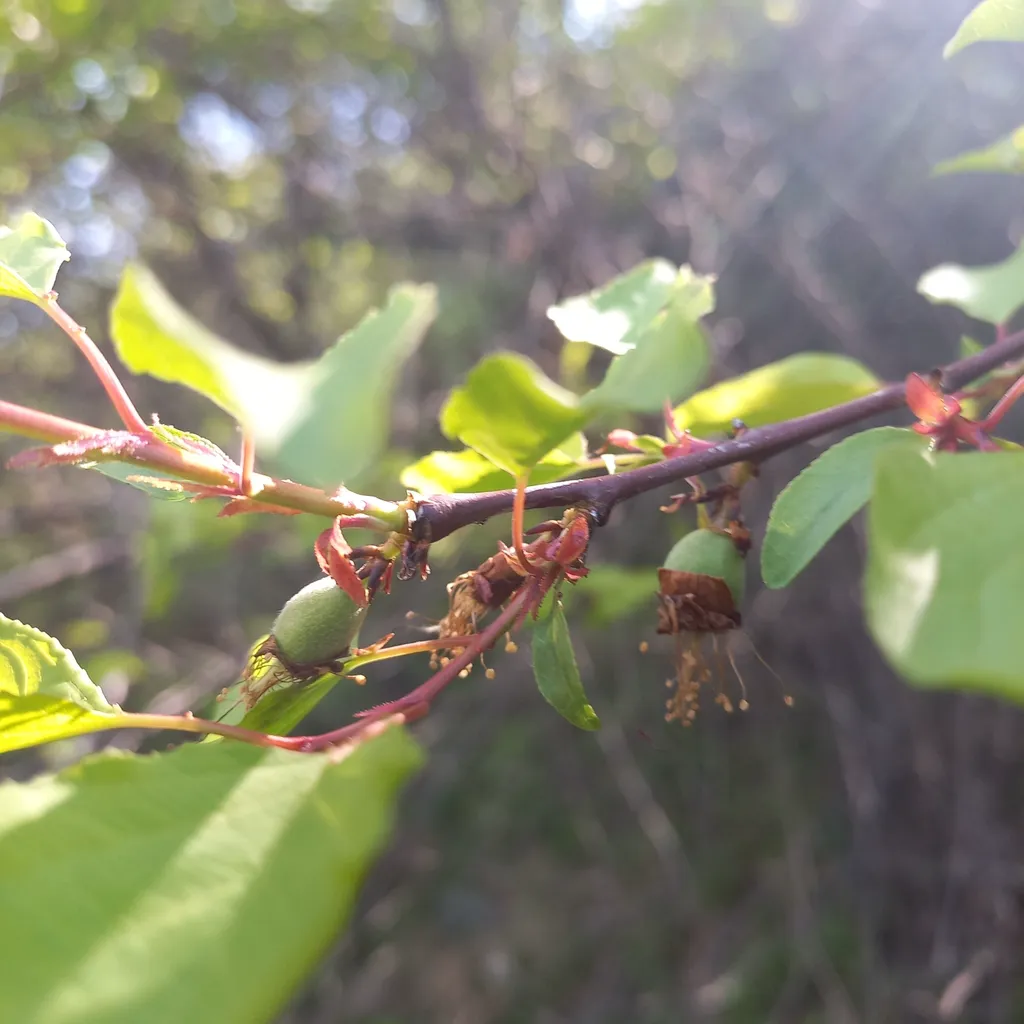
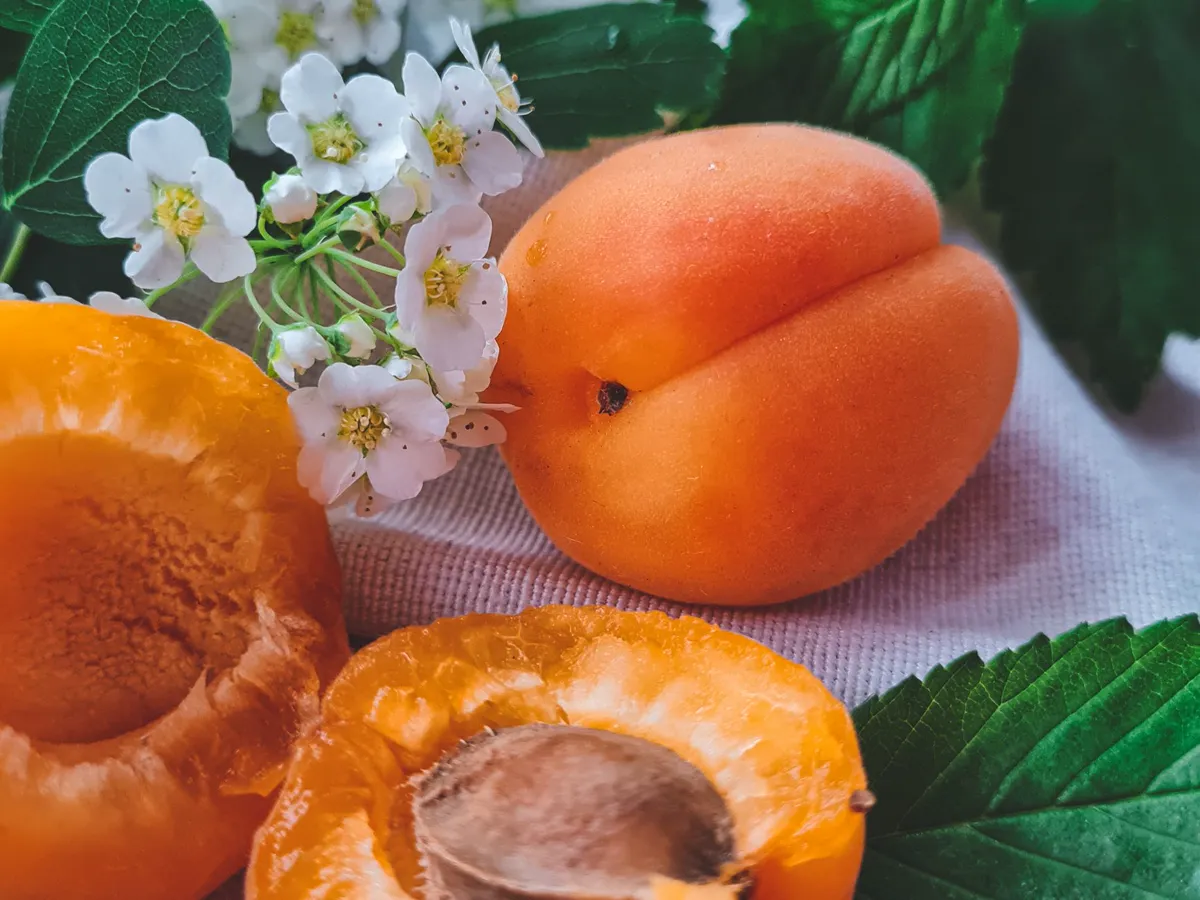
- Choose a full-sun, sheltered spot (6+ hours), ideally a warm south- or west-facing wall in cool climates, with deep, fertile, well-drained loamy soil (pH 6.5–7.5) (see improving garden soil).
- Avoid frost pockets. Cold air slides downhill and pools at the bottom of a slope, arriving exactly when the tree is in flower. A gentle slope with air drainage, or ground near a large body of water, is far safer than a sheltered dip.
- Dig a hole two to three times the width of the roots but no deeper than they are. Loosen the base with a fork rather than filling it with rich compost, which encourages roots to circle instead of spreading.
- Keep the graft union 5–10 cm (2–4 in) above the finished soil level. Lay a cane across the hole to check. Burying it cancels the rootstock and, on wet soil, invites collar rot.
- Backfill with the soil you removed, firming in layers, then water in thoroughly to settle the roots — even in damp weather.
- Stake young trees for the first one to three years, especially in windy gardens, and check the tie each year so it never cuts into the bark.
- Mulch a 60–90 cm circle with compost or well-rotted manure, keeping a hand’s width clear of the trunk, and keep that circle free of grass for the first few years.
- Space by rootstock, not by cultivar — roughly 1.5–2.5 m for dwarf, 3–4 m for semi-dwarf, 5.5–6.5 m for standard trees. A fan on a wall needs about 3.5–5 m of wall length.
On alkaline or chalky soil, watch for iron chlorosis — new leaves turn yellow between dark green veins while older leaves stay normal. Apricots are prone to it where the pH is high, and the fix is chelated iron plus organic matter, not more fertiliser. Most apricots are self-fertile, so a single tree fruits, which is what makes them so practical for small gardens.
Watering, feeding & frost protection
Once established, water apricots about weekly so the soil does not dry out 2–3 inches down, especially as the fruit swells (see how often to water plants). Feed with a higher-nitrogen fertiliser in late winter and late summer after the first couple of years. Crucially, because the blossom is so early, protect it from frost with horticultural fleece on cold nights. This is often the difference between a crop and none.
Spring frost & blossom protection
Apricots flower earlier than any other common garden fruit tree, and that single fact explains most disappointing years. In parts of the western United States, growers expect a full apricot crop only about three years in five for exactly this reason.
Damage depends far more on the bud stage than on the depth of the frost. A closed bud shrugs off a night that destroys an open flower. The figures below, from the critical-temperature tables used by extension services (see Michigan State University’s tree-fruit tables, drawn from Washington State University’s EB1240), give the temperatures at which about one in ten and nine in ten buds are killed.
| Bud stage | 10% kill | 90% kill |
|---|---|---|
| Bud swell | −9 °C (15 °F) | — |
| Bud burst | −7 °C (20 °F) | −18 °C (0 °F) |
| Red tip | −6 °C (22 °F) | −13 °C (9 °F) |
| First white | −4 °C (24 °F) | −10 °C (14 °F) |
| First bloom | −4 °C (25 °F) | −7 °C (19 °F) |
| Full bloom | −3 °C (27 °F) | −6 °C (22 °F) |
| In the shuck | −3 °C (27 °F) | −4 °C (24 °F) |
| Green fruit | −2 °C (28 °F) | −4 °C (25 °F) |
What actually helps in a garden. Horticultural fleece is the workhorse: a heavier grade gives roughly 2 °C of protection, which is often the whole margin. Drape it over canes so it does not touch the flowers, put it on before dusk, and take it off in the morning so any pollinators that are flying can work.
- Fan-trained and potted trees are protectable; a big free-standing tree is not. That is the strongest practical argument for training an apricot flat against a wall in a cold climate.
- Move pots into a porch, greenhouse or against a house wall for the flowering weeks.
- Water the soil the afternoon before a still, clear frost. Moist soil stores and releases more heat overnight than dry soil.
- Choose a late-flowering cultivar such as Harglow or Goldcot — the cheapest frost protection there is, decided once at purchase.
Pruning, training & thinning
Prune apricots in spring as growth starts, or in summer after fruiting — never in autumn or winter. Cool, damp weather is when silver leaf, bacterial canker and Eutypa spores are active, and every one of them enters through a fresh cut. Prune in dry weather and, ideally, when no rain is forecast for at least 48 hours.
Apricots fruit on short spurs that stay productive for roughly three years, plus on one-year-old shoots. So the job is not to shorten everything each winter but to keep a rolling supply of young wood coming through.
Formative years (1–3)
- At planting, cut back to three to five well-spaced branches around the trunk, about 45–60 cm above the ground, shortening them to roughly 45–60 cm.
- Year 2–3, keep the centre open — the classic open vase — so light and air reach every spur.
- Thereafter, remove no more than about 10–25% of the wood in a year: dead, diseased, crossing and inward growth first, then congested older spurs.
Fan training on a wall
In cool climates a fan is the standard form and the best one. It takes almost no ground space, can be kept to about 1.8 m tall and 3.5–5 m wide, and — the real point — it can be fleeced, hand-pollinated and picked without a ladder. Apricots are too vigorous for cordons or espaliers, so the fan is the trained shape to aim for.
Thinning the fruit
Thinning is the job most home growers skip and the one that changes the crop most. An unthinned apricot sets far more fruit than it can fill, giving small, stringy fruit, broken branches and often a poor crop the year after.
Two standards are quoted, and both work — they simply assume different tree sizes and timing:
- When fruitlets reach cherry size, thin pairs and clusters so the remaining fruit sit about 5–8 cm apart — the usual advice for fan-trained and garden trees in cooler climates.
- When fruitlets reach grape size (roughly four to six weeks after bloom), thin to about one fruit every 10–15 cm along the branch — the standard for open-grown trees where a heavier crop load is likely.
Take out the misshapen, damaged and shaded fruitlets first. On a fan, cut unwanted fruitlets in half with snips rather than pulling them, so the spur is not torn.
Growing apricots in containers
A dwarf apricot does well in a large pot, and in a frosty climate the pot is an advantage rather than a compromise: you can simply move the tree out of a cold night while it is in flower.
- Pot size: at least 45 cm (18 in) across to start, moving up as the tree matures. Smaller pots dry out faster than the tree can cope with in fruit.
- Compost: a loam-based mix such as peat-free John Innes No. 3, which holds nutrients and does not slump the way multipurpose compost does by its second year.
- Rootstock: a dwarfing stock such as Pumiselect, or a cultivar sold specifically as a patio tree.
- Position: the warmest, sunniest, most sheltered corner — a south- or west-facing patio.
- Water: regularly and steadily; pots swing between dry and soaked, and that swing is what splits and drops fruit.
- Feed: a high-potassium liquid feed every fortnight through the growing season, or a granular general fertiliser worked into the surface in spring.
- Repot every two to three years in spring into a slightly larger pot; once that becomes impractical, trim the roots lightly and replace the outer compost in the same pot. Top-dress in the years between — and keep the graft union clear when you do.
In cold regions, overwinter a potted apricot in an unheated greenhouse or against a house wall. Roots in a container sit several degrees colder than roots in open ground, and it is the roots that fail first.
Using apricots in the kitchen
A good apricot harvest is a joy in the kitchen. The fruit is delicious eaten fresh and warm from the tree. But a glut calls for a few simple ideas.
Apricots make superb jam. Their natural pectin and acidity set well. The flavour is rich and golden.
They also bake beautifully. Use them in tarts, crumbles and cakes. They pair wonderfully with almonds.
Dried apricots are a classic store-cupboard staple. Halve and pit the fruit, then dry it slowly. They keep for months and make a healthy, sweet snack.
Apricots with other fruit trees
Apricots sit happily in a mixed home orchard. They share care with other stone fruits. A warm, sheltered spot suits the whole group.
Grow them near cherries and plums for a productive corner. A mulch around each tree keeps the roots cool and moist. The early apricot blossom also feeds the first bees, helping the whole garden.
Common pests & diseases
Apricots have a short list of real troubles, and pruning at the right time plus clearing fallen and mummified fruit handles most of them. Use these notes alongside our organic pest control guide.
Brown rot — and how to tell it from frost
Brown rot kills blossom, then runs down the spur into the twig, and later turns ripening fruit brown with buff spore cushions before it shrivels into a hard mummy.
Here is the diagnostic that saves a lot of guesswork: blossom killed by brown rot stays attached to the branch, often with a sticky bead of gum at its base. Blossom killed by frost falls to the ground. Same empty tree, two completely different responses — one needs sanitation and airflow, the other needs fleece next spring.
Infection needs the flowers to stay wet, and the time required depends on temperature: at about 21 °C (70 °F) roughly three hours of wetness is enough, while at about 7 °C (45 °F) it takes six or more. That is why a warm, drizzly bloom is far more dangerous than a cold, damp one.
- Remove every mummified fruit from the tree and the ground before bud break — those mummies are the main spring spore source.
- Pick fruit as it ripens and never leave damaged fruit hanging; ripe fruit infects its neighbours in a cluster within days.
- Prune for an open canopy so blossom and fruit dry quickly.
Eutypa dieback (gummosis)
Whole branches wilt and die suddenly in late spring or summer with the dead leaves still attached, and the bark shows dark, rough cankers weeping amber gum. Spores infect fresh pruning wounds during rain (see UC IPM on Eutypa dieback). In cool weather a wound stays vulnerable for six weeks or more, against about two weeks in warm weather — which is precisely why summer pruning is the defence. Cut infected limbs at least 30 cm (12 in) below any internal discolouration, and check the cut face is clean wood.
Bacterial canker
Sunken dark lesions on trunk and branches with gum, girdled twigs, dieback, and leaves that yellow and drop by late summer. Unlike Eutypa, the leaves on affected limbs do not stay attached. It thrives in cool, wet springs. Prune it out in dry weather well below the visible canker, sterilise tools between cuts, avoid overhead watering, and keep the tree out of frost pockets — frost injury is one of the doorways the bacterium uses.
Shot hole (Coryneum blight)
Small purple-edged spots on leaves whose centres drop out, leaving holes as if the foliage had been peppered with shot; ripening fruit can show rough brown patches. Improve airflow, clear fallen leaves, and avoid wetting the foliage when watering.
Peach twig borer
Larvae bore into tender shoot tips and kill them, which spoils the shape of a young tree, then later feed into fruit at the stem end. Look for wilted shoot tips in spring and check fruit at the stalk. The larvae overwinter in tiny cells in rough bark and branch crotches, so keeping the trunk clean and removing damaged shoots promptly matters more than any spray in a garden.
Aphids
Blackfly and green aphids curl the tips of new shoots in spring. Wash them off with water, encourage ladybirds and hoverflies, and band the trunk with tree grease in late winter to stop ants farming them (see aphid control).
One spray warning specific to apricots: apricots are sensitive to sulphur, so sulphur-based fungicides that are fine on other fruit can scorch the foliage. Read the label and choose a product that names apricot.
Harvesting
Apricots are best left to ripen fully on the tree, because that is where the flavour is made. Sugar and aroma do not increase after picking — fruit taken early only softens and juices up, which is exactly why shop apricots so often taste of nothing.
They are ready when fully coloured, fragrant, and just soft enough to give under gentle pressure, lifting off with a slight twist. A well-ripened apricot carries roughly 15–18% soluble solids; the practical garden test is smell and a taste from the sunniest side of the tree.
- Pick over the tree every two or three days. A crop ripens unevenly over one to two weeks, and that is a feature — it spreads the glut.
- Harvest in the cool of the morning, when the fruit is firmest and least bruisable.
- Cup and twist rather than pulling, so the fruiting spur is not torn off with the fruit.
- Cool quickly. Ripe apricots keep only three to five days in the fridge; at 0 °C with 90–95% humidity, slightly firm fruit holds for one to two weeks.
- Leave firm, fully coloured fruit at room temperature for a day or two to finish softening, then refrigerate.
For preserving, slightly under-ripe fruit is actually better: it holds its shape in jam and dries more neatly. Halve and stone, then open-freeze on trays before bagging.
Yield & timeline
Apricots are quicker to repay you than most fruit trees, but the first years still go into building a frame. Here is what a healthy, well-sited tree realistically does.
| Tree type | First fruit | Full cropping | Mature yield per year | Productive life |
|---|---|---|---|---|
| Dwarf / patio (Pumiselect, pot-grown) | Year 2–3 | Year 4–5 | 7–14 kg (15–30 lb) | 15–20 years |
| Fan-trained on a wall | Year 3–4 | Year 5–6 | 11–18 kg (25–40 lb) | 20–30 years |
| Semi-dwarf (St Julien A, Krymsk 86) | Year 3–4 | Year 5–7 | 18–34 kg (40–75 lb) | 20–30 years |
| Standard (Myrobalan, Lovell) | Year 4–5 | Year 7–8 | 34–55 kg (75–120 lb) | 25–35 years |
Two things move these numbers more than anything else: frost during bloom, and drainage. Apricots are far more often lost to wet roots and canker than to old age.
Health benefits & uses
Per 100 g raw apricots carry 96 µg RAE of vitamin A, converted from 1,094 µg of beta-carotene, with 10 mg of vitamin C, 2 g of fibre and 259 mg of potassium, on 48 kcal (USDA record 171697). The beta-carotene is why apricots are associated with eye and skin health; that is what the nutrient does in the body, not a promise about anyone’s eyesight. They are delicious fresh, and used in jams, tarts, chutneys and baking. Dried apricots are a nutritious staple. The early blossom helps the first bees of the year (see attracting pollinators). It is a healthy, versatile and luxurious fruit.
This article is for general information only and is not medical advice. Talk to a qualified professional before using any plant medicinally.
Are apricot kernels safe to eat?
Crack an apricot stone and there is an almond-like kernel inside. Sweet kernels are used in confectionery and, in Ladakh and Central Asia, pressed for oil. Bitter kernels are a different matter, and this is one place where a garden guide should give numbers rather than reassurance.
Kernels contain amygdalin, which the body converts into hydrogen cyanide. Bitter apricot kernels run at roughly 3–8% amygdalin by weight. Reviewing the evidence in 2016, the European Food Safety Authority set an acute reference dose for cyanide of 20 µg per kg of body weight (its opinion is available via the US National Library of Medicine), and concluded that eating more than about three small raw kernels — or half of one large one — can push an adult past that level in a single sitting. For a toddler, even one small kernel can exceed it. EU law now caps hydrocyanic acid in raw apricot kernels sold as food at 20 mg/kg.
The same review is equally clear that eating the fruit itself carries no such risk. Apricot flesh is not the issue; concentrated raw kernels are.
- Do not eat raw bitter kernels, and never give them to children.
- Treat any product marketed as a health remedy made from raw kernels with real caution — the claims are not supported and the dose is the problem.
- Compost or bin the stones from your crop, or use them for the pleasure of trying to raise a seedling rather than for eating.
Growing apricots in India & warm climates
Apricots need a genuinely cold winter, so across most of the Indian plains the honest answer is that they will not fruit. Where the winter cold exists — the Himalaya and trans-Himalaya — they are outstanding, and India grows some of the finest apricots anywhere.
Where they grow. Ladakh is the country’s apricot heartland, with orchards up to around 3,300 m (11,000 ft) and roughly 2,600 hectares producing about 15,000–16,000 tonnes a year. Himachal Pradesh, Jammu & Kashmir and Uttarakhand follow, with plantings from about 1,000 m upward.
The variety that deserves its reputation. Ladakh’s Raktsey Karpo — white-kerneled — averages around 28% total soluble solids, with Halman near 25%. Those are extraordinary sugar levels for a fresh apricot, and Raktsey Karpo received a Geographical Indication tag in December 2022.
- Planting: December to February, while the trees are fully dormant.
- Spacing: about 6 × 6 m in hill orchards (roughly 275 trees per hectare); 3–4 m for a garden tree on semi-dwarf stock.
- Pits: around 1 × 1 m, refilled with topsoil mixed with well-rotted farmyard manure.
- Soil: well-drained loam, pH about 6.0–7.5; standing water is fatal.
- Varieties by zone: New Castle, Shakarpara and Early Shipley in the mid hills; Kaisha, Suffaida, Charmagaz and Nari in dry-temperate and high hills; Halman, Raktsey Karpo, Narmu, Khante and Margulam in Ladakh.
- First fruit: 3–4 years after planting.
If you garden below roughly 1,000 m in India, an apricot is the wrong tree, however appealing. The chill simply is not there, and a low-chill cultivar still needs a real winter rather than a mild one. The same space grows a superb guava, custard apple, jamun or pomegranate. The rule holds elsewhere too — in warm-coastal Australia, the lowland Mediterranean and the southern United States, chase the chill number honestly before buying.
Common apricot problems
Blossom killed by frost
It flowers very early. Cover it with fleece on frosty nights and choose a sheltered spot or a late-flowering variety.
Silvery leaves or dieback
Silver leaf, often from autumn or winter pruning. Prune only in spring or summer and remove affected wood.
Small, crowded fruit
Not thinned. Thin the young fruit for larger, sweeter apricots, and expect a light year to follow a heavy unthinned one.
Yellow leaves with green veins
Iron chlorosis, common on alkaline or chalky soil. Treat with chelated iron and build organic matter into the soil — more nitrogen makes it worse, not better.
Branches dying with the leaves still attached
Eutypa dieback. Cut back at least 30 cm into clean wood in summer, in dry weather, and stop pruning in autumn and winter altogether.
Blossom dead but still hanging on the tree
Brown rot rather than frost — frost-killed blossom falls. Clear every mummified fruit before bud break and open up the canopy.
Split or cracked fruit near harvest
Uneven soil moisture, usually a dry spell followed by heavy rain or watering. Mulch, water steadily through ripening, and pick promptly if heavy rain is forecast.
Related plant guides
- How to grow Peach
- How to grow Plum
- How to grow Quince
- How to grow Nectarine
- How to grow Apple
- How to grow Cherry
Frequently asked questions
Do I need two apricot trees?
No — most apricots are self-fertile, so a single tree will fruit.
When should I prune an apricot tree?
In late winter or early spring, or in summer — never autumn or winter — to avoid silver leaf disease.
Why did my apricot lose all its blossom?
Almost always frost — apricots flower very early, so protect the blossom with fleece on cold nights.
Can I grow apricots in a cool climate like the UK?
Yes — grow them in a sheltered, sunny spot or fan-trained against a warm wall, and protect the early blossom from frost.
How do I get sweeter apricots?
Let them ripen fully on the tree and thin the young fruit. Full sun and a warm wall also boost the sugar and flavour.
Can you grow an apricot tree from a stone?
You can, though the resulting tree is a gamble rather than a copy of the parent. The stone needs a cold, moist period first, so wrap the cleaned kernel in damp kitchen paper, seal it in a bag and refrigerate for six to eight weeks before potting. Germination usually follows within four to six weeks of moving it somewhere warm. Expect to wait several extra years for fruit and accept that quality varies, which is why nurseries sell grafted trees.
How tall does an apricot tree grow?
A standard apricot typically reaches around 4 to 6 metres tall with a similar spread once mature. Semi-dwarf and dwarf forms stay much smaller, often 2 to 3 metres, which makes picking and netting far easier. Fan-training against a warm wall keeps the tree flat and compact while giving the extra heat that ripens fruit in cooler regions. Annual pruning holds any of these shapes at whatever height you can comfortably reach.
How long does an apricot tree live?
In a garden setting, 15 to 35 productive years is a realistic expectation, though well-sited trees in ideal soil can live considerably longer. Trees usually begin bearing in their third or fourth year and hit full production a few years after that. Good drainage matters most, since apricots are far more often killed by wet roots and canker than by old age. Keep pruning cuts to dry summer or late winter weather to reduce the risk of silver leaf and bacterial canker.
How far apart should apricot trees be planted?
Space standard trees roughly 5 to 6 metres apart so their mature canopies never touch. Semi-dwarf and dwarf types can go 3 to 4 metres apart, and fan-trained trees on a wall need about 4 metres of wall length each. Crowding traps damp air among the branches, which invites canker and reduces the sunlight the fruit needs to sweeten. Leave room to walk around each tree for pruning, netting and picking.
Why are my apricot tree leaves curling?
Check the undersides of the affected shoots first, because aphids are the most common cause and their feeding puckers young leaves before they expand. Heat and drought stress produce a similar curl, usually with dull, dry-edged foliage across the whole tree. Fungal leaf curl, best known on peaches, occasionally affects apricots too and shows as thickened, blistered, reddened leaves. Wash off aphids or encourage ladybirds, mulch and water deeply in dry spells, and remove and bin badly distorted leaves.
Where is the best place to plant an apricot tree?
Choose the warmest, most sheltered spot in the garden with at least six hours of direct sun and free-draining soil. A south or south-west facing wall is ideal in cooler climates, because the stored heat protects early blossom and helps the fruit ripen. Avoid frost pockets at the bottom of a slope, where cold air settles exactly when the tree is flowering. Steer clear of heavy, wet ground altogether, or plant on a raised mound if that is all you have.
How do you know when apricots are ripe?
Ripe fruit changes from green to a full yellow, orange or blushed red depending on the cultivar, and the flesh gives slightly under gentle pressure. Cup the apricot in your palm and twist softly, and a ready fruit parts from the spur leaving the stalk behind. The scent is the other reliable clue, since ripe apricots smell sweet and perfumed right on the tree. Pick over the tree every couple of days, because a crop rarely ripens all at once.
Should I thin apricot fruit?
Yes, and it is the single job most home growers skip. Apricots habitually set far more fruit than they can fill, so an unthinned tree gives a mass of small, stringy apricots and often little or nothing the following year. When the fruitlets reach grape size, remove enough so that one remains every 10 to 15 centimetres along the branch. The remaining fruit swells noticeably larger and sweeter, and the branches are far less likely to break.
Why does my apricot tree flower but set no fruit?
Frost is the usual culprit, because apricots blossom very early and a single cold night can kill the open flowers. Cold, wet or windy weather at bloom time also keeps bees away, so nothing gets pollinated even when the flowers survive. Very heavy cropping the previous year can push a tree into a lighter alternate year as well. Fleece the blossom on frosty nights, plant in a sheltered sunny spot, and hand-pollinate with a soft brush when pollinators are scarce.
Do apricots ripen after picking?
They soften, juice up and become more fragrant off the tree, but they gain almost no extra sugar. That is why a tree-ripened apricot tastes so different from a shop one picked hard for transport. Leave a paper bag of firm, fully coloured fruit at room temperature for a day or two to finish, then refrigerate. Fruit picked while still green never develops proper flavour, so wait for full colour before you start.
How many chill hours does an apricot tree need?
Most apricots need roughly 700 to 1,000 hours between about 0 °C and 7 °C, and a few traditional cultivars want more. Low-chill varieties bred for warm regions, such as Katy and Gold Kist, crop on about 250 to 350 hours. If your winter does not supply the hours the cultivar needs, the tree flowers thinly over a long, straggly period and sets very little fruit, which is the usual reason an apricot fails in a mild climate. Check the chill figure before the flavour description, because no amount of care substitutes for winter cold.
How can I tell whether frost or brown rot killed my apricot blossom?
Look at whether the dead flowers are still on the tree. Blossom killed by brown rot stays attached, usually with a sticky bead of gum where it joins the spur, and the infection often runs on into the twig behind it. Blossom killed by frost drops to the ground and leaves bare wood. The distinction matters because the two need opposite responses: brown rot calls for clearing mummified fruit, opening the canopy and picking promptly, while frost calls for fleece, a sheltered site and a later-flowering cultivar next time.
Which apricot varieties are not self-fertile?
Most apricots are self-fertile, but extension listings put Goldrich, Perfection, Riland and Rival in the self-unfruitful group, so each of those needs a second apricot cultivar flowering at the same time within about fifteen metres. Any other apricot in bloom at the same period will do the job. Even genuinely self-fertile trees often set more heavily with another apricot nearby, so a second tree is a bonus rather than a requirement for the rest.
When should apricot trees be pruned, and why never in winter?
Prune in spring as growth begins or in summer after harvest, always in dry weather with no rain forecast for a couple of days. Silver leaf, bacterial canker and Eutypa dieback all infect through fresh wounds during cool, damp conditions, which is exactly what autumn and winter provide. In cool weather a pruning wound stays vulnerable for six weeks or more, against roughly two weeks in warm weather, so summer cuts seal long before the spores arrive.
Are apricot kernels safe to eat?
The fruit is entirely safe, but the kernel inside the stone is a different question. Kernels contain amygdalin, which the body converts to cyanide, and bitter kernels carry roughly 3 to 8 per cent amygdalin by weight. On the European Food Safety Authority’s 2016 assessment, more than about three small raw kernels can take an adult past the acute reference dose in one sitting, and a single small kernel can do so for a toddler. Do not eat raw bitter kernels or give them to children, and treat kernel-based health products with real caution.
Which rootstock should I choose for a small garden apricot?
St Julien A is the usual answer for a garden tree or a wall-trained fan, holding the tree to roughly 3.5 to 4.5 metres and coping with a range of soils. Choose Pumiselect if you want a genuinely dwarf tree for a large pot, but give it light, free-draining soil because it is fussier. Torinel and Krymsk 86 are worth seeking out on heavy or wet ground, and Torinel has the useful habit of flowering slightly later, which helps in frost-prone gardens. Avoid vigorous Myrobalan unless you actually want a six-metre tree you cannot fleece or net.
Why is my apricot tree oozing gum from the bark?
Amber gum on the bark is the tree’s general response to injury or infection, so the surrounding detail tells you what it means. A small bead near an old pruning cut or a knock is usually nothing. Gum with sunken, dark, dead bark and branches dying back points to bacterial canker, where the leaves drop from affected limbs. Gum with rough cankers on branches that died suddenly in early summer with their leaves still attached points to Eutypa dieback instead. Both are cut out well into clean wood, in dry summer weather only.
How do I stop birds and squirrels taking my apricots?
Cover the fruit before it starts to colour, because once it sweetens you are already competing. Fine netting over a frame works on a fan-trained or dwarf tree, and individual fruit sleeves are practical when the crop is small. Move potted trees somewhere enclosed as the fruit ripens. Netting draped directly on the branches is less effective, since birds simply perch on it and peck through, and it also traps wildlife — always support it clear of the foliage and secure it at the bottom.
Can I grow an apricot tree in a greenhouse or polytunnel?
Yes, and in very cold regions it is often the only way to crop one reliably, because the blossom is protected from frost at exactly the point it matters. The trade-off is that no pollinating insects can reach the flowers, so you must hand-pollinate with a soft brush around midday on several consecutive days. Ventilate well once the weather warms, keep watering steady while the fruit swells, and expect to prune more often, since the shelter encourages soft growth.
What is the best way to use a glut of apricots?
Apricots ripen in a rush and keep poorly, usually only a few days in the fridge, so plan ahead. Halve and stone them and freeze on trays before bagging, which keeps them good for months and ideal for crumbles and compotes. Jam is the classic answer because apricots set well and hold their colour, while halves dried in a dehydrator or a very low oven store neatly in jars. Slightly under-ripe or blemished fruit is best cooked rather than kept for eating fresh.
Is an apricot tree safe around pets?
The kernel warning above is about people. Pets have their own version of it. The ASPCA lists apricot (Prunus armeniaca) as toxic to dogs, cats and horses. Stems, leaves and kernels contain cyanogenic glycosides, and wilting leaves after pruning are the most dangerous of all. The ripe flesh itself is not the problem. A swallowed stone is a blockage risk for a dog as well, quite apart from the cyanide. So rake up prunings and pick up windfalls before you let a pet under the tree. Contact a vet if a pet has eaten some. This is general information, not veterinary advice.
Still stuck? Ask the Plant Doctor
Describe the problem — yellow leaves, holes, no flowers — and get a clear answer in seconds. FreeAI can make mistakes. Answers are guidance, not a guarantee — check anything important against the guide it links to, and always read the label on any product before you use it.