Star Apple
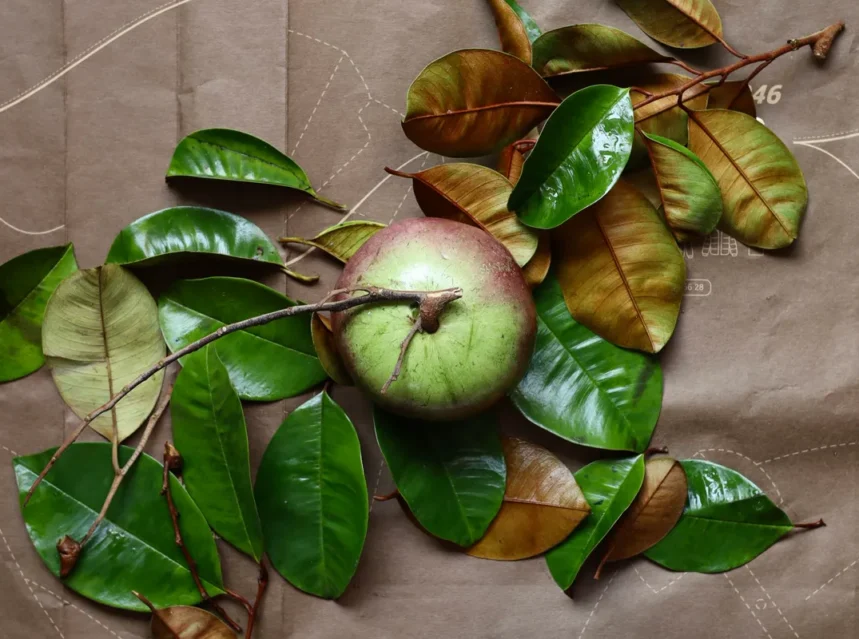
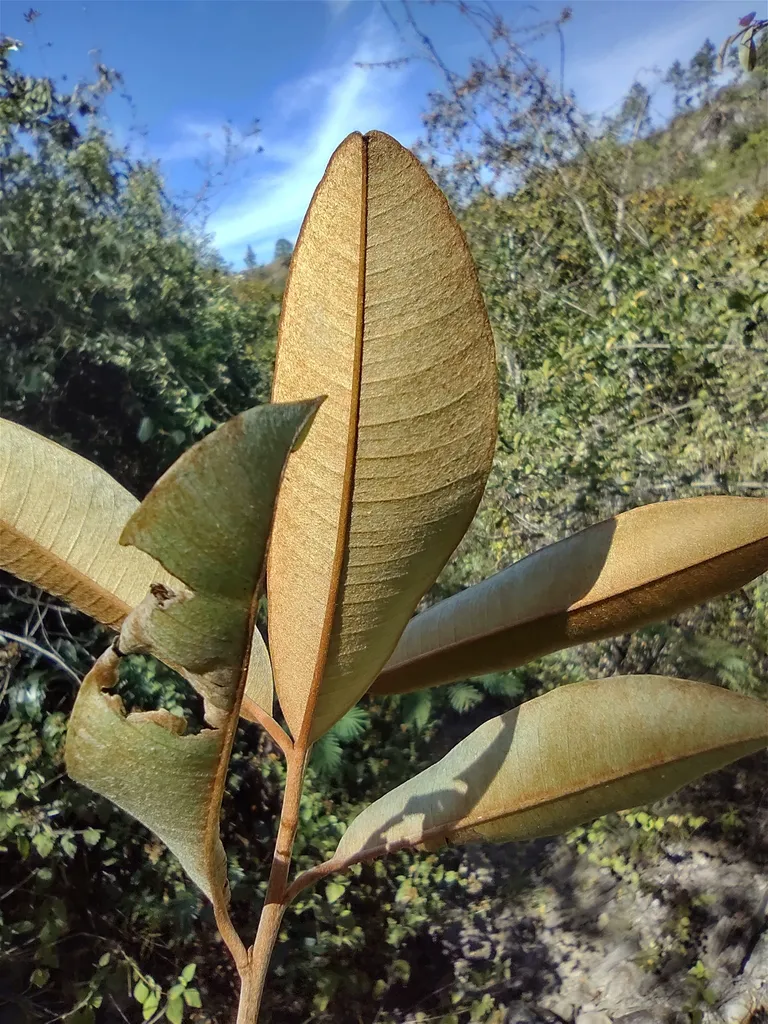
Star apple (Chrysophyllum cainito), also known as cainito or golden leaf, is a beautiful, fast-growing tropical fruit tree native to Central America and the Caribbean that produces smooth, round, purple or green fruits with a striking, star-shaped seed pattern visible when the fruit is sliced in cross-section — revealing milky-white, sweet, custard-like pulp of exceptional flavour. This is one of the most beautiful tropical fruit trees you can grow. Gardeners prize it two ways at once. First, it works as an ornamental specimen, because the leaf undersides shine a coppery gold. Second, it gives sweet fruit loved across the Caribbean, Southeast Asia, and tropical India. So here is the complete guide on how to grow star apple.
Quick start: Plant star apple in full sun in deep, well-drained, fertile soil. Fast-growing for a tropical fruit tree. Hardy only to light frost (USDA zones 10-11). Self-fertile. Fruits once a year (winter-spring in the Caribbean and South Asia). ⚠️ Do not eat the skin or seeds — only the milky interior pulp is eaten. ⚠️ The sticky, latex-rich juice from the skin stains and is difficult to remove — eat carefully.
Growers in Jamaica, Trinidad, Vietnam, and coastal India rate star apple among the most satisfying tropical fruit trees. It grows fast, looks striking, and crops well. The fruit also has no real commercial substitute. You eat the milky, sweet pulp by scooping it straight from the halved fruit. For many people this is a signature Caribbean and Southeast Asian flavour. Florida growers add that established trees are surprisingly drought-tolerant and low-maintenance after the first few years.
🧰 In a hurry? Jump straight to our tested picks for this guide ↓
Star apple at a glance
| Feature | Detail |
|---|---|
| Botanical name | Chrysophyllum cainito (family Sapotaceae) |
| Common names | Star apple, cainito, golden leaf, milk fruit (Vietnam) |
| Plant type | Medium to large tropical evergreen tree (10-20 m; manageable with pruning) |
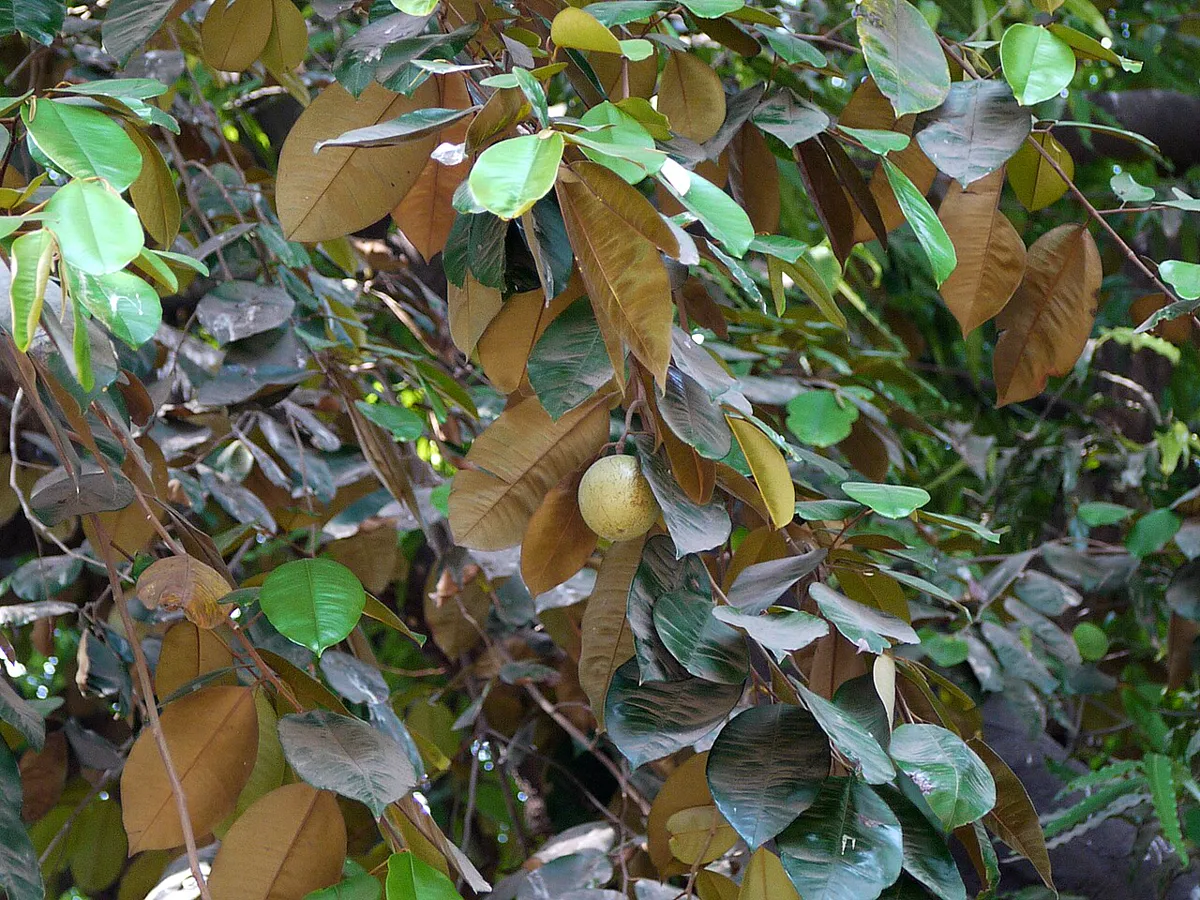
| Ornamental feature | Leaves: dark green above, stunning copper-gold below; canopy exceptionally attractive |
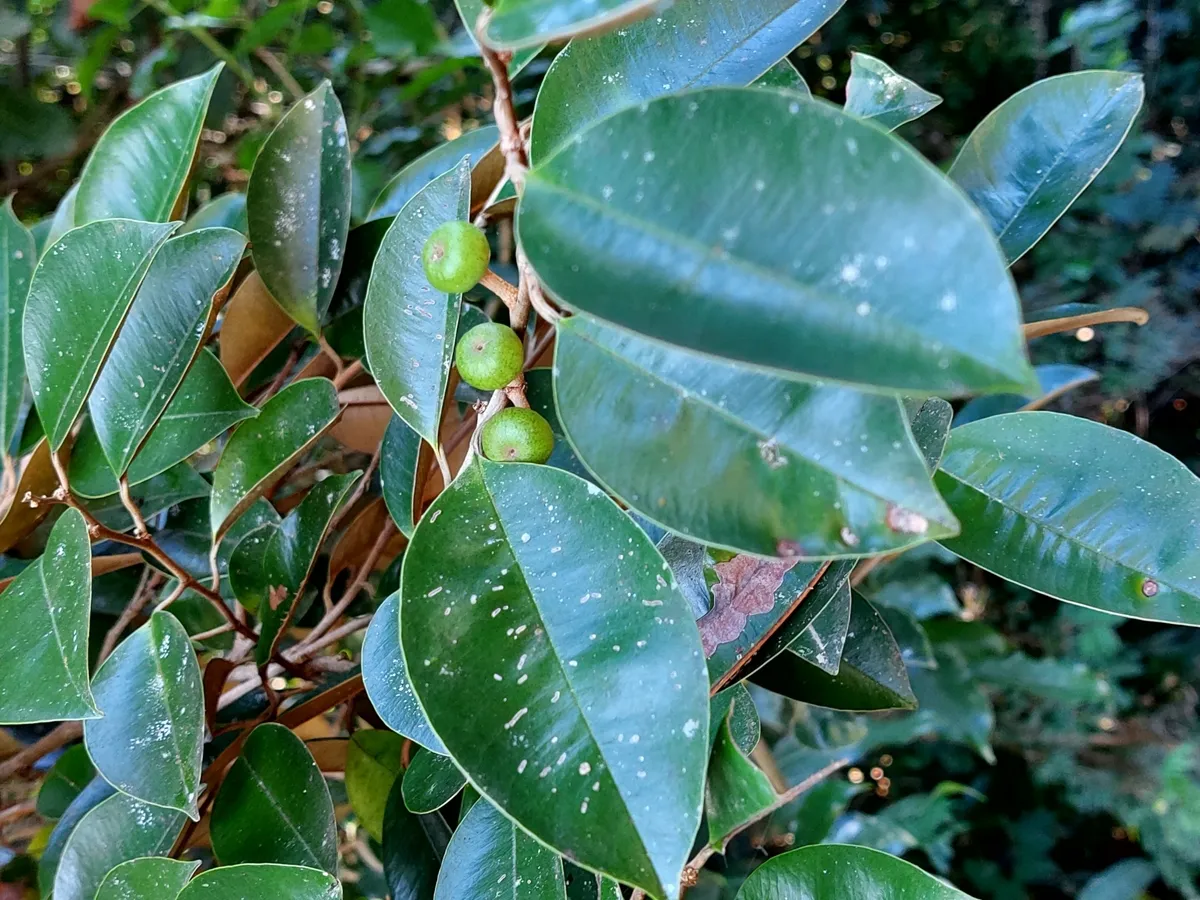
| Fruits | Round, 5-10 cm; purple or green; milky sweet pulp; winter-spring |
| ⚠️ Eating note | Eat pulp only; skin and sap are sticky, bitter, inedible |
| Sun | Full sun |
| Hardiness | USDA zones 10-11; frost-tender |
Why grow star apple?
- One of the most beautiful tropical fruit trees. The bicoloured leaves — deep green on top, shimmering copper-gold beneath — create an extraordinary visual effect when the wind moves through the canopy. Few fruit trees are as ornamentally spectacular.
- Exceptional fruit flavour. The milky, sweet, custard-like pulp has a rich, exotic flavour unlike any common commercially available fruit. It is considered a delicacy across the Caribbean and Vietnam.
- The iconic “star” cross-section. When cut horizontally, the seed arrangement creates a perfect star pattern in the white pulp — visually striking and instantly memorable, making it a conversation-starting fruit for any occasion.
- Fast-growing and productive. Star apple grows faster than many tropical fruit trees and begins fruiting within 3-5 years of planting from a grafted tree — a relatively short wait for a tree of this quality.
- Dual use: ornamental and edible. Star apple earns its place in a tropical garden as a stunning shade and specimen tree as well as a productive fruit source — not a compromise plant.
History, origin and how it spread
Star apple is native to Central America and the Greater Antilles — Jamaica, Cuba, and Hispaniola. Its wild range reaches into the lowland Caribbean basin (see Encyclopaedia Britannica). Indigenous Caribbean peoples domesticated it long before Columbus. In fact, the name “cainito” comes from the native Taíno and Carib languages. Later, the Spanish and Portuguese carried star apple through their tropical colonies. They took it to the Philippines, India, and West Africa in the 16th and 17th centuries.
Today the tree grows across the tropical and subtropical belt. Jamaica treats it as a cultural symbol and eats it in a dish called “matrimony,” mixed with grapefruit. Vietnam loves “vú sữa,” or milk fruit, from the Mekong Delta. You also find it in Trinidad, the Philippines, West Africa, Brazil, and India. FAO’s crop statistics have no star apple item, so no official world tonnage exists for it. Instead, it stays a regional specialty crop rather than an international trade item.
In India, star apple grows in coastal and humid regions. These include Kerala, Tamil Nadu, Karnataka, Goa, Maharashtra, Andhra Pradesh, and the Andaman Islands. The Portuguese first brought it to Goa. From there it spread along the western and southern coasts. In Kerala people call it “swarnapazham,” meaning golden fruit. The Kerala Agricultural University recommends it as a good backyard tree for the state’s humid tropical climate. However, it does not suit the cooler northern plains or high-altitude regions.
Best season and when to plant
Plant star apple in the wet season. In India that means June to September, and in the Caribbean and Florida it means summer. The natural rainfall helps the young tree settle in. In USDA zones 10-11, such as southern Florida and Hawaii, plant in spring or early summer. Specialist tropical nurseries sell container-grown plants year-round.
Buy grafted trees whenever you can. Grafted trees from named varieties fruit in 3-5 years. Seed-grown trees, by contrast, may take 7-10 years. They also give variable, sometimes inferior, fruit. So a grafted tree is the safer choice for a home garden.
How to plant and grow star apple
- Full sun is essential. Star apple is a tropical tree that requires maximum sunlight for best growth and fruiting. Site in the most open, sunny position available. See improving garden soil.
- Soil: Deep, well-drained, fertile soil. Star apple adapts to a range of soil types including sandy loam, clay loam, and even shallow rocky soils, but performs best in deep, organically rich, well-drained conditions. It tolerates mildly alkaline and slightly acidic soils (pH 6.0-7.5).
- Spacing: Allow 8-10 m between trees for mature specimens. For home gardens, regular pruning can maintain star apple at a manageable 3-5 m — it tolerates pruning well. Regular pruning also improves light penetration into the canopy and increases fruiting.
- Pruning: Prune after the fruit harvest to control size and improve the following year’s crop. Remove water sprouts, crossing branches, and dead wood. Star apple fruits on old wood (like most tropical fruit trees) — heavy pruning delays fruiting. See our guide to mango tree management for related principles.
- Mulching: Apply a 5-10 cm layer of organic mulch (bark, compost, wood chips) around the base, keeping it away from the trunk. Mulching retains moisture, suppresses weeds, and improves soil structure.
Sun, soil, watering and feeding
Sun: Full sun for best fruit production. Star apple is a light-demanding tropical tree — it will not fruit well in shade. For home gardens, ensure the tree is not shaded by buildings or other large trees as it matures.
Soil: Well-drained, fertile, deep soil. Avoid waterlogged conditions. Star apple has moderate drought tolerance once established. See soil improvement.
Watering: Water regularly for the first 2-3 years while the tree establishes. After that, star apple handles drought reasonably well. Still, water during long dry spells, especially as the fruit develops in winter and spring. Avoid overwatering, because a mature tree copes better with dry soil than wet. See how often to water plants.
Feeding: Apply a balanced fertiliser three times a year. Feed at the start of the season, at mid-season, and after harvest. A potassium-rich feed before flowering helps fruit set. In India, many growers use compost, neem cake, and wood ash at the base twice yearly. Young trees also benefit from more frequent feeding while they grow fast.
Pests and diseases
- Fruit fly (Bactrocera species): In Asia and the Pacific, fruit fly is the primary pest of star apple. The larvae infest ripening fruits. Use fruit-fly traps, bag developing fruits with paper or mesh bags, and harvest promptly. See organic pest control.
- Scale insects: Common on the bark and underside of leaves. Treat with horticultural oil spray during the dormant season. See pest management.
- Algal leaf spot (Cephaleuros virescens): An algal growth that forms green-grey crusty patches on leaves. More cosmetic than damaging. Improve airflow through the canopy with pruning.
- Root rot (Phytophthora): In waterlogged or compacted soils. Ensure excellent drainage, particularly on clay soils.
Harvesting
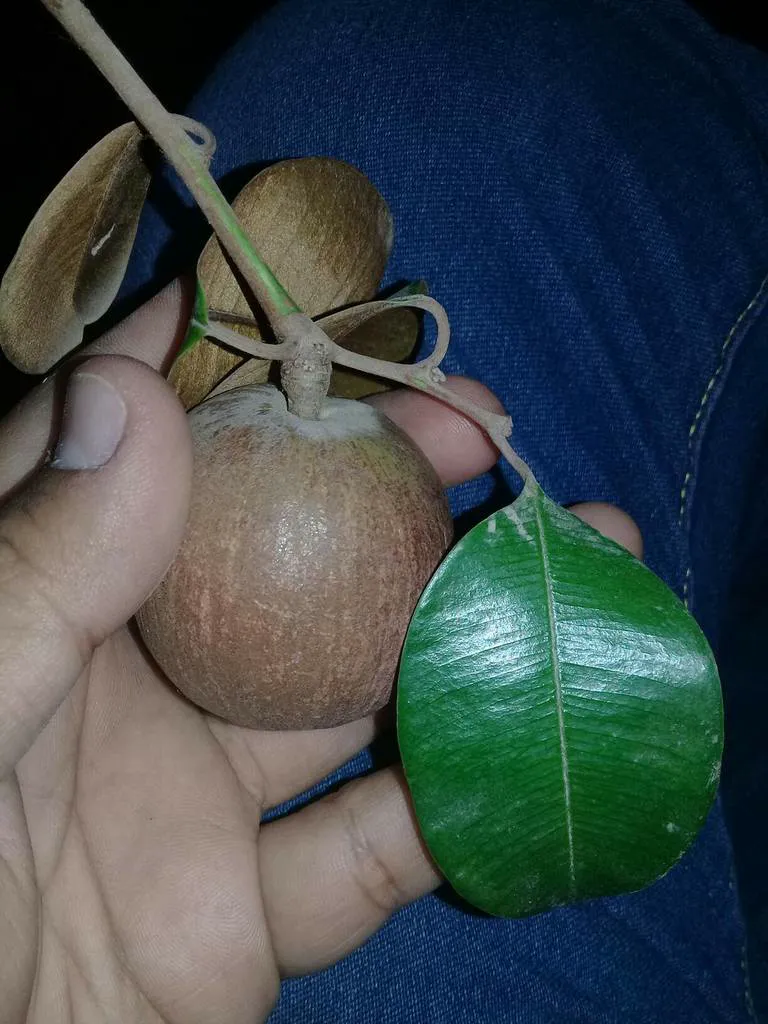
Star apple fruits ripen in winter to spring, roughly November to March in India and the Caribbean. Watch for a few ripeness signs. The skin turns from bright green or purple to a duller, softer tone. The fruit gives slightly to thumb pressure. It also parts from the branch with gentle downward pressure. Do not pull hard, because ripe fruits come away easily. Handle each one with care too. The skin releases a sticky white latex that stains hands and clothing and is hard to remove.
To eat, cut the fruit in half horizontally rather than vertically. This reveals the star pattern. Then scoop out the milky pulp with a spoon, avoiding the skin and the bitter layer just inside it. You can eat the pulp straight or mix it with other fruits. In Jamaica, the classic dish “matrimony” blends the pulp with sour orange juice or grapefruit. In Vietnam, people often chill it and eat it as dessert. Note that the fruit does not ship well, because it bruises easily and spoils within a few days.
Health benefits and uses
Star apple pulp is generally reported to carry vitamin C, calcium, phosphorus and dietary fibre, with a moderate natural sugar content. The USDA database has no entry for the fruit, so those values come from Caribbean and Southeast Asian food-composition tables rather than from FDC. The milky pulp contains latex compounds. These are safe in the ripe fruit.
However, eating a lot of the bitter skin layer may cause digestive discomfort. Traditional Caribbean folk medicine used leaf and bark preparations, but those are separate from the edible fruit. For the kitchen, keep it simple. Eat it fresh, chill it as dessert, blend it into smoothies, or add it to fruit salads. Jamaicans also use it in “matrimony.” Cooks rarely heat the fruit, because its delicate flavour and milky texture are best raw.
This article is for general information only and is not medical advice. Consult a healthcare professional for dietary guidance.
Common star apple problems
Tree not fruiting
The usual cause in home gardens is too little sun. Star apple needs full sun to fruit reliably. Trees in partial shade flower but set little fruit. So if a grafted tree is over five years old and still bare, check the sun exposure first. Then look at other causes. These include irregular watering during flowering and nutrient shortage, which a potassium-rich feed before flowering helps fix. Finally, check whether the tree is seed-grown, because those take 7-10 years and give variable results. Always buy grafted.
Sticky latex on hands and clothing
The latex released when you cut the skin is very sticky and hard to remove. To prevent it, wear disposable gloves while harvesting and cutting. To remove it, rub cooking oil on your hands before washing. Unripe papaya also works, because its papain breaks down the latex. Above all, do not cut the fruit bare-handed over good clothing.
Fruit drop before ripening
Premature fruit drop usually comes from drought stress during fruit development. So water deeply in the 2-3 months before harvest. Swinging between drought and flood also triggers fruit drop in many tropical trees. Because of this, heavy mulching to hold soil moisture is one of the best long-term fixes.
Related tropical fruit tree guides
- How to grow Mango
- How to grow Black Sapote
- How to grow Custard Apple
- How to grow Guava
- How to grow Lychee
- How to grow Jackfruit
Related plant guides
- How to grow Atemoya
- How to grow Carambola
- How to grow Finger Lime
- How to grow Mamey Sapote
- How to grow Tamarind
- White Sapote
How to propagate star apple
A grafted tree is the home-garden answer: grafted plants have been known to bear in their first year, and they fruit in three to five where a seedling takes seven to ten and may not match the parent.
That said, star apple is one of the more rewarding tropical fruits to raise yourself, because all three routes work. Seed sown in a light, sandy loam germinates at about 70% and takes up to six weeks, and it stays viable for several months — but seedlings need five to ten years to fruit. Greenwood cuttings taken from mature stems root well given strong, moist bottom heat. Air layering is the reliable middle path, taking four to seven months to root a branch that is already of fruiting age (Plants For A Future).
Frequently asked questions
Why is it called star apple?
When a star apple fruit is cut in half horizontally (not vertically), the seed arrangement creates a perfect star pattern in the white, milky pulp — typically with 6-10 seeds arranged radially around the central core. This distinctive star shape, clearly visible in the contrasting white pulp, gives the fruit its common English name. The pattern is a result of the seed arrangement in the fruit’s carpels (seed chambers). The star pattern is most pronounced and most beautiful in the purple-skinned variety.
How do you eat star apple?
Cut the fruit in half horizontally (to reveal the star pattern). Scoop the milky pulp out with a spoon, avoiding the bitter inner skin layer and the skin itself. Do not bite through the skin — it releases sticky, bitter latex. The pulp is eaten directly, mixed with other fruits (the traditional Jamaican “matrimony” mixes star apple pulp with sour orange or grapefruit), or blended into smoothies. Eat chilled — the flavour and texture are best when the fruit is cold. Do not try to peel star apple like an ordinary fruit.
Can star apple grow in a pot?
Young star apple trees can be grown in large containers (60 cm+ diameter) for the first few years, particularly in temperate climates where frost protection is needed. However, the tree’s natural growth to 10-20 m makes long-term container cultivation challenging — it is not as naturally compact as some other tropical fruit trees. Container growing is mainly practical as a frost-protection strategy in marginal climates (moving the container indoors in winter) rather than as a permanent long-term growing method. Regular pruning of container-grown specimens can maintain manageable size but reduces fruiting potential.
What is the difference between purple and green star apple?
Both are Chrysophyllum cainito but are different cultivar types. The purple variety has dark purple-brown skin, vivid copper-gold leaf undersides, and white to lavender-tinged milky pulp — it is the most commonly encountered and generally considered to have the best flavour and most dramatic star pattern. The green variety has green skin even when fully ripe (making ripeness harder to judge by colour), similar copper-gold leaf undersides, and white pulp. The flavour of both is similar — sweet, milky, and distinctive. The purple type is slightly sweeter in most assessments; the green type sometimes has a lighter, more delicate flavour.
How long does a star apple tree take to fruit?
A grafted tree from a nursery usually starts fruiting within one to three years of planting, which is why grafted stock is worth paying for. Seed-grown trees are much slower and far less predictable — commonly four to seven years, and sometimes closer to ten. Seedlings also vary in fruit quality, since they do not come true to the parent. If you want reliable fruit in a reasonable time, start with a named grafted variety.
How do you grow star apple from seed?
Take seed from a fully ripe fruit, wash off the pulp, and sow it fresh — viability drops steadily and is largely gone after about six months. Sow about 2 cm deep in a free-draining mix, keep it warm (25-30C) and evenly moist, and expect germination in three to six weeks. Grow the seedling in a pot for its first year or two before planting out, protecting it from cold and strong wind throughout.
What climate does star apple need?
It is strictly tropical to warm subtropical — USDA zones 10-12, thriving in humid conditions around 18-29C. Mature trees tolerate only the briefest touch of cold, and young trees are damaged near freezing. In India it grows well in Kerala, coastal Karnataka, Tamil Nadu, and parts of the north-east, but it is not a plant for regions with real winters unless you can keep it in a large pot under cover.
Why is my star apple sticky inside?
Sticky white latex inside the flesh means the fruit was picked too early. Star apple must ripen fully on the tree — the skin softens slightly and dulls, and the fruit yields to gentle pressure. At that point the latex has largely gone and the pulp is sweet and smooth. Always avoid eating the skin and the rind layer just beneath it, which stays latex-rich even in ripe fruit.
When is star apple in season?
The main season in most growing regions runs from late winter into spring, with many areas harvesting from roughly February to June; the Caribbean and Central America also see fruit into late summer. In India, coastal orchards typically harvest in the first half of the year. Because trees flower over an extended period, a single tree often gives fruit in waves rather than one concentrated harvest.
Is star apple the same as chikoo (sapota)?
No — they are different fruits from the same plant family, Sapotaceae. Star apple is Chrysophyllum cainito, with smooth purple or green skin and a distinctive star pattern when the fruit is cut across. Chikoo or sapota is Manilkara zapota, with rough brown skin and grainy, malty-sweet flesh. The confusion is common in Indian markets because both are round tropical fruits with milky sap when unripe, but the trees, flavour, and texture are quite distinct.
Can you grow a star apple tree in a pot?
Yes, for a while. A grafted dwarf-habit tree will live happily in a large container of 60 cm or more, which lets gardeners outside the tropics move it under cover for winter. Use a rich, free-draining mix, water regularly in warm weather, feed through the growing season, and prune to keep the canopy compact. Container trees stay much smaller and crop lightly compared with a ground-planted tree that can exceed 15 metres.
Is star apple good for you?
The ripe pulp is a reasonable source of vitamin C, calcium, phosphorus, and potassium, along with dietary fibre, and it has long been valued as a refreshing fresh fruit across the tropics. Traditional medicine in several regions has used various parts of the plant, though this is not a substitute for treatment. Eat the pulp only — the skin, rind, and seeds are not eaten. This is general information, not medical advice.
Still stuck? Ask the Plant Doctor
Describe the problem — yellow leaves, holes, no flowers — and get a clear answer in seconds. FreeAI can make mistakes. Answers are guidance, not a guarantee — check anything important against the guide it links to, and always read the label on any product before you use it.