Why Is My Aloe Plant Drooping? 6 Causes and Fixes
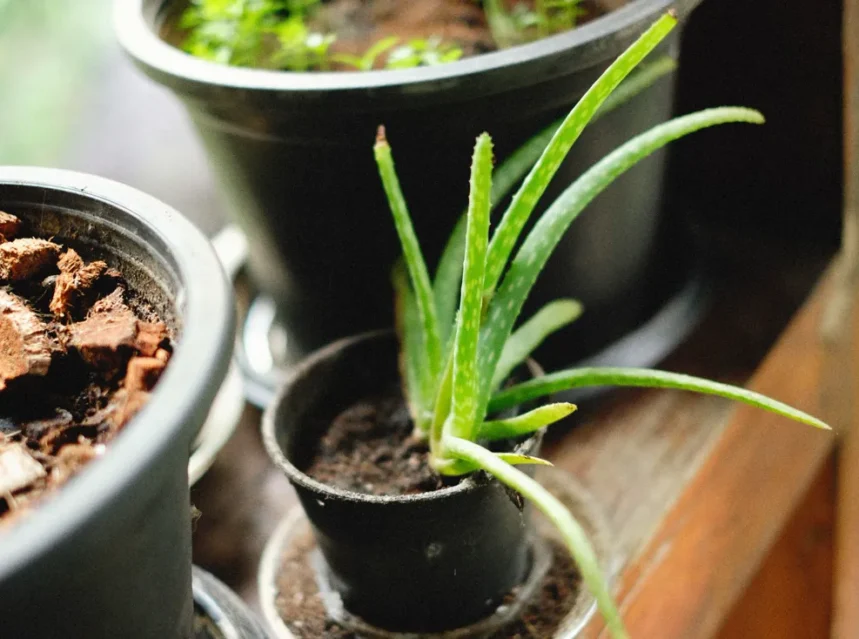
Why is my aloe plant drooping and falling over? The two big causes pull in opposite directions — overwatering rots the roots so the plant can no longer anchor itself, while too little light makes the leaves stretch, flatten and flop outward. Once you spot which one it is, an aloe usually stands tall again with a simple change.
Quick answer: Drooping with a mushy base and soggy soil means overwatering and root rot. Leaves that flop outward, pale and stretched, in a dim spot mean too little light. Cold, a top-heavy pot and rare underwatering are the other causes. Match the cause below.
🧰 In a hurry? Jump straight to our tested picks for this guide ↓
Why is my aloe plant drooping? Quick diagnosis
| What you see | Most likely cause |
|---|---|
| Drooping, soft mushy base, soggy soil | Overwatering and root rot |
| Leaves flop outward, pale, stretched, dim spot | Too little light |
| Thin, flat leaves after weeks of dry soil | Underwatering (rare) |
| Sudden droop after a cold night | Cold damage |
| Tall plant tipping in a shallow pot | Top-heavy or wrong pot |
| Weak, floppy growth after heavy feeding | Over-fertilising |
Overwatering: the number one cause
Overwatering droops more aloes than anything else. Aloe is a succulent that stores water in its leaves, so constantly wet soil rots the roots.
Once the roots rot, they can no longer anchor or feed the plant, so it flops and the base turns soft and mushy. Unpot the aloe, cut away any smelly, dark roots, and repot into fresh, gritty, free-draining mix. Then water only when the soil is almost completely dry, treating it as root rot if the base is soft. The Missouri Botanical Garden stresses that aloe needs sharp drainage and dry spells.
Too little light: the outward flop
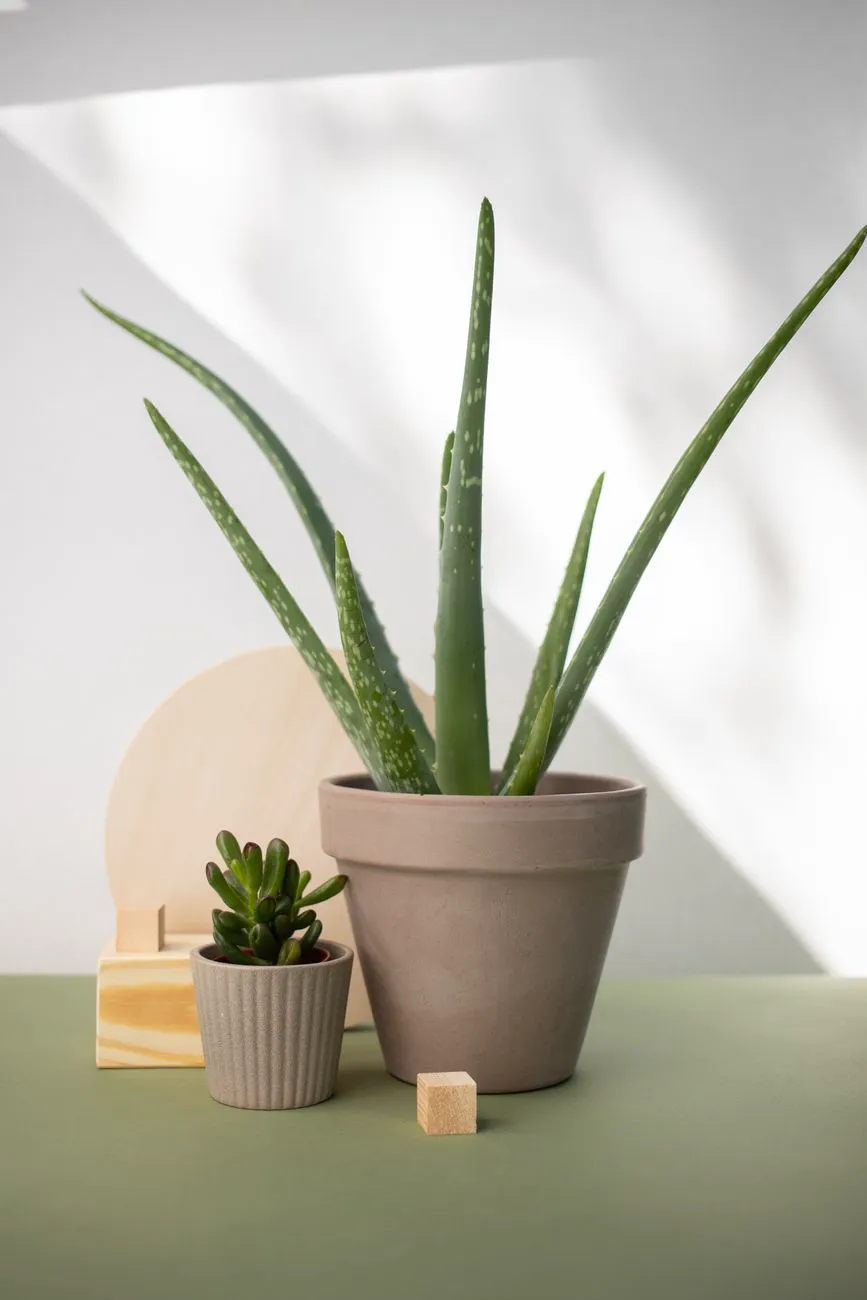
The other big cause looks quite different. In a dim spot, aloe leaves stretch towards the light, grow pale and thin, and flop outward from the centre instead of standing upright.
Aloe needs plenty of light — at least six hours of bright, direct or dappled sun a day. Move it to your sunniest windowsill, or add a grow light in a dark room. The New York Botanical Garden library points to low light as a leading reason aloes flop over.
Underwatering, cold and feeding
Underwatering can droop an aloe too, though it takes weeks of neglect. Without stored water the leaves go thin and lose their firm, upright stance, so give a thoroughly dried-out plant a good soak.
Cold is a quicker danger. Aloe is frost-tender and dislikes anything below about 10°C (50°F), which can make the leaves soften and droop, so keep it warm in winter. And go easy on feed, as too much fertiliser pushes weak, floppy growth. The Clemson Cooperative Extension advises light feeding for succulents.
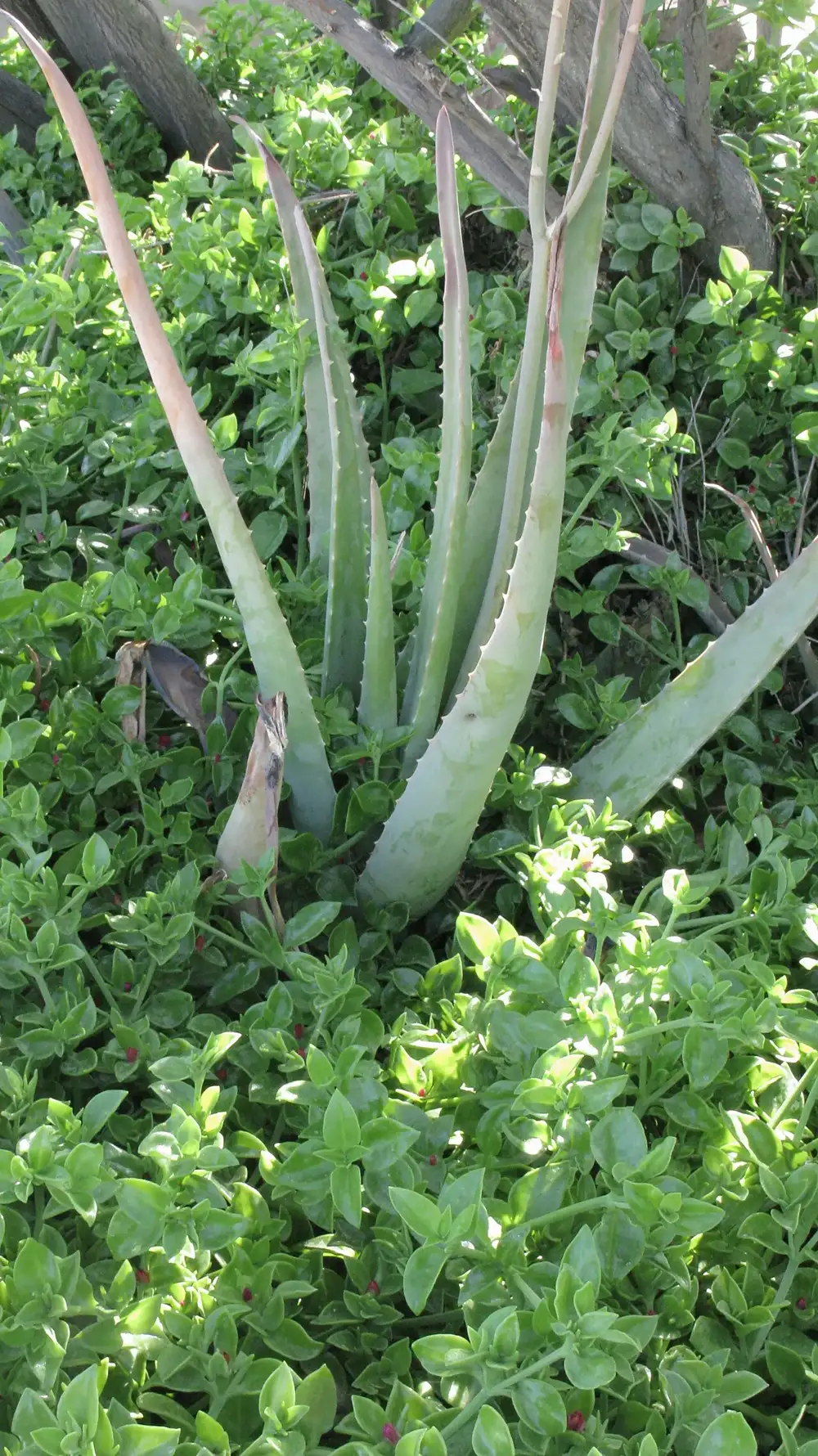
Top-heavy plants and the right pot
Sometimes the plant is simply top-heavy. A tall aloe, or one with lots of offset “pups”, can tip over in a light or shallow pot even when it is perfectly healthy.
Repot it into a heavier, slightly deeper pot for stability, and remove some of the pups to replant separately. This lightens the load and gives you free new plants. Our repotting guide shows how.
Drooping aloe in India
Two settings droop aloe fast. Overwatering and the humid monsoon, when the soil stays wet, are the usual culprits.
In India, aloe vera (ghritkumari) grows easily in the sun but rots in soggy monsoon soil, so water sparingly and move pots under cover during heavy rain. Give it a bright, sunny spot and a very gritty, free-draining mix. Adding coarse sand keeps the roots dry through the wettest weeks. Terracotta pots help here too, since they let the soil breathe. Our aloe vera care guide has more.
Sun, soil and watering to keep aloe upright
Most drooping traces back to three basics: light, soil and water. Get these right and firm, upright leaves follow.
First, light. Aloe wants a bright spot with several hours of sun each day. A south- or west-facing window suits it well. In a dim corner the leaves stretch and flop, so move the pot closer to the glass.
Next, soil. Aloe roots hate sitting wet. Use a gritty cactus or succulent mix, or add sharp sand and perlite to ordinary potting soil. The pot must have drainage holes. Terracotta helps too, because it dries faster than plastic.
Finally, water. Let the mix dry out almost fully between drinks. In summer that often means a soak every two to three weeks. In winter the plant rests, so water even less. When you do water, tip away anything that collects in the saucer.
How to prevent your aloe drooping again
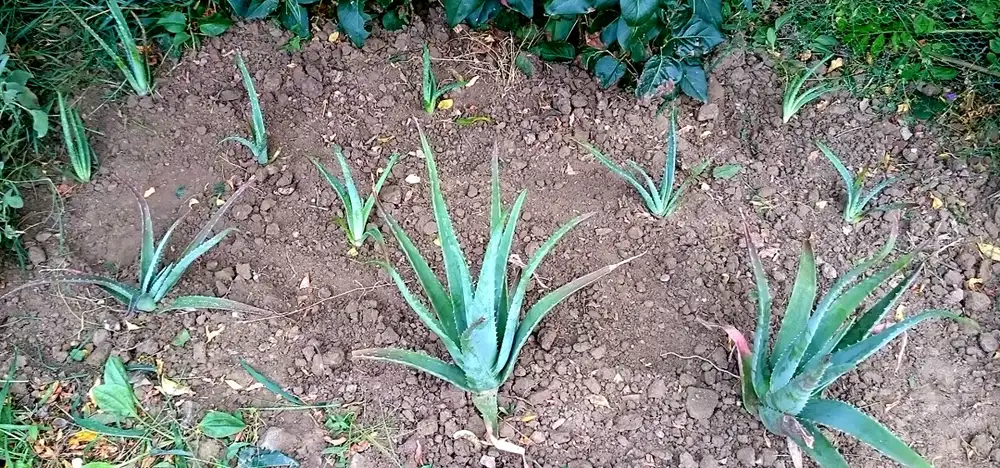
Prevention is easier than a rescue. A few simple habits keep an aloe standing for years.
Check the soil before every watering. Push a finger in, and only water when it feels dry to the knuckle. When in doubt, wait a few more days. Aloe forgives a dry spell far more than a soggy one.
Turn the pot a quarter every week or two. This stops the plant leaning toward the window and keeps growth even. It is a small move that pays off over time.
Feed lightly, and only in spring and summer. A weak, half-strength succulent feed once a month is plenty. Skip feeding in autumn and winter.
Repot every couple of years into fresh, gritty mix. Remove crowded pups as you go. A stable, well-anchored plant rarely tips. For year-round guidance, see our succulent care for beginners guide.
How to fix a drooping aloe plant
- Feel the soil and base — if soggy and soft, unpot, remove rot and repot in dry, gritty mix.
- If leaves are stretched and pale, move the plant to a much brighter, sunny spot.
- Water only when the soil is nearly dry, and never leave it standing in water.
- Keep the plant above 10°C and ease off feeding.
- Repot a top-heavy aloe into a heavier pot and remove some pups.
Firm, upright, plump leaves growing from a stable base are the sign your aloe has recovered.
How long recovery takes
Patience helps here. An overwatered aloe needs time to grow fresh roots after repotting. Give it a warm, bright spot and hold off on water while it settles. New firm growth often shows within a few weeks.
A light-starved aloe firms up faster once you move it into the sun. However, the leaves that already stretched and bent stay that way. New leaves from the centre come in compact and upright instead. Over a season, that fresh growth reshapes the whole plant. For more on watering habits, see our how often to water plants guide.
Frequently asked questions
Can a drooping aloe plant recover?
Usually yes. If it is drooping from low light, it firms up once moved to a sunny spot, though stretched leaves stay bent. Overwatered aloes recover after you remove the rotten roots and repot into dry, gritty mix and cut back on watering.
Is my aloe drooping from over or underwatering?
Check the soil and base. Soggy soil with a soft, mushy base means overwatering and root rot, by far the more common cause. Bone-dry soil for weeks with thin, flat leaves means underwatering, which is rarer.
Why is my aloe flopping over and falling flat?
Flopping outward from the centre, with pale, stretched leaves, almost always means too little light. The leaves grow weak and elongated reaching for the sun. Move the plant to a bright, sunny window and new growth will come in firm and upright.
How much light does an aloe plant need?
At least six hours of bright light a day, ideally direct or lightly dappled sun. In a dim room the leaves stretch and flop, so choose your sunniest spot or supplement with a grow light to keep the plant compact and upright.
How do I fix root rot in a drooping aloe?
Act quickly. Slide the plant out of its pot and shake the old mix away from the roots. Cut off every black, soft or smelly root with clean scissors, and keep only firm white or tan ones. Let the plant air-dry for a day or two so the cuts seal. Then repot into fresh, gritty, fast-draining mix in a pot with drainage holes. Wait about a week before the first light watering, and keep it in bright light.
Should I cut off drooping aloe leaves?
Only remove leaves that are mushy, brown or clearly dead. A leaf that droops but stays firm and green still feeds the plant, so leave it alone. Once light and watering improve, new leaves emerge upright, though the old bent ones never straighten. Cut unwanted leaves right at the base with a clean blade, and take just a few at a time. Removing too much at once weakens a plant that is already stressed.
Why is my aloe drooping after repotting?
Some sagging after repotting is normal. The roots take time to settle into the new mix, so the plant cannot support its leaves fully for a week or two. Keep it in bright indirect light, hold off on water for about a week, and skip fertiliser. If the drooping worsens and the base feels soft, check for damaged or rotting roots. Firm roots plus patience usually solve the problem on their own.
Can a pot that is too big make aloe droop?
Yes, indirectly. Aloe roots stay shallow, so a wide pot keeps a large volume of soil damp long after the roots have taken what they need. That constant moisture leads to rot, and rotting roots cannot hold the leaves up. Pick a pot only slightly wider than the rosette, with drainage holes. Terracotta helps in humid climates, including coastal India, because the walls let water evaporate and the mix dries faster.
Why are my aloe leaves bending down and browning at the tips?
Brown, dry tips on bending leaves usually point to underwatering or very dry air combined with heat. The plant pulls water from leaf tips first. Water deeply until it runs from the drainage hole, then let the mix dry completely before the next drink. Brown tips with soft, dark bases mean the opposite problem, so check the base too. Salt build-up from hard tap water or heavy feeding can also scorch tips.
Can cold weather make an aloe droop?
Yes. Aloe dislikes cold and starts to sag when temperatures drop below roughly 10°C, especially if the soil is wet. Frost damages leaf tissue and leaves it limp and translucent. Move potted plants indoors or under cover on cold nights, which matters in north Indian winters and in temperate gardens from autumn onward. Keep the mix dry during cold spells, because cold plus wet soil causes far more damage than cold alone.
Is it normal for a big aloe to lean or fall over?
Older aloes often get top-heavy and lean, especially when they grow a long bare stem. This is natural ageing rather than illness, though weak light makes it worse. You can behead the rosette, let the cut callus for several days, then replant it in dry gritty mix to root. The bare stump often sprouts pups too. Rotating the pot every few weeks also keeps growth even and reduces leaning.
How long does a drooping aloe take to recover?
Expect weeks, not days. A light-starved aloe firms up in its new spot within two to four weeks, as fresh leaves appear upright and thick. A plant recovering from root rot needs longer, often a month or two, because it must build new roots first. Old drooping leaves stay bent, so judge recovery by the new centre growth. Steady light, a dry-then-soak watering rhythm, and patience do most of the work.
Sources and further reading
Related guides
- Aloe vera care
- Root rot
- Why are my aloe leaves turning brown?
- How to repot a plant
- How often to water plants
- Succulent care for beginners
Still stuck? Ask the Plant Doctor
Describe the problem — yellow leaves, holes, no flowers — and get a clear answer in seconds. FreeAI can make mistakes. Answers are guidance, not a guarantee — check anything important against the guide it links to, and always read the label on any product before you use it.