Why Is My Dieffenbachia Drooping? Causes and Fixes
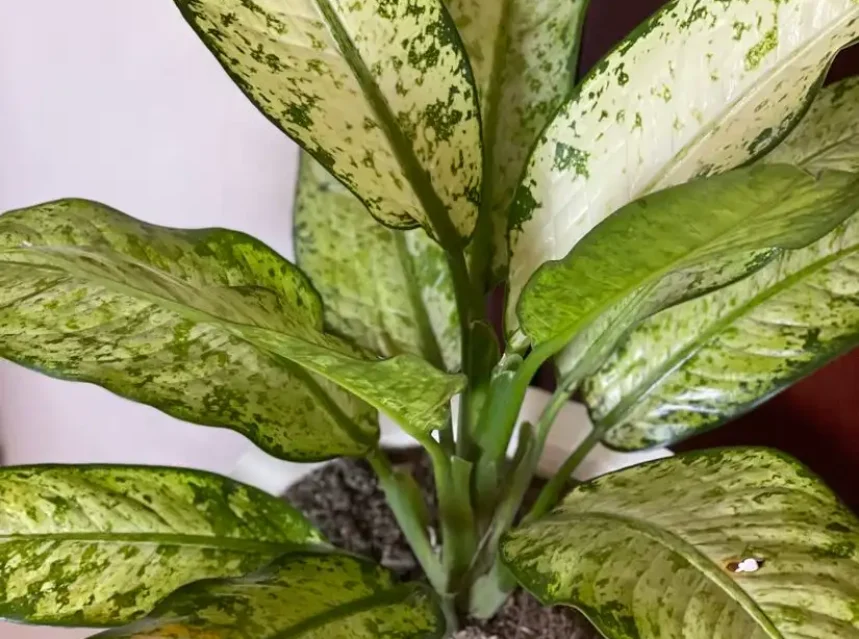
Why is my dieffenbachia drooping? Watering extremes are the top cause — both thirst and overwatering leave a dumb cane unable to hold its leaves up, so they wilt and sag. Cold, low humidity and too little light cause the same droop.
Quick answer: Drooping with dry soil means thirst. Drooping with soggy soil, yellow leaves and a sour smell means overwatering and root rot. Sudden droop with mushy leaves after cold means cold damage. Match the cause below.
🧰 In a hurry? Jump straight to our tested picks for this guide ↓
Why is my dieffenbachia drooping? Quick diagnosis
| What you see | Most likely cause |
|---|---|
| Drooping with dry soil, crispy edges | Underwatering |
| Drooping with soggy soil, yellow leaves, sour smell | Overwatering and root rot |
| Sudden droop, mushy leaves after cold | Cold damage |
| Drooping with curled, crispy edges in dry air | Low humidity |
| Weak, leaning, drooping growth in a dark spot | Too little light |
| Sudden droop soon after repotting | Transplant shock or root-bound roots |
| Droop with fine webbing, sticky residue or tiny bugs | Pests |
| An old lower leaf slowly drooping | Natural ageing |
Underwatering: the common droop
Thirst droops dumb canes often. When the soil dries out too far, the plant cannot hold its big leaves up, and they wilt and sag. The good news is a thirsty dieffenbachia usually perks back up soon after a drink.
The fix is to check the soil. Water when the top few centimetres feel dry, soaking the pot until it drains. Keep the soil lightly, evenly moist, never bone dry. The Garden For Indoor guide covers reviving a drooping dumb cane. Our dieffenbachia care guide has the full routine.
Overwatering and root rot
Overwatering droops a dumb cane too, which trips people up. Soggy soil rots the roots, so they cannot take up water. The leaves then wilt, yellow and turn mushy, even though the pot is wet, often with a sour smell.
So check the soil first. If it is wet and the plant droops, stop watering and let it dry out. Treat a mushy, smelly base as root rot, and repot into fresh, well-draining mix in a pot with drainage holes. Our watering guide helps you tell thirst from overwatering.
Cold: a common winter cause
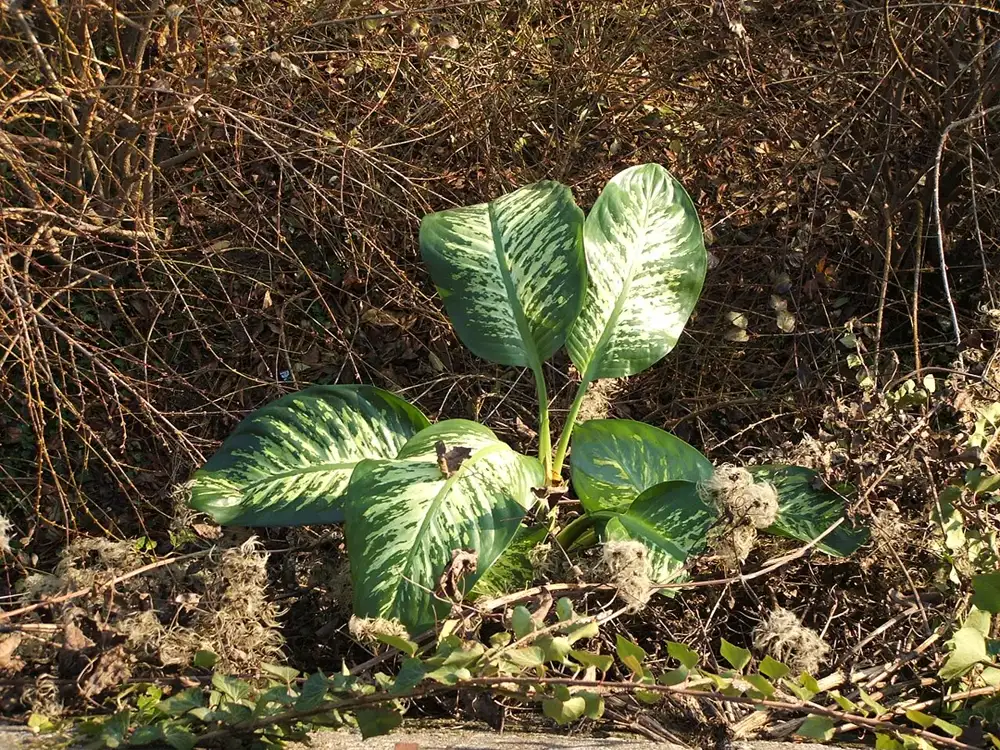
Cold is a big trigger for dumb canes. They are tropical and hate the cold. A spot near a frosty window, a cold draught, or a chilly room can droop the plant fast, often with mushy, brown leaves.
So keep it warm, ideally above about 16°C. Move it away from cold windows, draughts and open doors in winter. The Royal Horticultural Society notes dieffenbachias need warmth and dislike cold draughts. Cut off any mushy, cold-damaged leaves, then keep its care steady and let it recover.
Humidity and light
Dry air adds to the droop. Dumb canes like moderate to high humidity, around 50% or more. In dry, heated or air-conditioned rooms the leaves lose water fast and droop. A pebble tray or humidifier helps, as our humidity guide explains. The University of Wisconsin Extension recommends warm, humid conditions and bright, indirect light for dieffenbachia.
Light matters too. In a dark corner the plant grows weak and leggy, and the leaves droop and lean toward the light. So give it bright, indirect light, out of harsh direct sun. A grow light helps in a dim room, as our grow light guide covers. This is the same balance other aroids like, as our pothos drooping guide shows.
Repotting shock and root-bound roots
A fresh droop right after repotting is common. Repotting disturbs the roots, so the plant wilts for a few days while it settles. This is transplant shock, and it usually passes on its own.
To help, keep the care steady. Water gently, avoid temperature swings, and give bright, indirect light. Do not feed a stressed plant for a few weeks. Choose a pot only about 5 cm wider than the old one, since too much soil stays wet and rots the roots.
A plant that has outgrown its pot droops for the opposite reason. When roots circle the pot or poke through the drainage holes, the soil holds little water. So it dries out fast and you find yourself watering constantly. Move it up one pot size into fresh mix, and the drooping usually eases.
Pests that make a dumb cane droop
Sap-sucking pests can also droop a dieffenbachia. Spider mites, aphids and mealybugs feed on the leaves and drain their moisture, so the foliage weakens and sags. Spider mites in particular love the same dry, heated air that already stresses the plant.
Check the leaf undersides and stem joints for clues. Look for fine webbing, tiny moving dots, sticky residue or small cottony white spots. First, rinse the plant in the shower to knock pests off. Next, wipe the leaves and treat with insecticidal soap or neem oil, repeating weekly until they clear. Our spider mites guide and mealybug guide walk through the steps.
Keep your dieffenbachia from drooping
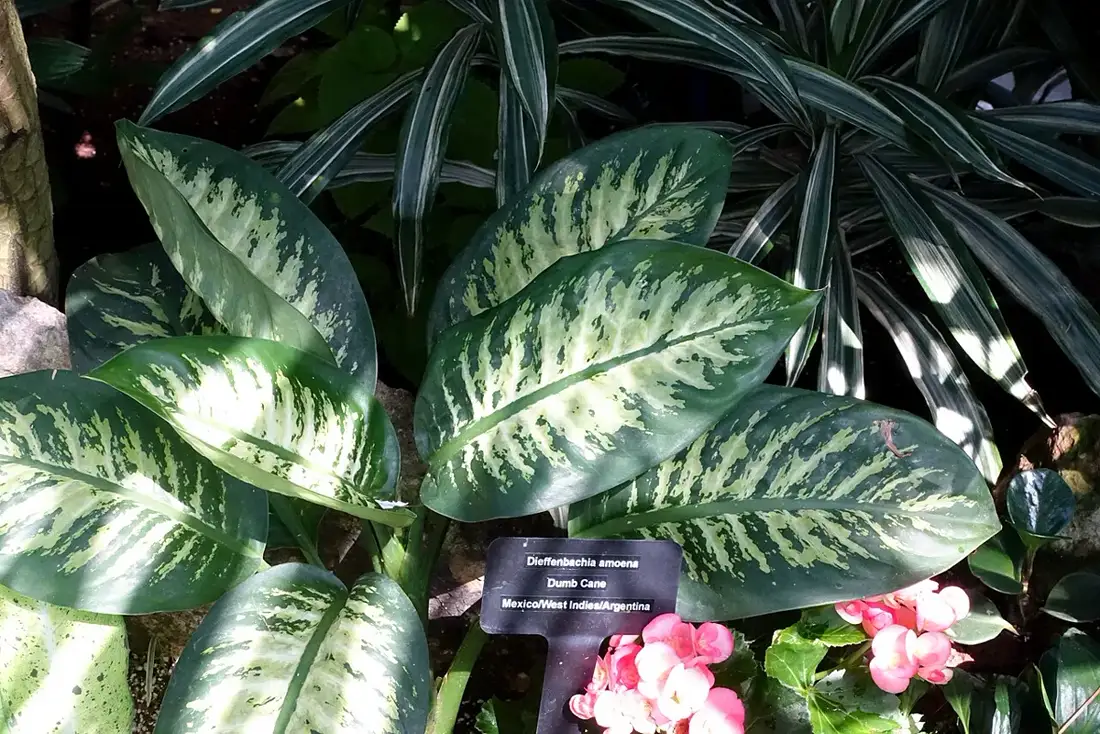
Steady care prevents most droops. Get the basics right and your dumb cane holds its leaves firm and upright.
- Water: soak when the top few centimetres feel dry, then let the pot drain fully. Never leave it sitting in water.
- Soil and pot: use a light, well-draining mix in a pot with drainage holes. Wet, heavy soil is the main cause of rot.
- Light: give bright, indirect light, out of harsh direct sun that scorches the leaves.
- Warmth: keep it above about 16°C, away from cold windows, draughts and heating vents.
- Humidity: aim for around 50%, using a pebble tray or humidifier in dry rooms.
- Feeding: feed lightly with a balanced houseplant fertiliser through spring and summer, then rest it in winter.
Note that the sap of a dumb cane is an irritant. So wear gloves when you repot or prune, and keep it away from curious pets and children.
Dieffenbachia drooping in India
Two settings droop dumb canes in India: overwatering and dry, air-conditioned rooms.
Dieffenbachia grows well as an indoor plant across warm parts of the country. But it rots if overwatered, especially in the humid monsoon when the soil stays damp longer, so water much less then. In dry AC rooms the leaves droop and crisp, so raise humidity with a tray. Give it bright, indirect light and keep it warm in the cooler hill-station winters. Our dieffenbachia guide has more.
How to revive a drooping dieffenbachia
- Feel the soil first — dry means thirst, soggy means overwatering.
- For dry soil, water thoroughly; it usually perks up soon after.
- For wet soil, stop watering and check the roots for rot.
- Keep it warm, above about 16°C, away from cold windows and draughts.
- Raise humidity with a pebble tray or humidifier in dry rooms.
- Give bright, indirect light, adding a grow light in a dark corner.
Firm, upright leaves within a day or two are the sign your dumb cane has recovered.
Frequently asked questions
Is my dieffenbachia drooping from over or underwatering?
Feel the soil to tell them apart. Drooping with dry soil means thirst, and the plant usually perks up after watering. Drooping with soggy soil, yellow leaves and a sour smell means overwatering and root rot, which needs less water and better drainage.
How quickly will a drooping dumb cane recover?
A thirsty dieffenbachia often perks back up within a day of a thorough watering. Recovery from root rot or cold damage takes longer, since you have to trim the damaged parts and repot or warm the plant, but healthy new growth follows once the cause is fixed.
Why is my dieffenbachia drooping in winter?
Usually cold. Dumb canes are tropical and droop fast near a frosty window or in a chilly room, often with mushy leaves. Move it somewhere warm, above about 16°C, away from cold draughts, cut off any mushy leaves, and it should recover.
Does low humidity make a dieffenbachia droop?
It can. Dumb canes like humidity around 50% or more, and dry, heated air makes them lose water faster than the roots replace it, so the leaves droop. Raising humidity with a pebble tray or humidifier, and keeping the plant away from vents, usually helps.
Why is my dieffenbachia drooping right after repotting?
Some wilting after a repot is normal. Fine feeding roots get broken during the move, so the plant cannot pull up enough water for a few days and the leaves sag. Keep it in warm, bright indirect light, skip direct sun, and water lightly rather than soaking the fresh mix. Most plants firm up within one to two weeks. If the droop keeps worsening and the soil stays wet, the problem is overwatering in the new pot, not shock.
How often should I water a dieffenbachia so it stops drooping?
Water by feel, not by calendar. Push a finger in and water only when the top quarter to half of the mix is dry. In a warm, bright room that usually works out to once every seven to ten days, stretching to two weeks in cool or low-light spots. Humid Indian monsoon weeks need much less water, while dry winter heating or air-conditioning speeds drying up. Always empty the saucer, since roots left standing in water rot quickly.
Can too little or too much light make a dumb cane droop?
Both can. Dieffenbachia wants bright indirect light near an east window or a metre back from a bright one. In deep shade growth slows, stems stretch and weak new leaves hang down. In harsh direct sun the leaves scorch, lose water faster than roots supply it, and wilt during the hottest hours. If your plant only droops in the afternoon and recovers by evening, light and heat are the likely cause rather than watering.
The stem has gone soft and mushy at the base. Can I still save the plant?
Often yes, but you must act fast. Soft, brown tissue at the base means rot, and it spreads upward through the cane. Cut the stem back into firm, white, healthy tissue with a clean blade. Let the cutting dry for a day, then root it in fresh, free-draining mix or water. Throw away the rotted base and its soggy soil. Dumb canes root readily from stem sections, so a rescue cutting usually beats trying to revive the old plant.
Should I cut off the drooping leaves?
Only remove leaves that are yellow, mushy or badly damaged. A leaf that is still green and firm will usually lift again once the cause is corrected, and it keeps feeding the plant meanwhile. Cut damaged leaves at the base of the stalk with clean scissors. After a repot or root-rot trim, removing a few of the worst leaves helps, since a reduced root system cannot support full foliage. Wear gloves, as the sap irritates skin.
Why is my dieffenbachia drooping and yellowing at the same time?
That combination points strongly at overwatering. Roots kept wet cannot take in oxygen, so they start to fail and the plant both wilts and yellows, usually from the lower leaves upward. Check the soil, tip the plant out and look for brown, soft roots. Trim the dead ones, repot into fresh airy mix in a pot with drainage holes, and water sparingly until new growth appears. Steady low light or a cold room makes the same pattern worse.
Can pests make a dieffenbachia droop?
Yes, though pests are a less common cause than water problems. Spider mites, mealybugs, thrips and scale all feed on plant sap, which weakens the leaves and leaves them limp. Look under the leaves and where the leaf stalk meets the stem for fine webbing, sticky patches or small white blobs. Wipe the foliage, rinse the plant in the shower and treat with insecticidal soap or neem oil. Dry indoor air favours spider mites, so raising humidity also helps.
Is a drooping dieffenbachia dangerous to pets or children?
A drooping plant is no more risky than a healthy one, but dieffenbachia is toxic if chewed. The sap holds insoluble calcium oxalate crystals, and the ASPCA lists the plant as toxic to cats and dogs. Chewing causes burning of the mouth, drooling and swallowing trouble. Keep it out of reach of pets and small children, and wear gloves when pruning or taking cuttings. This is general information, not medical or veterinary advice, so contact a professional if anything is eaten.
Related guides
- Dieffenbachia care guide
- Why is my pothos drooping
- Why is my peace lily drooping
- Root rot
- Humidity for houseplants
- How often to water plants
Still stuck? Ask the Plant Doctor
Describe the problem — yellow leaves, holes, no flowers — and get a clear answer in seconds. FreeAI can make mistakes. Answers are guidance, not a guarantee — check anything important against the guide it links to, and always read the label on any product before you use it.