Why Is My Jade Plant Not Growing? Causes and How to Fix It
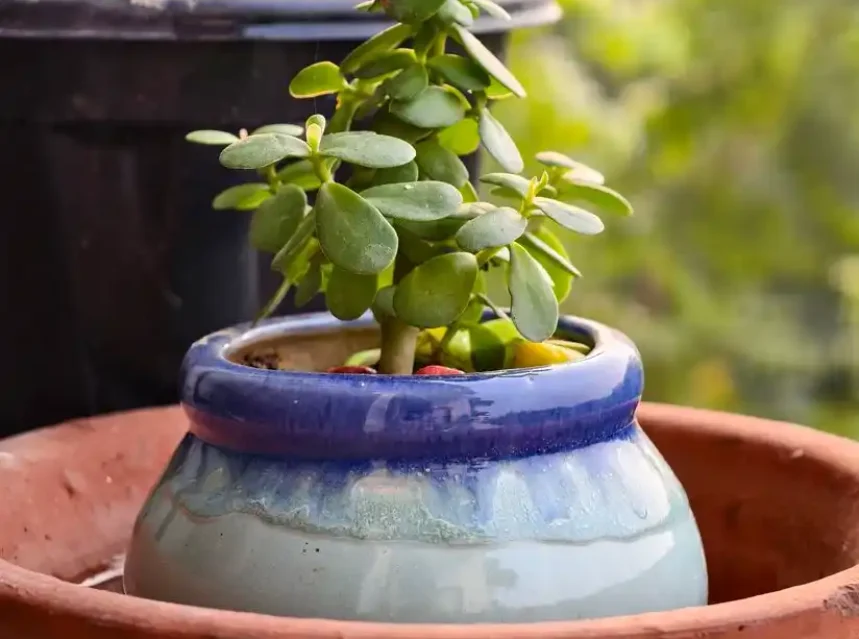
Why is my jade plant not growing? Often nothing is wrong, since jade is a naturally slow grower that rests in winter. When it truly stalls, the usual cause is too little light. Jade needs more sun than most houseplants, so give it a bright spot and be patient.
Quick answer: Move your jade to your sunniest window, since it needs several hours of direct light. Be patient, as jade grows slowly and rests in winter. Do not overwater it or move it to a huge pot. Match the cause below.
🧰 In a hurry? Jump straight to our tested picks for this guide ↓
Why is my jade plant not growing? Quick diagnosis
| What you see | Most likely cause |
|---|---|
| Slow growth on a healthy plant | Normal, jade is slow |
| No growth in autumn and winter | Natural seasonal rest |
| Weak, pale, leggy, stretched stems | Too little light |
| No growth with soggy soil, soft leaves | Overwatering or root rot |
| Shrivelled leaves, bone-dry tiny pot | Underwatering or cramped |
| Same size for a long time in good light | Needs a pot-up and feed |
First, jade is meant to be slow
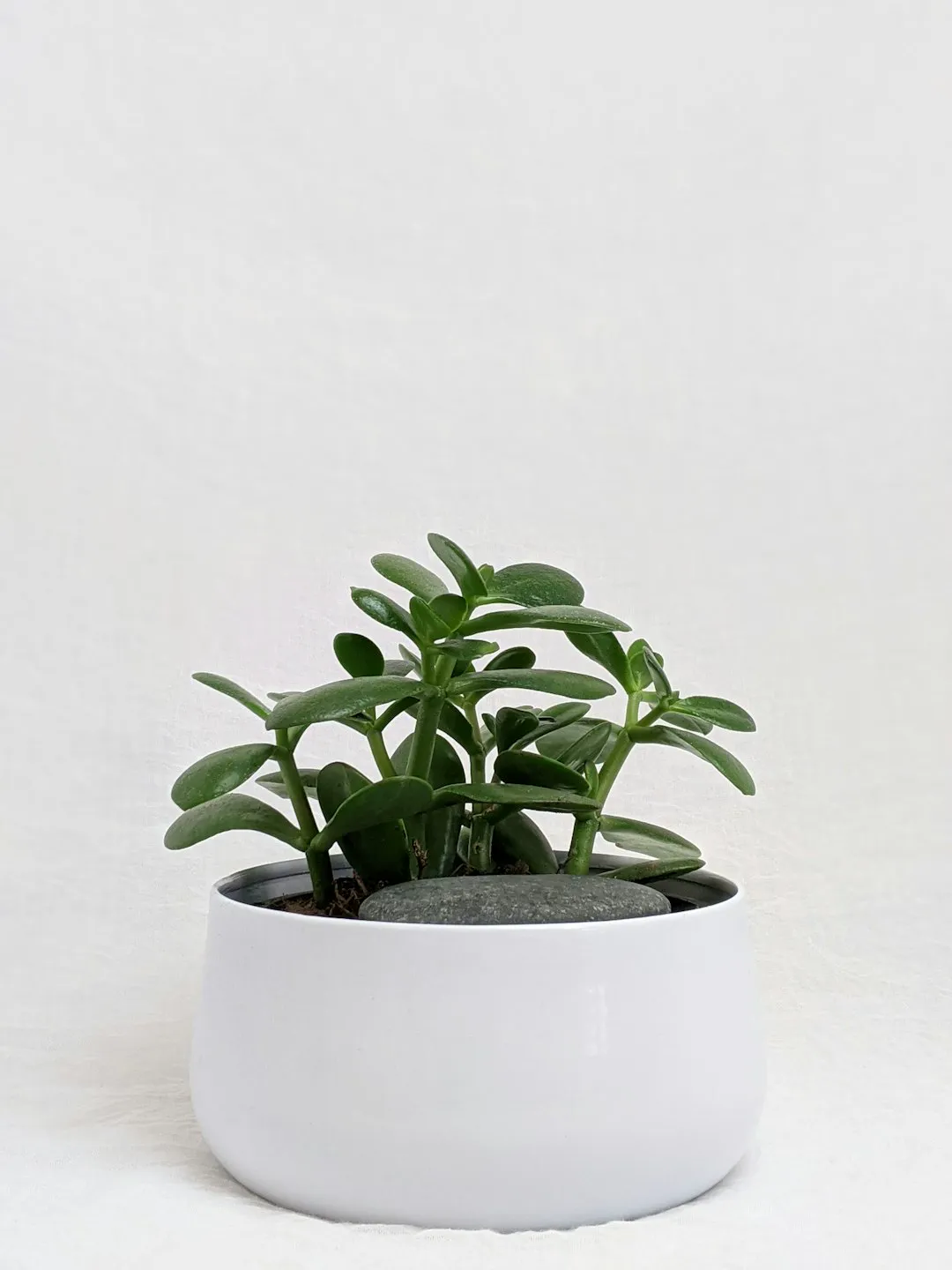
Start by adjusting your expectations, since this saves a lot of worry. Jade plants, or Crassula ovata, are naturally slow growers that put on just a few centimetres a year.
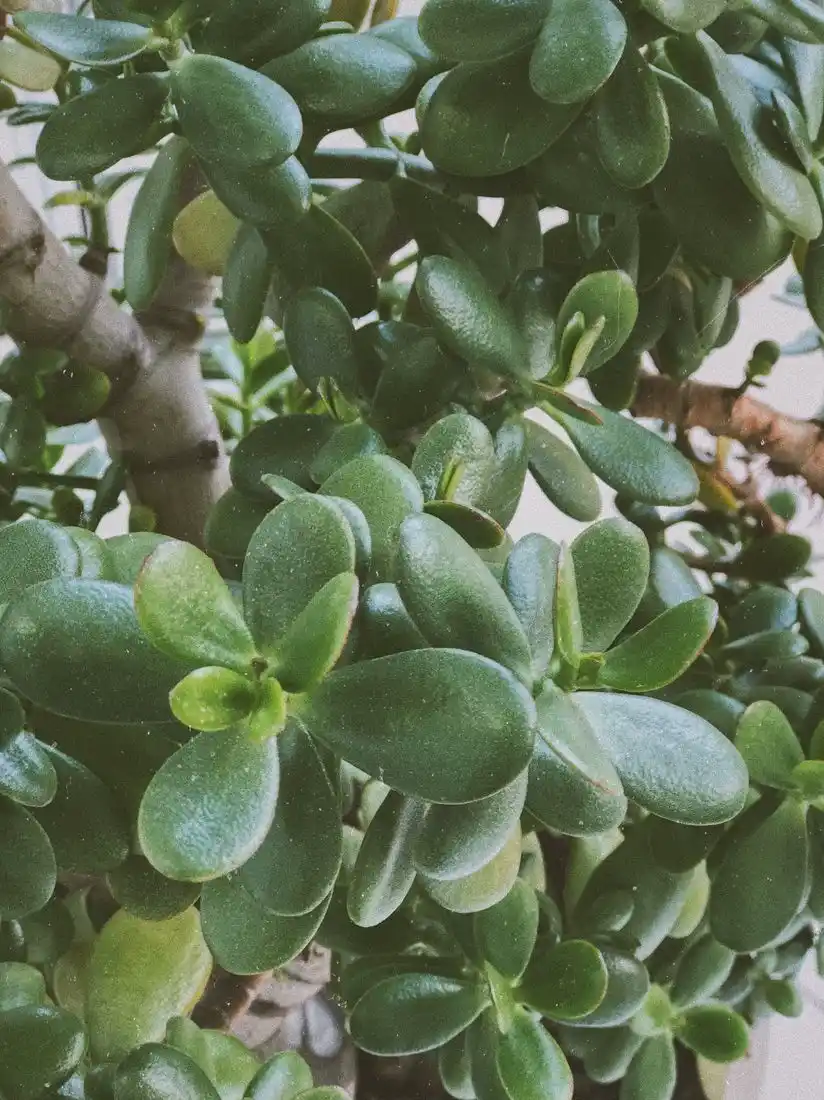
They also rest over autumn and winter, when growth stops almost completely. So a healthy jade that grows slowly, or sits still in the cold months, is behaving exactly as it should, as our jade plant care guide explains. Real trouble looks different, and light is usually the key.
Too little light: the top real cause
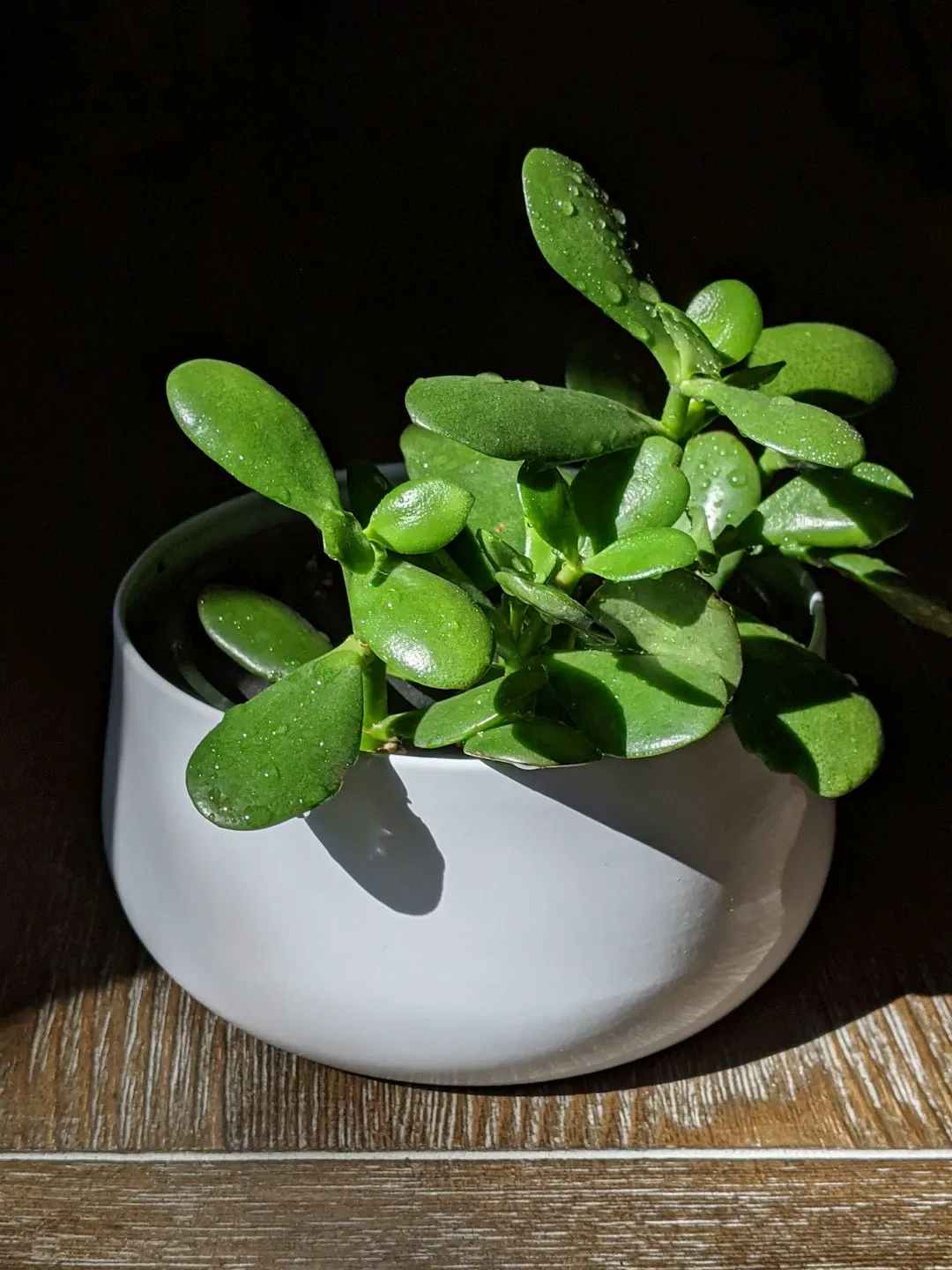
When a jade genuinely will not grow, light is the usual reason. Jade needs far more light than most houseplants, ideally several hours of direct sun a day.
In a dim spot, it makes little or no new growth, and what does come is weak, pale, and stretched. The stems grow thin and leggy as the plant reaches for light, as our leggy jade guide covers. So move yours to your brightest window, ideally south or west facing, or add a grow light, as our grow light guide explains.
Winter rest is normal
Sometimes your jade is simply resting. Like most succulents, jade slows right down from autumn through winter, when the light is weak and the days are short.
Growth all but stops, then resumes in spring. So a jade that is not growing in winter is usually just dormant, not failing. Ease right off the water and stop feeding through this rest, and it will pick up again when the bright, warm days return.
Overwatering stalls and rots it
Watering is where most jade problems start, and overwatering is the big one. Jade stores water in its fat leaves, so soggy soil quickly rots the roots, and rotted roots cannot feed new growth.
The signs are soft, mushy, or yellowing leaves, dropped leaves, and wet soil. So let the soil dry out well between waterings, and only water when the top two inches feel dry, in a pot with drainage holes. If the soil stays soggy and the plant has stalled, check for root rot, as our watering guide covers.
But do not keep it bone-dry either
Underwatering stalls a jade in the other direction. While jade is drought-tough, a plant left bone-dry for too long, especially in a tiny pot, runs out of water and stops growing.
The leaves then wrinkle and shrivel, as our shrivelling jade guide explains. So aim for a deep soak, then let the soil dry fully before the next drink. This wet-then-dry rhythm keeps the plant hydrated enough to grow without ever sitting wet.
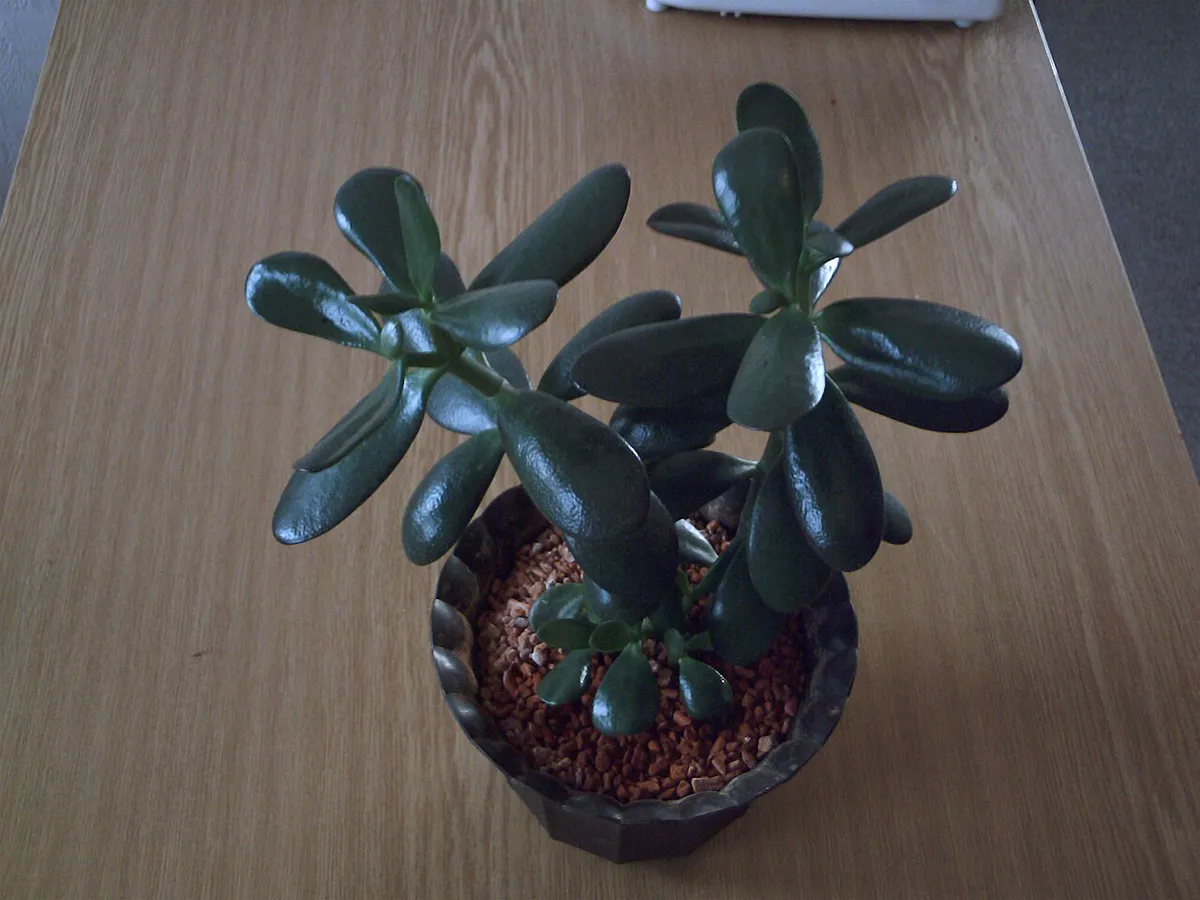
Pot size and feeding
A crowded or hungry jade can stall too. If yours has sat in good light at the same size for a long time, it may have used up its pot.
So check the roots, and if they are packed, move it up one size into a gritty, free-draining mix, as our succulent soil guide covers. A light feed once or twice through spring and summer helps it bulk up. Jade grows fine slightly pot-bound, though, so do not jump to a big pot, which holds too much water and risks rot.
Check for mealybugs
One cause people often miss is pests. Jade plants are prone to mealybugs, small white cottony insects that hide where the leaves meet the stems.
They feed on the plant’s sap, which weakens it and stalls new growth. So look closely into the leaf joints and under the leaves for fuzzy white specks or a sticky residue. If you find them, wipe them off with a cotton bud dipped in diluted rubbing alcohol, and repeat every few days until they are gone. A pest-free jade has the energy to grow again.
Warmth, and a tip to encourage growth
A couple of final points help. Jade grows best in warmth, so keep it above about 10C and away from cold draughts, since chilly conditions stall it further.
To encourage a fuller, bushier plant, you can pinch out the growing tips in spring. This prompts the jade to branch and put out new shoots, rather than staying tall and sparse. The Royal Horticultural Society recommends bright light and free-draining compost for crassula. Jade is a slow grower at the best of times, so give it all the light you can.
How to get a jade plant growing again
- Give it lots of light, ideally direct sun at a bright window.
- Be patient, since jade is slow and rests in winter.
- Let the soil dry between deep waterings, never soggy.
- Do not leave it bone-dry in a tiny pot either.
- Pot up one size and feed lightly if it is root-bound.
- Keep it warm, and pinch the tips to encourage branching.
Firm, plump leaves, sturdy stems, and fresh growth at the tips are the sign your jade plant is thriving again.
Jade plant not growing in India
Two things stall jade plants in India: too little light indoors and monsoon overwatering.
Jade loves the bright Indian sun and grows well on a sunny balcony or windowsill. But indoors, away from a window, it stalls and stretches, so give it your sunniest spot with several hours of light. In the humid monsoon the soil stays wet for days, so overwatering and rot become the real risk, and growth stops. So use a gritty, free-draining mix and water far less in the rains. Bright light and careful watering are what keep a jade healthy. Our jade plant guide has more.
Frequently asked questions
How fast should a jade plant grow?
Slowly. Jade plants are naturally slow growers that add only a few centimetres a year, mostly in spring and summer. So do not expect fast growth like a pothos. They also rest in winter, when growth stops. If yours grows slowly but has firm, healthy leaves and good colour, it is almost certainly fine, and patience is all it needs.
Why is my jade plant not growing new leaves?
Usually too little light or a natural winter rest. Jade needs several hours of bright, direct light to push new leaves, and it goes dormant in the cold months. So move it to your sunniest window and be patient if it is winter. Also check you are not overwatering, since soggy roots stall growth and can rot the plant.
Does a jade plant need direct sunlight to grow?
Yes, more than most houseplants. Jade grows best with several hours of direct sun a day, such as at a south or west-facing window. Without it, the plant makes little growth and turns weak, pale, and leggy. Introduce strong sun gradually if the plant has been in shade, though, so the leaves do not scorch as they adjust to the brighter light.
Should I repot my jade plant to make it grow?
Only if it is root-bound, and ideally in spring. A jade in good light that has stopped growing may have filled its pot, so moving it up one size with fresh, gritty mix can help it grow. But jade grows fine slightly pot-bound, so avoid a large pot, since too much wet soil around the roots often causes rot rather than growth.
How often should I fertilise a jade plant?
Sparingly. In the wild it grows in lean, rocky soil, so heavy feeding does more harm than good and can scorch the roots. A balanced or cactus fertiliser diluted to half strength, applied once every three to four months through spring and summer, is plenty. Always water first, then feed, so the fertiliser never hits dry roots. Stop completely in winter. If growth has stalled through poor light, extra feed will not restart it.
What soil does a jade plant need to grow well?
It needs a gritty, fast-draining mix that dries out between waterings. A ready-made cactus and succulent compost works, or blend roughly two parts potting mix with one part coarse sand and one part perlite or fine grit. Avoid dense, peaty compost that stays wet for days, since that suffocates the roots and stalls growth. The pot must have a drainage hole, and terracotta helps the root ball dry evenly.
Is it normal for a jade plant to stop growing in winter?
Completely normal. Short days, weak light and cool temperatures push jade into a resting phase where it makes little or no new growth. Cut watering back to roughly once a month, stop feeding, keep it in the brightest spot available, and protect it from cold draughts and unheated windowsills. Growth resumes on its own in spring. This rest is healthy, and mature plants often flower after a cool, dry winter.
Can overwatering stop a jade plant from growing?
Yes, and it is a frequent hidden cause. Roots sitting in wet soil cannot take up oxygen, so they begin to rot and the plant simply stalls, sometimes for months, before any leaf drops. Look for a soft, dark base to the stem or a sour smell from the compost. Let the soil dry completely, then check the roots. Trim away any brown, mushy sections and repot into fresh, gritty mix.
Will pruning help my jade plant grow?
Pruning does not speed a jade up, but it directs the growth it makes. Cutting a stem just above a leaf node in spring usually triggers two or more new shoots there, giving a fuller, stronger plant instead of a few long stems. Remove no more than a quarter at a time and use clean, sharp tools. The trimmed pieces root easily after a few days of drying, so nothing is wasted.
How big does a jade plant get, and how long does it live?
Given good light and steady care, an indoor jade commonly reaches around one to one and a half metres over many years, developing a thick, tree-like trunk. Outdoors in frost-free climates it can grow taller still. These are famously long-lived plants, often passed down through families and thriving for decades in the same household. Slow progress is therefore not failure, it is simply how the species grows.
Does a jade plant grow all year in India?
Almost, but not evenly. In most Indian cities the warm, bright months of spring and autumn bring the strongest growth. Growth slows during the fiercest summer heat, when the plant protects itself, and again in the monsoon, when constant damp raises the risk of root rot more than it encourages new shoots. Water less in the rains, keep pots under cover, and expect visible new leaves once the weather steadies.
Sources and further reading
Related guides
- Jade plant care guide
- Why is my jade plant shriveling
- Why is my jade plant leggy
- Why is my jade plant dropping leaves
- Best soil for succulents
- Best grow lights
Still stuck? Ask the Plant Doctor
Describe the problem — yellow leaves, holes, no flowers — and get a clear answer in seconds. FreeAI can make mistakes. Answers are guidance, not a guarantee — check anything important against the guide it links to, and always read the label on any product before you use it.