Why Is My Lucky Bamboo Turning Yellow? Causes and Fixes
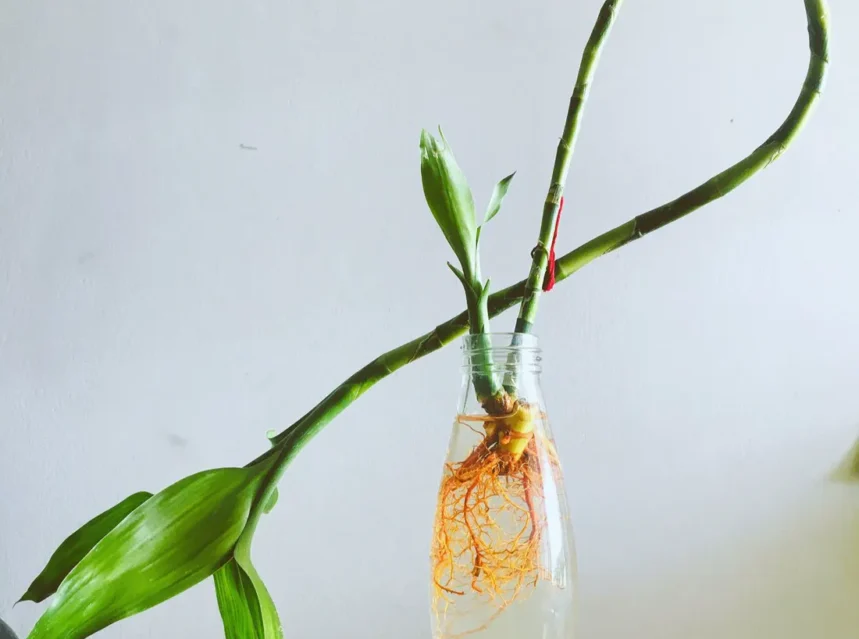
Why is my lucky bamboo turning yellow? Most often it is the water — lucky bamboo is very sensitive to the chlorine and fluoride in tap water — with too much light, over-feeding, stale water and root rot behind the rest. One rule matters most: a yellow leaf is usually fixable, but a yellow stalk is far more serious.
Quick answer: Yellowing tips and leaves usually mean tap-water chemicals, wrong light, or too much fertiliser. A stalk yellowing from the bottom often points to feeding or rot, and a fully yellow, soft stalk rarely recovers. Read your symptom in the table below, then match it to the fix.
🧰 In a hurry? Jump straight to our tested picks for this guide ↓
Why is my lucky bamboo turning yellow? Quick diagnosis
First, look closely at exactly what has gone yellow. The pattern tells you the cause, so use this at-a-glance chart before you change anything.
| What you see | Most likely cause |
|---|---|
| Yellow, then brown leaf tips | Chlorine or fluoride in tap water |
| Pale, washed-out or yellow leaves in a bright spot | Too much direct light |
| Yellow leaves that drop in a dark corner | Too little light |
| Stalk yellowing from the bottom up | Too much fertiliser |
| Yellowing with cloudy, smelly water | Old, stale water |
| Yellow, soft stalk with dark, mushy roots | Root or stalk rot (hard to reverse) |
| One or two lowest leaves yellow, top green | Normal ageing — no action needed |
| Yellow speckling with fine webbing or white fluff | Sap-sucking pests |
Tap water chemicals: the number one cause
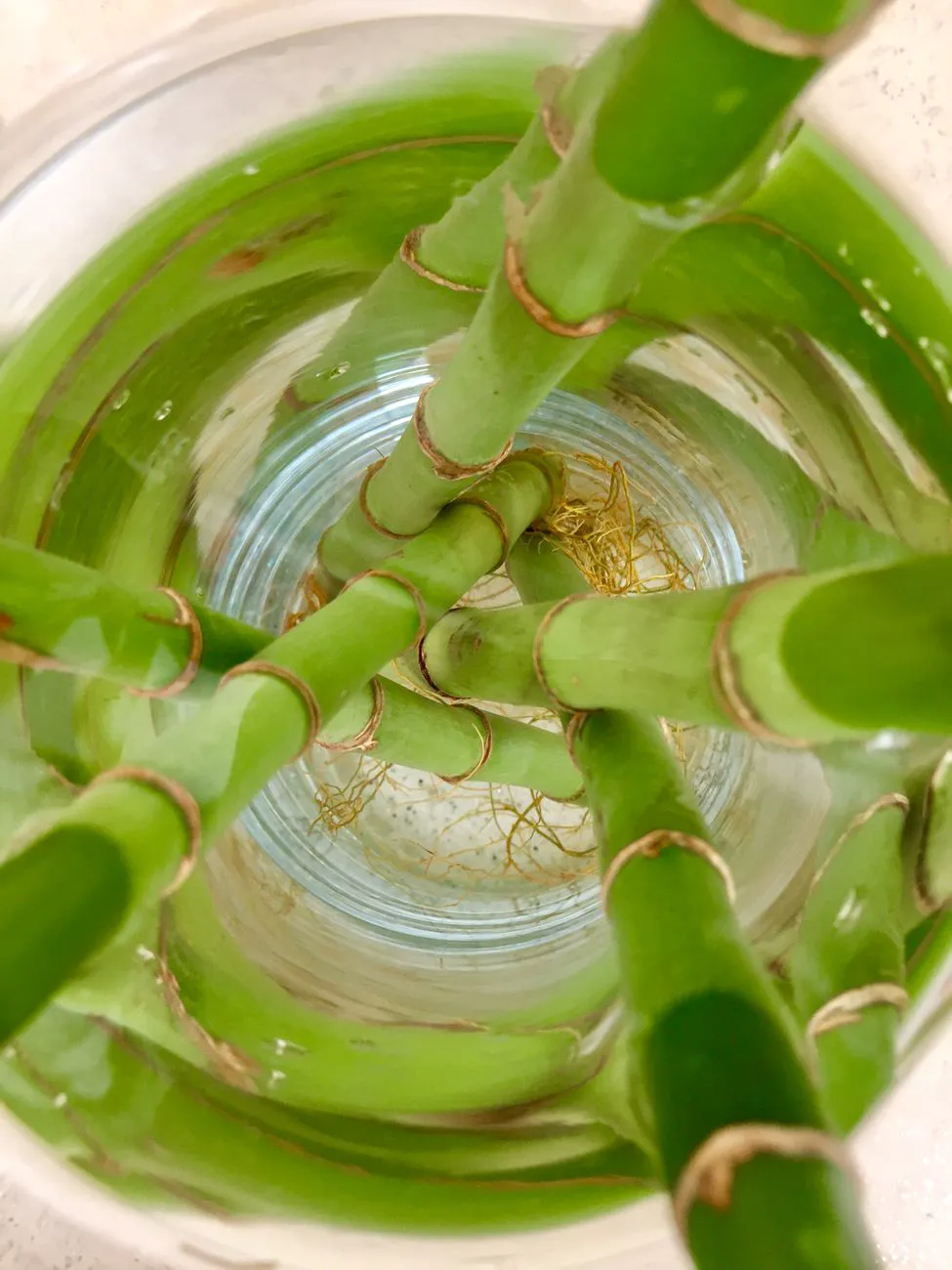
Water quality yellows lucky bamboo more than anything else. As a type of dracaena, it is one of the most chemical-sensitive houseplants you can grow. The chlorine, chloramine and fluoride in most tap water damage the fine roots, so the leaf tips go yellow and then brown.
Because the plant sits in water, it absorbs everything the water contains. The oldest, lowest leaves usually yellow first. Fluoride is the sneaky one — it does not evaporate, so it slowly builds up in the tissue over weeks. Chlorine does escape, however, if you let tap water stand uncovered for 24 hours.
So the single best fix is to switch to distilled, filtered or rainwater. The New York Botanical Garden library specifically recommends non-fluoridated water for lucky bamboo. Our full lucky bamboo care guide covers watering in more depth.
Yellow leaf or yellow stalk?
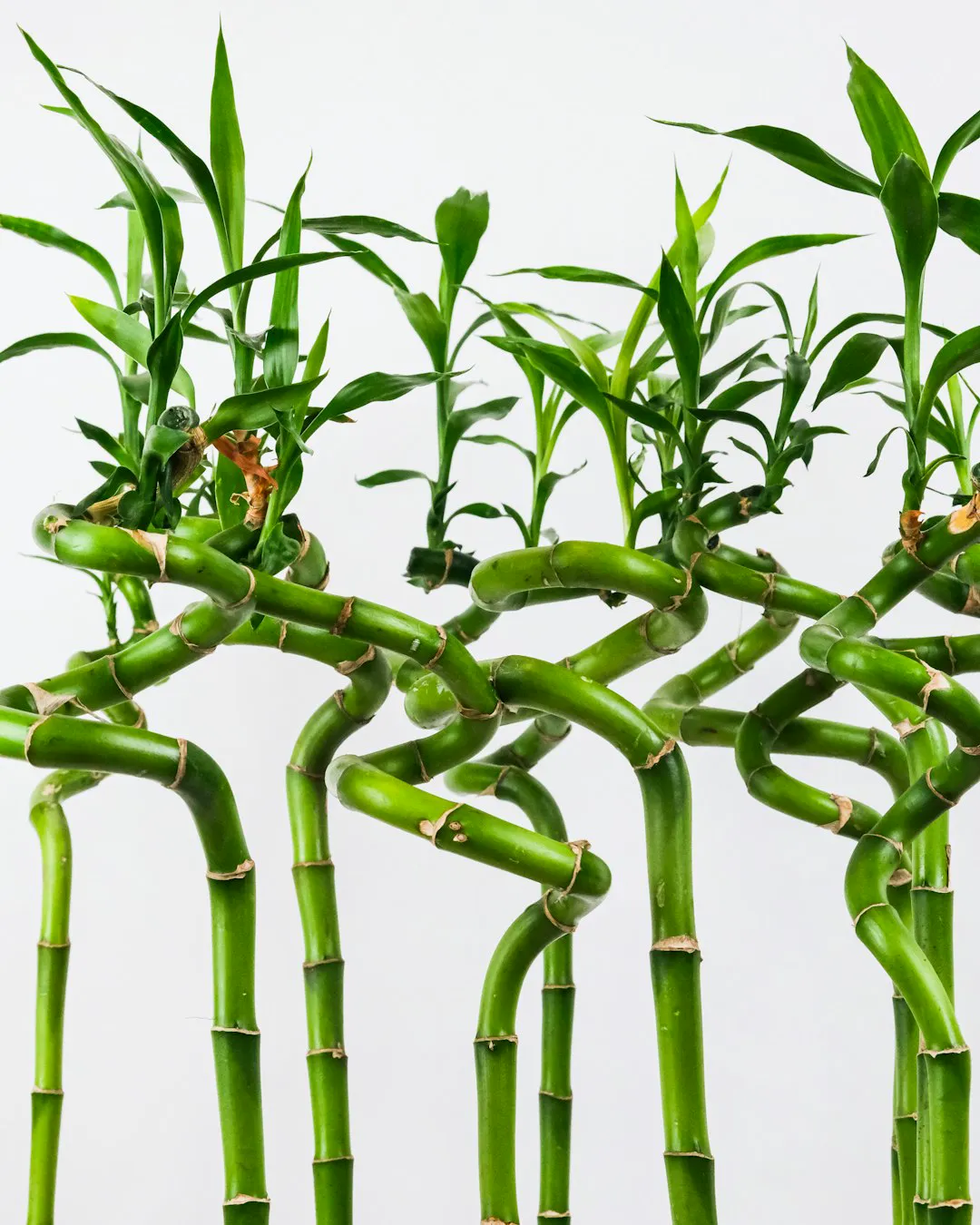
This distinction decides everything, so check it before you do anything drastic. A yellowing leaf is usually a fixable care issue. Sort out the water, light or feeding and the plant pushes fresh green growth from the nodes above the damage.
A yellowing stalk is more serious, because it often means the tissue is dying and rot has begun. If a stalk is yellowing from the top, cut it back into firm green tissue. If it is yellow and soft from the base, remove that whole stalk so the rot does not spread to the others. A healthy green top can still be re-rooted, as our propagation guide explains.
One honest warning: yellow parts never turn green again. The cells are already gone. Your goal is not to revive them but to stop new yellowing and protect the healthy growth.
Light: too much or too little
Light is the next thing to check. Too much direct sun bleaches the leaves pale and yellow with crispy edges. A dark corner does the opposite — it starves the plant, so the leaves yellow evenly and drop.
Lucky bamboo wants bright, indirect light, such as near an east or north window, or a few feet back from a brighter one. Keep it out of harsh afternoon sun. The Clemson Cooperative Extension recommends bright, indirect light for this plant. A simple habit helps too: rotate the vase a quarter-turn each week so every side gets even light and grows straight.
Over-feeding and stale water
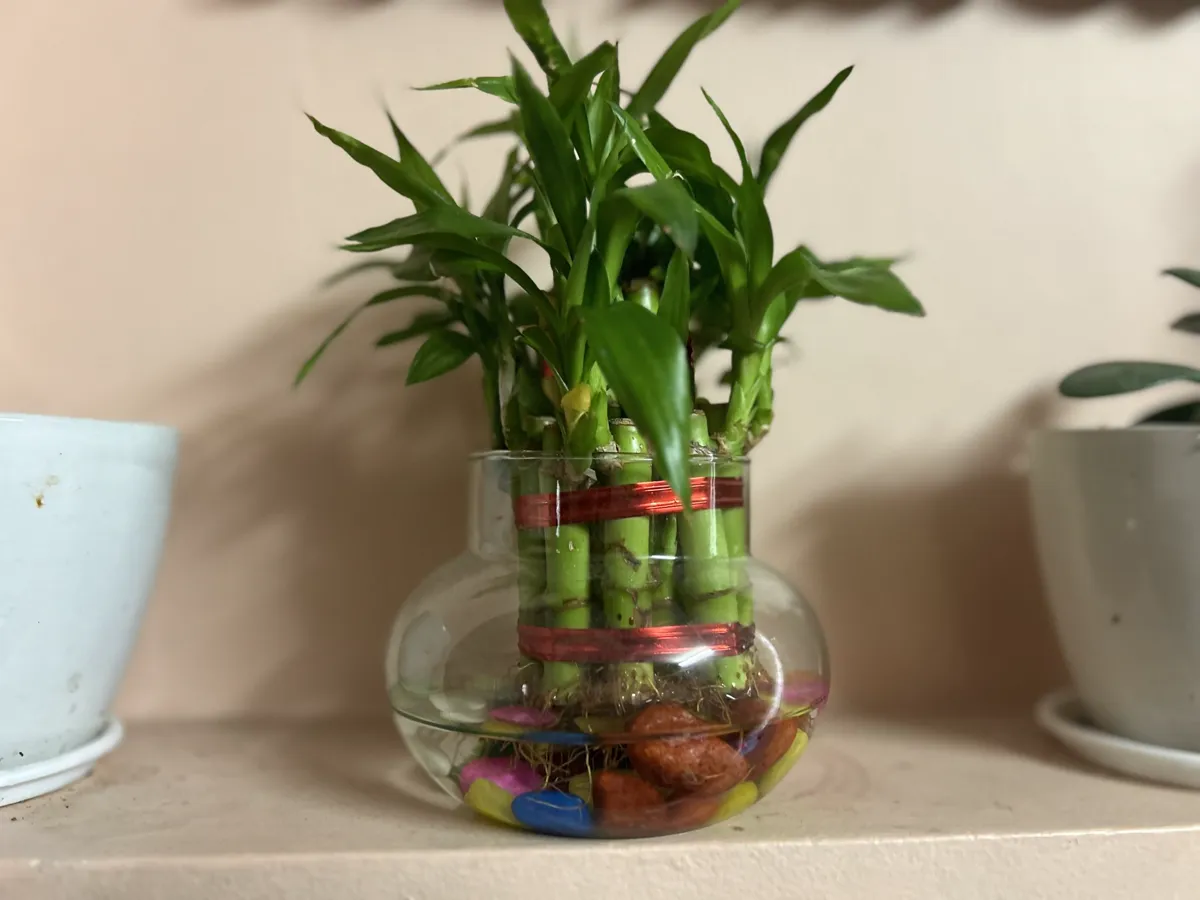
Lucky bamboo needs almost no fertiliser, and too much burns the roots. The classic sign is a stalk yellowing from the bottom up. So if you have been feeding it, change the water, rinse the container, and refill with plain distilled water and no feed. Extension guides suggest a quarter-strength houseplant feed only every second month at most.
Stale water is the other culprit. In a vase, standing water goes cloudy and smelly, oxygen runs low, and the plant yellows. Change it every one to two weeks, keep the roots covered, and rinse the pebbles each time. The Missouri Botanical Garden notes lucky bamboo needs only very light feeding. For soil-grown plants, our houseplant feeding guide has safe doses.
Overwatering, root rot and root colour
Root rot is the cause people miss most, yet it is often behind a soft, yellow stalk. In water culture it starts when the water sits stale and low in oxygen. In soil it starts when the mix stays soggy. Either way, the roots suffocate, bacteria move in, and the cane base darkens and softens.
Here is a quick trick most guides skip: check the root colour. Healthy lucky bamboo roots are reddish, orange or carrot-coloured. If yours are brown, grey, black or slimy, rot has set in. Trim the dead roots away with sterilised scissors, rinse everything, and refill with fresh water.
Two small habits prevent it. First, keep only the roots and about an inch of stem submerged — the rest of the cane should sit in air, not water. Second, in soil, let the top inch dry before you water again. Our guide to root rot and to overwatering versus underwatering go further.
Temperature, drafts and humidity
Sudden temperature swings shock lucky bamboo and trigger yellowing. Aim for a steady 65–90°F (18–32°C). Cold is the bigger threat, so keep the plant away from draughty windows, air-conditioner vents and heaters. Watering with icy water stresses it too — use room-temperature water instead.
Dry air shows up as brown, papery leaf tips rather than whole-leaf yellowing. If your room sits below about 40% humidity, mist the leaves a couple of times a week or set the vase near other plants. Our humidity guide and the note on dracaena brown tips cover this closely related problem.
Pests and algae in the vase
Sap-sucking pests drain the leaves and leave them yellow and speckled. Watch for spider mites (fine webbing), mealybugs (white cottony fluff) and the odd aphid or scale. Wipe them off with a cotton bud dipped in diluted rubbing alcohol, then rinse. See our notes on spider mites and mealybugs for a full treatment plan.
Algae is a cosmetic cousin of the same problem. Green film on a clear glass vase means light plus nutrients plus stale water. It rarely yellows the plant on its own, but it signals that the water needs changing. Rinse the vase and pebbles, or switch to an opaque container so light cannot fuel the algae.
Is some yellowing normal?
Not every yellow leaf is a crisis. If just one or two of the lowest leaves yellow while the top keeps pushing fresh green growth, that is normal ageing. The plant is shedding old foliage. Simply pinch those leaves off and carry on.
There is also a subtle trap with very pure water. Distilled and reverse-osmosis water contain no minerals at all, so a plant kept in them for many months with zero feeding can go pale from mild nutrient shortage. In that rare case, a single quarter-strength feed usually greens it back up. It is the mirror image of over-feeding, so read the whole plant before you act.
Yellow lucky bamboo in India
One factor yellows lucky bamboo in India more than any other: the water. Municipal supplies are heavily chlorinated, and borewell water is often hard and salty. Worse, large parts of India — including Rajasthan, Telangana, Andhra Pradesh and Gujarat — sit on a natural fluoride belt where groundwater fluoride runs high. That is exactly the chemical lucky bamboo hates most.
The good news is that many Indian homes already have an RO purifier, and RO water strips out most fluoride and chlorine. So water the plant from your RO tap, or use stored water, and change it regularly. Keep it in bright, indirect light away from the hot afternoon sun and the AC draught, and skip the fertiliser. During the monsoon, watch the water more closely, since warmth and humidity turn a stale vase cloudy fast. Our low-light plants guide has more picks for Indian homes.
How to fix yellow lucky bamboo, step by step
Work through this order and give the plant a couple of weeks to respond. New growth comes in green from the healthy nodes; the old yellow parts will not.
- Switch to distilled, filtered, RO or 24-hour-stood water at room temperature.
- Change the water every one to two weeks and rinse the pebbles.
- Move the plant to bright, indirect light, out of direct sun and dark corners.
- Stop feeding, or flush the container thoroughly if you over-fed.
- Check the roots — trim any brown, black or mushy ones with sterilised scissors.
- Trim yellow leaves, and cut or remove any yellowing stalk back into firm green tissue.
- Keep it warm and steady, away from vents, heaters and cold windows.
Firm green stalks and fresh, deep-green leaves are the sign your lucky bamboo has recovered. If a whole cane keeps browning, our guide to lucky bamboo turning brown tackles that next stage.
A quick safety note
Lucky bamboo (Dracaena sanderiana) contains saponins, which the ASPCA lists as toxic to cats and dogs; the sap can also irritate skin. Keep the plant and any trimmed pieces away from curious pets. For details, see whether lucky bamboo is toxic to dogs. This is general information, not veterinary advice — if a pet chews it, call your vet.
Frequently asked questions
Should I cut yellow leaves and stalks off lucky bamboo?
Yes. Trim yellow leaves off cleanly. For a yellow stalk, cut it back into firm green tissue, or remove the whole stalk if it is soft and yellow from the base, so the rot does not spread to healthy stalks.
Can a yellow lucky bamboo stalk turn green again?
Usually not. Once a stalk yellows it rarely returns to green, because the tissue is dying. You can save a healthy green top by cutting above the yellowing and re-rooting it, but the yellow part will not recover.
What water is best for lucky bamboo?
Distilled, filtered or rainwater is best, because lucky bamboo is sensitive to the chlorine and fluoride in tap water. If you must use tap water, let it stand uncovered for 24 hours first so the chlorine can escape.
Does lucky bamboo need fertiliser?
Very little. Lucky bamboo grows fine in plain water with no feed, and too much fertiliser burns the roots and yellows the plant from the bottom. If you feed at all, use a tiny amount very occasionally.
Why is my lucky bamboo turning yellow from the bottom up?
Yellowing that starts at the base of the stalk usually means trouble at the roots. The two common causes are stale, dirty water and a build-up of fertiliser salts, and both damage the submerged tissue first. Tip out the water, rinse the roots and pebbles, and refill with clean distilled or filtered water. Stop feeding for at least two months. If the base already feels soft or smells sour, cut the stalk above the damage.
Why are the leaves yellow but the stalk is still green?
That pattern is far less serious. Green stalks mean the plant itself is sound, and the leaves are reacting to something in their environment: chemicals in tap water, too much light, dry air, cold draughts, or simply age. Older lower leaves yellow and drop naturally as new ones form at the top. Remove the yellow leaves, switch to filtered or rainwater, and move the plant to bright indirect light away from vents.
Can too much sunlight turn lucky bamboo yellow?
Yes. Lucky bamboo evolved in the shaded understorey and burns easily in direct sun. Strong light first fades the leaves to a washed-out yellow-green, then scorches brown patches. A south-facing sill in summer, or any spot with hours of direct afternoon sun, is too harsh. Bright indirect light suits it best, roughly a metre back from a window or beside an east-facing one. Fluorescent office lighting alone is also enough.
How much water should be in a lucky bamboo vase?
Keep about three to five centimetres of water in the vase, enough to cover the roots and the very base of the stalks. Submerging more of the stalk encourages rot, which shows first as yellowing. Top up as the level falls, because roots left dry will also yellow the plant. Use room-temperature water and change it completely every one to two weeks so bacteria never get a chance to build up.
Does overwatering cause yellowing in soil-grown lucky bamboo?
It does, and it is the most common mistake when people move the plant into a pot. Lucky bamboo in soil wants an evenly moist, free-draining mix, not a swamp. Waterlogged compost starves the roots of air, they begin to rot, and the leaves turn yellow from the bottom. Always use a pot with drainage holes, empty the saucer after watering, and let the top couple of centimetres dry before watering again.
Can I save a lucky bamboo that has turned yellow?
Often, yes, if any part is still firm and green. Cut the healthy green top a few centimetres below a node with clean scissors, discard the yellow section, and stand the cutting in about five centimetres of clean water. New roots usually appear within a few weeks. Keep it in bright indirect light and change the water weekly. This is the standard way growers rescue stalks that have failed at the base.
Why did my lucky bamboo turn yellow soon after I bought or moved it?
Sudden changes stress the plant. Shops keep it in warm, humid, evenly lit conditions, and a move to a drier, cooler or darker home shows up as yellowing leaves within a week or two. Transport chills in winter do the same. Settle it in one steady spot with bright indirect light, change to filtered water, avoid feeding for a month, and give it time before deciding anything is seriously wrong.
Can too little light turn lucky bamboo yellow?
Yes. Lucky bamboo tolerates shade far better than sun, but a dark corner or a windowless room eventually starves it. The plant fades to a pale yellow-green, growth becomes thin and stretched, and lower leaves drop. In hot regions such as much of India, a bright north-facing spot indoors, or a shaded balcony out of direct sun, gives the right balance: plenty of ambient light without the scorching midday rays.
Sources and further reading
Related guides
- Lucky bamboo care guide
- How to propagate houseplants
- Best indoor plants for low light
- Root rot
- Humidity for houseplants
- How to fertilize houseplants
Still stuck? Ask the Plant Doctor
Describe the problem — yellow leaves, holes, no flowers — and get a clear answer in seconds. FreeAI can make mistakes. Answers are guidance, not a guarantee — check anything important against the guide it links to, and always read the label on any product before you use it.