Why Is My Monstera Not Splitting? Causes and Fixes
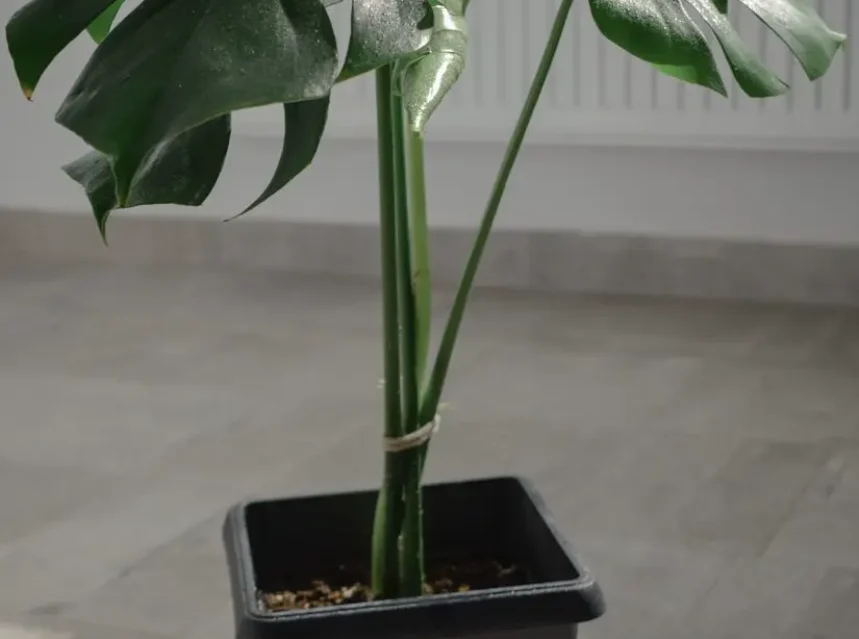
Why is my monstera not splitting? A monstera not splitting is almost always a plant that is still too young — young monsteras grow solid, heart-shaped juvenile leaves and only begin splitting once they mature, usually around two to three years old. After age, too little light is the biggest reason for monstera leaves not splitting, with low humidity, cool temperatures, hunger and a root-bound pot behind it.
Quick answer: Small solid leaves on a young plant mean it is simply too young, so wait. New leaves staying solid on a mature plant in a dim corner mean too little light. Match your symptom in the table below, then give the plant what it needs.
🧰 In a hurry? Jump straight to our tested picks for this guide ↓
Why is my monstera not splitting? Quick diagnosis
| What you see | Most likely cause |
|---|---|
| Small, solid, heart-shaped leaves on a young plant | Too young — juvenile leaves |
| New leaves stay solid in a dim spot | Too little light |
| Slow growth, small leaves, crispy edges | Low humidity |
| Growth stalls in a cold or draughty room | Temperature too low |
| Pale, slow growth despite good light | Nutrient hunger |
| Roots circling out of the drainage holes | Root-bound pot |
| A trailing plant that never climbs | No support to trigger mature leaves |
| Narrow, upright leaves that stay whole | Non-splitting species (Peru, standleyana) |
| Big new leaves splitting more each time | Nothing wrong — it is working |
Age: the number one reason
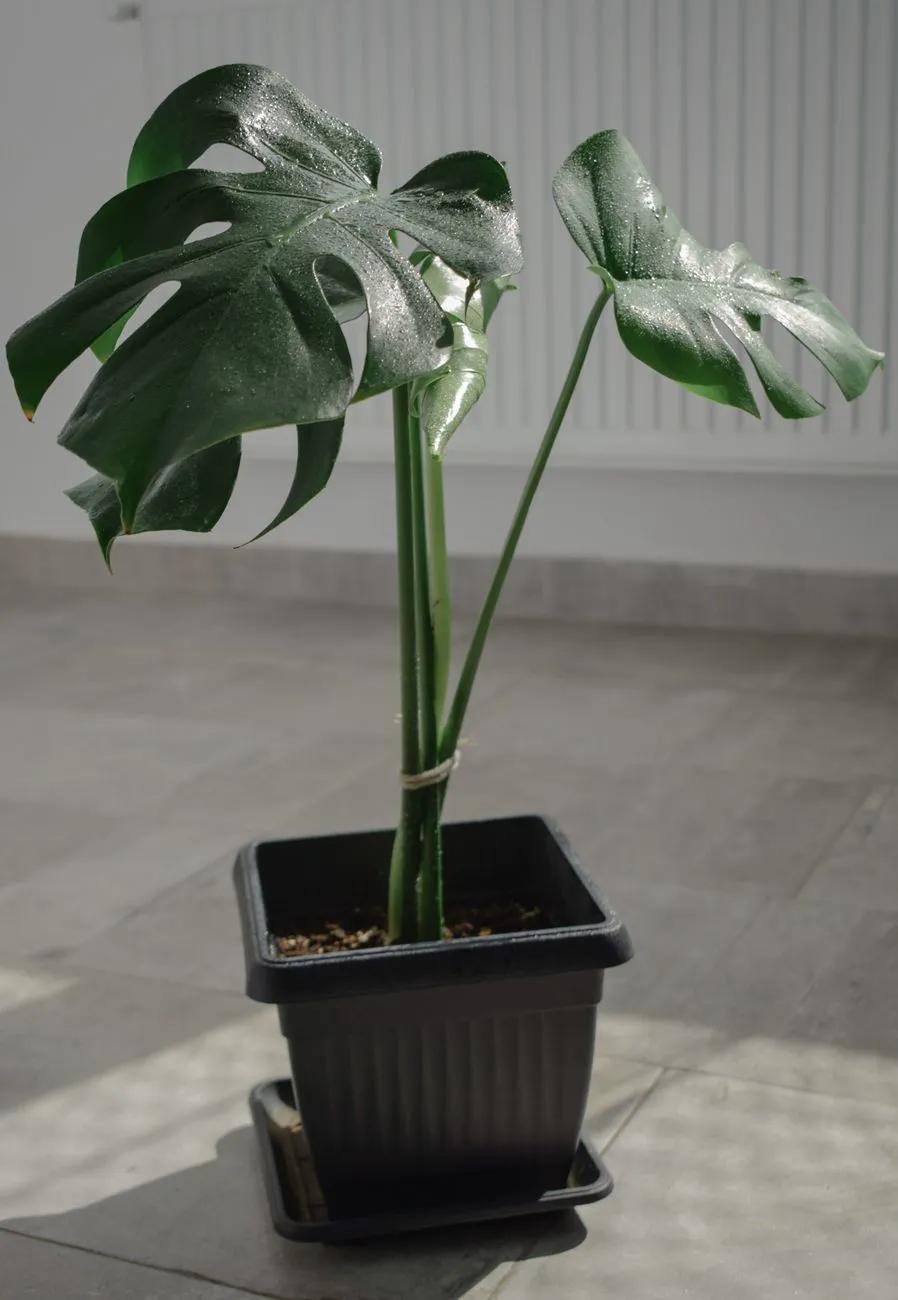
Most of the time, a monstera without splits is simply too young. Like other plants in the arum family, monsteras change leaf shape as they mature. They start with small, solid, heart-shaped juvenile leaves. Only later do they produce the big leaves with holes and splits, known as fenestration.
A healthy plant usually begins splitting at about two to three years old. In practice, splits tend to appear after the plant has pushed out roughly five to ten solid juvenile leaves, and once individual leaves reach about 25 to 33 cm (10 to 13 inches) across. So if your monstera is young and its leaves are small but healthy, there is nothing to fix. Give it time and steady care, and watch each new leaf, not the old ones.
Which monstera do you have? Species and genetics
Here is a detail most guides skip: not every monstera fenestrates. If your plant has grown for years in bright light and still never splits, check the species first.
Monstera deliciosa and Monstera adansonii both develop dramatic holes with age. But Monstera Peru and Monstera standleyana stay whole for life — solid, glossy leaves are simply their normal look, not a problem. Even within splitting species, genetics vary, so two plants in the same room can fenestrate at different rates. Our Monstera adansonii guide covers that swiss-cheese species in detail. According to Wikipedia, M. deliciosa is a hemiepiphyte native to the tropical forests of southern Mexico through Panama, where climbing shapes how its leaves develop.
Light: the fix that matters most
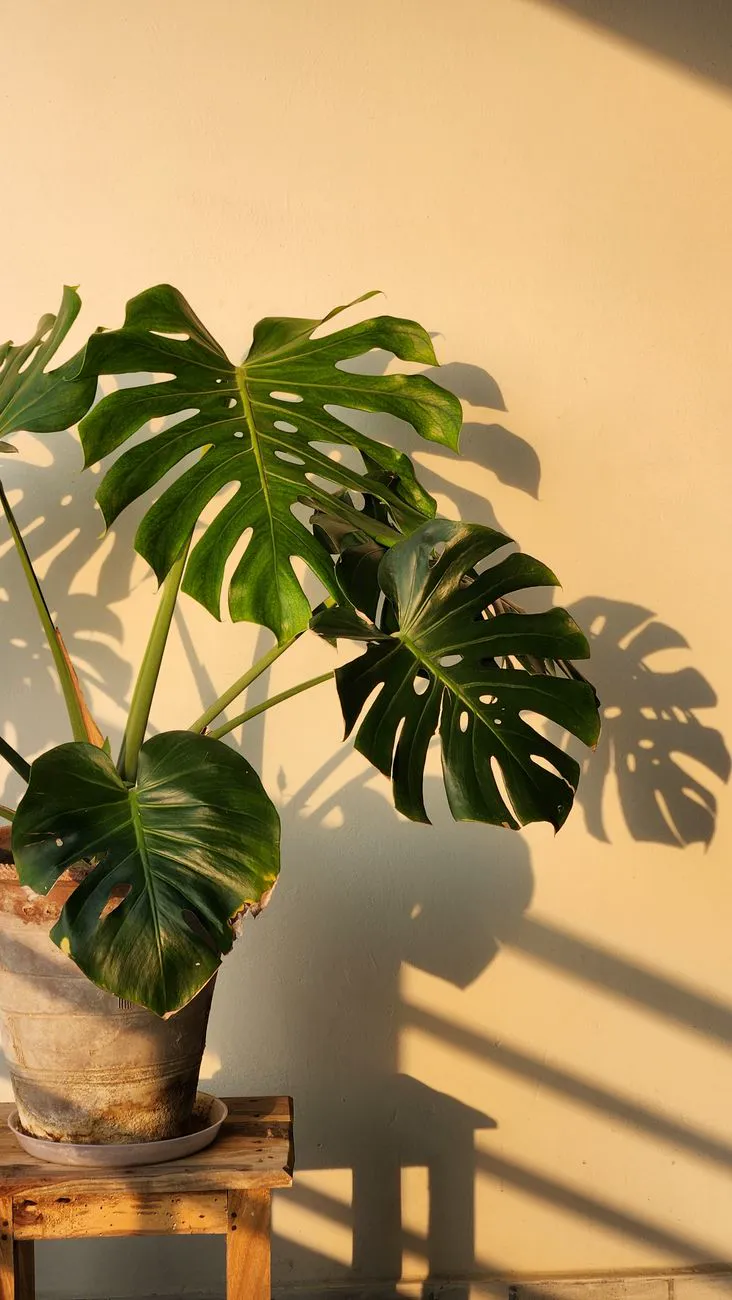
For a mature plant, light is the single biggest lever. Splitting takes energy, and without enough light a monstera spends what it has on survival rather than fancy fenestrated leaves. A dim corner is the most common reason a grown plant stops splitting.
So move it to bright, indirect light for six to eight hours a day. An east window works well, or set it a few feet back from a bright south or west one. A quick field test many growers use: if you can comfortably read a book beside the plant at midday without a lamp, the light is probably bright enough. Avoid harsh direct sun, though, which scorches the leaves. In a genuinely dark room, a grow light does the job, ideally 20 to 60 cm above the foliage.
Our grow light guide covers the options, our monstera care guide has the full routine, and a stretched, floppy plant reaching for a window is often a light problem, as our leggy monstera guide explains.
Give it something to climb
In the wild, monsteras are climbers that scale tree trunks toward the canopy. As they climb, they switch to producing their largest, most fenestrated leaves. A trailing plant left to sprawl across a shelf often keeps making small, solid juvenile leaves instead.
So add a moss pole, coir pole or trellis, and gently tie the stem to it. Guide the aerial roots toward the pole and keep the moss lightly damp. This mimics the plant’s natural growth habit and nudges it toward mature, split leaves. Support pairs well with good light, because a climbing monstera also builds a stronger root system that fuels bigger foliage.
Humidity, temperature and feeding
Monsteras are tropical plants that enjoy moderate to high humidity. In very dry indoor air, growth slows and leaves stay small and solid with crispy edges. So aim for around 50 to 60% humidity with a humidifier or a nearby pebble tray. The Missouri Botanical Garden notes monsteras want warmth, humidity and bright indirect light indoors. Our houseplant humidity guide explains simple ways to raise it.
Temperature matters more than most owners realise. Monsteras grow best between about 18 and 27°C (65 to 80°F), and growth stalls in cold, draughty rooms or right beside an AC vent. When growth stalls, so do the splits.
Feeding counts too, because fenestration needs resources. A hungry monstera grows slowly and pale, so feed with a balanced houseplant fertiliser, such as a diluted 20-20-20, every few weeks through the growing season, then ease off in winter. Keep watering steady as well. Let the top few centimetres dry, then water thoroughly, because both drought and soggy roots stall new growth. Overwatering is a quiet culprit here, since waterlogged soil suffocates roots and can trigger rot that halts new leaves entirely.
A root-bound pot
A pot that is far too small can hold a monstera back. When roots circle tightly and push out of the drainage holes, the plant struggles to take up the water and nutrients that big split leaves demand.
So check the roots once a year. If they are packed and circling, move the plant up one pot size in spring, using a chunky, well-draining aroid mix. Do not jump to a huge pot, which stays wet and risks root rot. The University of Wisconsin Extension advises moving up only one pot size at a time. Our repotting guide walks through the steps.
Why do monstera leaves split at all?
Understanding the “why” helps you set the right conditions. Scientists are not fully settled on the reason, but a few well-supported theories explain fenestration. Knowing them makes the light rule above make sense.
- Catching sunflecks: the leading idea, proposed by biologist Christopher Muir, is that holes let a plant spread its leaf area to catch scattered flecks of sunlight on the dim forest floor, without wasting energy on solid tissue.
- Sharing light below: the gaps let light slip past upper leaves to reach the lower ones, so the whole plant photosynthesises for longer.
- Surviving wind and rain: holes let gusts pass straight through, and let heavy tropical rain drain off fast instead of tearing or pooling on big leaves.
Fenestration happens before the leaf unfurls
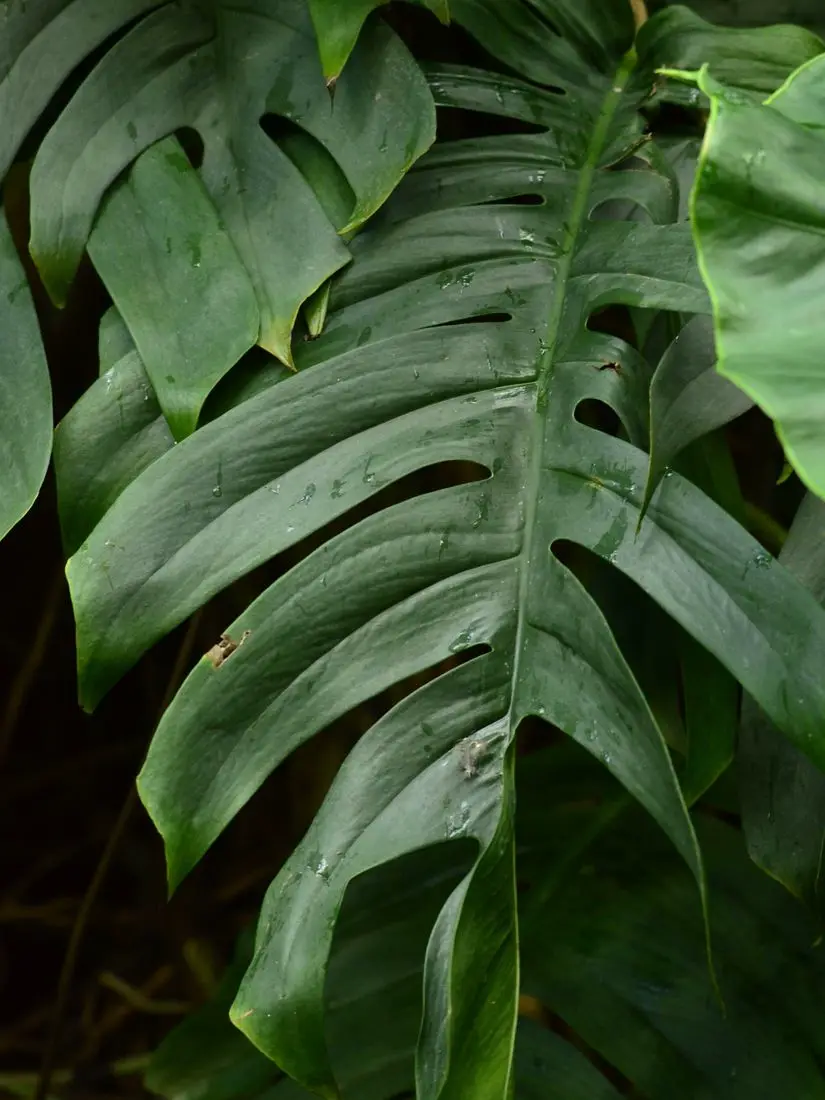
This is the single most misunderstood point, and it saves a lot of frustration. A leaf’s splits are set while it is still curled up in the stem. Once a leaf unfurls, it will never grow new holes, no matter how much you improve its light or humidity.
So judge your progress only by the next two or three leaves, not the ones already open. A crack or ragged tear on an unfurled leaf is not late fenestration either. It is usually physical damage or dryness during unfurling, which extra humidity helps prevent. And do not panic over a temporary setback: a monstera that has just been repotted, shipped or freshly propagated often pushes out a few smaller, less-split leaves while it settles, then returns to full-size fenestrated growth.
Fenestration stages: what to expect next
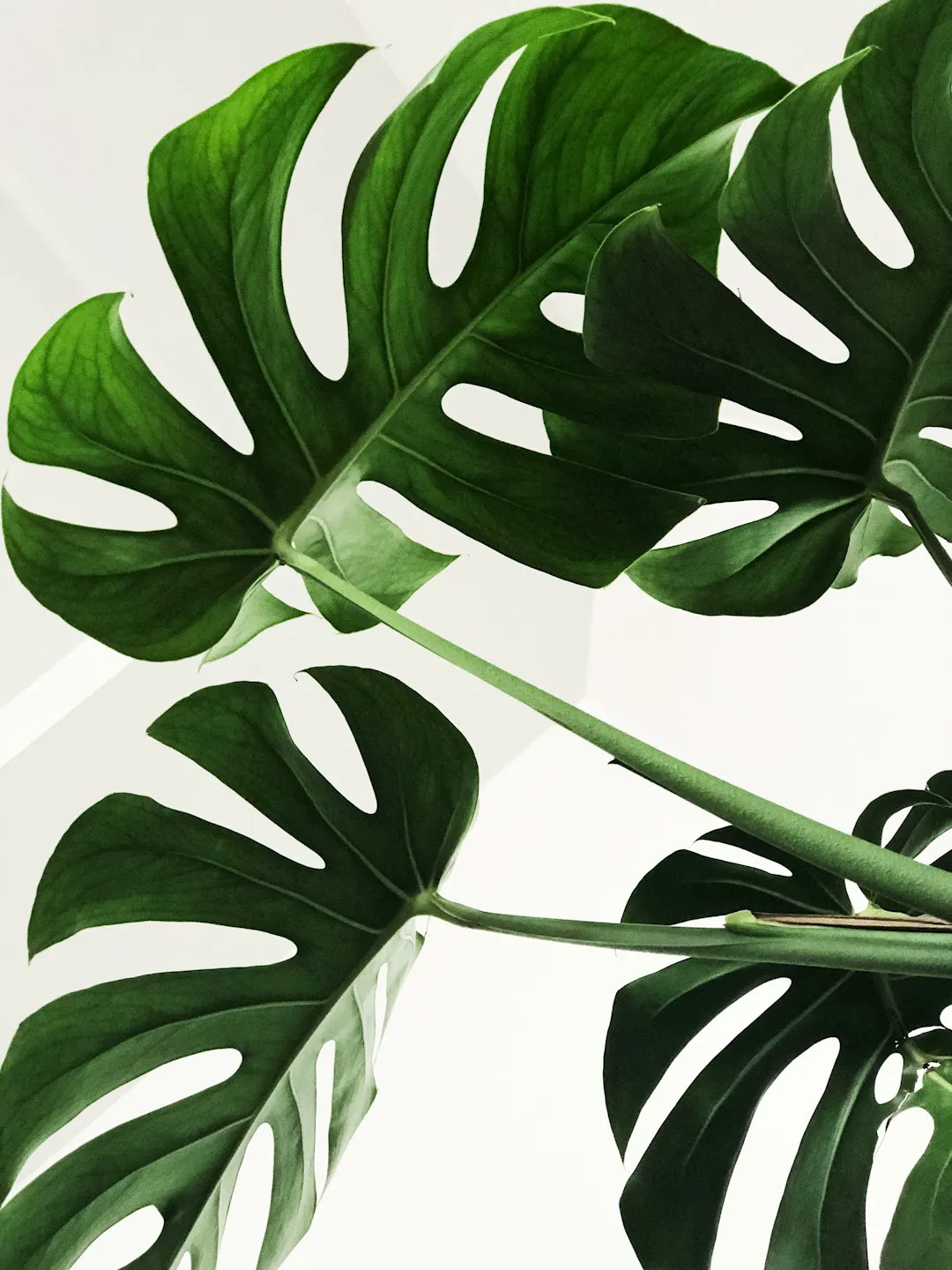
Splitting is gradual, so each new leaf should out-do the last. Use this rough progression to gauge whether conditions are improving.
| Stage | Leaf appearance |
|---|---|
| 1 | Solid, heart-shaped juvenile leaf |
| 2 | First slits along one edge |
| 3 | Full side splits, still no holes |
| 4 | Splits plus a row of holes near the midrib |
| 5 | Deep splits and multiple rows of holes |
Monstera not splitting in India
Two indoor settings hold monsteras back in India: dim, deep-set rooms and dry, air-conditioned air.
Monsteras grow happily across much of the country as houseplants, but a plant tucked into a dark corner rarely splits, so give it a bright spot near a window with filtered light. In AC rooms the air runs dry, so raise humidity with a tray or humidifier, especially through the hot pre-monsoon months. The warm, humid weeks of the monsoon actually suit monsteras well, and many growers see a burst of large split leaves then. Feed through the warm growing season, and keep the plant off cold tile in winter. Our monstera guide has more, and if your leaves also yellow, see why monstera leaves turn yellow.
How to get your monstera to split
- Be patient if the plant is young — splitting starts around two to three years old.
- Give bright, indirect light for six to eight hours, or add a grow light.
- Add a moss pole and let the plant climb to trigger mature leaves.
- Hold humidity near 50 to 60% and warmth between 18 and 27°C.
- Feed with a balanced houseplant fertiliser through the growing season.
- Repot up one size if the plant is root-bound, then judge only the new leaves.
Each new leaf emerging bigger and more deeply cut than the last is the sign your monstera has hit its stride. If curling leaves join the mix, our curling monstera guide helps you rule out watering stress.
Frequently asked questions
At what age do monstera leaves start splitting?
Usually around two to three years old, once the plant matures and its leaves reach a good size. Young monsteras grow small, solid, heart-shaped juvenile leaves first, so a healthy young plant with no splits is normal and simply needs time.
Will my monstera leaves split if it doesn't get enough light?
Rarely. Light is the biggest factor for a mature plant, because splitting takes energy the plant only has with enough bright, indirect light. In a dim spot a grown monstera tends to keep producing solid leaves, so move it brighter or add a grow light.
Does humidity affect monstera fenestration?
Indirectly, yes. Low humidity slows growth and keeps leaves small and solid with crispy edges, while moderate humidity around 50% supports the steady, healthy growth that leads to splitting. Light and maturity still matter most, but humidity helps.
Should I cut off my monstera's solid leaves?
Only if they are damaged or dying. Removing a few small, older leaves can push the plant to grow bigger new ones, but healthy solid leaves still feed the plant, so do not strip them all. Focus on better light, humidity and feeding instead.
Can a monstera leaf split after it has already unfurled?
No. Each leaf forms its holes and splits inside the tight roll before it opens, so the pattern is fixed once the leaf unfurls. A solid leaf will stay solid for its whole life. That is why care changes never show on existing leaves. Improve light, feeding and support now, and judge the result on the next one or two leaves the plant pushes out.
Do monsteras need a moss pole to grow split leaves?
A pole is not compulsory, but it helps. In the wild a monstera climbs tree trunks, and climbing triggers larger, more mature leaves with deeper splits. Indoors, a moss pole, coir pole or wooden plank gives the aerial roots something to grip, so the plant switches out of its sprawling juvenile habit. Keep the pole slightly damp and tie new growth loosely until the roots attach on their own.
Why did my newest leaf come out solid when older leaves have splits?
Losing fenestration on new growth is a stress signal, not a disease. It usually means the plant is getting less light than before, has run out of nutrients, is short of root space, or was recently moved or repotted. Check the light first, since winter and a shifted position are the common culprits. Sort out the cause, and splitting normally returns within a couple of new leaves.
Does fertiliser help a monstera produce split leaves?
It helps indirectly. Splitting takes energy, and a hungry plant simply makes small solid leaves. Use a balanced liquid houseplant feed at about half strength every three to four weeks through the active growing season, then stop in winter. In warm parts of India growth continues nearly year round, so light feeding can carry on longer. Never overfeed, because salt build-up burns roots and slows growth further.
Can a root-bound monstera stop splitting?
Yes. When roots circle tightly and fill the pot, the plant cannot take up enough water and nutrients to build big leaves, so new growth shrinks and stays solid. Look for roots pushing out of the drainage holes, soil that dries within a day, or growth that has stalled. Repot into a container only one size larger, using a chunky, free-draining mix with bark or perlite.
Do all monstera varieties develop split leaves?
Most climbing monsteras do, but the pattern differs. Monstera deliciosa makes deep edge splits plus holes on mature leaves. Monstera adansonii forms oval holes early, yet its leaf edges usually stay closed. Compact cultivars and some variegated plants grow slowly, so they take longer to mature. Check which species you actually own before worrying, because a young adansonii is never going to look like a grown deliciosa.
How long after improving light will my monstera start splitting?
Give it one full growing season. A healthy indoor monstera pushes out roughly one new leaf a month in warm, bright conditions, and each leaf is a little bigger and more divided than the last. So expect gradual progress over two to four leaves rather than an instant change. If a whole season passes with no improvement, look again at plant age, pot size and feeding.
Why are my monstera leaves small and solid in an Indian apartment?
Indoor light is usually the reason. Many flats have deep balconies, sun films or shaded windows, so the plant sits far below the bright indirect light it wants. Move it near an east-facing window or a bright balcony with shade cloth, away from harsh afternoon sun. Also water less in the monsoon, when slow drying keeps roots soggy, and resume regular feeding once new growth appears.
Sources and further reading
Related guides
- Monstera care guide
- Why are my monstera leaves turning yellow
- Why are my monstera leaves curling
- Humidity for houseplants
- Best grow lights
- How to repot a plant
Still stuck? Ask the Plant Doctor
Describe the problem — yellow leaves, holes, no flowers — and get a clear answer in seconds. FreeAI can make mistakes. Answers are guidance, not a guarantee — check anything important against the guide it links to, and always read the label on any product before you use it.