Why Is My String of Pearls Shriveling? Causes and Fixes
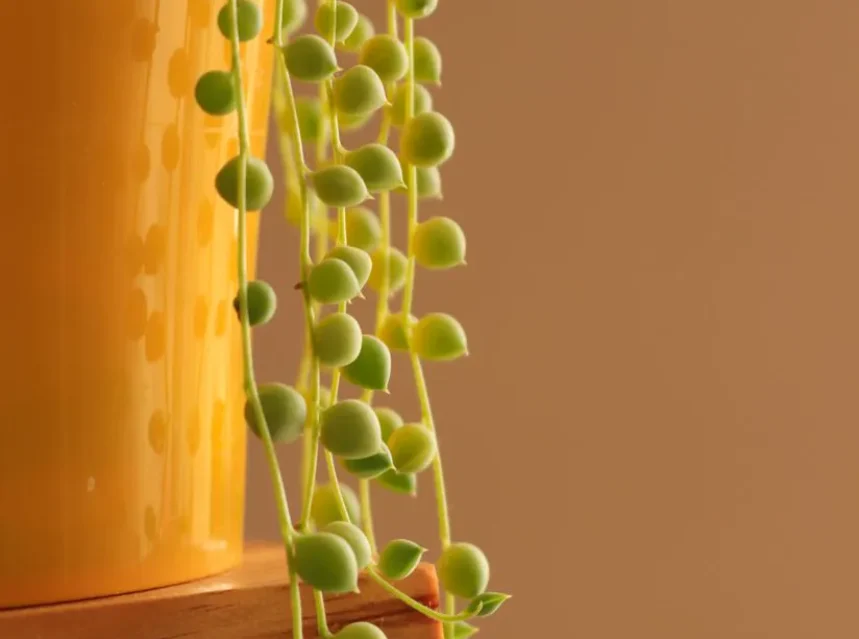
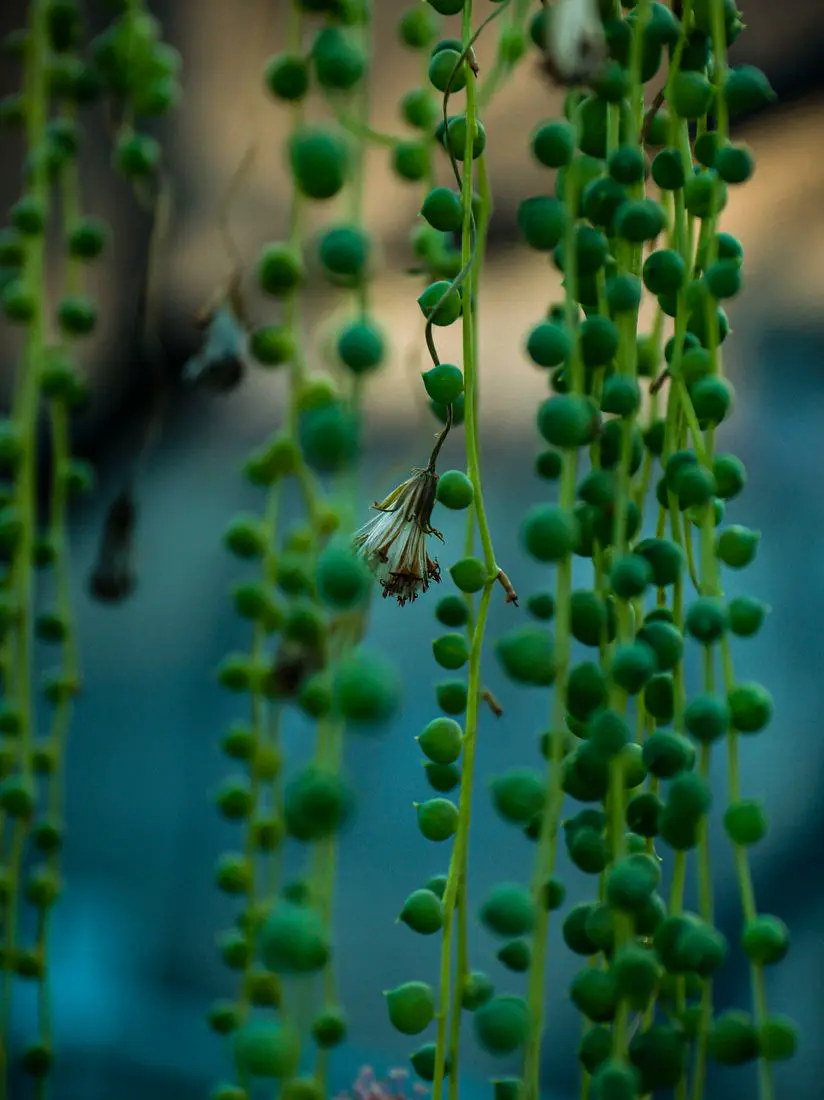
Why is my string of pearls shriveling? Feel a pearl to find out — pointy, dull, wrinkled pearls with dry soil mean thirst, while squishy, see-through pearls with soggy soil mean overwatering and root rot. This semi-succulent stores water in its round beads, so both extremes shrivel them.
Quick answer: Pinch a pearl. Firm-but-wrinkled and dull, with dry soil, means a thirsty plant, so give it a deep soak. Squishy and translucent, with wet soil, means rot, so let it dry and check the roots. Match the cause below.
🧰 In a hurry? Jump straight to our tested picks for this guide ↓
Why is my string of pearls shriveling? Quick diagnosis
| What you see | Most likely cause |
|---|---|
| Pointy, dull, wrinkled pearls, dry soil | Underwatering |
| Squishy, see-through pearls, soggy soil | Overwatering and root rot |
| Shrivelling with mushy strands or black roots | Advanced root rot |
| Shrivelling in a hot, sunny window | Heat and too much sun |
| Only a few old strands shrivelling | Natural ageing |
| A clear stripe on each pearl | Normal window, not damage |
Feel a pearl first
The fastest way to diagnose is to pinch a pearl. This one touch tells thirst and rot apart, which look similar from a distance.
A thirsty pearl feels firm but wrinkled, and looks pointy and dull, with bone-dry soil. An overwatered pearl feels squishy and looks see-through, with soggy soil. So feel a pearl, then read the matching cause below.
Underwatering: pointy, dull pearls
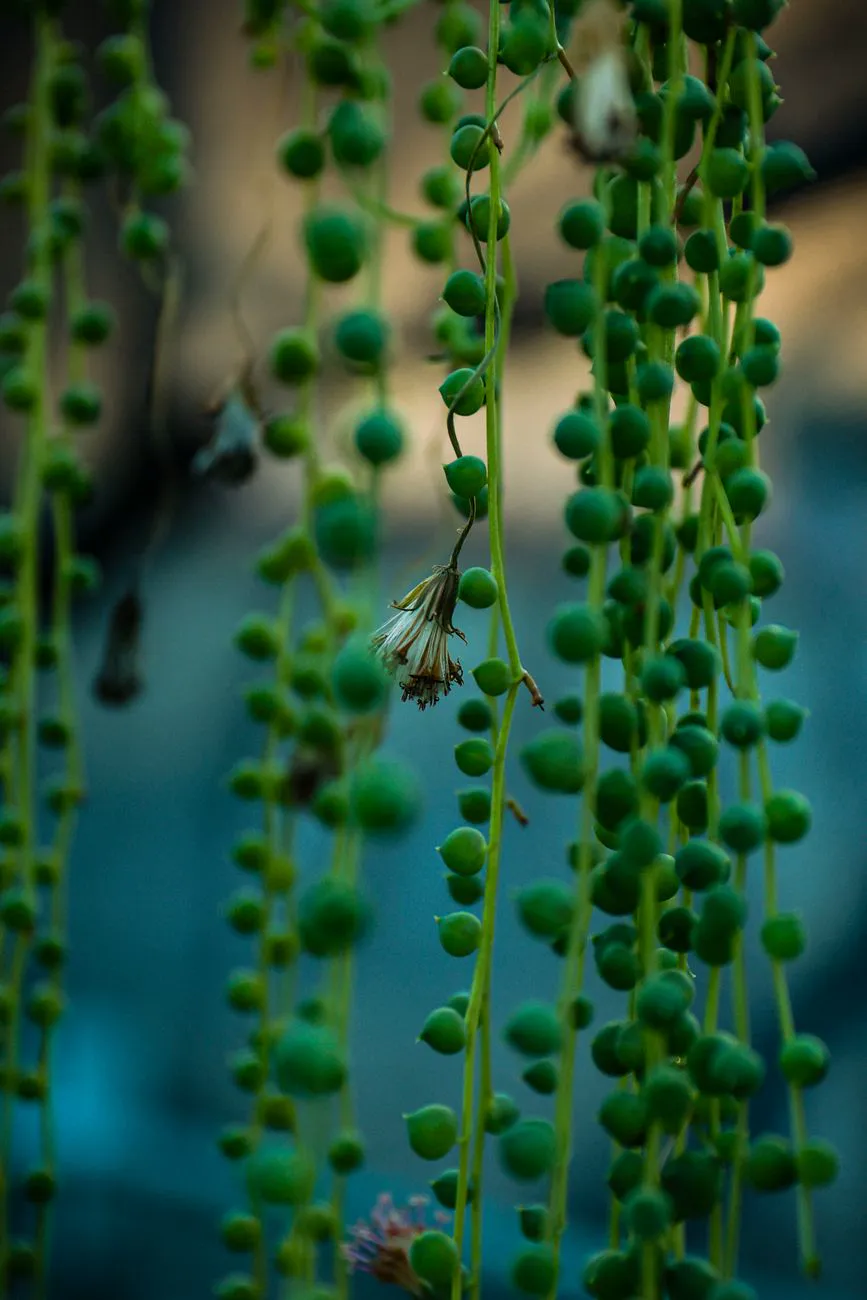
Thirst is the most common cause of shrivelling. A string of pearls stores water in its round beads. When the soil dries out for too long, the plant draws on that store, and the pearls flatten, wrinkle and go dull.
The good news is it recovers fast. Give the plant a deep, thorough soak, and the pearls plump back up within a few days, as our string of pearls care guide explains.
The Succulent Plant Care guide notes underwatered pearls look pointy and dull.
Soak it, do not mist it
Here is a mistake many people make. A string of pearls has fine, shallow roots, so a light mist never reaches them. Misting a thirsty plant does almost nothing.
So give it a real drink instead. Water thoroughly until the water runs from the drainage holes, or bottom-water the pot in a tray. Then let it dry out before the next drink, as our watering guide shows.
Overwatering: squishy, see-through pearls
Too much water shrivels the pearls in a sneaky way. When the soil stays soggy, the fine roots rot, so they cannot draw up water. The pearls then shrivel even though the soil is wet, and they feel squishy and look translucent.
So check the soil. If it is soggy and the pearls are soft, suspect rot. Unpot the plant, trim any black, mushy roots, and repot into fresh, dry, gritty mix. Treat it as root rot, as our mushy succulent guide also covers.
The Garden For Indoor guide notes overwatered pearls turn squishy and translucent.
The clear window is normal
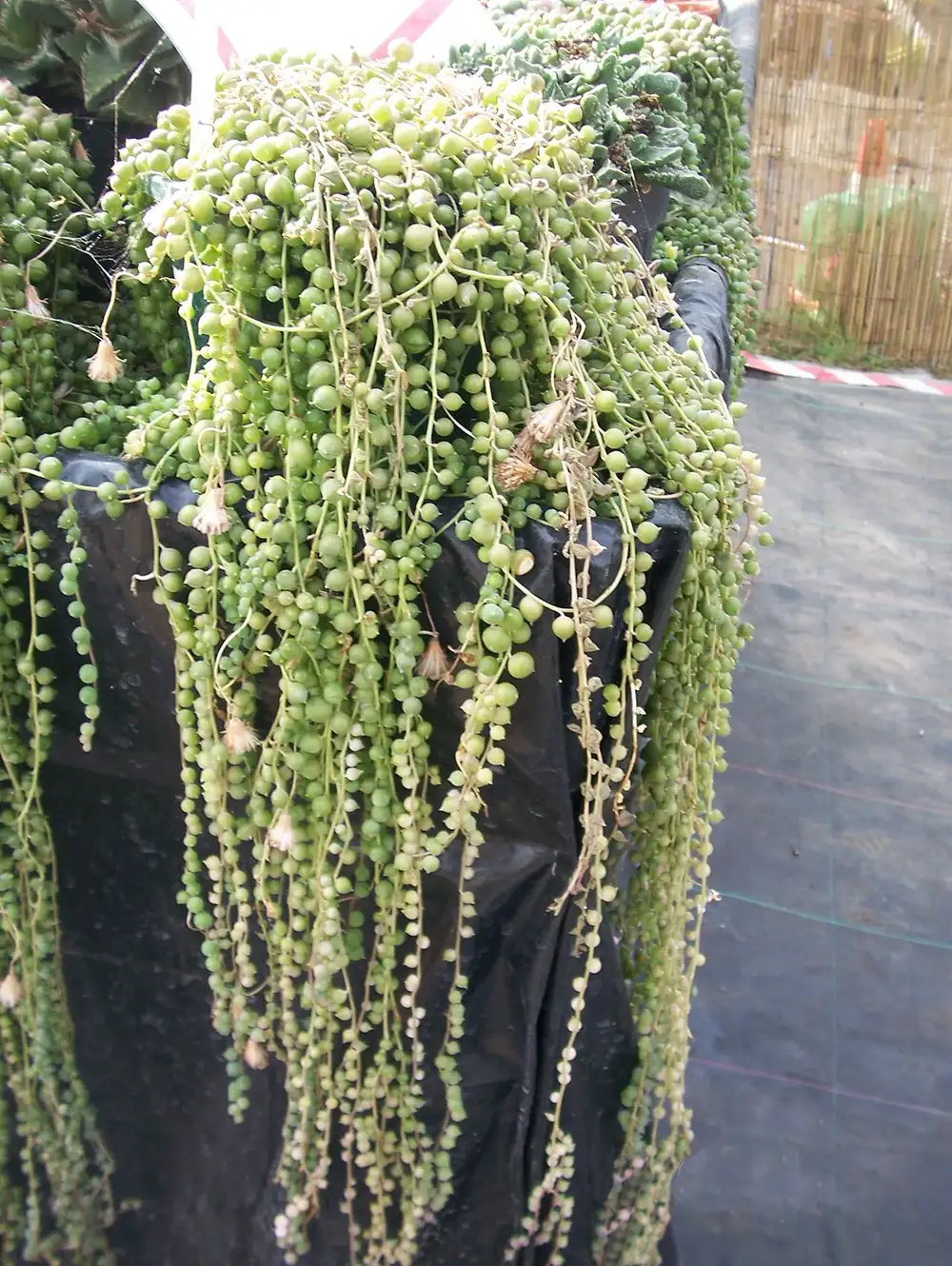
Do not panic at the see-through stripe. Each round pearl has a clear, translucent window down one side. This is completely normal, not a sign of damage.
The window lets light into the middle of the round bead, so the plant can still photosynthesise inside. So a firm, plump pearl with a clear stripe is healthy. Worry only when the whole pearl goes squishy and see-through.
Light, heat and soil
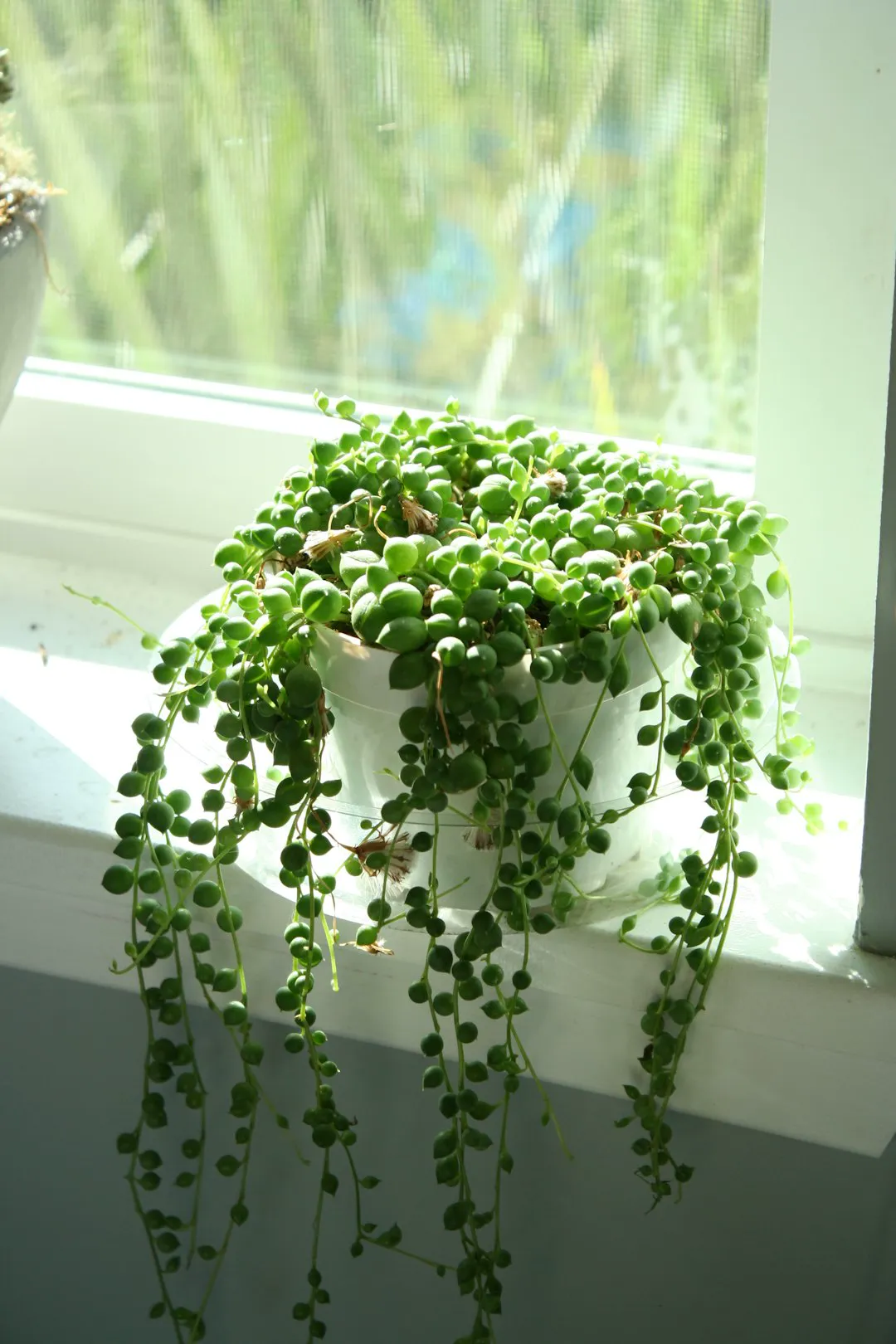
The setting matters too. A string of pearls likes bright, indirect light with some gentle sun, but harsh, hot afternoon sun scorches and shrivels the pearls. So keep it out of a baking window, or use a grow light in a dim room, as our grow light guide covers.
The right soil prevents most rot. Use a gritty, fast-draining succulent mix in a pot with drainage holes, as our succulent soil guide covers. The Royal Horticultural Society recommends free-draining compost and careful watering for senecio. The same care suits its trailing cousin, as our string of hearts guide shows.
String of pearls shriveling in India
Two things shrivel string of pearls in India: hot, dry summers and monsoon overwatering.
String of pearls grows well as a hanging plant in bright, airy spots across the country. But in the hot, dry summer the shallow pot dries fast, so the pearls shrivel from thirst, and need a deeper drink. In the humid monsoon, though, the soil stays damp far longer, so water much less then to avoid rot. Use a gritty mix in a pot with drainage. Our string of pearls guide has more.
How to fix shriveling string of pearls
- Pinch a pearl, as pointy and dull means thirst and squishy means rot.
- For thirst, give a deep soak, not a mist, and it plumps up in days.
- For soggy soil and squishy pearls, check the roots for rot.
- Repot rot into fresh, dry, gritty mix, and trim mushy roots.
- Keep it out of harsh, hot afternoon sun.
- Ignore the clear window stripe, as it is normal on every pearl.
Plump, round, firm green pearls are the sign your string of pearls is healthy again.
Frequently asked questions
Will shriveled string of pearls plump back up?
Yes, if thirst was the cause. A deep, thorough soak refills the pearls, and they plump back up within a few days. Badly shrivelled old pearls may not recover, but new growth will be plump. For rot, though, you must trim the bad roots and repot first.
Is my string of pearls shriveling from over or underwatering?
Feel a pearl and the soil. Pointy, dull, wrinkled pearls with bone-dry soil mean thirst. Squishy, see-through pearls with soggy soil mean overwatering and root rot. This touch test is the quickest way to tell the two apart before you water again.
Why is my string of pearls shriveling even after watering?
Two reasons. You may be misting instead of soaking, so the water never reaches the fine, shallow roots. Or the roots have rotted from overwatering, so they cannot drink at all. So give a proper deep soak, and if the soil stays wet, check the roots for rot.
Why do my string of pearls have a clear line on them?
That clear stripe is a normal window. Each round pearl has a translucent line that lets light into the middle of the bead, so it can photosynthesise. So it is a healthy feature, not damage. Only worry if the whole pearl turns squishy and see-through.
How often should you water a string of pearls?
Water only when the top inch of soil is dry. Indoors that is roughly every 10 to 14 days in warm weather, and about once a month in winter. Always soak the pot until water runs out of the drainage hole, then empty the saucer. In humid Indian monsoon months the mix stays damp far longer, so stretch the gap and check with your finger first. Frequency is never a fixed rule, because pot size, light and air movement change how fast the soil dries.
Can too much sun make string of pearls shrivel?
Yes. This plant grows under desert shrubs in southern Africa, so the pearls are shaded in the wild. Long hours of harsh afternoon sun scorch them, and they turn dull, wrinkled and sometimes bleached or brown. Bright indirect light with a little gentle morning sun suits it best. An east window is ideal. On hot Indian terraces and balconies, move the pot behind a shade net or under a taller plant from March to June.
Why does my string of pearls shrivel in winter?
Growth slows in winter, so the plant drinks much less. Many people keep watering on the old schedule, the soil stays cold and wet, and the roots start to rot. Then the pearls shrivel even though the pot is damp. Cold draughts near a window and dry heat from a radiator also pull moisture out of the beads. Move it away from both, cut watering back sharply, and give it the brightest spot you have.
How do I check a string of pearls for root rot?
Slide the plant out of its pot and look at the root ball. Healthy roots are fine, pale and firm. Rotted roots are brown or black, mushy, and often smell sour. Trim every soft root with clean scissors, let the plant dry for a day, then repot into fresh gritty succulent mix in a smaller pot with a drainage hole. Wait about a week before the first light watering so the cut ends can seal.
Should I cut off the shrivelled pearls and stems?
Cut off any strand that is fully dry, brown or bare, because it will not refill. Leave strands that are only slightly wrinkled, since they usually plump up again after a proper soak. Trimming also helps the plant, as removing dead growth pushes energy into new beads and encourages branching near the soil. Use clean scissors and cut just above a healthy pearl. Do not strip the plant bare in one go.
Can I save a shrivelling string of pearls by propagating it?
Yes, and it is the safest backup when the roots are failing. Snip several healthy strands about 10 cm long, remove the pearls from the last few centimetres, and lay that bare part flat on damp succulent mix. Roots form at the leaf nodes within a few weeks in warm, bright conditions. Water lightly until the cuttings anchor. Spring and early autumn give the fastest results, both in temperate climates and in most of India.
Does the wrong pot or soil cause shrivelling?
Very often, yes. A pot without a drainage hole traps water at the base, the fine roots suffocate, and the pearls wrinkle from thirst even in wet soil. Dense, peaty potting mix does the same thing. Use a shallow terracotta or plastic pot with a hole, and a gritty succulent mix with plenty of coarse sand or perlite. Shallow pots suit the plant well, because its roots stay near the surface rather than going deep.
Can pests make string of pearls shrivel?
They can. Mealybugs, aphids and spider mites feed on plant sap, so affected beads slowly deflate and lose colour. Check where the strands meet the soil and along the stems for white cottony specks, fine webbing or sticky residue. Wipe pests off with a cotton bud dipped in rubbing alcohol, then treat the whole plant with insecticidal soap or neem oil. Keep the plant apart from your other succulents until no new pests appear.
Sources and further reading
Related guides
- String of pearls care guide
- Why is my string of pearls dying
- Why is my string of hearts dying
- Why is my jade plant shriveling
- Best soil for succulents
- Root rot
Still stuck? Ask the Plant Doctor
Describe the problem — yellow leaves, holes, no flowers — and get a clear answer in seconds. FreeAI can make mistakes. Answers are guidance, not a guarantee — check anything important against the guide it links to, and always read the label on any product before you use it.