How to Grow a Pomegranate Tree (Anar) in Pots or Beds
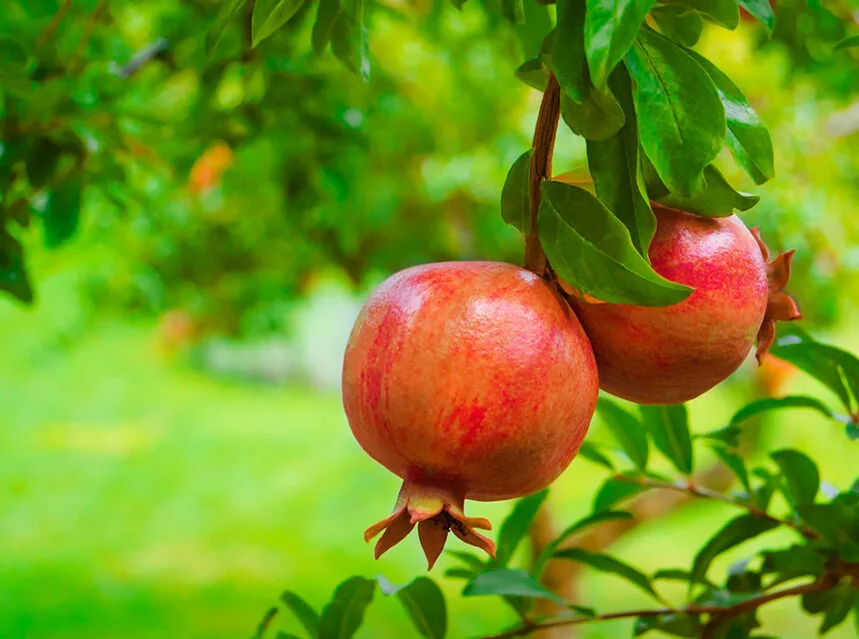
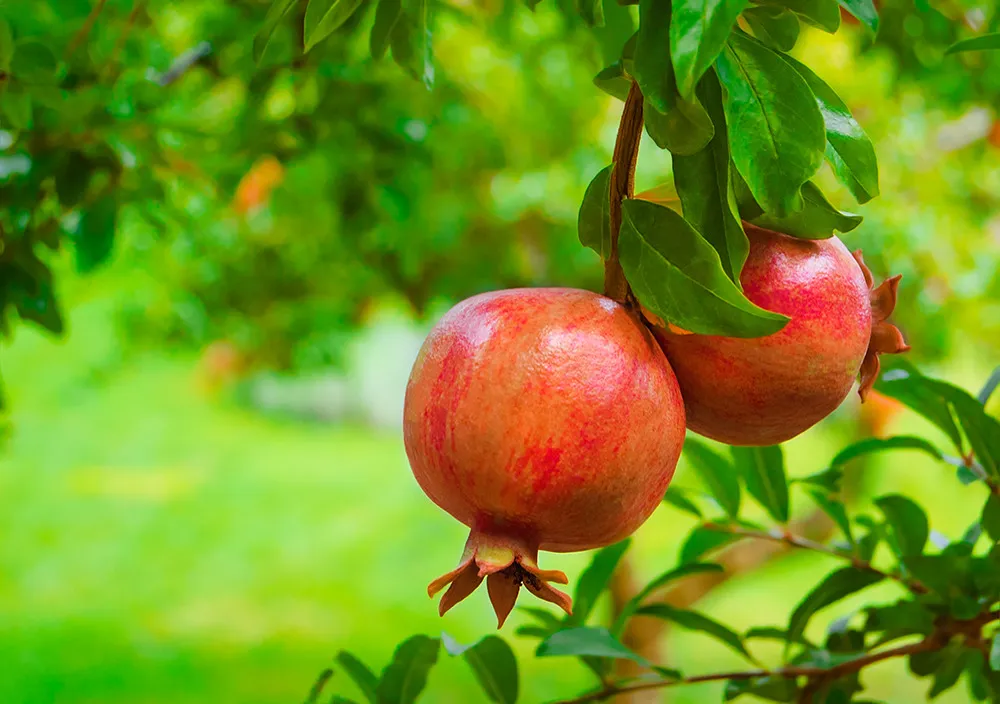
A pomegranate tree is a beautiful, tough, and rewarding choice. It gives you bright orange-red flowers, glossy leaves, and jewel-like fruit. It also shrugs off heat and drought once settled. And it grows well in a large pot. So even small gardens can enjoy fresh anar. Here is the complete guide on how to grow pomegranate.
Quick start: Give a pomegranate full sun and well-drained soil or a big pot. Water deeply but not too often. Prune in the dormant season. Then be patient — most trees fruit in 2–3 years, and the fruit is ripe when deep red.
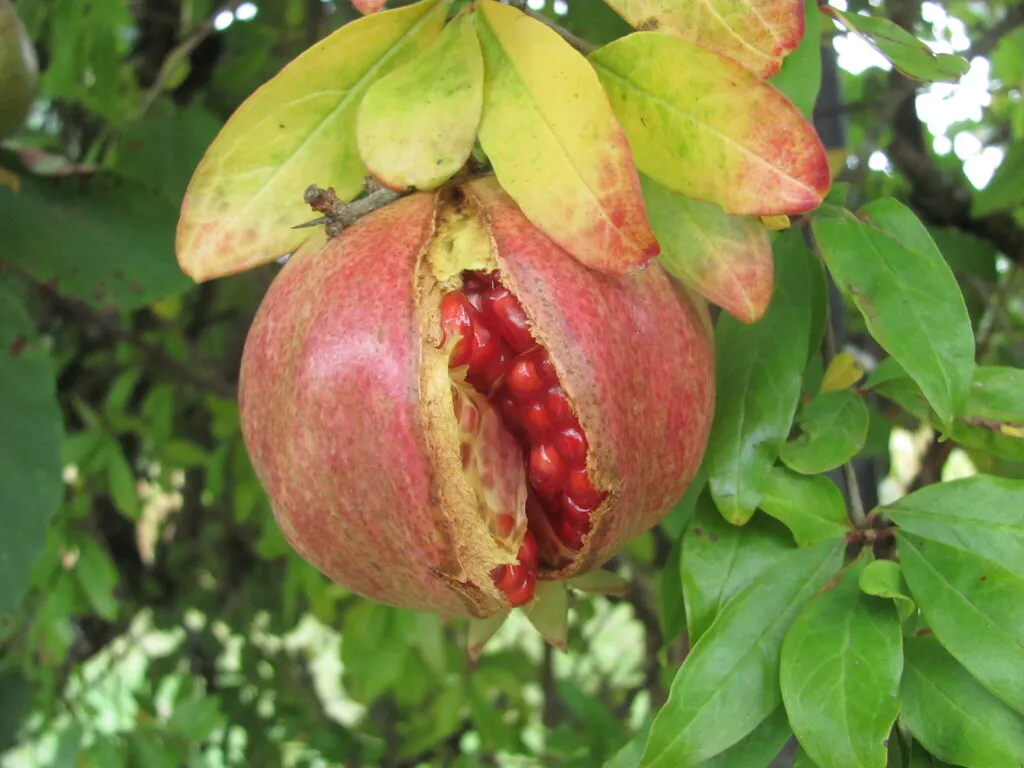
Pomegranates are tougher and more drought-tolerant than their exotic fruit suggests, and growers find an established plant thrives on heat and sun. They fruit best after a long, hot summer, and in cooler or wetter climates are often grown in a large pot that can be moved under cover. Splitting fruit is a common frustration, usually caused by erratic watering as the fruit ripens.
🧰 In a hurry? Jump straight to our tested picks for this guide ↓
Pomegranate at a glance
| Feature | Detail |
|---|---|
| Botanical name | Punica granatum (family Lythraceae) |
| Plant type | Deciduous fruiting shrub/small tree |
| Sun | Full, hot sun |
| Soil | Free-draining; tolerates poor soil |
| Climate | Hot, dry summers; drought-tolerant |
| Container | Yes — dwarf types are ideal |
| Known for | Jewel-like, juicy seeds (arils) |
Why grow a pomegranate?
Pomegranates are hardy and long-lived. They handle heat and drought better than most fruit trees. They also look stunning, with vivid flowers and rich red fruit. Better still, they grow happily in large containers. So they suit terraces and patios, and the arils carry the punicalagin antioxidants the fruit is known for.
Where pomegranates grow best (top producing countries)
Pomegranates love hot, dry climates. India is the world’s largest producer. Iran, China, Turkey, and Spain follow. The tree thrives in warm regions with long summers. In India, anar is a major crop, especially in Maharashtra.
Best season & when to plant
Plant pomegranate in spring, after the cold passes. It needs heat and full sun to fruit well. It also tolerates poor soil, which is a bonus. In cool climates, grow it in a pot. Then move it somewhere bright and sheltered for winter.
How to plant a pomegranate
You can grow pomegranate from a young plant, a cutting, or seed. Cuttings and young plants fruit sooner. To plant in a pot:
- Use a large container — around 10 gallons — with good drainage.
- Fill it with well-draining mix, adding sand or perlite plus compost (pH 6.0–7.0). See improving garden soil.
- Set the root ball in place, but keep soil off the trunk.
Sun, soil & watering
First, sun. Pomegranates need at least 6 hours of full sun daily. More sun means more fruit.
Next, water. Water deeply but infrequently. This encourages strong, deep roots. Let the top inch of soil dry between waterings. However, do not let the soil go bone dry, and never keep it soggy — both cause problems (see how often to water). Always water at the base, not over the leaves.
Pruning
Prune during the dormant season, before new growth begins. Remove dead, diseased, or damaged wood. Also cut back the suckers that sprout from the base. As a result, the plant gets better airflow, more light, and higher yields.
Common pests & diseases
A few pests can appear. These include the pomegranate butterfly, thrips, scale, mealybugs, and whiteflies. Fungal issues like leaf spot and powdery mildew show up in damp weather. So keep the canopy open and treat early with neem (see organic pest control). Bag developing fruit if the pomegranate butterfly is a problem in your area.
Harvesting pomegranates
Be patient at first. Most trees take 2–3 years to bear fruit. The fruit is ripe when it turns a deep red and feels slightly soft. It also makes a metallic sound when tapped. Importantly, pomegranates do not ripen after picking. So leave them on the tree until fully coloured, then cut them off with shears.
Health benefits & uses
Pomegranate arils carry 4 g of fibre, 236 mg of potassium and 10.2 mg of vitamin C per 100 g on 83 kcal (USDA record 169134). Note the vitamin C is ordinary — what makes pomegranate unusual is the punicalagins, and it is those that the heart-health research has looked at. The findings are promising rather than settled. Enjoy the juicy arils fresh, scattered on salads and yogurt. You can also juice them or use the seeds in drinks and desserts.
This article is for general information only and is not medical advice. Talk to a qualified professional before using any plant medicinally.
Common pomegranate problems
Fruit splitting
Caused by irregular watering, especially heavy water after a dry spell. So keep moisture steady as fruit ripens.
No fruit
Usually a young tree, too little sun, or too much shade. Give full sun and be patient.
Dropping flowers
Some natural flower drop is normal. Heavy drop can mean stress, so keep watering and feeding steady.
History, origin & how it spread
The pomegranate is native to the region from Iran to northern India (see Encyclopaedia Britannica). It is one of the oldest cultivated fruits.
It spread across the Mediterranean and Asia, rich in myth and symbolism. India and China lead world production, followed by Iran, Turkey, Afghanistan, the US, Iraq, Pakistan, Syria and Spain (Wikipedia on pomegranate production and export); there is no official tonnage table, as FAO’s crop statistics have no pomegranate item. India is a major grower of anar. It loves hot, dry summers.
Feeding & fertilising pomegranates
Pomegranates are light feeders, so go easy. Too much nitrogen pushes leafy growth and delays fruit. A balanced fertiliser, or a low-nitrogen blend higher in potassium, suits them better as they mature (see best organic fertilisers).
Feed lightly in early spring as growth begins, then again after flowering. Compost or well-rotted manure worked in around the base also helps. For potted plants, feed a little more often, because frequent watering washes nutrients out. Stop feeding by late summer so growth hardens off before cold weather.
Growing in containers
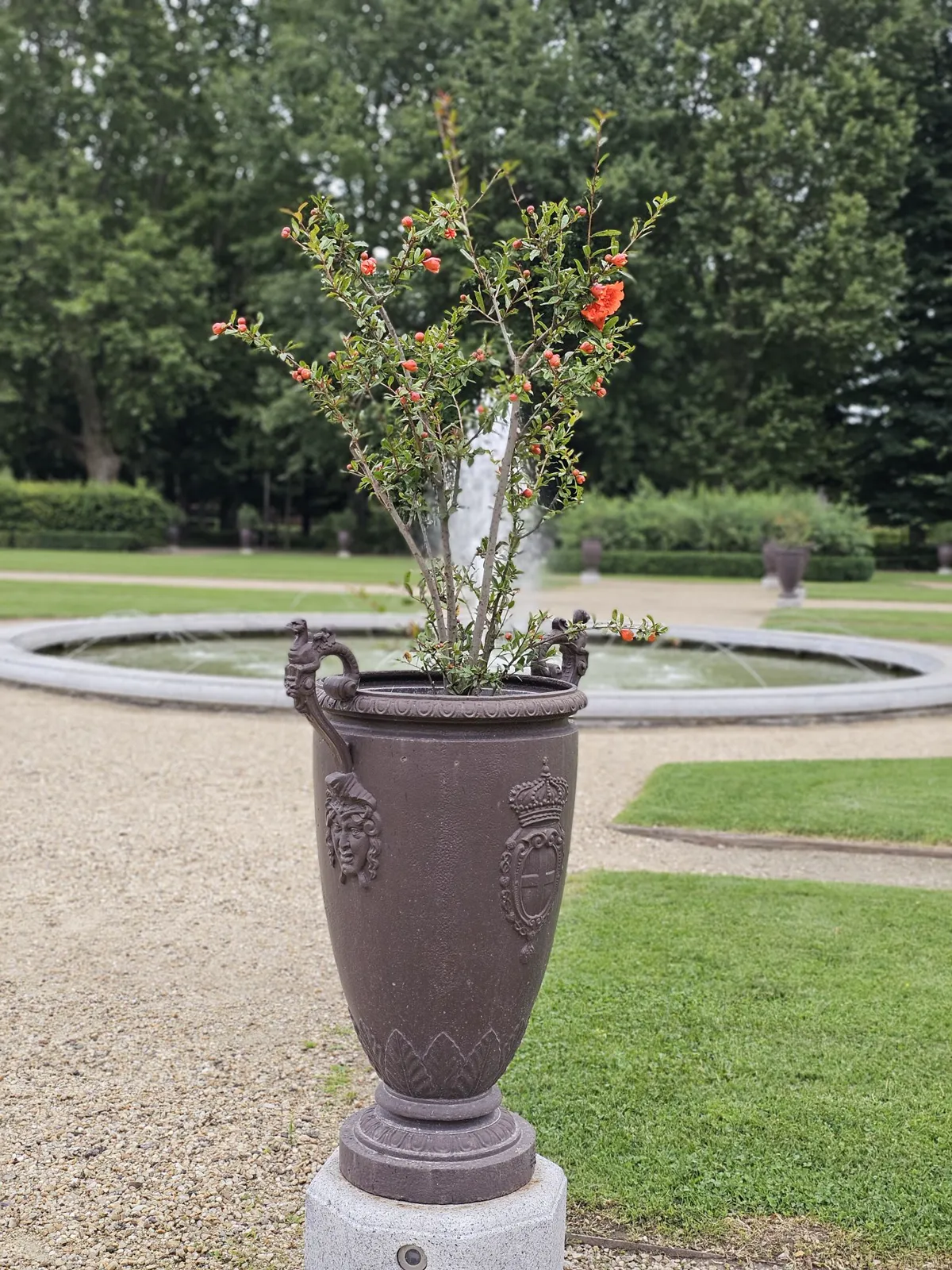
Pomegranates, especially dwarf types, grow well in large pots (see improving garden soil). This suits cooler climates, as the pot can be sheltered for winter.
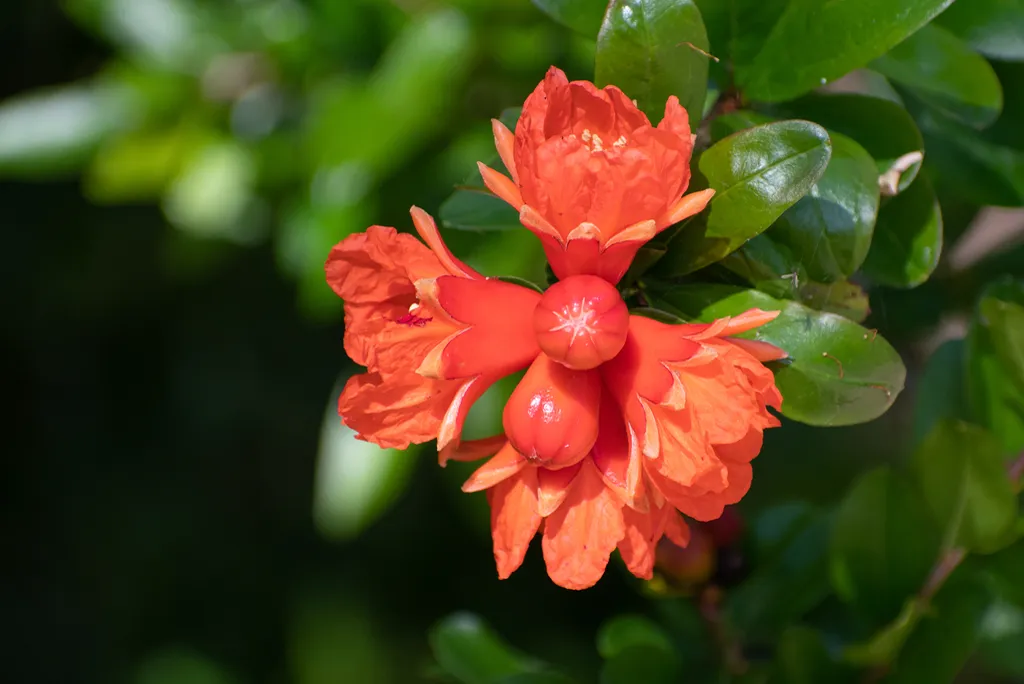
They are also beautiful in flower, with bright orange-red blooms. So even as an ornamental, a potted pomegranate earns its place. Prune lightly to shape it.
Growing pomegranate in the Indian climate
India suits the pomegranate beautifully, which is why anar is such a major crop here. The plant loves the long, hot, dry summers of regions like Maharashtra, Gujarat, Karnataka, and Rajasthan. It also copes with poor, sandy soils where many fruit trees struggle.
The monsoon, however, brings the main challenge. Heavy, erratic rain as fruit ripens causes splitting and invites fungal rot, so improving drainage and keeping the canopy open really matters. Many growers time planting so the crop ripens after the rains. In hotter plains, light afternoon shade can protect young plants, while a thick mulch keeps roots cool and conserves moisture through the dry season.
Choosing a pomegranate variety
Pomegranates come in a surprising range, from large fruiting types to compact ornamentals. For fruit, named varieties such as ‘Wonderful’ are the most widely grown, prized for large, deep-red fruit, while others are valued for sweeter, softer seeds. In cooler or shorter-summer climates, early-ripening kinds give the best chance of a crop.
If space is tight, the dwarf pomegranate (Punica granatum var. nana) stays under a metre tall, flowers freely and fruits in a pot, though its small fruits are more decorative than edible. Gardeners in warm regions can grow almost any variety in open ground; those in cooler climates do best with a compact type in a large container that can be moved somewhere bright and frost-free for winter.
Related plant guides
- How to grow Fig
- How to grow Grapes
- How to grow Lemon
- How to grow Orange
- How to grow Grapefruit
- How to grow Mango
Safety note on which part you use: the arils are food. The warnings in the literature belong to concentrated medicinal preparations of the bark and rind — Plants For A Future lists gastric irritation, vomiting, dizziness, vision problems and worse from overdosing them. Eat the fruit and leave bark and rind extracts to a qualified practitioner. This is general information, not medical advice.
How to propagate pomegranate
Pomegranate is one of the easiest fruit trees to reproduce, and the reason is worth knowing: it roots readily from hardwood cuttings, so you can raise a tree that is identical to a variety you have already tasted. Seed is the one method that does not pay off if you want fruit.
From hardwood cuttings
This is the standard method and the one nurseries use. In the dormant season, take pencil-thick cuttings 20–25 cm long from healthy one-year-old wood, and insert them two-thirds of their length into a free-draining mix, keeping the top bud above the surface. Keep them barely moist rather than wet. Semi-ripe cuttings of about 4–5 cm with a heel, taken in early summer under cover, also strike well. Grow the rooted plants on for a season before planting out.
From suckers and layering
Pomegranate throws suckers from the base — the same ones you cut off when pruning. Instead of binning them, lift rooted suckers in the dormant season and pot them up until they are growing away strongly. Air layering works well on this species too, and gives a larger plant faster than a cutting.
From seed
Sow fresh seed in spring at around 22°C and it germinates easily, but seedlings are variable and take considerably longer to bear. Use seed for ornamental or hedging plants, not for a tree you are growing for fruit.
Frequently asked questions
How long does a pomegranate take to fruit?
Usually 2–3 years from planting, sometimes longer for seed-grown trees.
Can I grow pomegranate in a pot?
Yes. It grows very well in a large, well-drained container in full sun, ideal for terraces.
Why is my pomegranate fruit splitting?
Irregular watering. Keep the soil evenly moist as the fruit ripens to prevent splitting.
When should I plant anar in India?
Spring is ideal, giving the tree a full warm season to establish before fruiting.
Why is my pomegranate flowering but not setting fruit?
Pomegranates carry two kinds of flower: bell-shaped female flowers that can set fruit, and narrower vase-shaped male flowers that only supply pollen and always drop. A tree covered in falling flowers is often simply shedding its male ones, which is normal. Genuine failure to set usually means the tree is still young, is short of sun, has had too much nitrogen, or that rain during flowering has washed the pollen away.
What is the anar butterfly and how do I stop it?
The anar butterfly, or pomegranate fruit borer, lays eggs on flowers and young fruit; the caterpillar then bores inside, eats the pulp, and the fruit rots and drops with a small entry hole and frass around it. Bagging each young fruit in a paper or butter-paper cover once it is a few centimetres across is the most effective home remedy and needs no spray. Collect and destroy every infested fruit rather than leaving it under the tree, since that breaks the breeding cycle.
What causes bacterial blight on pomegranate?
Bacterial blight, known in India as telya, shows as dark oily-looking spots on leaves and fruit that later crack in an L or Y shape. It spreads fast in humid monsoon weather and through infected planting material and pruning tools. There is no cure once a tree is badly affected — prune out and burn affected wood in dry weather, disinfect tools between cuts, avoid overhead watering, and start with certified disease-free plants.
How and when should I prune a pomegranate?
Train it as either a single-trunk small tree or a multi-stemmed bush in the first two or three years, then keep pruning light. Remove suckers from the base regularly, take out dead, crossing, and weak wood, and thin congested growth so light reaches the centre. Prune after harvest or in the dormant season, since fruit forms on short spurs on two to three-year-old wood, and heavy cutting removes exactly that.
How do I know when a pomegranate is ripe?
Ripe fruit turns its full varietal colour, loses its perfectly round shape and becomes slightly flat-sided, and sounds metallic when tapped. It should feel heavy for its size. Unlike many fruits, pomegranate does not ripen further after picking, so leaving it a little longer on the tree is better — but harvest before heavy rain, because that is exactly when the fruit splits.
How do you propagate pomegranate?
Hardwood cuttings are the standard method and root readily: take pencil-thick cuttings 20-25 cm long from one-year-old wood in the dormant season, and insert them two-thirds deep in a free-draining mix. Air layering also works well. Seed is not recommended for fruit, because seedlings are variable and take considerably longer to bear, though they are fine for ornamental hedging.
Which pomegranate varieties are best in India?
Bhagwa, also sold as Kesar, dominates commercial planting for its deep red arils, soft seeds, and good keeping quality. Ganesh is the older widely grown variety with pinkish arils and softer seeds, while Ruby and Arakta are popular for colour and yield. For a home garden in a hot dry region almost any of these performs well; in humid, high-rainfall areas expect more trouble with bacterial blight regardless of variety.
Still stuck? Ask the Plant Doctor
Describe the problem — yellow leaves, holes, no flowers — and get a clear answer in seconds. FreeAI can make mistakes. Answers are guidance, not a guarantee — check anything important against the guide it links to, and always read the label on any product before you use it.