Lawn Mowing Height Guide
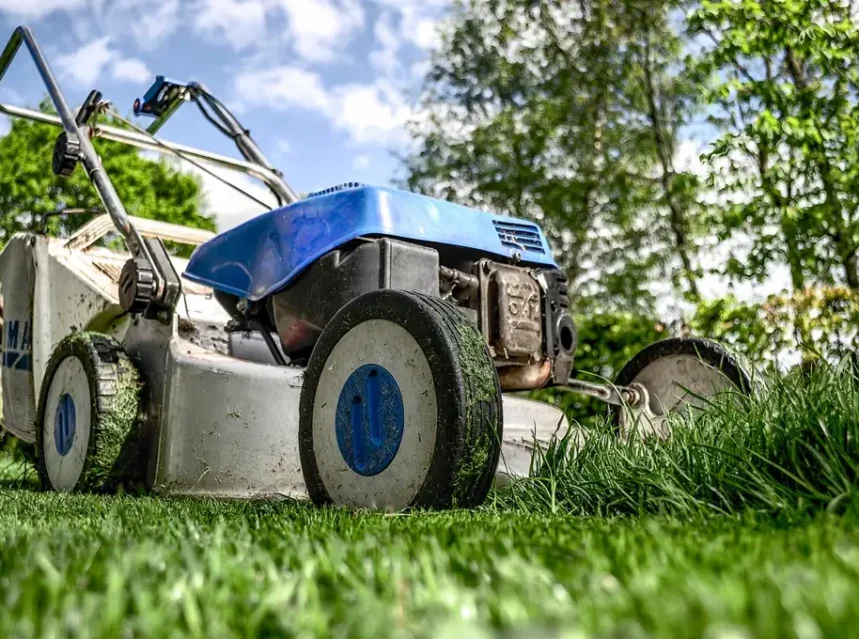
Lawn mowing height is the length you leave the grass after cutting — and it is the single biggest lever you have over how thick, green and weed-free your lawn looks. Most struggling lawns are not underfed or underwatered. They are simply cut too short. Set the mower right and the lawn fixes half its own problems.
Quick answer: Keep cool-season grasses (fescue, ryegrass, Kentucky bluegrass) at 2.5–4 inches, warm-season grasses (Bermuda, zoysia) at 1–2.5 inches, and Indian doob lawns at about 1–1.5 inches. Never remove more than one-third of the blade in a single mow, and raise the cut in summer heat or drought.
🧰 In a hurry? Jump straight to our tested picks for this guide ↓
Lawn mowing height by grass type
| Grass type | Ideal height | Season type |
|---|---|---|
| Tall fescue | 3–4 in (7.5–10 cm) | Cool-season |
| Kentucky bluegrass | 2.5–3.5 in (6–9 cm) | Cool-season |
| Perennial ryegrass | 2–3 in (5–7.5 cm) | Cool-season |
| Fine fescues | 2.5–3.5 in (6–9 cm) | Cool-season / shade |
| Bermuda (doob) | 1–2 in (2.5–5 cm) | Warm-season |
| Zoysia | 1–2.5 in (2.5–6 cm) | Warm-season |
| St. Augustine | 2.5–4 in (6–10 cm) | Warm-season |
| Centipede | 1.5–2 in (4–5 cm) | Warm-season |
| Indian doob lawn | 1–1.5 in (2.5–4 cm) | Warm-season |
| Shaded lawns (any) | Add 0.5–1 in to normal | — |
Why does mowing height matter so much?
Because grass height above ground controls root depth below ground. The two grow in proportion, and almost everyone underestimates it.
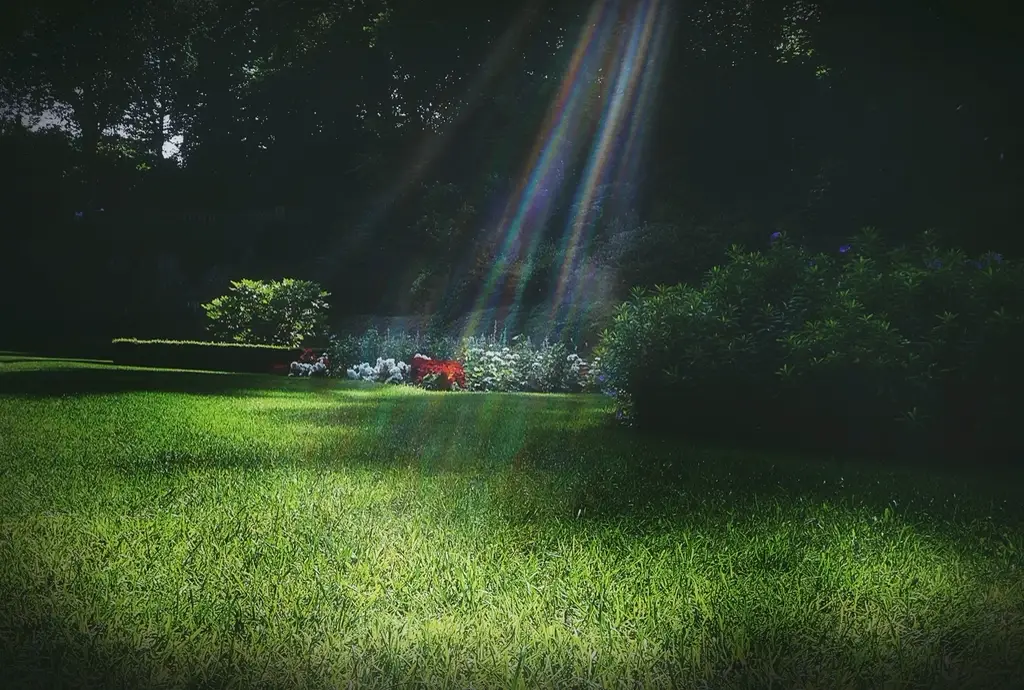
A blade of grass is a solar panel. Cut it short and the plant loses the leaf area it uses to make food, so it abandons deep roots to survive. Shallow roots then need more water and more feeding, and they collapse first in a heatwave. Taller grass does the opposite: it builds deeper roots, shades the soil so moisture lasts longer, and blocks the sunlight that crabgrass and other weed seeds need to germinate. Research summarised by the University of Illinois Extension puts it simply: lawns mowed at taller heights have deeper roots and fewer weeds. A higher cut is free weed control.
The one-third rule
One rule governs every good mowing decision: never remove more than one-third of the grass blade in a single cut. Turf programs such as Kansas State University’s treat it as the foundation of lawn health.
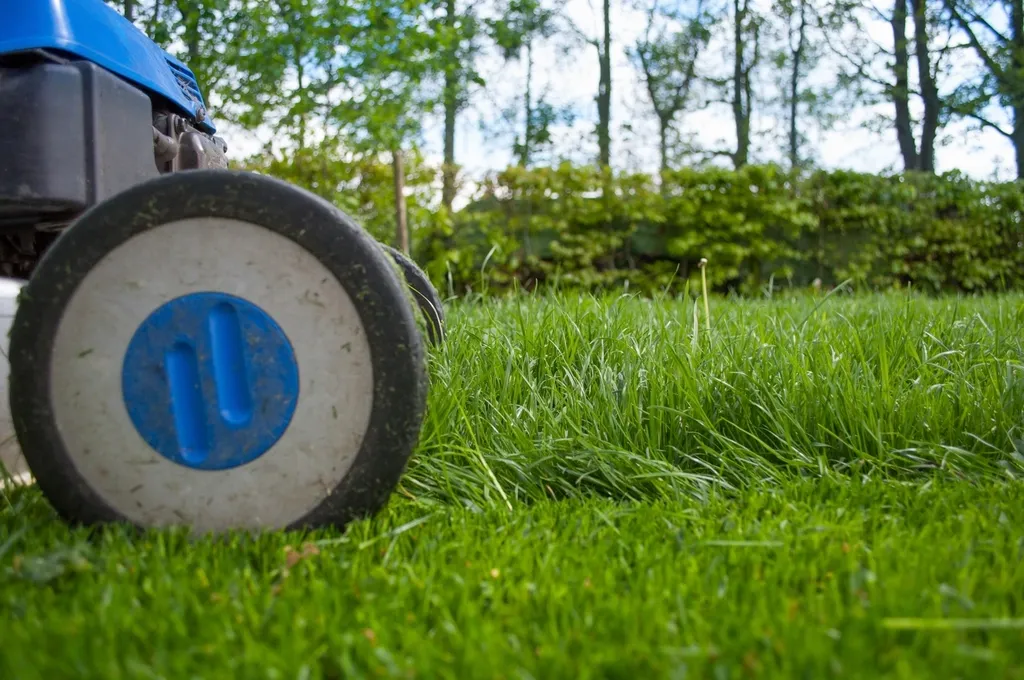
Cutting more than a third at once shocks the plant. Growth stops, roots stall, and the lawn turns that tired grey-brown for a week. The rule also sets your schedule backwards from height: if you keep bluegrass at 2.5 inches, mow when it reaches about 3.5–3.75 inches. Came back from holiday to a jungle? Do not scalp it back in one pass. Take a third off, wait three or four days, and step it down again until you are back to target.
Cool-season lawns: mow high
Fescues, ryegrass and Kentucky bluegrass dominate lawns in the northern US, UK and other temperate regions. They grow hardest in spring and autumn, and they reward a high cut.
Hold them at the top of their range — 3 inches or more for most mixes, up to 4 for tall fescue — and you will water less, weed less and feed less. The “golf course” urge to shave them is the classic mistake: golf greens use special grasses, daily care and full-time staff. A family lawn cut to half an inch simply dies in patches, then invites weeds, and then needs overseeding to repair. Set it high and the same lawn becomes self-defending.
Warm-season lawns: shorter, but not scalped
Bermuda, zoysia, St. Augustine and centipede run lawns across the southern US, Australia and most of the tropics. They spread by runners and tolerate — even prefer — a shorter cut.
Bermuda stays dense at 1–2 inches, zoysia similar, while St. Augustine wants to stay tall at 2.5–4 inches despite being warm-season. The runner habit means these grasses recover from low mowing far better than cool-season types, but scalping to bare soil still burns the stolons and opens the door to weeds. In peak summer, move every warm-season lawn to the top of its range; the extra shade keeps soil temperatures sane.
Mowing height for Indian doob lawns
Most Indian lawns are doob (Bermuda) maintained the traditional way — short, dense and springy. The same height science applies, with a monsoon twist.
Keep doob at roughly 2.5–4 cm. Through the monsoon it grows explosively, so mow more often rather than cutting lower; wet scalping tears the turf and invites fungus. In peak summer, raise the cut and water early morning so the lawn shades its own roots — a doob lawn allowed a little height survives May heat dramatically better than a shaved one. In north India’s brief winter dormancy, mowing nearly stops; resume gradually as growth returns in February. Many Indian gardeners still use hand cylinder mowers, which actually give a cleaner cut than rotary blades — just keep them sharp.
How often should you mow?
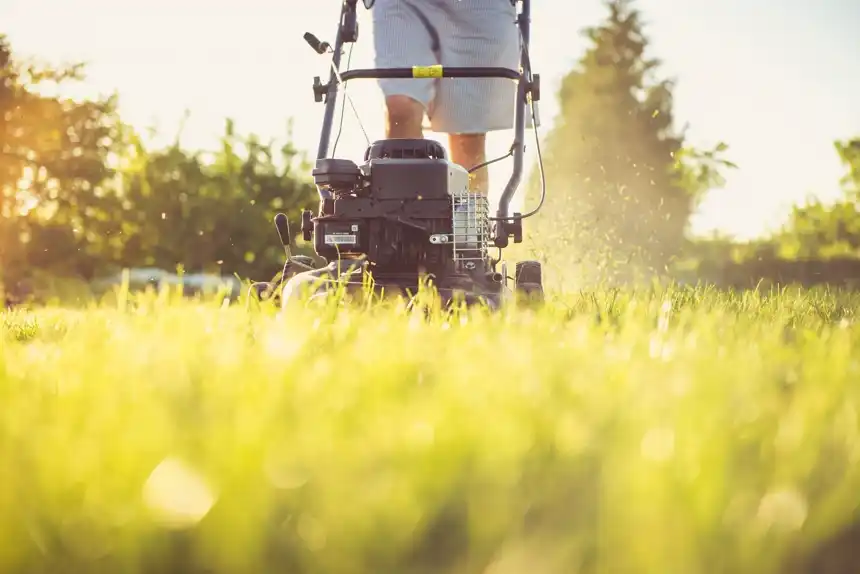
Forget “every Sunday”. Mow by growth, not by calendar — the one-third rule sets the rhythm automatically.
- Spring and autumn (cool-season): typically every 5–7 days during growth flushes.
- Summer (cool-season): growth slows; every 10–14 days may be plenty. Raise the height too.
- Summer and monsoon (warm-season/India): peak growth; every 4–7 days.
- Drought or extreme heat: mow less, cut higher, and never mow a wilted lawn.
One more habit separates good lawns from great ones: vary your mowing direction each time. Repeating the same pattern leans the grass over and ruts the soil.
Mulch the clippings or bag them?
Mulch, almost always. Clippings cut little-and-often disappear into the lawn within days and feed it for free.
Clippings are about 4 percent nitrogen — leaving them on the lawn returns roughly a quarter of the lawn’s annual feeding (the rest is covered in our lawn feeding schedule), the same principle that makes green manures work in beds. They do not cause thatch; that myth was debunked decades ago. Bag only when the grass got away from you (long, clumping cuttings smother turf), when the lawn is diseased, or for the last leaf-mixed mows of autumn. A mulching mower makes this effortless, but any mower set to the right height does a fair job.
Common mowing mistakes
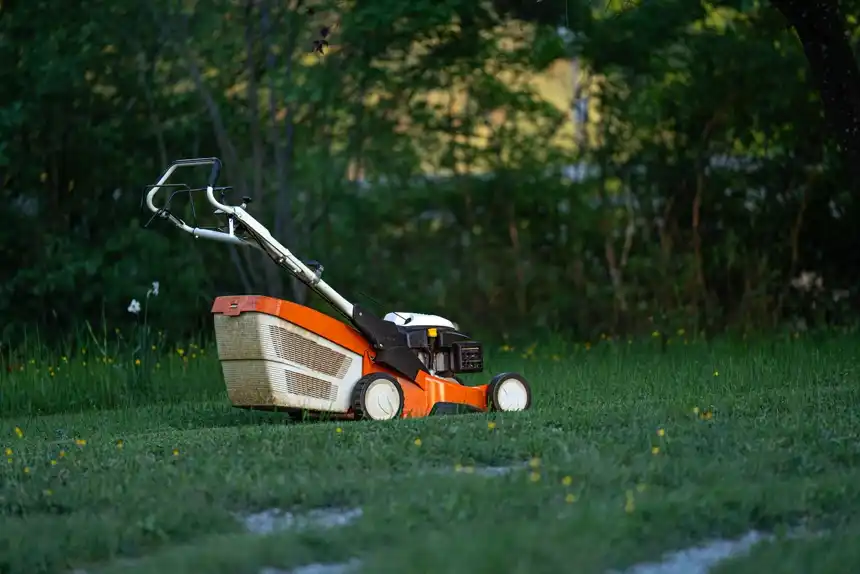
- Scalping: cutting to an inch “so it lasts longer” — it doesn’t; it just stresses the lawn into thinning. Repair scalped patches by overseeding the lawn in the next window.
- Dull blades: a blunt mower tears instead of cuts, leaving white-grey shredded tips that brown by evening. Sharpen at least once a season.
- Mowing wet grass: clumps, ruts, fungus and a filthy mower deck. Wait for the surface to dry.
- Same height all year: the right height in April is wrong in a July heatwave. Adjust seasonally.
- Mowing drought-stressed turf: if footprints stay visible in the grass, skip the mow entirely.
Beyond the perfect lawn: mow less on purpose
The best-known version of that idea is No Mow May, and the evidence behind it is more interesting than the slogan: our No Mow May guide sets out why a cut every two to four weeks feeds more bees than a month of tall grass, and how to bring an overgrown lawn back down safely.
The healthiest mowing schedule for some gardens is less mowing altogether. Two ideas worth a corner of your lawn:
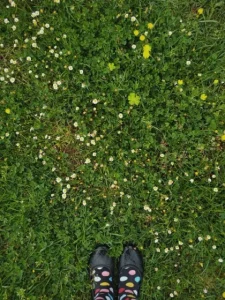
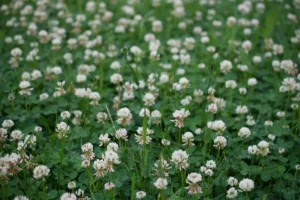
Campaigns like No-Mow May leave spring lawns uncut so clover and early flowers feed bees — even a strip helps, and it pairs beautifully with deliberately pollinator-friendly planting. And where grass struggles — deep shade, steep slopes, baking strips by the drive — a no-mow groundcover such as creeping thyme or an ornamental clump like fountain grass looks better than thin turf and never asks for a Sunday morning again. Our full guide to lawn alternatives compares all the options. The rest of the lawn, mowed high and sharp, will look all the greener beside it — see our full guide to growing a green lawn.
What experienced lawn keepers report
Ask any seasoned turf community and the answer is almost a chant: mow high, mow sharp, mow often. On lawn-care forums, the most commonly shared transformation story involves no product at all — just raising the deck from 2 inches to 3.5 and waiting a month, after which owners report visibly thicker turf and crabgrass fading without herbicide. The same growers consistently name dull blades as the most invisible mistake: lawns that “look brown two days after mowing” almost always trace back to torn, not cut, grass tips. University turf specialists agree on the priority order — height first, sharpness second, frequency third, and products a distant fourth.
Related plant guides
- How To Overseed A Lawn
- How to grow A Green Lawn
- Lawn Feeding Schedule
- Lawn Alternatives
- How To Prune Roses
- Organic Weed Control
Frequently asked questions
What is the best height to cut grass?
For most cool-season lawns, 2.5–4 inches; for warm-season lawns like Bermuda and zoysia, 1–2.5 inches. Within those ranges, taller is safer — especially in heat, shade or drought.
Is it better to cut grass short so it grows slower?
No. Cutting short forces the plant to regrow leaf urgently, which actually uses more resources, weakens roots and lets weeds in. A higher cut grows steadier and healthier — and you mow no more often under the one-third rule.
Should I change my lawn mowing height in summer?
Yes. Raise the cut by half an inch to an inch in hot or dry spells, in every climate. Taller grass shades the soil, conserves moisture and keeps roots cooler — the cheapest drought protection a lawn can get.
What height should an Indian doob lawn be kept at?
Around 2.5–4 cm (1–1.5 inches). Mow more frequently — never lower — during the monsoon flush, raise the height before peak summer, and keep cylinder-mower blades sharp for a clean cut.
Will cutting grass too short kill it?
Scalping the lawn — shaving it right down — badly weakens it and can kill patches outright. Cutting off too much leaf at once starves the roots, exposes bare soil to weeds, and leaves the crowns to bake and dry out. A scalped lawn often turns brown and takes weeks to recover, if it recovers at all. Raise the deck and take less off each pass instead.
What is the one-third rule for mowing?
The one-third rule says never remove more than a third of the grass blade in a single cut. So if your target height is 3 inches, mow before the grass reaches about 4.5 inches. Taking more than a third at once shocks the plant and forces it to spend root reserves regrowing leaf. Mowing more often, not lower, is how you keep a lawn short and healthy.
How short should I cut grass before winter?
Slightly shorter than your summer height for the final cut of the season — around 2 to 2.5 inches for cool-season lawns — to reduce matting and snow-mould risk. Do not scalp it, though; some leaf is needed to feed the roots through dormancy. Lower the height gradually over the last few mowings rather than in one drastic cut.
Does taller grass really prevent weeds?
Yes — keeping grass on the taller side is one of the cheapest weed controls there is. Longer blades shade the soil surface so weed seeds like crabgrass get far less of the light they need to germinate. A dense, taller lawn simply out-competes weeds for light and space, which is why raising the cut often does more than any spray.
How often should I mow my lawn?
Mow by height, not by the calendar — cut whenever the grass has grown by about a third above your target height. In the fast spring and early-summer flush that can mean every four to five days; in high summer or drought it may stretch to two weeks or more. Letting the grass tell you keeps you inside the one-third rule automatically.
Should you mow wet grass?
Avoid it where you can. Wet grass clumps and clogs the mower, tears rather than cuts cleanly, and the ragged ends invite disease, while wet soil compacts under the wheels. If you must mow damp grass, raise the height, take a lighter pass, and keep the blade sharp. A clean, sharp cut matters as much as height for lawn health.
How short should I cut grass for the first mow in spring?
Start the season at your normal height, not lower. A common myth is that a hard early scalp makes the lawn green up faster, but it just stresses grass that is still waking up. Take the first cut once the lawn is actively growing, remove no more than a third, and make sure the blade is sharp after a winter of storage.
Related guides
- How to grow a green lawn
- How to overseed a lawn
- Creeping thyme: the no-mow groundcover
- How to grow fountain grass
- No Mow May
- Clover Lawn
Still stuck? Ask the Plant Doctor
Describe the problem — yellow leaves, holes, no flowers — and get a clear answer in seconds. FreeAI can make mistakes. Answers are guidance, not a guarantee — check anything important against the guide it links to, and always read the label on any product before you use it.