Why Are My Anthurium Leaves Turning Brown? Causes & Fixes
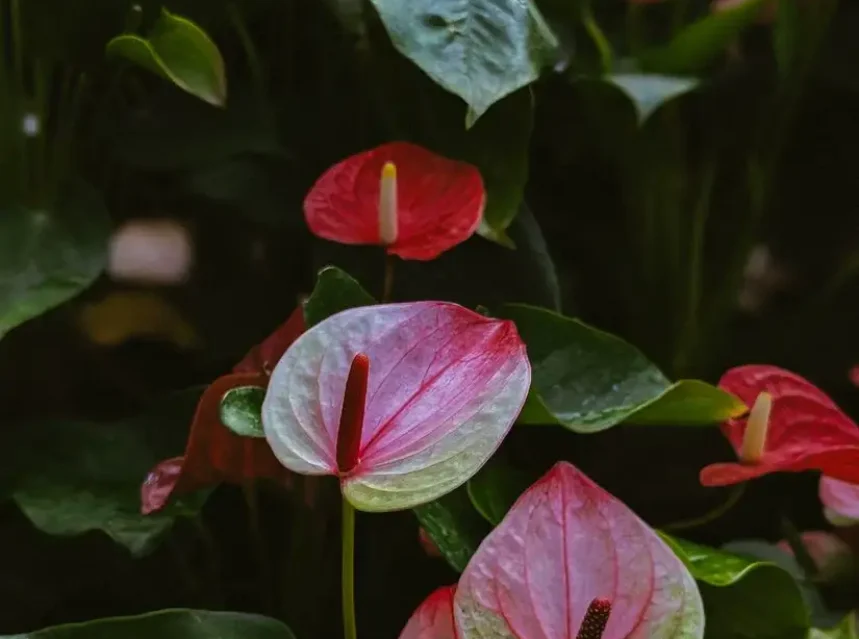
Why are my anthurium leaves turning brown? Low humidity is a top cause of crispy brown tips, but the browning pattern tells the real story — tips, patches and burnt edges each point to a different problem. Watering stress, harsh sun and salt build-up from feed or tap water cause the rest.
Quick answer: Crispy brown tips mean low humidity or thirst. Brown, scorched patches in strong sun mean sunburn. Brown edges with a white crust on the soil mean fertiliser or tap-water salts. Yellow leaves browning at the tips mean overwatering. Match the pattern below.
🧰 In a hurry? Jump straight to our tested picks for this guide ↓
Why are my anthurium leaves turning brown? Quick diagnosis
| What you see | Most likely cause |
|---|---|
| Crispy brown tips and edges | Low humidity or underwatering |
| Yellow leaves browning at the tips, soggy soil | Overwatering and root rot |
| Brown, scorched patches in strong sun | Sunburn |
| Brown edges with a white crust on the soil | Fertiliser or tap-water salts |
| Brown, water-soaked spots | Disease |
| An old lower leaf slowly browning | Natural ageing |
Low humidity: the classic brown tips
Dry air causes brown tips more than anything else. Anthuriums are tropical plants that want steady, moderate to high humidity, usually around 50 to 70%, so in dry, heated or air-conditioned rooms the leaf tips and edges crisp and turn brown.
The fix is to raise the humidity around the plant. A pebble tray works well. Sit the pot on a shallow dish of pebbles and water, keeping the base above the water line. The evaporating water then moistens the air while the roots stay dry. A nearby humidifier or a bright bathroom help too. Once the air stays moist, new leaves come in clean and the browning stops spreading. Our humidity guide has more methods.
Watering stress: tips and edges
Both too little and too much water brown the leaves. Underwatering dries the tips and edges to a crispy brown. Overwatering does the opposite. It rots the roots, so the leaves yellow first and then brown at the tips as the plant struggles to move water.
So keep the mix lightly moist, never soaked and never bone dry. Water thoroughly, let all the excess drain away, and never leave the pot sitting in water. If the soil is soggy and the base is mushy, treat it as root rot and repot into a chunky, airy aroid mix. Our watering guide helps you find the balance, and our anthurium yellowing guide covers the overwatering side.
Sun scorch and salt burn
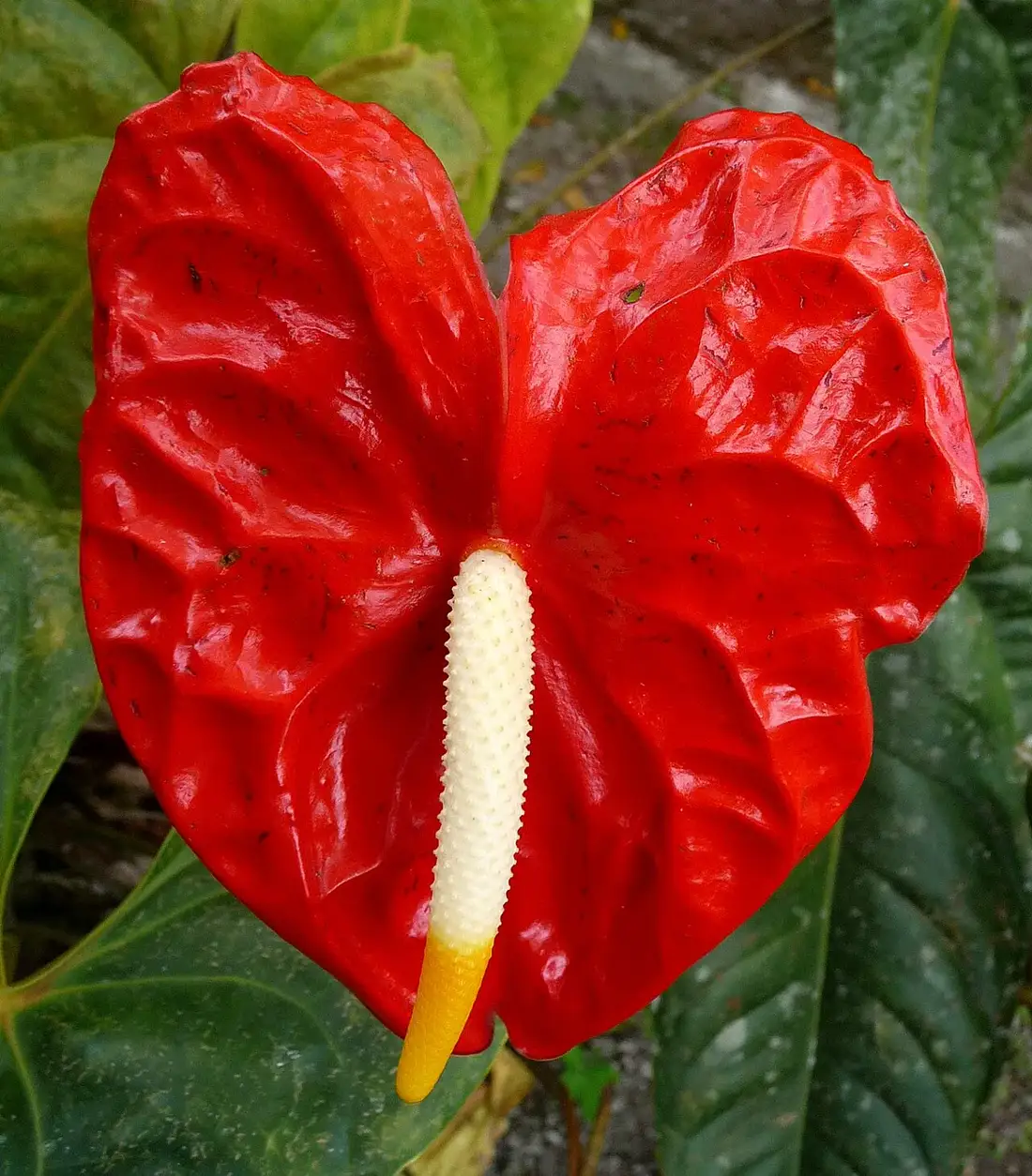
Harsh light browns anthuriums in patches. Too much direct sun, especially at a hot window, scorches the leaves, leaving dry brown patches where the light burns them. So move the plant a little back from the window, use a sheer curtain, or shift it to an east or west window where the light is gentler but still bright. The Royal Horticultural Society recommends bright, filtered light and warm, humid conditions for anthuriums.
Salts are another common cause of brown edges. Too much fertiliser, or mineral-heavy tap water, builds up salts in the soil. These sometimes show as a white crust on the surface or pot rim. The salts then burn the leaf edges brown. So feed only lightly and flush the pot with clean water to wash the salts out. Water with filtered or rainwater where you can. Our fertiliser guide explains feeding rates, and the same salt-burn affects other plants, as our dracaena brown tips guide shows.
Soil, disease and trimming
The right soil prevents a lot of browning. Anthuriums have air-loving roots. They need a chunky, fast-draining aroid mix of bark, perlite and a little potting soil. Use a pot with drainage holes so the roots never sit wet. The University of Wisconsin Extension notes anthuriums need well-drained, airy media and moderate humidity. Our potting soil guide explains the blend.
Brown, water-soaked spots that spread can point to a fungal or bacterial disease. So remove affected leaves with clean scissors, improve airflow, and avoid wetting the leaves. To tidy a plant with brown tips, trim them to the natural leaf shape once you have fixed the cause, and new, clean leaves will follow.
Pests that brown anthurium leaves
Tiny pests can also brown the leaves. Spider mites are the usual culprit indoors. They feed on the underside of the leaf and leave fine speckling that turns brown over time. Look for pale dots and faint webbing near the veins.
Scale and mealybugs cause trouble too. They cling to stems and leaf backs, sap the plant, and leave sticky patches that brown and weaken the tissue. So check new plants before you bring them home, and wipe the leaves now and then.
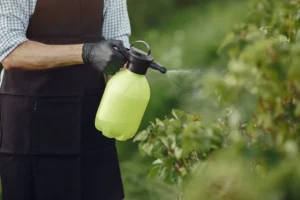
The fix is gentle but steady. First, rinse the leaves under a soft spray to knock pests off. Next, wipe both sides with a cloth. Then treat with insecticidal soap or neem oil every few days until the pests are gone. Good humidity helps here as well, because spider mites thrive in dry air. Our spider mites guide covers treatment in detail.
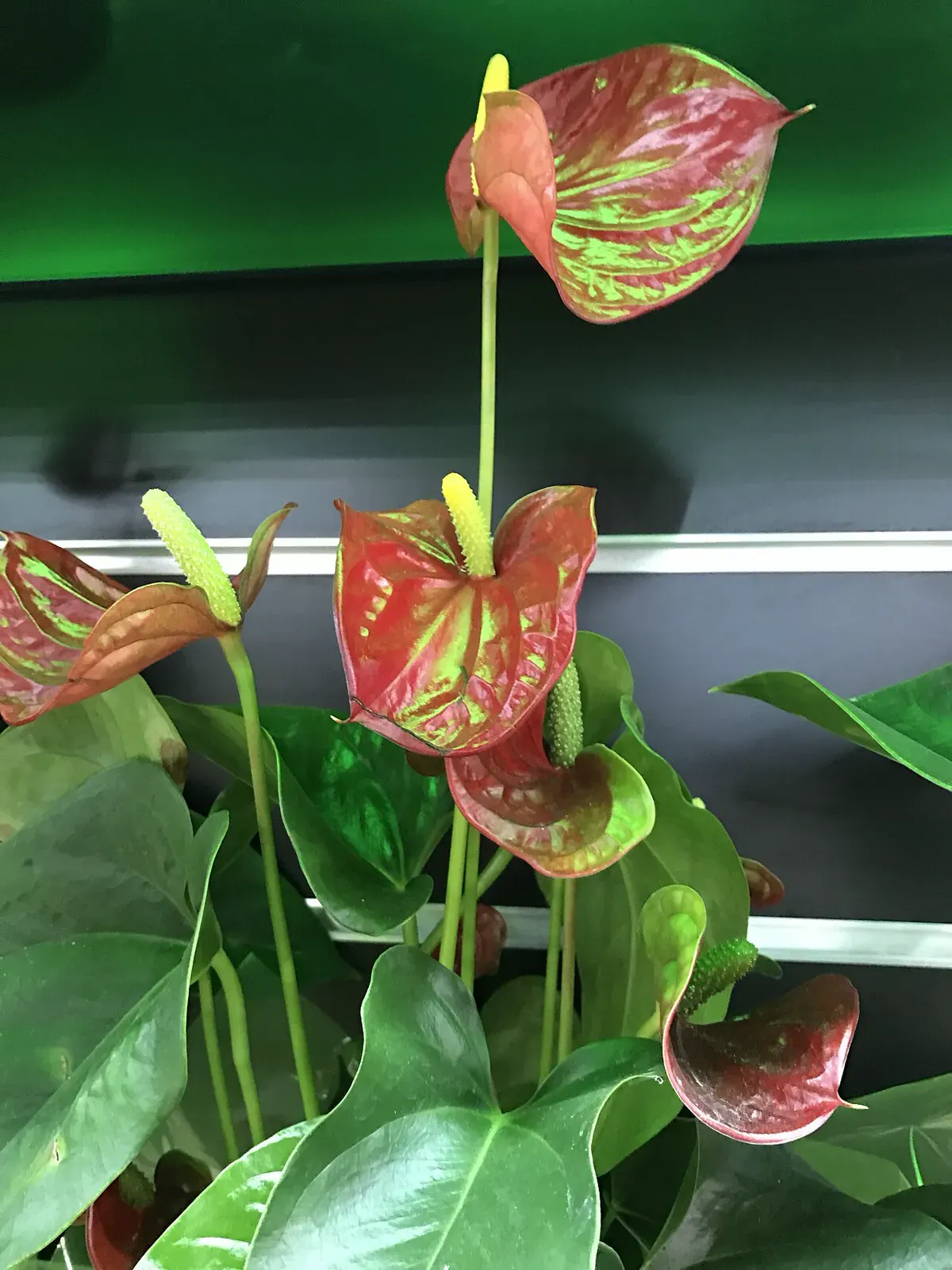
How to prevent anthurium leaves turning brown
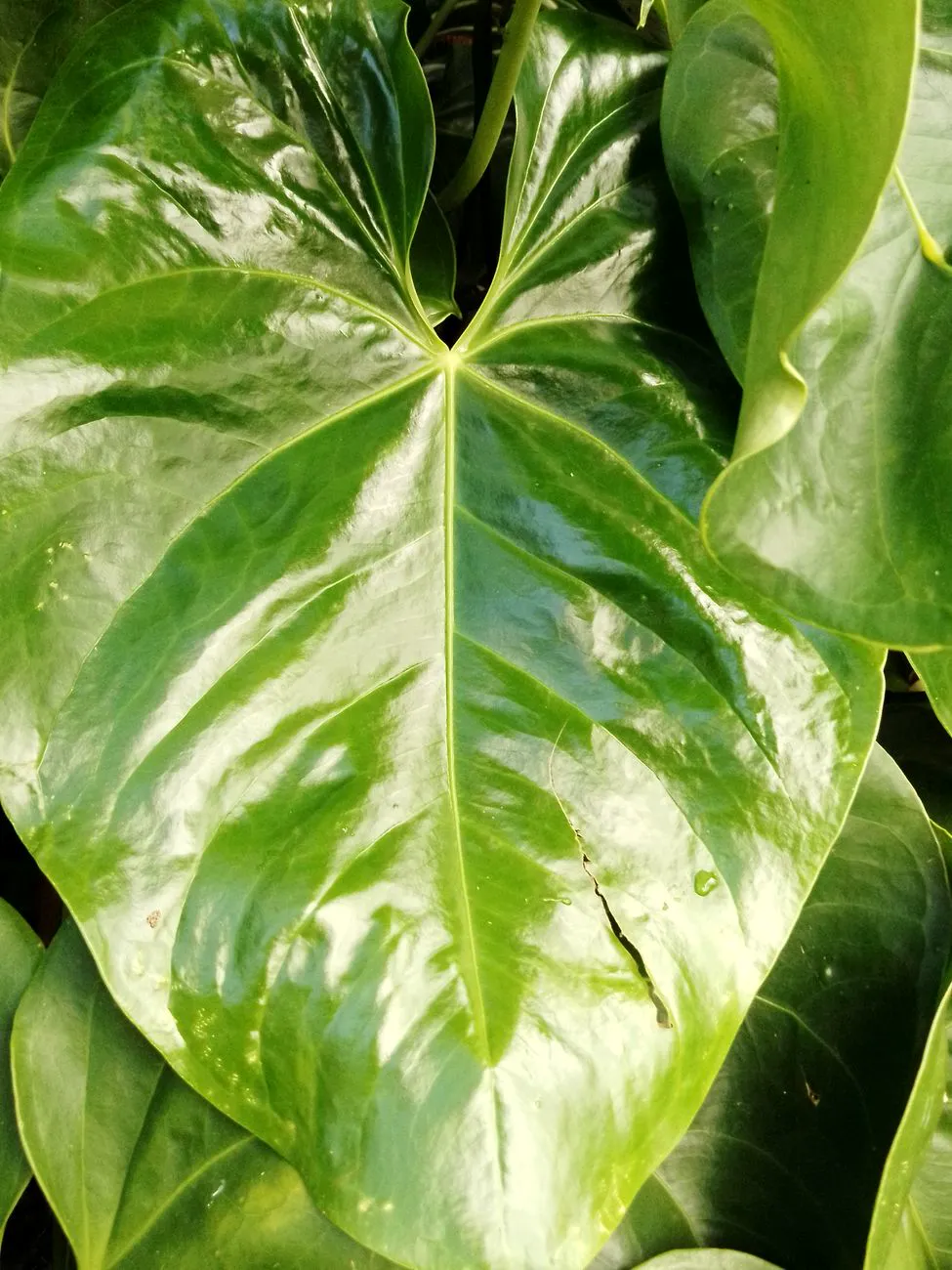
Prevention is far easier than a rescue. Keep the air moist, the water clean and the light bright but indirect, and most browning never starts. A steady routine matters more than any single fix.
Check the soil with your finger before you water. Feed only in the growing season, and lightly. Wipe the leaves monthly so dust does not block light and pests cannot settle. Finally, keep the plant away from heaters, cold draughts and hot glass, because sudden swings stress the leaves and brown the edges.
Anthurium leaves turning brown in India
Two settings brown anthurium leaves fast in India: dry, air-conditioned rooms and hard tap water.
Anthurium grows beautifully as an indoor plant across much of the country, especially in warm, humid regions, but AC rooms and the dry summer air crisp the leaf tips, so raise humidity with a pebble tray. Much of India also has hard, mineral-rich tap water that browns the edges, so use filtered or stored rainwater where you can, and flush the soil now and then. Keep the plant in bright, indirect light out of harsh afternoon sun. Our anthurium guide has more.
How to fix brown anthurium leaves
- Match the pattern — crispy tips mean humidity or thirst, patches mean sun, edges with crust mean salts.
- Raise humidity to 50 to 70% with a pebble tray or humidifier.
- Keep the mix lightly moist, and repot into airy aroid mix if it is soggy.
- Move the plant out of harsh direct sun into bright, indirect light.
- Feed lightly, flush out salts, and water with filtered or rainwater.
- Trim brown tips to the leaf shape once the cause is fixed.
Firm, glossy, deep-green new leaves without brown edges are the sign your anthurium has recovered.
Frequently asked questions
Why does my anthurium have brown tips?
Usually low humidity. Anthuriums want steady humidity around 50 to 70%, so dry, heated or air-conditioned air crisps the leaf tips brown. Underwatering and salt build-up from feed or tap water do the same, so raise humidity, water evenly, and flush the soil to help.
Should I cut the brown leaves off my anthurium?
Trim brown tips or badly browned leaves with clean scissors, following the natural leaf shape. Browned tissue will not turn green again, so removing it tidies the plant, but always fix the cause first, usually humidity, watering or salts, so new leaves do not brown too.
Is my anthurium browning from too much or too little water?
Look at the pattern. Crispy brown tips with dry soil mean underwatering, while yellow leaves browning at the tips with soggy soil mean overwatering and root rot. Keep the mix lightly moist, never soaked and never bone dry, and check the soil before watering.
Can hard tap water turn anthurium leaves brown?
Yes. The minerals and salts in hard tap water build up in the soil and burn the leaf edges brown over time, sometimes leaving a white crust. Switching to filtered, distilled or rainwater, and flushing the pot now and then, usually stops the edges from browning.
Can too much sunlight turn anthurium leaves brown?
Yes. Anthuriums grow under shady rainforest canopies, so harsh direct sun scorches the leaves and leaves pale, bleached patches that dry to brown. A spot behind a sheer curtain near an east or north window works well. In India, keep the plant off hot west-facing balconies in summer, because afternoon sun through glass can burn a leaf in a single day.
Why does my anthurium have brown spots on the leaves?
Distinct brown spots usually point to a fungal or bacterial problem rather than dryness. Bacterial blight starts as small water-soaked marks near the edges and veins that darken into sunken brown lesions, often with a yellow halo. Wet leaves and poor airflow encourage it, so water the soil rather than the foliage, remove badly spotted leaves with clean scissors, and space plants so air can move between them.
Can over-fertilizing cause brown anthurium leaves?
Yes. Excess fertilizer leaves salts in the potting mix, and those salts pull moisture from the roots and scorch the leaf edges and tips brown. Anthuriums are light feeders, so a weak dose of balanced liquid feed every four to six weeks in the growing season is plenty. If you suspect a build-up, flush the pot with plenty of plain water and skip feeding for a month or two.
Why are my anthurium flowers turning brown?
The colourful spathes are simply ageing if they fade and brown after several weeks, which is normal; snip the spent stem at the base. If fresh flowers brown quickly, the plant is stressed, most often by dry air, direct sun, underwatering or a cold draught. Keep it warm, humid and in bright indirect light, and new blooms should open and hold their colour far longer.
Is it normal for older anthurium leaves to turn brown?
Yes, to a point. The oldest, lowest leaves naturally yellow and then brown as the plant redirects energy into new growth, so losing an occasional bottom leaf is nothing to worry about. It becomes a problem when several leaves brown at once, or when newer leaves are affected too. In that case, check watering, humidity, light and salts rather than blaming age.
What humidity does an anthurium need to stop browning?
Aim for roughly 50 to 70 percent. Below about 40 percent, the leaf tips and edges dry out and brown, which is common in air-conditioned rooms and in dry winter air. A pebble tray, a small humidifier or grouping plants together all help. In much of India the monsoon months are humid enough on their own, while dry summer and winter spells are when the plant needs extra help.
Can pests cause brown anthurium leaves?
They can. Spider mites, mealybugs, thrips and scale all suck sap, leaving speckled, stippled or patchy leaves that gradually yellow and brown. Check the undersides of leaves and the stem joints, and look for fine webbing or white cottony clumps. Wipe the leaves with a damp cloth, then treat with neem oil or insecticidal soap weekly until the pests are gone, and isolate the plant meanwhile.
Related guides
- Anthurium care guide
- Why are my anthurium leaves turning yellow
- Why does my dracaena have brown tips
- Humidity for houseplants
- Root rot
- Best potting soil
Still stuck? Ask the Plant Doctor
Describe the problem — yellow leaves, holes, no flowers — and get a clear answer in seconds. FreeAI can make mistakes. Answers are guidance, not a guarantee — check anything important against the guide it links to, and always read the label on any product before you use it.