How to Grow Brugmansia (Angel’s Trumpet)
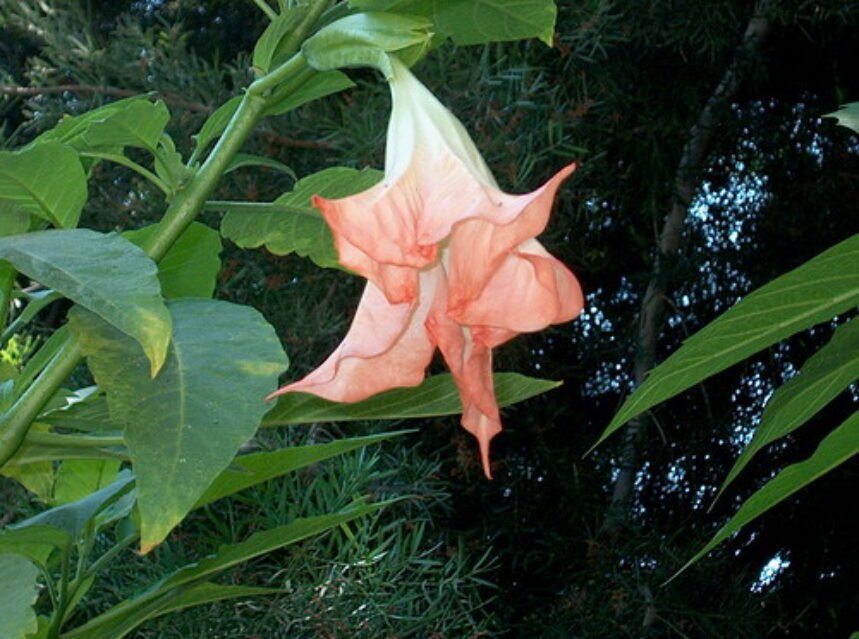
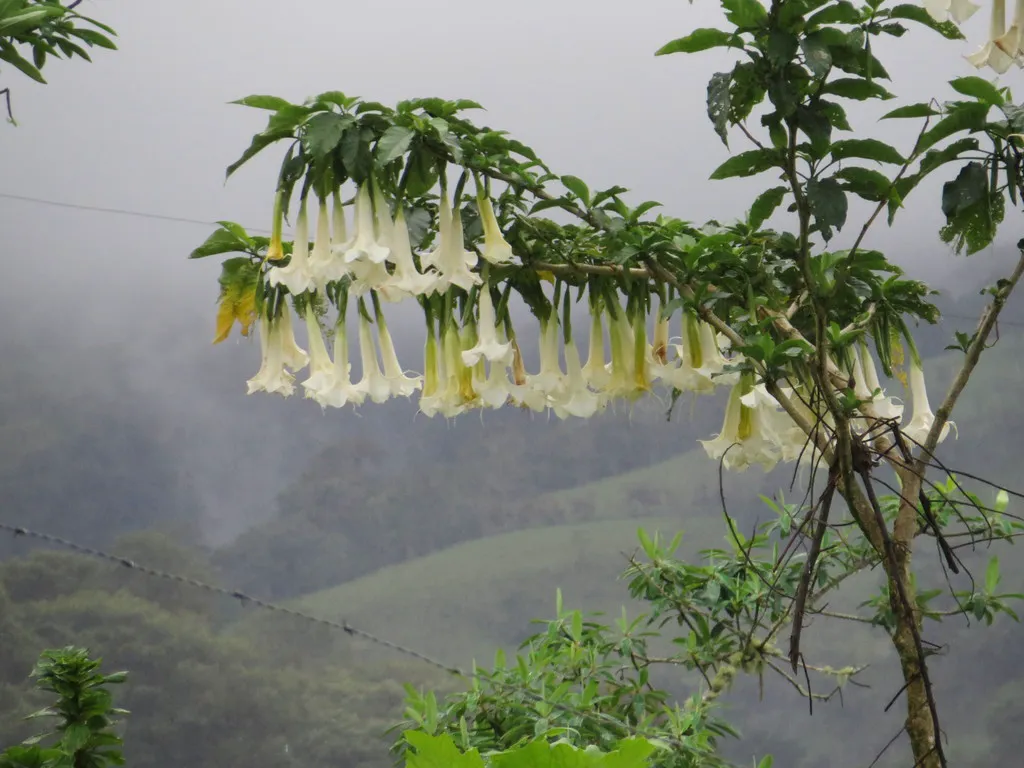
Brugmansia (angel’s trumpet) is a tender South American shrub or small tree grown for its huge, pendulous, intensely fragrant trumpet flowers — one of the most dramatic plants you can grow. The enormous blooms, in white, peach, gold or pink, hang from the branches and release an intoxicating scent, especially in the evening. It is a showstopper for a warm patio or garden. But it is also highly toxic, so it must be grown with care. Here is the complete guide on how to grow brugmansia (angel’s trumpet).
Quick start: Grow brugmansia in full sun (light shade in fierce heat) in rich, well-drained soil, ideally in a large pot. It is thirsty and hungry, so water generously and feed well. Prune in early spring, as it blooms on new wood. Bring it indoors over winter. Warning: every part is highly toxic.
Brugmansia, the angel’s trumpet, is a spectacular tropical shrub hung with enormous pendulous flowers that pour out their scent in the evening to draw moths. Growers learn it is a greedy plant, needing generous feeding and plenty of water to fuel that show, especially in a pot. It is frost-tender, so in cooler areas it is cut back and overwintered under cover. A vital caution: every part of the plant is highly poisonous, so it must be kept well away from children and pets.
🧰 In a hurry? Jump straight to our tested picks for this guide ↓
Angel’s trumpet at a glance
| Feature | Detail |
|---|---|
| Botanical name | Brugmansia (family Solanaceae) |
| Plant type | Tender shrub or small tree |
| Light | Full sun (light shade in fierce heat) |
| Soil | Rich, well-drained |
| Water & feed | Heavy — often daily in summer |
| Flowers | Huge hanging trumpets; summer–autumn |
| Winter | Frost-tender — bring indoors |
| Warning | Every part highly toxic — wear gloves |
Why grow angel’s trumpet?
Brugmansia is unmatched for drama and fragrance. A few reasons to grow it:
- Spectacular flowers. The enormous hanging trumpets are pure theatre.
- Evening scent. The rich fragrance fills a patio after dark.
- Generous bloomer. A well-grown plant carries dozens of flowers at once.
- Great in pots. It makes a magnificent large container specimen.
History, origin & where brugmansia grows
Brugmansia is native to tropical South America — along the Andes from Venezuela to northern Chile, and in south-eastern Brazil, where it grows as a tender tree or large shrub (range, status and toxicity). All seven species are listed as Extinct in the Wild: no wild plant has ever been confirmed, and every one alive is in cultivation or escaped from it. The suspected reason is quietly extraordinary — the animal that once dispersed its seeds is thought to have died out, so the plant now depends entirely on gardeners to exist at all. Its danger has a name too: tropane alkaloids, including scopolamine, which is why poisoning brings delirium and hallucinations rather than simple stomach upset, and why the seeds and leaves are the most dangerous parts. Indigenous cultures grew and used it for centuries, treating it with great respect.
From South America it spread worldwide as a prized ornamental. Its sheer drama made it a favourite in warm gardens and on patios everywhere. It is distinct from Datura, its relative, which has upward-facing trumpets.
The plant loves heat, sun, rich soil and plenty of water, and it is frost-tender (see the Royal Horticultural Society). It can grow outdoors year-round only in warm, frost-free regions. Everywhere else, gardeners grow it in pots and overwinter it indoors.
Best season & when to plant
Grow brugmansia through the warm season, planting out or moving pots outside once all frost has passed. It flowers from summer into autumn, often in flushes, peaking in warm weather. It must be brought indoors before temperatures fall below about 45–50°F (7–10°C).
How to plant brugmansia
- Choose full sun (light or dappled shade in very hot, dry climates), sheltered from cold.
- Use rich, well-drained soil; a large pot (at least 12–15 inches) makes overwintering easy (see improving garden soil).
- It likes plenty of water but is prone to root rot in soggy ground, so ensure good drainage.
Watering & feeding
Brugmansia is very thirsty and hungry. In warm weather, container plants may need watering daily, as they wilt dramatically if they dry out (see how often to water plants). Feed monthly with a balanced liquid feed in spring, then switch to a high-potassium feed (like tomato food) in summer to drive heavy flowering. Do not let it sit waterlogged.
Pruning & overwintering
Brugmansia blooms on new wood, so prune in early spring to shape it, expecting about a month before new blooms appear. Before the first frost, bring it indoors to a spot that stays above about 45–50°F. Keep it cooler and water sparingly over winter, then start it back into growth in spring.
Propagating brugmansia from cuttings
One of the joys of brugmansia is how easily it roots. A single plant can give you many more for free. So it is simple to share or expand your collection.
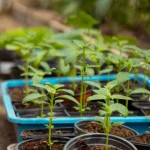
Take cuttings in the warm months from healthy, semi-ripe stems. Cut a piece about 6 to 8 inches long, just below a leaf node. Remove the lower leaves and any flowers.
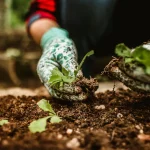
Root the cutting in water or in moist, free-draining compost. Kept warm and bright, it usually roots within a few weeks. Always wear gloves, as the sap is toxic, much like other propagation projects.
⚠️ Important: brugmansia is highly toxic
Every part of brugmansia is highly poisonous and can cause serious illness or death if eaten, and the sap can irritate skin. Always wear gloves when pruning or handling it, wash your hands afterwards, and never grow it where children or pets might chew it. Grow it purely as an ornamental, away from food crops, and site it thoughtfully.
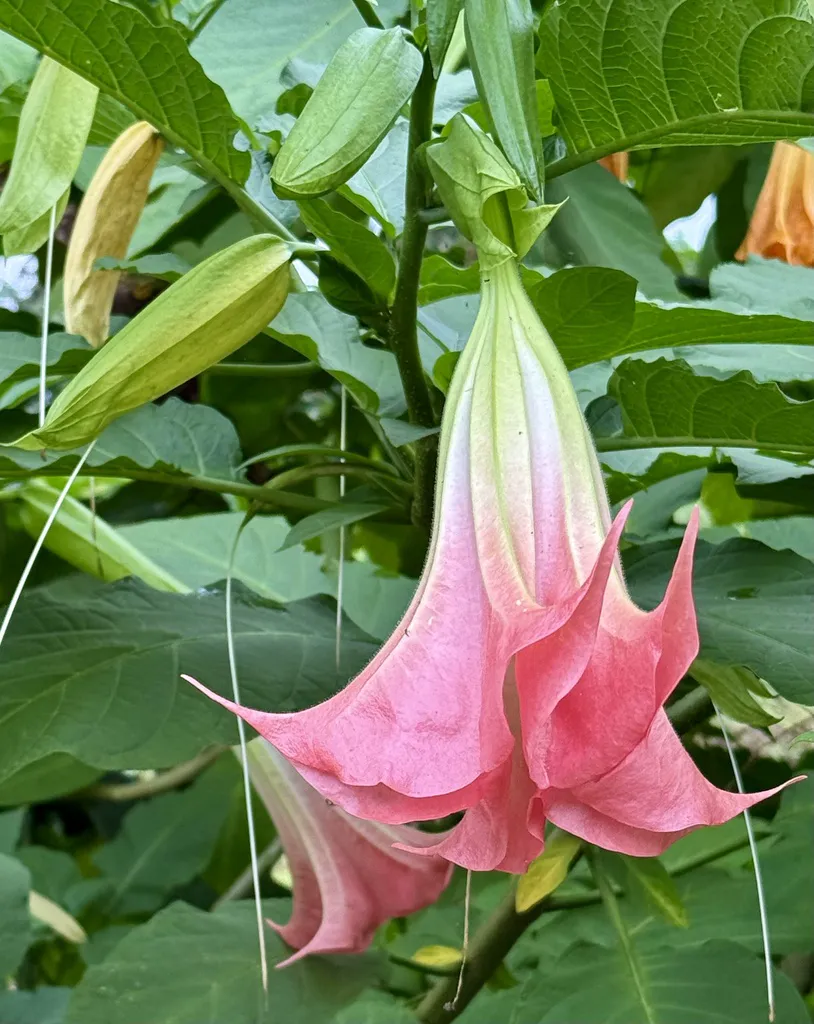
Brugmansia colours and fragrance
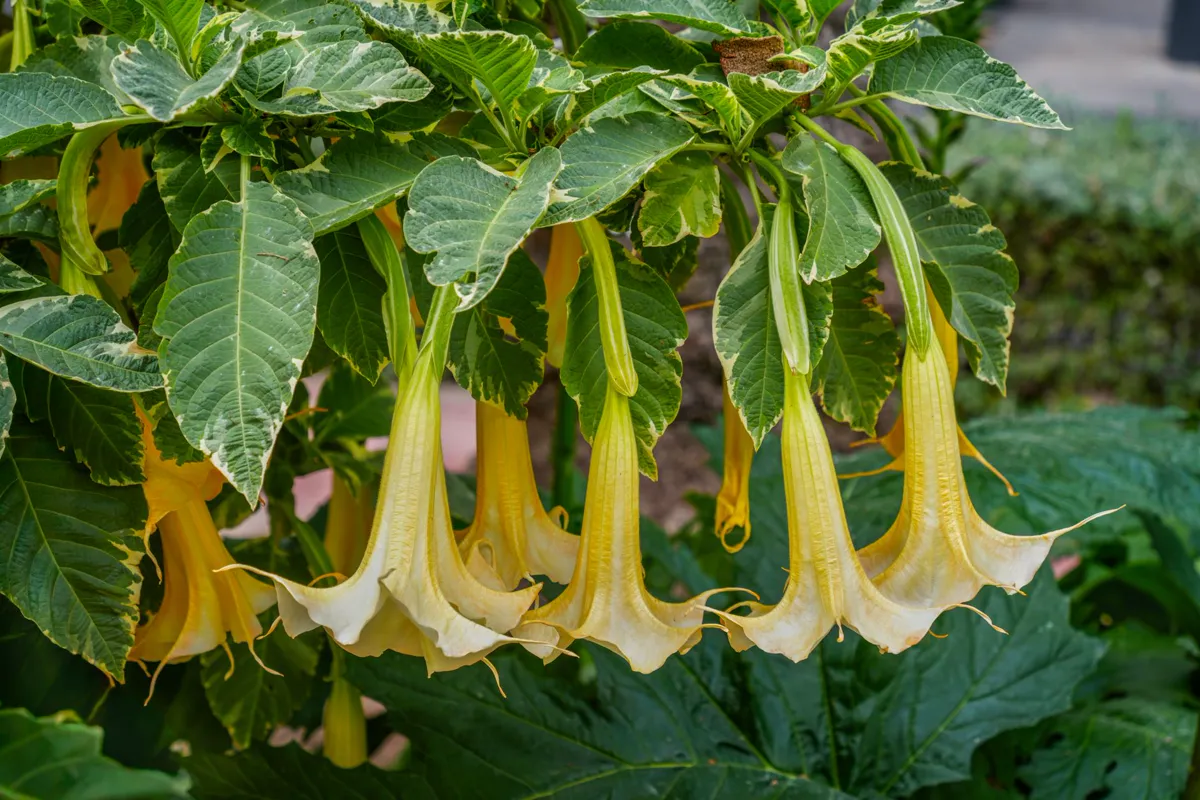
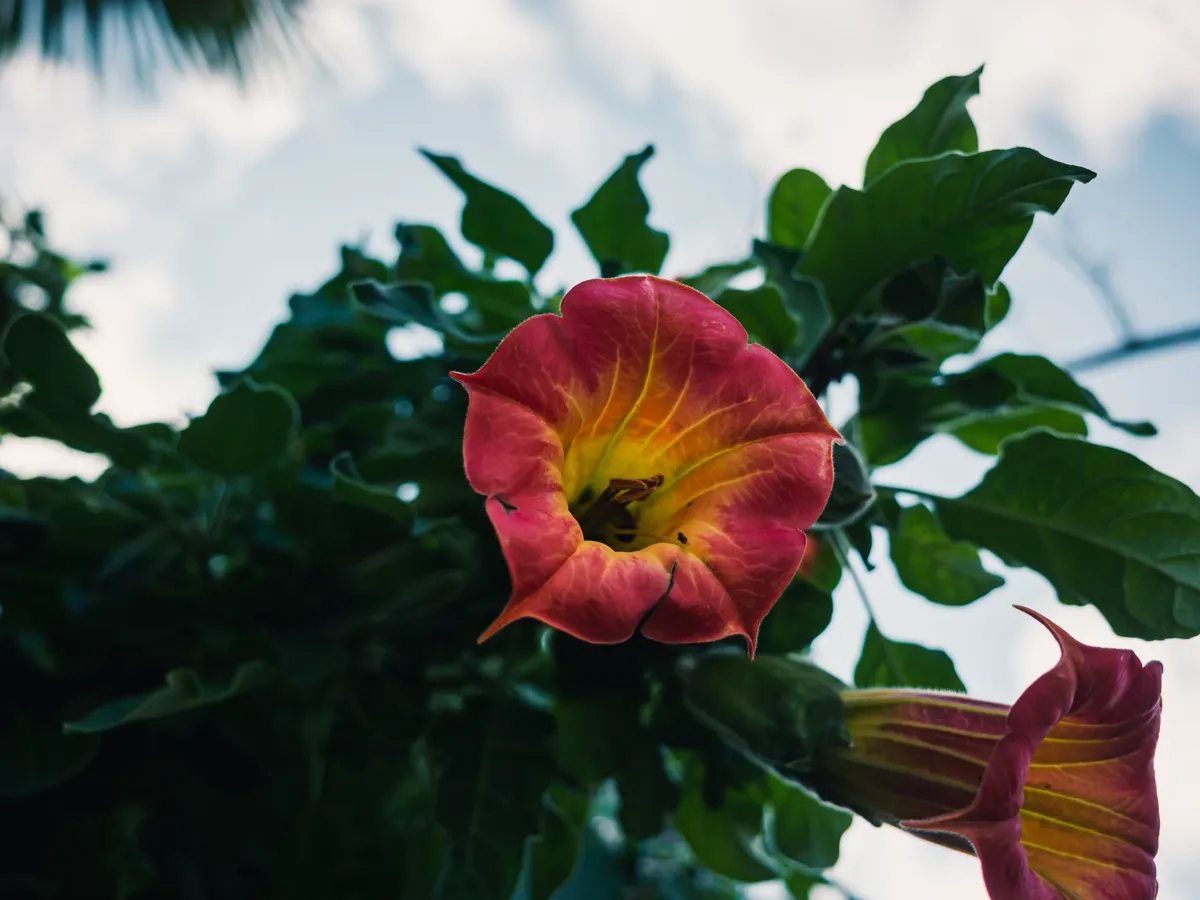
Part of brugmansia’s appeal is the range of warm colours. The huge trumpets come in white, peach, gold, apricot and soft pink. So you can match it to almost any patio scheme.
Many varieties also shift colour as the flowers age. A bloom may open cream and deepen to apricot over a day or two. This gives a single plant several shades at once.
The fragrance is strongest in the evening, when it draws night-flying moths. A plant in full flower can scent an entire courtyard after dark. Site it near a seating area to enjoy this fully.
Growing brugmansia in containers
For most gardeners, a large pot is the ideal home for brugmansia. A container makes the essential job of overwintering simple. So it suits anyone outside the tropics.
Choose a big, sturdy pot, at least 12 to 15 inches across, with good drainage. Fill it with rich, free-draining compost and stand it in full sun. Be ready to water daily and feed heavily through summer.
When frost threatens, simply wheel or carry the pot indoors. Keep it cool and on the dry side until spring. This way the same plant grows bigger and better year after year.
Common pests & diseases
Watch for spider mites, whiteflies, aphids and caterpillars, especially on plants brought indoors (see aphid control), plus root rot in wet soil. Good airflow, drainage and early treatment keep it healthy. Use our organic pest control guide, taking care given the plant’s toxicity.
Benefits & uses
Angel’s trumpet delivers spectacular, fragrant blooms and a tropical, exotic presence, making it a magnificent container specimen or garden focal point in warm climates. The evening scent also draws night-flying moths (see attracting pollinators). Kept frost-free, it returns for years and grows into an impressive flowering tree. It is an unforgettable, if strictly ornamental, plant for the bold gardener.
This article is for general information only and is not medical advice. Talk to a qualified professional before using any plant medicinally.
Common brugmansia problems
Wilting
Thirsty, as it dries out fast in heat. Water generously, even daily in summer for pots.
Few flowers
Too little sun or food, or recently pruned. Give full sun, a high-potassium summer feed, and time after pruning.
Leaf drop or cold damage
Too cold. Bring it indoors before frost and keep it above about 45–50°F.
Related plant guides
- How to grow Canna
- How to grow Datura
- How to grow Gloriosa Lily
- Mandevilla care
- How to grow Amaryllis
- How to grow Night Blooming Jasmine
Frequently asked questions
Is brugmansia poisonous?
Yes — every part is highly toxic and can be fatal if eaten, and the sap irritates skin. Wear gloves and keep it away from children and pets.
When should I prune angel's trumpet?
In early spring — it blooms on new wood, and flowers appear about a month after pruning.
How often should I water brugmansia?
Generously — in hot weather, potted plants may need watering daily, as they wilt quickly when dry.
Does brugmansia survive winter?
Only in frost-free climates; elsewhere, bring it indoors and keep it above about 45–50°F over winter.
Why won't my brugmansia flower?
Usually too little sun or feeding, or it was recently pruned. Give it full sun, a high-potassium summer feed, and a few weeks to bloom on its new growth.
Can I grow brugmansia from a cutting?
Yes, very easily. Take a 6 to 8 inch semi-ripe stem cutting in the warm months and root it in water or moist compost. Always wear gloves, as the sap is toxic.
How big does brugmansia get and how fast does it grow?
Growth is remarkably quick for a woody plant. In a single warm season a well-fed specimen can put on around 6 feet, and mature plants in frost-free climates form small trees. In containers the final size depends largely on the pot, with plants typically reaching anywhere from 4 to 15 feet tall. Regular spring pruning keeps a potted plant to a manageable height without costing you flowers, since the blooms form on new wood.
What size pot does brugmansia need?
Go large. A young plant is happiest moved up in stages, but a mature brugmansia wants a container of at least 2 feet across, and many growers finish in something close to a 20 gallon pot. The plant is thirsty and top-heavy, so a wide, heavy container also stops it blowing over in wind. Use a rich, free-draining mix, make sure the drainage holes are generous, and repot or top-dress every spring.
Why are my brugmansia leaves turning yellow?
The three usual causes are watering problems, hunger, and spider mites. Soggy compost suffocates the roots and yellows the lower leaves, while a plant this vigorous also exhausts its feed quickly and pales all over when nitrogen runs short. If the yellowing looks like fine speckling and you can see webbing under the leaves, spider mites are feeding on them. Some leaf drop is also normal when a plant is moved indoors in autumn or is preparing for dormancy.
What pests attack brugmansia?
Spider mites and whiteflies are the two big problems, especially on plants kept indoors or in dry air, and aphids and caterpillars turn up outdoors. Mites thrive when the plant is dry at the root and the air lacks humidity, so consistent watering is genuinely preventive. Insecticidal soap or neem oil works, but you must repeat the spray for three to four weeks to break the mite life cycle. Always wear gloves when handling or spraying the plant, because the sap is toxic.
What is the difference between brugmansia and datura?
They are closely related nightshades that are often confused. Brugmansia, the angel’s trumpet, is a woody shrub or small tree whose long trumpet flowers hang downwards. Datura, sometimes called devil’s trumpet, is a herbaceous plant that is usually annual, stays much shorter, and holds its flowers upright or outward. Datura also sets spiny seed capsules, which brugmansia does not. Both are dangerously toxic in every part, so handle either one with the same caution.
Is it safe to grow angel's trumpet around children and pets?
Only with real care, and many gardeners choose to skip it altogether where small children or curious pets have free access. Every part of the plant, including the flowers, leaves, seeds, and sap, is highly toxic if swallowed, and poisoning can be severe or fatal. The fragrance drifting through a garden is not considered a poisoning risk in the open air, but the plant itself must never be tasted, chewed, or brewed. Plant it out of reach, wear gloves when pruning, wash your hands afterwards, and clear up prunings promptly. This information is general guidance only and not medical advice — if anyone or any animal ingests part of the plant, contact a doctor, poison control, or a vet immediately.
Still stuck? Ask the Plant Doctor
Describe the problem — yellow leaves, holes, no flowers — and get a clear answer in seconds. FreeAI can make mistakes. Answers are guidance, not a guarantee — check anything important against the guide it links to, and always read the label on any product before you use it.