How to Grow Canna Lilies: Bold Tropical Color
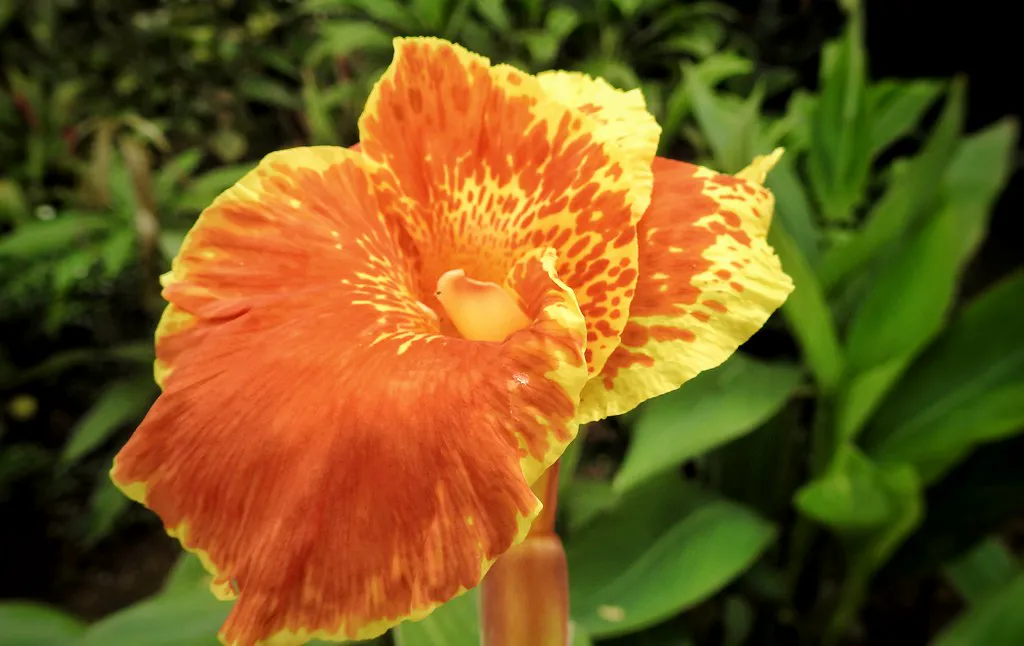
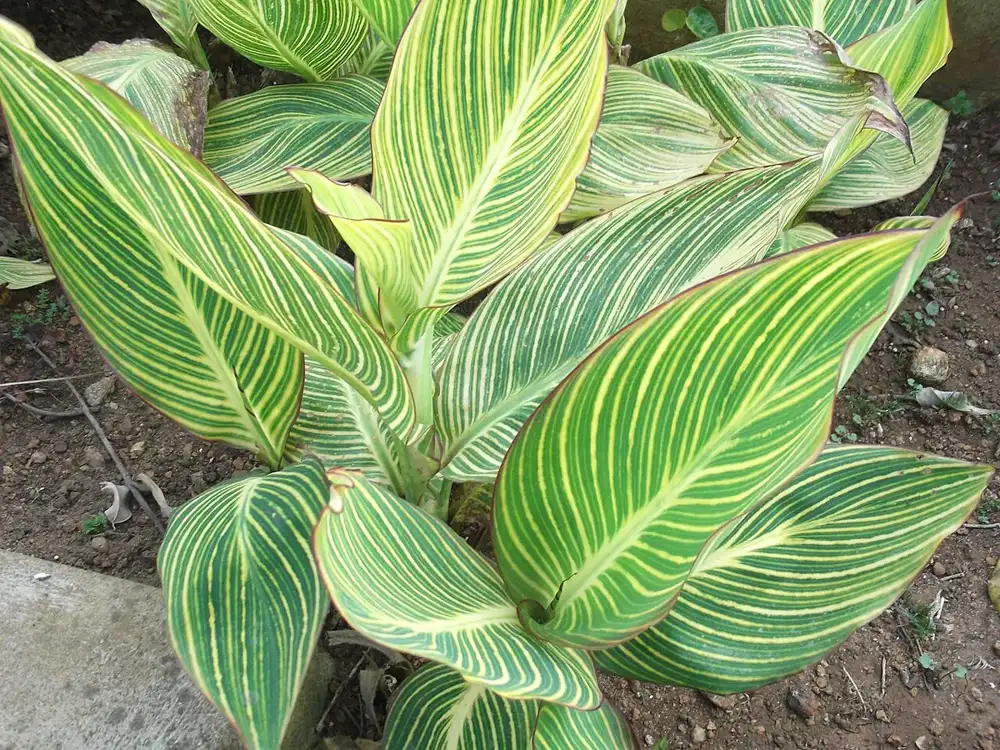
Canna lilies (Canna) are bold, fast-growing tropical perennials grown from rhizomes for their huge paddle-shaped leaves and flamboyant summer flowers — instant exotic drama for any garden. The leaves, in green, bronze or striped, are topped with vivid red, orange, yellow and pink blooms from midsummer to frost. They are surprisingly easy, growing fast even outside the tropics. Here is the complete guide on how to grow canna lilies.
Quick start: Plant canna rhizomes in full sun in rich, moist soil after frost, eyes pointing up. Keep the soil wet, feed well, and deadhead for more blooms. In cold climates, lift and store the rhizomes over winter. Then enjoy bold tropical colour all summer.
Cannas bring an instant tropical look, with bold paddle leaves and flamboyant flowers that thrive in heat. Growers feed and water them generously, because these are hungry, thirsty plants that reward rich living with non-stop colour all summer. In cold-winter areas the rhizomes are lifted and stored frost-free, then replanted in spring. One thing to watch for is canna virus, which streaks the leaves, so it is worth starting with clean, healthy stock.
🧰 In a hurry? Jump straight to our tested picks for this guide ↓
Canna lily at a glance
| Feature | Detail |
|---|---|
| Botanical name | Canna (family Cannaceae) |
| Plant type | Tender rhizome perennial |
| Light | Full sun (6–8 hours) |
| Soil | Rich, moist (loves wet ground) |
| Planting | Spring, after frost; eyes up |
| Flowers | Red, orange, yellow, pink; midsummer–frost |
| Winter | Lift and store in cold climates |
| Note | Not a true lily; hungry and thirsty |
Why grow canna lilies?
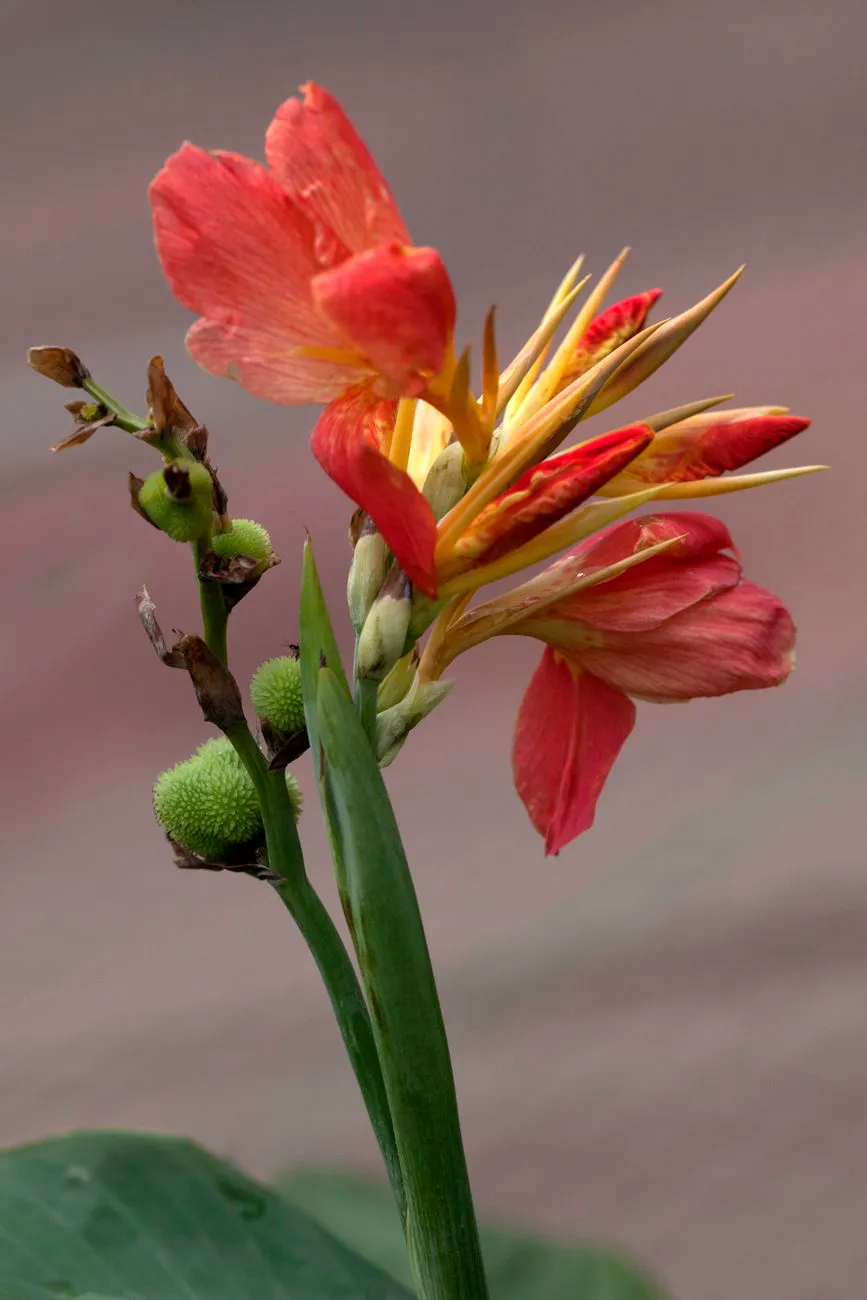
Cannas deliver maximum tropical impact for minimal effort. They grow quickly, bloom prolifically from midsummer to frost, and their architectural leaves look striking even between flushes. They’re perfect as a bold focal point, a massed tropical display, or a screen, and they thrive in beds, large pots, and even at pond edges (they love moisture).
History, origin & where cannas grow
Every canna species is native to the American tropics, the genus running from the southern United States (South Carolina west to southern Texas) south to northern Argentina (Canna). Worth knowing before you buy: “canna lily” is a misnomer — cannas are not lilies at all, but sit in the order Zingiberales, which makes them relatives of ginger and banana. That is exactly why they want the heat, rich feeding and moisture a ginger wants, and not lily treatment. Indigenous peoples grew Canna indica — achira — for its starchy edible rhizome for thousands of years, and the bold looks later made cannas Victorian bedding favourites.
Plant breeders crossed the wild species into the large-flowered garden cannas we grow today. These come in a huge range of flower and foliage colours. Despite the common name, they are not true lilies at all.
They are heat-loving, herbaceous perennials that grow from rhizomes (see the Royal Horticultural Society). So they thrive in warmth, sun and moisture, and revel in conditions that suit a tropical look. In warm climates such as much of India, they grow vigorously and can stay in the ground.
Best season & when to plant
Plant canna rhizomes in spring, after all frost, once the soil is warm. They bloom from midsummer to the first frost in a long, colourful display. They’re hardy in warm zones (roughly 7–10) and grown as lifted tubers in colder areas. Blooms appear about 10–12 weeks after planting.
How to plant canna rhizomes
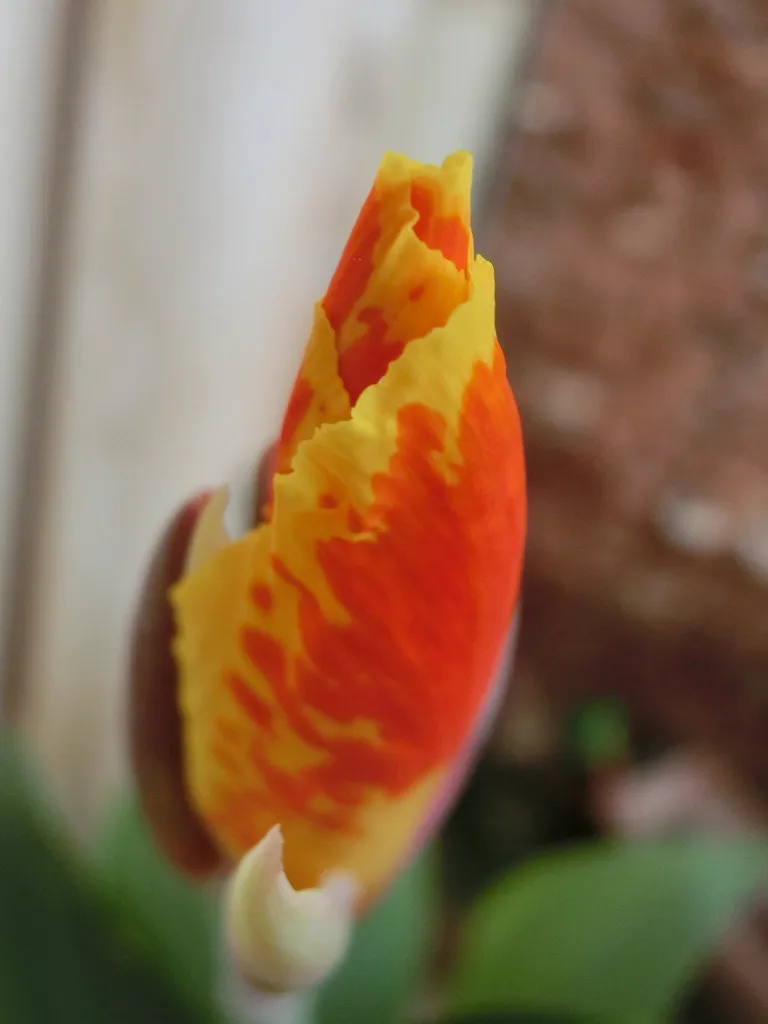
- Dig a hole and set the rhizome 1–2 inches deep with the “eyes” (growth buds) pointing up, then cover with soil.
- Choose full sun and rich, moist soil (see improving garden soil).
- Space large types generously, as they get big and bold.
Sun, soil & watering
Cannas need full sun — 6–8 hours — for the best flowering (in very hot climates, part shade helps the blooms last). They love wet soil: keep it consistently moist, giving a deep soak weekly (or every other day in extreme heat), and mulch to hold moisture (see how often to water). Feed regularly — they’re hungry plants.
Overwintering cannas
In cold climates, cannas will not survive a freeze in the ground. But the rhizomes store easily, so you need not buy new each year. So a little autumn care keeps them going.
After the first frost blackens the foliage, cut the stems down to a few inches. Lift the rhizomes carefully with a fork, shake off the soil, and let them dry for a day or two. Then pack them in dry compost, sand or sawdust.
Store them somewhere cool, dark and frost-free, above about 40°F, such as a garage or cellar. Check them through winter and discard any that rot. Replant them in spring once the soil warms, and they soon burst back into growth.
Dividing and multiplying cannas
Cannas multiply readily, so one clump soon becomes many. Dividing is simple and gives free new plants. So your display grows year on year.
Lift a dormant clump in spring, or when storing in autumn, and you will see the rhizomes have spread. Cut them into sections, each with at least one or two healthy “eyes” or growth buds. A clean, sharp knife does the job.
Let any cut surfaces dry briefly to guard against rot. Replant the divisions in spring, eyes up, in rich, moist soil. Each piece grows into a full, flowering plant within the season.
Deadheading & winter care
Deadhead spent flowers to keep cannas blooming and tidy (see deadheading flowers). In cold climates, after the first frost blackens the foliage, lift the rhizomes and store them somewhere dry above 40°F (a basement or garage) over winter, then replant in spring.
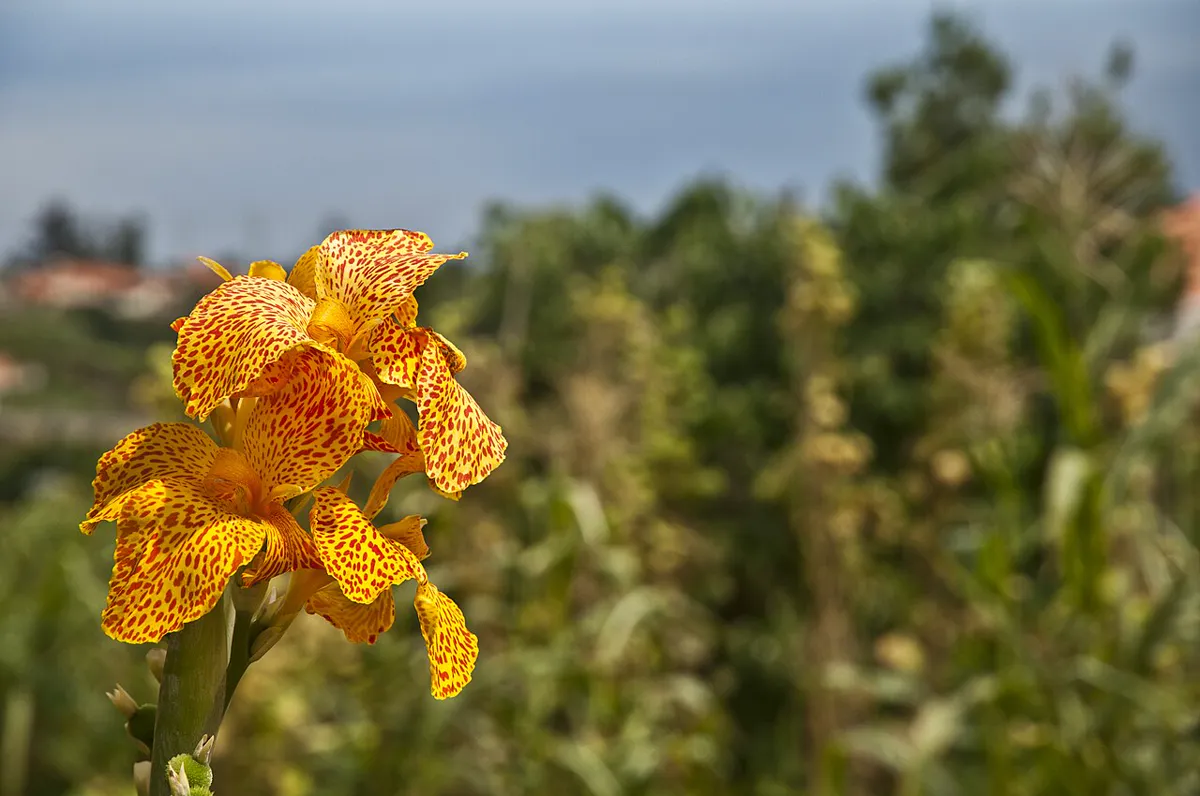
Cannas for a tropical look
Few plants create an instant jungle effect like cannas. Their bold leaves and flamboyant flowers do the work for you. So they are a designer’s shortcut to an exotic garden.
Use a large clump as a dramatic focal point, or mass several for a wall of tropical colour. The bronze and striped-leaved varieties add drama even out of flower. They pair brilliantly with dahlias, banana plants and ornamental grasses.
Tall types make a fast summer screen, while dwarf cannas suit pots and small borders. They also thrive at a pond edge, where many plants fail. Together with other bold foliage, they turn a sunny bed into the tropics.
Growing cannas in containers
Cannas grow superbly in large pots, which suits a patio or small garden. A container also makes lifting and storing the rhizomes easy. So even cold-climate gardeners can enjoy them.
Choose a big, heavy pot with rich compost and good drainage. Stand it in full sun and keep it really well watered, as potted cannas dry out fast. Feed regularly through summer for strong, continuous flowering.
Dwarf varieties suit pots best, staying neat and bold. In autumn, move the pot somewhere frost-free, or lift and store the rhizomes dry. Restart it in spring for another season of tropical colour.
Common pests & diseases
Watch for the canna leaf roller (a caterpillar that rolls and chews the leaves), plus aphids and spider mites. Remove affected leaves and treat with the methods in our organic pest control guide; rinse off aphids. Canna rust and viral streaking can also appear — remove badly affected plants.
Benefits & uses
Cannas give bold, long-lasting tropical colour and dramatic foliage, perfect for focal points, mass plantings, and a lush, exotic look. They draw hummingbirds and pollinators (see attracting pollinators) and thrive even in damp spots and pond margins where many plants fail.
This article is for general information only and is not medical advice. Talk to a qualified professional before using any plant medicinally.
Common canna problems
Few flowers
Too little sun, dry soil, or underfeeding. Give full sun, keep soil wet, and feed well.
Rolled, chewed leaves
Canna leaf roller. Remove affected leaves and treat early.
Rhizomes rot in storage
Stored too wet or cold. Cure and store them dry, above 40°F.
Related plant guides
- How to grow Calla Lily
- How to grow Heliconia
- Water Lily care
- How to grow Crocosmia
- How to grow Brugmansia
- How to grow Begonias
Frequently asked questions
How deep do I plant canna rhizomes?
About 1–2 inches deep, with the eyes (growth buds) pointing up, in full sun.
Do cannas need a lot of water?
Yes — they love consistently moist soil and even thrive at pond edges. Keep them really well watered, especially in hot weather, for the very best leaves and flowers.
Do canna lilies come back every year?
In warm zones they are perennial and stay in the ground. In cold areas, lift and store the rhizomes somewhere dry and frost-free over winter, then replant them in spring.
How long do cannas take to bloom?
About 10–12 weeks after planting, then they flower until the first frost.
Why are my cannas all leaves and few flowers?
Usually too little sun, dry soil or underfeeding. Give them full sun, keep the soil really moist, and feed regularly through summer, and the bold flowers will follow the lush leaves.
What is chewing neat rows of holes in my canna leaves?
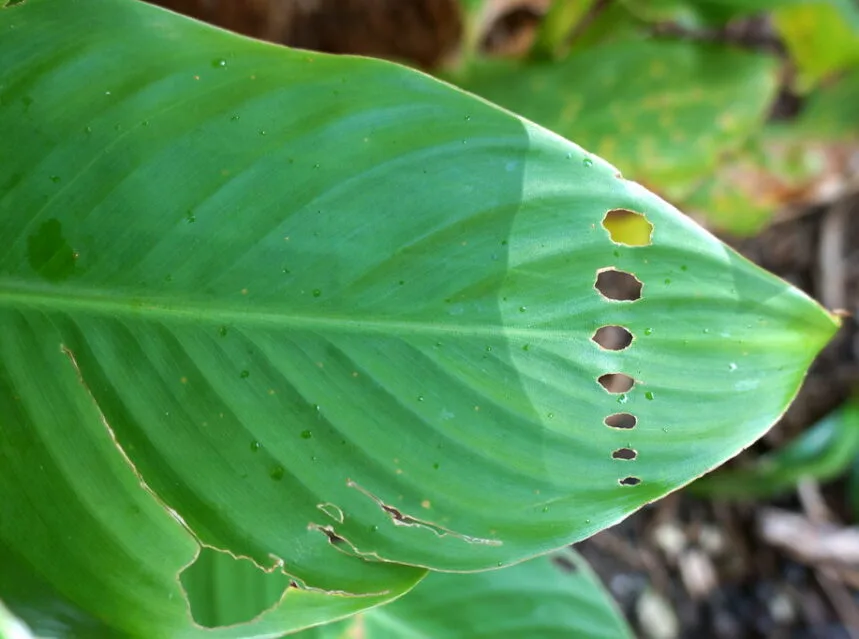
That signature pattern is the work of the canna leaf roller, the caterpillar of a skipper butterfly, which binds a young leaf shut with silk and feeds inside it. When the leaf finally unfurls, the damage appears as a tidy line of holes across the blade. Pick off and squash rolled leaves as soon as you spot them, and clear away dead foliage at the end of the season, since the pest overwinters in it. The damage looks bad but rarely threatens the plant’s health.
Should I deadhead canna lilies?
Removing individual faded flowers keeps the display looking fresh and stops seed pods forming, which can sap energy. The important detail is to snip off only the spent blooms, not the whole stem, because a second and sometimes third flower spike often emerges from the same stalk. Once every bud on a stem has finished, cut that stem right down to the base so new shoots have room. Cannas flower prolifically either way, so this is about tidiness as much as quantity.
What causes rusty orange spots on canna leaves?
Canna rust, a fungal disease that shows as raised orange-yellow pustules on the undersides of leaves before the tissue browns and dies. It thrives in warm, humid, crowded conditions, which makes it common during monsoon weather and in overwatered beds. Remove and bin affected leaves promptly, thin congested clumps so air moves freely, and water at soil level instead of over the foliage. Badly infected plants are best cut back hard and allowed to reshoot.
How tall do canna lilies get?
It varies enormously by variety. Dwarf hybrids stay around 18-30 inches (45-75 cm), the popular mid-size types reach roughly 3-5 feet (1-1.5 m), and giant forms can top 8 feet (2.4 m) in a hot summer. Most reach their full height within a single season. Check the label before buying, because a tall variety planted at the front of a border will hide everything behind it.
Are canna lilies invasive?
In most gardens they are not, since they expand as a slowly widening clump rather than running or seeding aggressively. In frost-free tropical regions, however, Canna indica has naturalised along waterways and is treated as a weed in parts of Africa and Australia. If you garden in a warm, wet climate, keep clumps contained, remove seed pods, and never dump surplus rhizomes in the wild. Elsewhere, an annual lift or division is all the control you need.
Can I grow canna lilies in pots?
Yes, and containers suit them well as long as the pot is generous — at least 14-16 inches (35-40 cm) wide for a mid-size variety. Cannas are hungry and thirsty, so use rich compost, water daily in hot weather, and feed every couple of weeks through summer. A wide, heavy pot also stops tall varieties toppling in wind. Pots make it easy to move the whole plant somewhere frost-free for winter.
What looks good planted with canna lilies?
Their upright, bold leaves pair well with anything that softens or contrasts. Dahlias, salvias and zinnias echo the hot colours, while elephant ears, ornamental grasses and coleus build on the tropical look. Low, spreading plants such as sweet potato vine or portulaca cover the somewhat bare canna stems near ground level. In a mixed border, place cannas towards the back or use a single clump as a strong focal point.
Are cannas grown from bulbs or rhizomes?
They are true rhizomes, which are swollen underground stems, not bulbs, even though they are usually sold on the same shelf as summer-flowering bulbs. A rhizome has visible growth points called eyes along its surface, much like a potato. Knowing this matters when you buy: pick firm, plump pieces with two or three clear eyes rather than shrivelled scraps. Soft or lightweight rhizomes rarely grow away well.
When should I dig up canna rhizomes for winter?
In frost-prone gardens, lift them within a week or two of the first light frost blackening the foliage. That first frost is a useful signal because it stops top growth without yet damaging the rhizomes below the soil. Cut the stems back to about 4 inches (10 cm), lift the clump with a fork, and shake off loose soil. Do not wait for a hard freeze, which can reach down and spoil the rhizomes themselves.
How do I store canna rhizomes over winter?
Let the lifted clumps dry for a few days somewhere airy and frost-free so the cut surfaces seal. Then pack them in a box or open bag of barely moist coir, peat-free compost or wood shavings, keeping the pieces from touching where possible. Store at roughly 40-50F (5-10C) in a dark, unheated place such as a garage or cellar. Check every few weeks and remove anything soft before it spreads.
Why did my stored canna rhizomes go mushy?
Almost always too much moisture and too little air. Rhizomes packed damp, undried or in sealed plastic sweat and quickly develop soft rot. A storage area that is too warm makes the problem worse by encouraging fungal growth. Cure the rhizomes first, use a breathable medium, leave the container loosely open, and inspect through the winter so a single rotting piece does not take the whole box with it.
How do I divide canna rhizomes?
Spring, just before planting, is the easiest time, when the eyes are visible and swelling. Wash the soil off, then cut through the starchy flesh with a clean sharp knife so every piece keeps two or three eyes plus a decent chunk of storage tissue. Let the cut faces dry for a day or two before planting so they callus over. Dividing a congested clump every two or three years actually improves flowering, since overcrowded rhizomes produce more leaf than bloom.
Do canna rhizomes multiply on their own?
Yes, and quickly. Each parent rhizome puts out side branches through the season, so one piece planted in spring often lifts as a cluster of several by autumn. In frost-free zones where they stay in the ground, clumps expand year after year until they need thinning. This is why cannas are such good value: a handful of rhizomes can fill a border within two or three seasons.
Can I start canna rhizomes indoors before spring?
Yes, and it is worth doing in short-season areas. Pot them up about four to six weeks before your last expected frost, using free-draining compost and burying them just a couple of inches deep. Keep them warm and only lightly moist until shoots appear, then water more freely and give the brightest light you have. Harden the plants off before moving them outside, and you will gain several weeks of flowering.
Still stuck? Ask the Plant Doctor
Describe the problem — yellow leaves, holes, no flowers — and get a clear answer in seconds. FreeAI can make mistakes. Answers are guidance, not a guarantee — check anything important against the guide it links to, and always read the label on any product before you use it.