How to Grow Coconut
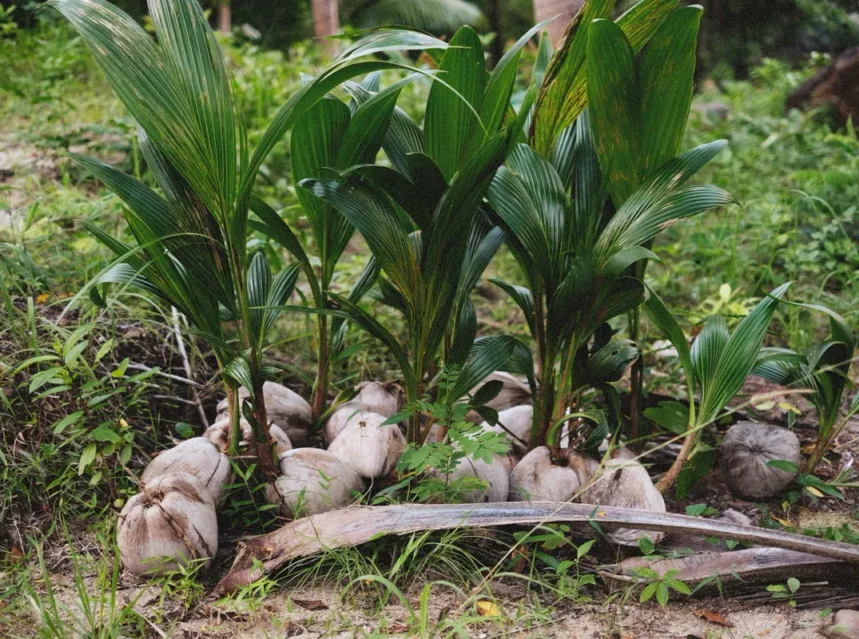
The coconut (Cocos nucifera) is a tall tropical palm grown for its refreshing water, rich flesh and oil-packed kernel — and few plants say “tropics” quite like it. A single seed nut sprouts into a graceful, arching palm that can feed a family for decades. In warm coastal gardens it is a generous, long-lived provider, while cooler-climate gardeners can raise young palms as striking patio plants. It needs heat, sun and patience, but the care itself is simple. Here is the complete guide on how to grow coconut.
Quick start: Give a coconut palm full sun, deep sandy soil and steady warmth. Plant a sprouted whole nut, water it well while it establishes, and feed it through the warm season. It is frost-tender, so protect young palms from cold, and be patient — fruiting takes a few years.
A coconut palm grows slowly at first, then settles into decades of steady cropping once it matures. The quirk that surprises new growers is that you plant the whole nut, not a seed, laying it on its side half-buried so the shoot emerges from one end. It loves heat, humidity and free-draining sandy soil, and it tolerates salt spray better than almost any fruit plant, which is why it lines so many tropical coastlines. Frost is fatal to young palms, so in cooler areas it is grown in a large pot and kept warm and bright. Dwarf varieties crop sooner and stay manageable.
🧰 In a hurry? Jump straight to our tested picks for this guide ↓
Coconut at a glance
| Feature | Detail |
|---|---|
| Botanical name | Cocos nucifera (family Arecaceae) |
| Plant type | Tall tropical palm |
| Grown from | A whole sprouted nut |
| Sun | Full sun (6–8+ hours) |
| Soil | Deep, sandy, very free-draining |
| Needs | Steady warmth, humidity, salt-tolerant |
| First fruit | ~6–10 years (dwarf types 4–5) |
| Climate | Tropical/subtropical; frost-tender |
Why grow a coconut palm?
A coconut palm is the ultimate tropical multitasker. Few plants give so much from one seed, because nearly every part is useful. The tender nuts hold sweet, hydrating water, and the mature kernel yields flesh, milk and oil for the kitchen. The palm also throws cool, dappled shade and an unmistakable holiday feel over a warm garden. In coastal India and across the tropics, it is a staple of home plots and a quiet source of income.
History, origin & where coconuts grow
The coconut originated around the Indo-Pacific region, spanning the warm coasts and islands between the Indian Ocean and the western Pacific (see Encyclopaedia Britannica). Because the buoyant, water-tight nut floats and stays viable for weeks at sea, ocean currents and early seafarers spread it across the tropical world. As a result it now fringes coastlines from Asia to Africa and the Americas.
A fascinating fact is that the coconut “shell” is actually the stone of a large fruit called a drupe, much like a peach or plum pit, only far bigger. The fibrous husk around it is what lets the nut float and survive long voyages. This same husk gives us coir, used for rope, matting and potting media.
Indonesia, India and the Philippines are the world’s three largest coconut producers, in that order, together growing 72% of the 65.5 million tonnes harvested in 2024 (FAO-sourced production table). In India the palm is grown heavily along the southern and coastal states, where warmth and humidity stay high year-round. In cooler climates it survives only under glass or as a tender container palm.
Best season & when to plant
Plant a sprouting coconut in spring or early summer, as warmth builds, so the young palm has a long, hot season to root and grow. Coconuts thrive in consistent temperatures of about 80–95°F with high humidity, and they stall or die in cold. In India and the tropics they can be started almost any time in the warm, humid months. In cooler regions, start them indoors and keep them frost-free.
How to plant a coconut
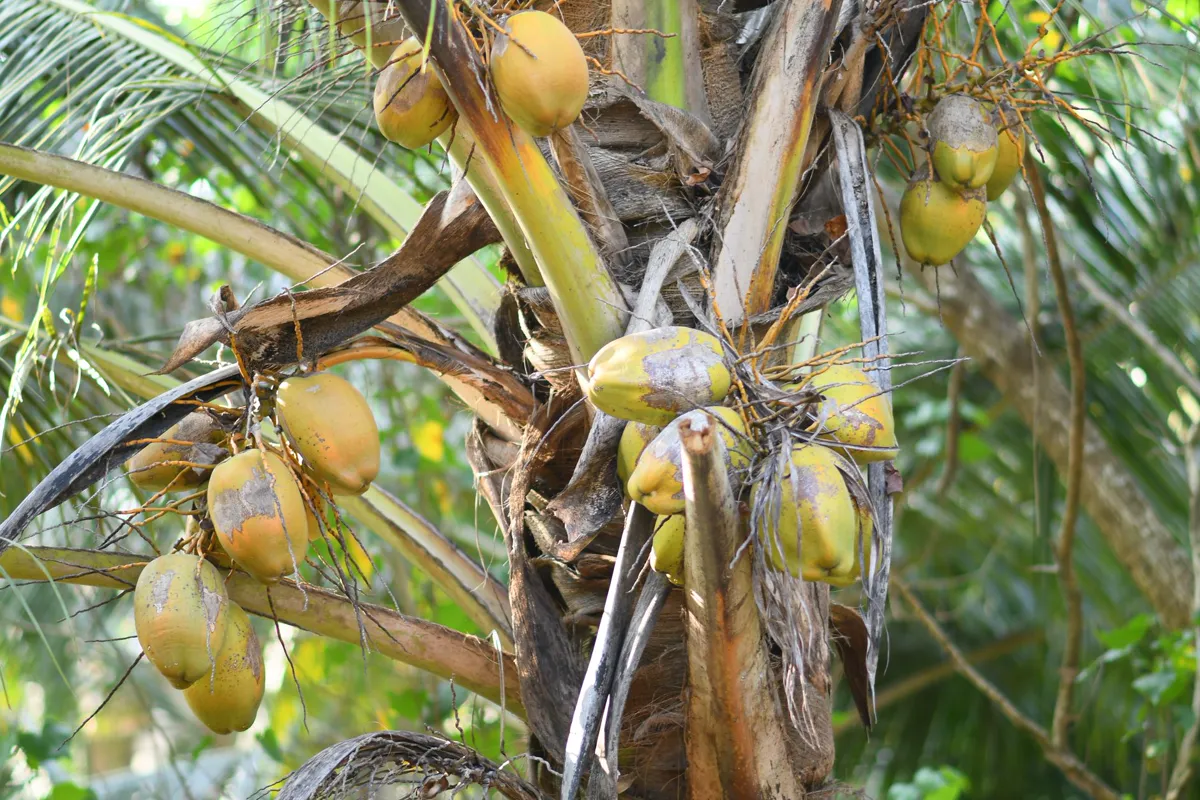
Coconuts are grown from a whole, ripe, unhusked nut that you sprout yourself. Choose a fresh nut that still sloshes with water inside, as that means it is alive. Give it:
- Full sun — at least 6–8 hours — in a warm, sheltered, frost-free spot.
- Deep, sandy, very free-draining soil, because the palm hates sitting in cold, wet ground (see improving garden soil).
- Plenty of room overhead and around the trunk, or a very large container for patio growing.
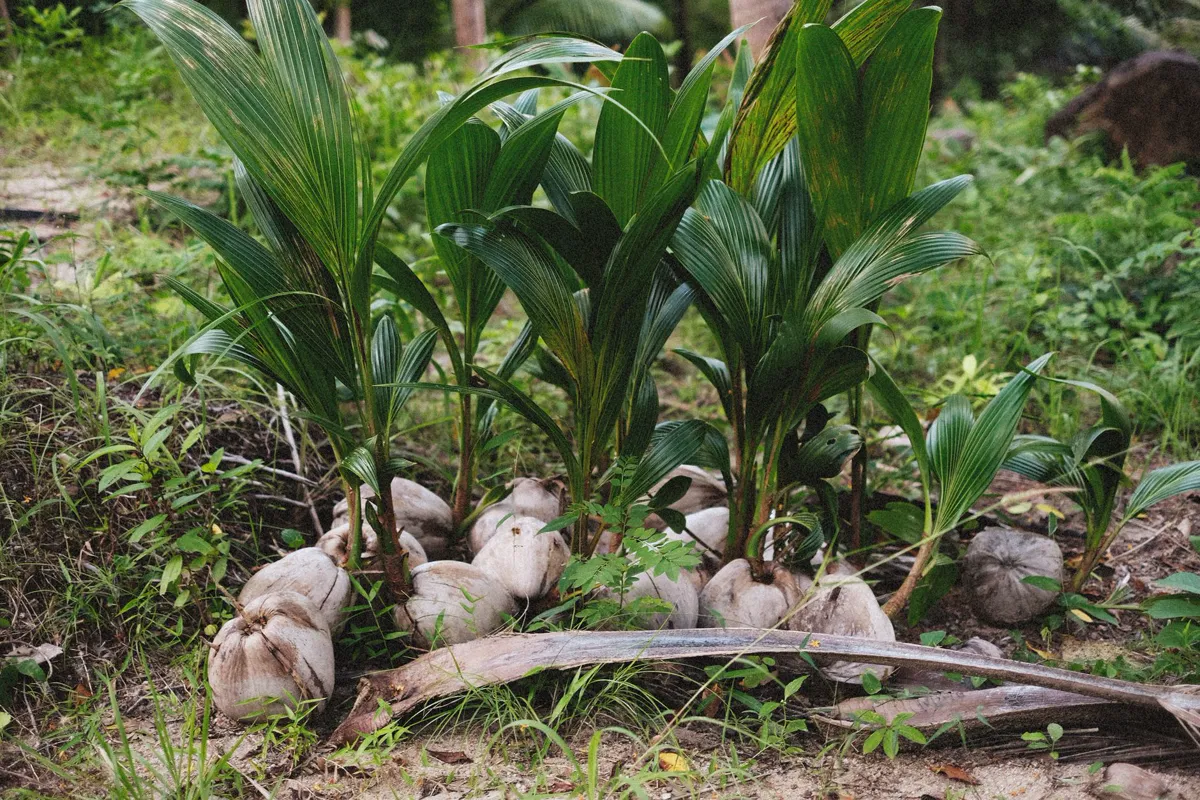
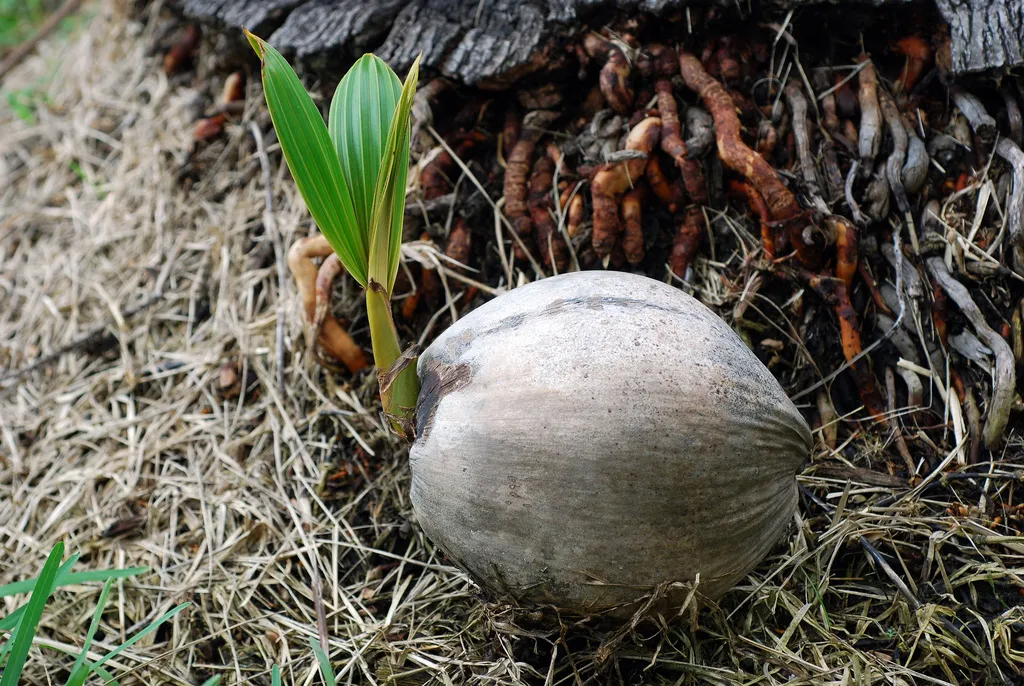
Lay the nut on its side and half-bury it, leaving the top showing. Keep it warm and moist, and a shoot will push from one end in a few months. Patience is part of the process.
Sun, soil, watering & feeding

Coconuts love heat, light and steady moisture, yet they will not tolerate waterlogging. Keep young palms consistently moist while they establish (see how often to water), then water deeply but less often as they mature. Feed through the warm season with a balanced fertilizer rich in potassium and magnesium, the nutrients that drive strong fronds and good nutting. A coastal palm also appreciates the trace minerals it gets near the sea, so the occasional dose of these elements helps inland growers too.
Growing coconuts in containers and cool climates
You do not need a beach to enjoy a coconut palm. A sprouted nut grows happily in a large pot for several years. So even cool-climate gardeners can keep one as a bold, leafy feature, much like other container plants.
Choose a deep, sturdy container with sandy, free-draining compost. Stand it in the brightest, warmest spot you have through the summer. Water and feed it regularly, since a growing palm is still hungry and thirsty.
Before any frost, move the pot somewhere warm and bright, such as a heated conservatory. Keep it on the drier side over winter and resume feeding in spring. A potted palm will not usually fruit, but it makes a spectacular tropical houseplant.
Common pests & diseases
Watch for rhinoceros beetle, red palm weevil, scale insects and coconut eriophyid mite, plus fungal troubles like bud rot in very wet, humid spells. Keep the crown clean, remove dead fronds, and use the methods in our organic pest control guide; hose off light scale and treat early. Good airflow, healthy feeding and clean planting material prevent most problems before they start.
Harvesting coconuts
A coconut palm crops in stages, sending up flower spikes that set nuts in a steady rhythm once mature. For sweet drinking water, harvest tender green coconuts at around 6–7 months, when the water inside is at its most plentiful and refreshing. For flesh, milk and oil, leave them until fully mature at about 11–12 months, when the husk turns brown and the nut feels heavy and sounds full. Information gain: a simple field test is to shake a nut — a clear sloshing sound means plenty of water inside, ideal for a tender drinking coconut.
Every part of the coconut is useful
One of the joys of growing coconuts is how little goes to waste. Far beyond the drink, the whole nut and palm earn their keep. So a single tree quietly supplies the kitchen, the garden and the home.
The sweet water hydrates and refreshes, while the white flesh is eaten fresh, grated into curries, or pressed for rich coconut milk. The dried kernel, called copra, is crushed for cooking oil prized across South India.
The fibrous husk becomes coir for ropes, mats and excellent potting compost, and the hard shell makes bowls, charcoal and craft. Even the fronds are woven for thatch and baskets, so almost nothing is thrown away.
The drinking-coconut trick
Home growers in coastal India have a clear preference between tender and mature nuts. It is worth understanding before you harvest. So you pick each nut at exactly the right stage for its purpose.
A tender green coconut, picked young, is all about the water. At that stage the flesh is a soft, jelly-like layer that you can scoop with a spoon. The drink is sweetest and most plentiful then.
Left on the palm, the same nut hardens. The water reduces while the flesh thickens into firm, oil-rich kernel. So you let nuts mature only when you want flesh, milk or oil rather than a drink.
Health benefits & uses
Coconut is valued as a source of healthy fats, fibre and minerals such as potassium and manganese, and tender coconut water is a naturally light, hydrating drink. The flesh is eaten fresh and grated, pressed into milk for curries and desserts, and dried for oil. Coconut is woven through the cuisines of South India, Southeast Asia and the tropics, from chutneys to sweets.
This article is for general information only and is not medical advice. Talk to a qualified professional before using any plant medicinally.
Common coconut problems
No fruit
Usually too little time, warmth or feeding. Give full sun, feed with potassium and magnesium, and be patient — even dwarf palms need a few years.
Yellowing or browning fronds
Often a magnesium or potassium shortage, cold stress, or drought. Feed correctly, protect from cold, and water deeply but never into soggy soil.
Rotting crown or collapse
Bud rot or waterlogging in cold, wet conditions. Improve drainage, avoid wetting the crown in cool weather, and use clean, healthy planting stock.
Related plant guides
How to propagate a coconut palm
There is exactly one way to make a new coconut palm: sprout a nut. Coconut cannot be grown from cuttings, division or grafting — a palm has a single growing point at the top of its trunk, so there is nothing to take a cutting from. Every coconut palm you have ever seen started as a whole nut.
Sprouting the nut
Use a fully mature nut with its husk still on; a de-husked supermarket coconut will not sprout. Lay it on its side and half-bury it, so that roughly the top half stays exposed. The shoot emerges from one end of the nut rather than the top, which is why the nut goes in sideways rather than upright.
Keep it warm and reliably moist — this is a tropical palm, and cold, wet ground rots the nut instead of sprouting it. Be patient: a coconut takes months, not weeks, to show a shoot, and the nut itself feeds the seedling for its first stage of growth, so it should be left attached and not tidied away once green growth appears.
Frequently asked questions
How long does a coconut palm take to fruit?
Tall types often take 6–10 years, while dwarf varieties can start cropping in about 4–5 years in good warm conditions.
Can I grow a coconut in a pot?
Yes — a sprouted nut grows well in a large container for several years as a striking patio or indoor palm, though a potted palm will rarely fruit.
How do I sprout a coconut?
Use a fresh, unhusked nut that still has water inside, lay it on its side half-buried in warm, moist, sandy soil, and keep it warm — a shoot appears in a few months.
Why is my coconut palm not growing?
Most often cold, poor drainage or starvation. Give steady warmth and full sun, plant in free-draining sandy soil, and feed through the warm season.
How tall does a coconut palm get?
Tall varieties commonly reach 60 to 80 feet over their lifetime, while dwarf types usually settle between 20 and 40 feet, which makes them far more practical for a home garden. Container-grown palms are naturally restricted by their pot and rarely pass about 5 to 6 feet indoors. If overhead space or falling nuts are a concern, plant a dwarf selection and site it well away from roofs, parking areas and paths.
How many coconuts does one palm produce a year?
A healthy, well-fed palm growing in a genuinely suitable climate typically yields somewhere between 50 and 80 nuts a year, and exceptional trees on good coastal soil can exceed 100. Output depends heavily on water, potassium levels and salt or sand content in the soil. Young trees crop lightly at first and build up over several seasons. Trees under drought stress, or growing at the cool edge of their range, produce far fewer nuts.
How long does a coconut palm live?
In the ground in a warm coastal climate, a coconut palm commonly lives 60 to 80 years and can keep bearing fruit for most of that time, with some reaching a century. Container-grown palms are a completely different story and usually last only about five to ten years, because their roots stay restricted and light levels indoors are never adequate long term. Treat a potted coconut as a striking medium-term feature plant.
How much water does a coconut palm need?
Deep, regular watering is the single biggest factor in growth and yield. Established outdoor palms benefit from a thorough soaking once or twice a week in dry weather rather than frequent light sprinkles, so moisture reaches the deeper roots. Potted palms want soil that stays evenly moist but never sits in a saucer of standing water, which quickly causes root rot. In a dry season, mulching the root zone saves a surprising amount of water.
Can coconut palms survive cold or frost?
No — they are strictly tropical and are reliably hardy only in USDA zones 10b to 12. Growth stalls below about 18C, and even a short frost damages the fronds and can kill the growing point outright. Anywhere cooler, the palm has to spend the cold months in a bright, heated conservatory or greenhouse. That single limitation, rather than soil or feeding, is what stops most temperate gardeners from ever fruiting a coconut.
What soil and fertiliser do coconut palms need?
They evolved on sandy, free-draining coastal soil and hate heavy, waterlogged clay. Aim for a light, sandy loam and improve drainage with sand or grit if needed. Coconuts are heavy feeders of potassium, and a specialist palm fertiliser containing potassium, magnesium and manganese suits them far better than a generic garden feed. Feed several times through the warm season, keeping granules away from the trunk base to avoid scorching.
Why are my coconut palm leaves turning yellow or brown?
Old lower fronds yellow and die naturally, so a few at the base are not a worry. Widespread yellowing usually points to a potassium or magnesium shortage, which is very common in sandy soil, and is corrected with a proper palm feed. Brown, crispy tips generally mean dry air, salt build-up from fertiliser, or underwatering. Waterlogged roots produce a duller, general decline with soft new growth, so always check drainage first.
Can I grow a coconut palm indoors?
You can grow one for a few years as a novelty, but it is unlikely to thrive long term and will never fruit. The plant wants intense light, high humidity and constant warmth, none of which a normal room supplies. Give it the brightest window available, mist or use a humidity tray, keep it well away from cold draughts, and expect to replace it eventually. Sprouting a nut yourself makes it a genuinely fun project regardless.
Still stuck? Ask the Plant Doctor
Describe the problem — yellow leaves, holes, no flowers — and get a clear answer in seconds. FreeAI can make mistakes. Answers are guidance, not a guarantee — check anything important against the guide it links to, and always read the label on any product before you use it.