How to Grow Macadamia
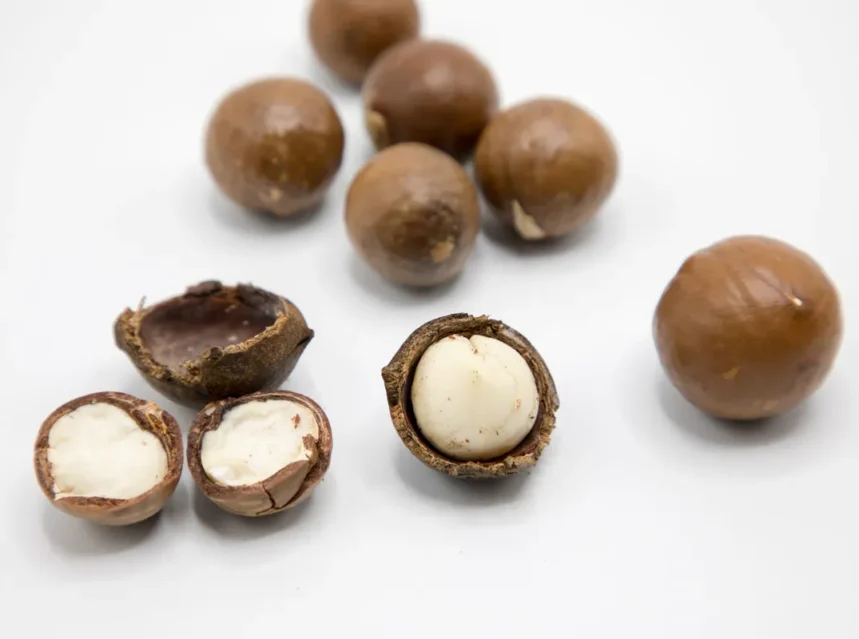
Macadamia (Macadamia integrifolia and M. tetraphylla) is a handsome subtropical evergreen tree grown for its rich, buttery nuts encased in one of the hardest shells in the plant world. Native to Australia, it is the only widely grown food crop to come from that continent. A macadamia is a long-term, ornamental tree for warm, frost-free gardens — slow to start but generous and beautiful once mature. Here is the complete guide on how to grow macadamia.
Quick start: Grow macadamia in a warm, frost-free climate, in full sun and deep, free-draining, slightly acidic soil. Choose a grafted tree for earlier, reliable nuts. Water steadily, feed lightly and carefully (it dislikes too much phosphorus), and shelter it from wind and frost. Nuts ripen and fall in late summer to autumn — gather them, dry, then crack the very hard shell. Note: macadamia nuts are toxic to dogs.
Growers in subtropical and frost-free regions describe the macadamia as a beautiful, long-lived tree that rewards patience rather than quick results. Tropical and subtropical gardening communities such as tropical-plant forums note that grafted trees are well worth the cost because seedlings can take many years longer to crop and vary in quality. They also flag two practical points: the tree is sensitive to frost and harsh wind when young, and the shell is famously hard to crack, so a proper macadamia cracker is a worthwhile tool. Dog owners are reminded that the nuts are toxic to dogs.
🧰 In a hurry? Jump straight to our tested picks for this guide ↓
Macadamia at a glance
| Feature | Detail |
|---|---|
| Botanical name | Macadamia integrifolia, M. tetraphylla; family Proteaceae |
| Plant type | Subtropical evergreen nut tree |
| Height | 6–12 m (can be pruned smaller) |
| Sun | Full sun (light shade when young) |
| Soil | Deep, free-draining, slightly acidic; low phosphorus |
| Climate | Subtropical, frost-free (zones 9–11) |
| Time to crop | Grafted 4–6 years; seedlings 8–12 years |
| Harvest | Late summer to autumn, as nuts fall |
| Safety | Nuts toxic to dogs; shell extremely hard |
Why grow macadamia?
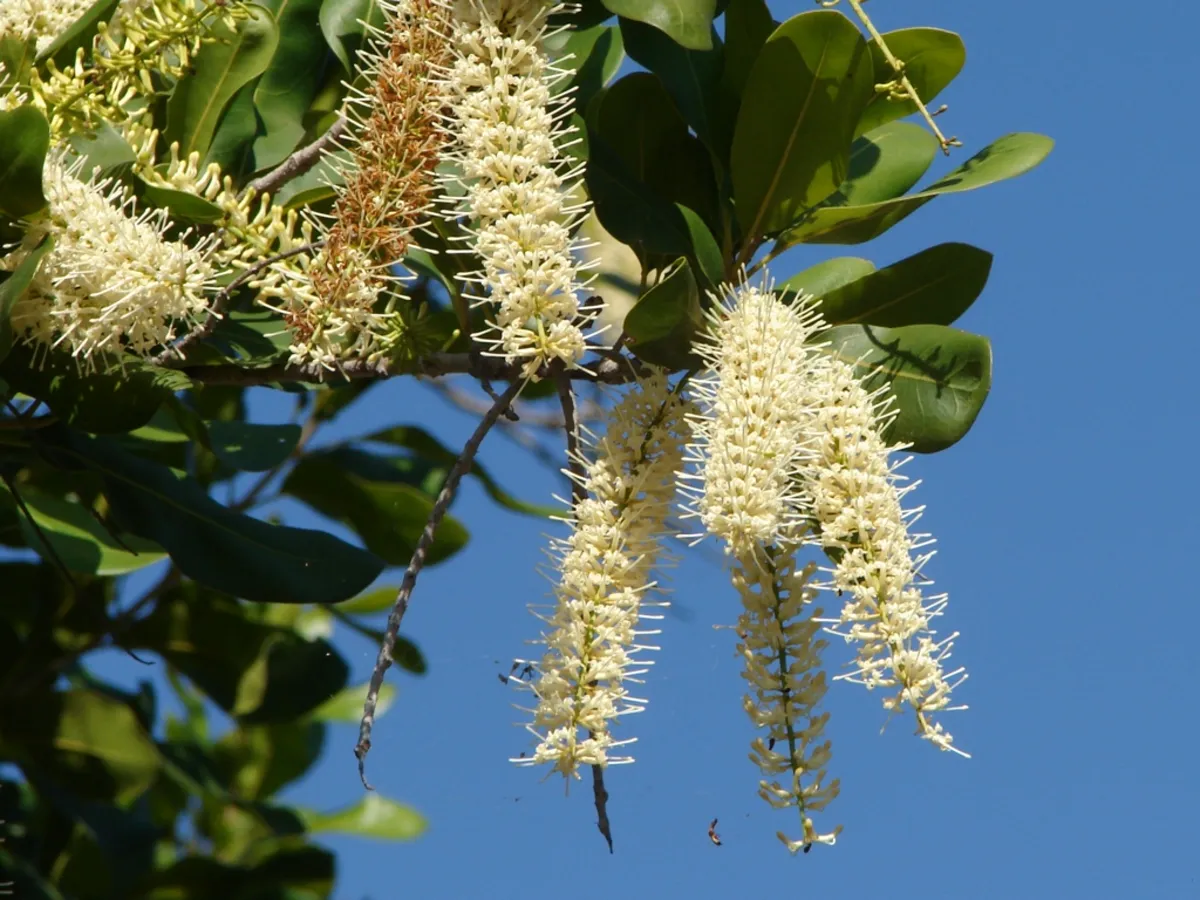
The macadamia is a tree to grow for the long term and for its beauty as much as its crop. A mature tree is a dense, glossy-leaved evergreen with cascading sprays of small flowers, then heavy crops of the world’s most luxurious — and expensive — nut. Home-grown macadamias, fresh and properly dried, are a real treat.
It is also a fine landscape and shade tree for warm gardens, with handsome holly-like foliage on some types. While it needs space, patience, and the right climate, few nut trees are as ornamental or as prized. For subtropical growers it sits alongside other warm-climate trees like the avocado and mango.
History, origin & spread
The macadamia is native to the subtropical rainforests of eastern Australia — coastal Queensland and northern New South Wales — where Aboriginal peoples gathered and ate the nuts for thousands of years, knowing them by names such as gyndl and jindilli. It is the only Australian native plant to become a major commercial food crop (the background on the macadamia records this origin).
The tree was named in the 1850s after the chemist John Macadam. Although Australian in origin, it was Hawaii that first developed the macadamia as a commercial orchard crop in the early 20th century, and for decades Hawaii led world production.
Today macadamias are grown across the subtropics: Australia and South Africa are now the largest producers, followed by countries such as Kenya, China, the United States (Hawaii), and parts of Latin America. In India, macadamia is a minor but growing crop in suitable subtropical hill regions. The nut’s richness and very hard shell have made it a premium product worldwide.
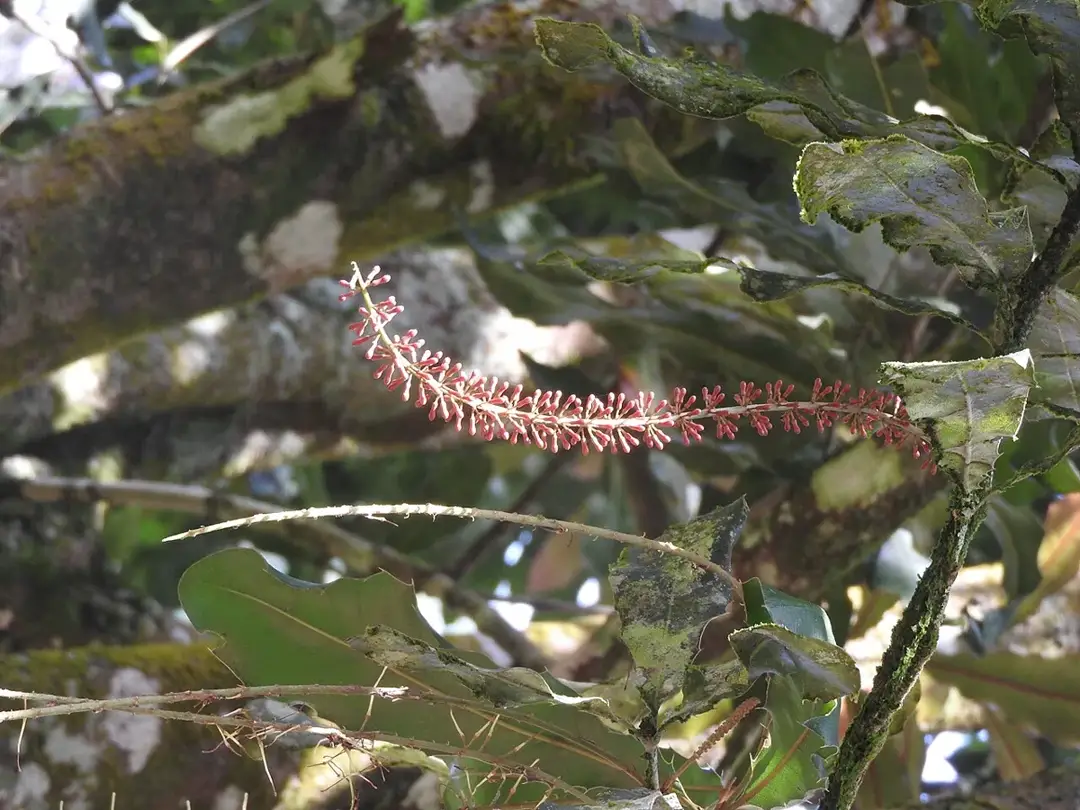
Best climate & when to plant
Macadamia is a subtropical, frost-free tree. It thrives in warm, humid climates with mild winters and dislikes both hard frost and intense dry heat. Young trees are especially frost- and wind-sensitive, while mature trees tolerate light, brief frost.
Plant in spring, once any frost has passed, so the tree establishes through the warm season. It suits frost-free subtropical regions — coastal and warm areas of the US (Hawaii, parts of California and Florida), Australia, South Africa, and the warmer hill regions of India. In cooler climates it can only be grown in a large pot under glass. Choose a grafted named variety for earlier, reliable, good-quality nuts.
How to grow macadamia: planting step by step
Macadamias need care at planting because they are slow and long-lived:
- Choose a warm, sheltered, sunny spot with deep, free-draining, slightly acidic soil, protected from frost and strong wind.
- Give the tree plenty of room to spread, well away from buildings.
- Plant a grafted sapling at the same depth it grew in the nursery, handling the roots gently.
- Water in well, stake against wind, and shelter young trees from cold and harsh sun.
- Mulch generously to keep roots cool and moist, keeping mulch off the trunk.
Macadamias have fine, surface-feeding roots (proteoid roots typical of the Protea family), so they dislike disturbance and very rich soils. A grafted tree fruits years sooner than a seedling and gives known nut quality.
Sun, soil, watering & feeding
Give macadamia full sun (a little shade when very young) and deep, free-draining, slightly acidic soil. Good drainage is essential, as the tree resents waterlogging, but it also needs steady moisture, especially while flowering and setting nuts.
Water regularly and deeply, particularly in dry spells and during nut development (see how often to water plants). Feed carefully: macadamias belong to the Protea family and are sensitive to high phosphorus, which can harm them, so use a low-phosphorus fertiliser formulated for native or proteaceous plants, or feed lightly with a balanced low-P feed. Keep the root zone mulched and weed-free, as the surface roots compete poorly with grass.
Growing macadamia in pots
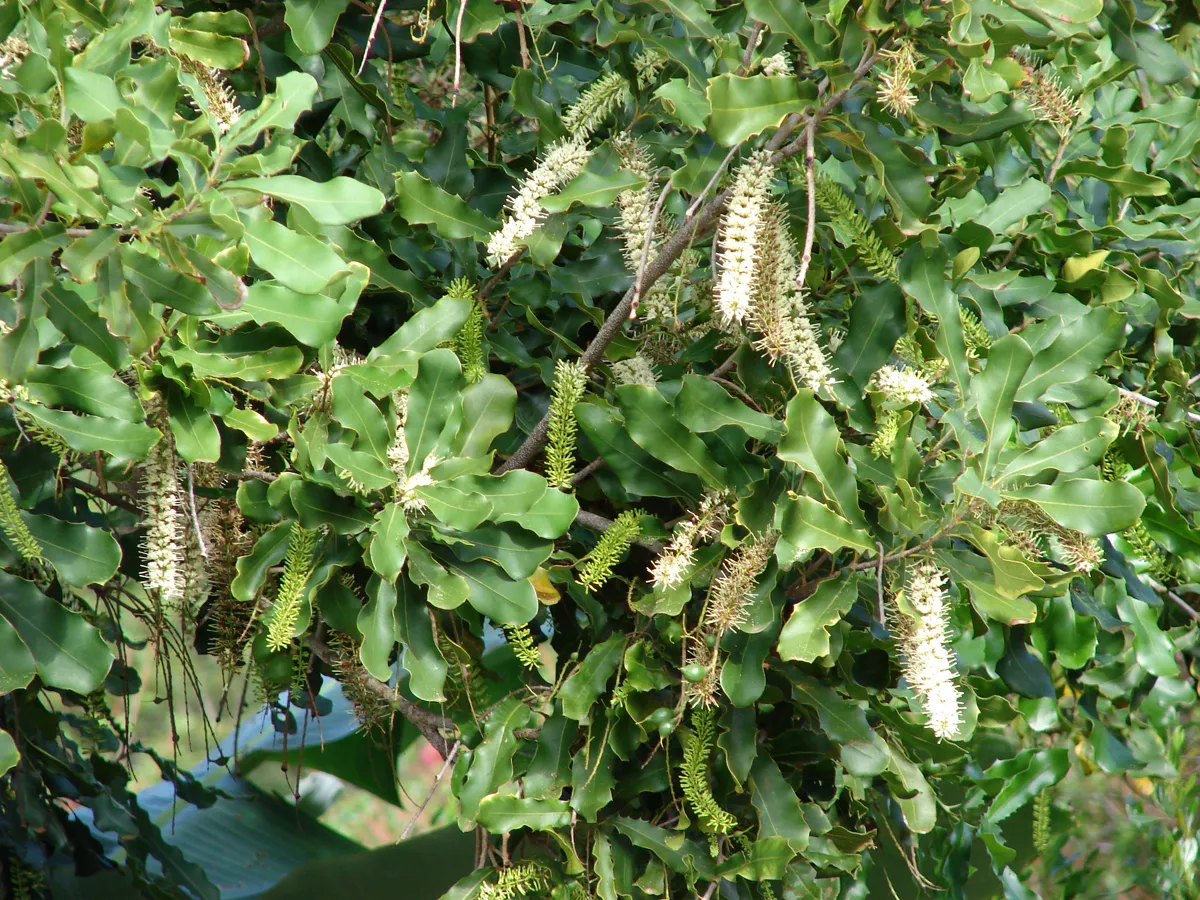
In cooler climates, or where space is tight, a macadamia can be grown in a large container and kept under cover in winter, though cropping in a pot is modest. Use a deep pot with excellent drainage and a low-phosphorus, slightly acidic potting mix.
Place it in the sunniest, most sheltered spot for summer, water steadily without waterlogging, and bring it into a bright, frost-free place before any frost. Prune to keep it compact, repot every few years, and be realistic: a potted macadamia is mainly an ornamental with a light crop rather than a productive orchard tree. Even so, the glossy evergreen foliage makes it a fine large pot plant.
Harvesting & cracking macadamias
Macadamias ripen in late summer to autumn and, helpfully, mature nuts simply fall to the ground in their green husks rather than needing picking. Gather them frequently from the ground, as nuts left lying can mould or be taken by rodents.
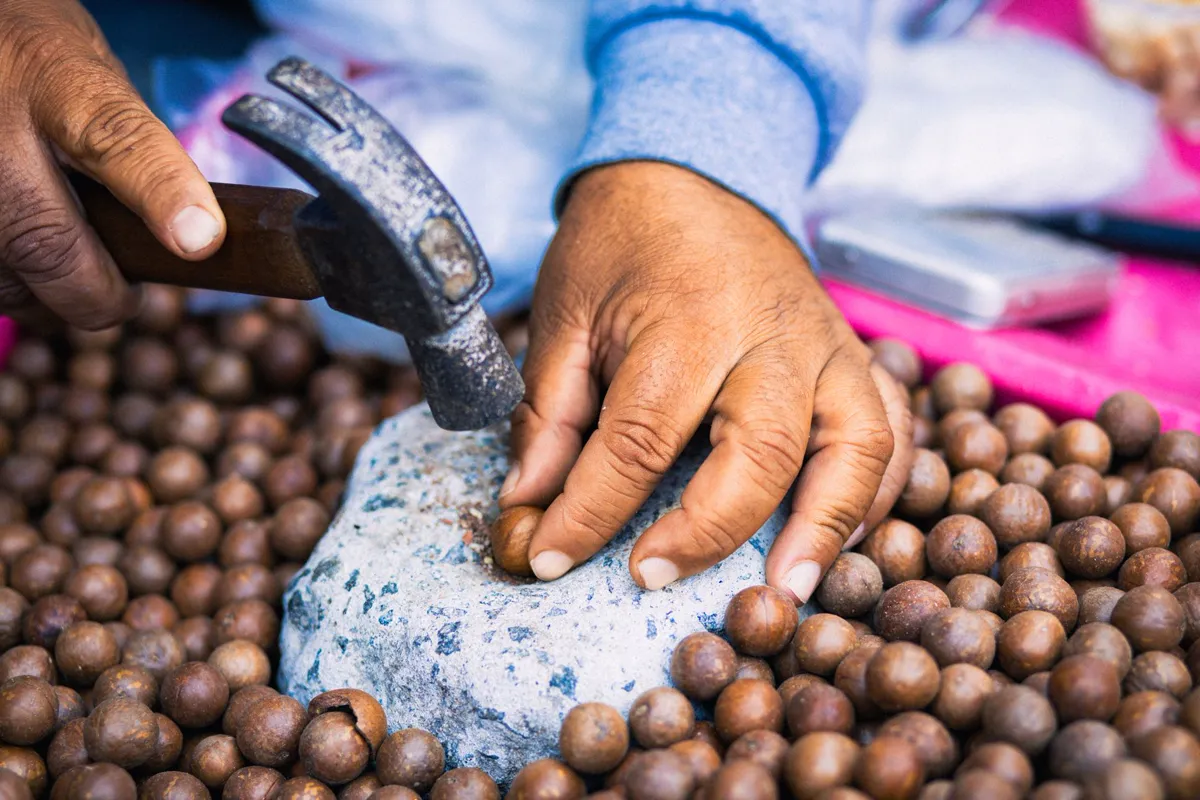
Remove the green outer husk soon after gathering, then dry the nuts in their shells for a few weeks in a warm, airy place — drying is essential and improves flavour and crispness. The famous challenge is the shell: macadamia has one of the hardest shells of any nut, so a dedicated macadamia cracker or a strong vice is needed; ordinary nutcrackers rarely manage it. Properly dried in-shell nuts store for months.
Common pests & diseases
Rats and rodents are keen on fallen nuts, and in producing regions nut borers and stink bugs (such as the macadamia nut borer and various bugs) damage developing nuts. Aphids and scale can affect foliage. Prompt gathering of fallen nuts reduces rodent and pest pressure.
Diseases include Phytophthora root rot in poorly drained soils — the main reason sharp drainage matters — along with husk spot and various trunk cankers in humid conditions. Good drainage, airflow, and orchard hygiene (clearing fallen husks) prevent most problems. A healthy, well-sited macadamia is generally robust once established.
Health benefits, uses & a pet warning
Macadamia nuts are rich and nutritious, valued as a source of healthy monounsaturated fats, fibre, and minerals. Eaten in moderation as part of a balanced diet, they are a wholesome food, though they are high in calories and are everyday nutrition rather than a medicine.
In the kitchen, macadamias are eaten raw or roasted, baked into the classic white-chocolate macadamia cookies, added to salads and desserts, and pressed for a fine, mild oil used in cooking and cosmetics. Important pet-safety warning: macadamia nuts are toxic to dogs, causing weakness, vomiting, tremors, and other symptoms even in small amounts — keep nuts and fallen husks away from dogs.
Medical disclaimer: this information is general and for educational purposes only — it is not medical advice. Tree nuts are a common human allergen, and macadamias are toxic to dogs. Consult a qualified healthcare or veterinary professional as appropriate.
Common macadamia problems
No nuts for many years
Usually normal patience — seedlings take eight to twelve years, and even grafted trees need four to six. Frost damaging flowers, too much shade, or stress can also delay cropping. Choose a grafted variety and protect young trees.
Tree damaged by cold or wind
Macadamias are frost-tender and wind-sensitive when young. Plant in a warm, sheltered spot, protect young trees over winter, and avoid exposed sites.
Poor growth or yellowing after feeding
Often phosphorus toxicity from ordinary fertiliser. Switch to a low-phosphorus feed made for native or proteaceous plants, and feed sparingly.
Shells impossible to crack
Macadamia shells are exceptionally hard by nature. Dry the nuts fully first, then use a proper macadamia cracker or a vice — ordinary nutcrackers usually cannot break them.
Related plant guides
Frequently asked questions
How long does a macadamia tree take to produce nuts?
A grafted macadamia usually starts cropping in about four to six years, while seed-grown trees take much longer — often eight to twelve years — and vary in nut quality. A grafted named variety is the reliable choice.
Can you grow macadamia outside the subtropics?
Not well outdoors in cold climates — macadamias are frost-tender and need warm, frost-free conditions to crop. In cooler regions they can be grown in a large pot under glass as an ornamental, with only a light crop.
Why are macadamia shells so hard to crack?
The macadamia has one of the hardest shells in the plant world by nature. Dry the nuts fully first, then use a dedicated macadamia cracker or a vice; standard nutcrackers usually cannot break the shell.
Are macadamia nuts safe for pets?
No — macadamia nuts are toxic to dogs, causing weakness, vomiting, and tremors even in small amounts. Keep the nuts and fallen husks well away from dogs, and consult a vet if a dog eats any.
Are macadamia trees self-pollinating, or do I need two?
A single macadamia will set some nuts on its own, but yields are usually much better with a second, different variety planted nearby. Cross-pollination between compatible cultivars reliably lifts nut set, so commercial orchards interplant varieties on purpose. Bees do the work, so plant the pair within about fifty feet of each other and avoid spraying insecticides while the long cream flower racemes are open. If you only have room for one tree, choose a variety with a good reputation for setting nuts alone.
Are macadamia shells and husks dangerous to dogs?
They are, for two separate reasons. The green outer husk and the traces of kernel left on a cracked shell carry the same toxin that makes the nuts themselves a problem for dogs, and the toxic dose is low; veterinary references report clinical signs in dogs at around 2.4 g of nuts per kg of body weight. Beyond that, the shell is one of the hardest in the plant world and a swallowed piece can crack a tooth or lodge in the gut, which is a surgical emergency. Rake up fallen nuts and husks under the tree and bin cracked shells rather than composting them where a dog can dig.
What are the signs of macadamia poisoning in a dog, and how long does it last?
Affected dogs typically show weakness, wobbliness in the hind legs, vomiting, tremors, dullness or a raised temperature, and veterinary sources note that these usually appear within 12 hours of eating the nuts. It looks alarming, but the outlook is generally good, and signs commonly settle within about 12 to 48 hours with supportive care. Ring your vet or a pet poison line straight away rather than waiting to see how bad it gets, especially if the dog is small or has eaten a lot. This is general safety information and not a substitute for veterinary advice.
How do I harvest and dry macadamia nuts at home?
Do not pick them off the tree. Mature nuts drop of their own accord over several weeks, so gather them off the ground every few days before rodents and damp get to them. Remove the green husk within a day or two of collecting, then spread the in-shell nuts one layer deep in a mesh tray somewhere warm, dry and airy for two to three weeks. They are ready when a nut rattles in its shell, and drying properly is what makes the kernel crisp and the shell finally crackable.
Why are macadamia nuts so expensive?
Almost every stage of the crop is slow or difficult. A grafted tree takes several years to bear and a decade or more to reach full production, so growers wait a long time for a return. Harvest depends on nuts dropping over weeks rather than a single mechanical shake, the notoriously hard shell needs specialised cracking equipment, and the kernel is only a small fraction of the weight collected. Add a narrow band of frost-free subtropical climate where the trees crop well, and limited supply against strong demand keeps prices high.
Can macadamia be grown in India?
Yes, in the right pockets. Macadamia suits frost-free subtropical hill conditions with reliable rainfall, so trials and small plantings have done best in parts of the Nilgiris, Coorg, the Western Ghats and the north-eastern hill states, often alongside coffee. The hot dry plains are unsuitable, as the trees dislike prolonged drought, salty soil and searing heat. Anyone in India planting macadamia should start with grafted trees of named varieties from a reputable nursery, since seed-grown trees take far longer and give unpredictable nuts.
How big does a macadamia tree get, and how long does it live?
Left alone, a macadamia becomes a broad evergreen tree of roughly 40 to 50 feet with a wide, heavy canopy, so give it real space and keep it well away from walls and drains. Garden trees are usually kept far lower by pruning the leader and shaping the framework in the early years, which also makes gathering the drop easier. They are long-lived, commonly productive for many decades, so it is a tree you plant once and site carefully. Shelter matters too, as the brittle branches split in strong wind when loaded with nuts.
Sources and further reading
Still stuck? Ask the Plant Doctor
Describe the problem — yellow leaves, holes, no flowers — and get a clear answer in seconds. FreeAI can make mistakes. Answers are guidance, not a guarantee — check anything important against the guide it links to, and always read the label on any product before you use it.