How to Grow an Avocado Tree
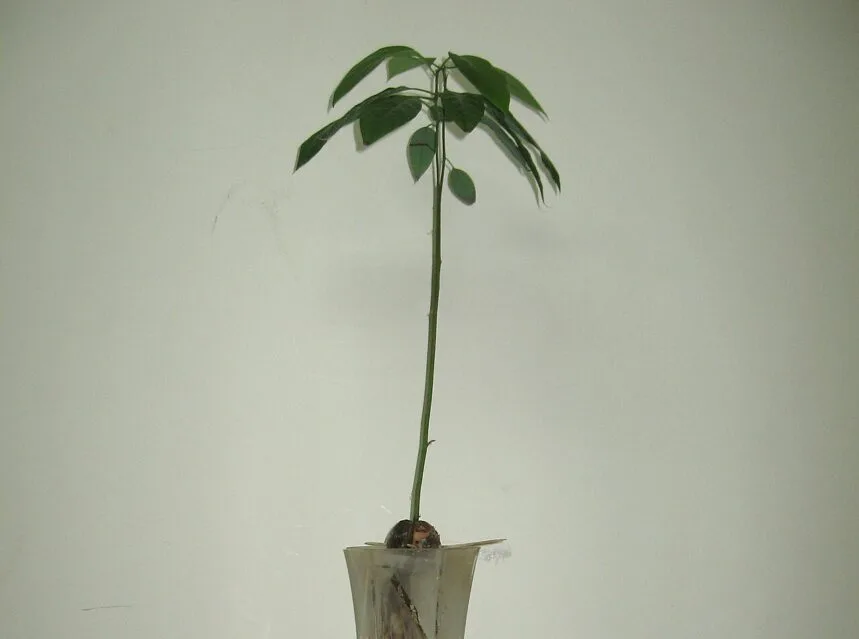 Image: M.t.lifshits — CC BY-SA 3.0, via Wikimedia Commons
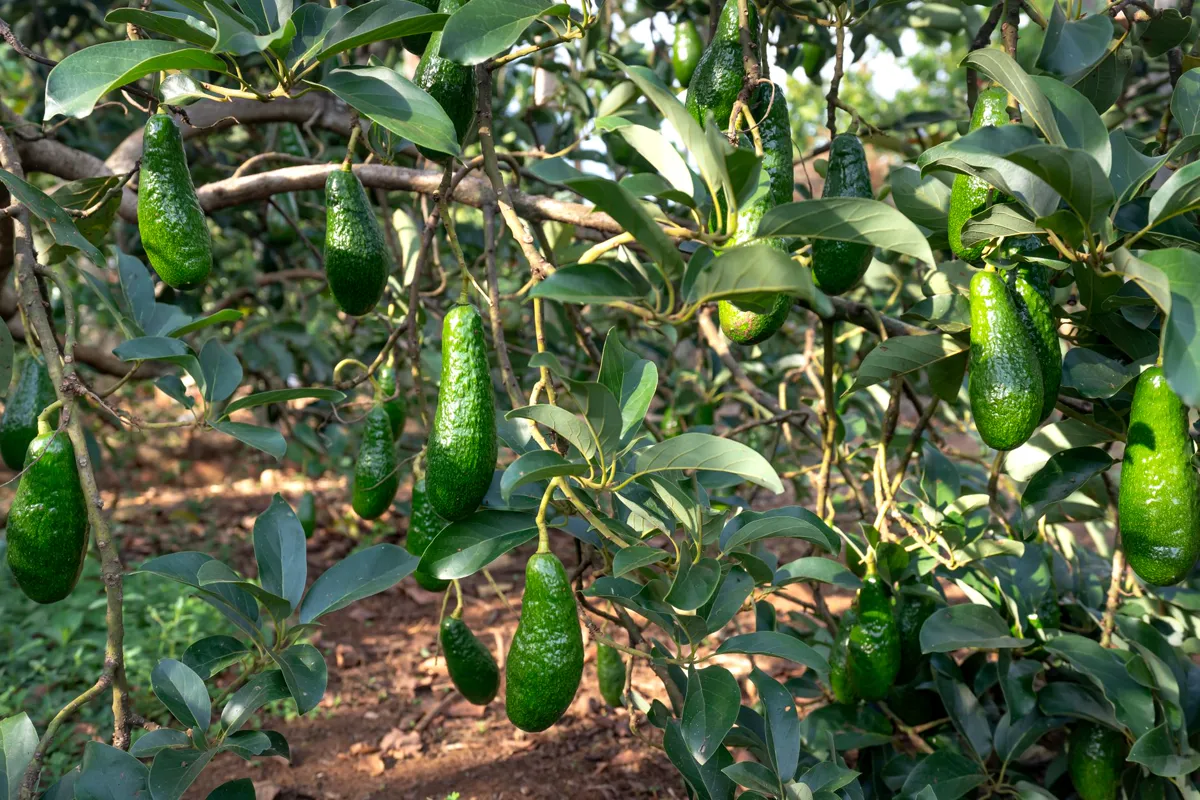
The avocado (Persea americana) is a subtropical evergreen tree grown for its creamy, buttery, nutritious fruit — the fruit the world has fallen in love with. Growing your own, whether a productive tree in a warm garden or a leafy houseplant from a saved seed, is hugely satisfying. It takes patience and the right conditions, but a home-grown avocado is a genuine treat. Here is the complete guide on how to grow an avocado tree.
Quick start: Grow avocado in full sun in rich, very well-drained soil — it hates wet feet and frost. You can sprout a seed in water, but grafted trees fruit far sooner and more reliably. Water 2–3 times a week (keep moist, not soggy), feed with nitrogen, and protect from cold. Seed-grown trees take 5–13 years to fruit; grafted, 3–4.
Avocado is endlessly tempting to grow from a saved stone, and the sprouting pit makes a fun houseplant, but growers should know seed-grown trees take many years and rarely fruit true to type. For reliable fruit, a grafted tree is the answer, and many varieties crop far better with a second tree nearby for cross-pollination. The plant’s biggest enemy is wet feet, so perfect drainage matters more than almost anything. It also needs a frost-free spot to thrive.
🧰 In a hurry? Jump straight to our tested picks for this guide ↓
Avocado at a glance
| Feature | Detail |
|---|---|
| Botanical name | Persea americana (family Lauraceae) |
| Plant type | Subtropical evergreen fruit tree |
| Sun | Full sun |
| Soil | Rich, very well-drained (hates wet feet) |
| Climate | Frost-free / near-frost-free (zones 9–11) |
| First fruit | Grafted 3–4 yrs; seed 5–13 yrs |
| Harvest | Picked mature, ripens off the tree |
| Key risk | Root rot in wet soil |
| Flower type | Type A or Type B — pairing the two lifts fruit set |
| Cold tolerance | Mexican race to about −8 °C; Guatemalan −3 °C; West Indian barely below freezing |
| Spacing | 4–5 m dwarf · 6–8 m standard garden tree · 8–12 m orchard |
| Mature height | 3 m (Wurtz/Little Cado) to 12–18 m (seedling trees) |
| Roots | Shallow — most feeder roots in the top 15 cm of soil |
| Typical yield | Roughly 60–100 kg (100–500 fruit) from a mature tree in a good year |
| Maturity test | Dry matter — about 20.8% minimum for Hass, not colour |
Why grow an avocado tree?
Avocados give you rich, creamy, nutritious fruit that’s expensive to buy, on an attractive evergreen tree (or a fun, leafy houseplant from seed). A productive tree yields generously, the fruit is wonderfully versatile, and growing your own — even just as a green project — is rewarding. For warm-climate gardeners and curious indoor growers alike, it’s a fascinating plant.
Which avocado should you grow?
Avocado varieties differ far more than apple or citrus varieties do, because they come from three separate wild races with genuinely different cold tolerance. Choosing across races is the single most important decision, and it happens before flavour ever enters the conversation.
| Race | Cold tolerance | Fruit character | Typical varieties |
|---|---|---|---|
| Mexican | Hardiest — mature trees survive around −6 to −8 °C (18–22 °F) | Small, thin-skinned, very high oil; anise-scented leaves | Mexicola, Duke, Bacon, Zutano |
| Guatemalan | Moderate — around −3 to −2 °C (26–28 °F) | Thick, pebbly skin; stores and ships well | Reed, Nabal, Pinkerton, Gwen |
| Guatemalan × Mexican hybrids | −3 to −4 °C (25–27 °F) | The commercial middle ground | Hass, Fuerte, Wurtz (Little Cado) |
| West Indian | Least hardy — damaged near freezing | Large, glossy, lower oil, watery-sweet; salt-tolerant | Pollock, Simmonds, Waldin |
The second decision is flower type. Every avocado is classed Type A or Type B, and pairing one of each substantially improves fruit set — explained in full in the pollination section below.
| Variety | Flower type | Cold limit (mature tree) | Best for |
|---|---|---|---|
| Hass | A | ≈ −4 °C (25 °F) | The benchmark for flavour and storage |
| Reed | A | ≈ −3 °C (27 °F) | Upright, compact tree; large round fruit |
| Wurtz / Little Cado | A | ≈ −4 °C (25 °F) | The only true dwarf — about 3 m, ideal for pots |
| Fuerte | B | ≈ −3 °C (27 °F) | Classic partner for Hass; spreading tree |
| Bacon | B | ≈ −4.5 °C (24 °F) | Cooler gardens; reliable pollinator |
| Zutano | B | ≈ −3.5 °C (26 °F) | Hardy, heavy flowering, mediocre flavour — a pollinator first |
| Mexicola | A | ≈ −7 °C (18–20 °F) | The cold-climate choice; small edible-skinned fruit |
The short answer. In a truly frost-free garden, plant Hass with a Type B partner such as Fuerte or Bacon. Where light frosts happen, choose Mexican-race or Mexican-hybrid varieties. On a balcony, in a cold climate, or indoors, plant Wurtz — it stays around 3 metres and is the only genuinely dwarf avocado.
History, origin & where avocados grow
The avocado is native to south-central Mexico and Central America, where it was cultivated by the Aztecs and earlier peoples thousands of years ago. The name comes from the Aztec word “ahuacatl”. Spanish explorers carried it to other warm regions, and it slowly spread around the world.
For centuries it remained a regional crop, but the 20th century turned it into a global favourite. The popular Hass variety, raised from a single Californian seedling, drives much of today’s trade. Demand has since soared worldwide.
Avocados are subtropical-to-tropical trees grown across Mexico (by far the largest producer), the US, Central and South America, and the Mediterranean. Mexico grew about 2.76 million tonnes in 2024 out of a world crop of 11.2 million — roughly double second-placed Colombia, with the Dominican Republic, Peru and Indonesia next (see avocado production by country, sourced from FAOSTAT). They suit frost-free or near-frost-free climates (zones 9–11), though some varieties tolerate a light frost. In cooler regions they are grown as container or houseplants and rarely fruit, but make handsome foliage plants.
Rootstocks & root-rot resistance
With most fruit trees the rootstock controls size. With avocados it controls something more urgent: whether the tree survives Phytophthora cinnamomi, the root-rot pathogen that is the most widespread avocado disease in the world and the usual cause of a healthy-looking young tree slowly failing.
That is why nurseries sell clonal rootstocks — genetically identical clones of proven survivors. Seedling rootstocks are cheaper and noticeably less resistant.
| Rootstock | Root-rot resistance | Notes |
|---|---|---|
| Dusa | Strong | The dominant clonal rootstock worldwide; vigorous, high-yielding, wide adaptability |
| Latas · Uzi · Zentmyer | Strong | Newer selections recommended alongside Dusa |
| Duke 7 | Intermediate | Long-established clonal standard, widely available |
| Toro Canyon | Intermediate | Cloned from a survivor in infested ground; also salt-tolerant |
| Seedling (unnamed) | Weak | Common in cheap trees — avoid where root rot is present |
An honest caveat that the labels rarely carry: resistant does not mean immune. A resistant rootstock planted in badly drained ground, or kept waterlogged by over-watering, still dies. Drainage and irrigation do more than the rootstock name — the rootstock simply buys you margin for error.
Best season & when to plant
Plant avocado trees in spring, after frost, into warm soil. Trees flower in spring and the fruit takes many months to mature, often hanging on the tree well into the following season. Grafted trees fruit in about 3–4 years; seed-grown trees take anywhere from 5 to 13 years — and may never fruit well — so grafted stock is best for fruit.
How to grow avocado (seed or tree)
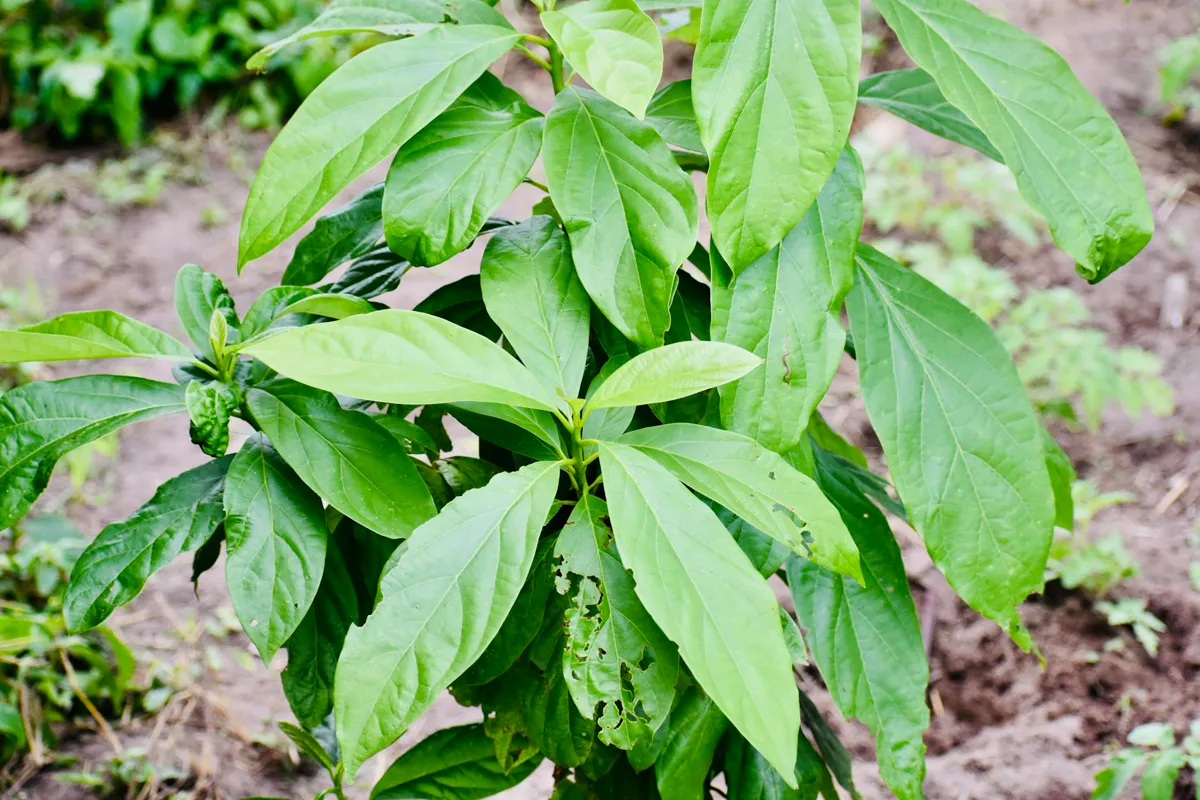
- From seed (a fun project): suspend the pit (broad end down) with toothpicks over water; roots and a shoot appear in 2–6 weeks, then pot it up in rich soil with the seed half-exposed.
- For fruit: plant a grafted tree in full sun in rich, very well-drained soil — avocados are highly prone to root rot in wet ground (see improving garden soil).
- On clay, plant on a mound. Build it about 30–60 cm high and 1–1.5 m across and plant into the top. This one step does more to prevent root rot than any spray, because it lifts the roots clear of the wet zone.
- Plant slightly high, never deep. Set the rootball so its surface sits a couple of centimetres proud of the surrounding soil, and keep the graft union well clear.
- Handle the roots gently. Avocado roots are brittle and shallow — most feeder roots sit in the top 15 cm — so do not tease them out or firm the soil hard.
- Mulch generously but never against the trunk. A 10–15 cm layer of coarse wood chip over the root zone suppresses root rot, keeps the shallow roots cool, and is standard practice in commercial groves. Leave a clear 15–20 cm ring around the trunk.
- Protect the trunk from sunburn. Young avocado bark scorches easily in strong sun. Paint exposed trunks with a 50:50 mix of white interior latex paint and water, or wrap them loosely.
- Space by variety: roughly 4–5 m for dwarf types, 6–8 m for a standard garden tree, and 8–12 m in orchard conditions where trees reach full size.
- In cold climates, grow in a large container to move indoors over winter; pinch the growing tip to keep it bushy.
Soil pH around 6–6.5 suits avocados best. They are also unusually sensitive to salt, so where water is hard or saline, water deeply enough to leach salts past the root zone rather than little and often.
Watering, feeding & care
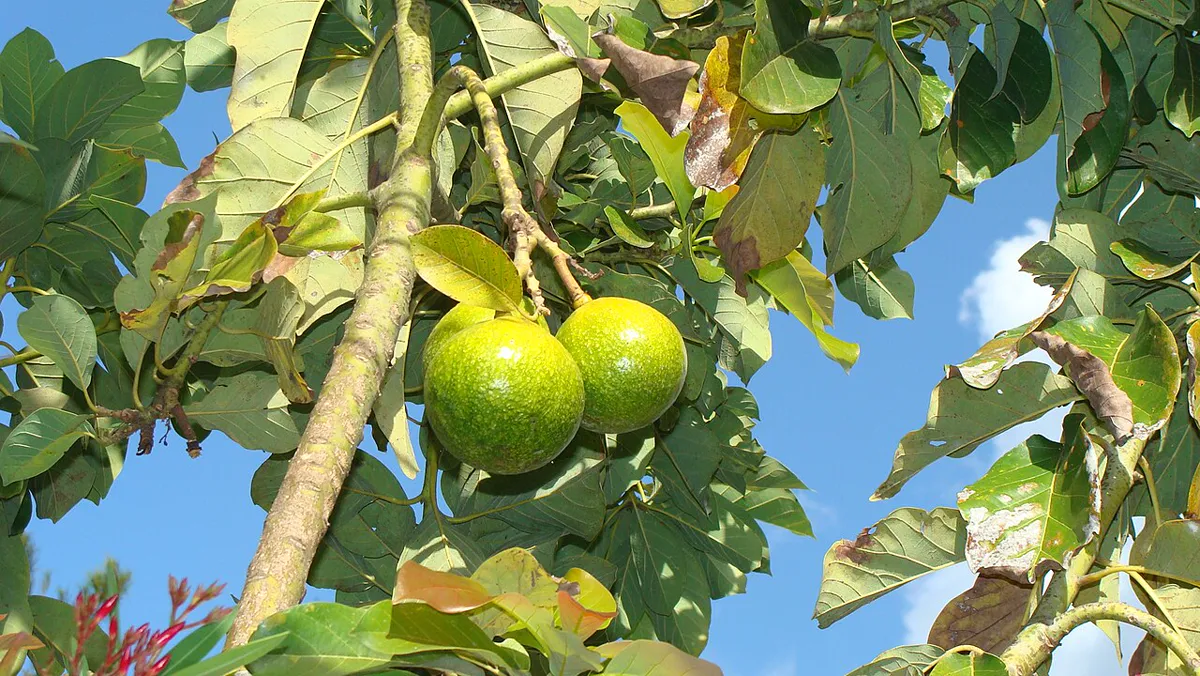
Avocados like to be kept moist but never soggy — water young trees 2–3 times a week, easing to about weekly once established, always with excellent drainage (see how often to water). Feed with a nitrogen-rich fertilizer (avocados are leaf-hungry) plus zinc. Mulch the shallow roots, and protect from frost and cold wind, which they dislike intensely.
Irrigation is the single most important thing you control. Extension guidance on avocado root rot puts correct watering ahead of every other management practice, ahead even of rootstock choice. The failure mode is almost always the same: frequent shallow watering that keeps the top few centimetres permanently wet, exactly where the feeder roots and the pathogen both live.
- Water deeply, then let the top few centimetres dry before watering again. Push a finger or a moisture meter in rather than watering on a fixed schedule.
- Never let water stand. If puddles linger after rain, the site needs a mound, not a bigger tree.
- Leach occasionally. One deliberately heavy watering now and then flushes accumulated salts below the roots — worth doing where water is hard.
- Feed little and often in the growing season, easing off before cold weather so soft growth hardens.
Leaf tips turning brown and crisp usually mean salt accumulation rather than drought. Yellowing between green veins on new leaves points to iron or zinc shortage, which is common on alkaline soils and treated with a chelated feed, not more nitrogen.
Cold, frost & sunburn protection
Cold is the limit that decides whether an avocado is a fruit tree or a foliage plant in your garden. The figures in the variety table above are for mature, hardened trees. A young tree in its first two or three winters is markedly more tender, often by several degrees, and its trunk is the vulnerable part.
- Wrap the trunk of young trees with fleece, hessian or foam pipe insulation before the first frost. A tree that keeps a live trunk regrows; one that loses it dies to the graft.
- Mound soil or mulch loosely over the graft union for winter in marginal climates, then pull it away in spring.
- Water before a frost night. Moist soil holds and releases more heat than dry soil.
- Shelter from cold wind, which desiccates the large leaves faster than frost damages them.
- Whitewash the trunk (50:50 white latex paint and water) against sunburn, and shade very young trees through their first intense summer.
If your winters regularly drop below about −4 °C, grow a Mexican-race variety such as Mexicola or Bacon, or keep the tree in a pot you can move. Fighting the climate with fleece every year rarely produces fruit.
Pollination & pruning
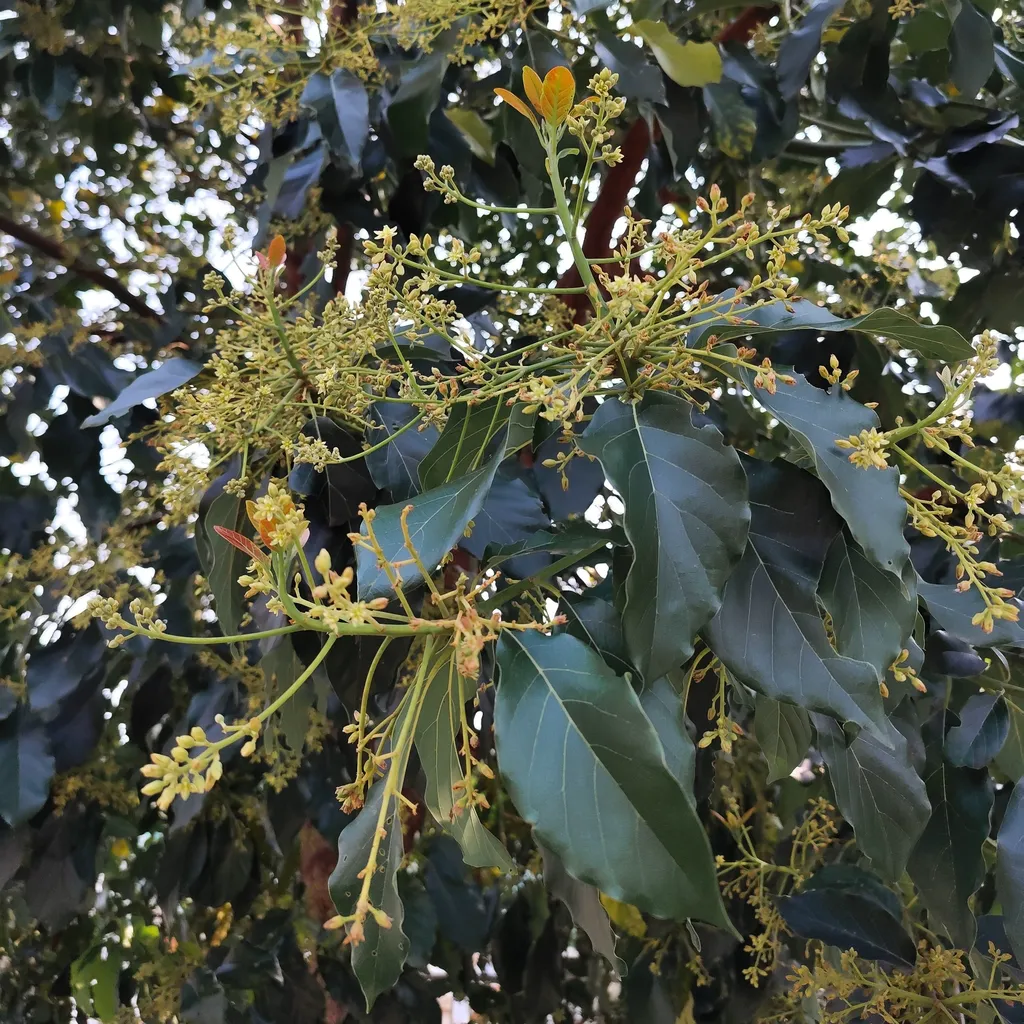
Avocado flowering is one of the strangest arrangements in horticulture, and understanding it explains almost every “my tree flowers but sets nothing” question.
Each flower opens twice, on two consecutive days, and it is functionally female one day and male the other. Botanists call this synchronous dichogamy. Every variety follows one of two schedules:
- Type A — flowers open female in the morning, close, then reopen as male the following afternoon. (Hass, Reed, Wurtz, Mexicola)
- Type B — flowers open female in the afternoon, close, then reopen as male the next morning. (Fuerte, Bacon, Zutano)
The two schedules interlock exactly. A Type A tree sheds pollen in the afternoon, precisely when Type B flowers are receptive; Type B sheds in the morning, precisely when Type A flowers are receptive. Plant one of each within pollinator range and both trees crop noticeably better.
So why does a single tree often fruit anyway? Because the timing is temperature-driven. In cool or overcast weather the phases drift, overlap and blur, so male and female flowers are open on the same tree at once and it self-pollinates. That is also why fruit set is best when bloom-time temperatures sit around 20–27 °C (70–80 °F) — warm enough for bees to work, not so hot that flowers dry before pollen arrives.
Practical takeaways: plant a Type B partner if you have space, keep bees welcome by not spraying insecticide during bloom (see attracting pollinators), and accept that avocados drop most of their flowers — a mature tree may open a million blossoms and carry a few hundred fruit. That is normal, not failure.
Pruning
Avocados need less pruning than any other fruit tree here, and heavy pruning costs you fruit because the crop forms on the outer canopy.
- Young trees: tip the leader once to force branching, and choose a framework of well-spaced limbs.
- Established trees: remove dead, crossing and low-hanging wood, and shorten whatever has grown beyond picking height. Do this after the frost risk passes and before the summer heat.
- Never strip the canopy. Exposed branches sunburn quickly — if you open the tree up, whitewash what you have exposed.
Growing an avocado from seed
Sprouting an avocado pit is a classic, satisfying project. It is cheap, fun and great for children. So even cold-climate gardeners can enjoy growing one.
Wash a fresh pit and suspend it broad-end-down over a glass of water using toothpicks. Keep the base in water somewhere warm and bright. Roots and a shoot usually appear within two to six weeks.
Once it has good roots and leaves, pot it up in rich, free-draining soil with the seed half-exposed. Pinch the growing tip to keep it bushy. Remember, though, that a seed-grown plant rarely fruits well, so enjoy it mainly as foliage.
Growing avocado in a container
In cooler climates, a pot is the only practical way to grow avocado. It lets you move the tree indoors over winter. So you can keep this tender tree alive far outside its natural range, much like other container plants.
Choose a large pot with excellent drainage and a free-draining, rich mix. Stand it in the sunniest spot you have, indoors or out. Water to keep it moist but never soggy, the cardinal avocado rule.
Move it outdoors for the warm summer and back under cover before frost. Pinch and lightly prune to keep it compact and bushy. Even if it never fruits, it makes a handsome evergreen pot plant.
If you actually want fruit from a pot, the details matter:
- Start with a grafted dwarf variety — Wurtz (Little Cado) is the only genuinely dwarf avocado, reaching about 3 m rather than 10 m or more. A seed-grown plant in a pot will not fruit.
- Pot size: begin around 40–60 litres and work up to the largest container you can still move. Half-barrels are a common end point.
- Mix: free-draining and coarse — a soil-based compost lightened with bark or perlite. Avocados fail faster in dense, water-holding compost than in almost anything else.
- Drainage: plenty of holes, pot feet, and never a full saucer. In containers, root rot arrives through the saucer.
- Light: the sunniest position available. Indoors that means the brightest window in the house, and even then growth will be leggier than outdoors.
- Move it outside for every warm month — the flowers need insects and the leaves need real light.
Indoors, expect a handsome foliage plant with occasional flowers and rare fruit. That is a fair outcome, not a failure: a fruiting avocado needs months of warmth that a living room does not supply.
Common pests & diseases
Avocados carry fewer pest problems than most fruit trees — biological control does much of the work in commercial groves — but one disease dominates everything else.
Phytophthora root rot
This is the main killer of avocados worldwide. Leaves turn small, pale and yellowish, wilt with brown tips, the canopy thins, branches die back and the crop shrinks. Dig and the feeder roots are black and brittle instead of white and crisp. The pathogen moves in water running over and through soil, and arrives on infected nursery stock, muddy boots and tools.
- Get the water right first — it outranks every other measure.
- Plant on a mound in any soil that holds water, and never in a low spot.
- Mulch 10–15 cm deep with coarse wood chip over the root zone; the microbial life in decomposing chip actively suppresses the pathogen. Growers also apply gypsum, about 10 kg to a medium tree, alongside the mulch.
- Buy clonal, resistant rootstock such as Dusa, and avoid moving soil from an affected tree to a healthy one.
Persea mite
Tiny mites feeding on leaf undersides, leaving green-brown necrotic spots and fine silvery webbing, then early leaf drop that exposes fruit and branches to sunburn. They thrive in hot, dry conditions. A strong jet of water on the leaf undersides, plus keeping the tree unstressed and dust-free, handles garden-scale infestations (see sap-sucker control).
Avocado and greenhouse thrips
Thrips scar young fruit, leaving leathery brown russeting on the skin. It looks alarming and is almost entirely cosmetic — the flesh inside is unaffected. Treat only if scarring is severe, and favour a strong water spray and natural predators over insecticide (see thrips control).
Anthracnose
Dark, sunken, spreading spots on ripening fruit, worst in humid weather and monsoon climates. Clear fallen fruit and leaves, prune for airflow, and avoid wetting the canopy. Because the infection sits latent in the fruit until it ripens, prompt picking and clean handling matter more than late spraying.
Sunblotch viroid
Yellow or reddish streaks on fruit and stems, distorted growth, poor cropping. There is no cure, it spreads through infected budwood and contaminated tools, and infected trees should be removed. The only real protection is buying certified disease-free nursery stock — one more reason not to graft from an unknown neighbourhood tree.
Scale and caterpillars
Minor by comparison. Scale is dealt with by encouraging predators and spot-treating; leaf-rolling caterpillars are picked off. Use the methods in our organic pest control guide. Yellowing leaves across the whole tree usually signal overwatering or poor drainage rather than any pest.
Harvesting
Avocados break the usual rule of fruit growing: mature and ripe are two different things. The fruit matures on the tree but will not soften while attached, so the tree doubles as your store cupboard — fruit can hang for weeks or months until you want it. Ripening only begins once you pick.
That raises the real question: how do you know when it is mature? Colour is unreliable, and size only roughly helpful. Commercial growers use dry matter, which rises as oil content rises and correlates directly with eating quality. California’s minimum for Hass is about 20.8% dry matter, and international standards sit between roughly 19% and 25% depending on variety.
You cannot easily measure that at home, so use the grower’s practical version:
- Pick one test fruit of good size and leave it on the counter for a week.
- If it softens evenly and tastes rich, the crop is mature — start picking as you need fruit.
- If it shrivels, stays rubbery or tastes watery and grassy, it was immature. Wait two or three weeks and test again.
- Cut the stalk with snips rather than pulling, leaving a short stub on the fruit — a torn stem end lets rot in.
Ripening and storage
Keep picked fruit at room temperature and it will soften in roughly three to seven days, yielding to gentle pressure at the stem end. To speed it up, put it in a paper bag with a banana or apple, whose ethylene accelerates the process.
Do not refrigerate an unripe avocado. Below about 5 °C an unripe fruit suffers chilling injury: it never ripens properly, and the flesh greys and develops off-flavours. Once ripe, a few days in the fridge is fine and slows things down usefully.
Yield & timeline
Avocados reward patience, and how you started the tree matters more than anything else you do.
| How it was started | First fruit | Full cropping | Mature yield per year |
|---|---|---|---|
| Grafted, standard variety | Year 3–4 | Year 7–8 | 60–100 kg (roughly 100–500 fruit) |
| Grafted dwarf (Wurtz) in the ground | Year 2–3 | Year 5–6 | 20–40 kg |
| Grafted dwarf in a large pot | Year 3–4 | Year 6+ | A few kilos in a good year |
| Grown from a seed | Year 5–13, if ever | Unpredictable | Unpredictable, and rarely like the parent fruit |
Expect alternate bearing too: a heavy year is often followed by a light one, because a big crop drains the tree’s reserves. Thinning a very heavy set and feeding steadily softens the swing but never removes it entirely.
Health benefits & uses
Per 100 g an avocado carries 14.7 g of fat, most of it monounsaturated, with 6.7 g of fibre, 485 mg of potassium, 81 µg of folate, 2.07 mg of vitamin E and 21 µg of vitamin K, on 160 kcal (USDA record 171705). Those are the numbers behind its reputation as a heart-friendly fruit; it is food, not treatment. They’re eaten fresh — in guacamole, salads, on toast, in smoothies, and countless dishes. The tree’s flowers are good for bees (see attracting pollinators). A genuinely nutritious, versatile, and beloved fruit.
This article is for general information only and is not medical advice. Talk to a qualified professional before using any plant medicinally.
Your tree dropping its baby fruit is not a mistake you made
This is the most common panic with a young avocado, and almost every guide skips it entirely. A tree flowers extravagantly, sets tiny fruit, then sheds most of it over a few weeks — and the owner assumes they have watered wrongly.
They almost certainly have not. UF/IFAS states it plainly: “Less than 1% of the flowers on an avocado tree ultimately produce fruit.”
An avocado can carry a million flowers and finish the season with a hundred or two. That is the normal design of the plant, not a failure of care.
| When | What happens |
|---|---|
| First 5 weeks after fruit set | 30–50% of already-fertilised fruitlets drop |
| Weeks 6–10, at pea size | A second wave sheds more |
| Season end | Under 1% of the original flowers remain as fruit |
There is a subtler finding worth knowing. In studies of dropping ‘Hass’ flowers, the large majority had already been pollinated — the pollen tube simply failed to complete fertilisation. So even a tree visited by plenty of bees will shed heavily. Adding a second tree improves the odds; it does not change the arithmetic.
What this means for you: do not react to the drop. Do not increase feeding, and do not increase watering, because both can make things worse. Judge the tree on what is still hanging at pea size and beyond.
Brown leaf tips are usually salt, not sunburn
Brown, dry leaf tips on an avocado get blamed on sun, wind or “fungus”. Far more often they are salt — specifically chloride in the irrigation water, accumulating in the leaf. Avocado is among the more salt-sensitive fruit trees, and this is barely mentioned in general growing guides.
The tell is the pattern: the browning starts at the leaf tip and works back toward the base, evenly, on many leaves at once. Sunburn is patchy and worst on the exposed side; wind damage is ragged and worst at the edges.
Two numbers make it concrete. Yield begins to suffer at roughly 75 ppm chloride in irrigation water, and falls by about 12% for every additional 35.5 ppm.
The fix is how you water, not how much:
- Water so a little always drains away. Aiming for around 10–20% more water than the root zone holds, every time, keeps flushing salt past the roots. This works better than the common advice to flood the tree once a month.
- Do not panic over a little tip burn. Below roughly 10% of the canopy affected, there is no measurable yield cost.
- Mulch heavily, which reduces evaporation and therefore the rate at which salt concentrates in the topsoil.
This matters most on hard borewell or bore-fed municipal water, which is the normal case across much of India and in many dry regions elsewhere. If your tips brown persistently and the soil is not waterlogged, have the water tested for chloride before you change anything else.
Growing avocados in India
Avocados are a genuine option in India, but only in specific belts. The tree wants warm, humid conditions without hard frost, and — the part most guides miss — it wants well-drained ground far more than it wants heat.
Where they grow. The established areas are Kodagu (Coorg) and Gundlupet in Karnataka, the Kodaikanal and Nilgiris (Ooty) hills of Tamil Nadu, parts of Kerala, Maharashtra, Sikkim and the North-East. Elevation matters: mid-elevation hills give the mild, humid conditions the tree prefers, while hot dry plains and waterlogged low ground both fail it.
Indian breeding is worth knowing about. ICAR-IIHR in Bengaluru has released Arka Supreme and Arka Coorg Ravi, selected for Indian conditions rather than imported wholesale from California. Alongside these, Hass, Fuerte, Pollock, Nabal, Waldin and local green types are all grown.
- Planting: at the start of the monsoon, once the rains are established and the soil is warm.
- Spacing: 6–12 m depending on variety vigour, with the wider end for spreading types like Fuerte; hill plantings in Sikkim often use about 10 × 10 m.
- Pits: roughly 1 × 1 m refilled with topsoil and well-rotted farmyard manure.
- Soil: deep, well-drained loam, pH about 6–7. Avocados will not tolerate waterlogging, so avoid heavy black cotton soil and low-lying plots, or plant on mounds.
- Yield: around 100–500 fruit per tree, often quoted as 80–100 kg a year from about the eighth year.
- Monsoon watch-out: anthracnose and root rot both surge in the rains. Mound planting, wide spacing and airflow do most of the prevention.
The market case is strong — Indian demand is growing quickly and most fruit is still imported — but the horticultural case still depends on the site. On heavy, poorly drained land, no variety and no rootstock will save the tree.
Common avocado problems
Root rot / dying tree
Wet, poorly drained soil — the number one avocado killer. Plant in very well-drained soil and never overwater.
Years with no fruit
Seed-grown trees take 5–13 years (if ever). Grow a grafted tree for fruit in 3–4 years.
Yellowing leaves
Usually overwatering or poor drainage. Ease off watering and improve drainage. Yellowing between green veins on new leaves instead points to iron or zinc shortage on alkaline soil.
Brown, crisp leaf tips
Salt build-up rather than drought, common with hard water and in pots. Water deeply now and then to leach salts below the roots, and ease off fertiliser.
Flowers everywhere but almost no fruit
Partly normal — an avocado sheds the vast majority of its flowers. Cool weather at bloom, no Type B partner, or insecticide sprayed during flowering all make it worse.
Fruit that never softens properly
Picked immature, or an unripe fruit was refrigerated. Leave the next test fruit on the tree two or three weeks longer, and keep unripe avocados out of the fridge.
Bark splitting or bleaching on young trunks
Sunburn. Paint exposed trunks with a 50:50 mix of white latex paint and water, and shade very young trees through their first summer.
Related plant guides
- How to grow Orange
- How to grow Grapefruit
- How to grow Mango
- How to grow Loquat
- How to grow Soursop
- How to grow Chikoo
Frequently asked questions
What is the difference between Type A and Type B avocado trees?
Every avocado flower opens twice, on two consecutive days, working as female one day and male the other. Type A varieties such as Hass open female in the morning and shed pollen the following afternoon, while Type B varieties such as Fuerte open female in the afternoon and shed pollen the next morning. The two schedules interlock, so planting one of each gives noticeably better fruit set. A single tree still fruits in many gardens, because cool or cloudy weather blurs the timing and lets the tree pollinate itself.
How do I know when an avocado is ready to pick?
Colour is unreliable, since many varieties stay green when mature. Growers measure dry matter instead, which rises with oil content — about 20.8 per cent is the minimum for Hass. At home, pick one full-sized test fruit and leave it on the counter for a week: if it softens evenly and tastes rich, the crop is mature and you can pick as you need it. If it shrivels or tastes watery and grassy, wait two or three weeks and test another.
Why does my avocado tree flower heavily but set no fruit?
Massive flower drop is normal — a mature tree can open around a million blossoms and carry only a few hundred fruit. Beyond that, cold weather during bloom is the usual culprit, since fruit set is best around 20 to 27 °C, and a missing Type B partner reduces it further. Spraying insecticide while the tree is in flower removes the bees that do the work. Young trees also drop everything for their first year or two of flowering, which is not a fault.
Can an avocado grown from a seed produce fruit?
Sometimes, but it is a poor route to fruit. A seedling takes anywhere from five to thirteen years to flower, may never crop well, and will not match the fruit it came from, because avocados do not come true from seed. It also grows into a very large tree unless it is grafted. Sprouting a pit is a genuinely enjoyable project and makes a handsome foliage plant — just buy a grafted tree if the goal is avocados on toast.
Why are my avocado leaves developing brown tips?
Brown, crisp leaf edges and tips usually mean salt accumulation rather than a lack of water. Avocados are unusually salt-sensitive, and hard tap water plus frequent light watering concentrates salts exactly where the shallow feeder roots sit. Water deeply enough to push those salts below the root zone every few weeks, mulch to reduce evaporation, and cut back on fertiliser. Rainwater is worth using for potted trees where the tap water is hard.
Do avocado trees need a lot of pruning?
No, and heavy pruning actively costs you fruit, because the crop forms on the outer canopy. Tip a young tree once to force branching, then limit yourself to removing dead, crossing and low-hanging wood, plus anything above comfortable picking height. Prune after the frost risk has passed and before intense summer heat. If you open the canopy up, whitewash the newly exposed branches, since avocado bark sunburns quickly.
Will an avocado from a seed produce fruit?
Maybe, but it can take 5–13 years and the fruit is unpredictable — for reliable fruit, grow a grafted tree.
Do avocados ripen on the tree?
No — they ripen only after picking, and can be stored on the tree for weeks until you’re ready to harvest.
Why is my avocado tree dying?
Most often root rot from wet soil — avocados need excellent drainage and hate soggy roots.
Can I grow an avocado indoors?
Yes — it makes a handsome leafy houseplant from a seed or young tree, though indoor plants rarely fruit.
Do I need two avocado trees to get fruit?
Not always, but it helps. Avocados have type A and type B flowers that open at different times, so a second tree of the opposite type nearby greatly improves fruit set, though a single tree often crops a little.
How big does an avocado tree get, and can you keep it small?
Left to itself in a warm climate, a seedling avocado can reach 15 to 18 metres, which is far too big for an average garden. Grafted garden varieties are much more manageable and most growers hold them at 3.5 to 4.5 metres by pruning the leader every year. Dwarf selections such as Wurtz stay smaller again and suit a courtyard or a large pot. Decide on your ceiling height early and prune from the start, because it is much harder to bring an overgrown tree back down later.
How often should I water an avocado tree?
Newly planted trees usually need watering two or three times a week through their first summer, because the root ball is small and dries out fast. A mature tree in the ground prefers deep, less frequent soaking, roughly the equivalent of 5 cm of rain a week in hot weather, applied so moisture reaches about 30 cm down. Always let the top few centimetres dry before watering again. Avocado roots are shallow and hate standing water, so consistent moisture without waterlogging is the target, and a thick mulch does half that job for you.
When and how do you prune an avocado tree?
Prune after the main harvest and before the next flush of flowers, which in most climates means late winter to early spring. Take out dead, crossing and inward-growing branches first, then shorten the central leader to control height and open the canopy so light reaches the inner wood. Keep each cut modest, since avocado bark scorches easily when suddenly exposed to hot sun, and paint or shade any newly bared limbs if your summers are fierce. Never remove more than about a quarter of the canopy in one season.
How cold can an avocado tree tolerate?
Cold tolerance varies a lot by variety. Mexican-race types such as Mexicola and Bacon are the toughest and can shrug off short dips to roughly minus 6 C once established, while Hass and other Guatemalan-race trees suffer below about minus 1 to minus 2 C. West Indian types are the most tender of all and want a frost-free climate. Young trees of any variety are far more vulnerable than mature ones, so wrap trunks, use fleece on cold nights, and plant against a warm wall in marginal areas.
Which avocado varieties are best for pots and small gardens?
Wurtz, often sold as Little Cado, is the classic dwarf choice because it rarely exceeds around 3 metres and is self-fertile enough to crop alone. Day is another variety container growers rate highly, since it starts fruiting while still small. Gwen and Reed are moderately compact and can be held at a manageable size with annual pruning. Whatever you choose, buy a grafted plant, use a large pot with sharply draining mix, and expect to repot every two or three years as the roots fill the container.
Are avocado tree roots invasive, and how far from a house should I plant?
Avocado roots are shallow and spread wide rather than driving deep, so they rarely crack foundations, but they can lift paving and push against fences and retaining walls. The roots typically extend out to around the width of the canopy, sometimes 7 to 8 metres on a big tree. A sensible rule is to plant at least 5 to 8 metres from a building, and further still from drains and boundary walls. That distance also protects the tree, since foundations and paving create dry, compacted soil that shallow avocado roots dislike.
Why are my avocado tree leaves turning yellow?
Overwatering is the most common cause, because soggy soil starves the roots of air and can lead to root rot. Check drainage before reaching for fertiliser. If the soil is fine, look at the pattern: yellowing between green veins on new leaves usually points to iron or zinc shortage, while an even pale yellow across older leaves suggests nitrogen is low. Feed young trees three or four times through the growing season and mature trees twice, in early spring and again in late summer. Some yellowing and leaf drop in late spring is simply the natural seasonal changeover and needs no action.
How do you sprout an avocado seed in water?
Wash the stone clean, then work out which way up it goes: the broad flat end sits at the bottom and the slightly pointed end faces up. Push three or four cocktail sticks into the widest part at a slight downward angle, and rest them on the rim of a glass so the bottom third of the stone stays in water. Keep the glass somewhere warm and bright, and change the water weekly so it stays clear. Roots often take four to eight weeks to appear, and once the taproot is around 8 to 15 cm long with a leafy shoot on top, pot the seedling into free-draining compost.
How long does it take an avocado to produce fruit?
That depends entirely on how the plant started life. A grafted nursery tree usually flowers and sets its first fruit within three to four years of planting. A tree raised from a supermarket stone commonly needs seven to thirteen years, and some never crop at all because the parent fruit was a hybrid. If your goal is guacamole rather than a handsome houseplant, buy a named grafted variety. If you enjoy the experiment, grow the stone as a foliage plant and treat any fruit as a bonus.
Can you grow avocado in India?
Yes, and commercial orchards already exist in parts of Karnataka, Tamil Nadu, Kerala, Maharashtra and the north-eastern states. Avocado wants a frost-free climate with a distinct dry spell for flowering and genuinely free-draining soil, so hill slopes and well-drained loams suit it far better than heavy black cotton soil or low-lying plots. Heavy monsoon rain sitting around the roots is the biggest local risk, so plant on a raised mound. Choose Mexican or Guatemalan-type grafted plants from a reliable nursery rather than growing from a stone.
How do you ripen avocados after picking?
Avocados only soften once they leave the tree, so pick them firm and ripen them indoors. Left at normal room temperature a mature fruit usually softens in about four to seven days. To speed things up, put it in a paper bag with a banana or apple, which concentrates the ethylene gas that triggers ripening and can cut the wait to a day or two. Once it yields to gentle pressure at the stem end, move it to the fridge to hold it in condition for a few more days.
Why does my avocado flower heavily but set no fruit?
Heavy flowering with no fruit is normal and has several causes. An avocado throws out well over a million flowers and naturally keeps only a tiny fraction of them, so some drop is expected. Beyond that, the usual culprits are a tree that is still too young, poor pollination because no compatible type A or type B partner is nearby, a shortage of bees during the flowering window, or temperature extremes, since pollen fails in heat around 35 C and in cold snaps. Too much nitrogen fertiliser is another common reason, because it pushes leafy growth instead of fruit.
How much light does an avocado plant need?
Outdoors it wants full sun, ideally six to eight hours a day, with some shelter from strong wind and from fierce afternoon sun while young. Indoors, light is nearly always the limiting factor: a south-facing window or the brightest spot you have is the minimum, and plants in dim corners grow tall, thin and pale. Turn a potted plant every couple of weeks so it grows evenly rather than leaning. Move indoor plants outside for the warm months if you can, hardening them off gradually so the leaves do not scorch.
Is an avocado tree safe around animals?
Not for every animal, and the detail matters more than a yes or no. The ASPCA lists Persea americana as toxic to horses, naming persin as the toxic principle and respiratory distress, heart failure and oedema among the signs; the same risk is reported for other grazing livestock and for birds. Dogs are far less sensitive to persin, but the stone is a genuine choking and blockage hazard and the skin is best kept away from them.
None of this makes the fruit a problem for people, who eat the flesh daily. In practice: do not plant an avocado where horses or livestock can browse the leaves or reach fallen fruit, clear windfalls, and if an animal eats leaves, bark or stones, speak to your vet or the ASPCA Animal Poison Control line. This is general information, not veterinary advice.
Still stuck? Ask the Plant Doctor
Describe the problem — yellow leaves, holes, no flowers — and get a clear answer in seconds. FreeAI can make mistakes. Answers are guidance, not a guarantee — check anything important against the guide it links to, and always read the label on any product before you use it.