How to Grow Rambutan
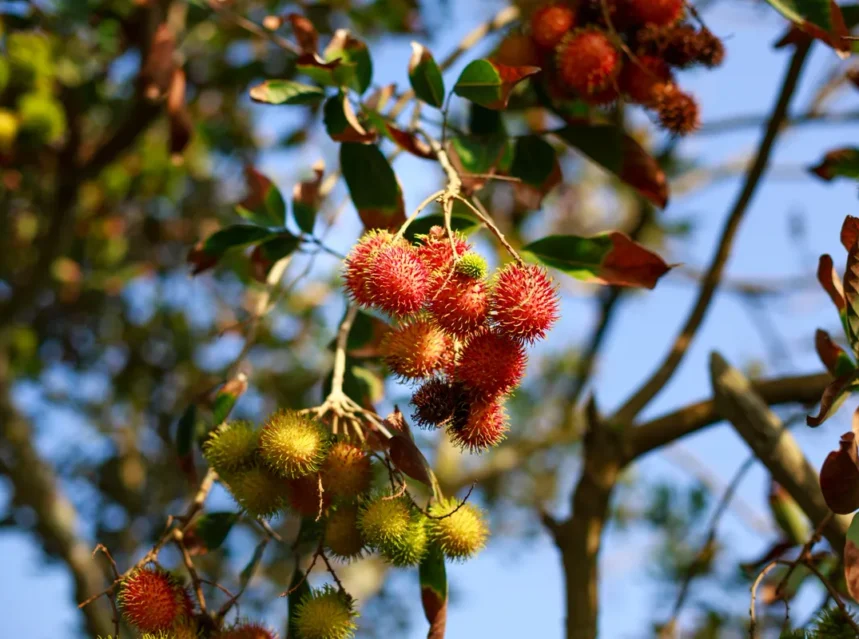
Rambutan (Nephelium lappaceum) is a tropical evergreen tree grown for its striking red, soft-spined fruit with sweet, translucent, lychee-like flesh inside. Native to Southeast Asia and named for its “hairy” appearance, the rambutan is a close relative of the lychee and longan. It is a beautiful, productive tree for hot, humid, frost-free gardens, and an exotic treat for any tropical grower. Here is the complete guide on how to grow rambutan.
Quick start: Grow rambutan in a hot, humid, frost-free climate, in full sun and deep, rich, free-draining slightly acidic soil. It needs consistent warmth, moisture, and high humidity. Choose a grafted tree for earlier, reliable fruit. Water regularly, feed in the growing season, and shelter from cold and wind. The fruit ripens bright red (or yellow) in the wet season — pick when fully coloured and eat fresh.
Tropical-fruit growers describe the rambutan as rewarding but demanding about climate: it needs genuine tropical heat and humidity, and will not tolerate cold or dry air. Tropical-fruit enthusiasts stress choosing a grafted tree over a seedling, since seedlings are slow, variable, and often produce poorer or all-male trees. They also note that rambutan, like its relative the lychee, resents drying out and exposed positions, doing best with steady moisture, shelter, and the warm humid conditions of the lowland tropics. Container growers in cooler areas keep it under glass with extra humidity.
🧰 In a hurry? Jump straight to our tested picks for this guide ↓
Rambutan at a glance
| Feature | Detail |
|---|---|
| Botanical name | Nephelium lappaceum; family Sapindaceae |
| Plant type | Tropical evergreen fruit tree |
| Height | 8–20 m in ground; smaller grafted/pruned |
| Sun | Full sun (some shade when young) |
| Soil | Deep, rich, free-draining, slightly acidic |
| Climate | Hot, humid, frost-free tropics (zones 10–12) |
| Time to crop | Grafted 3–5 years; seedlings 5–6+ years |
| Harvest | Wet season, when skin turns fully red or yellow |
| Relatives | Lychee, longan (same family) |
Why grow rambutan?
The rambutan is one of the most eye-catching fruits you can grow, hanging in heavy clusters of bright red, soft-spined orbs that look almost decorative. Split the leathery skin and inside is sweet, juicy, translucent flesh — fragrant, refreshing, and similar to its cousin the lychee, but with its own gently grape-like flavour.
It is a handsome evergreen shade tree as well as a crop, with a dense, spreading canopy. For tropical growers it offers an exotic, high-value fruit that is expensive to buy and best eaten ultra-fresh from the tree. It joins other warm-climate fruits like the lychee and mango in a tropical garden.
History, origin & spread
Rambutan is native to the humid lowland tropics of Southeast Asia — Malaysia and Indonesia in particular — where it has been cultivated for centuries. Its name comes from the Malay word rambut, meaning “hair”, a perfect description of the fruit’s soft spines (the background on the rambutan records this origin).
From its Malay-Indonesian heartland the tree spread across tropical Asia and, through trade and cultivation, to other tropical regions including parts of Africa, Central America, and the Caribbean. It remains most strongly associated with Southeast Asian cuisine and markets.
Today the leading producers are Thailand, Indonesia, Malaysia, Vietnam, and the Philippines, with smaller plantings elsewhere in the tropics. In India, rambutan is grown in the humid southern states — notably Kerala, Karnataka, and Tamil Nadu — where it has become a popular and profitable home and orchard fruit in suitable areas.
Best climate & when to plant
Rambutan is strictly a hot, humid, frost-free tropical tree. It needs high temperatures, high humidity, and plenty of moisture, and it will not tolerate cold, frost, or dry air. It grows best in the lowland humid tropics below about 600 m altitude.
Plant at the start of the rainy season so the young tree establishes with natural warmth and moisture. It suits humid tropical regions — Southeast Asia, parts of tropical America, and the wet southern regions of India. It cannot be grown outdoors in temperate or arid climates; in cooler areas it is only possible in a warm, humid greenhouse. Choose a grafted tree for earlier, reliable, good-quality fruit.
How to grow rambutan: planting step by step
Rambutan needs warm, rich, sheltered conditions to thrive:
- Choose a hot, sheltered, sunny site with deep, rich, free-draining slightly acidic soil and high humidity.
- Give the tree room to spread, away from cold winds and frost pockets.
- Plant a grafted sapling at the same depth it grew in the nursery, handling roots gently.
- Water in thoroughly and give young trees some shade and shelter from harsh sun and wind.
- Mulch generously to keep the roots cool, moist, and weed-free.
Seedlings are slow, variable, and often unproductive (many turn out to be non-fruiting male trees), so a grafted tree of a known variety is strongly preferred. Keep young trees consistently moist — rambutan never likes to dry out.
Sun, soil, watering & feeding
Mature rambutans want full sun, though young trees appreciate light shade. The soil should be deep, fertile, and free-draining yet moisture-retentive, ideally slightly acidic. Both waterlogging and drought harm the tree, so the balance of rich-but-draining soil matters.
Water regularly and generously, especially in dry spells and during flowering and fruiting — rambutan is thirsty and resents drying out (see how often to water plants). High humidity is important; in marginal areas, misting or grouping plants helps. Feed through the growing season with a balanced fertiliser, with extra potassium as fruit develops, and mulch well to conserve moisture and feed the surface roots.
Pollination & growing in pots
Rambutan flowering is a little complex. Trees may carry male flowers, female flowers, or both, and many cultivated grafted trees are female with a small proportion of functional male flowers, so they set fruit well; having a pollinator source and active insects (bees) nearby improves yields. This is one more reason grafted, known-fruiting trees beat random seedlings.
In climates too cool for outdoor growing, rambutan can be tried in a large pot in a warm, humid greenhouse, kept above about 10°C at all times. Use a rich, free-draining acidic mix, maintain high humidity, water steadily, and keep it warm year-round. Cropping under glass is uncertain, but the glossy evergreen foliage makes it an attractive tropical specimen even where fruit is unlikely.
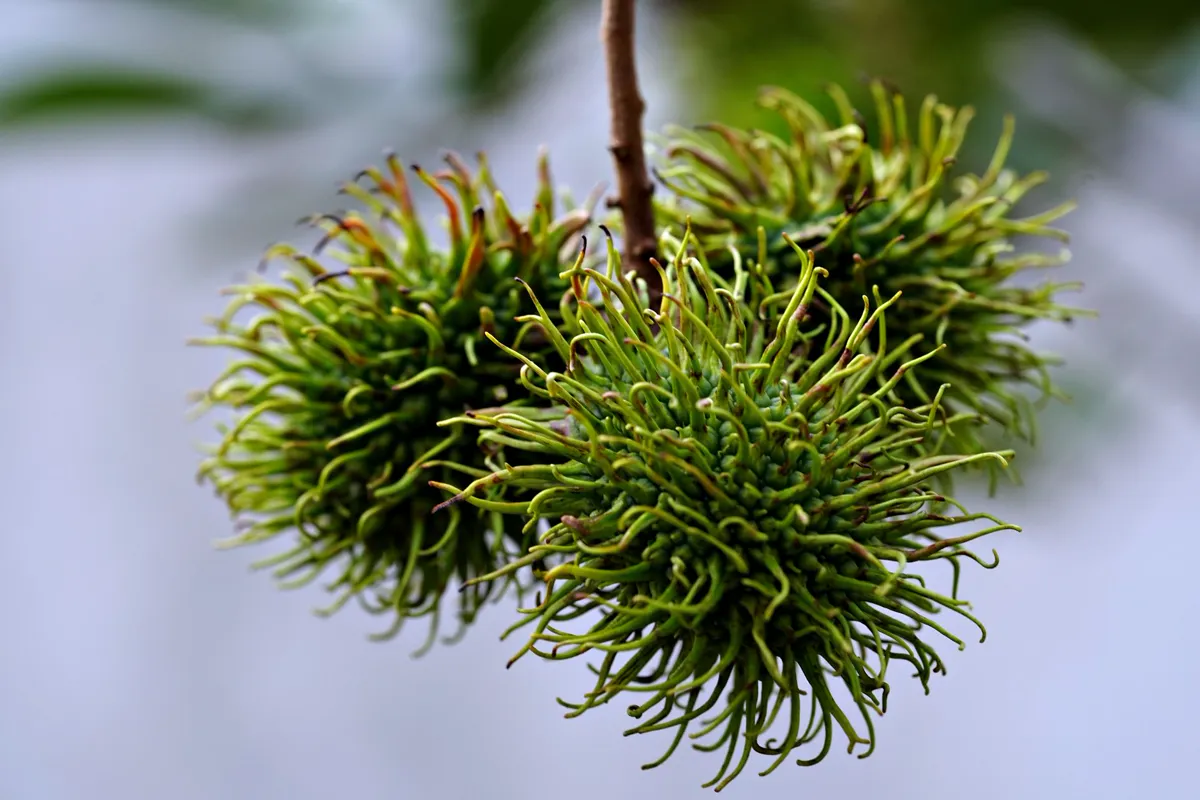
Harvesting & eating rambutan
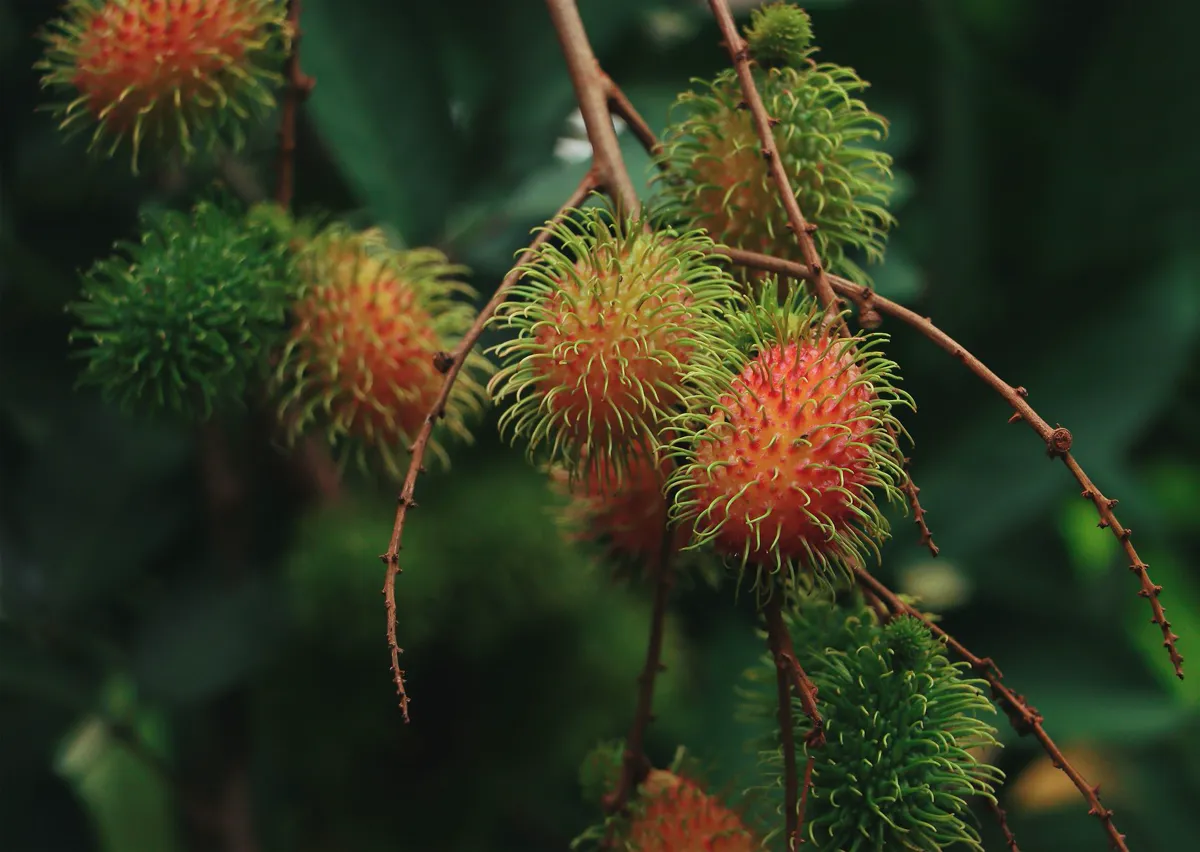
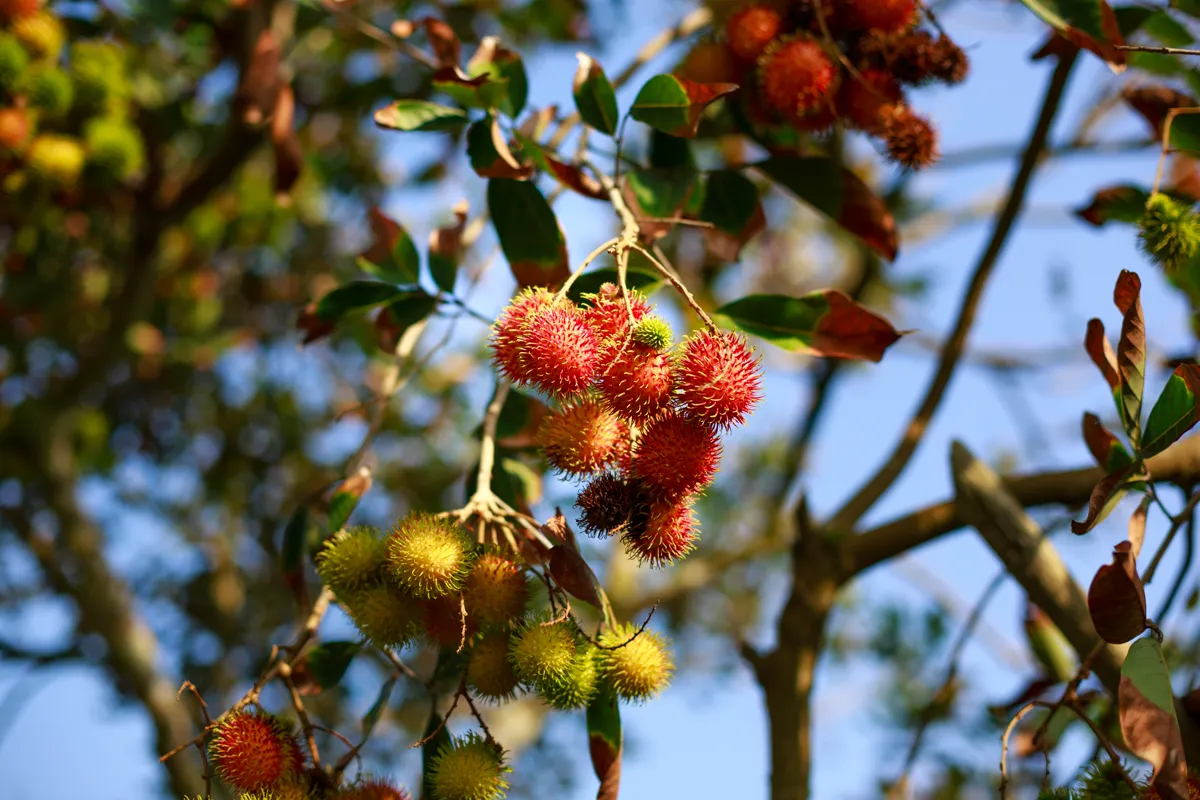
Rambutan fruit ripens in the wet season, the skin turning fully bright red (or yellow, in some varieties) with the soft spines often tipped a contrasting colour. Unlike some fruit, rambutan does not ripen further once picked, so harvest only when fully coloured. Cut whole clusters with secateurs rather than pulling individual fruit.
To eat, score or squeeze the leathery skin to split it and pop out the white, translucent flesh; eat around the single central seed (the seed is not eaten raw). The flesh is sweet, juicy, and aromatic, best enjoyed fresh and chilled. Rambutan does not store long — a few days refrigerated — so it is a fruit for eating soon after harvest, which is exactly why home-grown is such a treat.
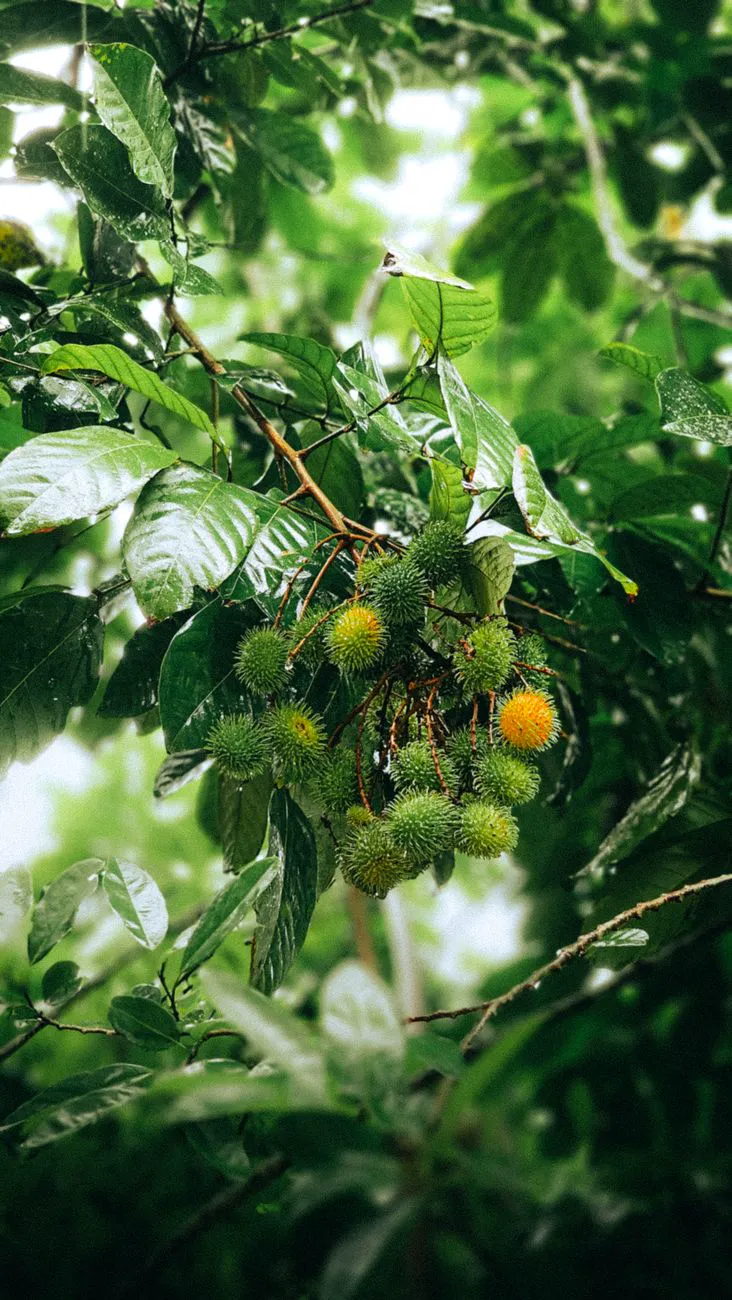
Common pests & diseases
In producing regions, fruit-piercing moths, mealybugs, scale, and fruit flies attack the fruit, while the tree can host aphids and various caterpillars. Birds and bats also take ripe fruit. Bagging fruit clusters and good orchard hygiene help reduce losses.
Diseases are mostly fungal in the humid conditions rambutan needs: anthracnose, powdery mildew on flowers, and stem cankers can occur, and root rot in waterlogged soil. Good airflow, careful watering, sharp drainage despite the moisture demand, and prompt removal of affected material keep most trouble in check. A well-grown rambutan in the right climate is reasonably robust.
Health benefits & uses
Rambutan flesh is a refreshing, juicy fruit valued as a source of vitamin C, fibre, and antioxidants, with a high water content and natural sweetness. Eaten fresh as part of a balanced diet, it is a wholesome treat, though it is everyday fruit rather than a medicine.
It is most often eaten fresh, but is also used in fruit salads, desserts, jams, jellies, and canned in syrup, and pairs well in sweet and savoury tropical dishes. The seed should not be eaten raw, as it contains compounds that make it unpalatable and potentially unsafe uncooked. Enjoy the sweet flesh and discard the seed.
Medical disclaimer: this information is general and for educational purposes only — it is not medical advice. Do not eat the raw seed. Consult a qualified healthcare professional before using any plant for health purposes.
Common rambutan problems
Tree damaged or killed by cold
Rambutan (Nephelium, a soapberry-family genus) is strictly tropical and frost-tender; even cool, dry conditions stress it. It can only be grown outdoors in hot, humid, frost-free climates, or under warm, humid glass elsewhere.
Flowers but no fruit
Often a pollination issue, a seedling male tree, or a stressed or very young plant. Grow a grafted fruiting variety, ensure pollinating insects are active, and keep the tree well watered and fed.
Leaves browning at the edges
Usually dry air, drying out, or wind exposure. Increase humidity and watering, mulch well, and shelter the tree from wind and harsh sun.
Fruit dropping or rotting
Irregular watering, heat stress, or fungal disease in very humid conditions. Keep moisture steady, improve airflow, remove affected fruit, and bag clusters against pests.
Related plant guides
- How to grow lychee
- How to grow mango
- How to grow guava
- How to grow cashew
- How often to water plants
- How to deal with root rot
Frequently asked questions
Is rambutan the same as lychee?
No, but they are close relatives in the same family (Sapindaceae), along with longan. Rambutan has soft red spines on a leathery skin, while lychee has a bumpy pinkish skin. The sweet, translucent flesh inside is similar, but each has its own flavour.
How long does a rambutan tree take to fruit?
A grafted rambutan usually starts cropping in about three to five years, while seed-grown trees take longer — five to six years or more — and many seedlings turn out to be unproductive male trees. A grafted variety is the reliable choice.
Can you grow rambutan outside the tropics?
Not outdoors in cool or dry climates — rambutan needs sustained tropical heat, humidity, and frost-free conditions. In cooler regions it can only be attempted in a warm, humid greenhouse, where fruiting is uncertain.
Can you eat the rambutan seed?
Not raw. Eat only the sweet white flesh around the seed, and discard the central seed, which is unpalatable and potentially unsafe uncooked. The flesh is best enjoyed fresh and chilled.
Can rambutan be grown in India, and where?
Yes, but only in the wet tropical belt. Commercial and homestead planting is concentrated in Kerala, particularly around Thrissur and Ernakulam, with smaller pockets in parts of Tamil Nadu, Karnataka and the north-east. The total planted area in the country is still small, well under a few thousand acres, so it remains a specialist rather than a mainstream crop. What those regions provide is what rambutan demands: high humidity, no frost, low elevation and well-distributed rainfall of around 200 cm or more a year. On the dry plains of north and central India it will not thrive outdoors, however much you irrigate, because the low humidity and hot dry winds scorch the foliage.
Do you need two rambutan trees to get fruit?
This is the question growers get wrong most often. Wild rambutan is largely dioecious, with separate male and female trees, but almost all cultivated varieties are grafted clones that are hermaphrodite — botanically they carry both parts, yet in practice they function as female because they produce very few functional male flowers.
The result is that a lone tree often sets a poor crop of small fruit. Commercial orchards solve this by including a pollen source, usually about one male or heavy pollen-producing tree for every eight to ten fruiting trees, or by grafting a male branch onto an existing tree. For a home garden, plant a grafted named variety and, if space allows, a second tree of a different variety nearby.
How do you grow rambutan from seed?
The seed loses viability within about a week of being removed from the fruit, so sow it fresh. Clean off all the flesh, sow flat about 1 to 2 cm deep in a free-draining potting mix, and keep it warm, humid and shaded, when germination usually takes two to three weeks. The problem is not germination but what follows: seedlings take five to six years or more to flower, they do not come true to the parent, and a large proportion turn out to be unproductive male trees. Grow seedlings if you want rootstock or simply enjoy the plant, but buy a grafted tree if you want fruit.
How tall does a rambutan tree get, and can it be kept small?
Left alone in the wild a rambutan can reach 15 to 25 m, but grafted orchard trees are far more manageable and are usually held at 4 to 7 m. The tree responds well to pruning, so an annual light trim after harvest to remove crowded, crossing and inward growth keeps it open, compact and easy to pick from. Trees are normally planted 8 to 10 m apart to allow for their wide spreading canopy. Avoid drastic hard pruning, which sets back fruiting for a season or two.
How much water and what soil does rambutan need?
Rambutan wants steady, generous moisture but has almost no tolerance for waterlogging, which is the fastest way to kill a young tree. It performs best on deep, well-drained sandy loam rich in organic matter, at an acidic pH of roughly 4.5 to 6.5, and it dislikes alkaline or heavy clay soils. Plant on a gentle slope or a raised mound where drainage is doubtful, and mulch heavily to keep the shallow feeder roots cool and moist. Irrigate through any dry spell, especially while fruit is developing, since a dry check causes heavy fruit drop.
When is rambutan season and how do you tell when it is ripe?
In Kerala the main crop typically ripens through the monsoon and after it, roughly July to September, while parts of South-East Asia get two crops a year. Judge ripeness by colour and by the spines: the skin should have coloured up fully to deep red, or to yellow in the yellow-fruited varieties, and the soft hairy spines should still be pliable and fresh-looking rather than dark and shrivelled. Rambutan does not continue to ripen after picking, so fruit harvested early stays sour. Cut whole small clusters with secateurs rather than pulling individual fruits, which damages the fruiting spurs.
Can you grow rambutan in a pot?
You can keep a young rambutan in a large container, and people in cooler regions do grow them in heated greenhouses and conservatories as foliage plants, but fruit is unlikely. The tree needs sustained tropical warmth, very high humidity and a large root run before it will crop, and a pot supplies none of those things well. If you want to try, use the biggest container you can manage with a free-draining acidic mix, keep humidity high, maintain warmth above about 15 degrees C at all times, and accept it as an ornamental. Anyone in a genuine tropical climate should plant in the ground instead.
Why is my rambutan tree not fruiting or dropping its fruit?
Work through the likely causes in order. Age comes first, since even a grafted tree needs three to five years before it crops. Next is pollination, which is the classic problem when a single hermaphrodite clone is grown with no pollen source nearby. After that comes water stress, because irregular watering during flowering and fruit development causes heavy drop, as does an unusually intense spell of rain or a cold snap. Poor drainage, root disease and a shortage of potassium and organic matter round out the list. Steady irrigation, mulch, a balanced feed after harvest and a nearby pollen source solve most cases.
Still stuck? Ask the Plant Doctor
Describe the problem — yellow leaves, holes, no flowers — and get a clear answer in seconds. FreeAI can make mistakes. Answers are guidance, not a guarantee — check anything important against the guide it links to, and always read the label on any product before you use it.