How to Grow Acerola
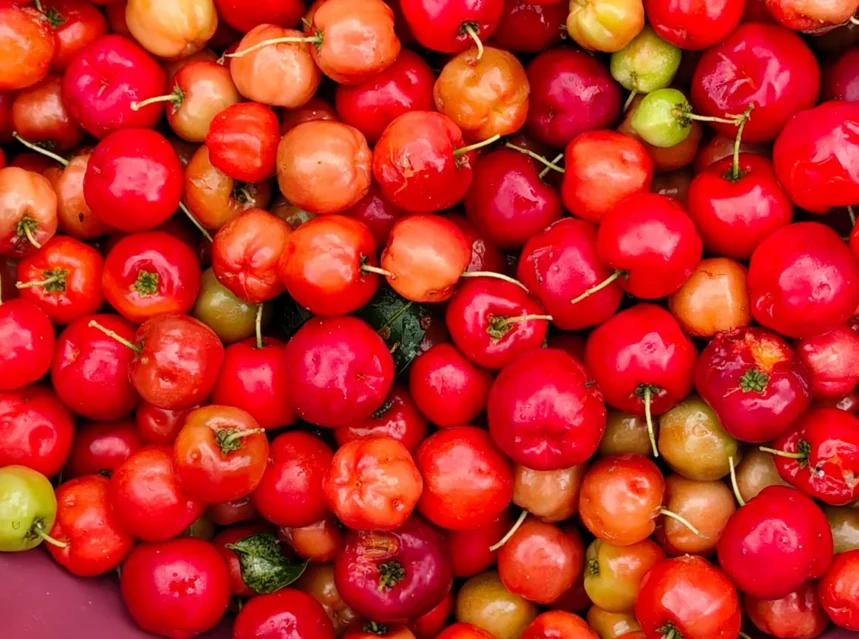
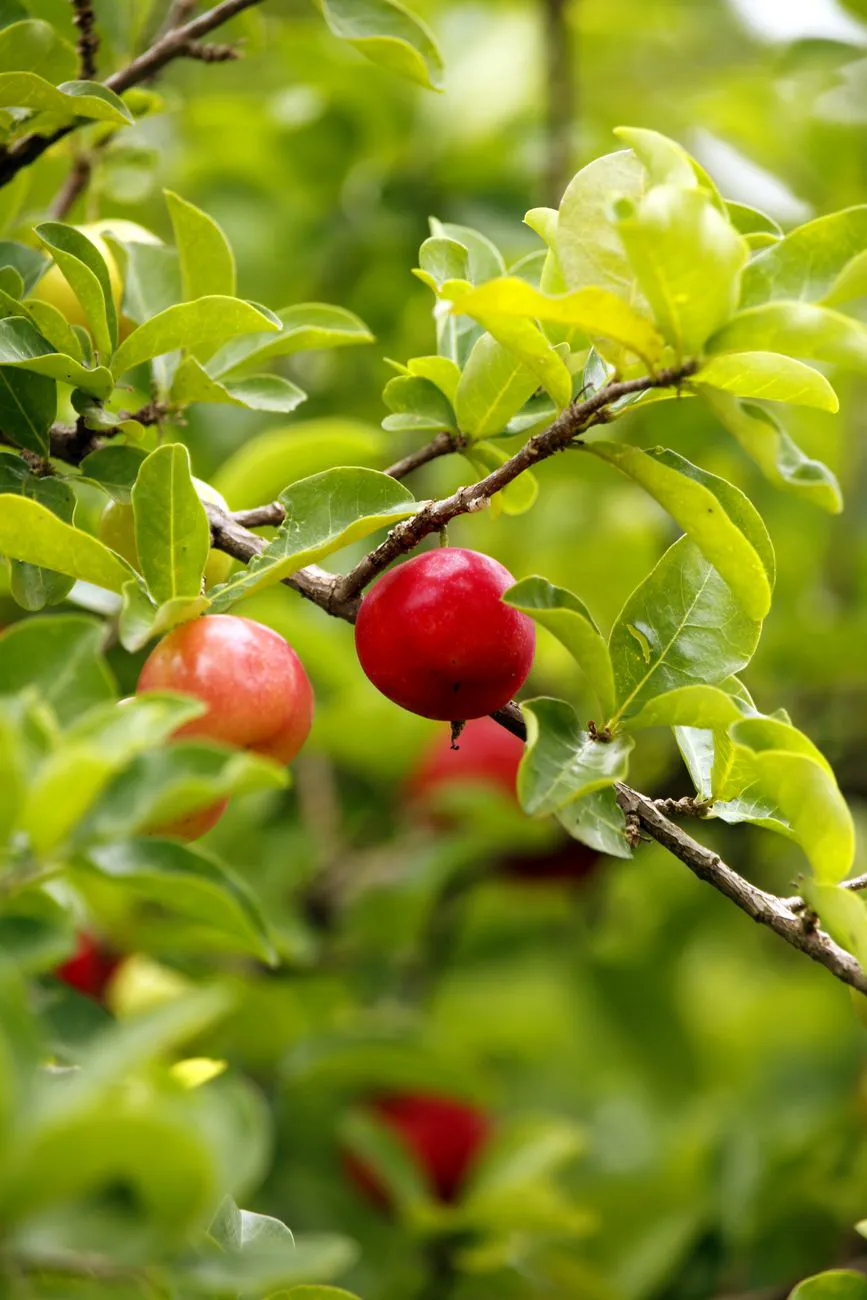
Acerola (Malpighia emarginata), also called Barbados cherry or West Indian cherry, is a compact tropical and subtropical shrub or small tree grown for its bright red, cherry-like fruit, whose vitamin C content — around 1,677 mg per 100 g — is among the highest measured in any fruit. Fast, productive, and small enough for pots, acerola crops several times a year in warm climates. It is an attractive, easy fruiting plant for warm gardens and containers. Here is the complete guide on how to grow acerola.
Quick start: Grow acerola in full sun in warm, frost-free or near-frost-free conditions, in free-draining soil or a large pot. It is compact, fast, and crops repeatedly. Water regularly, feed in the growing season, and protect from frost. The fruit ripens bright red and soft — pick it when fully coloured and eat fresh, as it is very perishable and intensely high in vitamin C.
Home growers in warm regions rate acerola as one of the easiest and most rewarding small fruiting plants, especially for pots. Gardeners in communities such as the r/tropicalfruit community highlight how quickly it crops, often flowering and fruiting in flushes through the warm months, and how well it suits container growing and pruning to size. The points they raise most are frost-sensitivity — it needs protection from cold — and the fruit’s extreme perishability, since ripe acerola bruises and spoils within a day or two, making it a fruit best eaten or processed straight from the plant.
🧰 In a hurry? Jump straight to our tested picks for this guide ↓
Acerola at a glance
| Feature | Detail |
|---|---|
| Botanical name | Malpighia emarginata; family Malpighiaceae |
| Other names | Barbados cherry, West Indian cherry, wild crepe myrtle |
| Plant type | Compact tropical/subtropical evergreen shrub or small tree |
| Height | 2–4 m (often to 6 m; easily kept smaller and good in pots) |
| Sun | Full sun (6–8+ hours); fruits poorly in shade |
| Soil | Free-draining; tolerates sand, clay and limestone |
| Soil pH | Near-neutral 6.5–7.5 preferred; acid soils need liming |
| Climate | Tropical to warm subtropical, frost-tender (USDA zones 9b–11) |
| Cold limit | Young plants die below 30°F (-1°C); mature trees survive brief 28°F (-2°C); dwarf types to ~22°F |
| Spacing | 3–4.5 m apart; 1.5–2 m for a hedge |
| Time to crop | Grafted plant or cutting 1–2 years; seedlings 3+ years |
| Flower to fruit | About 22–30 days |
| Crops per year | 3–5 flushes in warm climates; nearly everbearing in the tropics |
| Yield (mature) | Roughly 14–27 kg (30–60 lb) per established tree |
| Harvest | Bright red and soft; very perishable, use within a day or two |
Why grow acerola?
Acerola is a brilliant small fruiting plant for warm-climate and container gardeners. It is compact, fast, and remarkably productive. Because it flowers and fruits in several flushes through the warm season, fresh cherries appear again and again. Few fruiting plants give so much from so little space.
Its headline attraction is nutrition. Acerola is one of the richest natural sources of vitamin C known, far exceeding citrus. It is also ornamental, carrying pretty pink-and-white flowers and glossy leaves on a neat bush. So it earns its space as a hedge, a specimen shrub, or even a bonsai. For warm gardens it sits well beside other compact, productive fruits like the easy-to-grow guava and container citrus such as calamansi and lime. It also pairs naturally with the closely related Surinam cherry, another vitamin-rich tropical shrub.
History, origin & spread
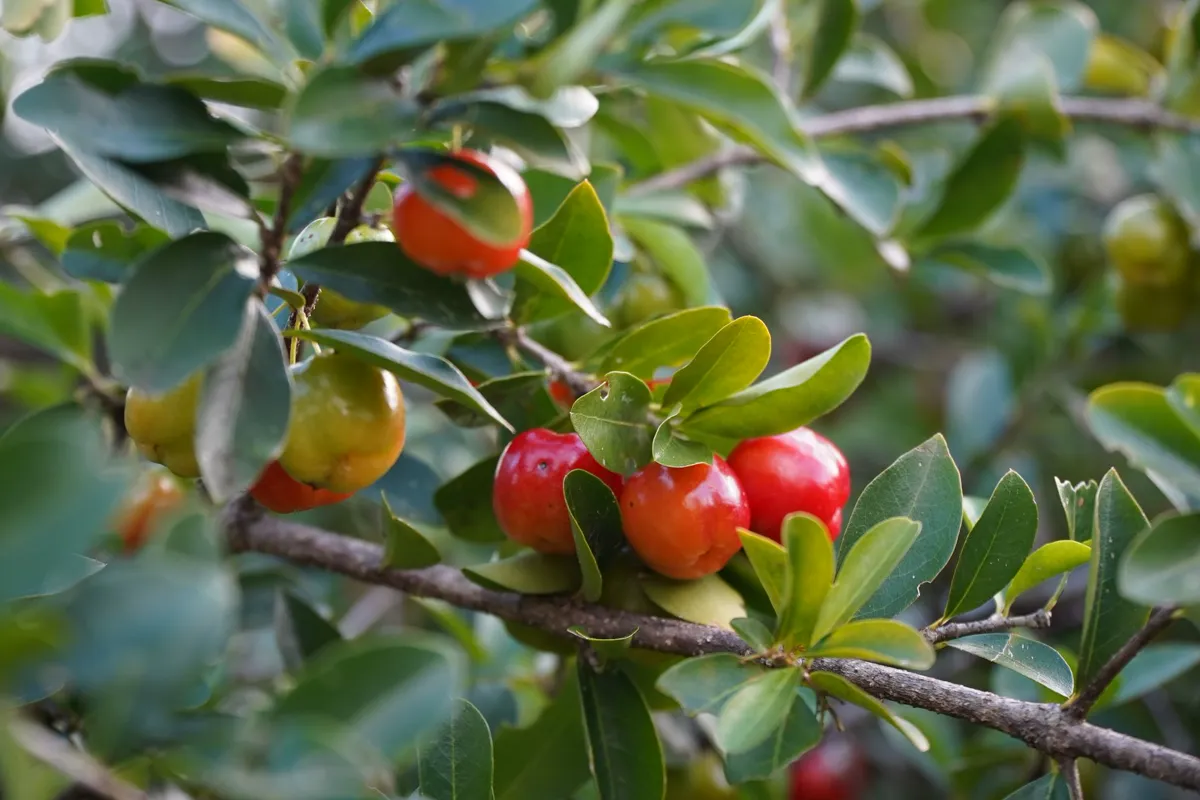
Acerola is native to the Caribbean, Central America, and northern South America, where it has long grown wild and been gathered for its fruit. The names “Barbados cherry” and “West Indian cherry” reflect its strong link with the Caribbean islands (the botanical background on acerola records this origin).
From its tropical American homeland the plant spread across the warm regions of the world as both a fruit and an ornamental. Interest exploded in the 1940s, when researchers in Puerto Rico measured its extraordinary ascorbic-acid content. Almost overnight it became a prized crop for the natural vitamin and supplement industry.
Today acerola grows across the tropics and warm subtropics. Brazil is by far the largest producer, with roughly 11,000 hectares of orchards supplying juice and vitamin-C extracts worldwide. It is also grown in the Caribbean, Central America, Vietnam, Hawaii, and warm parts of India, where nurseries across Tamil Nadu, Andhra Pradesh, Telangana, Kerala and Karnataka now sell young grafted or layered plants for home and orchard use.
Which acerola to grow: species & varieties
Not every “Barbados cherry” fruits well, so choose carefully. Two species share the common names, and the difference matters a lot for growers.
- Malpighia emarginata is the true fruiting acerola. It flowers heavily and sets prolific, juicy crops — this is the one to plant for fruit.
- Malpighia glabra looks similar and flowers freely, but it is mostly ornamental and sets little fruit. Nurseries sometimes label both the same way, so confirm the species before you buy.
Named cultivars fruit faster and truer than a random seedling. Growers rate ‘Florida Sweet’ for larger, semi-sweet fruit on an upright bush, and ‘B-17’ for big, tart, vitamin-packed cherries. ‘Manoa Sweet’ is prized in Hawaii for heavy crops of orange-red fruit, while ‘Dwarf’ stays compact, suits baskets, and takes cold to about 22°F — handy for marginal areas.
Best season & when to plant acerola
Knowing when to plant acerola is simple. Plant it in spring, once any risk of cold has passed, so it establishes through the warm season. It is frost-tender, tolerating only brief light cold when mature, and young plants always need protection.
It suits tropical and warm subtropical regions — frost-free parts of the US (south Florida, south Texas, warm coastal California), the Caribbean, Central and South America, Southeast Asia, and warm areas of India. In India, the best planting windows are the pre-monsoon spring (February–April) or the early monsoon (June–September), when steady moisture helps young plants root fast. In cooler climates, acerola makes an excellent container plant — summered outdoors and overwintered frost-free indoors or under glass.
How to grow acerola: planting step by step
Learning how to grow acerola in the ground is easy, because the plant is adaptable and quick to settle. Follow these steps.
- Pick a warm, sunny, sheltered spot with free-draining soil, or a large pot in cooler areas. Avoid low, waterlogged ground.
- Dig a hole about twice as wide as the rootball and mix in some compost, especially in sand or poor soil.
- Set the plant at the same depth it grew before, then firm the soil gently.
- Space plants 3–4.5 m apart, or about 1.5–2 m for a dense hedge or screen.
- Water in well and keep young plants consistently moist while they root.
- Mulch generously to conserve moisture and feed the shallow roots, keeping the mulch off the stem.
One practical warning most guides skip: young leaves and leaf stems carry fine, silky hairs that can irritate skin. Wear gloves and long sleeves when planting, pruning, or harvesting a young bush. The hairs fade as the leaves mature and turn glossy.
Its roots are shallow, so stake a first-year plant in windy sites. Acerola responds well to pruning, which keeps it bushy and a manageable size.
How to propagate acerola
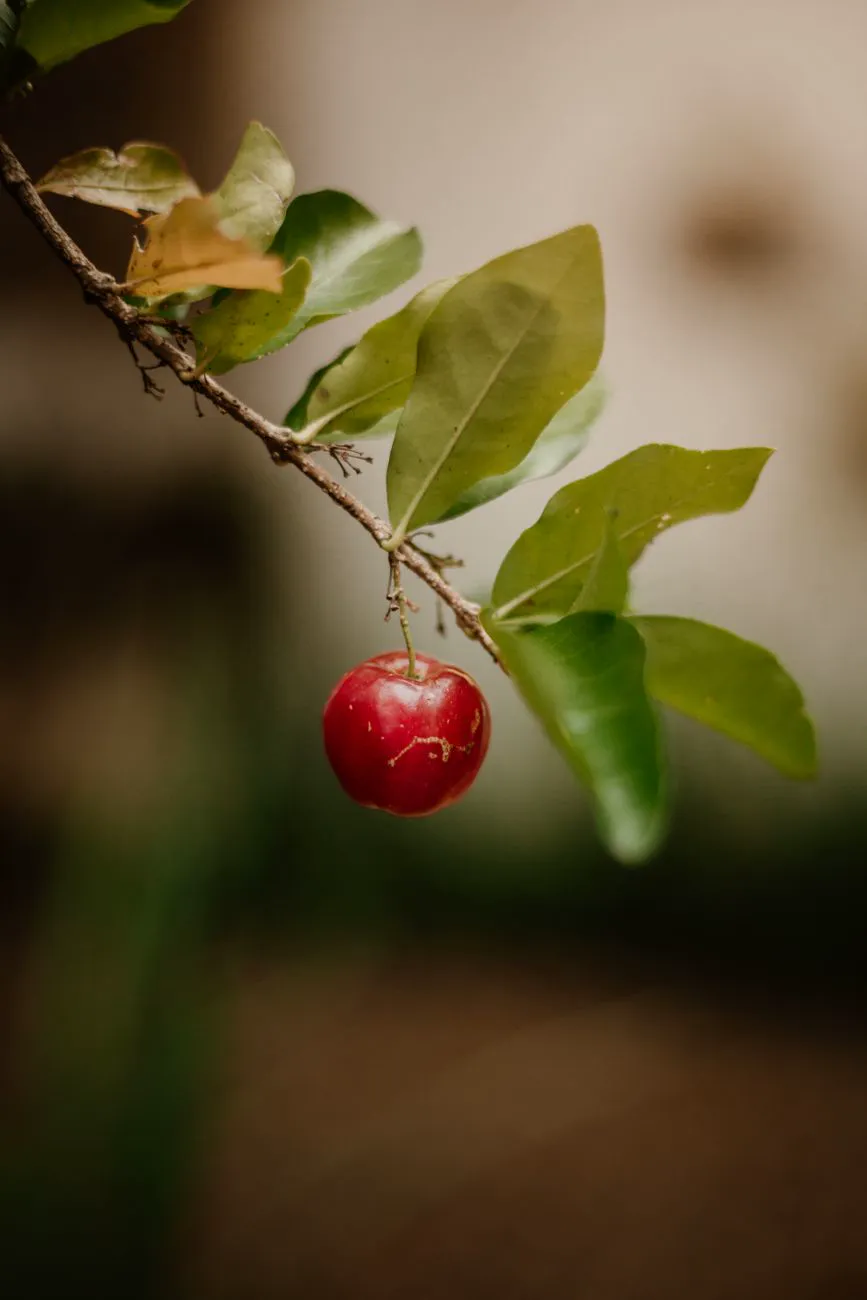
Seed is the least reliable route. Germination is slow and erratic, often taking 6–12 months, and seedlings vary in fruit quality — reported germination can be as low as 5%. For dependable crops, most growers propagate acerola vegetatively instead.
- Softwood or semi-hardwood cuttings are the easiest method. Take a 10–15 cm tip with two leaves in spring or summer, dip it in rooting hormone, and keep it in a warm, humid, moist medium. Cuttings root in roughly two months and give near-100% success with hormone.
- Air layering works well too. Wound a healthy branch below a node, wrap it in moist sphagnum moss and plastic, and pot up the rooted section after about 6–8 weeks.
- Grafting onto seedling rootstock is the standard commercial method, useful for fixing a named cultivar and speeding up cropping.
Cuttings and layers also keep the parent’s flavour and vigour, so you know exactly what you are getting. This matters for a fruit whose seedlings are so unpredictable.
Sun, soil, watering & feeding
Give acerola full sun for the heaviest cropping and best flavour; in part shade it grows spindly and fruits poorly. It is adaptable about soil, tolerating sandy, clay and even limestone ground as long as it drains freely. It prefers a near-neutral pH of about 6.5–7.5, and very acid soils benefit from a yearly dusting of lime, which authorities like the California Rare Fruit Growers link to more vigorous growth.
The plant is reasonably drought-tolerant once established, but steady moisture gives better, sweeter fruit. Water new plants weekly, and during flowering and fruiting soak the ground every week or so (see our guide on how often to water plants). A good soak after a dry spell often triggers a fresh flush of bloom.
For feeding, use a balanced fruit-tree fertiliser two to four times through the growing season, or an organic 8-3-9 type. Favour potassium and phosphorus over heavy nitrogen, because too much nitrogen pushes leaves at the expense of flowers. Consistent, modest feeding supports the repeated cropping far better than one big dose.
Growing acerola in pots
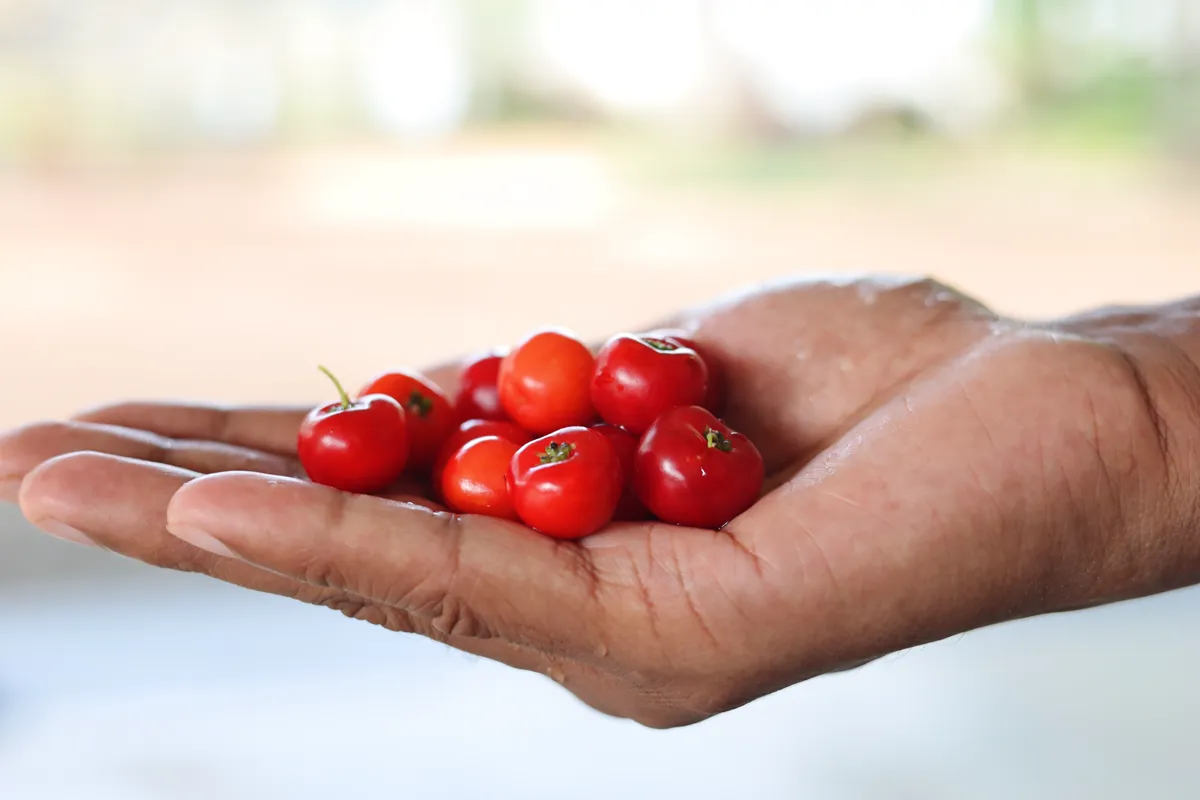
Acerola is one of the better tropical fruits for container growing, thanks to its naturally compact size and habit of fruiting young — often when just 1 m tall. Use a large pot (a 40–60 litre size suits a productive bush) with plenty of drainage and a free-draining mix. Place it in the sunniest spot you have.
Pots dry and heat faster than open ground, so check moisture often and let the top 2–3 cm dry between waterings. Feed a little more frequently than a garden plant, because nutrients leach from pots. Prune to keep the bush compact, and repot or top-dress every couple of years.
In cooler climates, move the pot outdoors for summer and bring it into a bright, frost-free room, porch or greenhouse before the first frost, watering sparingly in the cold months. This is exactly how gardeners in zone 8 and cooler — well outside acerola’s outdoor range — still manage home-grown fruit. A potted acerola crops surprisingly well on a patio or balcony.
Flowering & fruiting: why flowers drop
Acerola flowers in cycles tied to rainfall. A dry spell followed by a good soak or a monsoon burst reliably sets off a fresh flush of pink blossom, and warm regions see three to five such flushes a year. Fruit then ripens fast, in about 22–30 days from flower to picking.
Heavy flower drop is normal, and it surprises many first-time growers. University and grower reports note that up to 90% of flowers can fall without setting fruit. Much of this comes down to pollination: acerola flowers are mainly worked by solitary Centris bees, and some cultivars are partly self-incompatible, shedding their own pollen just after the stigma is most receptive.
You can still get a fine crop. First, encourage pollinators by avoiding sprays when the bush is in bloom. Second, keep the plant unstressed with steady water and feeding, since drought and poor nutrition worsen drop. Third, if bees are scarce — common on a balcony or indoors — hand-pollinate with a small soft brush, dabbing flower to flower in mid-morning. Growers report this noticeably lifts fruit set. Planting a second seedling nearby can also improve cross-pollination.
Harvesting & eating acerola
Acerola ripens quickly after flowering, the fruit turning bright red and soft. Pick it when fully coloured and slightly yielding, handling gently — ripe acerola bruises at a touch. Harvest in the morning to beat the birds, and pick every one to three days, because the crop ripens in a rush.
The fruit is extremely perishable. Sensory quality can slip within hours, and fresh cherries last only a day or two at room temperature, or up to a week refrigerated. So eat or process it promptly. Fresh, it is juicy and pleasantly tart-sweet, eaten out of hand around the three small seeds.
In the kitchen it shines as juice, jam, jelly, syrup, sorbet and frozen purée, and its bright acidity even helps stop cut fruit browning in a salad. Interestingly, green unripe fruit holds even more vitamin C than the ripe red stage, which is why the commercial crop is often picked slightly early for processing. Home-grown acerola, though, is best enjoyed ripe and straight from the bush.
Common pests & diseases
Acerola is fairly trouble-free, but a few pests turn up. Watch for aphids, scale, whitefly, spider mites and fruit flies, and treat early outbreaks with neem oil or insecticidal soap. In sandy soils, root-knot nematodes are the most serious threat, stunting young plants; heavy organic mulch, steady watering and, where known, fresh container mix all help. Birds also love the ripe fruit.
Diseases are mostly minor — occasional cercospora or anthracnose leaf spots in humid weather, and in waterlogged soil, root rot. Good drainage, airflow and restraint with the hose prevent most problems. Because acerola is robust and adaptable, it needs little spraying, which adds to its appeal as an easy home fruit. For a deeper look at two of its main enemies, see our guides to scale insects and root-knot nematodes.
Health benefits & uses
Acerola is famous as one of the richest natural sources of vitamin C. Fresh fruit can carry roughly 1,500–4,500 mg of vitamin C per 100 g — many times more than an orange by weight — along with carotenoids and other antioxidants. Just two or three cherries can supply an adult’s daily vitamin C. This is why the fruit is widely turned into natural vitamin-C supplements and juice concentrates.
Eaten fresh as part of a balanced diet, acerola is a wholesome, nutritious fruit. Vitamin C is traditionally valued for supporting normal immune function and collagen formation, and some studies suggest acerola’s antioxidants may help counter oxidative stress. Still, it is food rather than medicine and should not be relied on to treat any condition. Very high doses of vitamin C can upset the stomach and, in susceptible people, raise the risk of kidney stones or aggravate gout.
Medical disclaimer: this information is general and for educational purposes only — it is not medical advice. Consult a qualified healthcare professional before using any plant or supplement for health purposes.
Common acerola problems
Plant damaged by cold
Acerola is frost-tender. Plant it in a warm, sheltered spot, protect young plants under frost cloth, and in cooler climates grow it in a pot to bring under cover for winter.
Few flowers or fruit
Usually too little sun, too much nitrogen, or a young, stressed plant. Give full sun, water and feed steadily with a potassium-rich fertiliser, and a good soak after a dry spell often triggers a fresh flush of bloom.
Flowers set but fruit doesn’t form
Heavy flower drop points to poor pollination. Protect bees by not spraying in bloom, and hand-pollinate with a soft brush in mid-morning if pollinators are scarce, especially on a balcony or indoors.
Fruit spoiling fast
Normal — acerola is highly perishable and spoils within a day or two. Pick it just ripe and eat, freeze or process it promptly; it does not store fresh.
Poor growth in sandy soil
Possibly root-knot nematodes, which hit acerola in light soils. Improve soil with organic matter, mulch heavily, keep plants well watered and fed, and use fresh container mix where nematodes are a known problem.
Related plant guides
- How to grow Surinam cherry
- How to grow Jaboticaba
- How to grow Longan
- How to grow Dragon fruit
- How to grow Lime
- How to grow Calamansi
Frequently asked questions
Is acerola really high in vitamin C?
Yes, and by a wide margin: about 1,677 mg per 100 g against roughly 53 mg in an orange. Worth knowing as a grower: published analyses give a range of 3-46 mg per gram depending on maturity, with green, part-ripe fruit richer than fully ripe — so picking slightly early costs flavour and buys vitamin C. This is why it is widely used to make natural vitamin-C supplements and juice concentrates.
Can you grow acerola in a pot?
Yes — its compact size and willingness to fruit young make it one of the better tropical fruits for containers. Use a large pot of free-draining mix, full sun, regular feeding, and bring it under cover for winter in frost-prone climates.
How long does acerola take to fruit?
A grafted plant or rooted cutting often starts cropping within one to three years, and once established it fruits in repeated flushes through the warm season. Seed-grown plants are slower and more variable.
Why does acerola fruit spoil so quickly?
Ripe acerola is very soft and perishable, bruising and spoiling within a day or two, and its vitamin C degrades quickly too. Pick it just ripe and eat or process it promptly — it is best straight from the bush.
How cold-hardy is acerola, and will it survive a freeze?
Acerola is genuinely tropical and has very little frost tolerance. A well-established tree can shrug off a brief dip to about -2C (28F), but young plants are killed by almost any temperature below about -1C (30F), which is why it is grown outdoors only in warm subtropical and tropical zones. Gardeners in borderline climates keep it in a large container and move it into a bright porch or conservatory before the first cold night. Even where frost is rare, a cold wind will scorch the young growth and delay the next flush of flowers.
How big does an acerola tree get, and can it be kept small?
Left alone it forms a bushy shrub or small tree roughly 2.5 to 5 m (8 to 16 ft) tall with a spreading, twiggy crown. It responds very well to pruning, so most home growers keep it at 1.5 to 2 m by tipping the shoots after each fruiting flush. Because it flowers on new wood, that regular light trimming actually encourages more crops rather than costing you fruit. In a pot it naturally stays smaller still, which is one reason it suits terrace and balcony gardens.
How do you propagate acerola — from seed or cuttings?
Cuttings are the reliable route. Purdue’s New Crops horticulture reference notes that branch cuttings about 6 to 12 mm thick and 20 to 25 cm long will root in roughly 60 days under humid conditions, and the resulting plants stay true to the parent. Seed is far less dependable, with germination reported anywhere from 5 to 50 per cent, and seedlings vary widely in fruit size, flavour and vitamin C. Air layering and grafting are also used when a particular high-yielding clone is wanted.
What does acerola actually taste like, and how do you eat it?
A fully ripe acerola is juicy and soft with a bright, tart, slightly apple-like flavour and a distinct acidic edge — sweeter clones exist, but few people would call it a dessert cherry. It contains three small ridged stones, so it is usually eaten out of hand and spat, or pressed for juice. Because the fruit collapses so fast, most of the harvest ends up as juice, sorbet, jam or frozen pulp. Blending it with a milder fruit such as mango or banana softens the acidity nicely.
Why is my acerola flowering heavily but setting almost no fruit?
Poor pollination is the usual answer. Bees are the principal pollinators of acerola, and where bee activity is low the flowers simply drop — growers in Hawaii found wind and native insects were not enough, while Florida orchards near hives set well. Some clones are also partly self-incompatible, so a second, unrelated plant nearby improves set considerably. Heavy rain during flowering, drought stress and over-feeding with nitrogen will all add to flower drop.
What pests and diseases affect acerola?
The root-knot nematode Meloidogyne incognita is the single biggest obstacle to growing acerola successfully, especially in sandy, acidic soils where it stunts the tree and causes gradual decline. Keeping the root zone mulched, watering steadily and planting into soil not previously used for susceptible crops all help. Above ground, aphids, scale insects, whitefly and fruit flies are the common nuisances, and ripe fruit left on the bush attracts fruit flies quickly. Good airflow and prompt harvesting prevent most problems without spraying.
What soil and pH does acerola need?
It is not fussy about soil type and grows on limestone, marl, sand and clay provided drainage is genuinely free — it will not accept waterlogging. The preferred pH band is around 5.5 to 6.5. On strongly acidic ground, working lime in deeply before planting is recommended, because acerola on acid soil is prone to calcium deficiency and cropping suffers. A thick organic mulch keeps the shallow feeding roots cool and moist, which matters more than soil richness.
Does acerola lose vitamin C as it ripens?
Yes, and the difference is striking. Analyses summarised in Purdue’s New Crops reference record roughly 4,676 mg of ascorbic acid per 100 g in green, unripe fruit falling to around 2,000 mg per 100 g in very ripe fruit, with clone, sunlight and location shifting the figures further. Even the lower value is far above most fruit, so a ripe acerola is still exceptional. This is why commercial vitamin C powders are often pressed from fruit picked slightly under-ripe. This information is general and not medical advice.
Sources and further reading
Still stuck? Ask the Plant Doctor
Describe the problem — yellow leaves, holes, no flowers — and get a clear answer in seconds. FreeAI can make mistakes. Answers are guidance, not a guarantee — check anything important against the guide it links to, and always read the label on any product before you use it.