How to Grow Ash Gourd (Winter Melon / Petha)
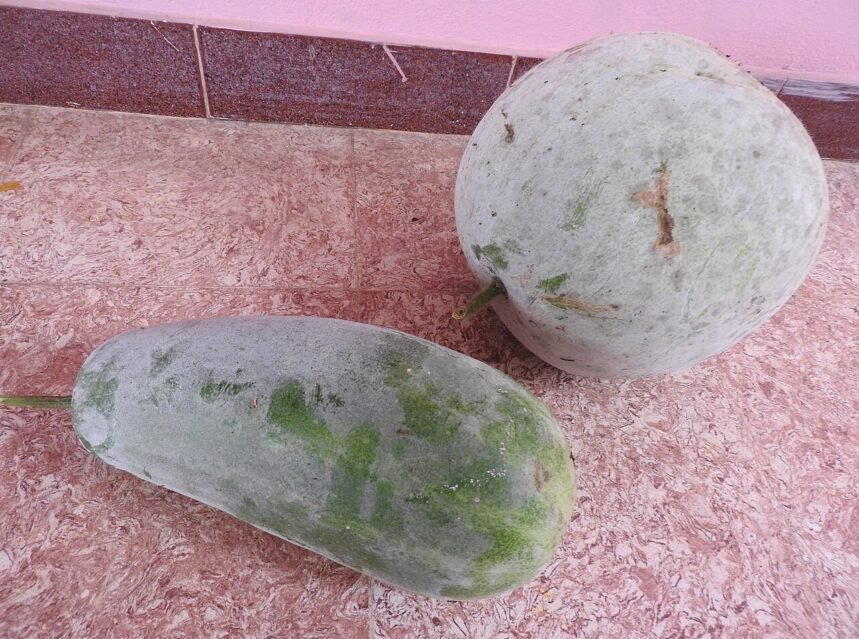 Image: Yercaud-elango — CC BY-SA 4.0, via Wikimedia Commons
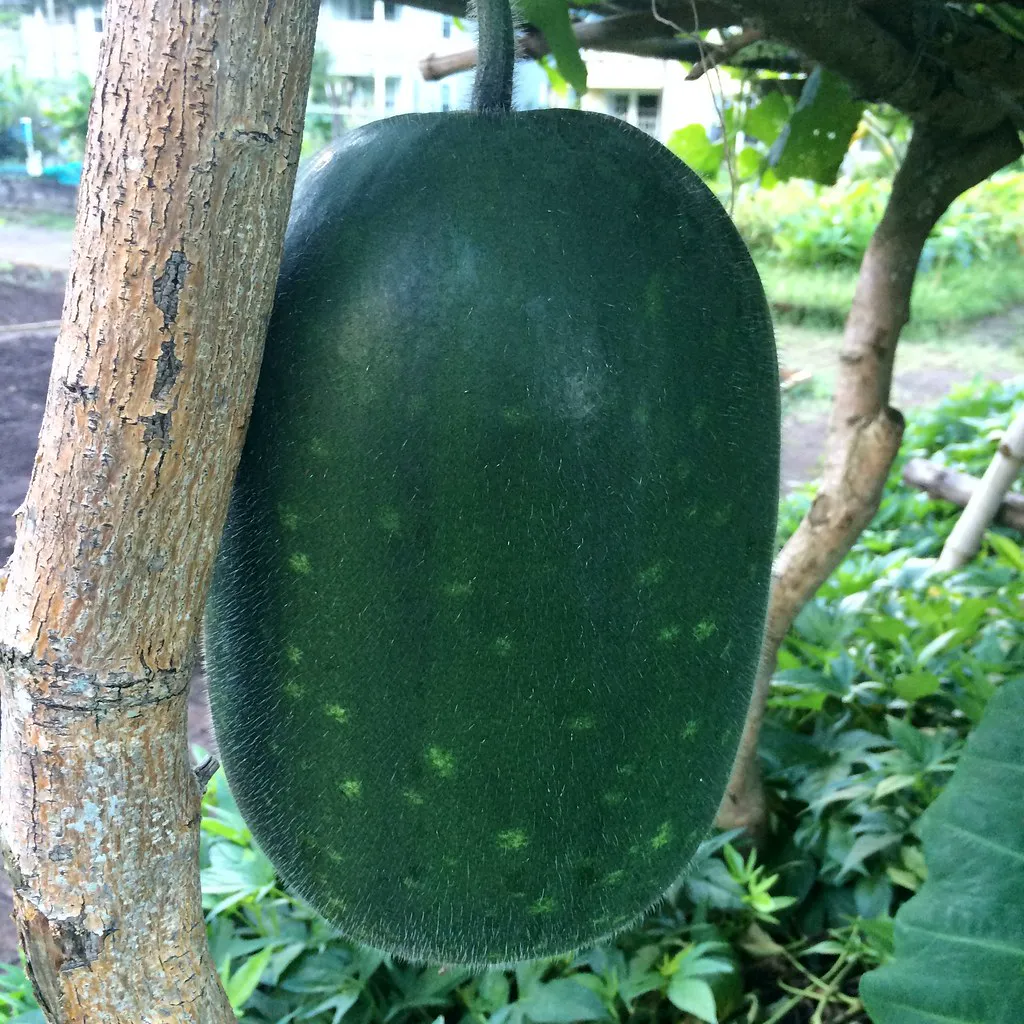
Ash gourd (Benincasa hispida) is a large, mild, warm-season climbing gourd grown for its pale fruit with a distinctive powdery, waxy bloom — known as winter melon, wax gourd or Chinese watermelon, and as petha in India. Mild and refreshing, it is a kitchen workhorse across Asia, famous in India for sweet “petha” and cooling juices, and beloved in Chinese cooking for soups. It also stores for months. Here is the complete guide on how to grow ash gourd (winter melon).
Quick start: Grow ash gourd in full sun in well-drained, organic-rich sandy-loam soil, in warm conditions (25–30°C). Soak seeds 24 hours, sow after frost, and give a strong trellis or plenty of ground room. Keep the soil consistently moist (not soggy), feed every 2–3 weeks, and harvest when the skin develops a powdery white coating. Ready in 3–4 months.
Ash gourd is a vigorous warm-season vine that rewards space and warmth with huge, pale fruits coated in a natural waxy bloom. That wax is the secret to its famous keeping quality, letting whole fruits store for many months in a cool, dry place. Growers give it a strong trellis or plenty of ground to roam, and in India it is classically sown as the monsoon arrives. Steady moisture and rich soil produce the biggest, smoothest melons.
🧰 In a hurry? Jump straight to our tested picks for this guide ↓
Ash gourd at a glance
| Feature | Detail |
|---|---|
| Botanical name | Benincasa hispida (family Cucurbitaceae) |
| Other names | Winter melon, wax gourd, petha |
| Plant type | Warm-season climbing gourd |
| Sun | Full sun |
| Soil | Rich, well-drained sandy loam |
| Support | Strong trellis or ground room |
| Harvest | 3–4 months; waxy white bloom |
| Bonus | Stores for months |
Why grow ash gourd?
Ash gourd is productive, versatile and exceptionally long-storing. A few reasons to grow it:
- Stores for months. The waxy skin keeps a mature fruit fresh well into winter.
- Hugely productive. One vigorous vine gives a generous crop.
- Globally useful. It stars in Indian, Chinese and Southeast Asian cooking.
- Mild and cooling. The low-calorie flesh suits juices, soups and curries.
History, origin & where ash gourd grows
Ash gourd is native to South and Southeast Asia, where it has been grown and eaten for thousands of years (see Encyclopaedia Britannica). It has deep roots in Indian cooking and Ayurveda, prized as a cooling, healing food. In China it became a staple for the famous winter-melon soup.
From Asia it spread to warm regions worldwide, valued for its long storage life. Before refrigeration, a waxy-skinned gourd that kept for months was hugely valuable. It remains a key vegetable across the tropics today.
As a warm-season crop it thrives in warm, mild climates (25–30°C) and warm summers worldwide, including the US South (see the Royal Horticultural Society). It is frost-tender, so cool-climate growers raise it in the warmest months or under cover. It simply needs a long enough season to mature the fruit.
Best season & when to plant
Ash gourd is a warm-season crop. In India, sow in spring, summer and the monsoon; in temperate regions, sow in late spring after the last frost, once the soil is warm. It needs a long, warm season — the fruit is ready in about 3–4 months, when fully mature for storing.
How to plant and grow ash gourd
- Soak the seeds for 24 hours; sow when the soil is warm (25–30°C), as they germinate in 7–14 days.
- Plant in full sun in well-drained, organic-rich sandy-loam soil, spacing the plants generously (90–120 cm apart) as the vines are vigorous (see improving garden soil).
- Give a strong trellis, arch or fence to climb, supporting the heavy fruits, or let it sprawl over plenty of ground; mulch to hold moisture.
Sun, soil, watering & feeding
Ash gourd needs full sun and warmth. Water regularly to keep the soil consistently moist, but avoid overwatering and waterlogging (see how often to water plants); a mulch helps retain moisture. Feed every 2–3 weeks with a balanced organic fertiliser to support the big, hungry vine and good fruit set. It is a vigorous, thirsty grower in the heat.
Training and hand-pollinating
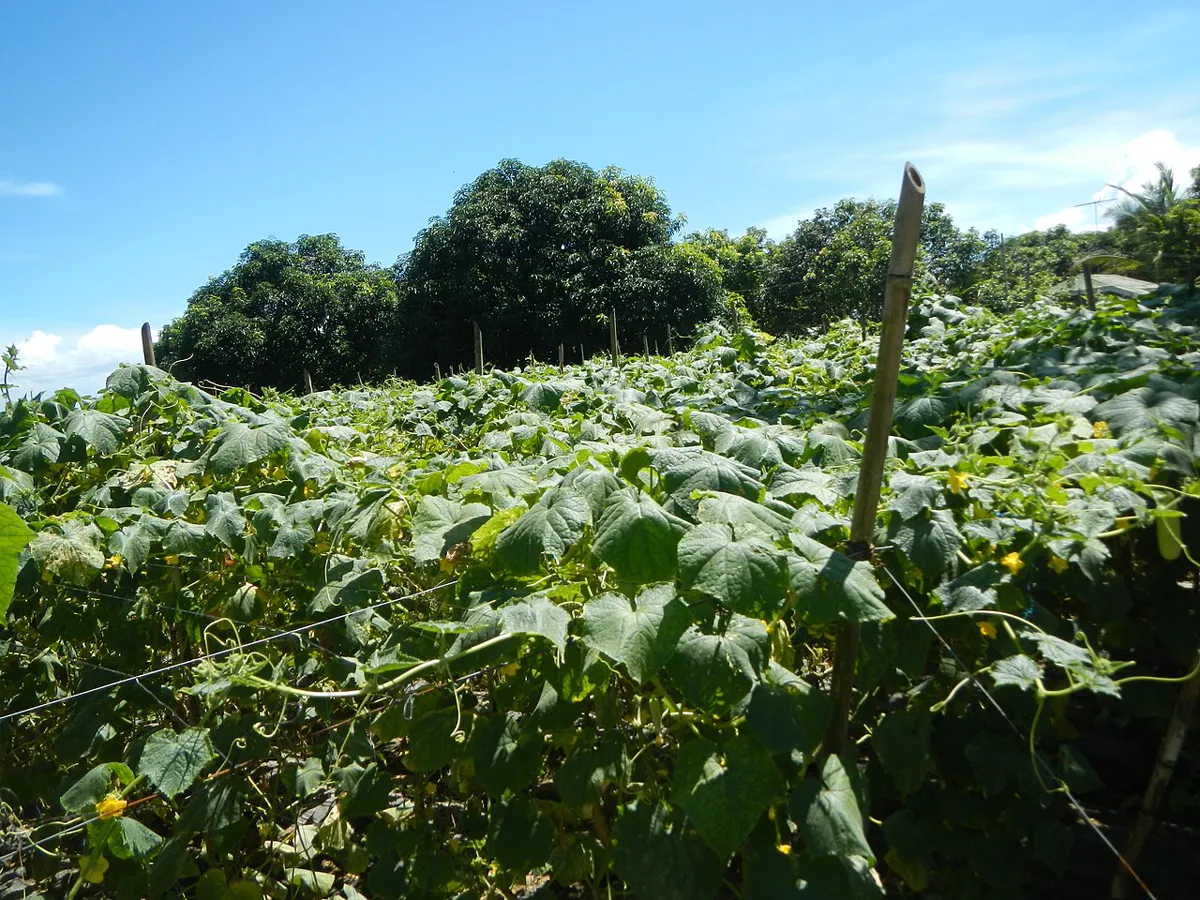
Ash gourd vines are large and rampant, so a little management helps. Training them upward saves space and keeps the fruit clean. So a strong support is well worth building.
Guide the young stems onto a sturdy trellis, arch or fence as they grow. Lifting the heavy fruits off the soil also reduces rot. If the structure is strong enough, the vine carries its big gourds happily overhead.
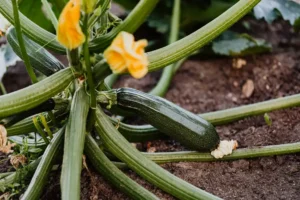
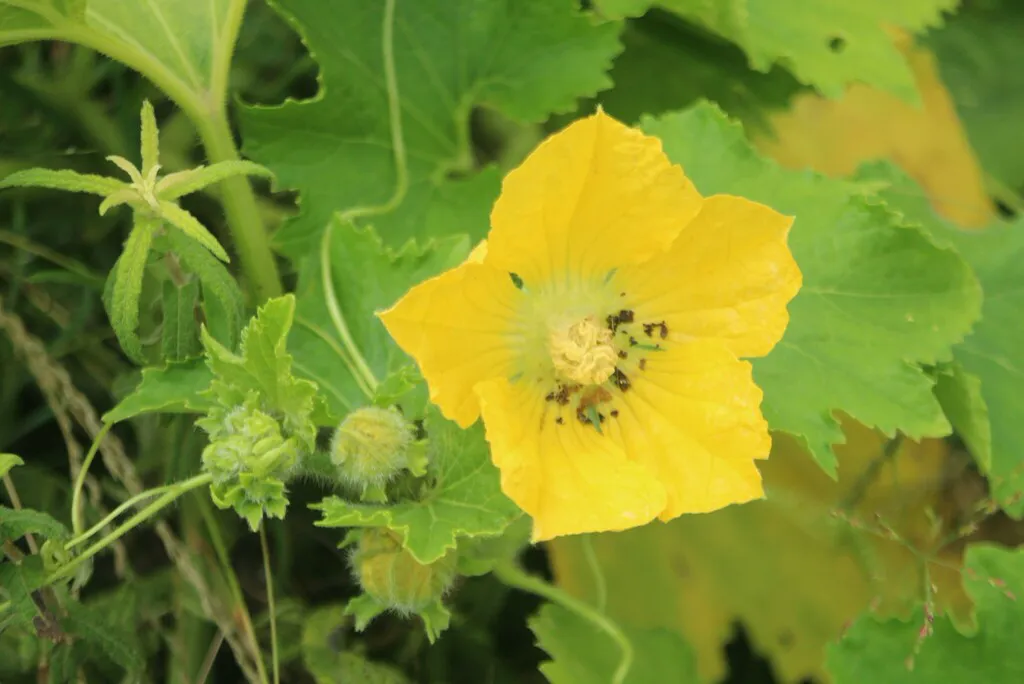
Like all gourds, ash gourd has separate male and female flowers. If bees are scarce and few fruits set, hand-pollinate in the cool morning. Brush pollen from a male flower onto the centre of each female bloom.
Common pests & diseases
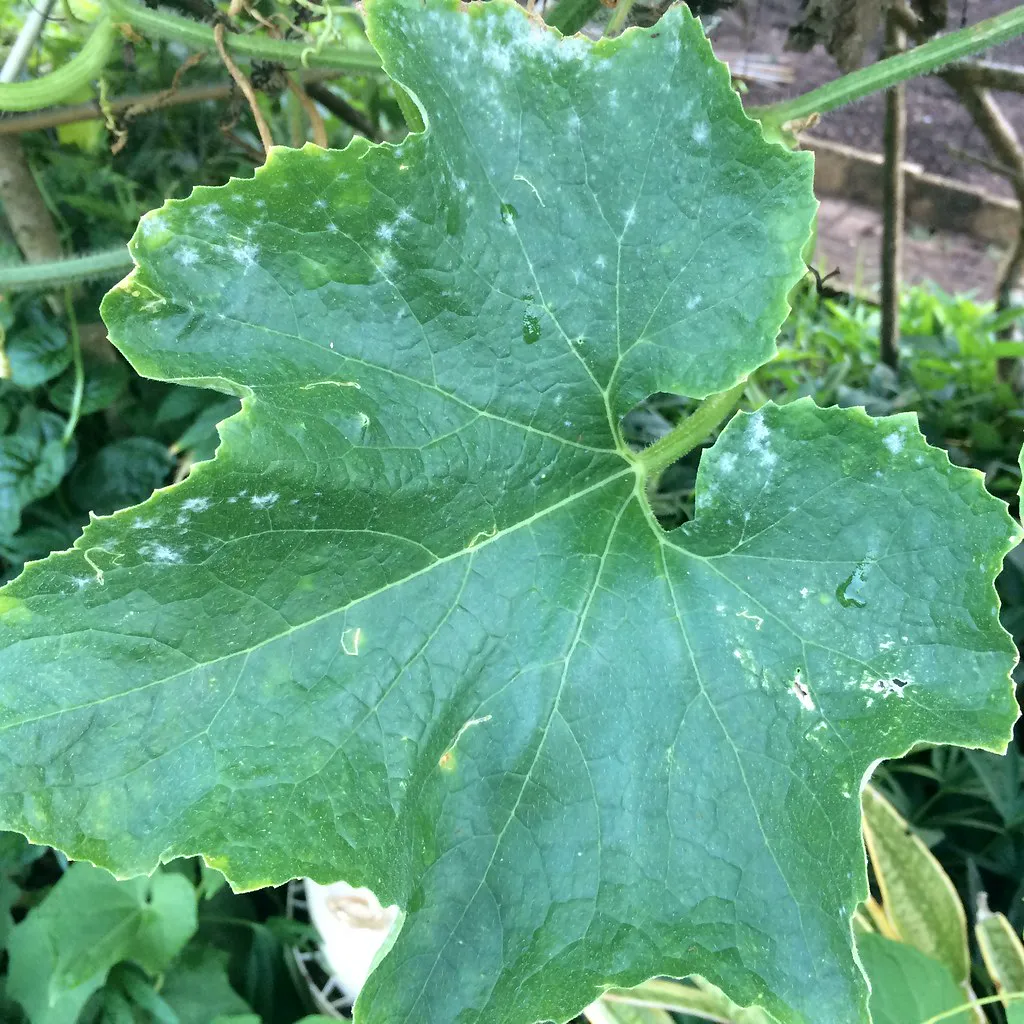
Like all gourds, watch for fruit flies, aphids and red pumpkin beetles (see aphid control), plus powdery and downy mildew in humid conditions. Keep the vines airy on a trellis, use neem oil or insecticidal soap, and pick or bag fruit against fruit fly. Follow the methods in our organic pest control guide for safe handling.
Harvesting
You can pick ash gourd young and tender (green, soft skin) for immediate cooking, or, for the classic long-storing fruit, leave it to fully mature, when it grows large and the skin develops a powdery, waxy white coating. Cut mature fruit with a bit of stem; that waxy bloom lets it store for months in a cool, dry, airy place. It is ready in about 3–4 months.
Storing and using ash gourd
One of ash gourd’s great virtues is how long it keeps. A mature, unblemished fruit can store for months. So a single harvest stretches well into the cooler season.
Keep whole mature fruits in a cool, dry, airy spot, and avoid bruising the waxy skin. Once cut, wrap the remaining piece and refrigerate it for a week or so. This makes it a brilliant winter standby in the kitchen.
In the kitchen it is wonderfully versatile across cuisines. Make Indian petha or cooling juice, Chinese winter-melon soup, or simple stir-fries and curries. It works wherever you would use a mild squash or marrow.
Health benefits & uses
Ash gourd’s claim to fame is what it lacks. USDA lists it as waxgourd, raw and records just 13 kcal per 100 g, among the lowest of any vegetable in the database, with 2.9 g of fibre (10% DV) carried in almost pure water. The micronutrients are slight: vitamin C 13 mg (14% DV), calcium 19 mg, iron 0.4 mg, zinc 0.61 mg, and no vitamin A at all. So “rich in vitamin C and minerals” overstates it — this is a bulk-and-water vegetable, and that is exactly why it works the way it does in the kitchen, absorbing whatever it is cooked with. It has long been used in Ayurveda as a cooling food. In India it becomes sweet petha and a cooling juice; in China and Southeast Asia, winter-melon soup, stir-fries and curries. It works wherever you would use a mild squash or marrow, and it keeps for months whole.
This article is for general information only and is not medical advice. Talk to a qualified professional before using any plant medicinally.
Common ash gourd problems
Few fruits or poor set
Often poor pollination, as it has separate male and female flowers. Be patient and hand-pollinate if bees are scarce.
Rotting fruit or vine
Waterlogging or fruit on damp soil. Keep it moist but well-drained, and trellis or mulch under the fruits.
Mildew on leaves
Humidity and crowding. Train it on a trellis for airflow and treat early.
Related plant guides
- How to grow Butternut Squash
- How to grow Chayote
- How to grow Muskmelon
- How to grow Watermelon
- Ridge Gourd
- Tinda
Frequently asked questions
What is petha/winter melon in English?
It is ash gourd (also called wax gourd or Chinese watermelon) — a large, mild gourd with a waxy white bloom when mature.
Why does ash gourd store so long?
The powdery, waxy coating on a mature fruit seals it, so it keeps for months in a cool, dry place.
How long does ash gourd take to grow?
About 3–4 months to a fully mature, storable fruit, or a good deal less if you simply pick it young and tender for immediate cooking.
Can I grow ash gourd in the US or UK?
Yes, as a warm-season crop in summer. It is frost-tender and needs a long warm season, so grow it in the warmest months or under cover.
Can I eat ash gourd young?
Yes — picked young and green, the tender flesh cooks quickly in stir-fries and curries. Left to mature, the same fruit develops its waxy skin for long storage.
Can I grow ash gourd in a container?
Yes, in a very large, deep pot with a sturdy trellis, much like other container vegetables. The vine is vigorous and thirsty, so use rich compost, water often, and feed it regularly through the season for a worthwhile crop.
Why are the flowers falling off my ash gourd without setting fruit?
Ash gourd carries separate male and female flowers on the same vine, and the males always appear first and drop after a day, which is perfectly normal. The problem is only real when female flowers, the ones with a tiny gourd swelling behind the petals, shrivel and fall too. That means pollen never reached them, usually because bee activity is low or the weather has been wet. Hand pollination in the early morning fixes it quickly.
How do I hand pollinate ash gourd?
Go out soon after sunrise, when the flowers are freshly open and the pollen is viable. Pick a male flower, peel back its petals and brush the pollen-covered centre directly onto the sticky middle of a female flower, or move the pollen across with a soft brush. One male will usually serve two or three females. Done consistently, this lifts fruit set dramatically on small garden vines that few bees visit.
Should I grow ash gourd on a trellis or let it run on the ground?
Both work, and it comes down to space. A strong trellis or pergola saves ground, keeps the fruit clean and off damp soil, and improves the airflow that helps prevent mildew, but the mature fruits are heavy and need cloth or net slings to take the weight. Letting the vine sprawl is easier and suits a big plot, though the fruits should sit on straw or a tile so they do not rot underneath. Either way allow 3 to 4 feet between plants.
How long do ash gourd seeds take to germinate?
About 7 to 14 days in warm, evenly moist soil. Germination stalls badly in cold ground, so wait until soil temperatures are properly warm rather than sowing early. Soaking the seed overnight before sowing softens the coat and speeds things up noticeably. Sow two or three seeds per station about an inch deep and keep the strongest seedling.
How do I know when an ash gourd is ready to pick?
A mature fruit stops enlarging, its skin hardens so a fingernail no longer marks it easily, and a chalky white bloom develops over the surface. The stem also begins to dry and the tendril nearest the fruit browns off. Cut with a few inches of stalk attached rather than pulling, since a torn stem end invites rot in storage. Fruit picked young and green for immediate cooking is a different call and needs none of these signs.
How long does ash gourd keep after harvest?
A properly mature fruit with its waxy coat intact and the stalk left on will keep for several months, often the better part of a year, in a cool, dry, airy place. Do not wash the bloom off, because that coating is what seals the skin, and do not refrigerate whole fruit. Store them on a rack or straw rather than a cold concrete floor, and check occasionally for soft spots. Once cut, refrigerate the remainder and use it within a few days.
Still stuck? Ask the Plant Doctor
Describe the problem — yellow leaves, holes, no flowers — and get a clear answer in seconds. FreeAI can make mistakes. Answers are guidance, not a guarantee — check anything important against the guide it links to, and always read the label on any product before you use it.