How to Grow Bitter Gourd / Karela (Healthy & Productive)
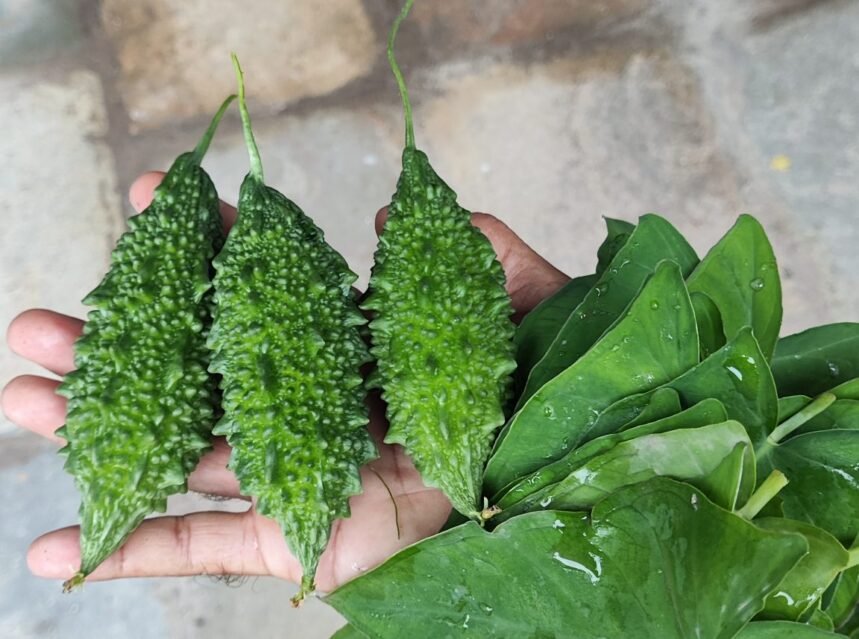
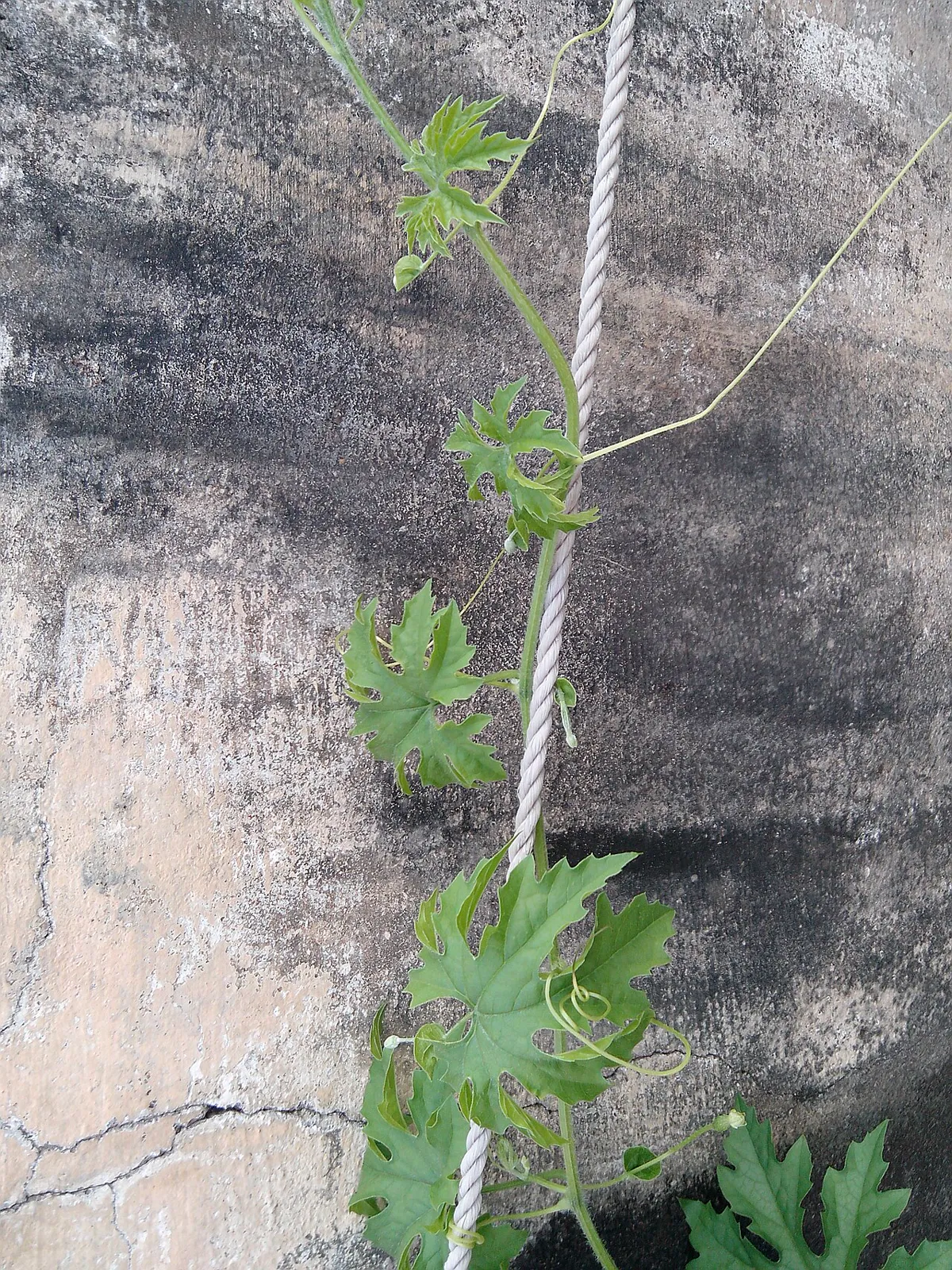
Bitter gourd (Momordica charantia), also called karela or bitter melon, is a warm-season climbing vine grown for its knobbly, distinctly bitter green fruits — prized as much for its health benefits as its taste. The fruits grow on vigorous vines that love heat and sun, and a few well-grown plants on a trellis will keep you in karela all season. It is a kitchen-garden favourite across India and Asia. With the right support and a little hand-pollination, it is straightforward. Here is the complete guide on how to grow bitter gourd.
Quick start: Soak seeds and sow in full sun in warm, rich soil. Give the vine a strong 5–6 ft trellis. Water deeply 2–3 times a week, hand-pollinate male to female flowers if fruit set is poor, and harvest the fruits young and dark green every 2–3 days.
Bitter gourd, or karela, is a warm-season climber that needs real heat and a sturdy trellis to do well. The tip experienced growers swear by is hand-pollination, dabbing pollen from male to female flowers in the early morning, which dramatically improves fruit set. In India it is a classic monsoon crop, romping away in the warmth and humidity. Soaking or salting the sliced fruit before cooking tames its famous bitterness.
🧰 In a hurry? Jump straight to our tested picks for this guide ↓
Bitter gourd at a glance
| Feature | Detail |
|---|---|
| Botanical name | Momordica charantia (family Cucurbitaceae) |
| Common names | Bitter gourd, karela, bitter melon |
| Plant type | Warm-season climbing vine |
| Sun | 6–8 hours direct sun |
| Support | Strong 5–6 ft trellis (essential) |
| Water | Deeply 2–3 times a week |
| Time to fruit | ~55–60 days from sowing |
| Harvest | Young, 4–5 in, dark green, every 2–3 days |
Why grow bitter gourd?
Karela is productive, well-suited to hot climates, and famously good for health. A few reasons gardeners love it:
- Space-efficient. Grown up a trellis it takes little ground space, ideal for terraces and container gardens.
- Heat-loving and reliable. It thrives where many vegetables struggle in summer.
- Health value. It is especially valued for blood-sugar support (more below).
- Pick your type. Grow the smaller, gentler Indian karela or the larger, milder Chinese bitter melon to suit your taste.
Types of bitter gourd to grow
Bitter gourd comes in a few distinct styles, and choosing the right one shapes both your harvest and how strong the bitterness is:
- Indian karela — shorter, very knobbly, narrow fruits with a deep green colour and the strongest bitter punch; the type used in most Indian cooking.
- Chinese bitter melon — longer, paler, smoother fruits with gentler ridges and a milder taste, good for stir-fries.
- Small “jhar” or wild types — tiny, intensely bitter fruits used more in pickles and traditional remedies.
All grow on the same vigorous vines and want the same heat, sun and trellis, so the choice is really about flavour and the dishes you cook. If you find karela very bitter, start with a Chinese type, harvest the fruits young, and use the salting trick before cooking. Gardeners on a terrace often grow two types up the same frame to compare them across a season.
History, origin & how bitter gourd spread
Bitter gourd originated across the Old World tropics — Africa as well as Asia, where it was a dry-season staple for ǃKung hunter-gatherers, and was probably fully domesticated in Southeast Asia before spreading through the rest of the continent in prehistory (origin and cautions). One garden-specific caution comes with it: the fully ripe fruit and the mature seeds are toxic, so pick the gourds green, as cooks do, and do not let children near a vine that has been left to colour up for seed. It has been cultivated and used in India for a very long time, woven into both cooking and traditional Ayurvedic and folk medicine for its bitter, cooling reputation. From its Asian homeland it spread to China, Southeast Asia, Africa and the Caribbean, carried along trade and migration routes, and each region developed its own dishes and types.
Today bitter gourd is grown widely across India, China and Southeast Asia, with India and China the leading producers. Neither has an official world figure attached to it: the FAO’s crop statistics have no bitter gourd line, counting it inside a general “other fresh vegetables” total, so national agriculture data is the only real source. That tropical heritage explains its needs in the garden: it wants real heat, strong sun and a long warm season, and it simply will not perform in cool conditions.
Best season & when to plant
Bitter gourd is a warm-season crop that fruits about 55–60 days after sowing. In India’s plains, the best sowing times are January–March (summer) and June–July (monsoon); in hilly regions, March–June. Elsewhere, sow after frost once the soil is warm. It needs 6–8 hours of direct sun, ideally in a spot sheltered from strong wind.
How to plant bitter gourd from seed
- Soak the seeds. Soak overnight (or nick the hard coat) for faster, more even germination.
- Sow in full sun. Use rich, well-drained soil amended with compost (see improving garden soil).
- Set the support first. Put the trellis in place at planting so you do not disturb roots later.
Trellis support (essential)
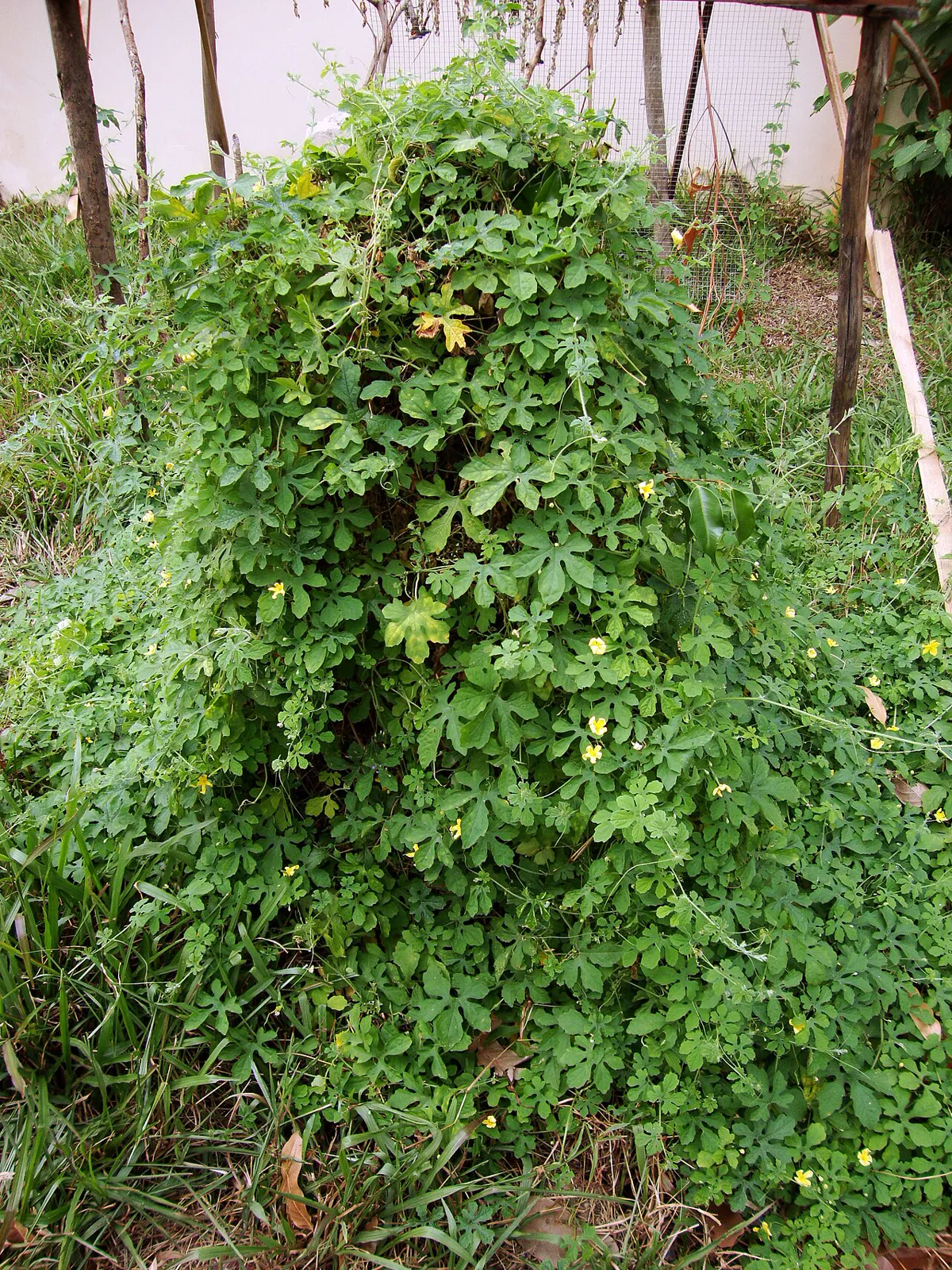
Bitter gourd is a climbing vine, so give it a strong trellis at least 5–6 feet tall from the start. Supporting the vine keeps the fruit off the ground (preventing rot and pest damage), improves air circulation, maximises sun exposure, and makes harvesting much easier. Like pumpkins and other cucurbits it will sprawl if left unsupported, so vertical growing is the way to go on a terrace.
Sun, soil & watering
Water deeply 2–3 times a week, keeping the soil moist but never waterlogged, and increase slightly during flowering and fruiting (see how often to water plants). Mulch around the base to conserve moisture and keep roots cool. A periodic balanced feed supports steady fruiting, but avoid overdoing nitrogen, which pushes leaves at the expense of fruit.
Pollination
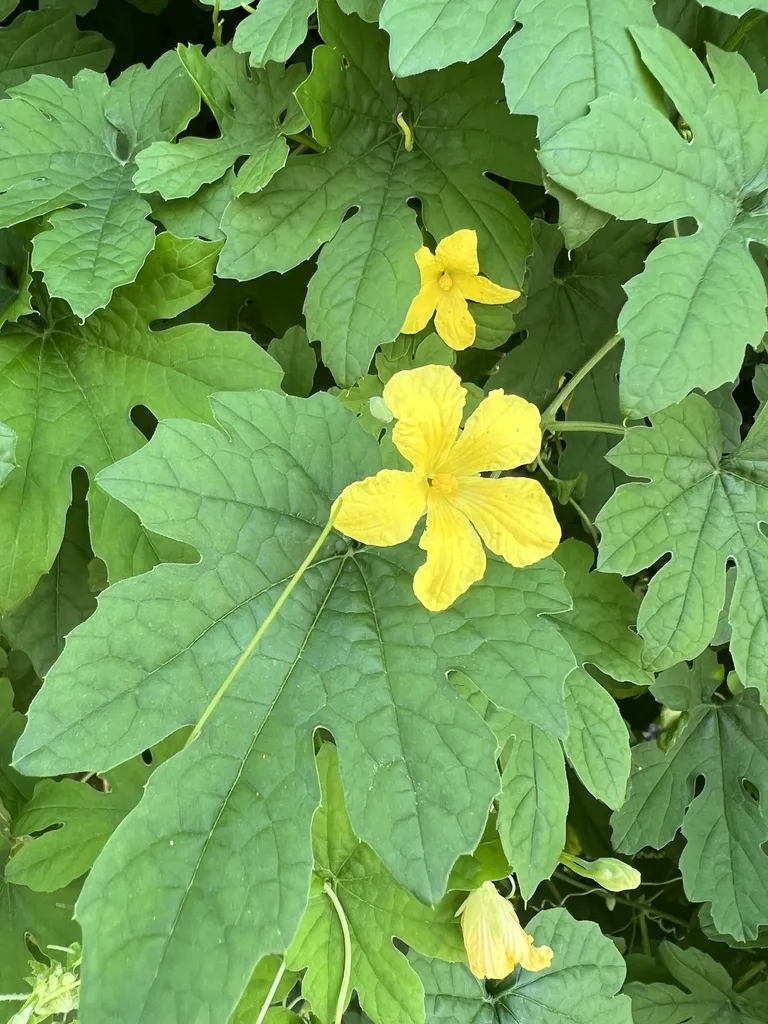
Bitter gourd has separate male and female flowers; the female flower has a tiny immature fruit behind it, while the male does not. If fruit set is poor, hand-pollinate: pick a male flower and gently touch its centre to the centre of a female flower, or use a soft brush. Doing this in the morning, when flowers are fresh, gives the best results — and attracting pollinators to the garden helps it happen naturally.
Common pests & diseases
The main pests are fruit flies, aphids and cucumber beetles, plus powdery mildew in humid weather. A reliable organic routine:
- Spray neem oil every 10–12 days (about 1 tsp neem + 1 litre water + a few drops of soap), coating leaves and flowers.
- Use fruit-fly traps and harvest promptly so fruit does not over-ripen on the vine.
- Rinse off aphids — see our aphid control guide and organic pest control for more.
Harvesting bitter gourd
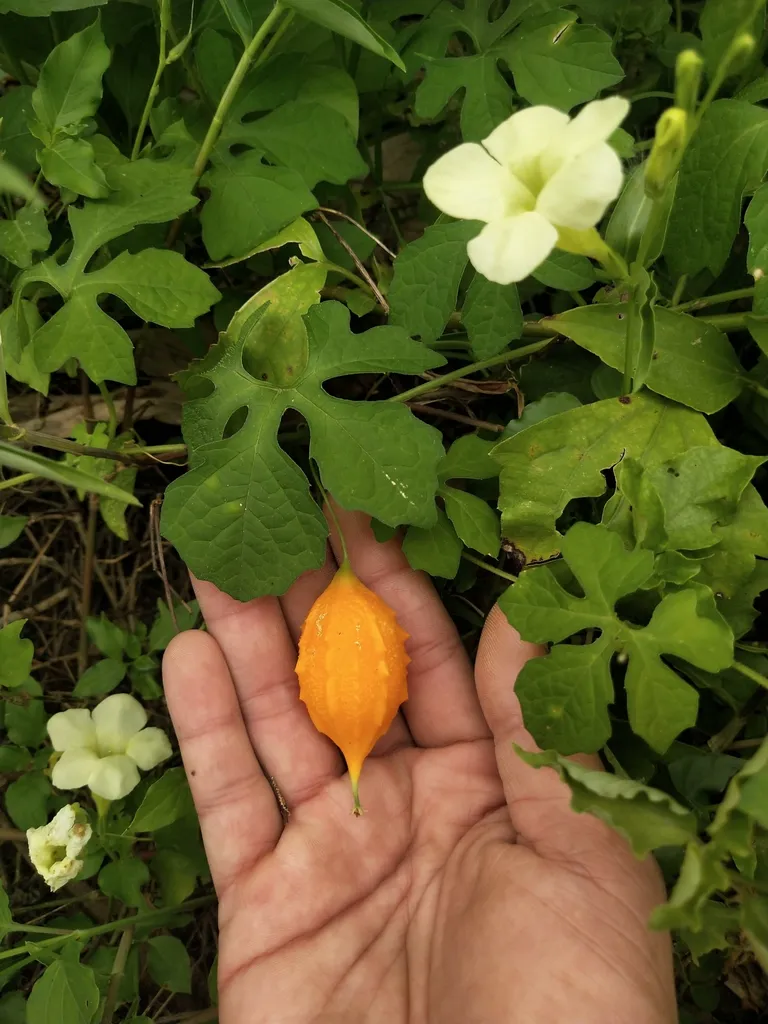
Start harvesting once fruits are 4–5 inches long and still dark green. Do not wait too long — left on the vine, they turn pale orange, split open and become unpalatable. Snip the fruits every 2–3 days with a sharp knife; frequent picking keeps the vine producing new fruit all season.
Health benefits & uses
Bitter gourd is renowned for its health value. It is very low in calories and rich in vitamin C, antioxidants and fibre, and contains compounds (such as charantin and polypeptide-p) that some studies suggest may support healthy blood sugar levels (see this review of the plant’s diabetes-related bioactivities and safety). It is used in stir-fries, curries (karela sabzi), stuffed dishes and juices. To reduce bitterness, salt and rest the slices, then rinse before cooking.
This article is for general information only and is not medical advice. Talk to a qualified professional before using any plant medicinally.
Growing karela on a terrace or in containers
Bitter gourd is one of the best cucurbits for a terrace or balcony, because it grows upward rather than sprawling. Use a large container of at least 15–18 litres (a grow bag or a deep pot) filled with a rich, free-draining mix, and set a trellis or net against a sunny wall or railing at planting time. One healthy vine can cover a surprising amount of vertical space and crop for weeks.
Container plants dry out faster than those in the ground, so check moisture daily in peak summer and feed every couple of weeks, since the limited root space holds fewer nutrients. Train the main stem upward and let the side shoots fill the frame — most fruit forms on these laterals. With good sun, steady water and morning hand-pollination, a terrace karela vine can be just as productive as one in a garden bed, which is exactly why it is such a favourite for Indian rooftop gardens.
Common bitter gourd problems
Flowers but no fruit
Poor pollination, often from too many early male flowers. Hand-pollinate male to female flowers in the morning.
Fruit flies ruining fruit
Use traps and regular neem sprays, and harvest promptly before fruit softens.
Bitter beyond normal / orange fruit
Left on the vine too long. Pick young and dark green for the best texture and flavour.
Related plant guides
Frequently asked questions
How long does bitter gourd take to grow?
It usually starts fruiting about 55–60 days after sowing and crops for several weeks.
Does karela need a trellis?
Yes — a 5–6 ft trellis keeps fruit clean, improves airflow and sun, and makes picking easier.
How do I reduce the bitterness of karela?
Salt the sliced fruit, let it sit, then rinse before cooking; harvesting young also helps.
When should I plant karela in India?
January–March for a summer crop and June–July for a monsoon crop in the plains.
Why are my bitter gourd flowers falling without fruit?
Male flowers always drop after a day or two — that is normal, and the vine produces far more of them than female flowers. The problem is when female flowers, recognisable by the tiny gourd behind the bloom, shrivel and fall: that means pollination failed. Poor bee activity, heavy monsoon rain during flowering, or spraying insecticide in the morning are the usual reasons, and hand pollination solves it reliably.
How do I hand pollinate bitter gourd?
Do it early in the morning while the flowers are freshly open. Pick a male flower, peel back its petals to expose the pollen-covered centre, and dab it directly onto the middle of a female flower — or move the pollen with a small soft brush. One male flower can pollinate two or three females. Fruit set usually becomes obvious within three or four days as the young gourd starts to swell instead of yellowing.
Can I grow bitter gourd in a pot?
Yes, and it is a popular terrace crop across India. Use a container at least 14-16 inches wide and equally deep, filled with rich, free-draining mix, and give it a sturdy trellis or net from day one. Potted vines dry out fast in summer, so expect to water daily and feed every two weeks once flowering starts. One healthy vine per large pot performs better than two crowded ones.
How do I protect bitter gourd from fruit fly?
Fruit fly is the single biggest karela pest — the female lays eggs into young fruit and the maggots ruin it from inside. The most effective home method is bagging: slip a paper or thin cloth cover over each fruit once it is a few centimetres long. Add pheromone or simple bait traps around the plot, collect and destroy every infested fruit rather than dropping it on the soil, and the population falls sharply within a season.
Why is my bitter gourd plant not flowering?
Too much nitrogen is the usual culprit: heavy urea or rich compost drives lush leafy vines with few blooms. Insufficient sun matters too, as karela needs six or more hours of direct light to flower well. Switch to a feed higher in phosphorus and potassium, ease off nitrogen, and pinch the growing tip once the main vine reaches the top of the trellis to encourage flowering side branches.
When and how should I harvest bitter gourd?
Pick while the fruit is still firm and light to medium green, usually 8-12 days after the flower sets, depending on the variety. Fruit left too long turns yellow-orange, splits open, and becomes unpleasantly bitter and seedy. Cut with a short stalk using scissors rather than pulling, and harvest every two or three days — frequent picking keeps the vine producing for far longer.
Is bitter gourd good for health?
Karela is a low-calorie vegetable that supplies vitamin C, folate, and fibre, and it has long been used in traditional Indian cooking and Ayurveda. Some studies suggest compounds in bitter gourd may influence blood sugar, though the evidence in people is limited and far from settled. Anyone managing diabetes or taking medication should speak to a doctor before using it in concentrated forms such as juice or supplements. This is general information only, not medical advice.
Which parts of a bitter gourd should not be eaten?
The unripe green gourd is the food, and that is the part you cook. The seeds and the bright red aril around them are removed first, and they should not be eaten in quantity, particularly by children. A fully ripe gourd that has turned orange and split open is past the eating stage for the same reason.
NC State Extension rates the plant medium severity and names the ripe fruit, fruit coats and seeds as the poisonous parts, listing headache, nausea, vomiting and diarrhoea if large quantities are eaten. Note what that does not say: the green gourd you actually cook is not the problem.
Bitter gourd is also traditionally avoided in pregnancy, and anyone already taking medication for blood sugar should speak to a doctor before eating it regularly, because the effects can add up. No authority we checked publishes pet-specific data for bitter gourd, so we make no claim there. This article is for general information only and is not medical advice.
Still stuck? Ask the Plant Doctor
Describe the problem — yellow leaves, holes, no flowers — and get a clear answer in seconds. FreeAI can make mistakes. Answers are guidance, not a guarantee — check anything important against the guide it links to, and always read the label on any product before you use it.